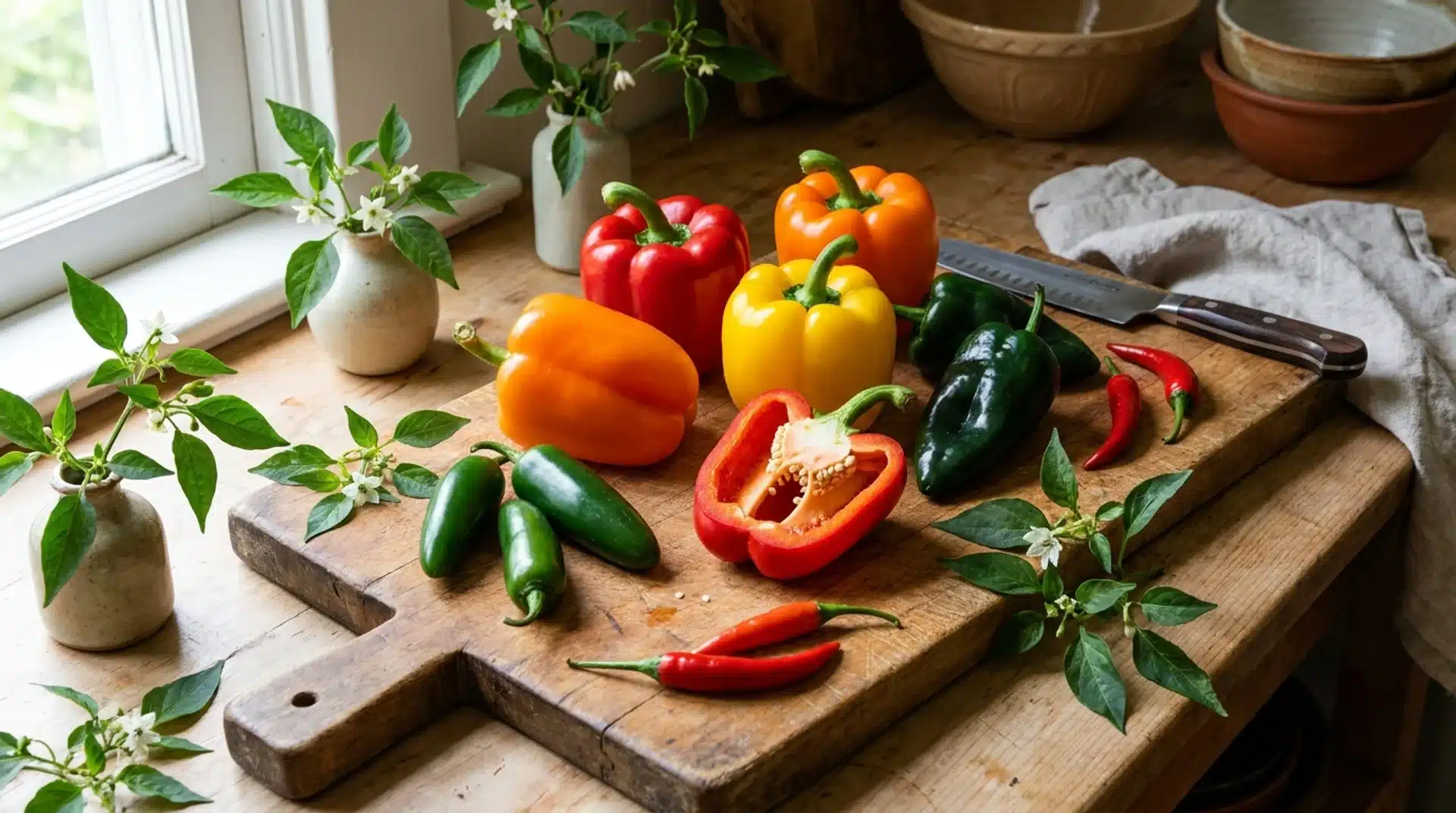
Botanically, a pepper has more in common with a strawberry’s cousin than with a carrot. It’s a fruit, and by the strictest scientific definition, it’s a berry.
Your grocery store, your favorite recipe site, and every cooking show on TV still call it a vegetable. A botanist looking at the same pepper sees fruit, because botany and cooking run on different rulebooks. One follows plant structure. The other follows taste and kitchen tradition.
Are Peppers a Fruit or a Vegetable?
A pepper grows from the flower of the pepper plant, part of the Capsicum genus, and every pepper carries seeds inside. Those two facts check both boxes on the botanical fruit test.
Bell peppers, jalapeños, habaneros, serranos, and ghost peppers all clear it the same way, because they all grow from flowers and contain seeds.
A published monograph on wild and cultivated Capsicum in the journal PhytoKeys confirms this. The genus includes chili peppers, bell peppers, habaneros, jalapeños, and pimientos, all botanically fruit-bearing flowering plants native to the Americas.
A 2009 classification study in the Journal of Food Composition and Analysis used the same botanical-versus-culinary framework to sort produce generally.
In the kitchen, peppers get used like vegetables. They go into stir-fries, fajitas, soups, and salads. Chefs and home cooks classify them as vegetables based on taste and how they work in savory cooking. Both answers are correct. They just follow different rules.
Wait, are peppers actually berries?
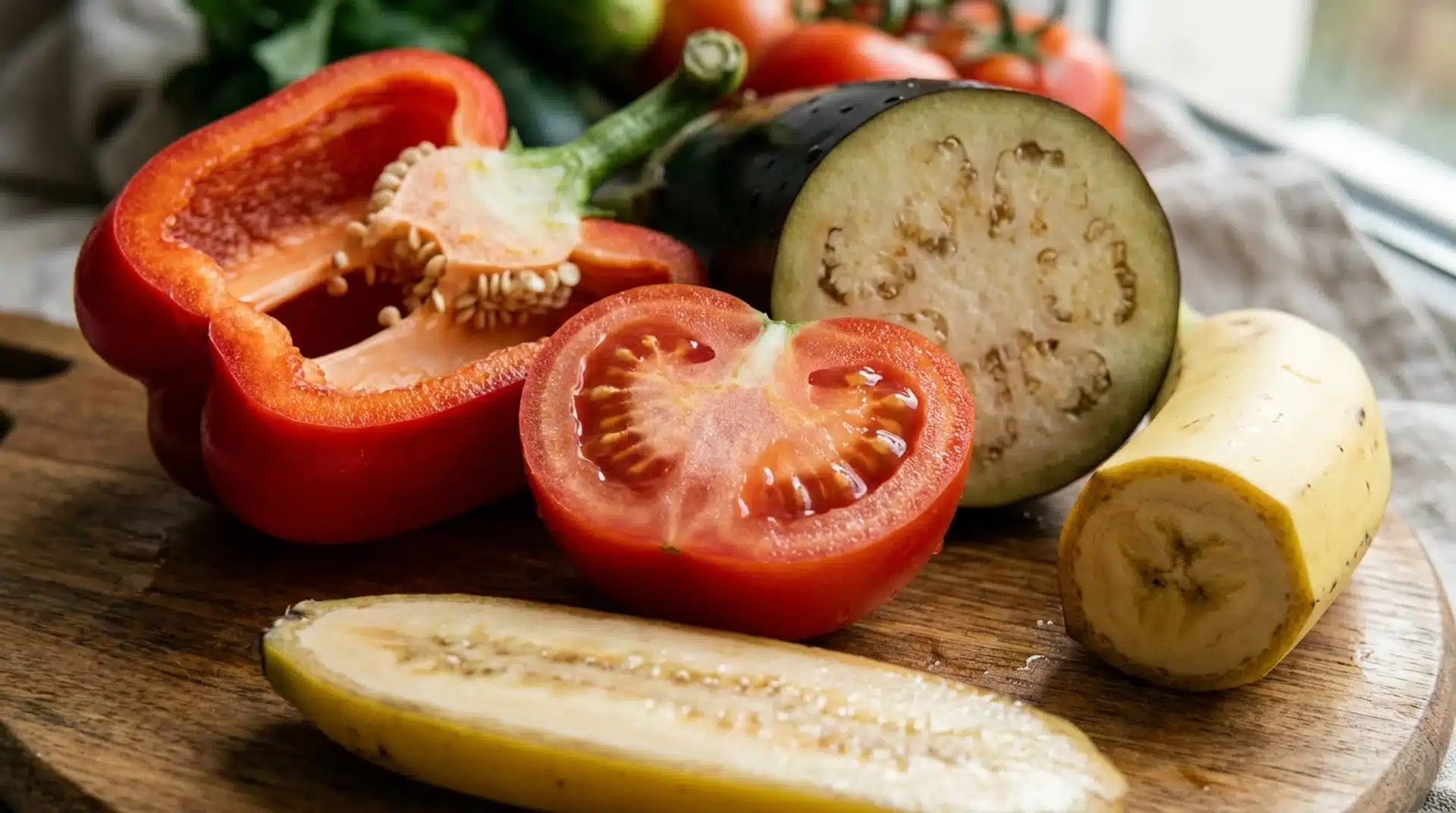
Peppers are not just fruits. They are botanical berries, not in the everyday grocery store sense, but in the strict scientific sense.
The criteria for a true botanical berry are specific. It must develop from a single flower with one ovary. It must have a fleshy middle layer. It must contain seeds embedded inside that flesh. A pepper checks all three.
These seeds are also what allow gardeners to grow new pepper plants through plant propagation, a process that involves creating new plants from seeds or other parts of an existing plant.
So are the tomato, the eggplant, and the banana.
Strawberries, raspberries, and blackberries are not botanical berries. They’re aggregate fruits, formed from flowers with multiple ovaries.
The foods people casually call berries in daily life are often not berries at all. The foods people call vegetables are often true berries in botanical terms.
Botanists use these classifications to organize plant families and study how plants reproduce. When a plant scientist calls a pepper a berry, that label tells them how the fruit developed inside the flower and how it likely spreads its seeds in nature.
What Makes Peppers a Fruit, Botanically?
The botanical definition of fruit has nothing to do with sweetness. In plant science, a fruit is the seed-bearing structure that grows from the ovary of a flowering plant.
It must have at least one seed and grow from a flower. That’s the entire test. Taste, texture, and how you use it in cooking are irrelevant to botanists.
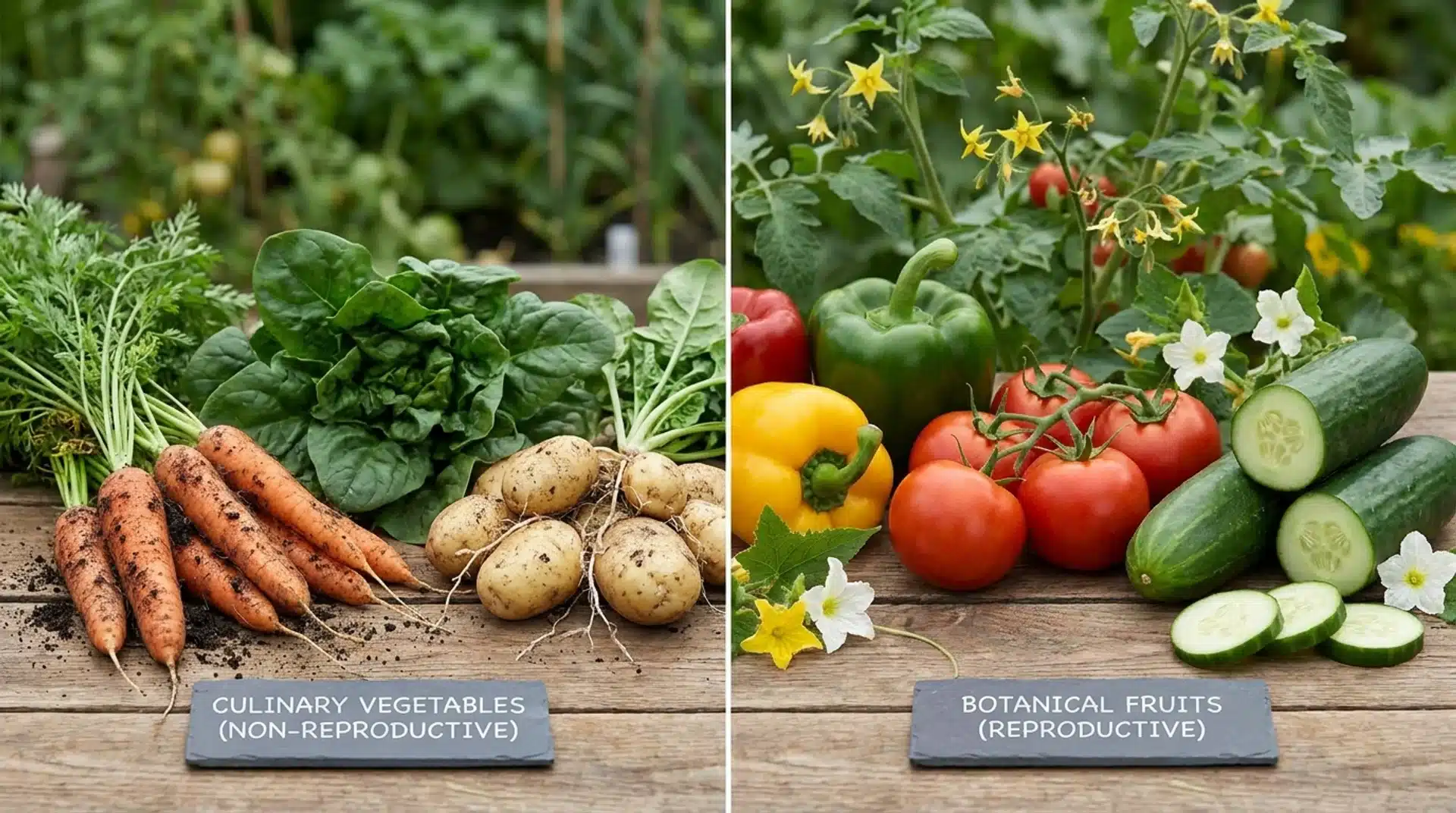
Vegetables, by contrast, do not have a precise scientific definition. Vegetable is a culinary word, a catch-all label for edible plant parts like roots, stems, and leaves.
Carrots are roots. Celery is a stem. Spinach is a leaf. None of them are products of plant reproduction.
| Basis | Vegetables | Fruits |
|---|---|---|
| Plant part | Roots, stems, leaves, or flowers | The seed-bearing part is formed from a flower |
| Main role | Supports growth or stores nutrients | Helps the plant reproduce |
| Botanical focus | Non-reproductive parts | Reproductive structures containing seeds |
| Examples | Carrot, spinach, potato | Tomato, apple, cucumber |
Why Do Chefs and Grocery Stores Call Peppers Vegetables?
Botany and cooking use different rulebooks, which is why the same food gets two different labels.
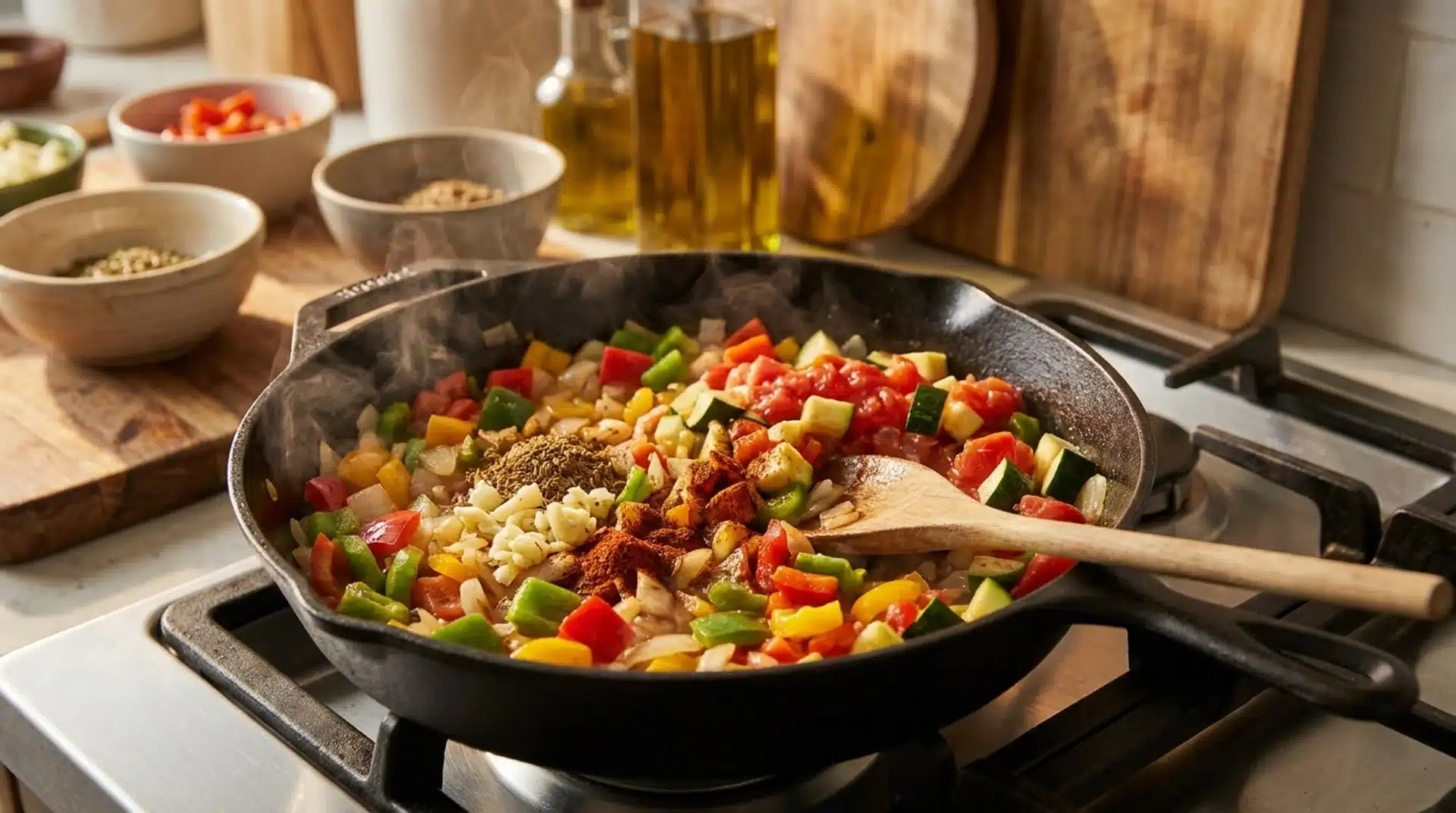
The culinary system classifies food based on flavor and how it fits into a meal. Culinary fruits are sweet or tart. They get eaten raw, in smoothies, in desserts, and as snacks. Culinary vegetables are savory. They go into cooked dishes, sides, and main courses alongside proteins and starches.
Peppers are savory. They are not as sweet as apples or as tart as citrus. They work with onions, garlic, and spices. You find them in chili and fajitas, not in fruit salad.
So the culinary system puts them in the vegetable column, and that’s also where they stay in every grocery store in the US.
The culinary classification is built around how people shop, cook, and think about food. It is more practical for everyday use than a botanical system designed for plant scientists. Neither system is wrong. They simply answer two different questions about the same food.
Why a Tomato Lawsuit Settles the Pepper Question Too
In 1893, the US Supreme Court decided a case called Nix v. Hedden, 149 U.S. 304. A produce importer named John Nix argued that tomatoes were fruit, not vegetables, under the Tariff Act of 1883.
The law at the time taxed imported vegetables but not imported fruit. Nix wanted to avoid the tariff on his tomato shipments.
The Court ruled against him unanimously. Justice Horace Gray wrote that in common language, tomatoes are vegetables. They are grown in kitchen gardens. They are served at dinner with meals, not as dessert. Even though botanists classify tomatoes as fruit, the Court held that the law follows ordinary meaning, not plant taxonomy.
The ruling set a legal precedent for products in US trade and commerce. If a food is used like a vegetable, it gets treated like a vegetable. Botanical identity is not the deciding factor.
That same logic applies directly to peppers. Science says fruit. The law says vegetable. Your kitchen says vegetable. Your botanist says fruit. All of them are right. They each use a different framework to answer the same question.
Which Other Vegetables are Fruits?
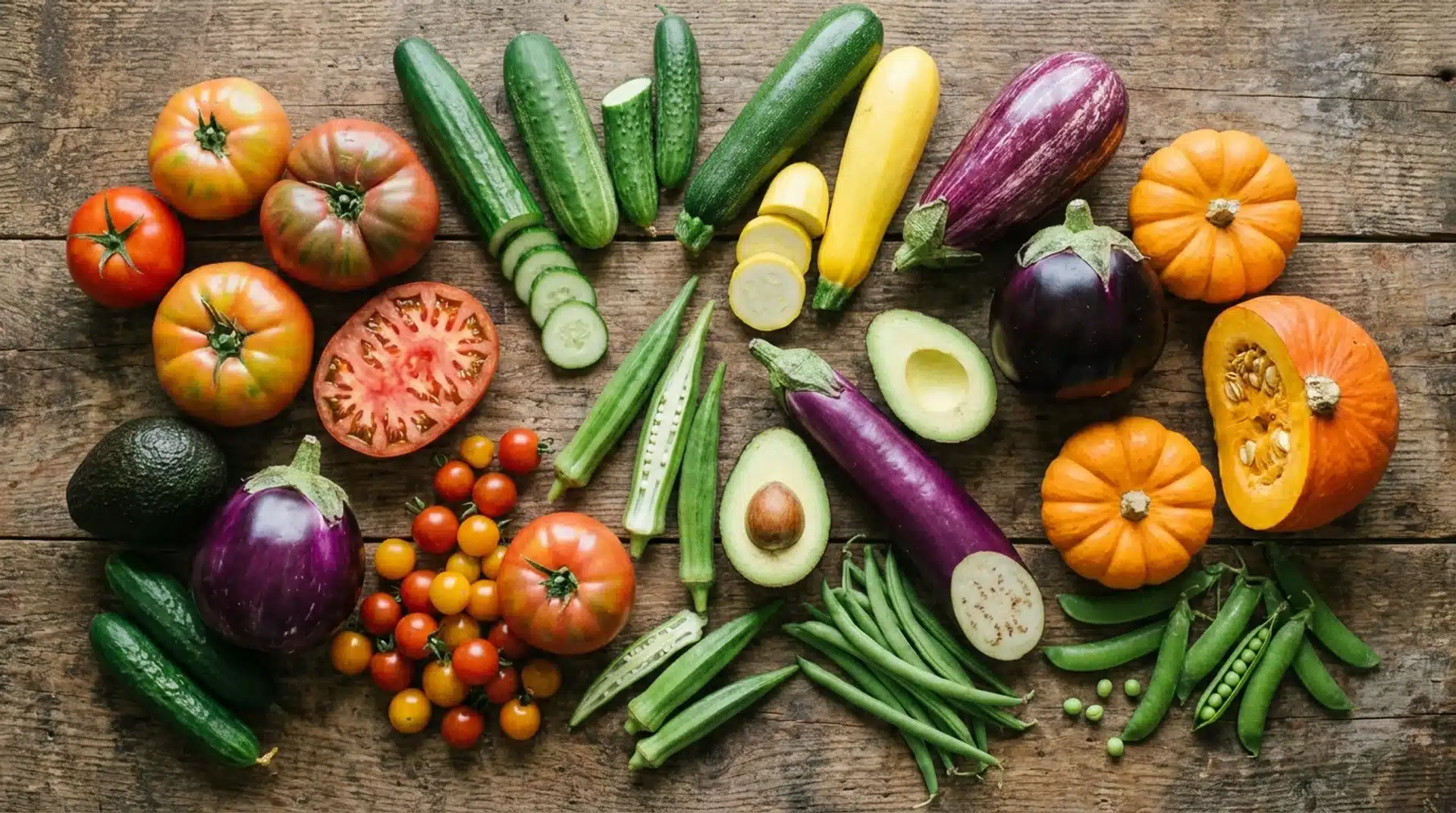
Peppers are not the only surprise on the produce aisle. The following foods are all botanically fruits. They grow from flowers and carry seeds inside, just like peppers do.
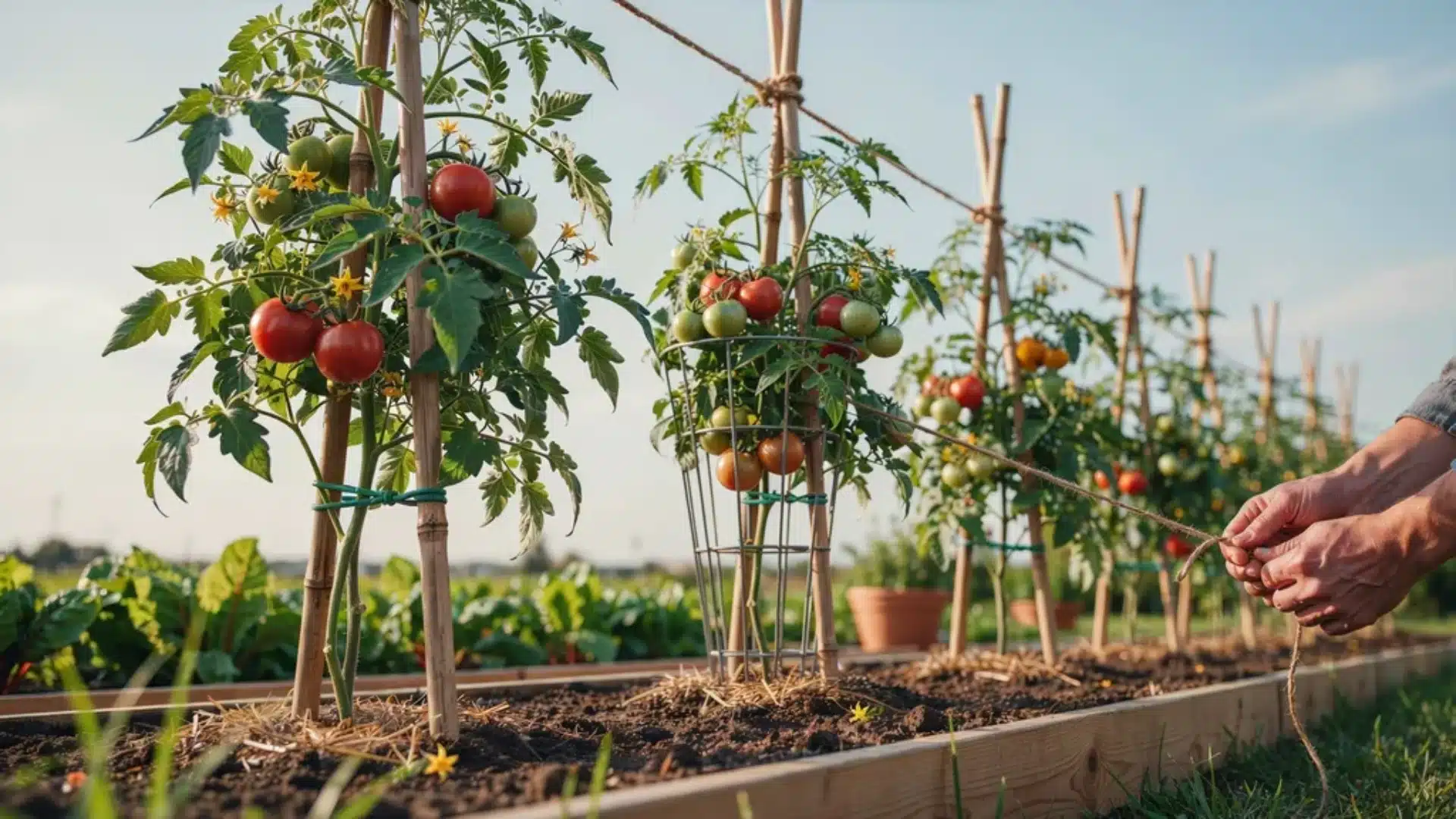
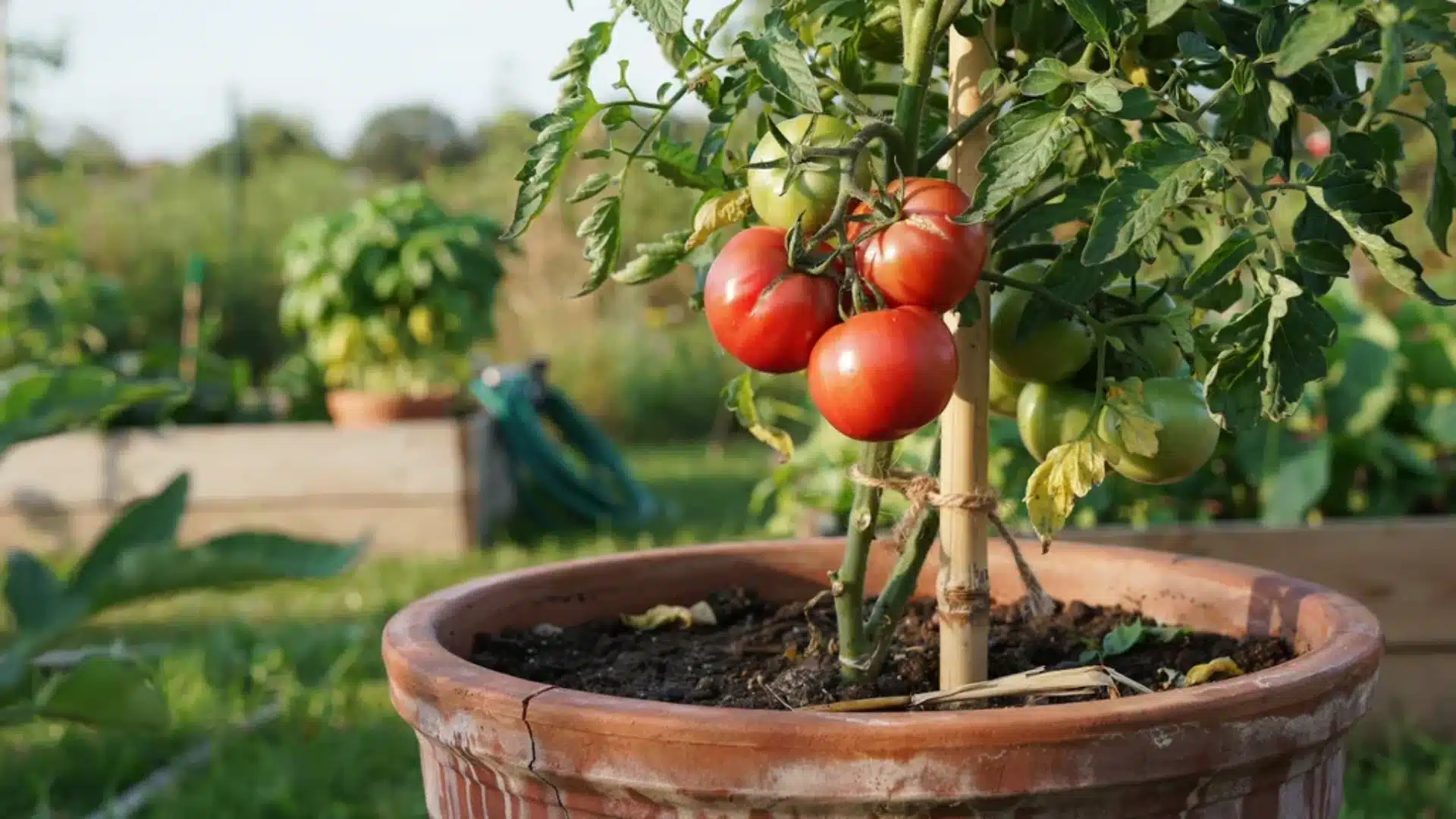
- Tomatoes: The most widely recognized example. Used in savory cooking worldwide.
- Cucumbers: Seeds are clearly visible inside every slice. Grows from a cucumber plant flower.
- Zucchini: A botanical berry used exclusively as a cooking vegetable across cuisines.
- Eggplant: Another botanical berry in the nightshade family, the same family as peppers.
- Avocados: Drupes, meaning single-seed fruits. Served in salads, on toast, and in dips.
- Pumpkin: The flesh and seeds grow from a vine-flowering plant in the gourd family.
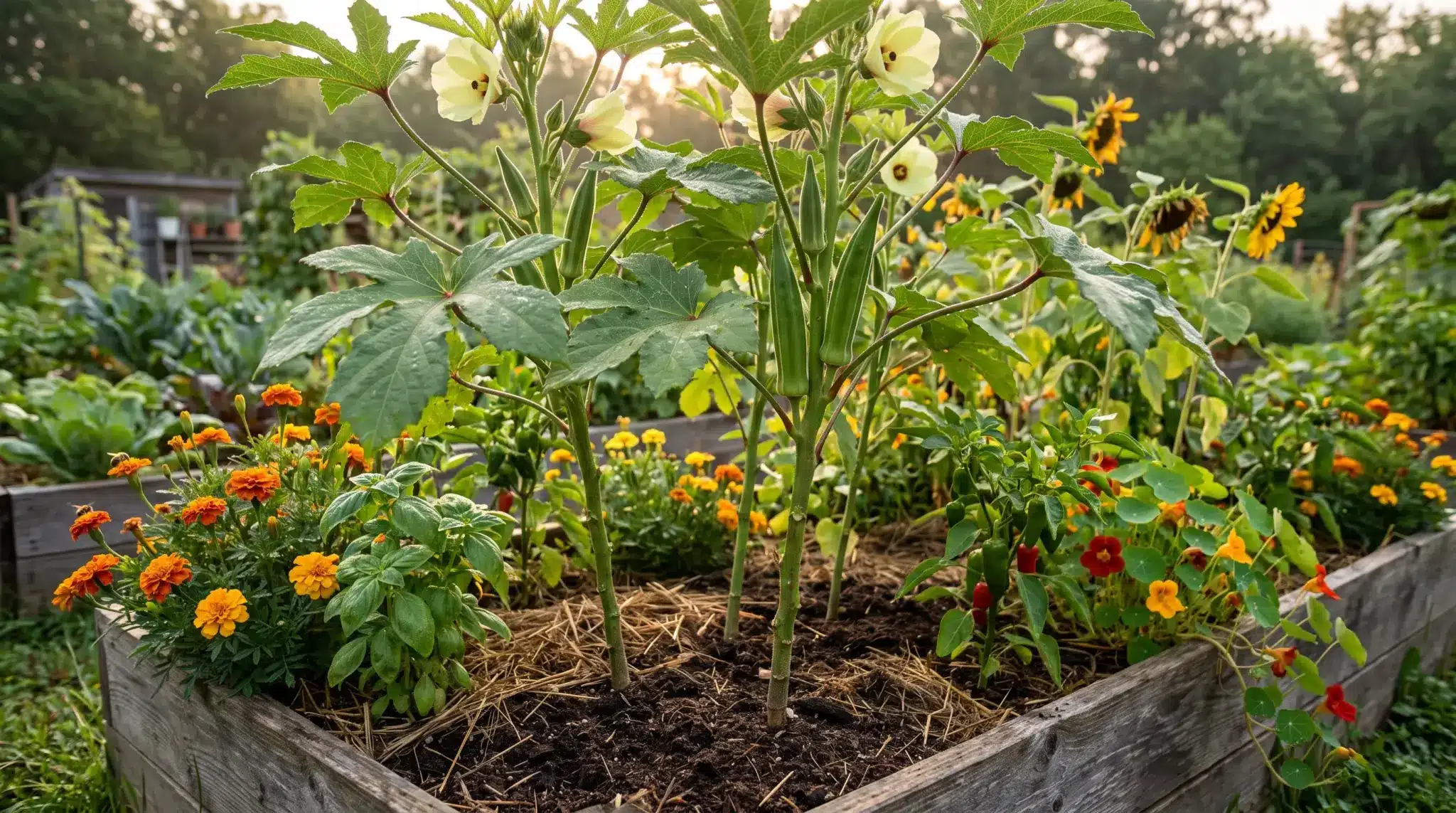
- Okra: A pod fruit. The seeds inside are the botanical giveaway that it belongs to this category.
- Green beans: The pod is the fruit. The beans inside are the seeds of the plant.
- Peas: The pod is the fruit. The peas you eat are the seeds packed inside.
All nine of these are classified as vegetables in US kitchens and grocery stores. All nine are botanical fruits. The list starts to make sense once you accept that a vegetable is a culinary invention, not a scientific category with fixed boundaries.
Frequently Asked Questions
Why doesn’t “vegetable” have a scientific definition?
Vegetable is a culinary term, not a botanical one. It groups edible roots, stems, and leaves by how they’re used, not how they reproduce.
Is a cucumber a fruit or a vegetable?
A cucumber is a botanical fruit. It grows from a flower and holds seeds, but kitchens and grocery stores treat it as a vegetable.
Do peppers count as a fruit or vegetable serving?
USDA MyPlate guidelines count peppers as a vegetable, not a fruit, for tracking daily produce intake, regardless of their botanical classification.
What This Means Next Time You’re at the Grocery Store
You don’t need a botany lesson to buy dinner.
Peppers belong in the vegetable aisle, the vegetable bin, and the vegetable role on your plate.
But the next time someone calls a tomato a vegetable at a cookout, you’ll know exactly what to say back.
Which other food surprised you when you found out it’s technically a fruit? Drop it in the comments.