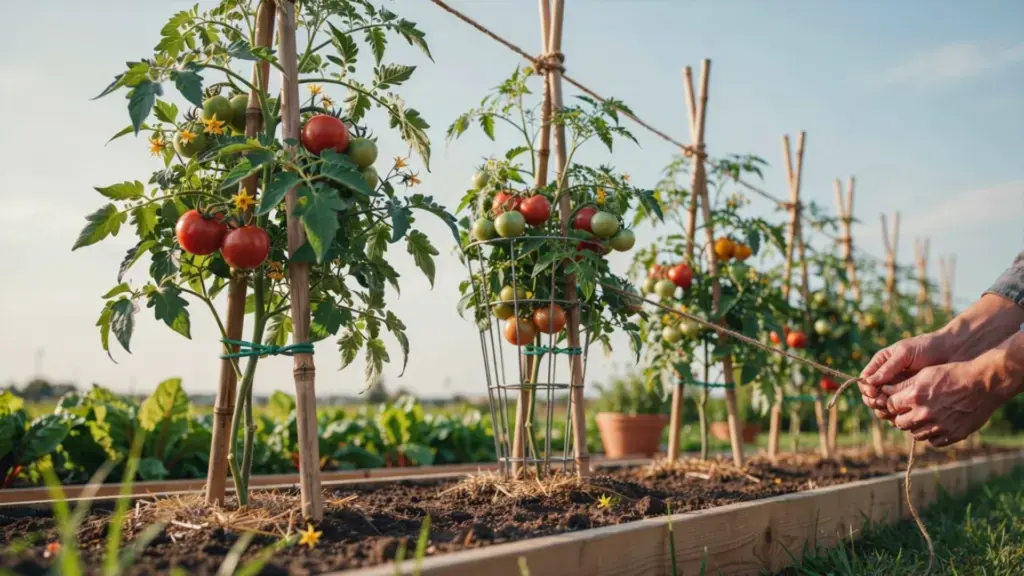
Your tomato plants looked great at planting time. Now they are flopping over, and fruit is sitting on wet soil.
I grew my first tomato at 12, and I let it sprawl wherever it wanted. The harvest was disappointing, and the plants stayed sick half the season.
Over a decade of backyard growing later, proper staking still makes more difference than almost any other single step.
Staking keeps fruit off the ground, improves airflow around plants, and helps them put energy into producing tomatoes rather than propping themselves up.
The six methods below range from single-stake backyard beds to greenhouse strings, so you can pick one that fits your space and plant type.
Why Staking Tomato Plants Changes Everything
Tomato plants are vines. Left alone, they spread out and cannot hold their own weight.
Here is what happens when you skip staking:
- Fruit sits on wet soil and rots faster
- Low foliage traps moisture and invites fungal diseases like blight and powdery mildew
- Pests like slugs and insects hide under leaves that touch the ground
- You get a smaller, harder-to-harvest crop
- The garden looks like a complete mess by July
Staking fixes all of that. It keeps the plant upright, gets the fruit into sunlight, and gives you clean access for pruning and picking. In my raised beds, a well-staked plant outperforms an unstaked one every single time.
Know Your Plant Type Before You Stake
Choosing the wrong support for your tomato variety wastes time and money. The first thing to check is whether your plant is determinate or indeterminate.
Determinate tomatoes grow to a fixed height, set all their fruit within about two weeks, and stop growing. They are more compact and need lighter support. A small cage or a 4-foot stake handles them fine.
Indeterminate tomatoes keep growing and producing fruit all season long. They can reach 8 feet or taller under good conditions. These plants need tall, strong support, so plan on 6-to 8-foot stakes or heavy-duty wire cages.
Always check your seed packet or plant label before buying materials. If it says “bush” or “compact,” that is a determinate variety. If it shows no maximum height or says “vine,” plan for indeterminate support.
Determinate varieties are also the better choice if you are growing tomatoes in pots, since their compact size fits containers without needing oversized support structures.
The Best Time to Stake Tomato Plants
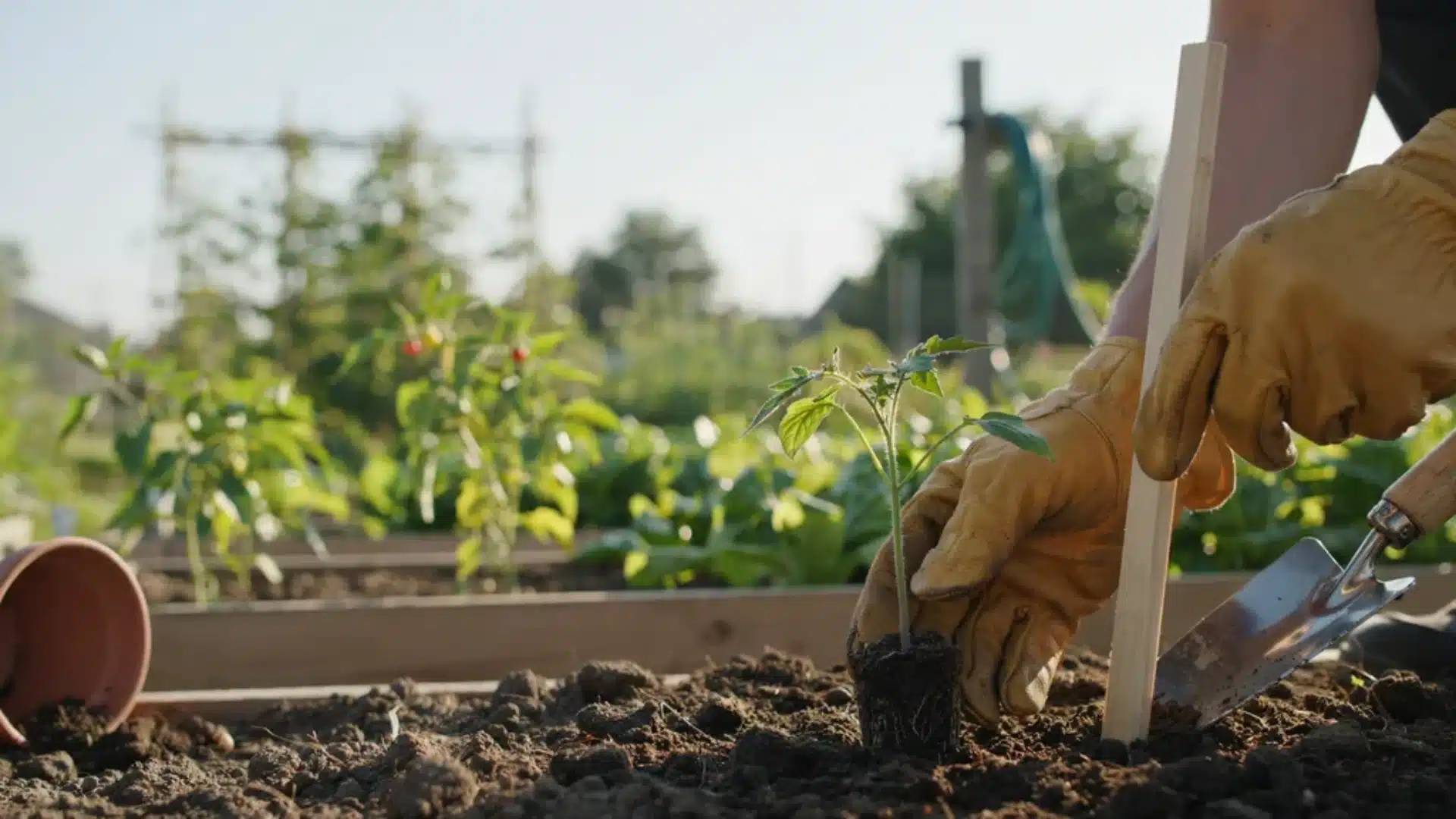
Most gardeners stake too late. This is the number one mistake I see, and it costs them root damage they never recover from.
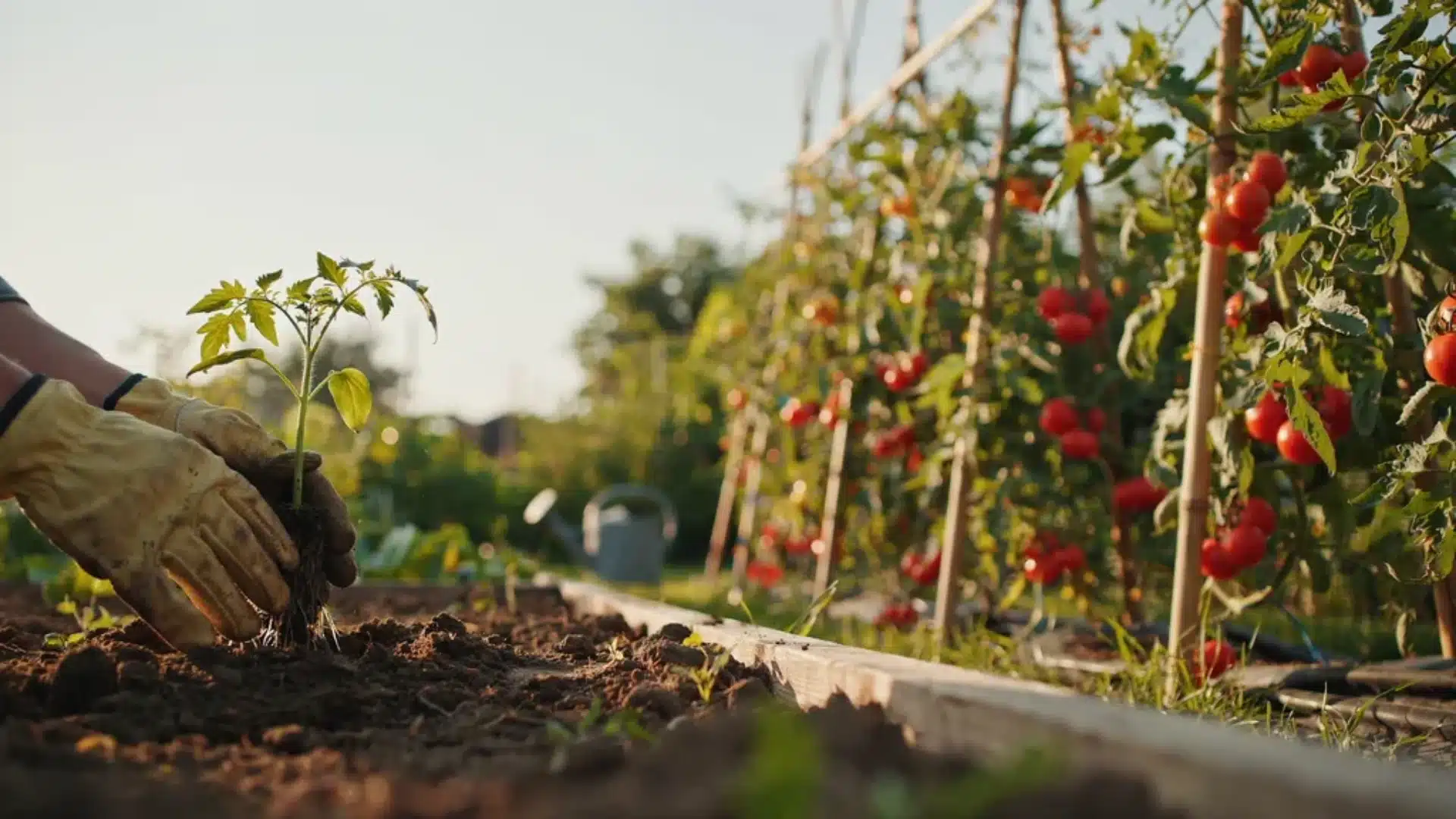
Stake at planting time, not after.
By the time your plant reaches knee height, its roots already extend 12 to 18 inches from the stem in every direction. Pushing a stake into the ground at that point risks slicing through roots you cannot see. The plant may survive, but it will not thrive.
Put your stake or cage in place the same day you transplant. The plant is small, the roots are still close together, and you can position the support exactly where you want it without guessing.
If you missed that window, stake as soon as plants reach 6 to 12 inches tall. Work slowly and place the stake at least 4 to 6 inches away from the stem.
A strong root system also depends on planting depth at transplant time, since deeper planting gives the stem more anchor points underground before a stake ever goes in.
What You Need to Stake Tomato Plants
You do not need expensive tools. Here is what works.
Stakes and Supports
- Metal T-posts, very sturdy, reusable for many years, best for indeterminate varieties
- Wooden furring stakes, affordable, last two to three seasons
- Bamboo canes are lightweight and good for smaller or determinate plants. Avoid thin bamboo for heavy, indeterminate varieties, as it bends and snaps under the full weight of the plant.
- Rebar, the most heavy-duty option for tall plants in windy spots
- Wire cages, buy the heavy-duty kind. The lightweight green cages sold cheaply at garden centers tip over with a full-grown plant.
Match your support to your plant. A heavy beefsteak tomato on a flimsy bamboo cane is a problem waiting to happen.
Tying materials:
- Soft garden twine
- Stretchy plant tape
- Strips of old fabric (cut-up t-shirts or pantyhose work well)
- Tomato clips
What to avoid: wire, zip ties, or anything stiff that cuts into the stem as it grows thicker.
How to Stake Tomato Plants: 6 Methods
Not every garden needs the same setup. Pick the method that fits your space, your plant type, and how much time you want to spend on it.
Method 1: The Single Stake Method
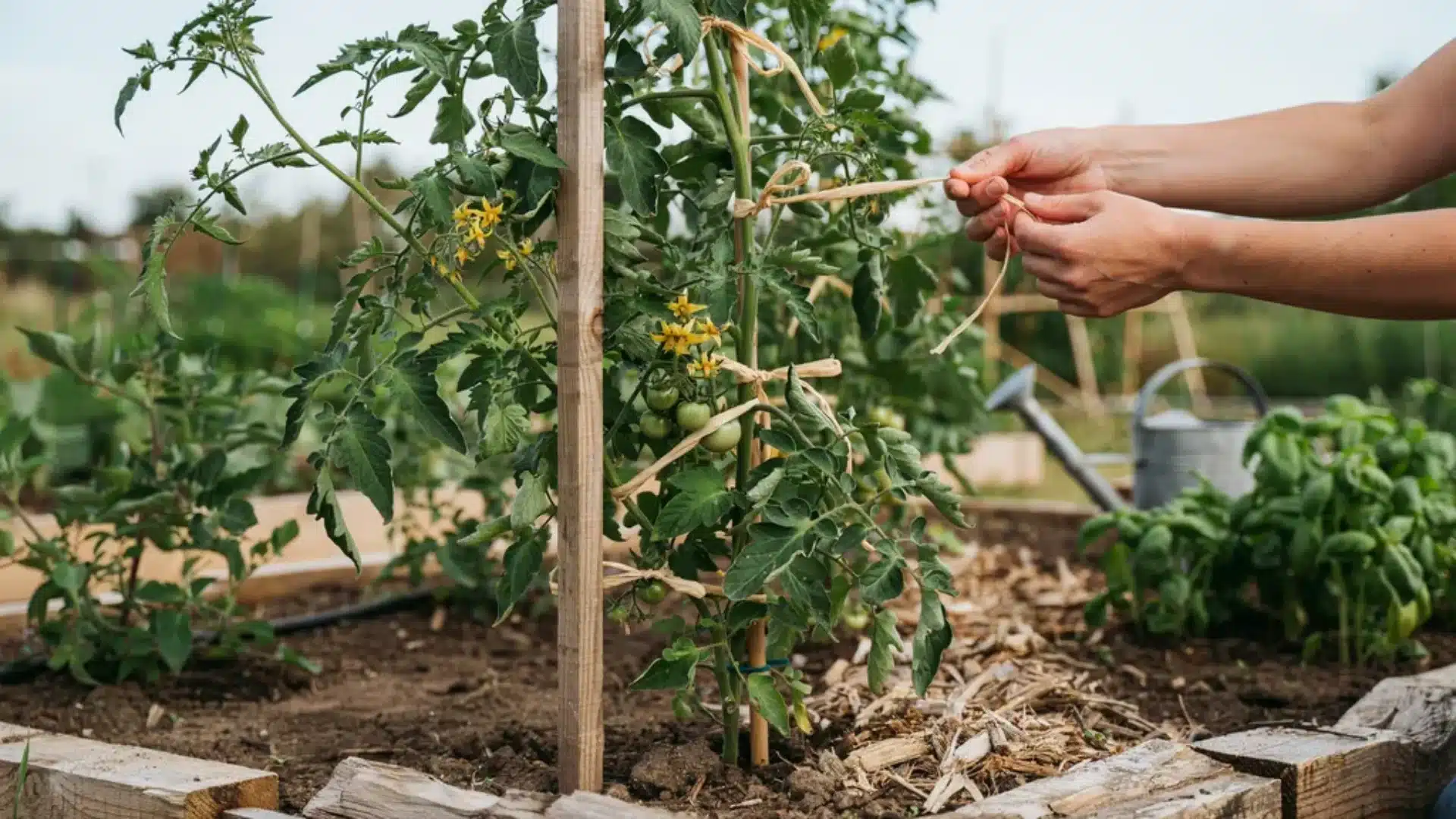
Best for: Indeterminate varieties, small gardens, first-time stakers
What you need: One 6-to-8-foot stake per plant, soft ties
Steps:
- Push the stake 1 foot into the ground, about 4 to 6 inches from the base of the plant
- Place it on the side away from the first bloom cluster so you don’t trap fruit between the plant and the stake
- Tie the main stem to the stake using a loose figure-eight knot
- Add a new tie every 6 to 8 inches as the plant grows taller
- Remove side shoots (called suckers) regularly to keep one strong main stem
Pro Tip: For indeterminate varieties, use a hardwood stake at least 6 feet above the soil, with another 2 feet buried for stability. Thin bamboo bends under a full plant’s weight.
Method 2: Tomato Cages
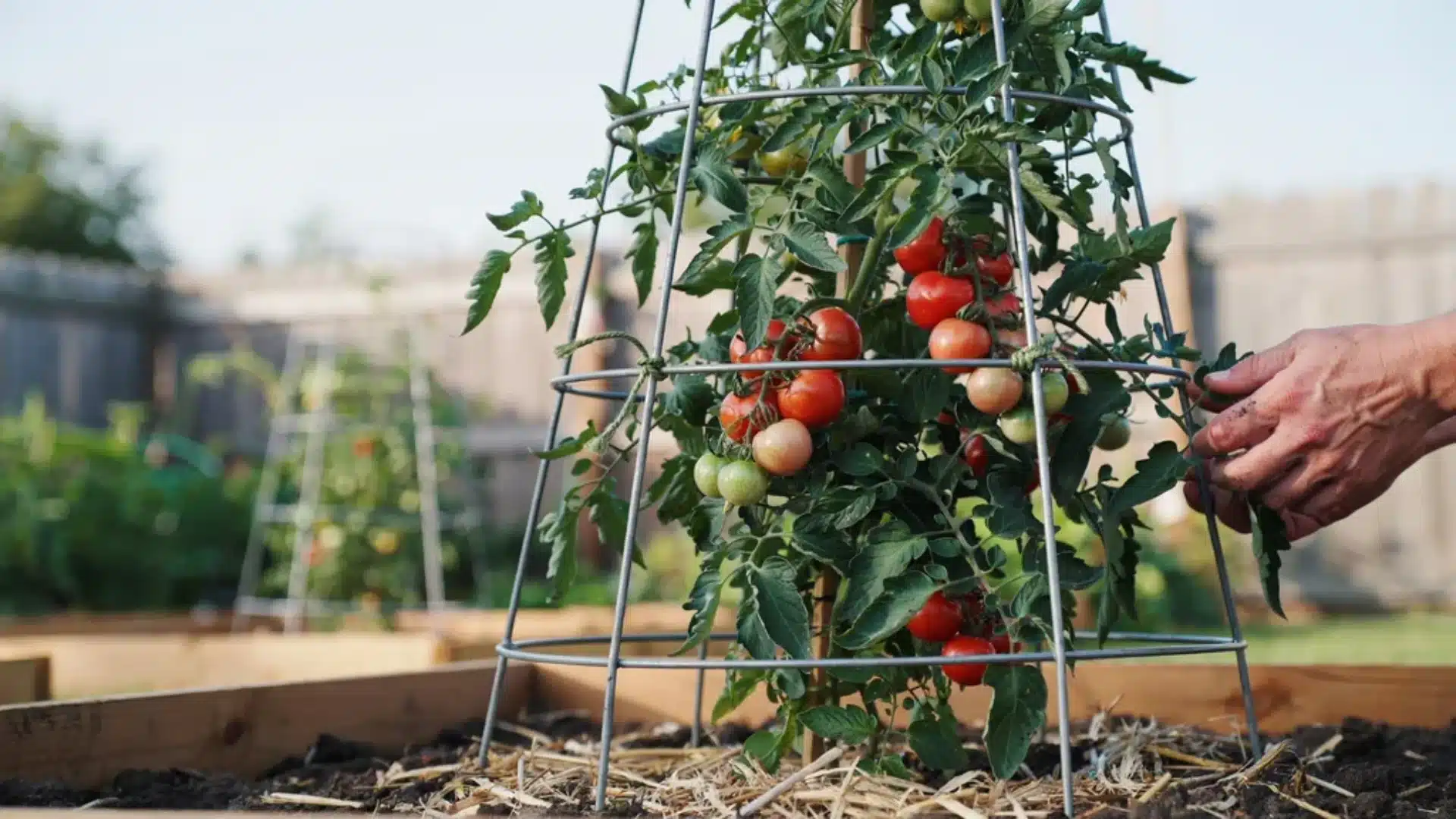
Best for: Determinate tomatoes, gardeners who prefer a hands-off approach
Cages are the most common choice for a reason. They require very little maintenance once placed correctly.
Steps:
- Place the cage directly over the transplant at planting time
- Push the cage legs firmly into the soil until they feel solid
- As the plant grows, guide branches through the cage openings
- Loosely tie any stems that hang outside the cage
What to avoid: the cheap, lightweight wire cages that cost two or three dollars each. They tip over with a full-grown plant. Invest in heavy-duty concrete reinforcing wire cages instead.
Method 3: The Florida Weave
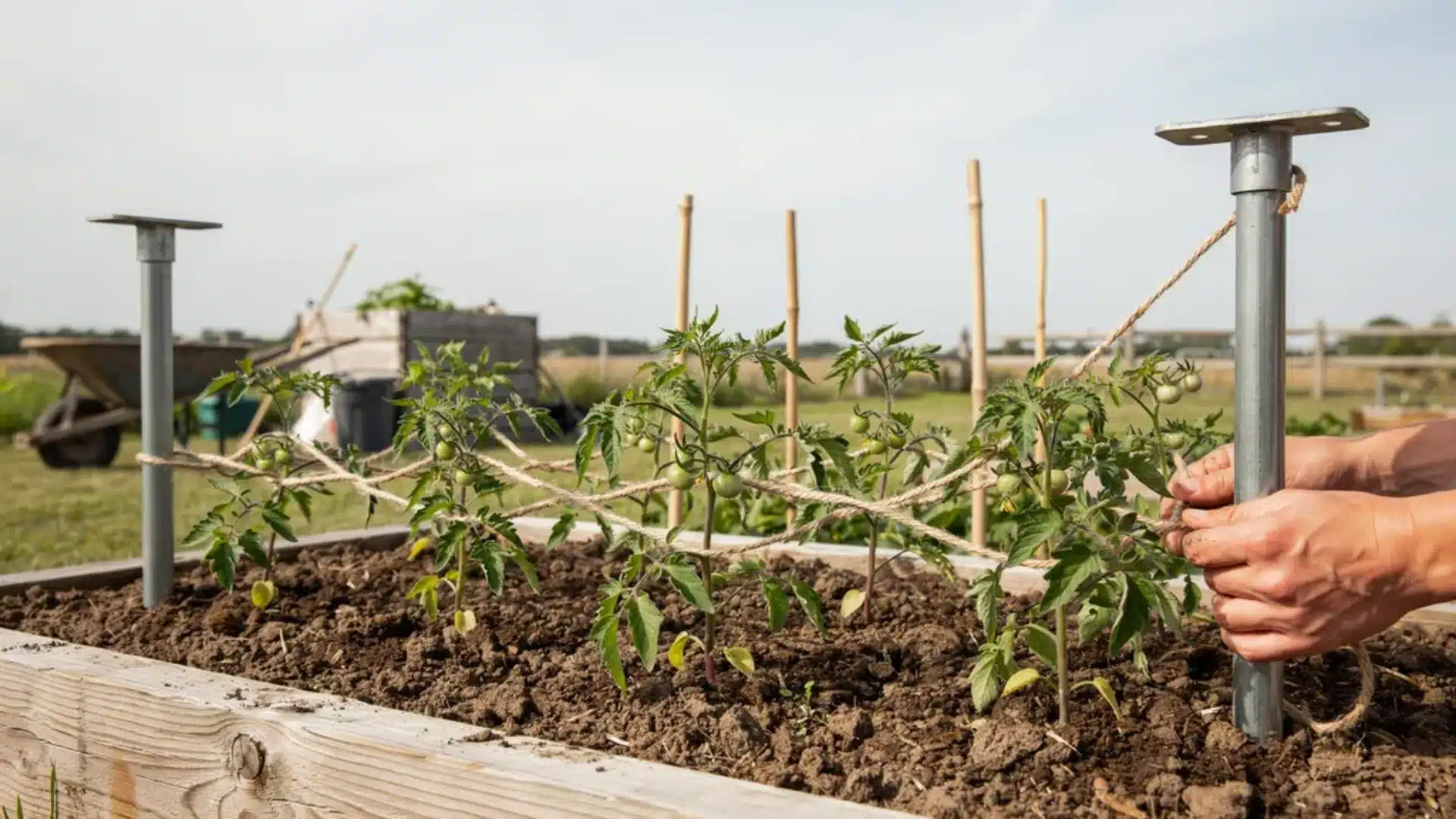
Best for: Row gardens, gardeners growing 10+ plants at once
This method comes from commercial tomato farming, and Rutgers Cooperative Extension calls it the stake-and-weave training system. It saves a lot of money on individual stakes.
What you need: Sturdy posts every few plants, durable tomato twine
Steps:
- Plant tomatoes 18 to 24 inches apart in a row
- Drive a stake 1 foot into the ground between every other plant
- Place a stronger T-post or metal stake at each end of the row
- When plants reach about 12 inches tall, tie twine to the end stake at 8 to 10 inches off the ground
- Thread the twine in front of one plant, behind the next, all the way down the row
- Loop back in the other direction to sandwich each plant between two lines of twine
- Tie off at the far-end stake, then add a new row of twine every 6 to 8 inches as plants grow taller.
The twine sandwiches each plant and holds them upright without tying each one individually. It is much faster than staking a long row single-handed.
Method 4: The Vertical String Method
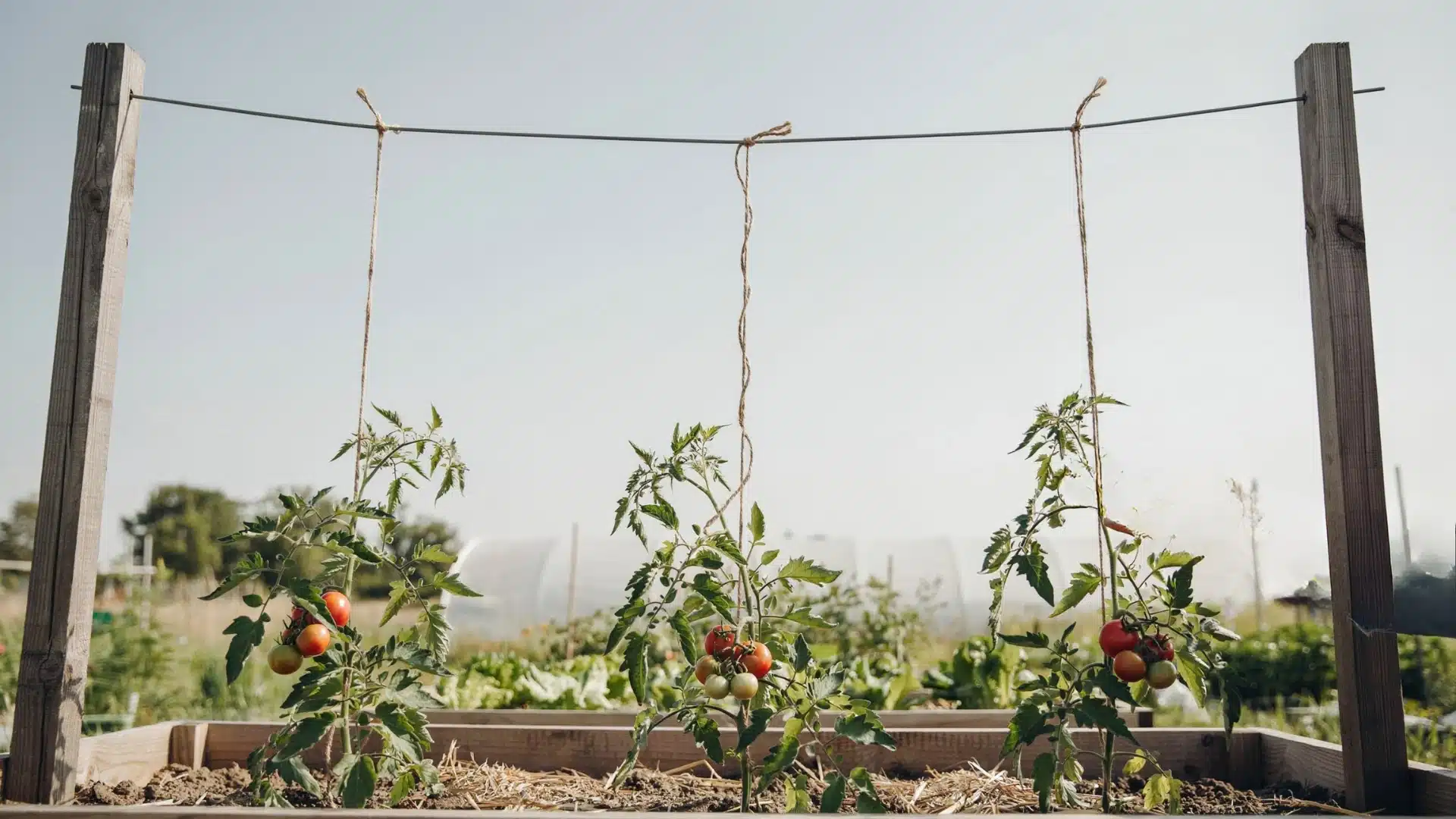
Best for: Greenhouse growers, raised beds with overhead structures, gardeners with limited horizontal space
Steps:
- Run a wire or pipe horizontally between two tall posts at least 8 feet off the ground
- Hang a string down from the wire above each plant, spacing strings 12 to 18 inches apart
- Plant one tomato at the base of each hanging string
- Secure the bottom of the string to the soil with a garden pin or by winding it around a small stick pushed into the ground.
- As the plant grows, gently twist the main stem around the hanging string in an upward spiral.
- Continue training the stem up the string throughout the season
This method takes up almost no horizontal space and gives plants the cleanest possible airflow. It works especially well when paired with regular sucker removal.
Method 5: The Double Stake Method
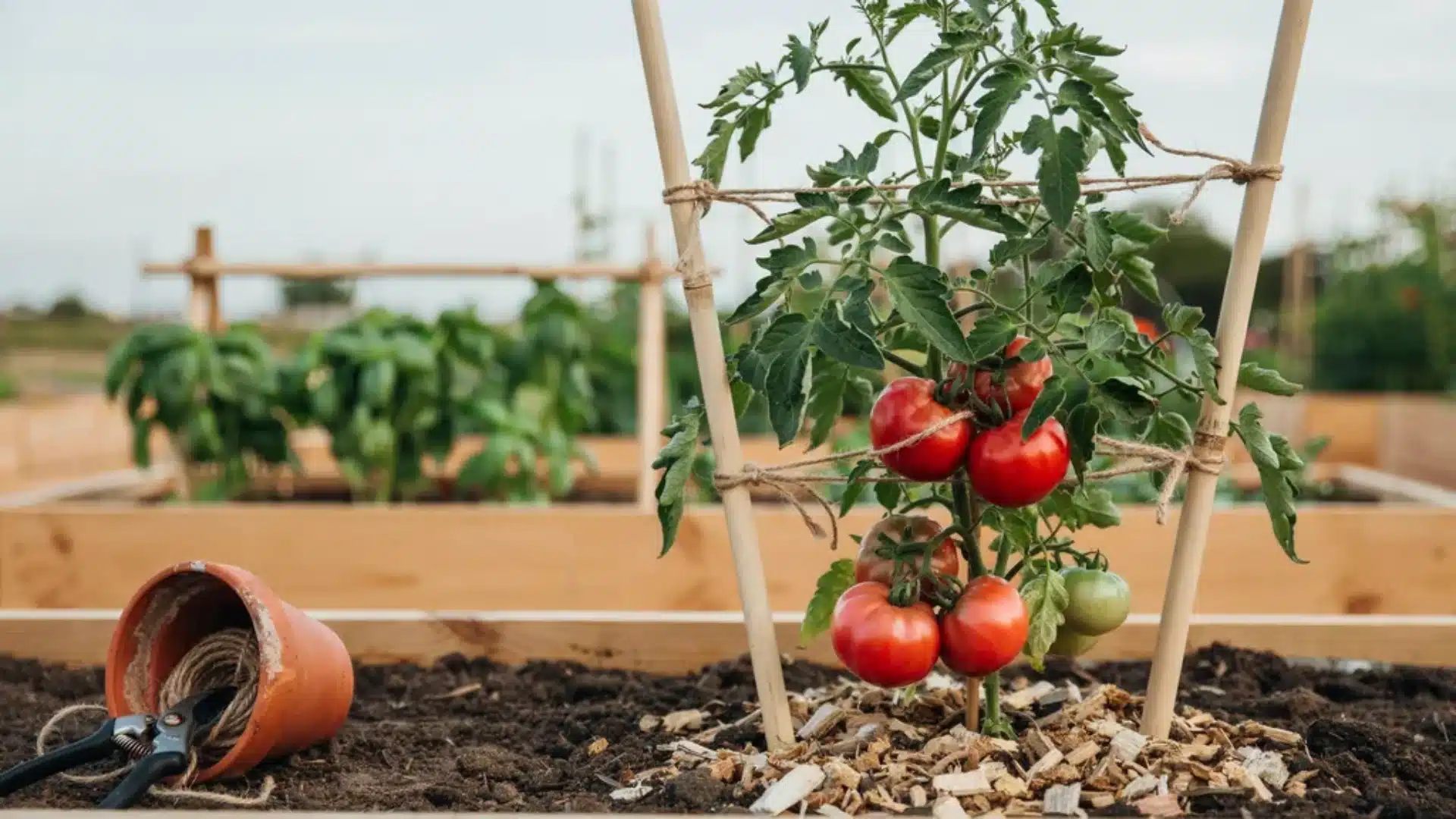
Best for: Large heirloom varieties and plants with heavy fruit like beefsteak tomatoes
A single stake sometimes isn’t enough for a plant carrying five or six large fruits at once. Two stakes solve that problem.
Steps:
- Place one stake on each side of the plant at planting time
- Tie a figure-eight loop of twine around the plant stem and both stakes
- Continue adding new ties every 6 inches as the plant grows
- Keep checking that the ties are not cutting into the stem as it thickens
The double stake distributes the weight of heavy fruit across two anchor points instead of one.
Method 6: The Bamboo Teepee
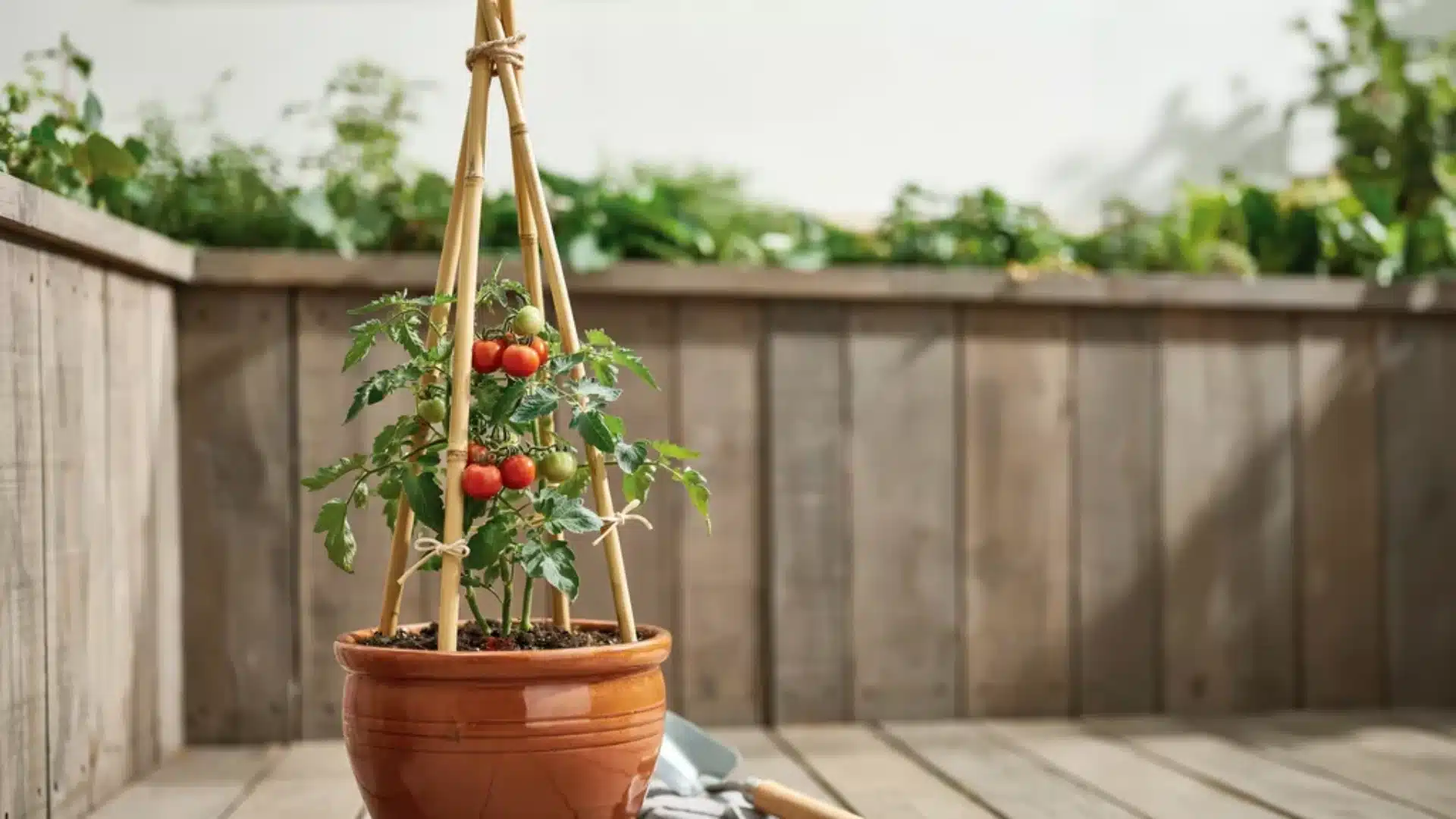
Best for: Container gardens, patios, small garden beds
Steps:
- Push 3 to 4 bamboo canes into the soil around the plant at an inward angle
- Tie the tops together tightly to form a teepee shape
- Guide growing stems outward to individual canes and tie loosely as the plant grows
This works best with smaller determinate varieties. For a larger indeterminate plant in a pot, switch to a single heavy-duty stake instead.
Common Tomato Staking Mistakes (And How to Fix Them)
Bad staking does more damage than no staking at all. I made most of these mistakes myself before I figured out what works.
1. Staking too late: Root damage is hard to recover from. Stake at planting time, every time.
2. Using a stake that is too short: A 4-foot stake looks fine when your plant is knee-high. It becomes useless once an indeterminate variety hits 6 or 7 feet. Use stakes at least 6 feet above the ground, with 2 feet buried below for stability.
3. Placing the stake too close to the stem: Stay 4 to 6 inches away from the base of the plant. Any closer and you risk slicing through roots.
4. Tying too tightly: This cuts off water movement through the stem. Always leave slack.
5. Forgetting to re-tie as the plant grows: Your job isn’t done after the first tie. Keep up with it every couple of weeks.
6. Using cheap cages for indeterminate plants: They tip over with a full-grown plant, and once one goes down, the whole row usually follows.
Staking and Pruning Work Together
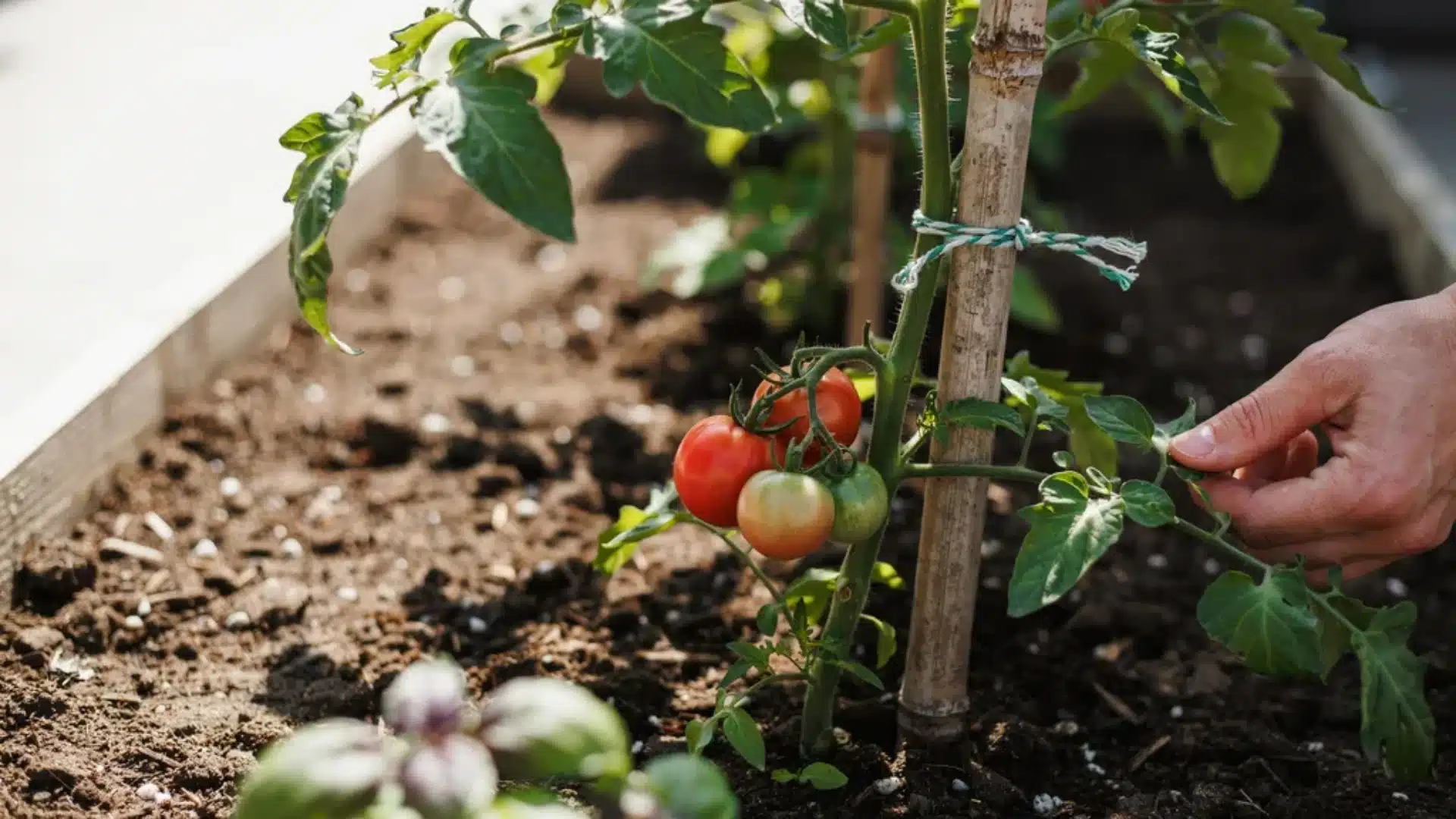
Staking alone won’t give you the best results. Pruning and staking work as a pair.
Suckers are the shoots that grow in the angle between the main stem and a side branch. If you don’t remove them consistently, a single-staked plant quickly becomes a tangled mess of stems with too little airflow and too little sunlight reaching the fruit.
For single-staked plants: remove suckers regularly to keep one strong main stem.
For caged plants, you don’t need to be as strict about suckers, but removing the lowest leaves still helps. Low foliage that touches the soil is the fastest path to fungal disease.
Staking keeps fruit in sunlight. Pruning keeps the plant focused. Together they produce sweeter, healthier tomatoes than either practice does on its own.
Staking Tomatoes in Containers vs. In-Ground Beds
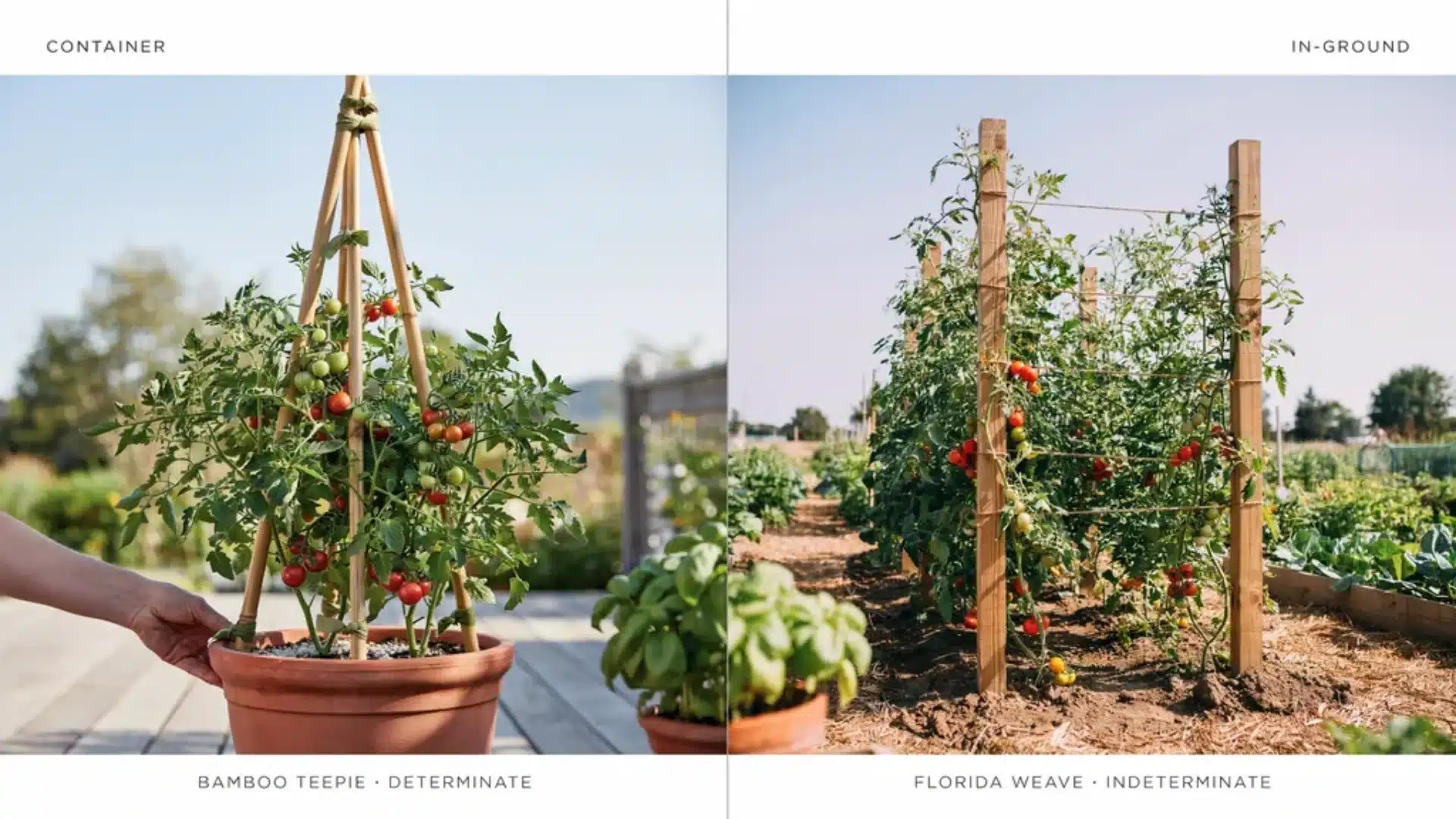
Container growing has its own set of rules when it comes to support.
In pots:
- Use shorter, lighter stakes to avoid top-heaviness
- Bamboo teepees or single canes work well for determinate varieties
- Put the stake in at the same time you transplant, since pot roots fill in fast
- Check stability regularly since pots tip over more easily than ground beds
- Heavier pots stay more stable. Adding gravel to the bottom helps
In-ground beds:
- You have more flexibility on stake length and weight
- T-posts and the Florida Weave are easier to use in the ground
- Roots spread further in the ground, so place your stake at least 4 to 6 inches away to avoid cutting through them.
The core rules stay the same in both settings. Stake early, stake securely, and keep up with tying as the plant grows.
Conclusion
Staking tomato plants comes down to three things. Choose the right method for your variety. Do it at planting time. Tie correctly throughout the season.
Get those right, and you will have cleaner plants, less disease, and a bigger harvest by summer’s end.
Which method are you using this year? Share it in the comments below.
Frequently Asked Questions
Is it better to use tomato cages or stakes?
Neither is universally better. Cages need less maintenance and suit determinate varieties. Stakes are cheaper, need active tying, and work better for tall indeterminate plants.
How to stake tomatoes cheaply?
Use bamboo canes, scrap hardwood, rebar, or the Florida Weave with twine. All cost far less than pre-made wire cages and hold up just as well.
Is rebar good for tomato stakes?
Yes. Rebar is one of the most durable and reusable options, especially for tall indeterminate plants in windy locations. Wear gloves when handling it.
Can you stake a tomato plant that is already grown?
You can, but expect some root damage. Push the stake at least 6 inches from the stem, work slowly, and tie loosely so the plant recovers without bending.