
TL;DR
How long do Christmas trees last?
Most fresh, well-watered cut Christmas trees stay green three to four weeks indoors; Fraser firs can last four to six weeks. Lifespan depends on species, freshness and care, and keeping the trunk base under water daily matters because a tree that dries out may stop drinking.
Last December, my rescue dog Scout emptied the tree stand in two days. The Fraser fir I’d picked at a choose-and-cut farm started dropping needles by day three.
That week taught me that how long Christmas trees last depends as much on water as on species. I made a fresh cut, refilled the stand, and the tree held on past New Year’s.
These days the stand gets checked as often as the dogs’ water bowls.
How Long Does a Real Christmas Tree Last?
Even after Scout’s raid, that Fraser fir stayed green from the first weekend of December until after New Year’s. I wanted to know whether that was normal, so I checked the extension services. NC State Extension gives Fraser fir, the species behind most North Carolina Christmas trees, the potential to last four to six weeks in a typical home. Iowa State University Extension puts fresh trees in general at three to four weeks.
Iowa State names three things that set the number: the species, how fresh the tree is at purchase, and its placement and care. Mine had the first two covered, so water nearly cut its season short.
Lifespan by Christmas Tree Species
Needle retention varies a lot between the types of Christmas trees sold at US lots. The ratings below come from the Chicago Botanic Garden’s Christmas tree guide.
Species | Needle Retention | What to Expect |
|---|---|---|
Fraser Fir | Excellent | Four to six weeks with steady water |
Noble Fir | Excellent | Firm branches for heavy ornaments |
Scotch Pine | Excellent | Dark blue-green color |
Douglas Fir | Very good | Softer branches |
Balsam Fir | Good | Excellent fragrance |
Concolor (White) Fir | Good | Pale blue-gray needles |
Norway Spruce | Good | Buy it close to Christmas |
Cornell Cooperative Extension suggests buying a Norway spruce about a week before Christmas because it doesn’t hold its needles well. I skip Norway spruce if I want a tree standing past Christmas, and I look for a Fraser fir first.
How to Pick a Fresh Tree
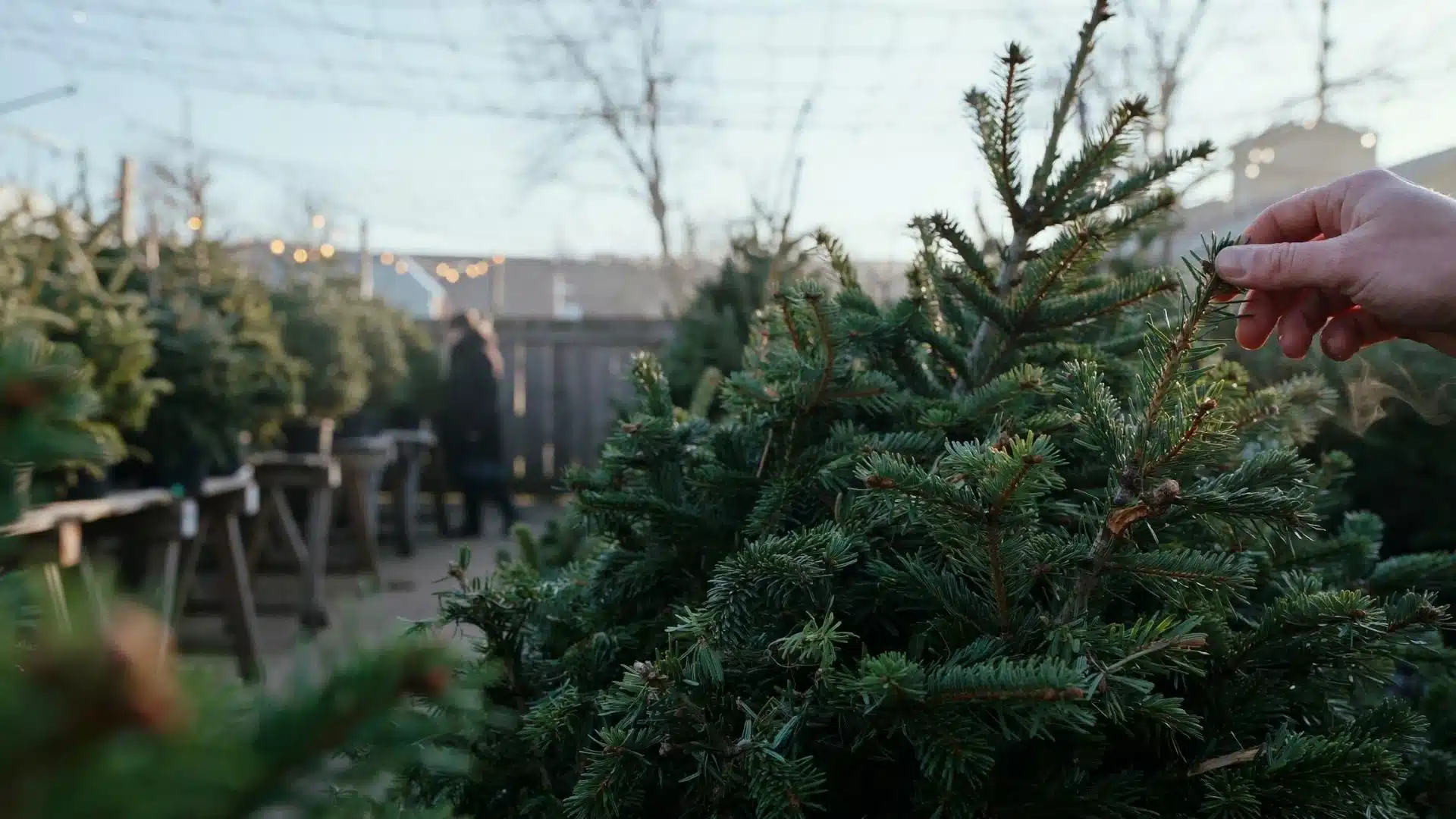
Fresh needles stay put when we run a hand along the branch.
Freshness at purchase counts as much as species. We can test it in about a minute, using the same checks Penn State Extension recommends.
Run a hand along a branch. Few needles should come off.
Bend a needle. It should flex, not snap.
Lift the tree and tap the trunk on the ground. It should feel heavy for its size, and only a few inner needles should fall.
A tree cut weeks ago at a big lot fades faster than one cut that week at a farm, so I always ask the seller for the cut date.
We cut ours at a choose-and-cut farm the first weekend of December, so it’s still sharp on Christmas Day.
Setting Up and Watering Your Tree
The National Christmas Tree Association says most species can go six to eight hours after cutting and still take up water. If a tree sat longer at the lot, we can saw about half an inch off the base, straight across, before it goes in the stand.
A reservoir stand works best, and I pick one that holds a gallon or more because a big tree empties a small one fast. Cut trees drink about a quart of water a day for every inch of trunk diameter, and NC State Extension notes that a 6-foot Fraser fir can use about a gallon a day for its first five to seven days. I check the stand morning and night that first week.
Plain tap water is all it needs. Sugar, aspirin, and other additives don’t help, and NC State Extension found some can raise water use or cause needle loss.
If the water drops below the base of the trunk, sap can seal the cut and the tree stops drinking. That’s what Scout’s two-day raid did to mine. A stand can still hold water while the cut end sits above it, so I check the waterline against the trunk. If it sat dry for hours, another fresh cut helps restore the flow.
With two dogs who treat the stand like a water bowl, I check mine more often. Heat pulls moisture out of a tree, so I keep it away from vents, fireplaces, and direct sun. I wait a day or two before I decorate the tree, and I use LED lights because they run cooler.
Signs Your Tree Is Drying Out
The NCTA’s freshness checklist doubles as a warning list once the tree is home.
Needles and outer branches that snap instead of bending
Heavy needle drop when we touch a branch
Faded, dull green color
A musty smell or wrinkled bark
Once a tree turns brittle and dry, it’s a fire risk. That’s when I take it out of the house.
What to Do With the Tree After Christmas
Many towns offer curbside pickup or drop-off recycling in January, so we can check local dates or search the NCTA tree recycling page. I lay the boughs over my perennial beds as winter cover (the hellebores, also called the Christmas rose, are blooming by then). I never burn a tree in the fireplace or wood stove, because dry needles flare up fast.
Frequently Asked Questions
Is it too early to put up a real Christmas tree?
Late November works for a fresh, well-watered fir. Most trees last three to four weeks, and a Fraser fir can reach four to six.
Which Christmas tree species lasts the longest?
Fraser fir, noble fir and Scotch pine all rate excellent for needle retention.
Can I save a tree that has dried out?
A fresh cut can reopen the trunk if sap sealed it, but needles that already turned brittle won’t recover. Remove a brittle tree for fire safety.
Scout Still Checks the Stand Every Morning
Scout still checks the stand every morning, and now I do too, right after I water the holiday plants on the kitchen windowsill. Last year’s Fraser fir went straight from the living room to the perennial beds in January, still green enough to smell like the mountains. Have a tree that made it well past January? Tell me which species it was in the comments