Quick answer
What are the main types of Christmas trees, and how do you choose the best one?
The main Christmas tree types are firs, pines, spruces, cypresses, and cedars. Choose a fir such as Fraser or noble for strong branches that hold heavy ornaments; pines offer a milder scent, spruces have stiff, sharp needles, and cypress and cedar are mostly regional choices in the South.
My first Christmas tree purchase as an independent adult was a Douglas fir. I loved how round it was! The tree version of a hug. I wasn’t thinking beyond that. But by week two, my glass decorations were slipping off those soft branches. A lesson learned.
Now I measure the corner before shopping. I move furniture until the tree has a place. We’re on layout attempt #14 this year (I wish that were an exaggeration). I also lean toward a Fraser because those weighty ornaments really need support. Pretty AND practical, please.
But branch strength is only part of this decision, there’s the scent, needle texture, shape, and how much shedding you’ll tolerate before New Year’s Eve. Our space, allergies, display plans, and spending limit matter, too. So let’s find a tree that works for your household, not just the one looking perfect on the lot. There are some very good options.
Christmas Tree Types at a Glance
Tree family | Needle retention | Scent strength | Branch strength | Allergy risk | Typical price range |
|---|---|---|---|---|---|
Fir | Very good | Strong | Medium to strong | Low to medium | $ to $$ |
Pine | Good to excellent | Mild to medium | Medium | Medium | $ to $$ |
Spruce | Fair | Medium | Strong | Medium | $ to $$ |
Cypress | Good | Mild | Weak to medium | Low | $$ |
Cedar | Good | Strong | Medium | Low to medium | $$ |
Prices are rough guides. $ is lower, $$ is higher, and local lots vary.
1. Fir Trees
Fir trees are a top choice at most tree lots. Their needles stay attached for weeks, and several types, like Fraser and noble, have stiff branches that hold ornaments without sagging.
Most firs last about four to five weeks with a fresh cut and daily water. The Real Christmas Tree Board notes that care counts as much as species, because storage at the lot and watering at home both affect needle retention. I fill the stand every morning, since how long cut trees last depends mostly on water.
Balsam Fir
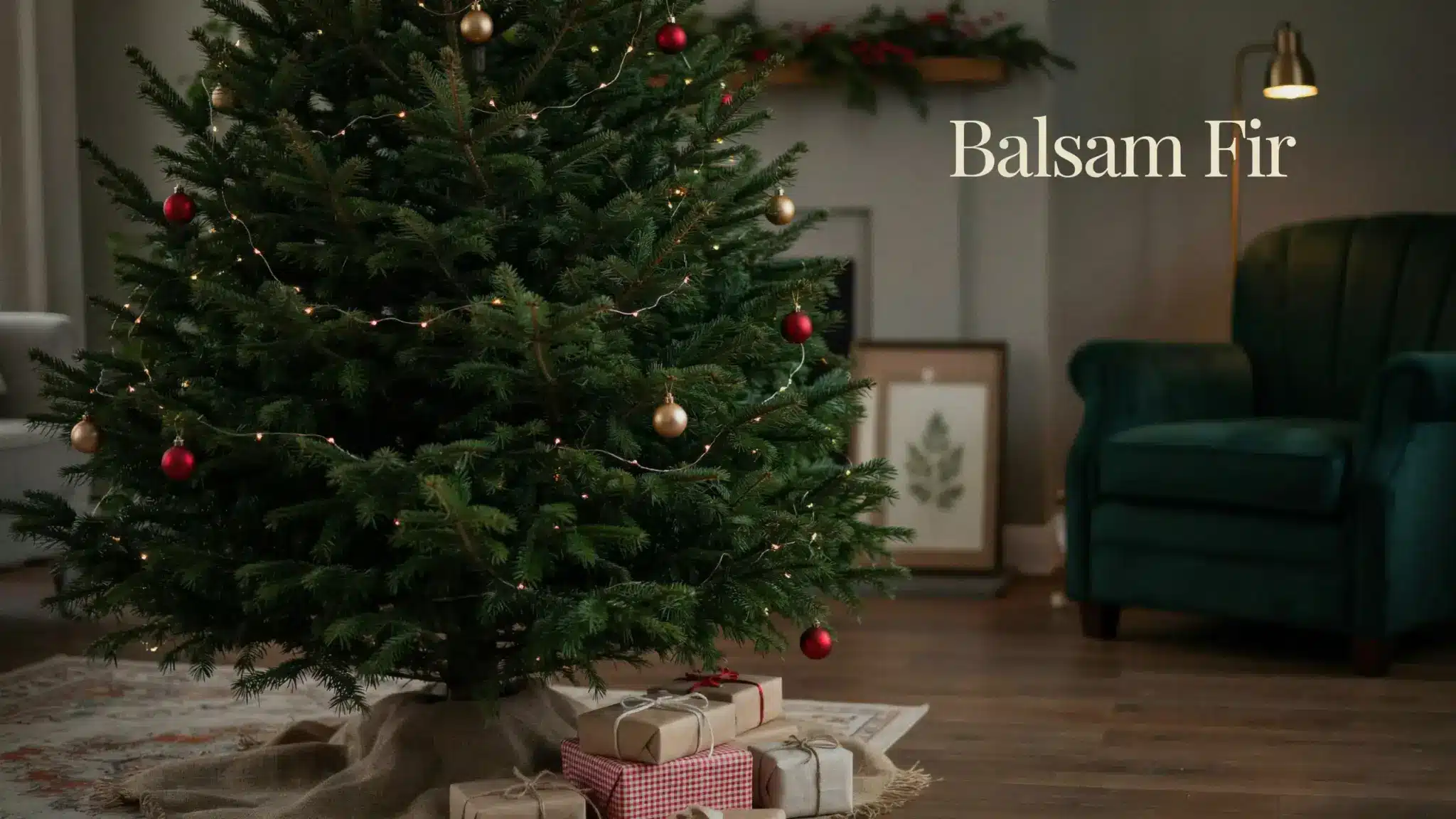
Balsam fir, the tree that makes the whole house smell like December.
It has dark green needles and the strongest scent of any fir, filling a room with that classic, rich holiday fragrance. Its branches are strong and good for hanging ornaments.
I check the stand daily and keep the water above the base of the trunk. Kept away from heat sources, it stays fresh and fragrant for about four to five weeks.
Douglas Fir
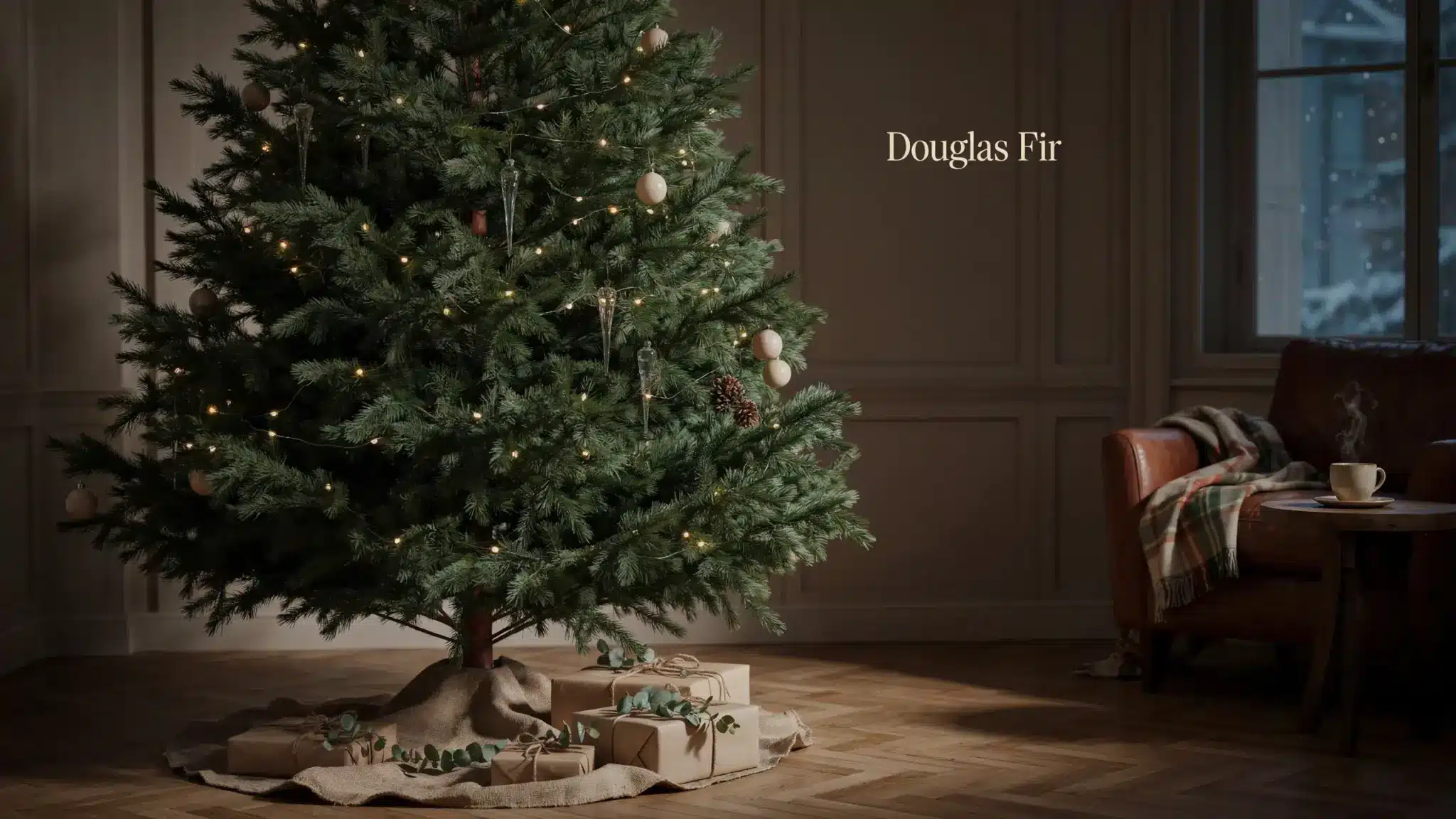
Douglas fir: full, round, and soft to the touch.
Its full, round shape fills a room with a lush, classic Christmas tree look. The needles are soft and grayish-green, giving it a gentle, natural look.
Its branches are softer than a Fraser’s, so I save heavy glass ornaments for a sturdier tree. Simple garlands and small ornaments on thin light strands work best here. Douglas fir lasts about three weeks, so I buy it in the first or second week of December.
Fraser Fir
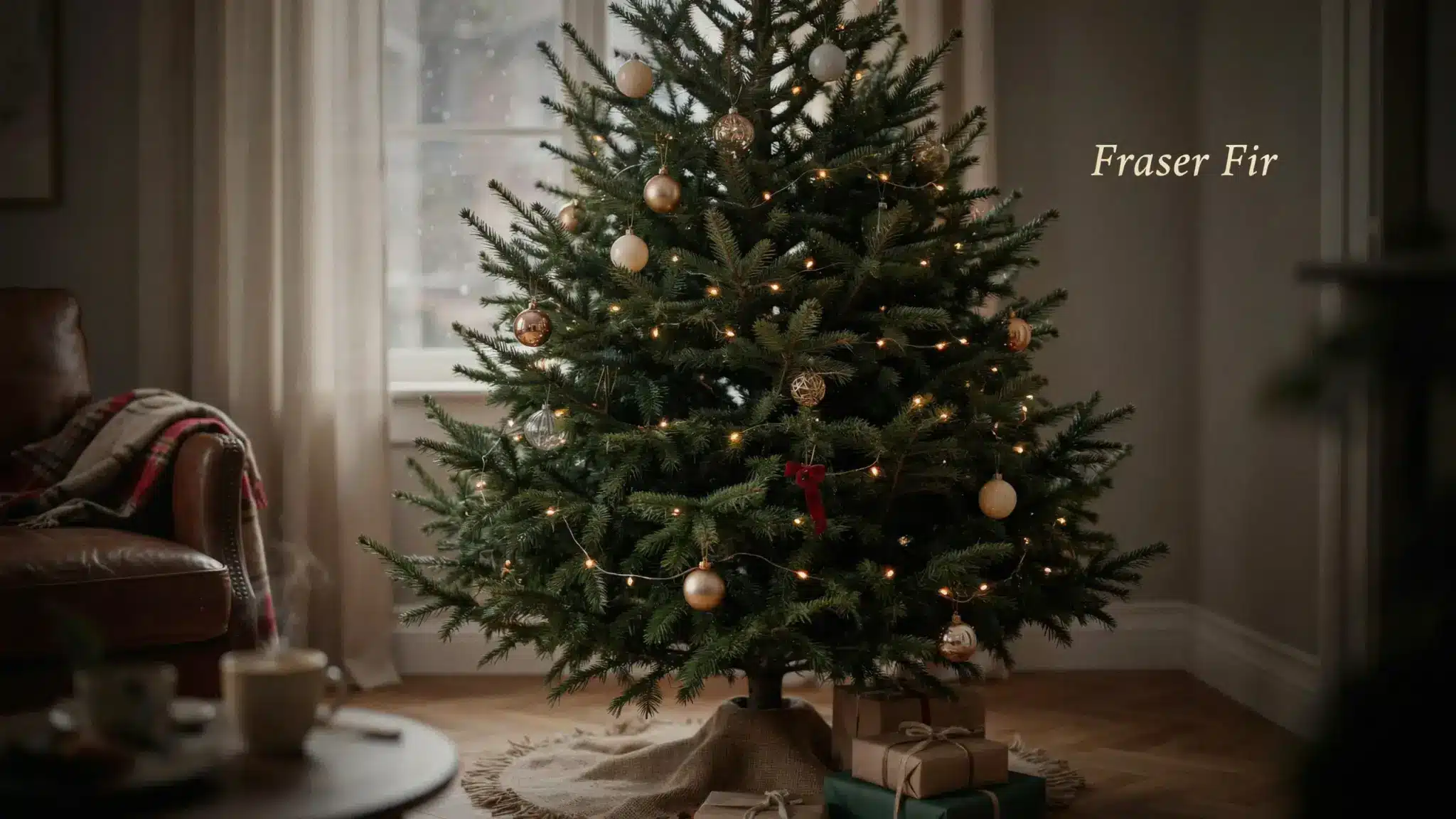
A Fraser fir, stiff branches ready for the heavy ornaments.
Fraser fir is one of the most popular trees in the U.S., thanks to its strong branches and excellent needle retention. Its branches curve slightly upward, creating sturdy ledges that hold heavy ornaments without sagging, which makes decorating the tree easier.
The needles stay on the tree for four to five weeks if you keep the stand consistently watered.
Noble Fir
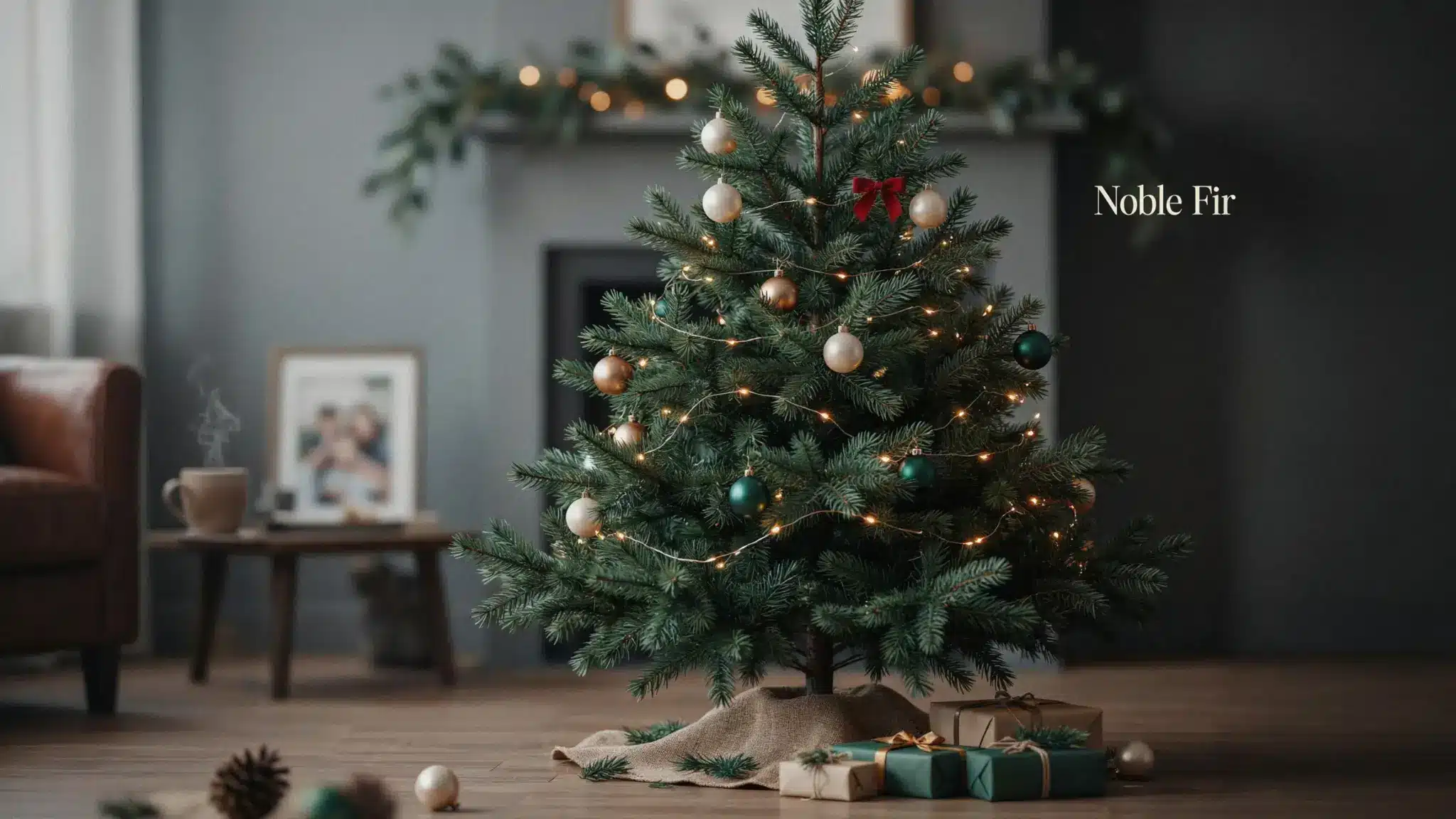
Noble fir, with branches stacked like shelves.
It has stiff, evenly spaced branches that can carry a lot of weight, making it an excellent choice for larger or heavier ornaments.
Its scent is milder than balsam or Fraser, offering a subtle, clean evergreen fragrance rather than a strong holiday aroma.
Noble fir is also a popular pick for wreaths and garland, since its branches hold their shape long after they are cut.
Grand Fir
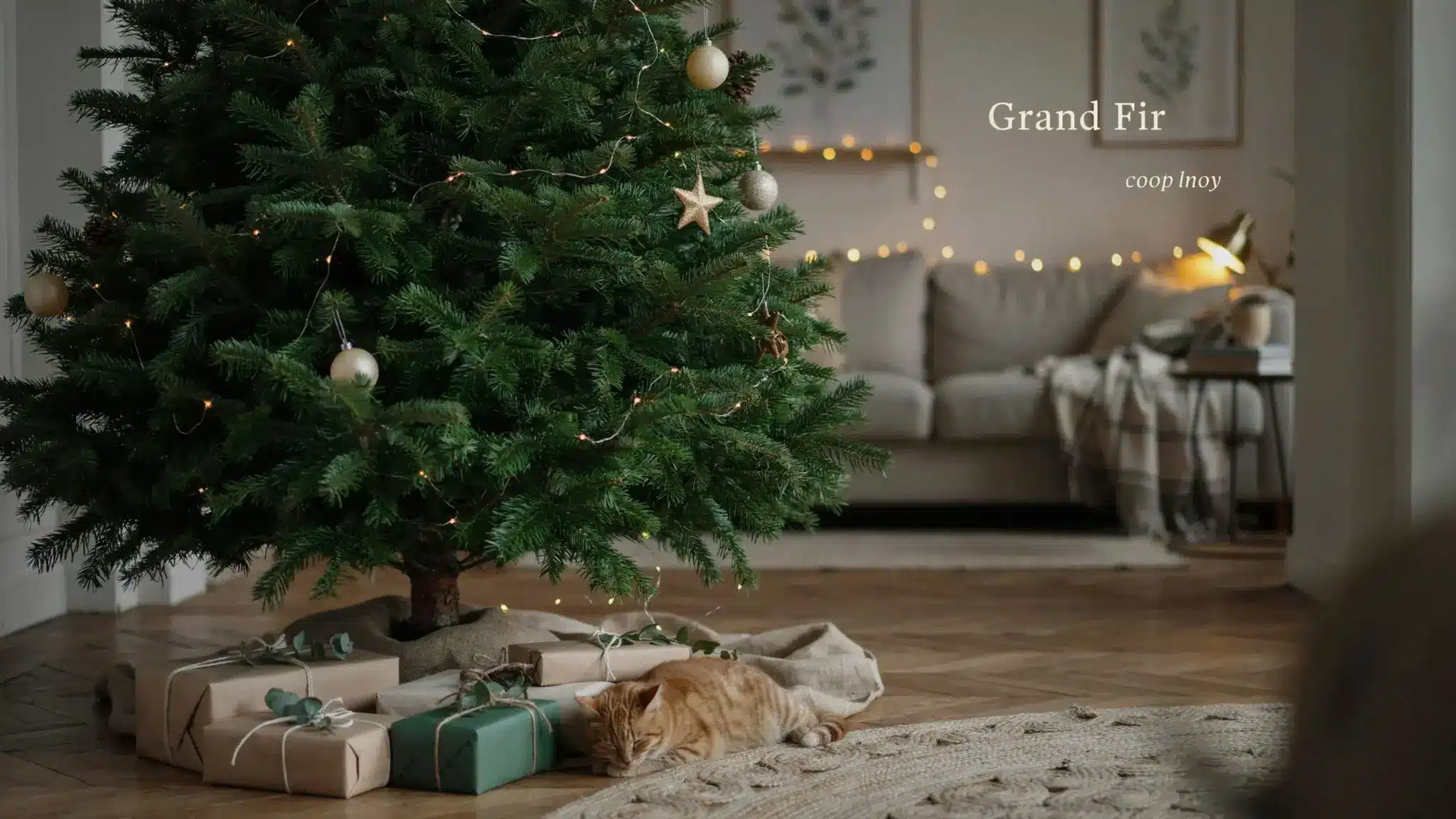
Grand fir, with a citrus note you can smell from across the room.
It has a citrus-and-pine scent that is hard to miss, filling the room with a fresh, bright holiday fragrance. The branches are soft and flexible, so this tree works best with lightweight decorations like paper ornaments and thin garland.
I skip heavy glass ornaments here, since they weigh down the branches and change the tree’s natural shape.
Canaan Fir
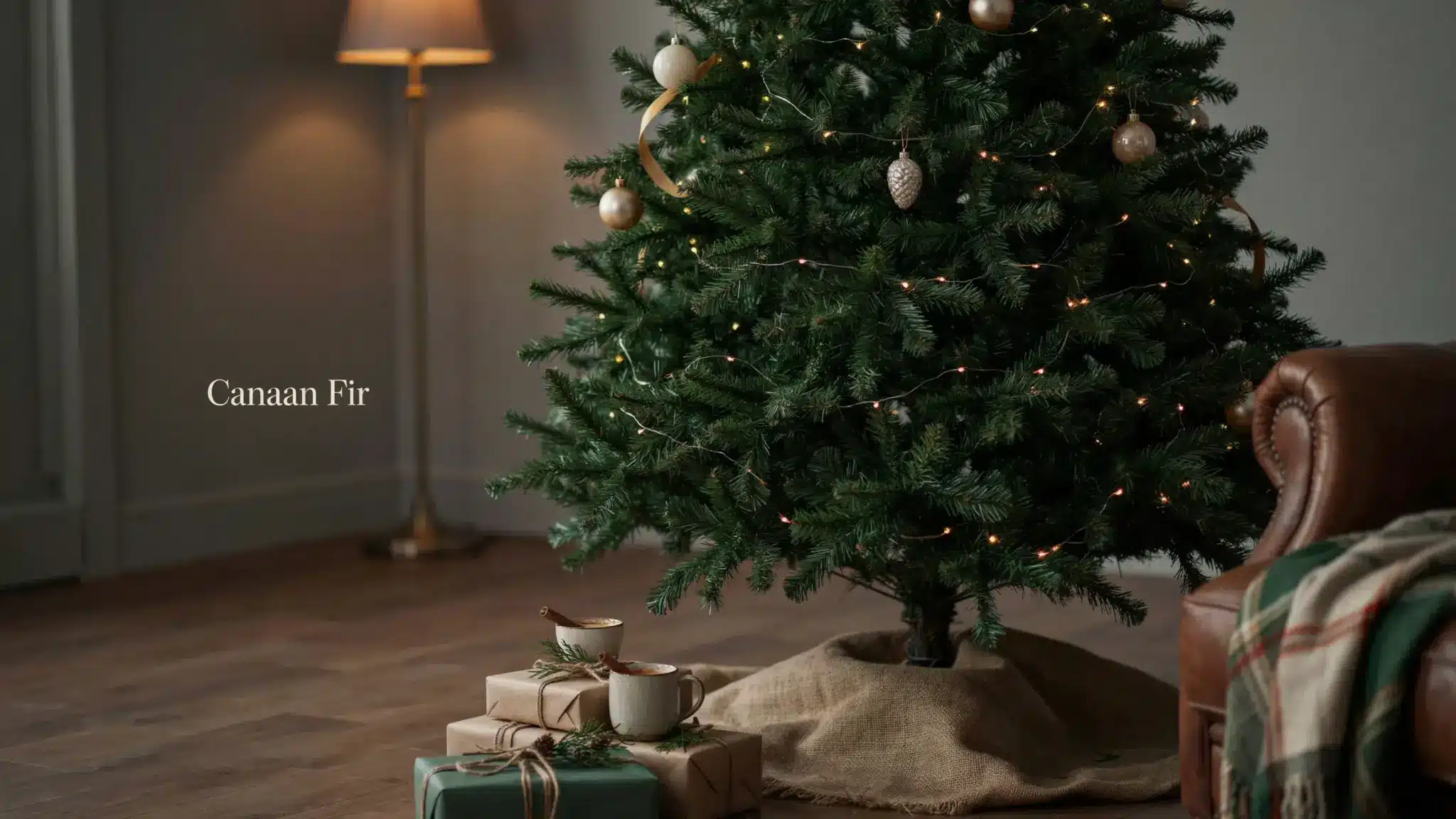
Canaan fir, a newer face at the tree lot.
It crosses the look of a balsam with the needle retention of a Fraser.
It is a newer option at most tree lots, so availability may vary depending on your local farm or retailer. Once it is in a stand with a full water reservoir, it needs little upkeep beyond daily water checks.
Concolor Fir
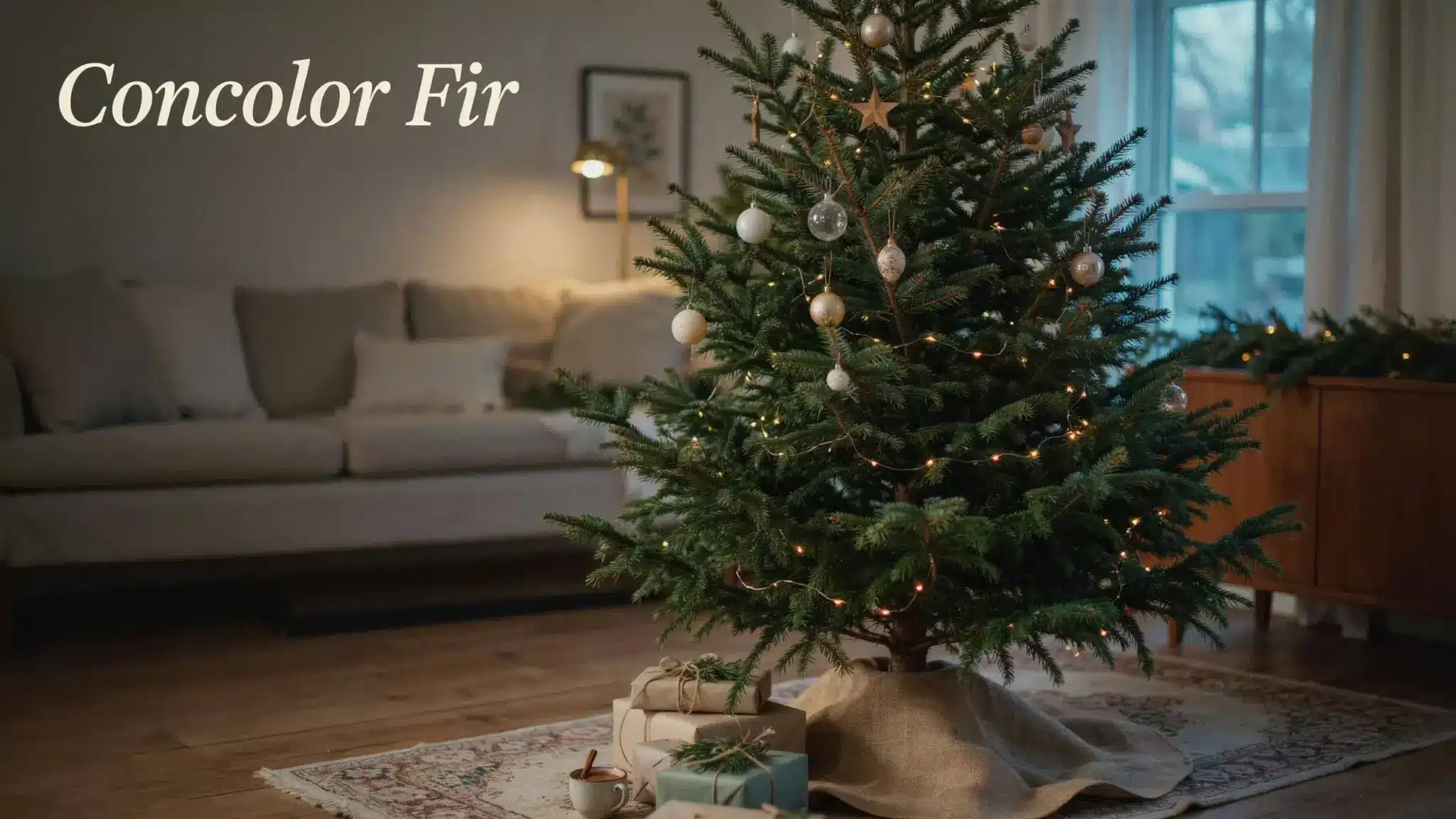
Concolor fir has long, soft, blue-green needles.
Sometimes called white fir, it has a light citrus scent that becomes stronger when you touch or brush against the needles.
Its long, soft, blue-green needles give it a distinctive look, and its sturdy branches hold their shape all season.
Nordmann Fir
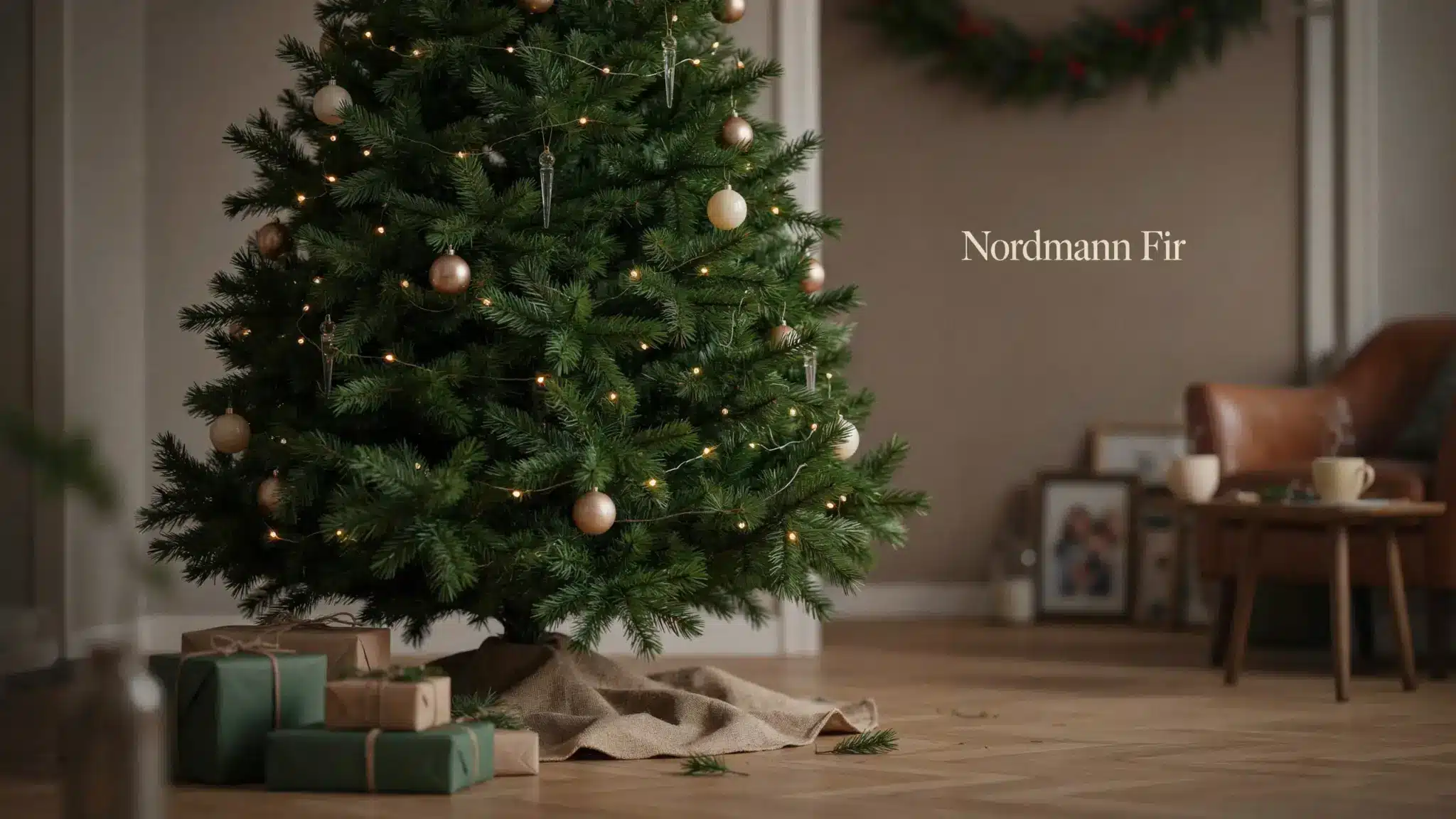
Nordmann fir, glossy and nearly scent-free.
It holds its needles very well and should last a full five weeks, which makes it a strong pick for a tree that stays fresh well into the season.
It has very little scent, which suits anyone sensitive to strong smells. The branches are tough enough to support heavier ornaments without bending or sagging. Nordmann fir grows mainly in the Pacific Northwest, so it is easiest to find west of the Rockies.
2. Pine Trees
Pine needles grow in clusters rather than single rows, which gives these trees a fuller, bushier look.
Scotch Pine
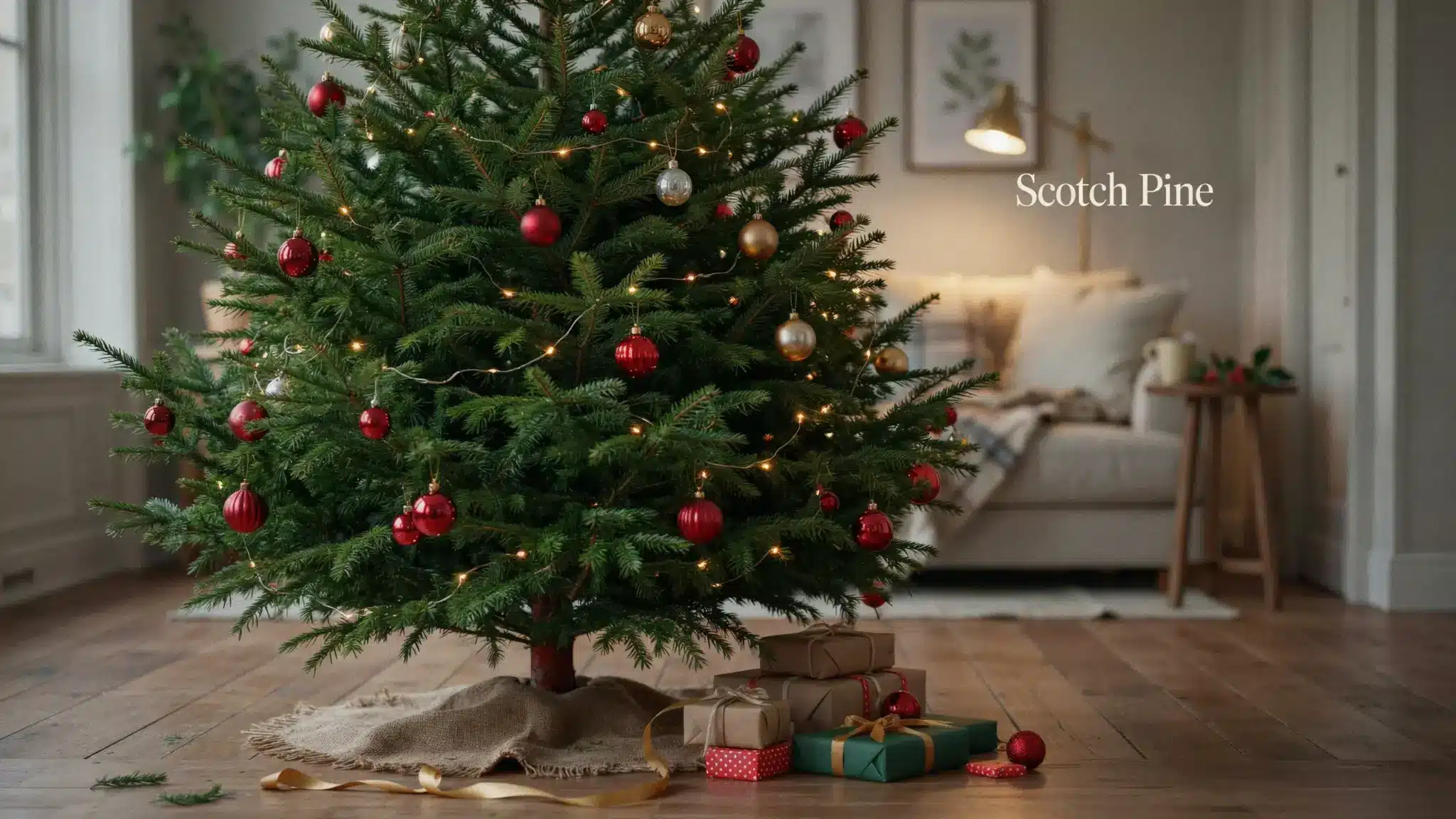
Scotch pine, pretty but prickly. Gloves on.
It holds its needles even after it dries out, but I would still keep the stand full, since a dry tree is a fire risk. Its strong needle retention means less cleanup and a fuller-looking tree throughout the season.
The needles are sharp, so I would wear gloves when stringing the lights or handling the branches.
White Pine
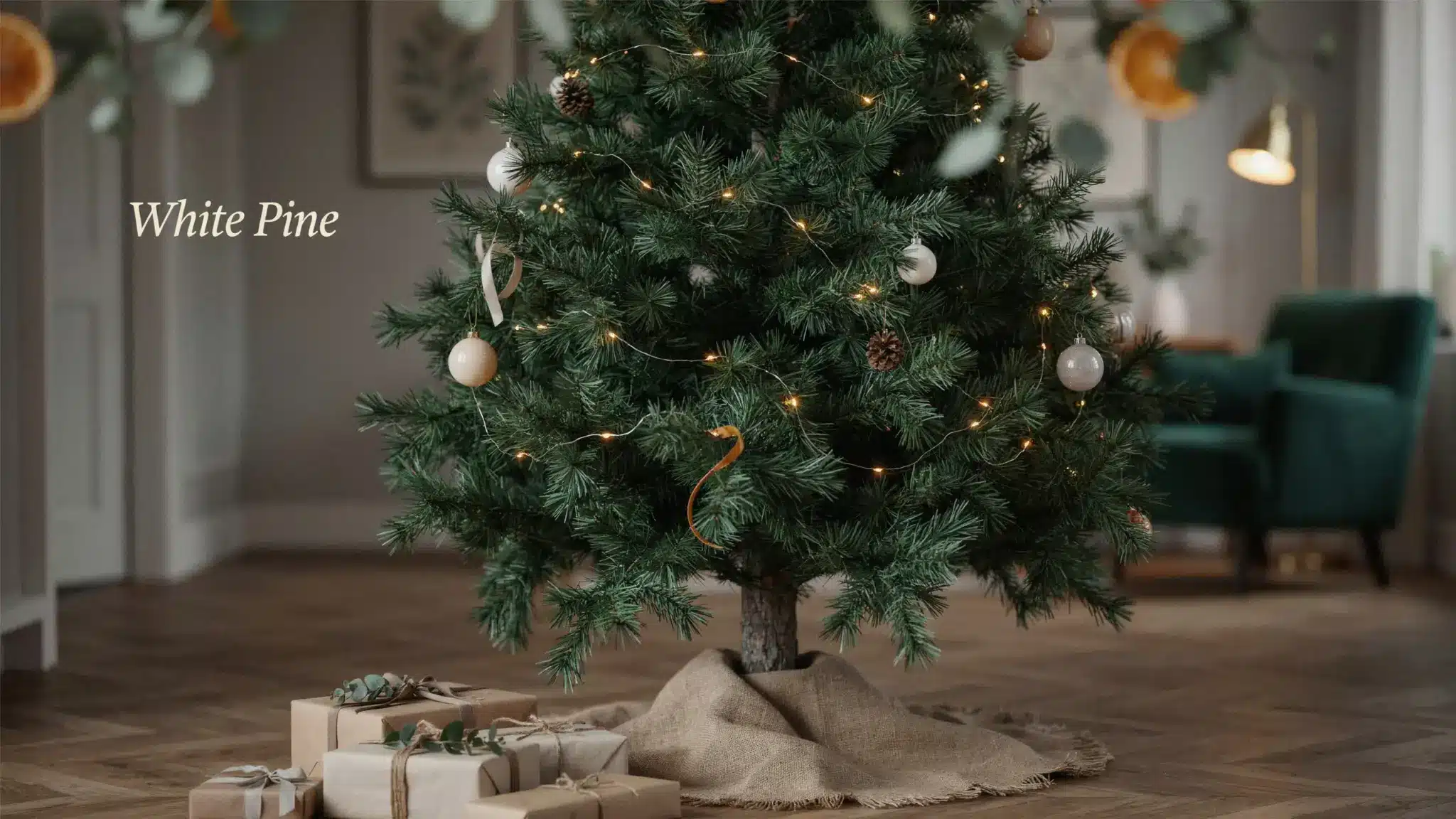
White pine, soft and fluffy.
It has a mild scent, which suits households that find strong evergreen smells overwhelming.
Its branches are soft and flexible, so it suits light ornaments better than heavy glass decorations. Small ornaments and thin garlands keep the branches from bending.
Virginia Pine
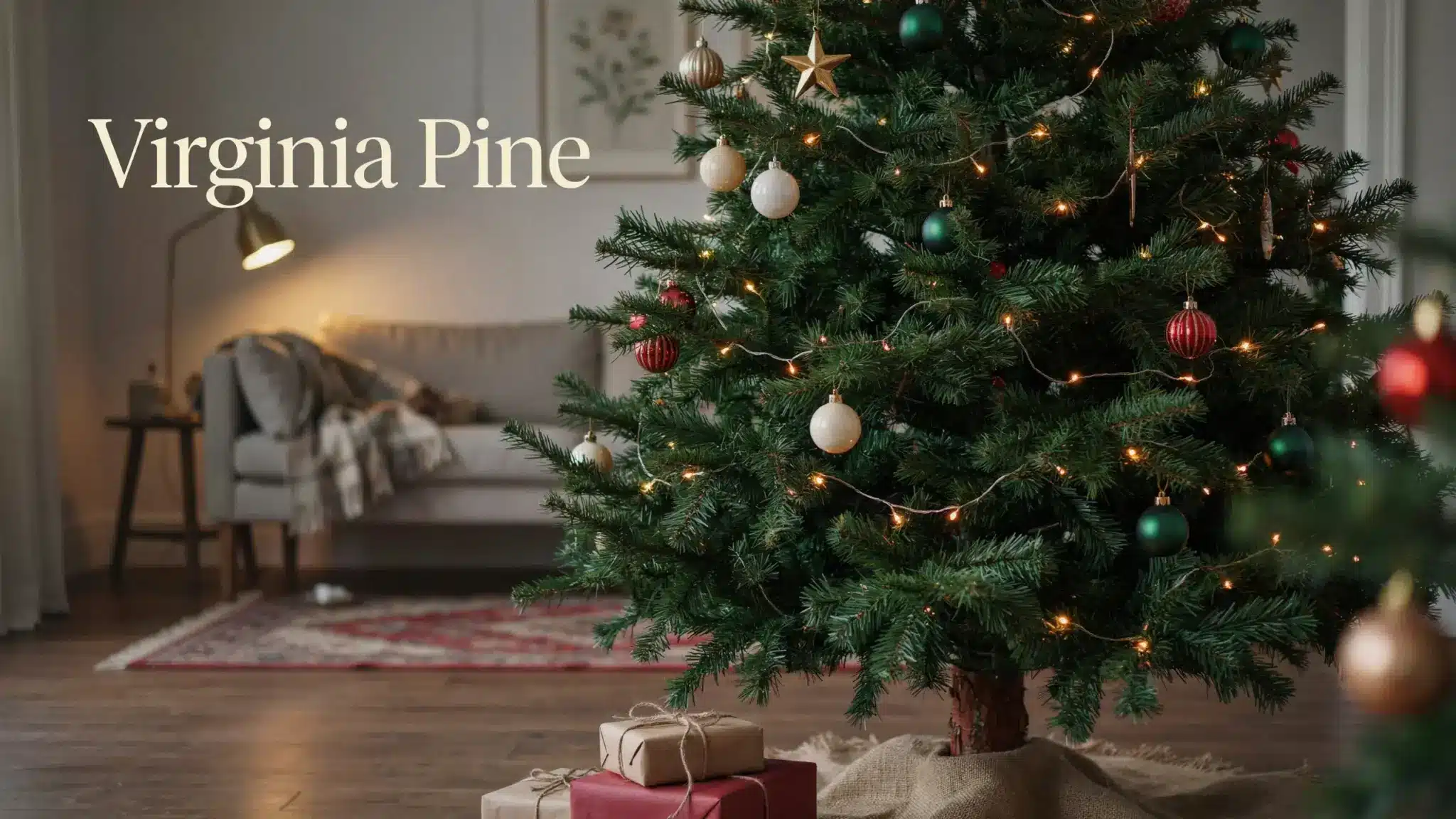
Virginia pine has short, twisted needles and a compact shape.
It has short, twisted needles and a dense, compact shape that takes trimming well, making it easy to shape into a full, symmetrical tree.
Because it sheds its needles faster than most pines, plan to buy it closer to the holiday rather than weeks in advance.
3. Spruce Trees
Spruce needles are short, stiff, and often sharp to the touch. These trees tend to hold a classic cone shape and need little shaping.
Blue Spruce
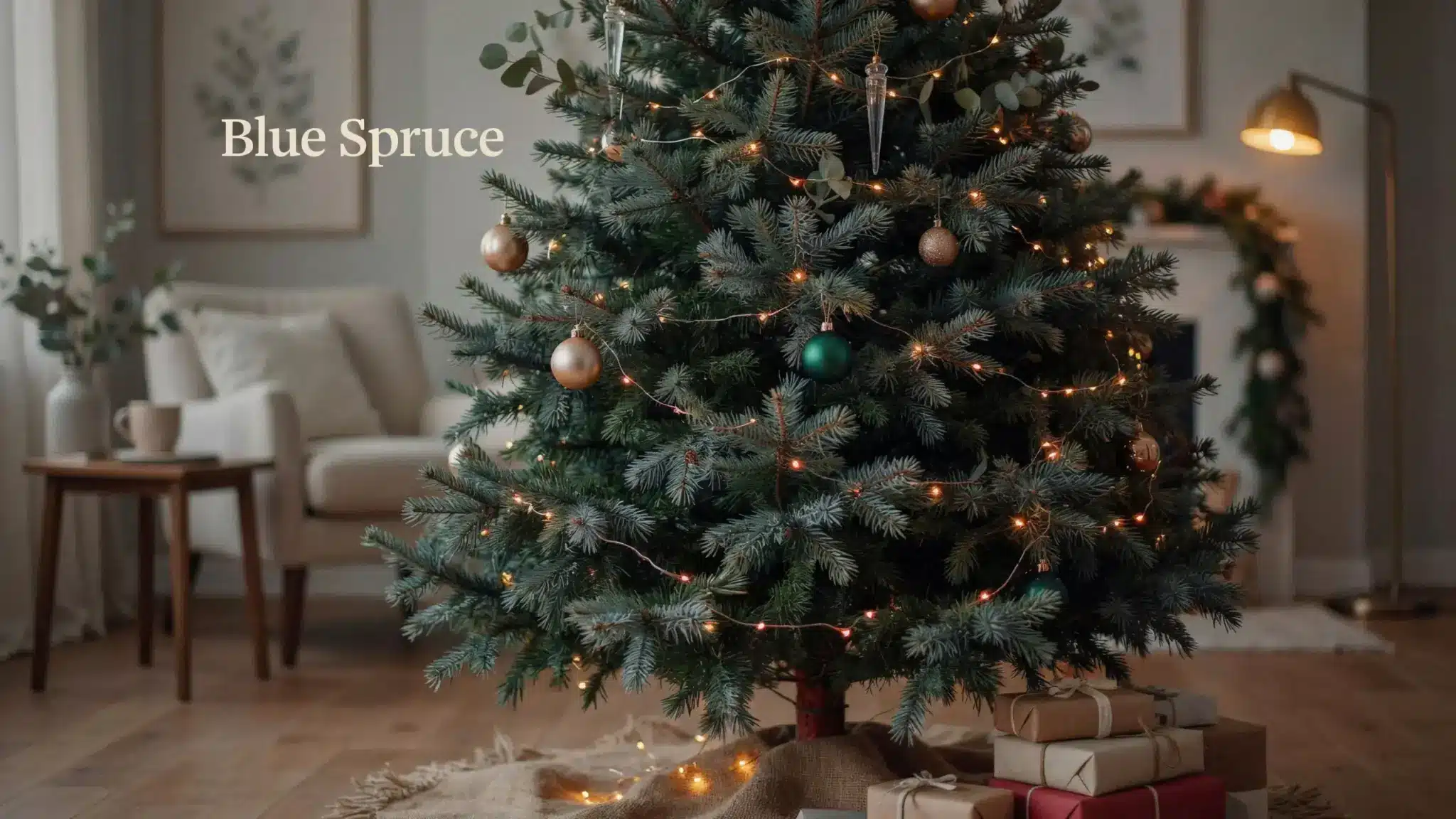
Blue spruce, the silver-blue showoff of the lot.
Also called Colorado blue spruce, it stands out for its silvery-blue color. The branches are strong enough for heavy ornaments, but the needles drop faster than a fir’s. It lasts about three weeks, and I would wear gloves when decorating it.
Norway Spruce
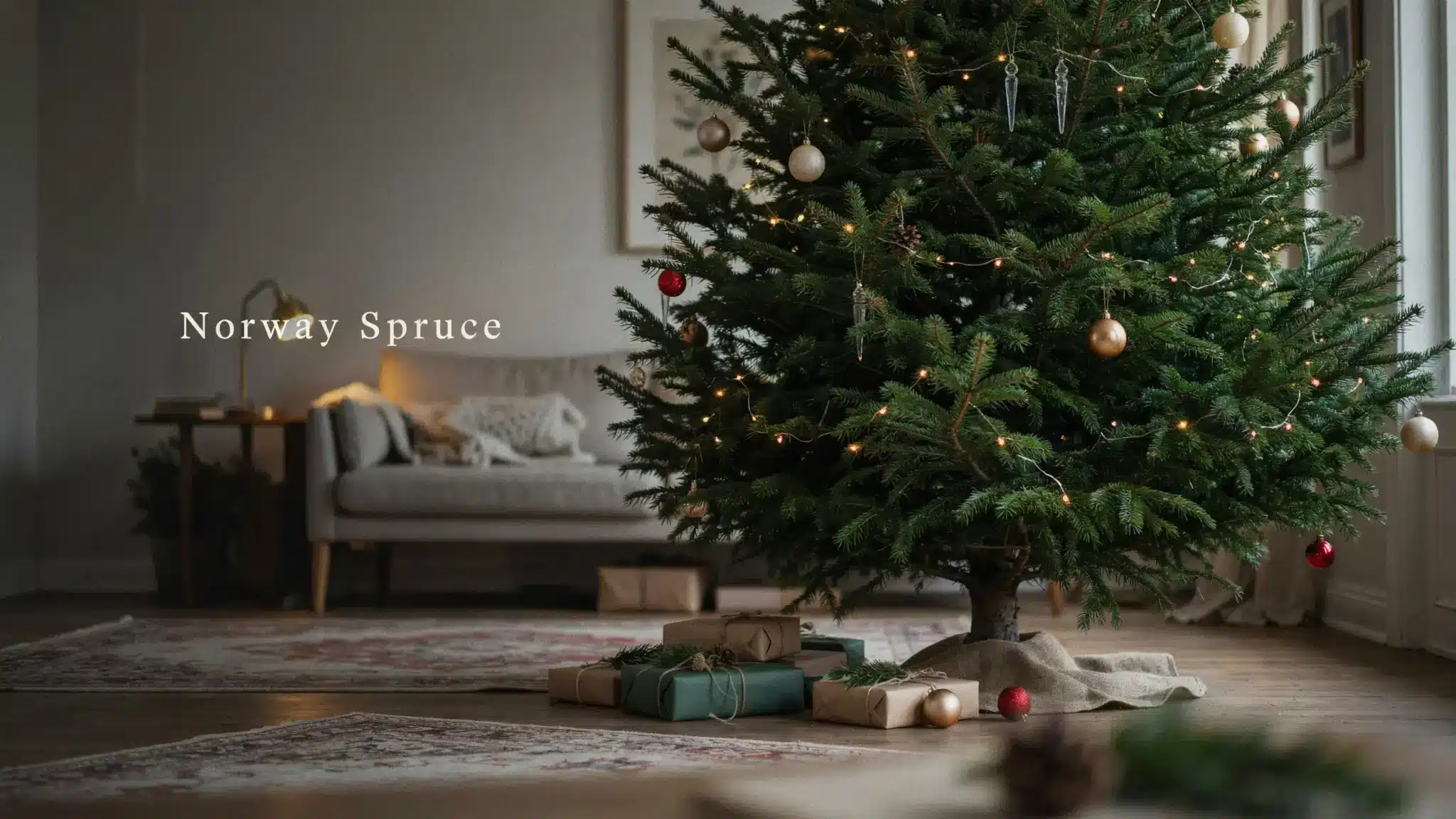
Norway spruce in its classic triangle shape.
Norway spruce grows fast and keeps the classic triangle shape you picture for a Christmas tree. It loses needles quickly, so I would buy it as close to the holiday as possible.
White Spruce
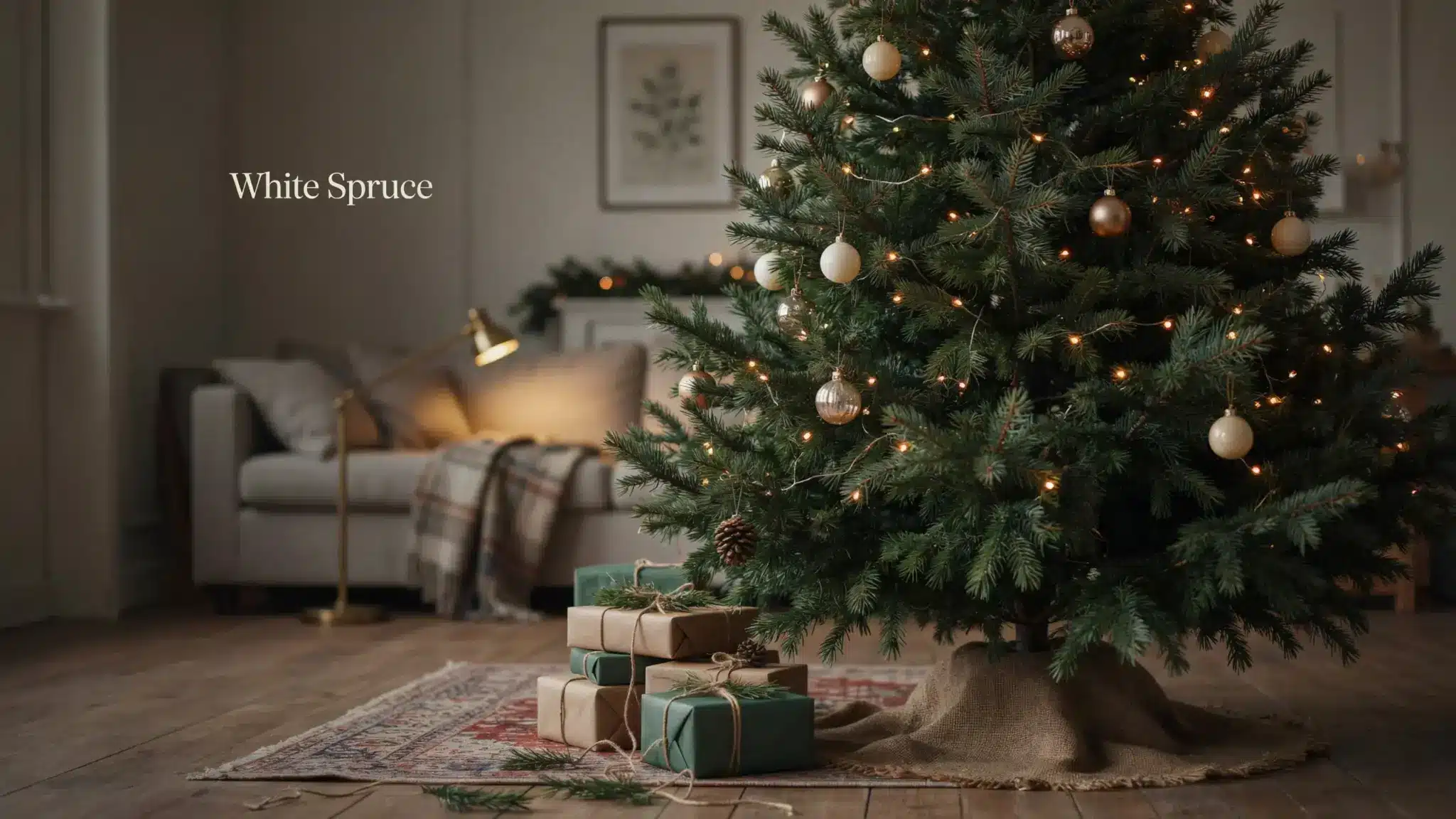
White spruce, frosted blue-green.
White spruce has a frosted blue-green look and strong branches. The scent is noticeable but not overpowering.
Dwarf Alberta Spruce

Dwarf Alberta spruce, small enough for a tabletop.
Dwarf Alberta spruce grows in a small, tidy cone and works well in a pot on a table or porch. If you live in an apartment or want a second tree for a bedroom, look for this size.
4. Cypress and Cedar Trees
These two families are mostly regional picks, and each one solves a specific problem.
Leyland Cypress
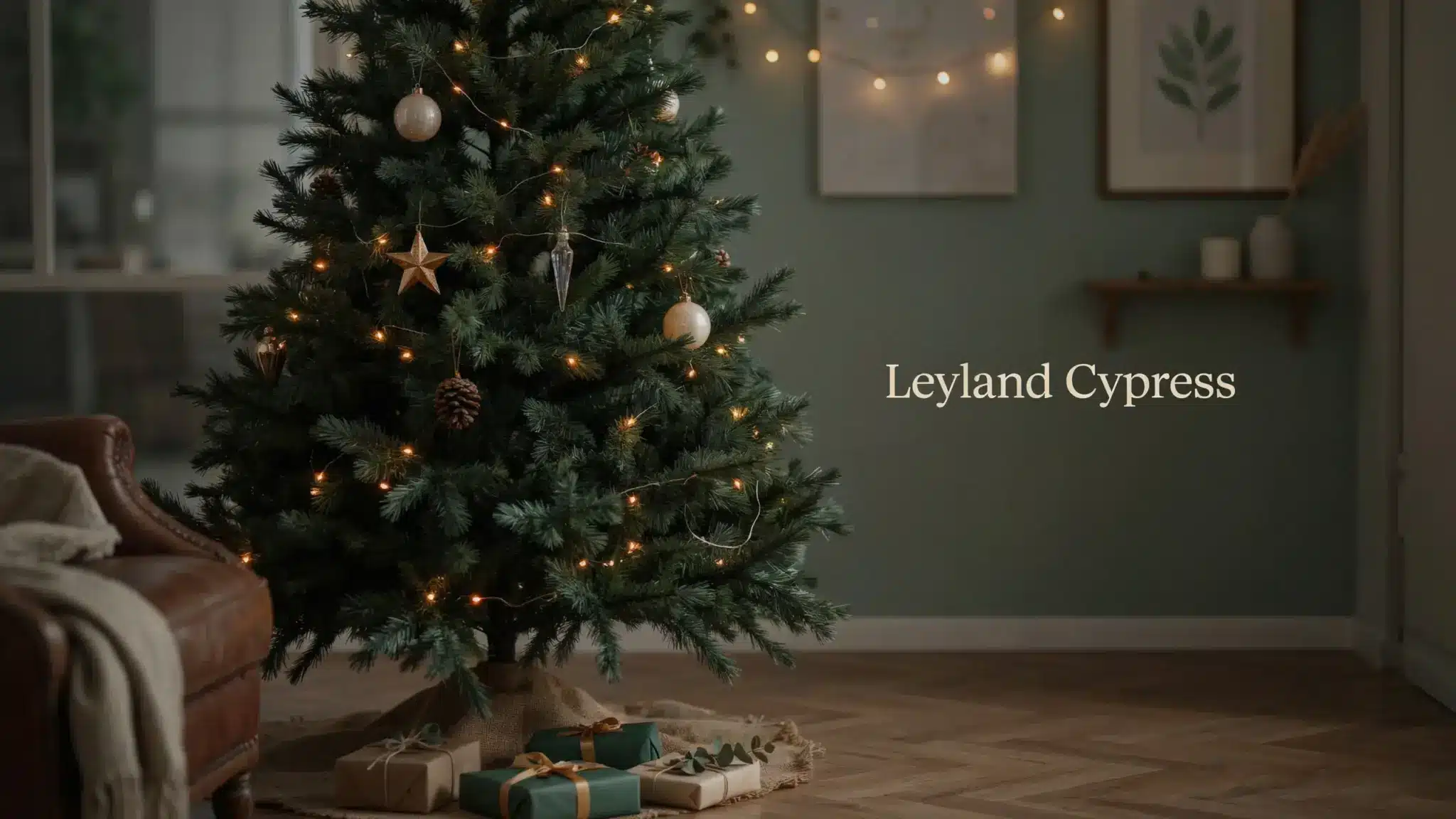
Leyland cypress, no sap and hardly any scent.
Leyland cypress produces no sap and has very little scent. That makes it a solid choice if someone in your home reacts to strong smells or sticky branches. It does not hold heavy ornaments well.
Arizona Cypress
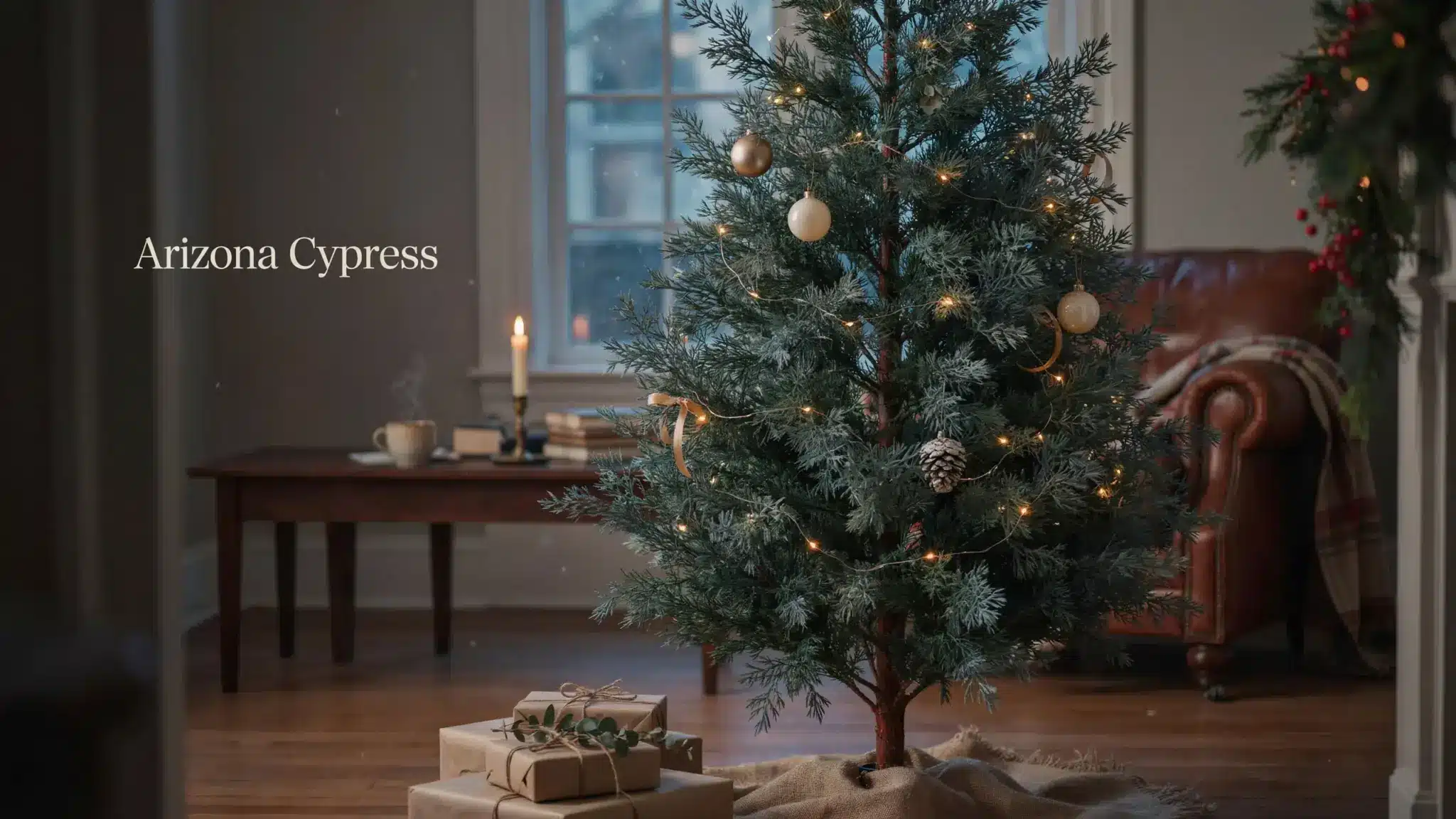
Arizona cypress in blue-gray.
Arizona cypress has a blue-gray color, and its cone shape stands out at the tree lot.
Eastern Red Cedar
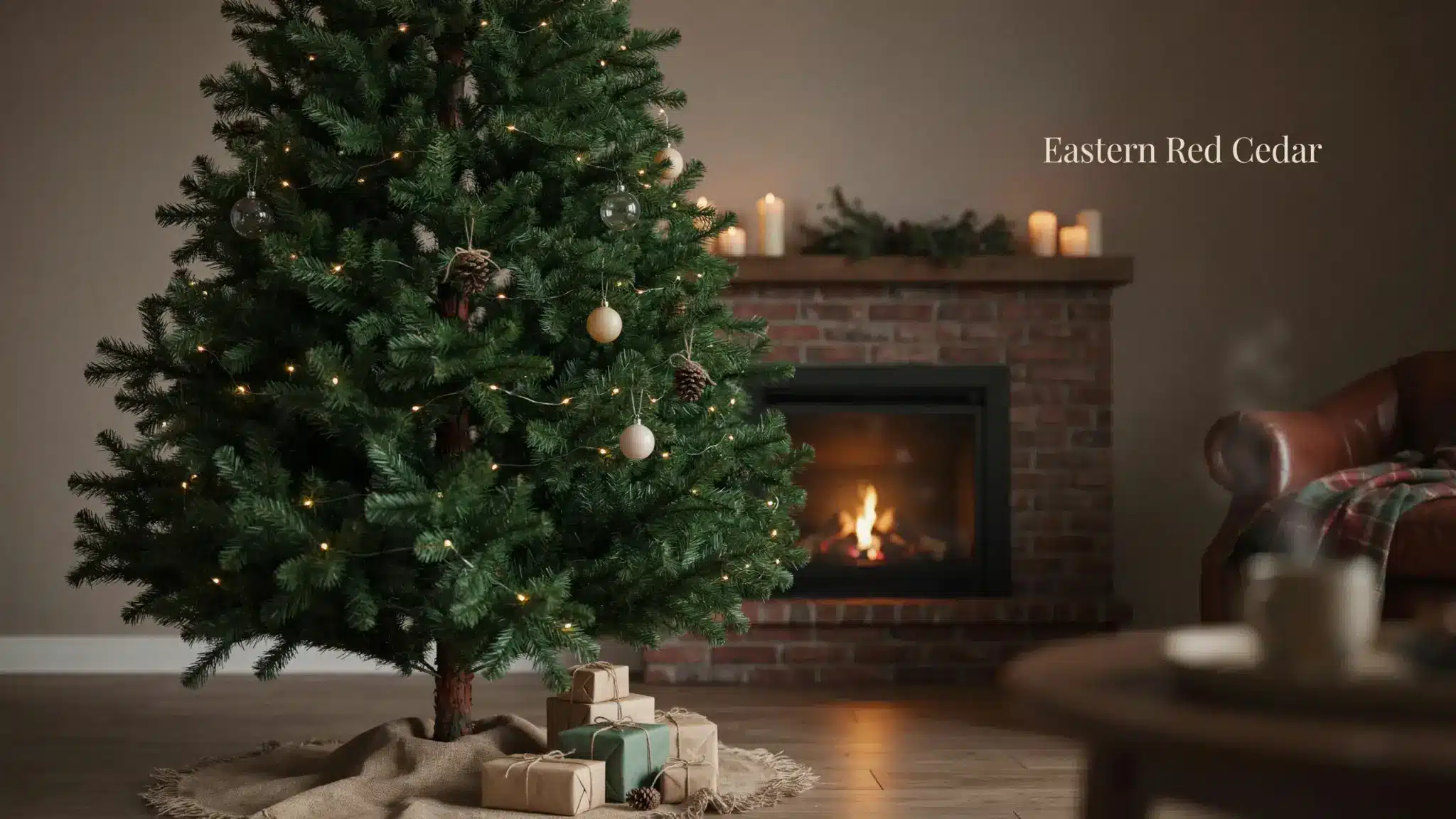
Eastern red cedar, dense and very fragrant.
Eastern red cedar has dense, upward-growing branches and a strong fragrance. It is a regional favorite in Missouri, Oklahoma, Texas, and Arkansas.
Deodar Cedar
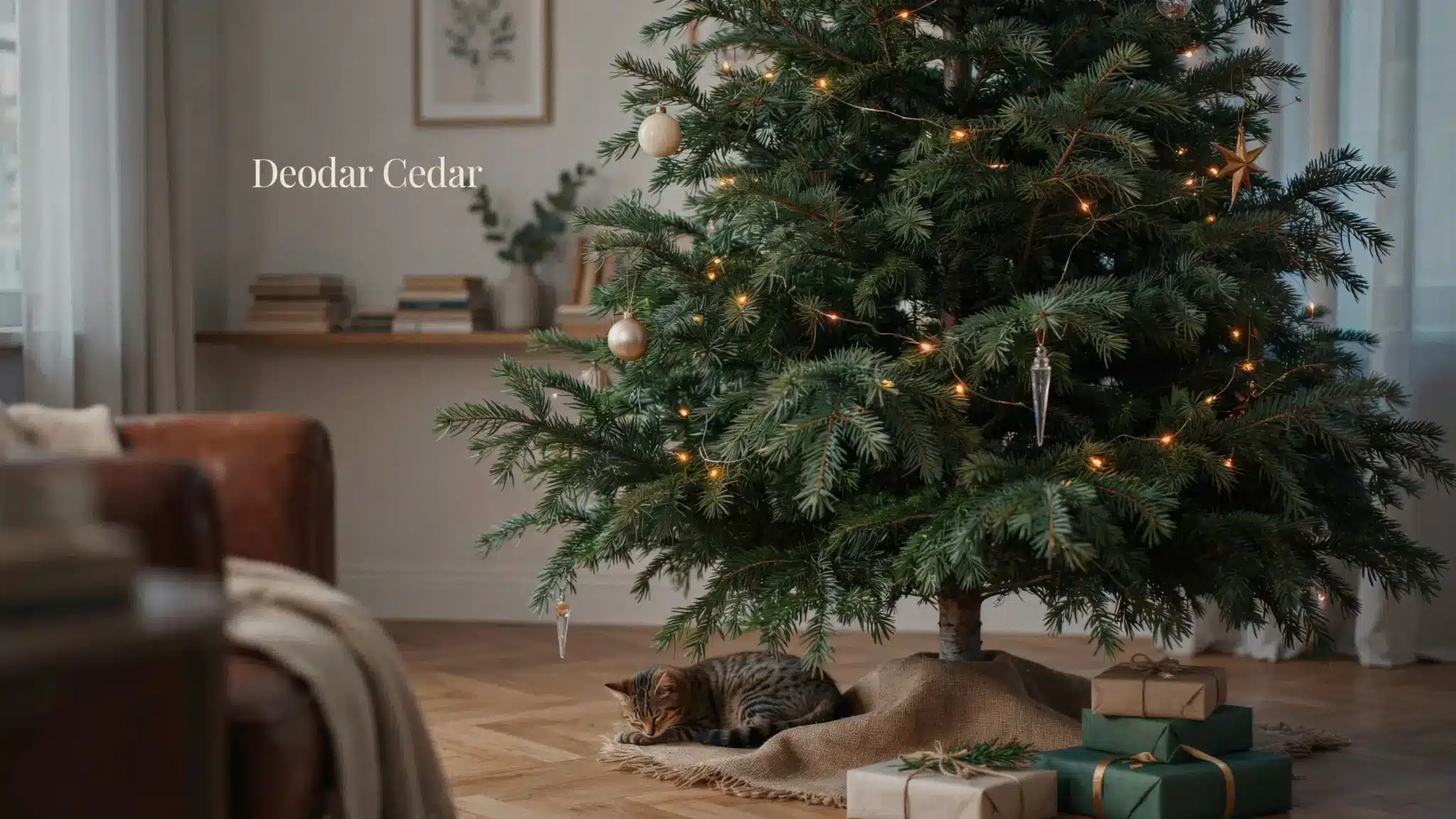
Deodar cedar and its drooping branches.
Deodar cedar has a loose, drooping branch pattern. It looks almost whimsical next to the tight pyramid shape of most other trees. If you want something different, it’s worth seeking out.
Real vs. Artificial Christmas Trees
The real versus artificial debate comes down to a few practical points, not just personal taste.
Cost adds up differently for each. A real tree is a yearly purchase. An artificial tree costs more upfront but can last a decade or longer with proper storage.
The National Fire Protection Association says Christmas tree fires are not common, but they tend to be serious when they happen, and a dry tree burns fastest. That is one more reason I keep the stand full.
Real trees are biodegradable, and many towns offer tree recycling after the holidays. Artificial trees are often made from plastic and shipped long distances, which carries its own environmental cost.
I buy a real tree every year, mostly for the scent and the drive to the farm. Neither option solves allergies on its own, and the next section explains why.
Allergy and Pet Considerations
Choosing a species does not fix allergy problems by itself. The bigger factor is often mold, not pollen or sap.
Cut trees sit in storage for weeks before they reach a lot. Mold can build up on the bark and needles during that time. Washing a real tree with a hose and letting it dry first can reduce this.
If strong scents bother you, Nordmann fir and Leyland cypress give off very little.
Artificial trees are not automatically safer. Dust and mold can build up in storage boxes over the months they sit unused. A quick wipe-down before setup matters just as much as it does for a real tree.
For pets, the bigger risk is dropped needles. Soft-needled trees like white pine or balsam fir drop fewer sharp bits. Blue spruce and Norway spruce drop needles faster, and their needles are sharp.
Best Tree by Region
What you find at a local lot often depends on where you live more than what you’d pick in theory.
In the Northeast, balsam fir and Fraser fir dominate most lots. In the South, Leyland cypress, Virginia pine, and Eastern red cedar show up more often and tend to cost less. Here in North Carolina, Fraser fir from the western mountains is the easy find.
The Midwest leans on Scotch pine and Douglas fir. In the Pacific Northwest, noble fir, grand fir, and Douglas fir grow locally. Prices there often run lower than elsewhere.
Best Tree by Space
A tree that looks great in a farmhouse with vaulted ceilings can overwhelm a studio apartment.
For small spaces or tabletops, a dwarf Alberta spruce or a potted mini fir fits without crowding the room. If floor space is tight, a few poinsettias and other holiday plants can fill a corner too. For large rooms or high ceilings, Douglas fir, grand fir, or noble fir fill the space without looking sparse. For a tight corner, balsam fir or Arizona cypress keep a narrower profile than most other types.
A quick sketch of the tree inside your living room furniture layout shows whether the sofa and the tree will compete.
Frequently Asked Questions
How many types of Christmas trees are there?
Real trees fall into five main families: firs, pines, spruces, cypresses, and cedars. Growers raise dozens of species within them.
What are the most common types of Christmas trees?
Fraser fir, balsam fir, Douglas fir, noble fir, Scotch pine, and blue spruce fill most U.S. lots, depending on your region.
Which Christmas tree has the strongest branches?
Fraser fir, noble fir, Nordmann fir, and blue spruce have stiff branches that hold heavy ornaments. Douglas fir, grand fir, and white pine suit lighter decorations.
Which Christmas tree has the least scent?
Nordmann fir and Leyland cypress have very little scent. Balsam fir and Eastern red cedar are among the strongest.
Pick the Tree That Fits Your Room, Not the Lot
I still tag a Fraser fir every December, and the drive up to the farm is half the fun. You will live with this tree for about a month, so it is worth picking one that fits your room and your ornaments. If you have a favorite from this list, tell me in the comments.