You spray the ants you can see, and they disappear for a day. Then the trail returns to the same spot. That happens because surface sprays only target visible ants, not the colony hidden underground.
The queen continues producing new workers, allowing the infestation to rebuild. Effective control requires reaching the source, not just killing the ants on the surface.
The U.S. Environmental Protection Agency recommends choosing pest control products based on the specific pest you are treating.
The University of Florida IFAS Extension also highlights that slow-acting bait products can be more effective for eliminating colonies because ants carry the bait back to the nest.
This guide covers the different types of outdoor ant killers, how to use them correctly, and the steps that help prevent ants from returning.
What are the Types of Outdoor Ant Killers?
The right outdoor ant killer depends on where ants are nesting and what species you are dealing with. Each product type targets a different situation, and using the wrong one wastes time.
1. Liquid Bait Stations and Bait Stakes
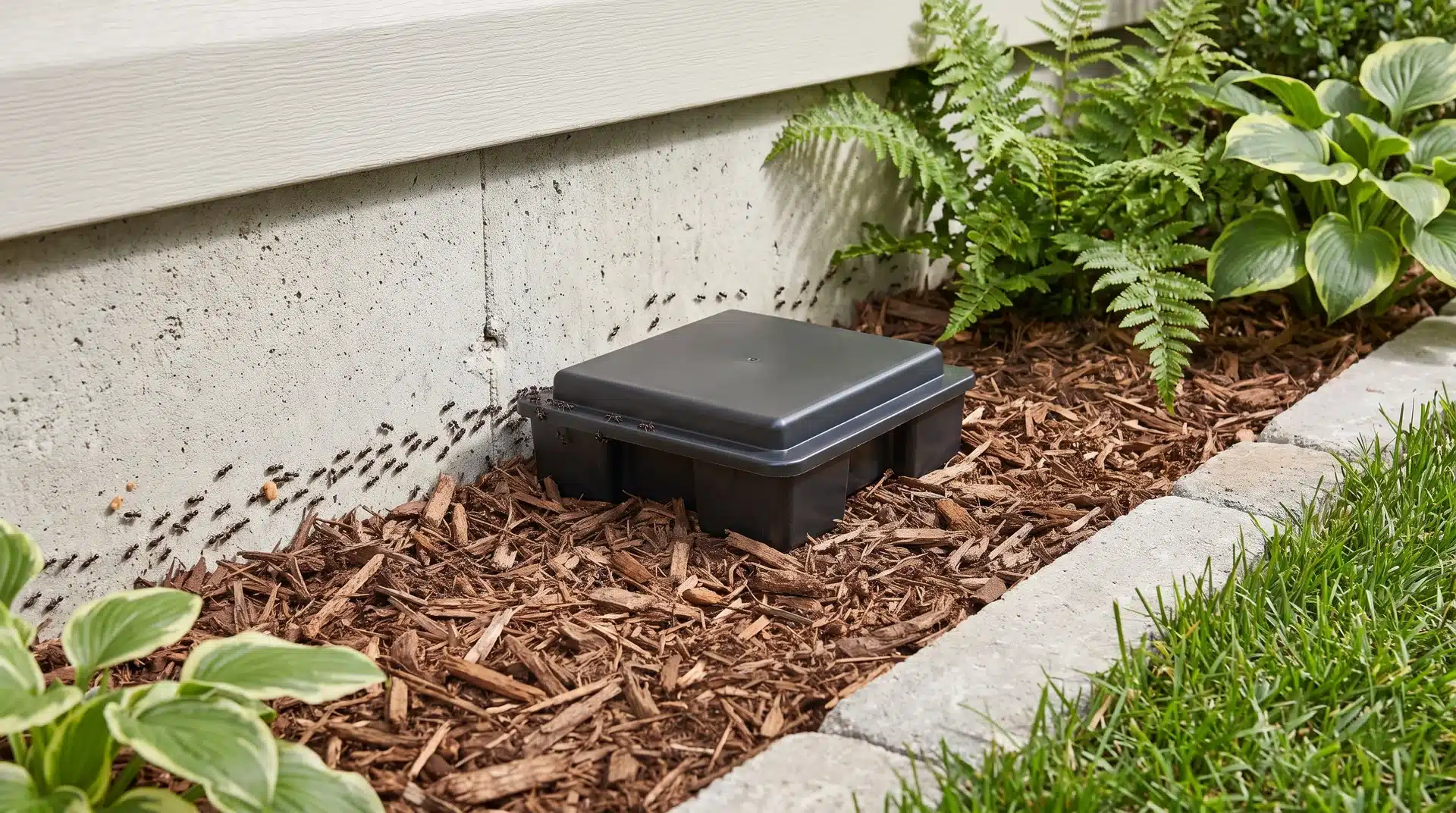
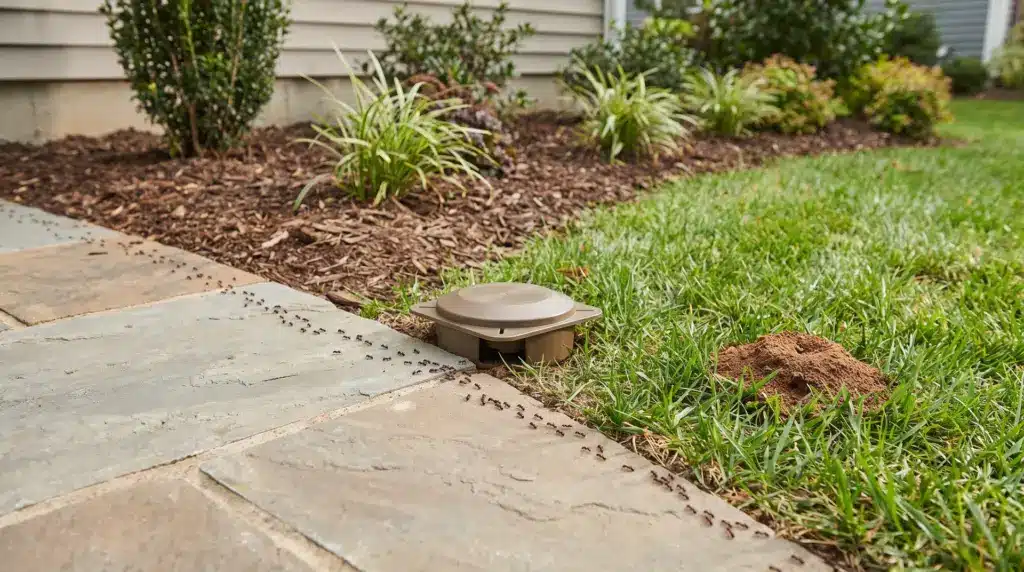
These work best for pavement ants, odorous house ants, and perimeter trails near your foundation or deck. The liquid inside uses borax as a slow-acting poison. Ants drink it and carry it back to the nest.
Terro Outdoor Liquid Ant Bait Stakes come in weatherproof housing designed to survive rain and direct sunlight. They stay active for weeks without needing replacement.
One thing to know: liquid bait stations do not work well for carpenter ants. Carpenter ants do not consistently forage liquid bait. Contact spray is more effective for them.
2. Granular Bait
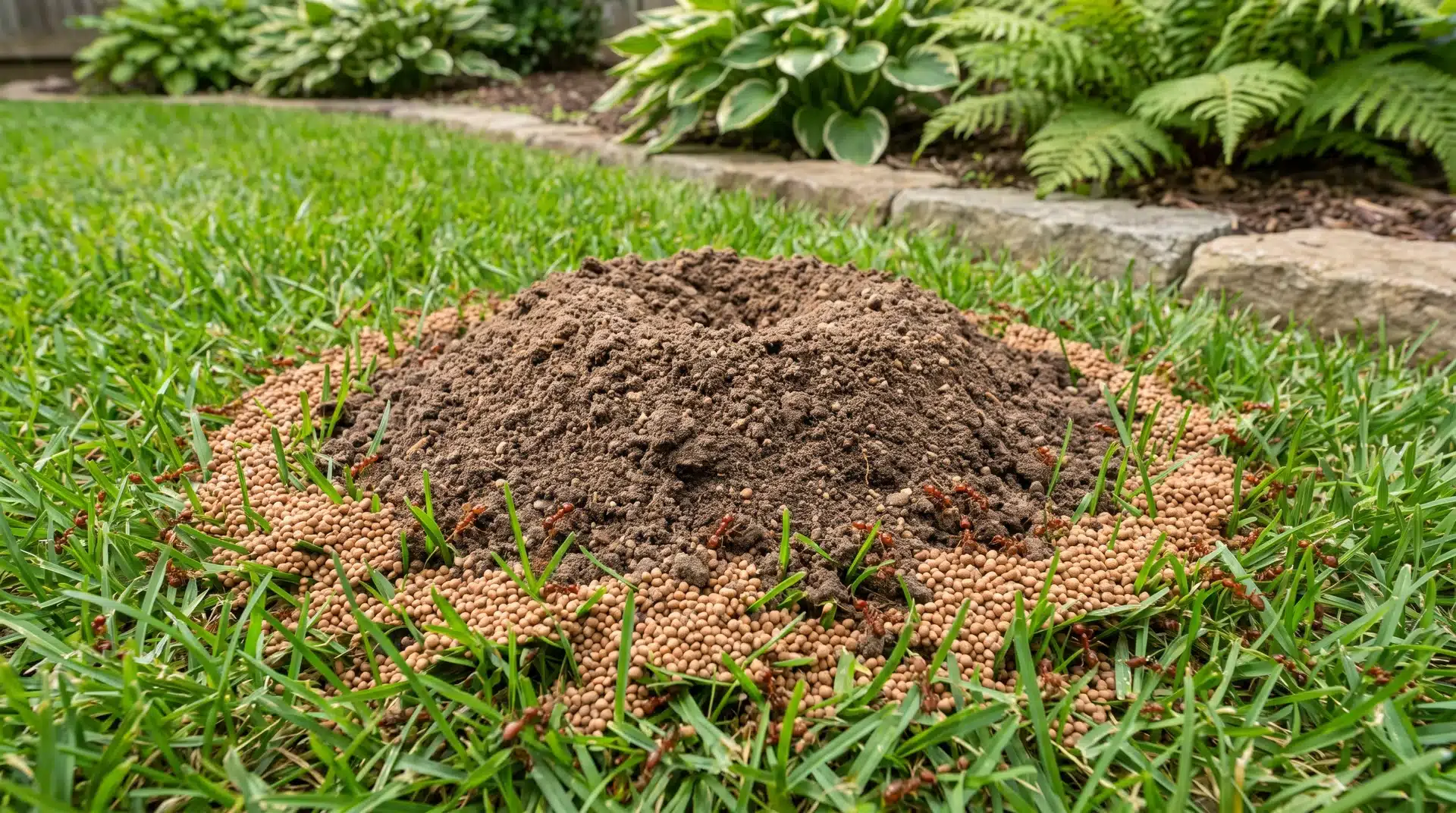
Granules cover large areas and work well for fire ant mounds, lawns, and garden beds. Spread them around the mound, not on top of it.
Placing granules on top disturbs the mound. Ants perceive that as a threat and stop foraging, preventing the bait from reaching the queen.
Spectracide One Shot Fire Ant Killer targets fire ants specifically. One application controls mounds for up to three months.
Amdro Ant Block controls 25 ant species and works well as a perimeter treatment around your home.
3. Contact Spray
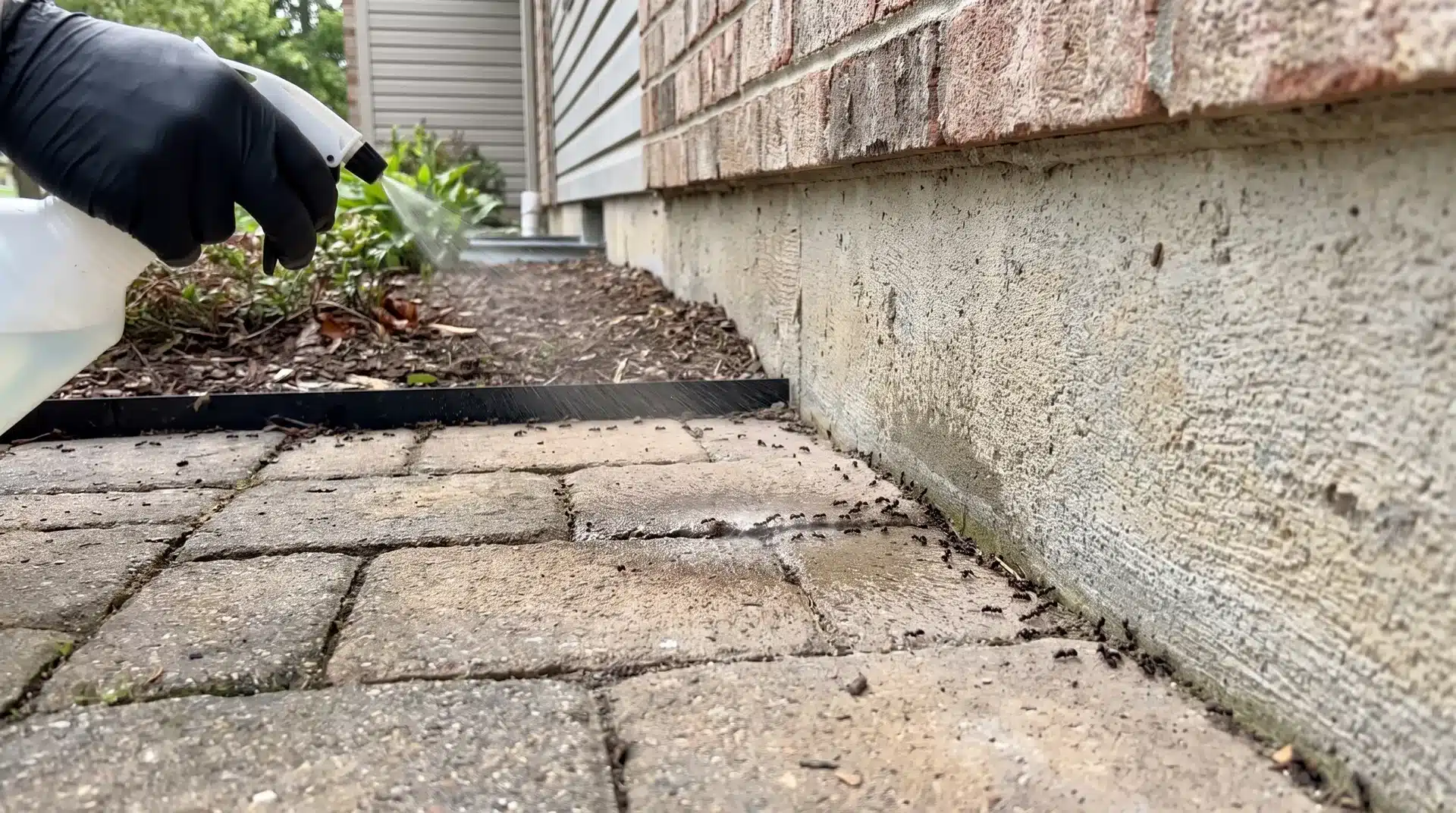
Sprays kill ants on contact and deliver fast, visible results. Use them on active trails, foundation cracks, or mounds you want to knock down fast.
The limitation is real: contact sprays do not reach the colony. Use spray for immediate relief while bait handles the colony. Keep them in separate areas so one does not cancel out the other.
How to Use an Outdoor Ant Killer Correctly?
The right ant-killer outdoor product, applied the wrong way, still yields poor results. These four steps apply to almost every outdoor treatment situation.
Step 1: Find Trails and Mounds Before You Treat
Walk your yard before applying anything. Check under rocks, along mulch edges, near wood piles, and along the foundation line.
Follow visible ant trails to locate where the colony nests. Treating without finding the source means placing bait where ants do not travel.
Step 2: Match the Product to Your Situation
- Large mound in the lawn: spread granular bait around the mound, not on top
- Trails along a deck or patio edge: place liquid bait stakes directly on the trail
- Cracks in pavement or the foundation: use contact spray first, then place bait nearby
Step 3: Do Not Mix Contact Spray with Active Bait
Contact insecticides repel ants. Spraying near an active bait station causes ants to avoid the area. They stop collecting the bait, breaking the colony-killing cycle at the most critical point.
Use one method per treatment zone at a time.
Step 4: Give it Time and Monitor
Expect more ant activity near bait stations in the first two to three days. Ants are actively collecting it. Colony decline typically shows by days five to seven. Mounds go inactive within two weeks in most situations.
How Does Outdoor Ant Killer Work?
Outdoor ant colonies are far larger than indoor ones. That size is exactly what makes surface treatments fail repeatedly.
A single yard colony can hold hundreds of thousands of workers. Killing surface ants does not stop the colony. The queen stays alive underground and replaces lost workers every day. To end the infestation, you have to reach the queen.
Outdoor ant killers work in two main ways. Contact kill products kill ants immediately on the spot. Colony-kill products work slowly, using ant behavior to spread poison throughout the nest.
Worker ants collect the bait and carry it back underground. They share it with larvae and the queen. The entire colony dies within five to fourteen days.
Weather also plays a role. Rain, UV light, and shifting soil temperatures break down standard indoor formulas fast.
Products labeled for outdoor use contain weatherproof ingredients that hold their effectiveness between applications. That durability separates a real outdoor ant killer from a general-purpose spray.
When Should You Apply Outdoor Ant Killer?
A good outdoor ant killer can fail if the timing is wrong. Weather, temperature, and ant activity all decide how effective the treatment will be.
- Time of Day: Apply in the early morning or late evening. These are peak foraging hours. Ants retreat underground during midday heat, so bait placed then gets very little traffic. Fire ant foraging peaks during the cooler parts of the day. Ants often stay underground when soil temperatures rise too high, reducing their surface activity.
- Weather Conditions: Do not apply granular products if rain is expected within 24 hours. Rain washes granules off the soil before ants collect them. Wait for the ground to dry before spreading any granular bait.
- Temperature: Most outdoor ant killer products lose effectiveness below 50°F. Ants slow down sharply in cold weather and forage far less. Bait uptake drops when soil temperatures fall.
- Season: Treat in spring when colonies first start foraging after winter. Treat again in late summer before fall activity peaks. These two windows provide the best results across the year.
- After Application: Do not water treated soil for at least 24 hours. Leave bait stations in place for at least one full week. Removing them too early interrupts the process before the poison reaches the queen.
Is Outdoor Ant Killer Safe for Pets and Kids?
Products containing cypermethrin or bifenthrin should not be allowed to come into contact with pets or children until fully dry.
Always check the label for re-entry times before applying. Borax-based liquid baits are low-toxicity at small amounts.
Enclosed housings, such as those in Terro Outdoor Liquid Ant Bait Stakes, keep the liquid sealed so that pets cannot reach it directly.
For yards with dogs or children, food-grade diatomaceous earth and spinosad-based granules are naturally derived options. Both have a reduced impact on non-target animals.
Avoid open liquid bait dishes in any spot pets can access. Always choose enclosed stations in shared outdoor spaces.
How to Stop Ants from Coming Back Outdoors?
Outdoor ant treatment works best when paired with changes that remove what draws ants to your yard. Without those changes, new colonies move in as fast as old ones die.
- Remove Food Sources: Clean outdoor eating areas after every use. Fallen fruit, open compost bins, and pet food left outside quickly draw ants back. Store anything that attracts foragers in sealed containers.
- Fix Moisture Problems: Leaky outdoor faucets and standing water near your foundation create ideal nesting conditions. Fix drips and improve drainage in low-lying areas near the house.
- Seal Entry Points: Caulk gaps around windows, door frames, and utility pipes. This stops outdoor colonies from moving inside when yard conditions change after treatment. If ants have already made their way indoors, the approach is different. Learn how to identify and eliminate ants in your home before they spread to kitchens, cabinets, and other living spaces.
- Trim Plants Near the House: Shrubs and tree branches touching your exterior walls give ants a direct path indoors. Keep at least a one-foot gap between plants and the foundation line.
- Reapply on Schedule: Most granular outdoor ant-killer products protect for up to 3 months. Set a reminder and reapply before that window closes. Treating on schedule is far simpler than starting over after ants return.
Conclusion
The right outdoor ant-killer approach starts with one clear decision: do you need contact kill or colony elimination? Surface sprays handle visible trails fast but leave the queen untouched.
Slow-acting baits reach the queen because workers carry the poison back and share it with her. Pick your product based on your ant type and yard situation.
Use enclosed bait stations where pets and children are present. And take the follow-through seriously. The conditions pulling ants back to your yard matter just as much as the treatment itself.
Fix those, and you will not need to treat the same space twice. Have a specific ant problem in your yard? Leave a comment below and share what you are dealing with.
Frequently Asked Questions
Does Dawn Dish Soap Really Kill Ants?
Yes. Dawn dish soap can kill ants by breaking down their protective outer coating, causing them to dehydrate. It works on contact but does not eliminate the entire colony or prevent future infestations.
What Smell Do Ants Hate the Most?
Ants dislike strong scents such as peppermint, citrus, vinegar, cinnamon, and clove. These odors can disrupt their scent trails, but they are not always reliable long-term repellents.
Why Should You Not Squish Ants?
Squishing some ants can release alarm pheromones that attract nearby ants and signal danger. Cleaning the area afterward helps remove these chemical trails and reduces further ant activity.