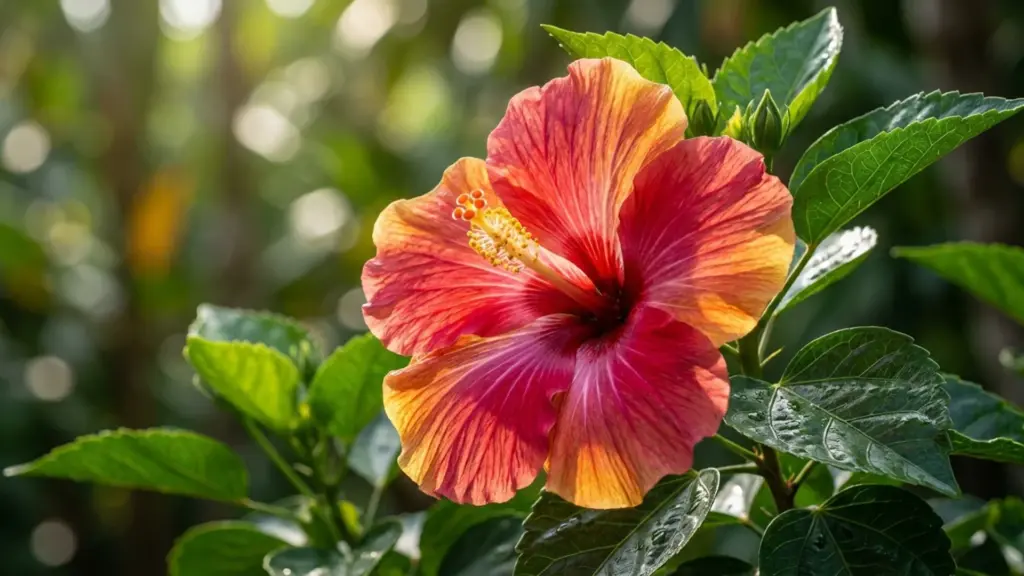
I get asked this a lot at farmers markets: “Is my hibiscus going to come back next year, or did I just waste twenty bucks?” Fair question.
The honest answer is that it depends on which hibiscus you bought, and nobody tells you that on the plant tag.
I’ve grown both hardy and tropical hibiscus on my farm here in North Carolina, and I’ve killed my fair share of them before I learned the difference.
So let’s clear this up. By the end of this post, you’ll know exactly what kind of hibiscus you have and whether it’s coming back in spring.
Are Hibiscus Perennials?
Yes, most hibiscus plants are perennials. But not all of them survive winter in every climate.
There are two main groups you’ll run into at nurseries. Hardy hibiscus is a true perennial in zones 4 through 9.
It dies back to the ground every fall and grows back from the roots each spring, without fail, as long as your winters aren’t brutal.
Tropical hibiscus is also technically a perennial, but only in zones 9 through 11. Anywhere colder than that, it either dies in the ground or needs to come inside for winter.
I grow a few tropical ones in pots so that I can drag them into my greenhouse before frost hits.
Types of Hibiscus You’ll Actually Run Into
I want to walk you through the three types you’ll most likely find at a garden center, because knowing which one you’re holding changes everything about how you care for it.
1. Hardy Hibiscus (Rose Mallow)
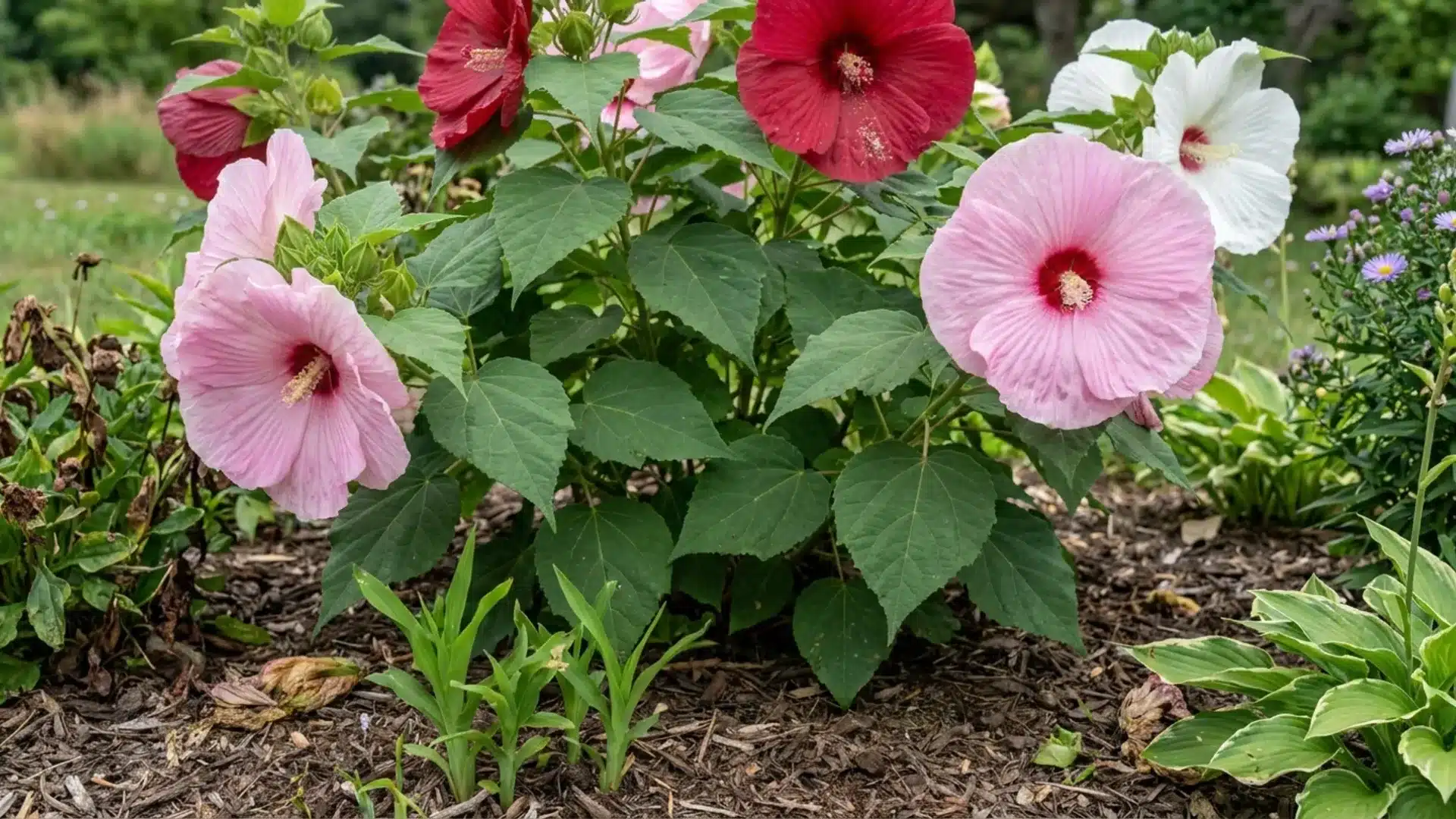
This is my favorite for cold-climate gardens. The leaves are dull and slightly rough, not shiny. Flowers can get huge, sometimes close to a foot across.
It grows in zones 4 through 9, and it dies all the way to the ground every autumn.
Don’t panic when that happens. It’s normal, and new growth shows up later than most other perennials, sometimes not until early summer.
2. Tropical Hibiscus (Chinese Hibiscus)
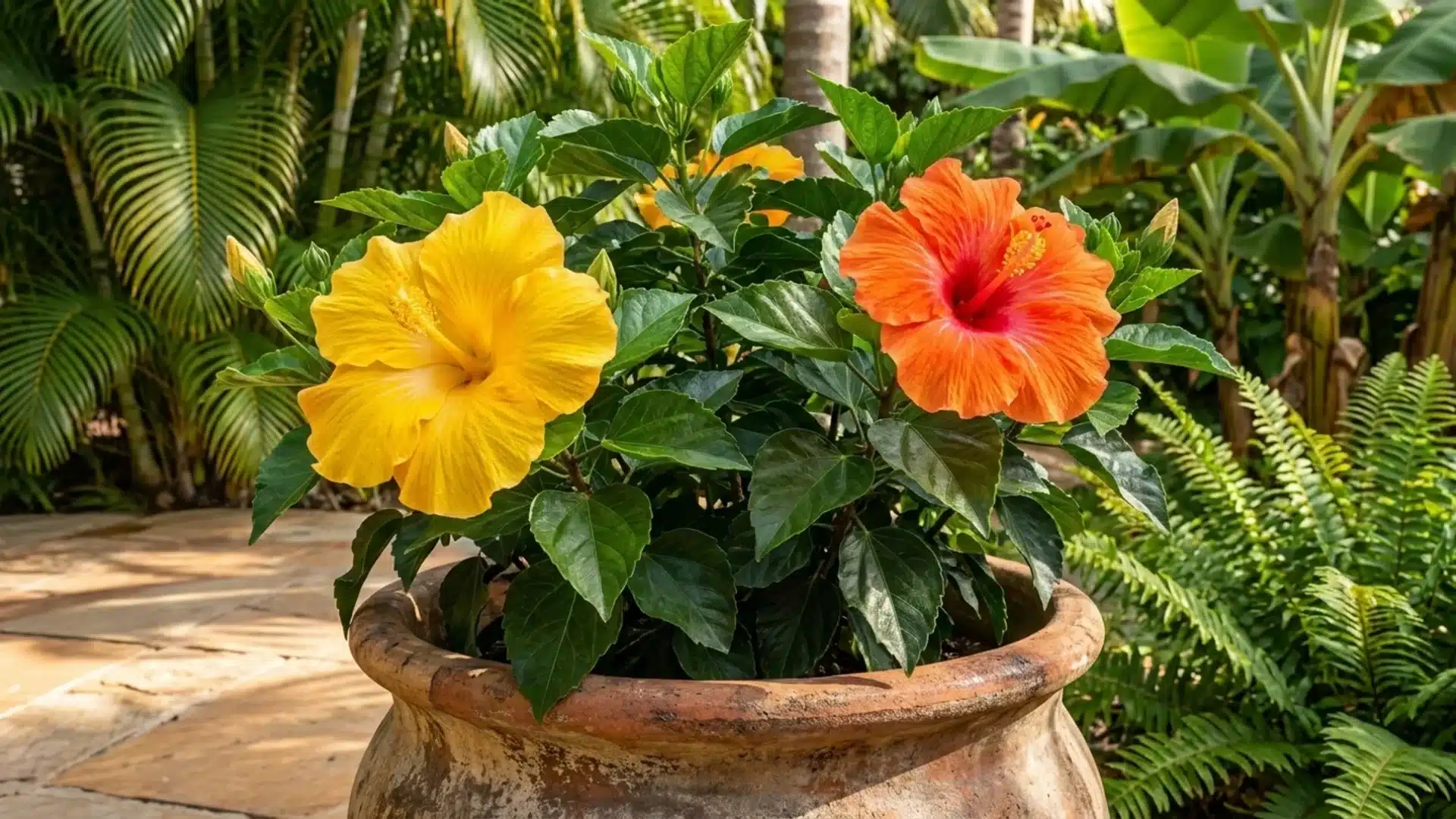
You’ll spot this one by its glossy, smooth-edged leaves. The flowers come in wild colors, including yellows and oranges you won’t see on hardy types.
It only survives outdoors year-round in zones 9 through 11. Everywhere else, treat it as a patio plant you bring inside before the first frost.
3. Rose of Sharon
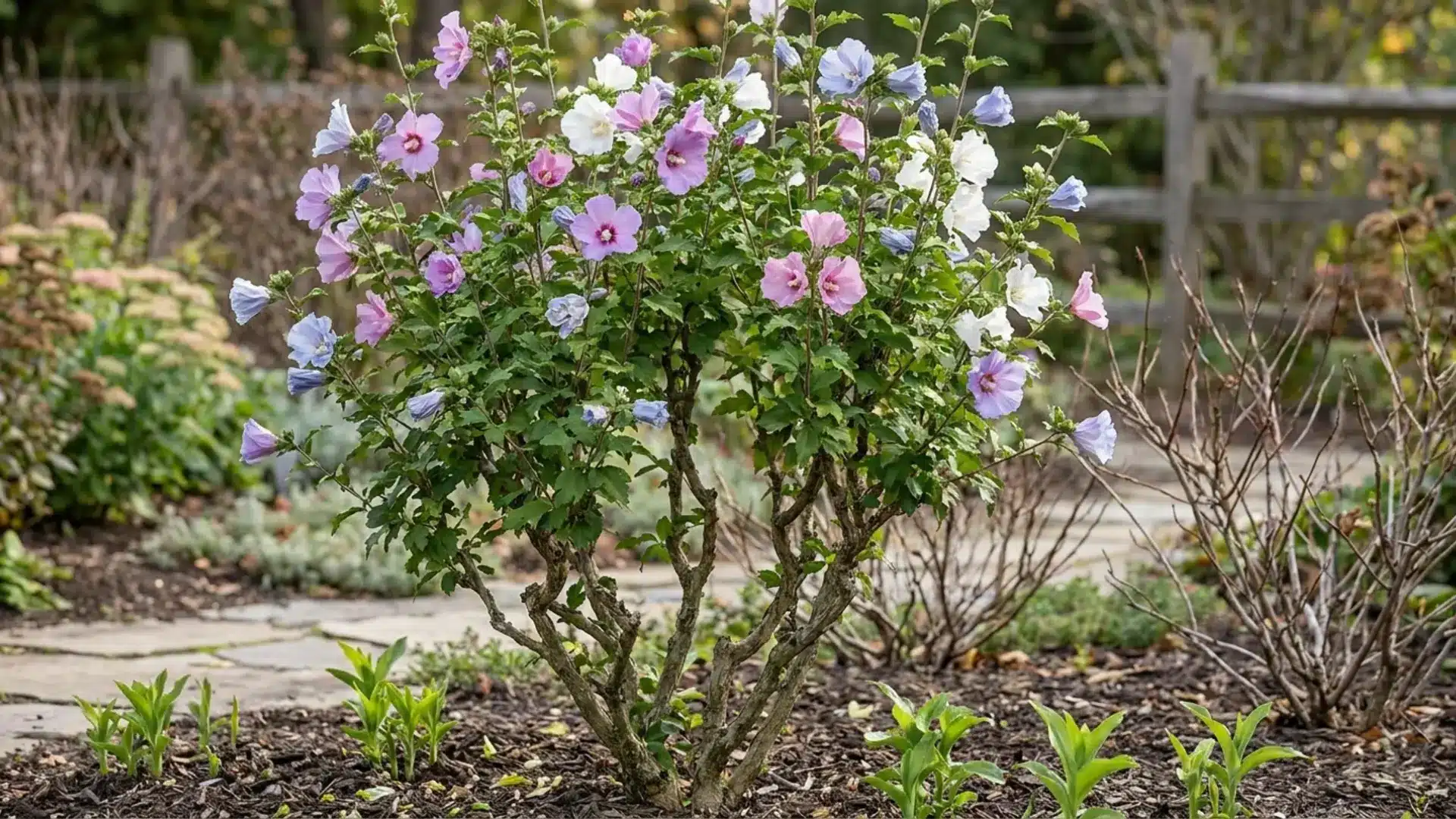
This one throws people off because it looks similar to tropical hibiscus but behaves nothing like it.
It’s a woody shrub, not a soft-stemmed perennial, and it keeps its structure through winter instead of dying back.
Hardy to around zone 5, and it self-seeds generously, so don’t be surprised if seedlings pop up nearby the following spring.
How to Tell If Your Hibiscus Is Perennial
If you bought a hibiscus with no tag, here’s the checklist I actually use when someone hands me an unlabeled plant:
1. Check your USDA hardiness zone first: This tells you more than anything else on this list.
2. Look at the leaves: Dull and slightly rough usually means hardy. Glossy and smooth usually means tropical.
3. Watch what happens after the first frost: Hardy types turn brown and collapse to the ground. Tropical types die outright if left outside.
4. Note the flower size: Hardy hibiscus flowers tend to run larger, sometimes 6 to 10 inches across.
5. Check for woody stems that stay standing through winter: That points to Rose of Sharon rather than a soft perennial hibiscus.
If you’re still not sure, my honest advice is just to wait it out. Mark the spot, keep the soil moist through fall, and see what happens in spring.
Hardy hibiscus is famously slow to wake up, often later than everything else in your bed, so don’t give up on it in April.
What If You Bought It With No Tag? Take a clear photo of the leaves, stem, and flower, then check with your local extension office or a nursery near you.
Caring for Perennial Hibiscus
Once you know what you’ve got, care is fairly simple. Give hardy hibiscus full sun and consistently moist soil.
It’s a heavy drinker, so don’t let it dry out during bloom season. Cut the dead stems back to about 4 to 6 inches once spring growth starts pushing through.
Tropical hibiscus wants similar sun and moisture, but needs protection the moment nights dip below 50 degrees.
I bring mine in before the weather forecast even mentions frost, because waiting a day too long has cost me plants before.
I usually cover the basics of plant propagation with new gardeners on my farm, since dividing an overgrown clump works the same way for hibiscus as it does for most perennials.
Frequently Asked Questions
What is the coldest temperature a hibiscus can tolerate?
The coldest temperature a hibiscus can tolerate depends entirely on the variety.
Are coffee grounds good for hibiscus?
Yes, used coffee grounds are great for hibiscus because they are slightly acidic and break down, releasing nitrogen that promotes lush leaves and vibrant blooms.
What not to plant next to hibiscus?
Avoid planting hibiscus next to drought-loving plants like succulents, cacti, agave, lavender, or rosemary.
Conclusion
So, are hibiscus perennials? In most cases, yes. The real question is whether your specific type survives winter where you live.
Hardy hibiscus, tropical hibiscus, and Rose of Sharon all behave differently once the temperature drops.
Check your zone, look at the leaves, and give it time before assuming the worst.
I’ve had hardy hibiscus scare me every single spring, only to show up right on schedule in June.
Got a hibiscus you can’t identify? Describe it in the comments, and I’ll help you figure out what you’re growing.