A bag of romaine at the grocery store runs $3 to $4. A seed packet costs about the same, and one packet has grown me more lettuce than I could eat in a season. I stopped buying bagged salad the year I did that math.
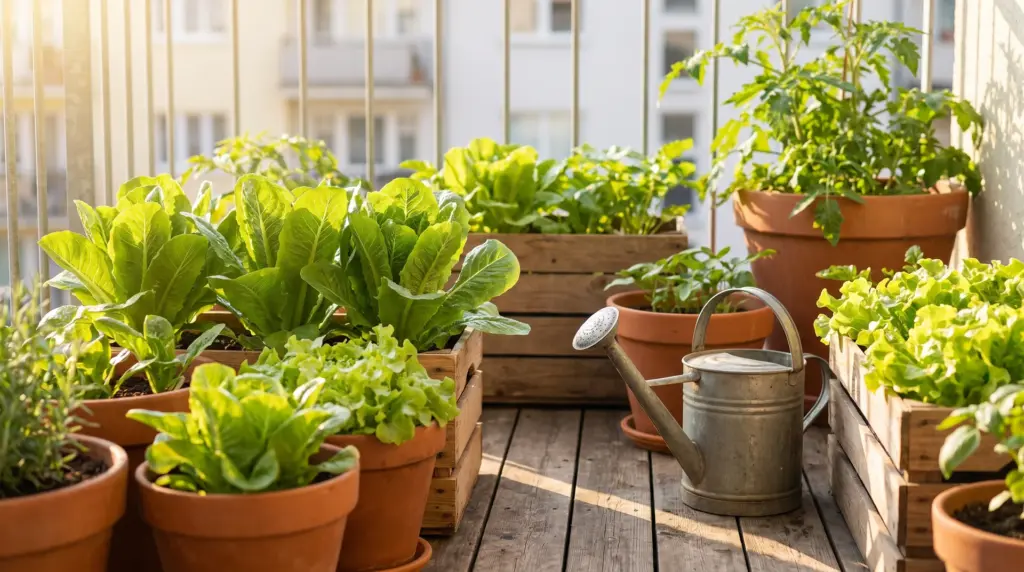
You don’t need a yard for this. A pot on a patio or balcony works just as well, and it’s usually the first vegetable I hand to anyone who tells me they don’t have room to garden.
According to the USDA Economic Research Service, food-at-home prices rose by over 20% between 2020 and 2023.
Growing your own is one of the simplest ways to cut that cost at home.
This post covers choosing the right pot, mixing the right soil, and keeping the harvest coming for months rather than a single cutting.
Planting Lettuce Seeds in Containers
Planting lettuce seeds takes less than 10 minutes. A few small details make all the difference. Some seeds sprout fast. Others just sit in the soil and do nothing.
Step 1: Choose Seeds or Transplants: Seeds cost less and give you more variety options. Transplants skip the germination phase, getting you to harvest 4 to 6 weeks faster. Both work well in containers.
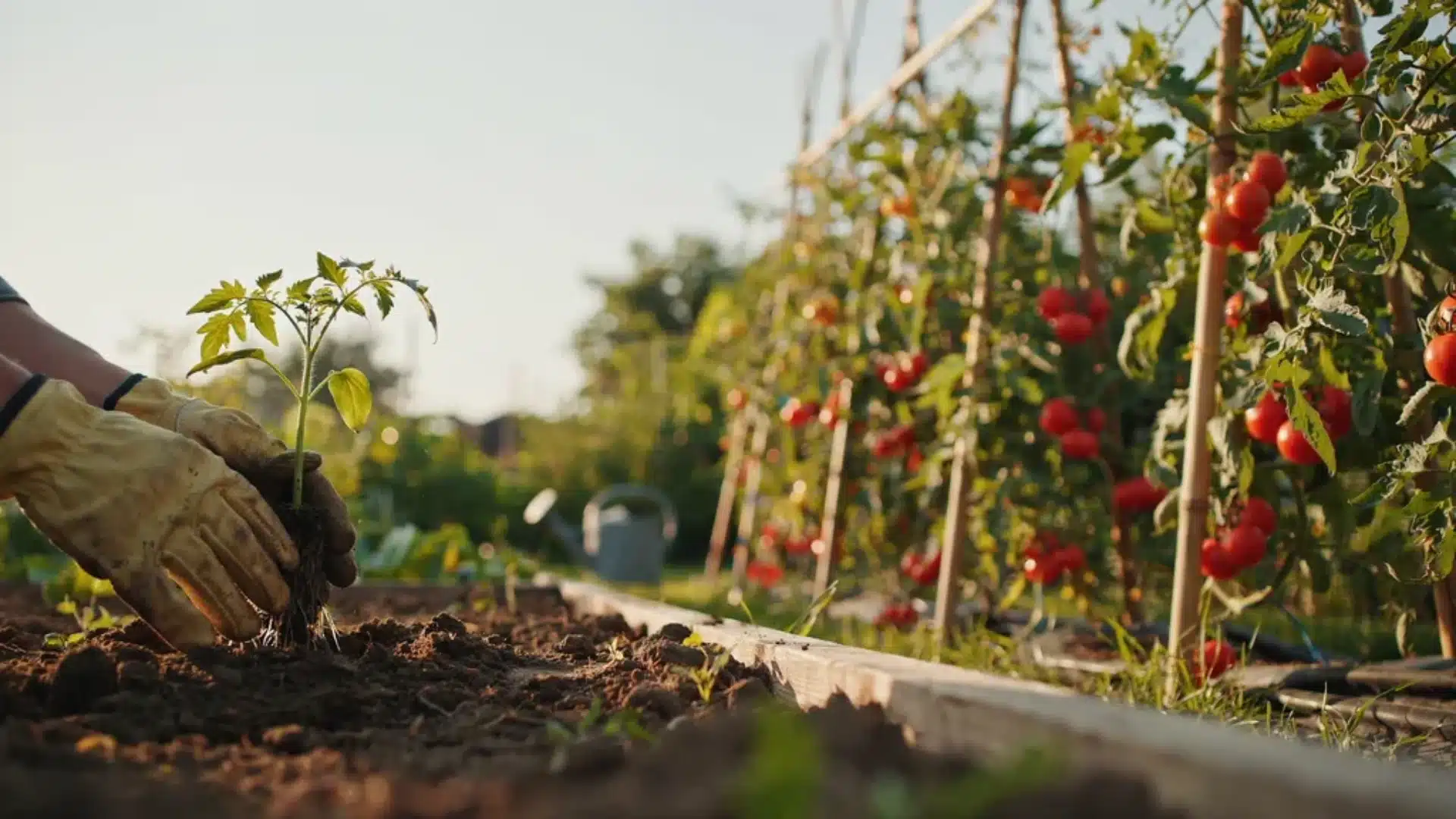
Step 2: Sow Seeds at the Right Depth: Sow seeds just one-quarter inch deep. Lettuce seeds need some light to germinate, so burying them too deep blocks light and slows the process. That’s a different depth than a tomato transplant needs. When I set out tomatoes, I bury the stem well below where it sat in the nursery pot to build a stronger root system.
Step 3: Space the Seeds Correctly: Space loose-leaf varieties 4 to 6 inches apart. Space head varieties 8 to 12 inches apart. Crowded plants compete for water and nutrients.
Step 4: Thin the Seedlings: When seedlings start to crowd each other, thin them out. Pull the smaller, weaker ones and leave the strongest plants standing. Eat the thinnings in a salad. Nothing goes to waste.
Step 5: Set up Succession Sowing: Every 2 to 3 weeks, sow a small batch of seeds in a separate container. Instead of 10 lettuces ready all at once, you get 2 to 3 at a time, week after week.
What Size Container Should You Choose?
The container you pick affects how often you water and how well roots develop. Getting the size right from the start prevents problems down the road.
For loose-leaf lettuce, use a container at least 6 inches deep and 12 inches wide. For head varieties like romaine or butterhead, aim for 8 to 10 inches deep and 12 to 16 inches wide.
Drainage holes are not optional. Without them, roots rot quickly in standing water. If your container has no holes, drill them before adding soil.
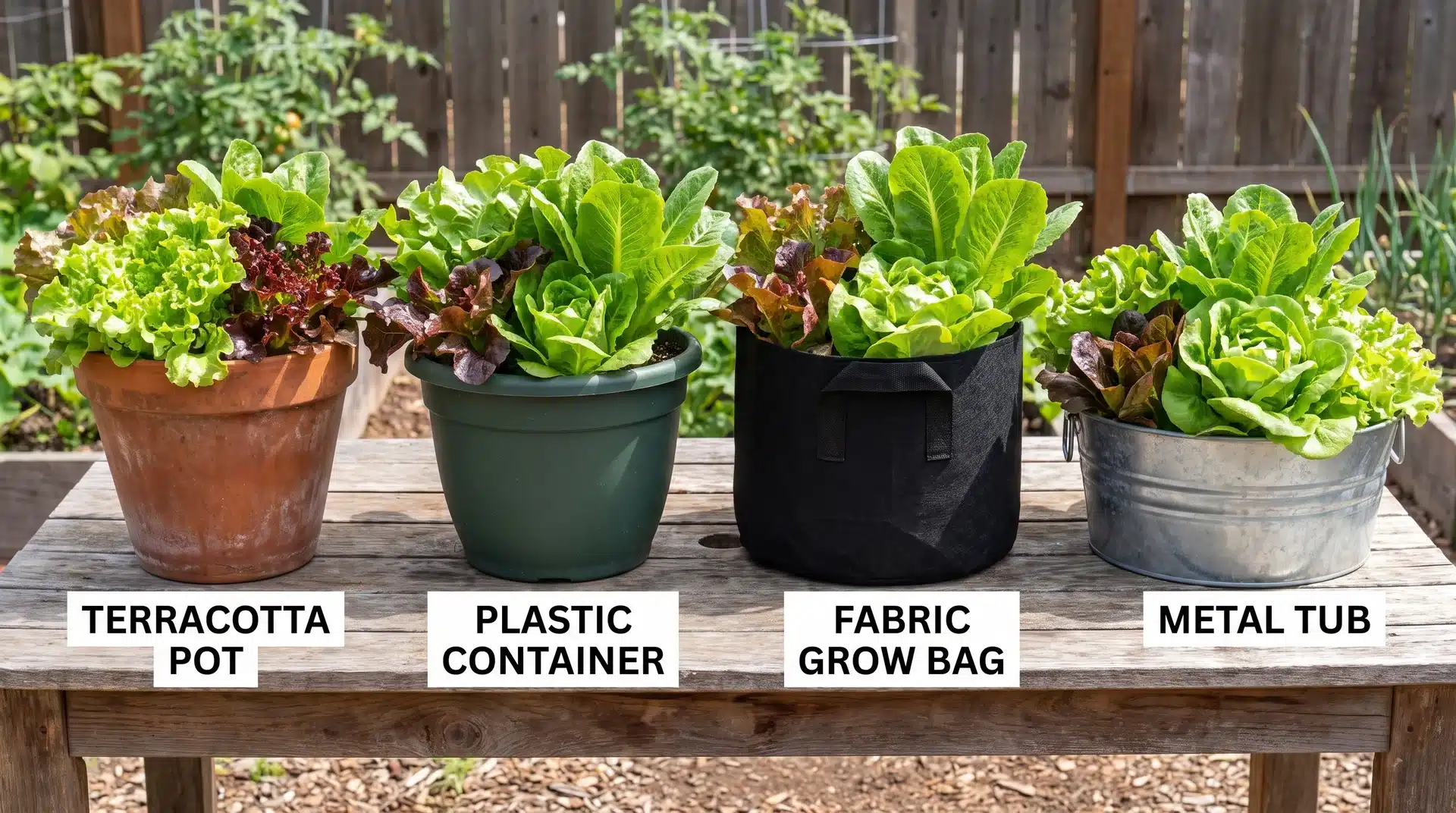
Here are four container types that work well:
- Terracotta pots: breathable material, dries out faster, needs more frequent watering
- Plastic containers: hold moisture longer, light enough to move easily
- Fabric grow bags: good air circulation, affordable, easy to store in the off-season
- Galvanized steel tubs: wide and deep, great for growing several varieties at once
What are the Best Lettuce Varieties for Containers
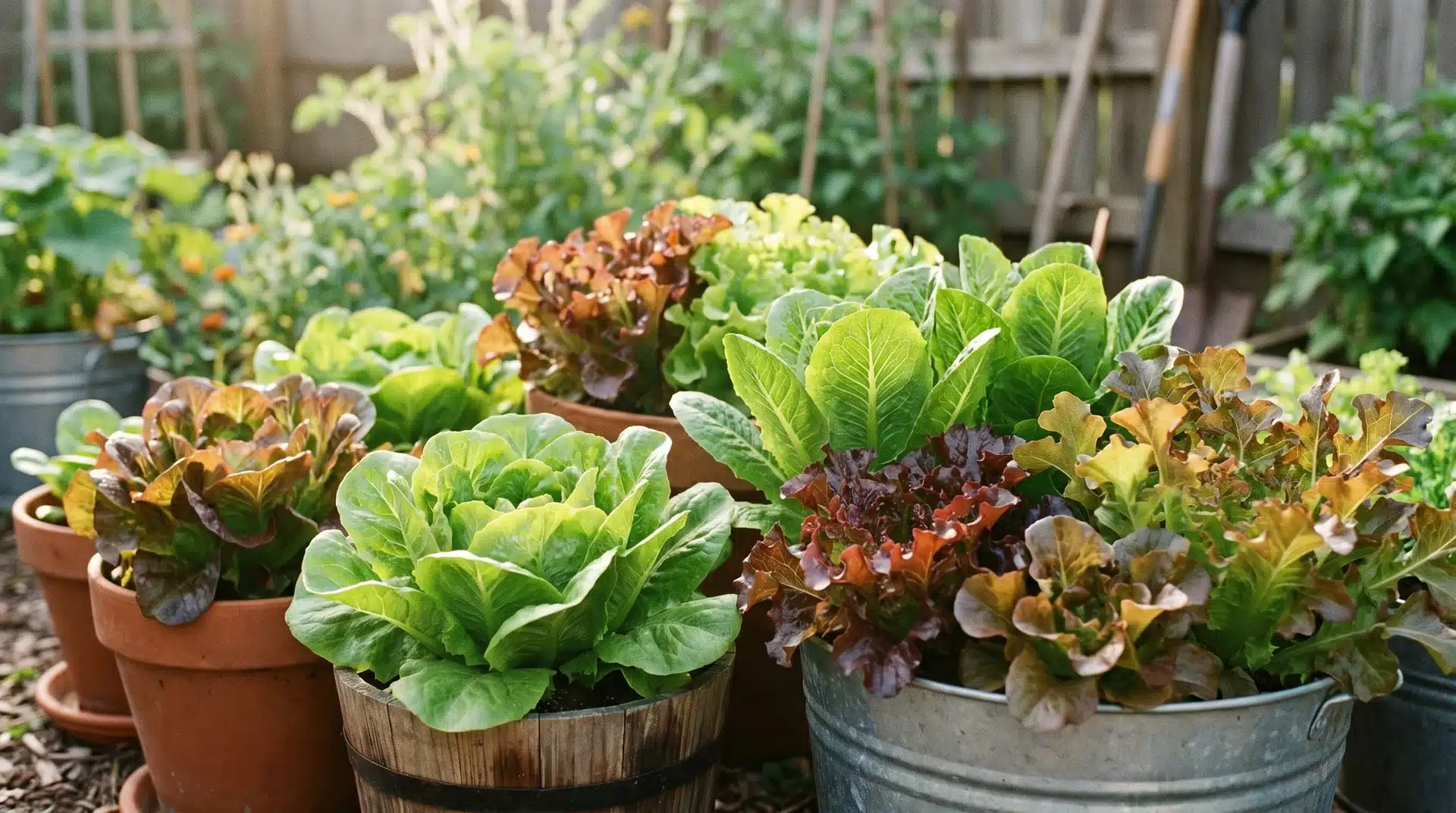
Not all lettuce types perform equally in pots. Some stay compact and regrow after cutting. Others bolt too early.
Here are five varieties that work well in containers:
- Buttercrunch: soft, buttery leaves with a compact head. Ready in 60 to 70 days. Works well with the cut-and-come-again harvest method.
- Black-Seeded Simpson: loose-leaf, heat-tolerant, ready in just 45 days. One of the fastest producers for container growing.
- Oakleaf: Resists bolting better than most other varieties. A solid choice for spring and early summer.
- Little Gem: a mini romaine that forms small, compact heads. Fits well in tighter containers.
- Red Salad Bowl: loose-leaf with deep red coloring. Pick outer leaves continuously throughout the season.
Pro tip: Plant two or three varieties in one wide container. You get a built-in salad mix without using extra pots.
What is the Best Soil Choice for Container Lettuce
Soil is the most important factor when growing lettuce in pots. The wrong mix leads to plants that dry out too fast or sit in soggy soil.
Never use regular garden soil in a container. It compacts too tightly in pots, cutting off air to the roots.
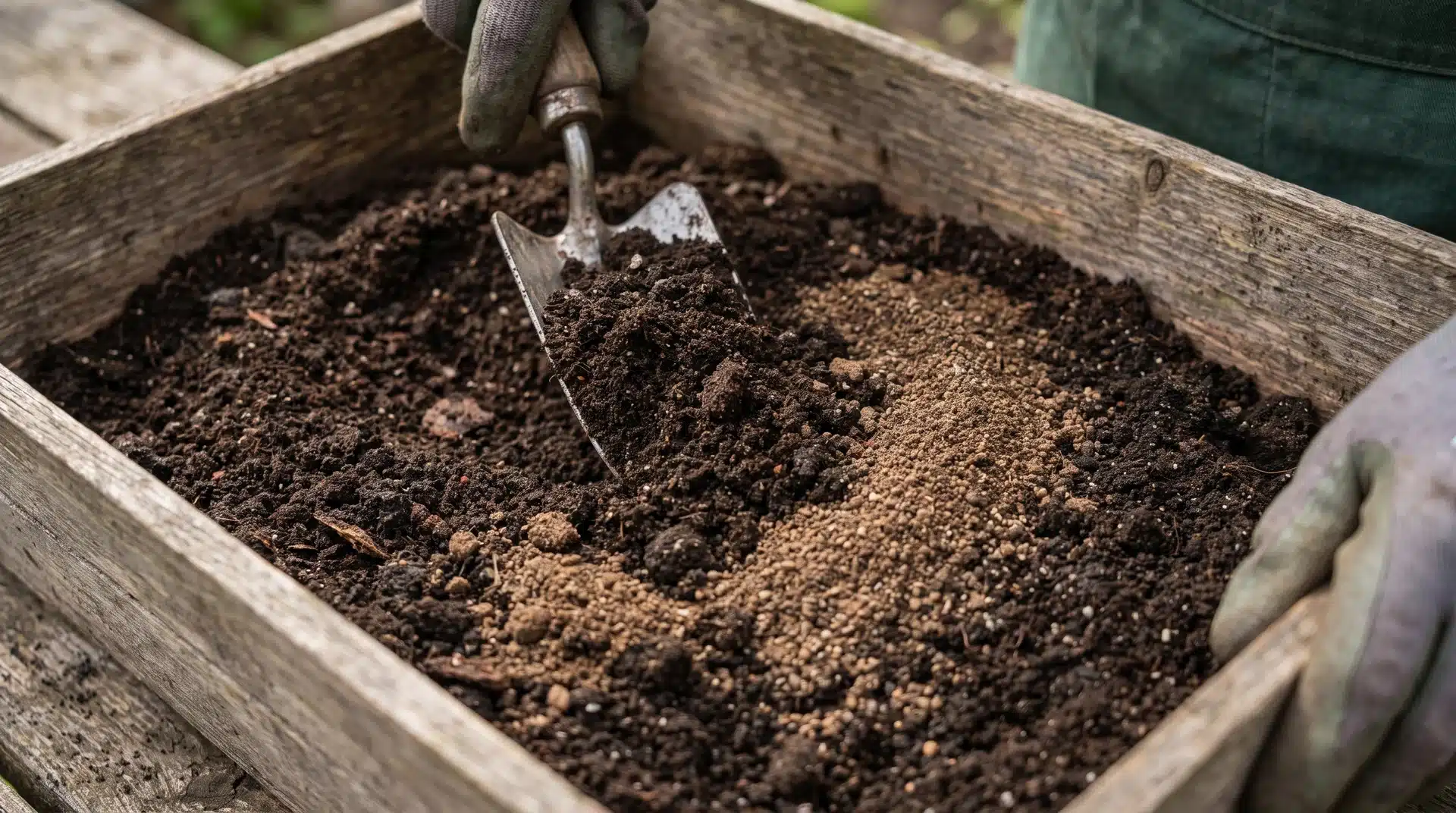
Start with a quality organic potting mix as your base. Mix in compost at a 3:1 ratio (three parts potting mix to one part compost).
Earthworm castings work particularly well here. They feed the plant steadily without burning the roots.
At planting time, mix in half a tablespoon of slow-release fertilizer per gallon of soil. This gives the plants a head start from day one.
One optional trick: place a coffee filter at the base of the container before filling. It stops soil from washing out through the drainage holes.
When Should You Plant Lettuce in Containers
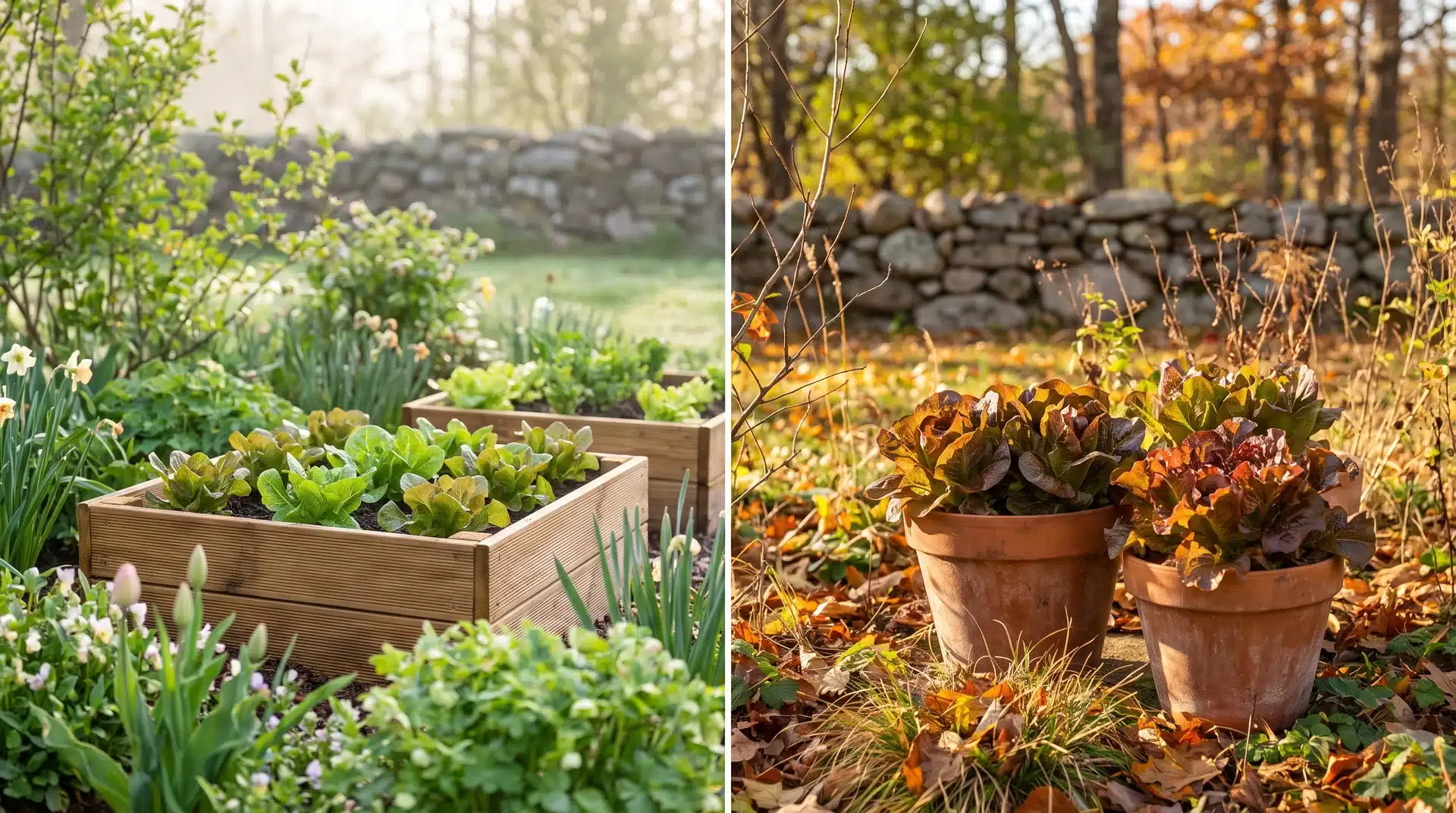
Timing matters more with lettuce than with most vegetables. Plant too early in cold soil, and germination slows down. Plant during peak summer heat, and the plant bolts before you get a single harvest.
Lettuce germinates best when soil temperatures sit between 60 and 75°F. Plants grow well in air temperatures between 45 and 75°F.
- Spring planting: start 4 to 6 weeks before your last expected frost date
- Fall planting: start 6 to 8 weeks before your first expected frost
You can check your USDA hardiness zone at the USDA Plant Hardiness Zone Map.
Summer growing is possible with the right variety. Oakleaf and Black-Seeded Simpson hold up better in warm weather. Move the pots to afternoon shade once daytime temps regularly exceed 70°F.
How Often Should You Water Container Lettuce
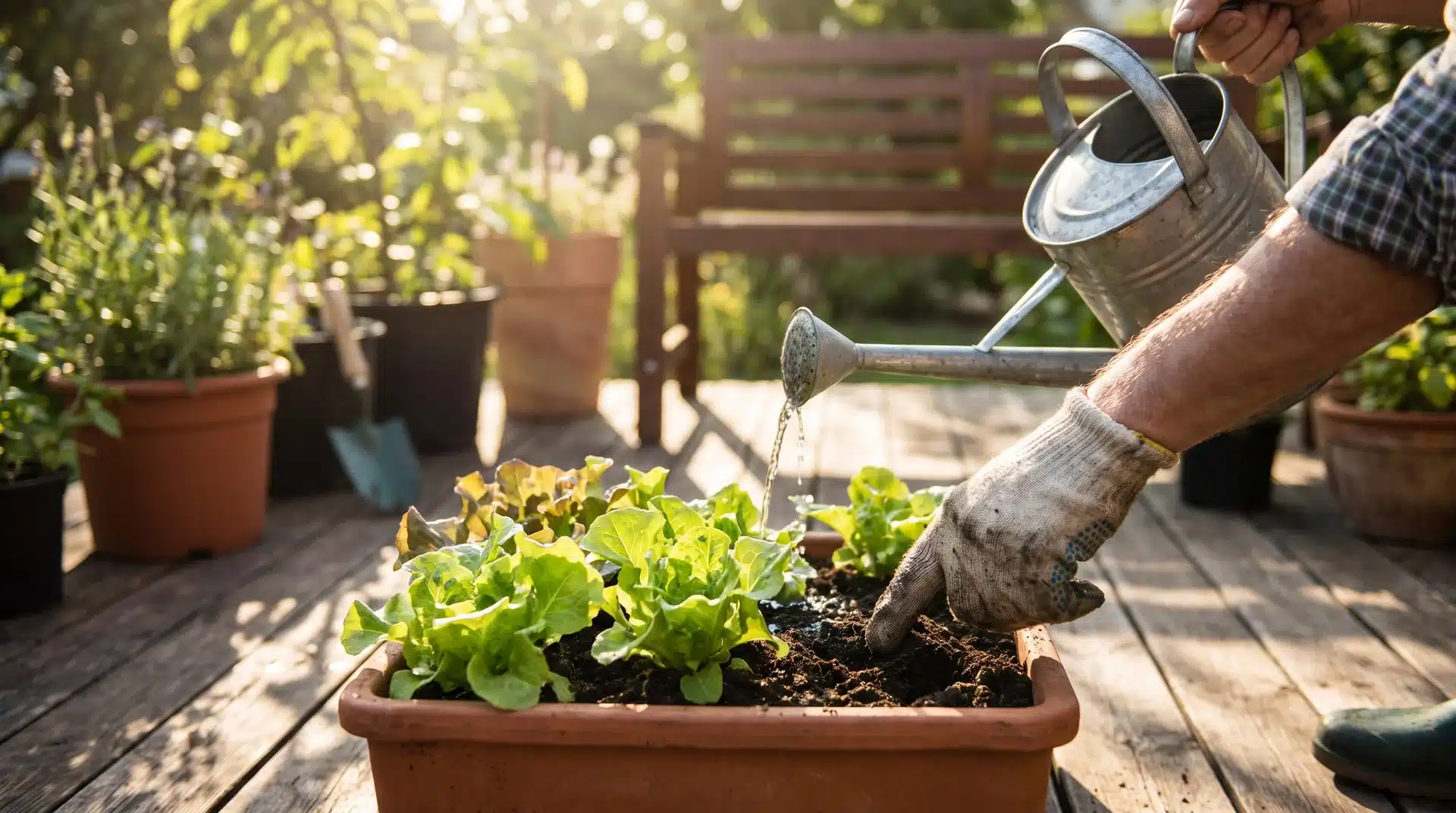
Watering is one of the most common challenges in container-grown lettuce. Pots lose moisture much faster than garden beds, and a terracotta container can dry out fast on a warm afternoon.
Check the soil daily. The goal is consistently moist soil. Stick your finger about an inch into the soil. If it feels dry at that depth, water it.
On very hot days, you may need to water twice. Always water at the base of the plant, not over the leaves. Wet leaves invite fungal problems.
A self-watering container is the most practical fix for the daily watering challenge. It holds a water reservoir at the base and feeds moisture up to the roots from below, so the soil stays damp without daily checking.
How to Stop Lettuce from Bolting in Containers
Bolting occurs when a lettuce plant stops producing leaves and instead grows a flower stalk. Once it starts, the leaves turn bitter quickly.
The main trigger is heat. Temperatures above 75 to 80°F, combined with long days, push lettuce toward bolting.
Here is how to stop it:
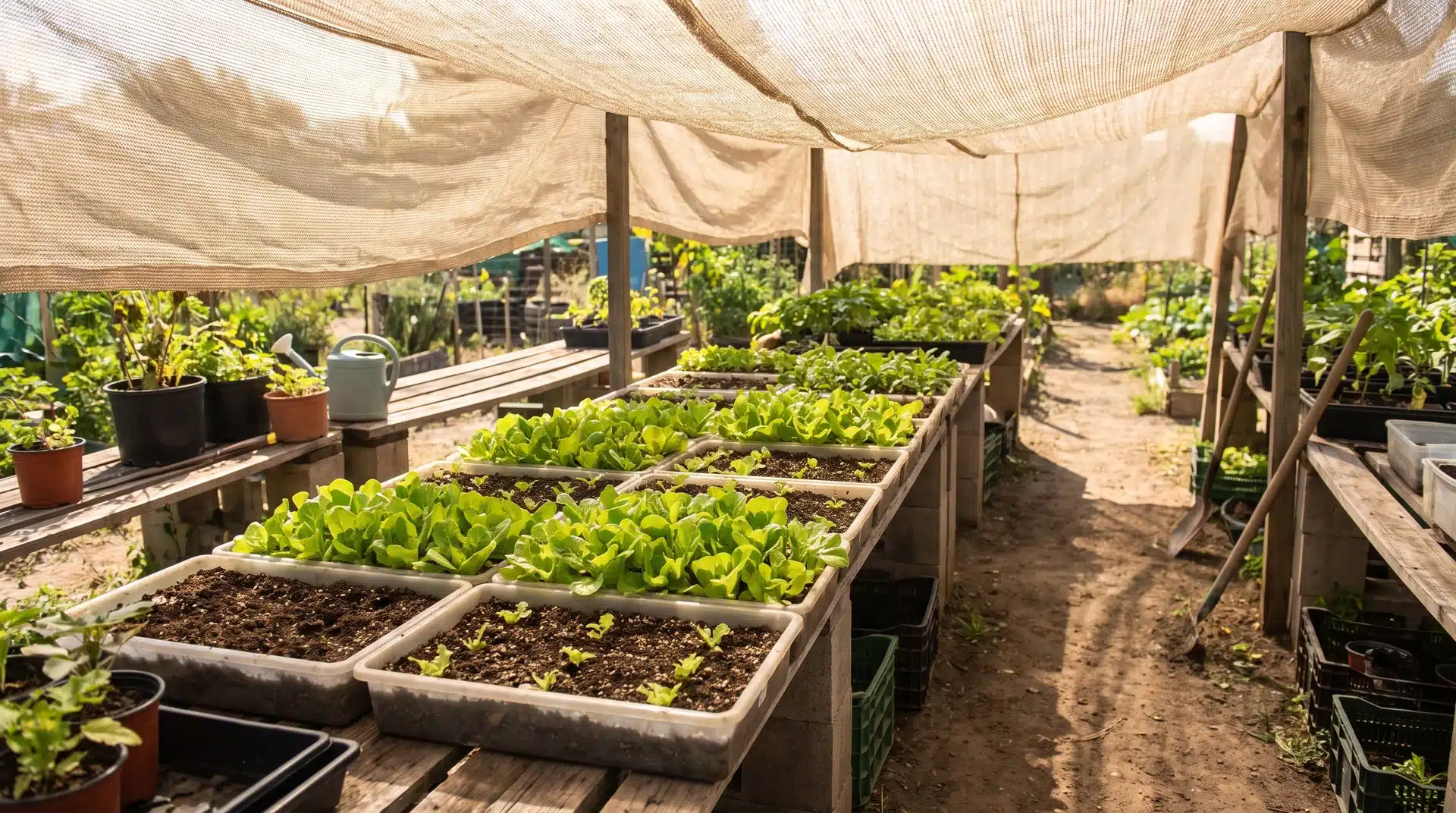
1. Move to Afternoon Shade: Move the pot to afternoon shade once daytime temperatures rise above 70°F. This is a real advantage of container growing over in-ground planting.
2. Choose Bolt-Resistant Varieties: Select heat-tolerant types like Oakleaf and Black-Seeded Simpson, which perform better in warm conditions and are slower to bolt.
3. Harvest Regularly: Pick outer leaves often. This encourages continuous growth and delays the plant’s transition to flowering.
4. Use Shade Cloth When Needed: During peak summer heat, cover plants with a 30 to 40% shade cloth to reduce stress and keep leaves tender.
If bolting has already started, harvest the whole plant right away. The leaves are still usable before the flower stalk fully opens.
How to Harvest Lettuce from Containers
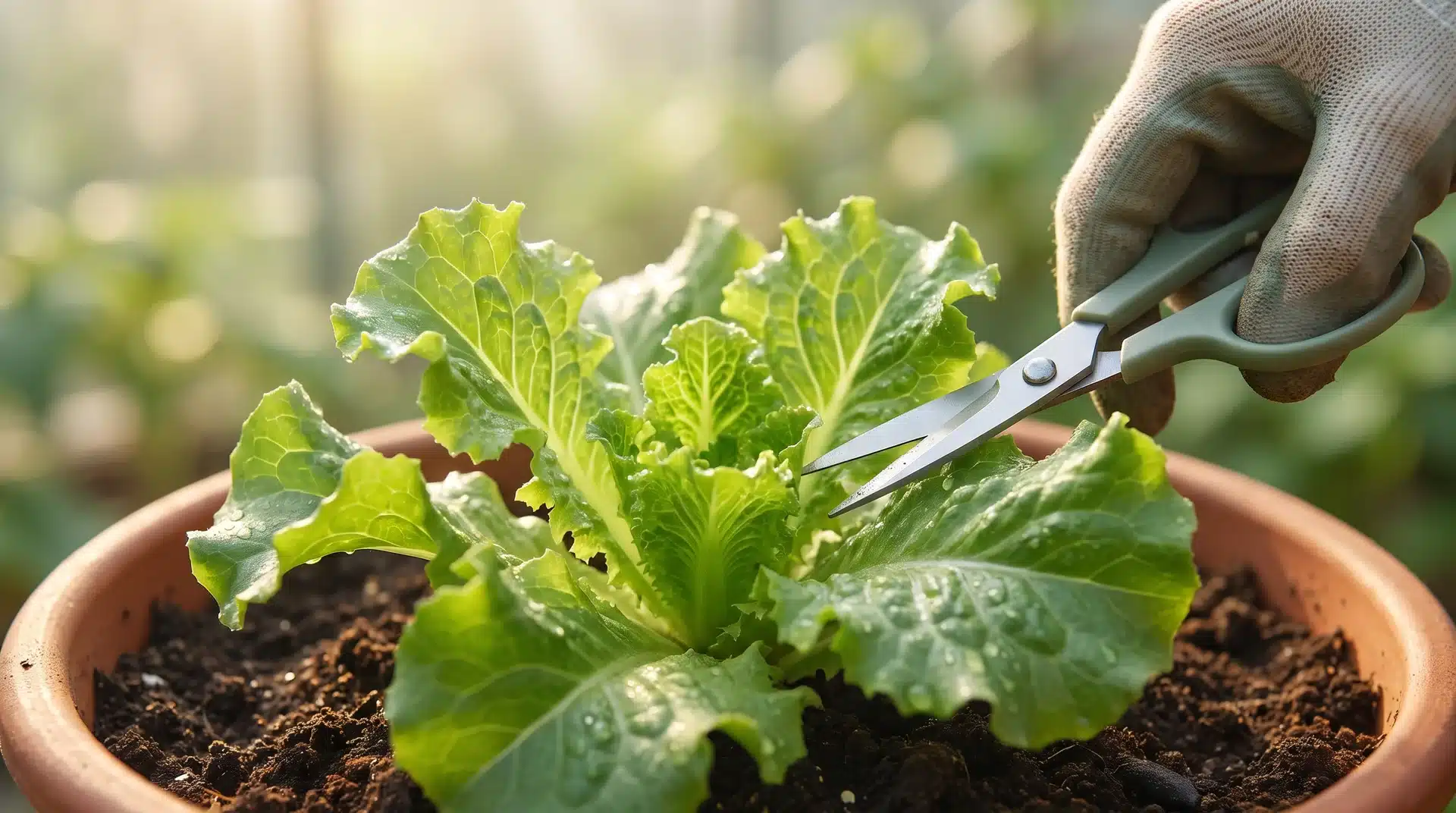
How you harvest determines how long your lettuce keeps producing.
The cut-and-come-again method works best for loose-leaf varieties. Use clean scissors to snip the outer leaves. Leave at least 1 inch of the plant at the base. New leaves grow back within a few days.
Harvest in the morning. Leaves hold more water early in the day. Morning-cut lettuce stays crisp much longer than leaves picked during afternoon heat.
For a full-head harvest, cut at the base with a sharp knife, leaving 1 inch of stem.
Post-harvest storage: wrap fresh leaves in a damp paper towel and store in an airtight container in the refrigerator. Cut lettuce stays crisp for 5 to 7 days.
Why Does Lettuce Grow Well in Containers
Lettuce is one of the most practical crops for small-space growing. Its roots stay shallow, it grows quickly, and it needs very little soil depth to produce well.
Lettuce roots need just 6 inches of soil depth to grow at full speed. That’s shallower than most vegetables. When I grow tomatoes in containers, I need a pot twice as deep to support the root system. Lettuce gets by on a fraction of that.
Some loose-leaf varieties are ready to pick in as little as 45 days. That’s faster than almost any other vegetable you can grow at home.
The biggest advantage of containers is that you can move them. Birds go after my seedlings in the raised beds every spring, so I keep a couple of lettuce pots up on the patio table instead, out of easy reach.
If temperatures rise, you shift the pot to a shadier spot. No in-ground plant gives you that option.
Common Problems When Growing Lettuce in Containers
A few problems recur in container lettuce gardens. Most are easy to fix once you know what you are looking at.
1. Slugs and snails are the most common pests. Keep pots on a hard surface like a patio, not on grass or near a lawn. Use beer traps or sprinkle diatomaceous earth around the base of the pot.
2. Yellowing leaves usually mean the plant is low on nitrogen. Top-dress the soil with a small amount of compost or apply a liquid fertilizer at half strength. Containers need more frequent feeding than in-ground plants.
3. Tip burn (brown leaf edges) is linked to inconsistent watering. A self-watering container helps prevent this by keeping soil moisture levels steady.
4. Leggy seedlings mean the plant is not getting enough light. Move the pot to a spot with at least 4 to 6 hours of direct sun each day.
Keeping the Harvest Going
Container lettuce keeps producing as long as the basics stay steady: good drainage, damp but not soggy soil, and a spot that avoids the worst of the afternoon heat.
Start a new pot every two to three weeks, and you’ll have fresh leaves coming in long after a single planting would have bolted and quit.
Try one pot this week. If it works out, add a second variety next month and build your own rotation from there.
Frequently Asked Questions
What is the Best Fertilizer for Lettuce?
A balanced fertilizer with a higher nitrogen ratio works best. Compost, well-rotted manure, or a liquid feed all support healthy leaf growth.
Do Coffee Grounds Help Lettuce Grow?
Yes. Using coffee grounds as fertilizer adds mild nitrogen, but compost them first. Fresh grounds can raise acidity around lettuce roots.
What is the Best Companion for Lettuce?
Carrots, radishes, onions, and dill all work well. They fill the gaps between lettuce plants, help keep pests down, and make better use of a small container.