
Quick Answer: The fastest way to propagate a Chinese money plant is to separate a rooted pup from the mother plant at the base. You can also root a stem cutting in water or soil, or root a stem plantlet cut from the main stem. Pups take the least effort since they already have a small root system attached.
I’ve pulled dozens of pups off my own Chinese money plants, and I killed my first three before I figured out what I was doing wrong.
A pup pulled too early, cut in the wrong spot, or dropped straight into soil without rooting in water first usually doesn’t make it.
Propagating a Chinese money plant isn’t hard once you know where to cut and when.
This guide covers three methods that work: pups, stem cuttings, and stem plantlets.
It also covers why a freshly potted pup wilts, why a cutting can sit in water for weeks with no roots, and what to do when the mother plant won’t produce babies at all.
What Is the Chinese Money Plant?
The Chinese money plant, known by its scientific name Pilea peperomioides, is native to the Yunnan and Sichuan provinces of southern China.
It grows shiny, round, coin-shaped leaves that can reach up to 4 inches wide. People also call it the friendship plant, the pass-it-on plant, the UFO plant, and the pancake plant.
The nickname “pass-it-on plant” came from a tradition. For decades, people shared baby plants with friends and neighbors rather than buying new ones.
That habit of gifting pups is part of why this plant makes such a good candidate for propagation. It’s built to make babies naturally.
A healthy Pilea produces small offset plants from its root system and its stem. These offsets are the easiest way to grow more plants.
Best Time to Propagate a Chinese Money Plant
Spring is the best time to propagate a Chinese money plant. The plant is actively growing, with more stored energy to quickly push out new roots.
Indoor temperatures between 65°F and 75°F keep new root growth moving. Summer works well too. Fall and winter propagation is possible, but expect slower results.
The plant’s growth slows in cooler months, which means rooting takes longer and the chance of failure goes up slightly.
One key thing to check before cutting: a pup should be at least 2 to 3 inches tall with a few of its own leaves before you remove it. A pup that’s too small will struggle to survive once it’s cut from the mother plant.
What You Need Before You Start
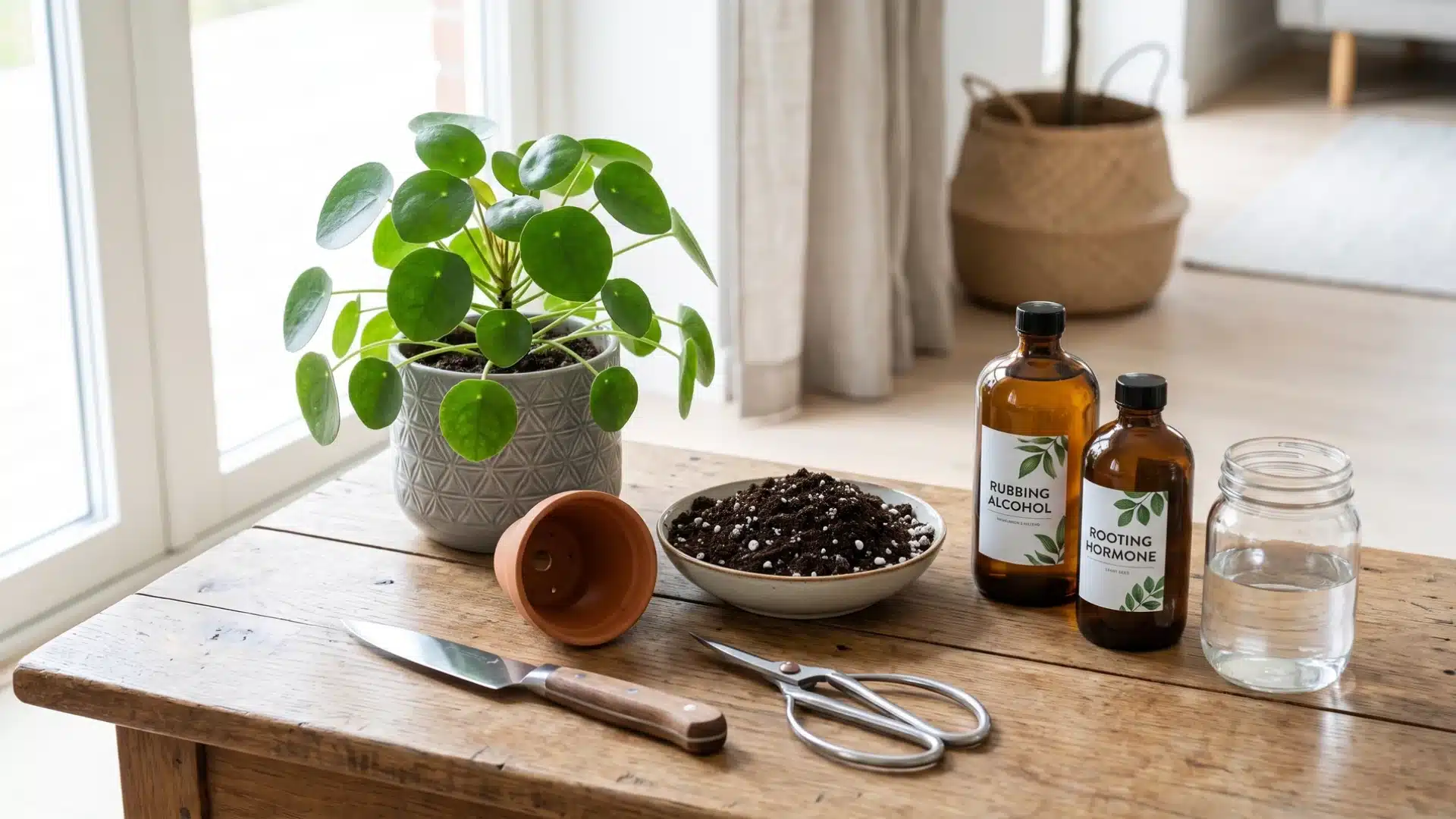
You don’t need special equipment. Most of these items are already at home.
- A sharp, clean knife or scissors: dull blades crush stems rather than cut them cleanly. Dirty blades transfer bacteria between plants. Wipe your tools with rubbing alcohol before use.
- Small pots with drainage holes: a 3 to 4-inch pot is ideal for a pup. A pot that’s too large holds too much moisture and can cause root rot.
- Well-draining potting mix: a 2:1 mix of standard potting soil and perlite works well. Perlite loosens the soil, stops compaction, and supports root growth.
- A glass or jar of clean water: if you root in water first, use purified water or tap water that has sat out overnight. This reduces the chlorine to which some plants are sensitive.
- Rooting hormone (optional): not needed for pups, since they already have a small root system. It can help with stem cuttings, but it isn’t required.
How to Propagate a Chinese Money Plant From Pups
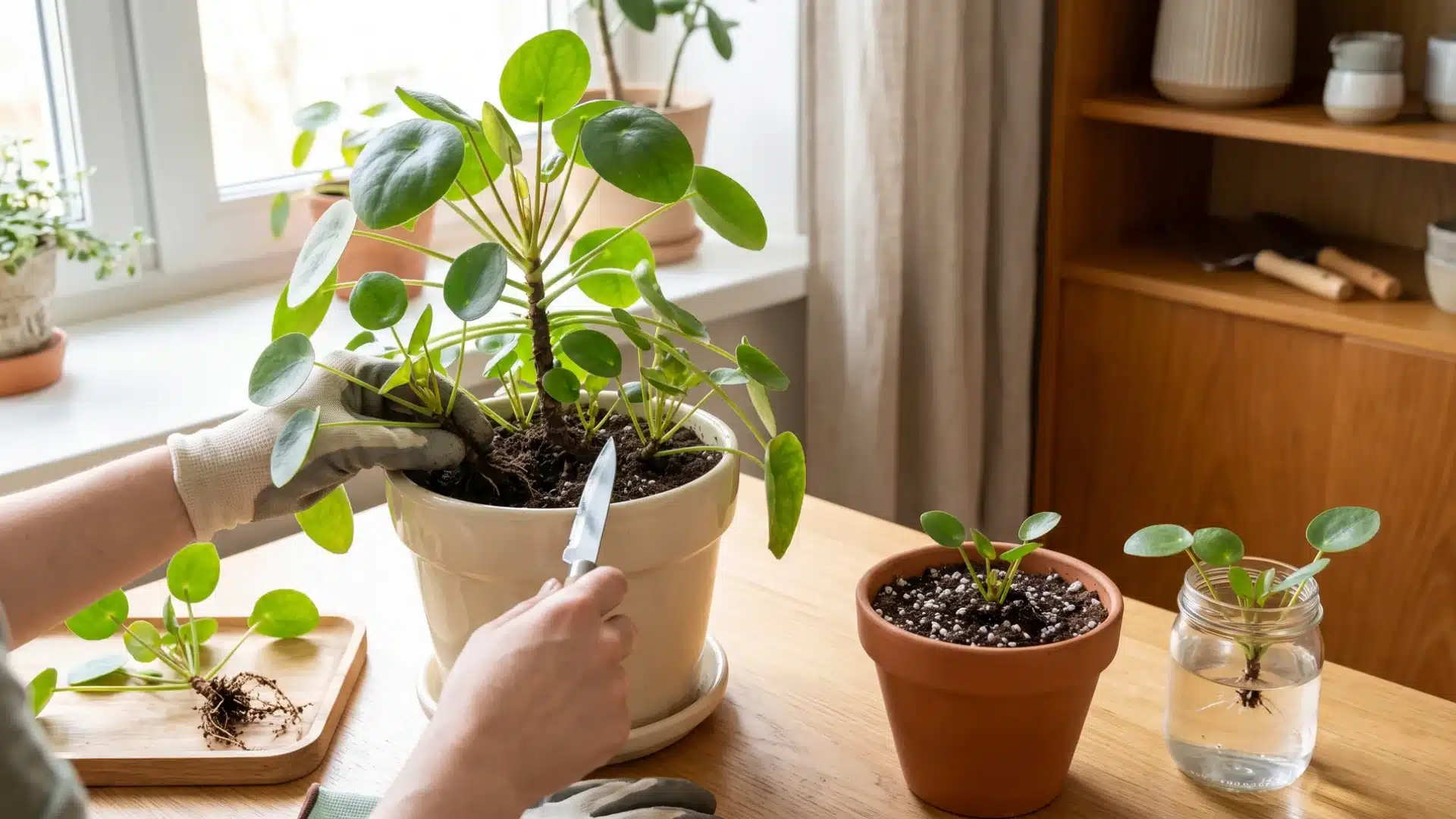
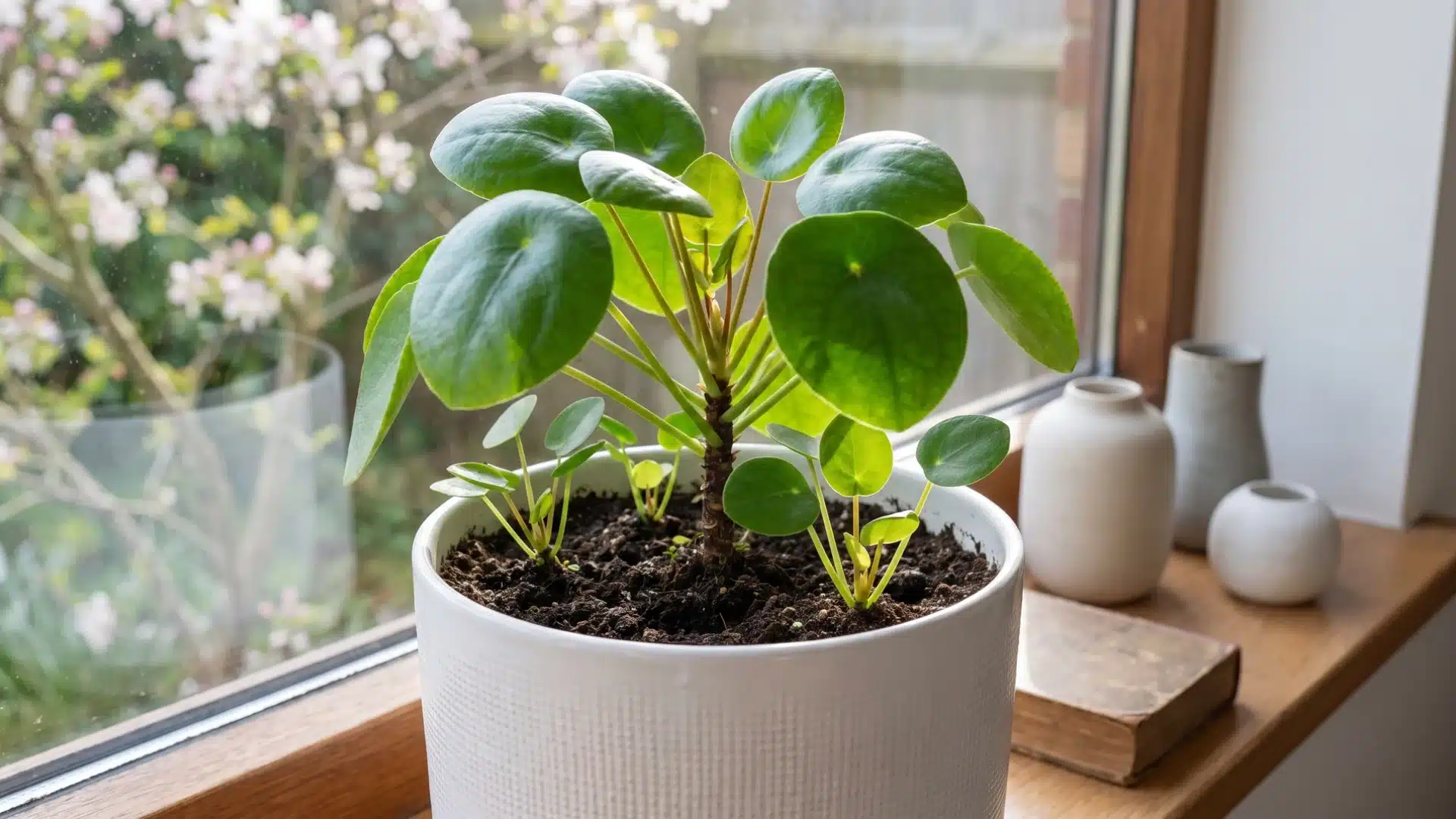
This is the easiest and most reliable method. Pups are small baby plants that grow from the mother plant’s underground rhizomes near the base of the pot. They already have a tiny root system, which gives them a head start.
Step 1: Look at the base of your plant. Pups appear as small Pilea-shaped sprouts emerging from the soil. Wait until a pup has at least 2 to 3 inches of height and a few leaves before removing it.
Step 2: Use your fingers to gently dig around the pup and find the rhizome, the root-like structure that connects it to the mother plant underground.
Step 3: Use a clean, sharp knife to cut the rhizome as close to the mother plant as possible. Leave as much of the rhizome attached to the pup as you can. I’ve cut pups too close to the base before, and the ones with more rhizome attached root noticeably faster.
Step 4: You now have two options:
- Plant directly in soil: fill a small pot with your potting mix. Push the rhizome end into the soil, deep enough that the pup stands upright on its own. Water thoroughly and keep the soil lightly moist for the first few weeks.
- Root in water first: place the rhizome end in a glass of clean water, with the water level reaching just to the top of the rhizome. The same rules that apply to rooting cuttings in water apply here too: keep the leaves above the surface, and move the pup to soil once roots reach about 1 inch long, usually in 1 to 2 weeks.
You don’t need to dip pups in rooting hormone. Their rhizomes already give them a root advantage.
How to Propagate a Chinese Money Plant From Stem Cuttings
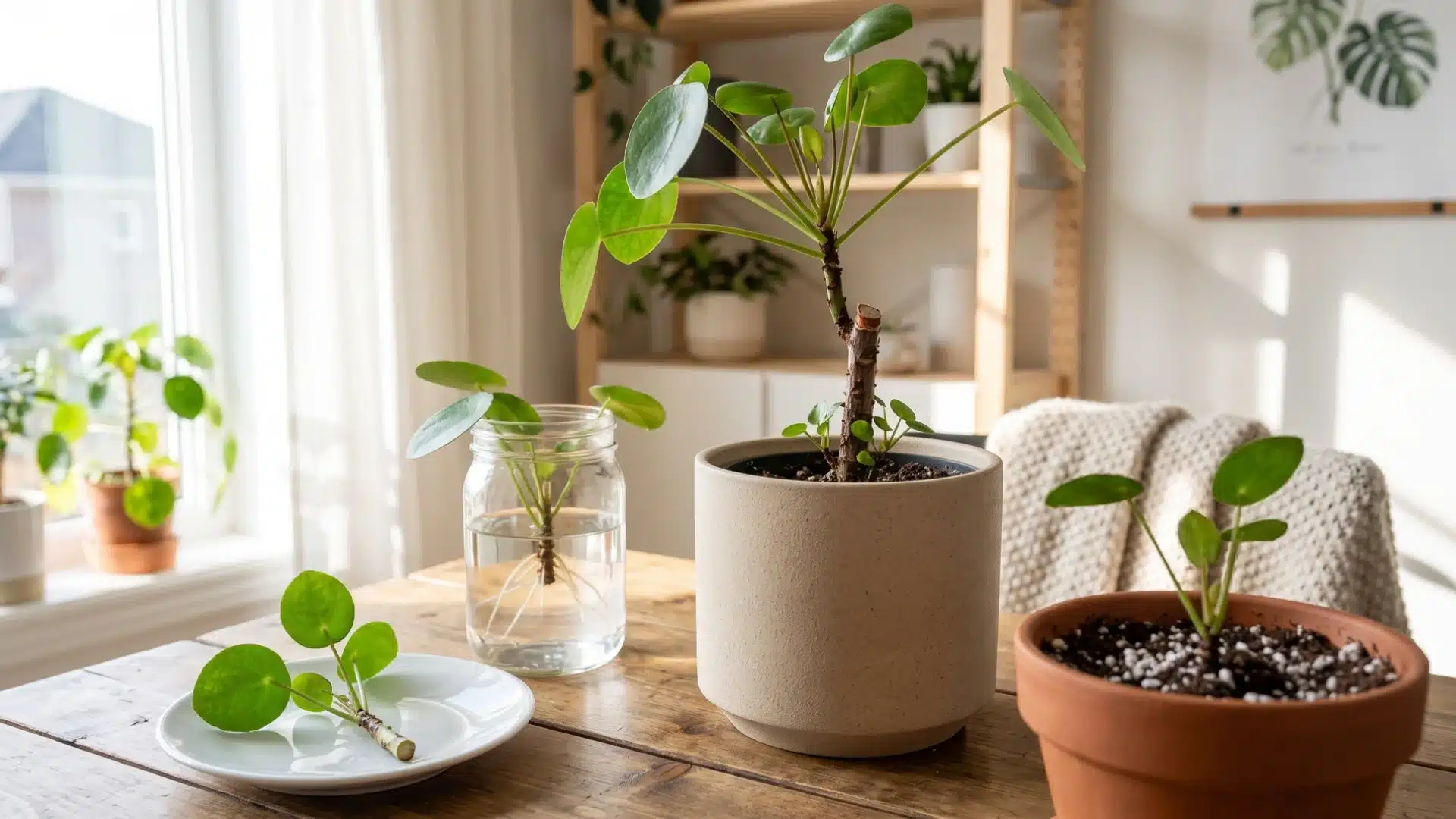
Use this method when your plant has no pups yet, is too tall and leggy, or you want to use trimmings from a recent pruning session.
Step 1: Choose a healthy section of stem with at least 2 to 3 leaves attached. Cut 2 to 3 inches below the leaves with a clean, sharp knife.
Step 2: Set the cutting aside for 2 to 3 days. This lets the cut end callous over, which lowers the risk of rot when it comes into contact with water or soil.
Step 3: Place the cut end in a glass of clean water. Keep the stem submerged, but keep the leaves out of the water entirely. Set the glass somewhere with bright, indirect light.
Step 4: Change the water fully every week, topping it off between changes.
Step 5: Once roots reach 1 to 2 inches long, usually after 3 to 5 weeks, move the cutting into a small pot of well-draining soil. This is close to the same process as propagating pothos in water, so if you’ve rooted one of those before, the steps will look familiar.
A useful bonus: cutting the main stem of the mother plant encourages it to grow new side shoots, resulting in a fuller, bushier plant over time.
How to Propagate a Chinese Money Plant From Stem Plantlets
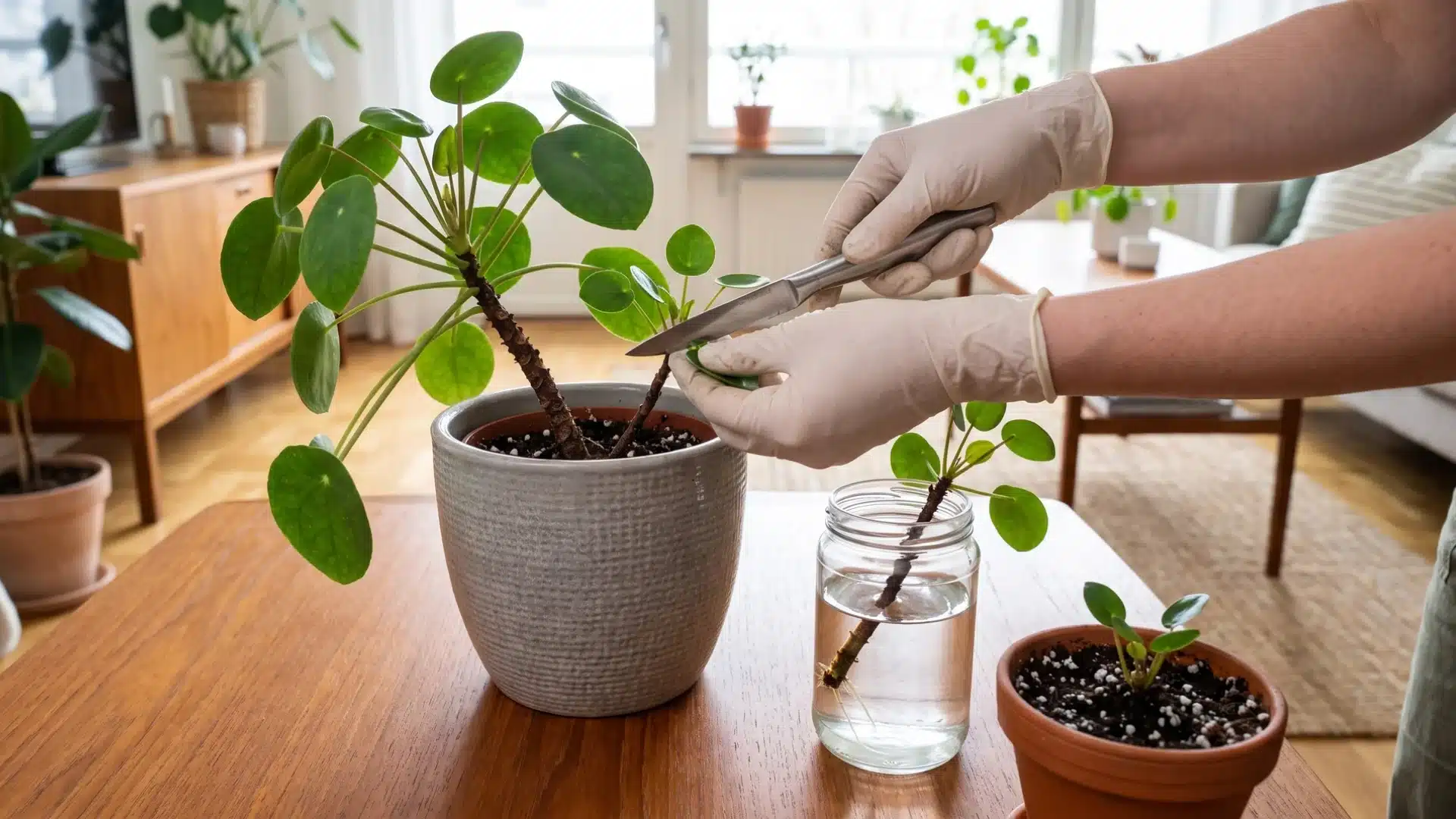
Stem plantlets look similar to pups, but they grow directly off the main stem rather than from the soil.
The key difference is that stem plantlets have no root system when cut. They need more attention than pups, but they’re still straightforward to handle.
Step 1: Wait until a stem plantlet is about 2 to 3 inches long. Smaller ones are harder to keep alive after cutting.
Step 2: Use a clean, sharp knife to remove the plantlet. Cut it as close to the parent stem as possible without damaging the main plant.
Step 3: Place the cut end directly into a glass of water. Keep the leaves above the surface. Roots form from the cut end over the next 3 to 4 weeks.
Step 4: Once a visible root system forms, move the plantlet into a small pot of fresh, moist potting mix.
Water vs. Soil: Which Method Works Better?
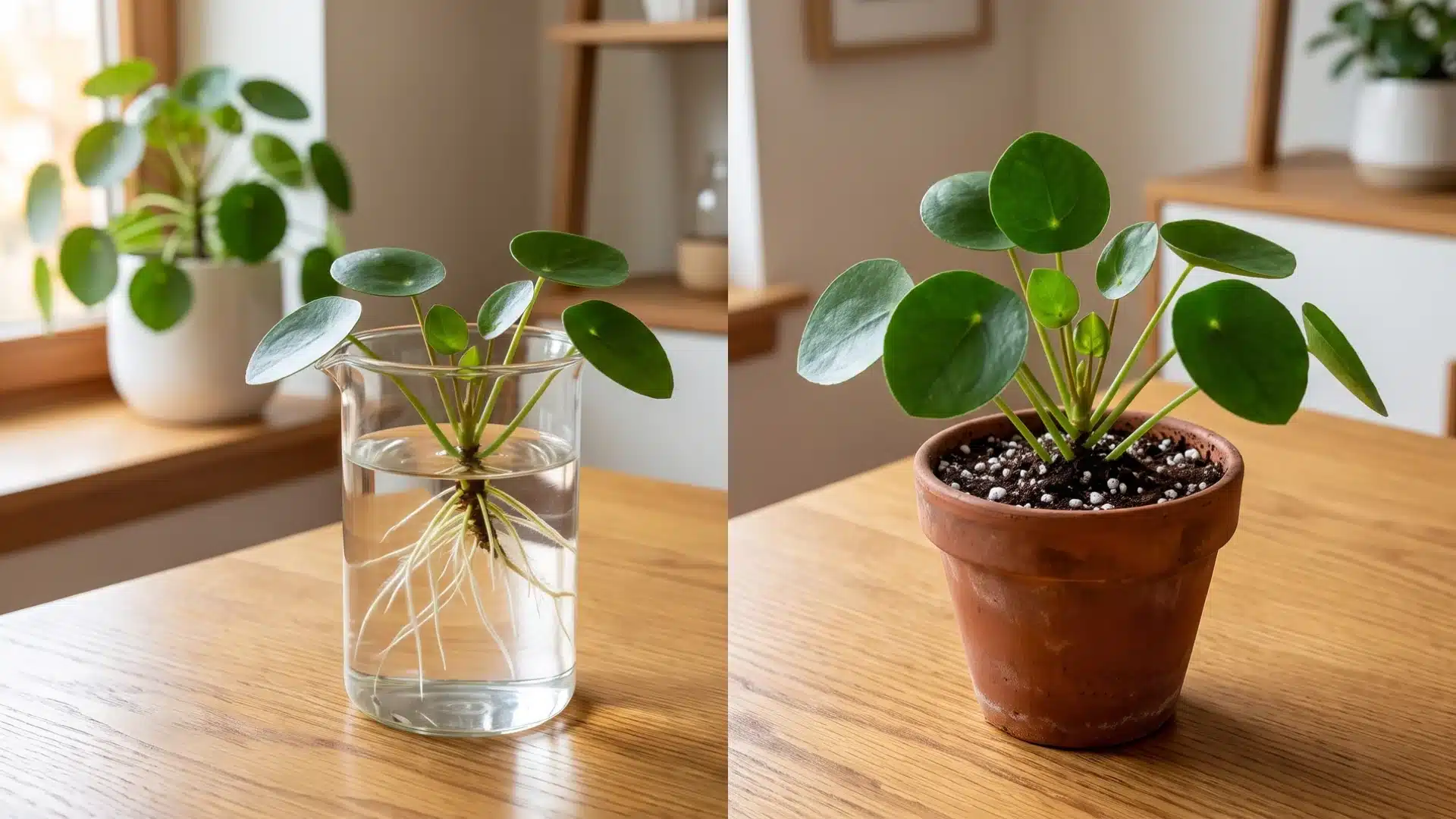
Both methods work. The right choice depends on how you want to monitor progress.
Water propagation lets you watch roots develop in real time. You know exactly when the cutting is ready to pot up. The downside is transfer shock when you move a water-rooted cutting into soil. The roots are adapted to water and need time to adjust to a drier environment.
Soil propagation skips the transfer step entirely. The roots develop and are already adapted to soil conditions. The downside is that you can’t see what’s happening underground, so it’s harder to know when the cutting has rooted.
Best approach for beginners: start in water for 1 to 2 weeks to confirm roots are forming, then transfer to soil. Keep the soil slightly more moist than usual during the first two weeks after transfer to ease the switch.
Caring for Your Newly Propagated Chinese Money Plant
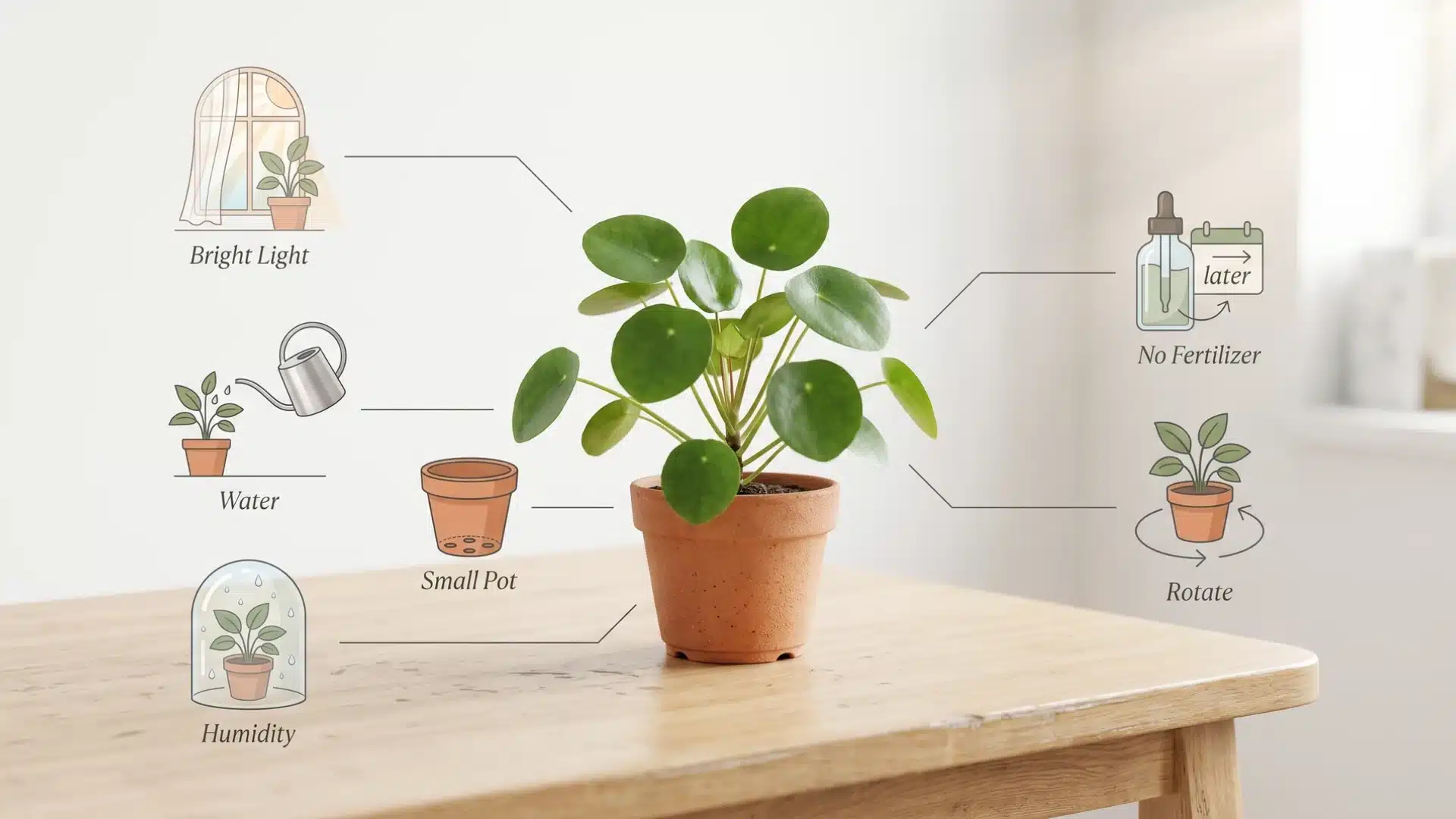
The first 4 to 6 weeks after propagation matter most. Young plants are more sensitive than mature ones, so their care needs differ slightly.
1. Light: Place the pot near an east- or west-facing window. Bright, indirect light is ideal. Keep new plants out of direct sun. The leaves can scorch easily at this stage.
2. Watering: Keep the soil slightly more moist than you would for a mature plant. Water when the top 2 to 3 inches of soil feel dry. Don’t let the pot sit in standing water. That leads to root rot.
3. Pot size: A 3- to 4-inch pot is the right size for a new pup. Pilea plants do better when the pot fits snugly around the roots. A pot that’s too large holds excess moisture and slows root development.
4. Fertilizing: Wait at least 2 to 3 months before adding any fertilizer. New plants are too tender to handle feeding right away.
5. Rotation: Turn the pot a quarter turn every week. This keeps the plant from leaning toward the light and maintains even growth.
6. Humidity boost: If your new cutting looks stressed after potting, cover it loosely with a clear plastic bag for 2 to 3 days. This raises humidity around the plant and helps it settle in.
Troubleshooting: What to Do When Propagation Goes Wrong
Here are the five problems I run into most often, and exactly what to do about each one.
1. The pup wilted right after planting: this is transplant shock, and it’s normal. The roots are adjusting to their new environment. Keep the soil lightly moist and place a loose plastic bag over the plant for a few days to raise humidity. The pup should recover within a week.
2. The cutting has been in water for over a month with no roots: check three things: light, warmth, and water freshness. Move the glass to a slightly warmer spot with more light, and change the water fully. If you’re using tap water straight from the faucet, switch to water that has sat out overnight.
3. The leaves are turning yellow: yellow leaves on a new cutting almost always point to overwatering. The root system at this stage is small and can’t handle much moisture. Let the soil dry out more between waterings and confirm the pot has a working drainage hole.
4. The leaf cutting has roots, but no new growth is appearing: for leaf cuttings to produce new plantlets, the cutting needs a small piece of the main brown trunk where the leaf connects. A leaf with just its petiole (the thin stalk) attached will grow roots but won’t produce new plants. This is different from growing succulents from leaf cuttings, where the leaf alone can form a whole new plant with no stem needed.
5. The mother plant isn’t making any pups: three common causes: not enough light, not enough pot space, or a plant that’s still too young. Move it to a brighter spot, check whether it’s root-bound and needs a slightly larger pot, and give it time. A plant that’s been in the same small pot for years with little light will focus on survival rather than reproduction.
Which Method Should You Try First?
Propagating a Chinese money plant comes down to three methods: pups, stem cuttings, and stem plantlets.
Pups are the easiest because they already have a partial root system. Stem cuttings work best when no pups are available. Stem plantlets fall in between: straightforward, but they need water rooting before soil.
Every method here follows the same core propagation basics that apply to any houseplant: clean tools, the right light, and patience while roots form.
Every new plant you grow is one you can keep, give to a friend, or use to fill a bare corner. Which method are you trying first? Tell us in the comments.
Frequently Asked Questions
Can You Propagate a Chinese Money Plant From a Leaf Alone?
No. A single leaf without a piece of stem attached will grow roots but never a new plant. The cutting needs a small section of stem where the leaf connects.
Where Do You Cut a Chinese Money Plant to Propagate It?
Cut pups at the rhizome near the mother plant’s base. For stem cuttings, cut 2 to 3 inches below a set of leaves.
How Long Does It Take Cuttings to Root in Water?
Stem cuttings usually root in 3 to 5 weeks. Pups root faster, often in 1 to 2 weeks, since they already have a small rhizome.
Is a Chinese Money Plant the Same as a Money Tree?
No. Chinese money plant is Pilea peperomioides. Money tree usually means Pachira aquatica, a different plant covered separately in our money plant propagation guide.
Can You Propagate a Chinese Money Plant in Winter?
Yes, but expect slower rooting. Lower light and cooler temperatures slow root growth, so winter cuttings can take twice as long as spring ones.