Quick answer
How do you care for a poinsettia?
Keep a poinsettia in bright, indirect light and steady temperatures of 60 to 70°F, away from drafts. Water only when the soil surface feels dry or the pot feels light; remove any foil or plastic sleeve first, then let excess water drain fully. Avoid cold windows and temperatures below 50°F.
I left my new poinsettia in the car for about ten minutes on a cold afternoon. Two leaves dropped that same week (I apologized to the plant out loud, and it clearly didn’t care).
That’s how I learned the first week decides most of poinsettia care. Cold air, a crowded store display, or too many days in the plastic sleeve can set off leaf drop that shows up days later.
Below are the steps I follow from store shelf to next fall, plus a troubleshooting table and the rebloom schedule.
Poinsettia Care Starts with Choosing a Healthy Plant
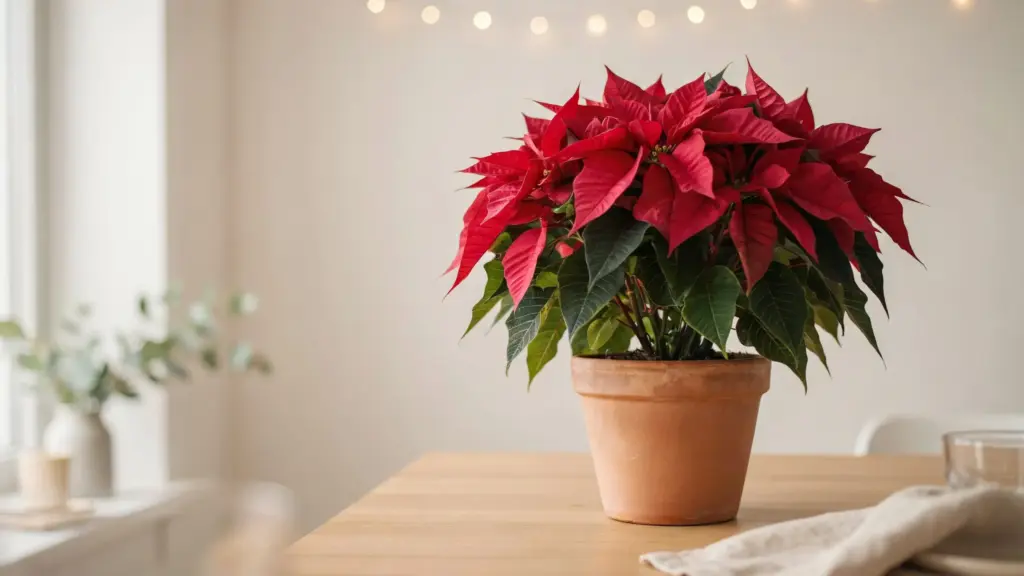
The poinsettia (Euphorbia pulcherrima) shows up in stores in November next to other holiday plants. Look for dense, deep green foliage with no yellowing or dropped leaves near the base. The bracts (the colored parts most people mistake for flowers) should look full.
The tiny true flowers in the center should be mostly closed with little pollen, which Oklahoma State University Extension links to a longer shelf life.
Skip plants sitting in a crowded display near an entrance. I picked mine from a shelf well away from the door, with bracts colored all the way to the edges and no pollen showing.
Poinsettia Care Basics
1. Light
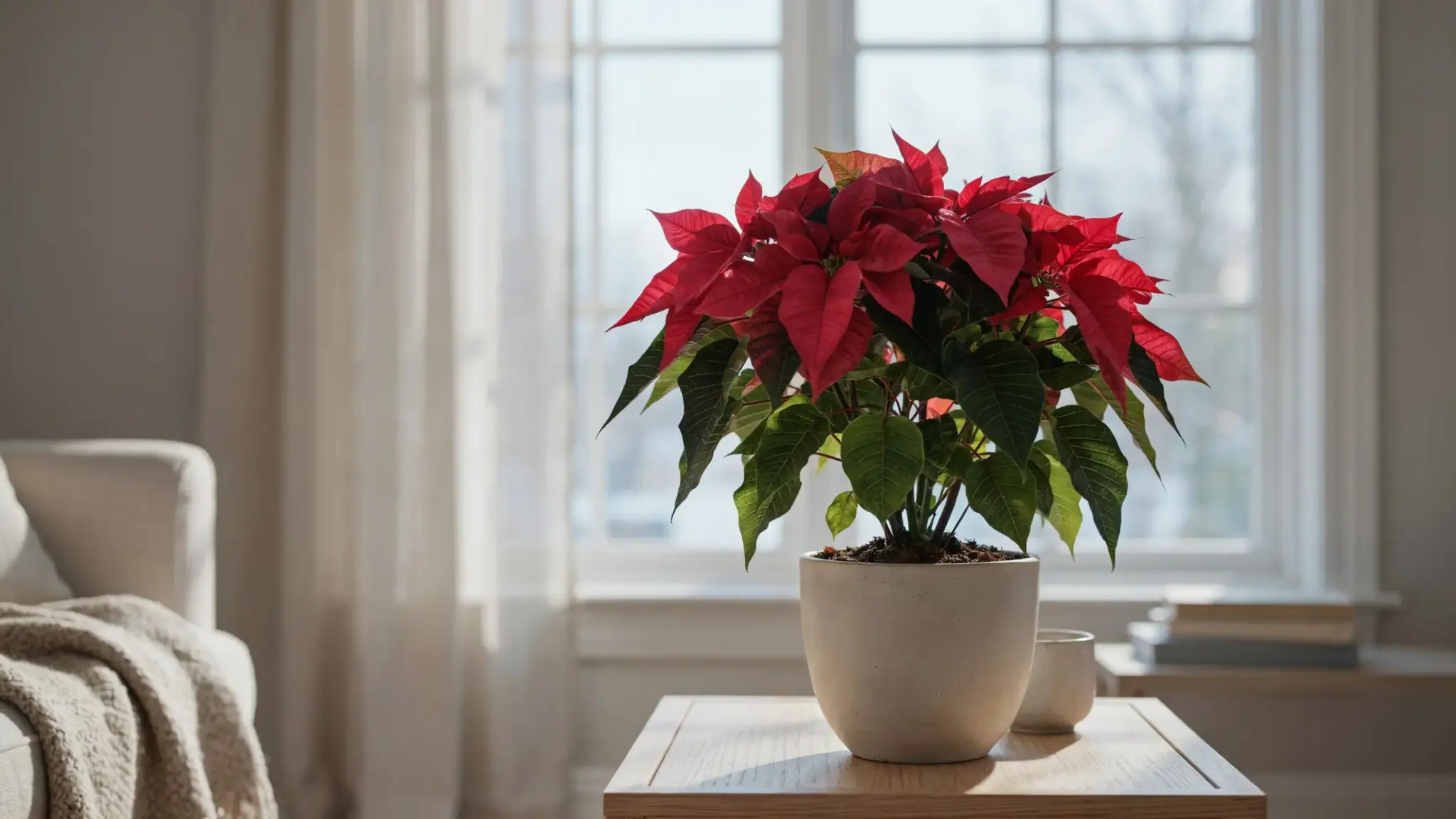
Give your poinsettia bright, indirect light, the same bright indirect light most of my houseplants like. A spot a few feet back from a south, east, or west window works well. Keep the leaves off the glass, since cold windowpanes can injure them in winter.
Poinsettias also hold their leaves longer in good light and drop them faster in a dim room, so I don’t tuck mine into a corner.
2. Watering
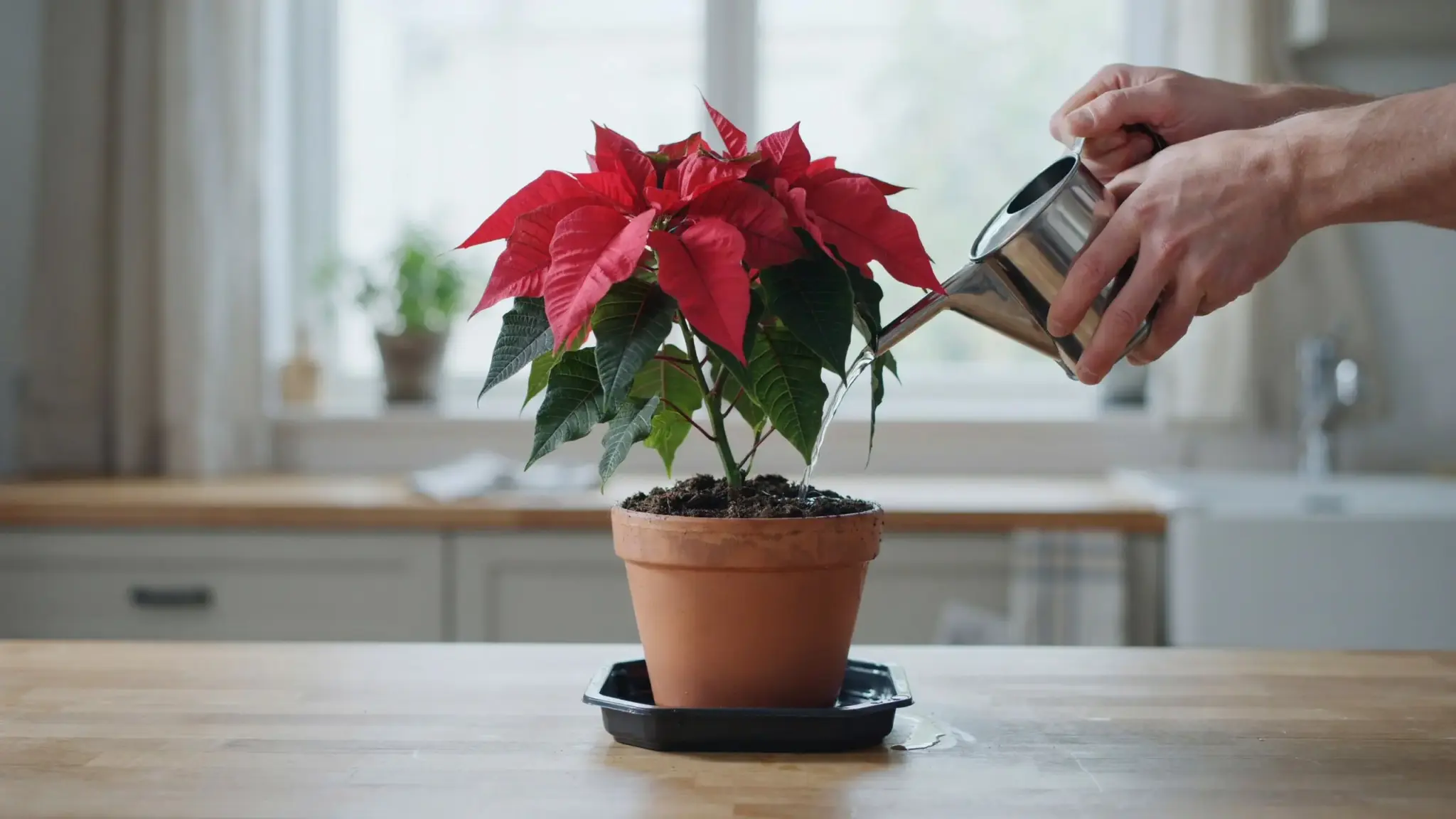
Check the soil instead of following a fixed schedule. Water when the surface feels dry or the pot feels light, the same test I use when watering houseplants. Pull off the foil wrapper first, since it traps water at the bottom.
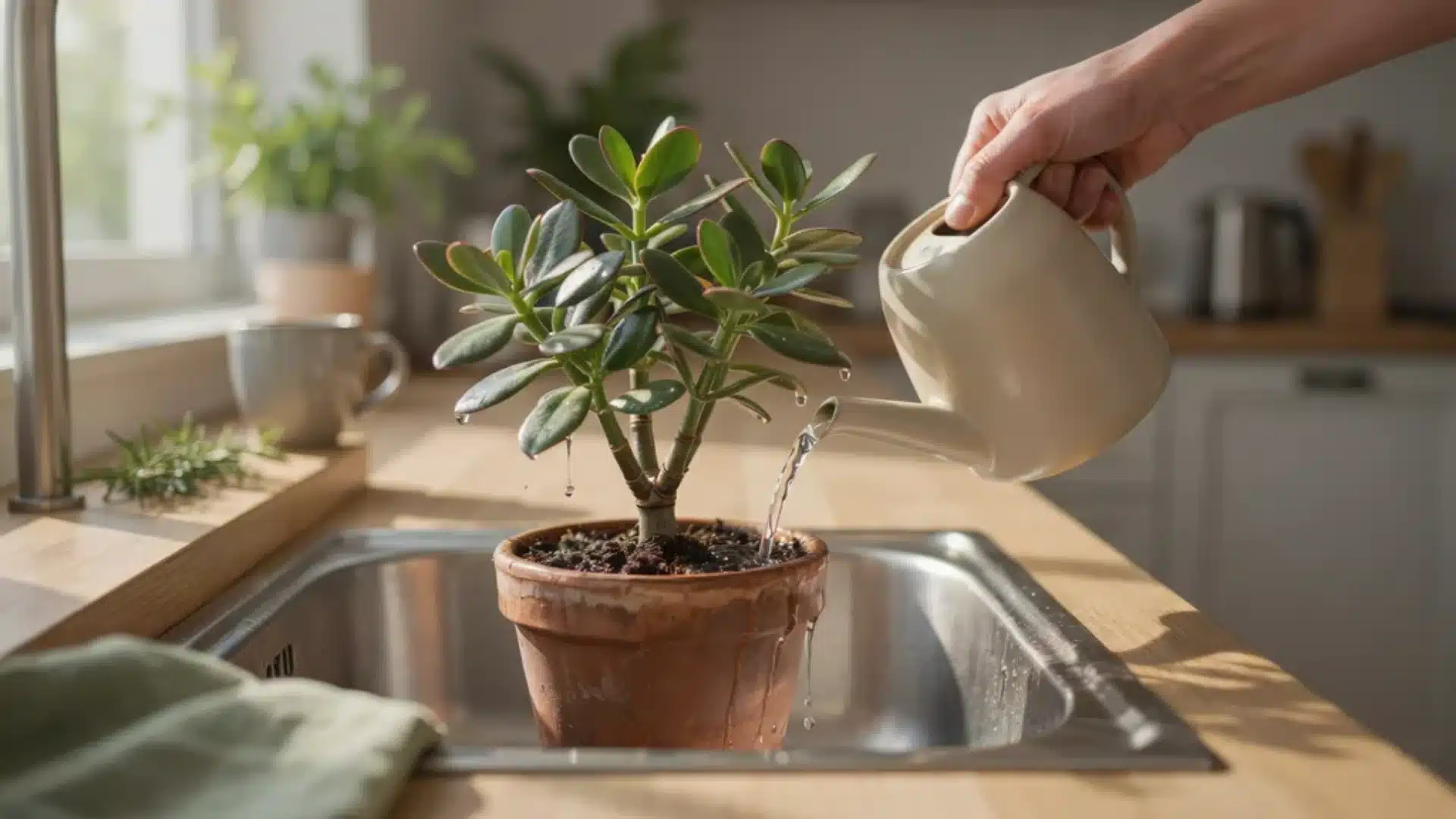
Water at the sink until it runs out the bottom, then let it drain. My six-inch pot took about a cup every four to five days.
3. Temperature and Drafts
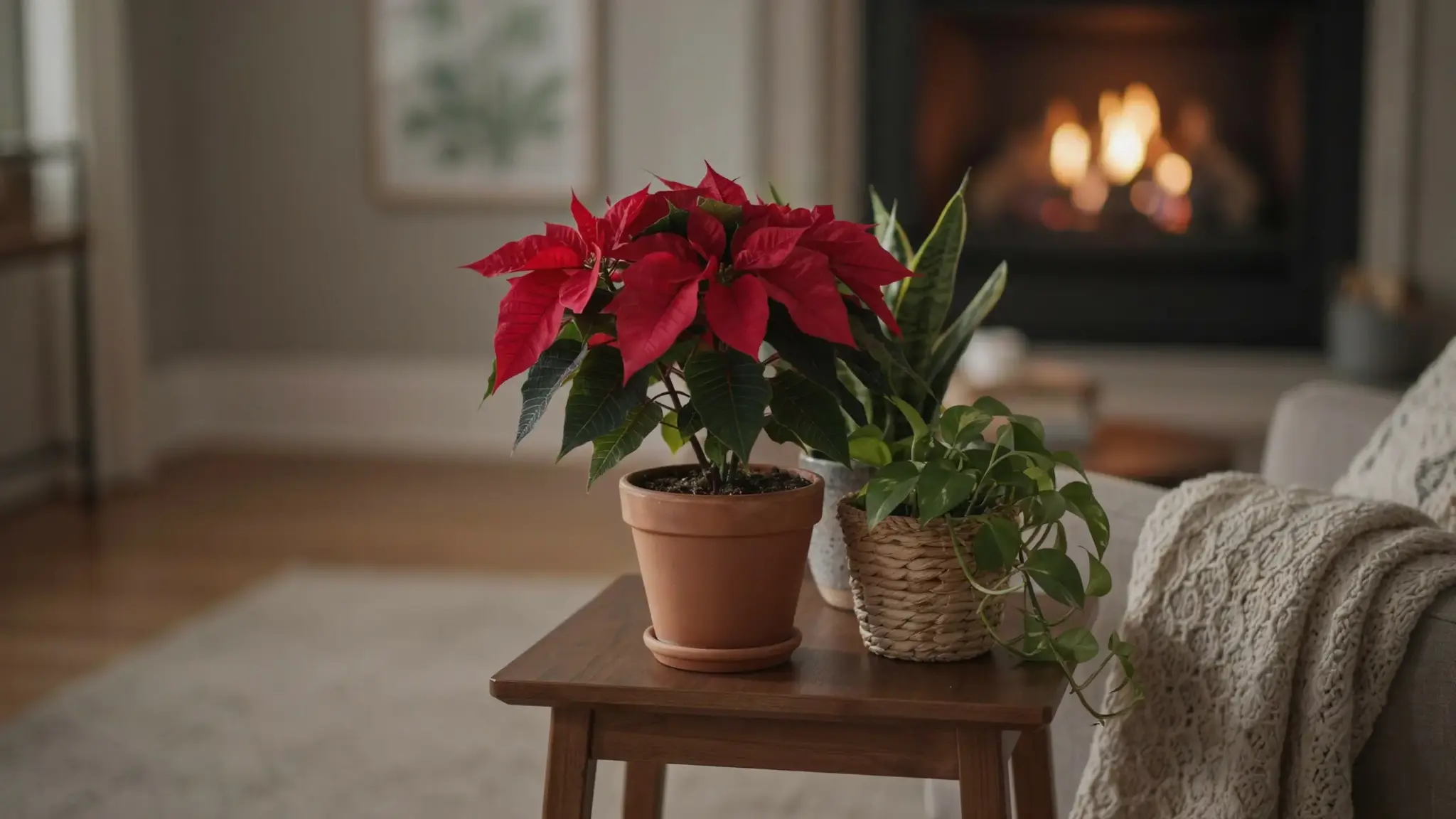
Poinsettias do best between 60 and 70°F, and temperatures below 50°F can damage them. Keep the pot away from heating vents, fireplaces, space heaters, and doors that open often.
A steady temperature matters more than hitting one exact number. Heated rooms run dry, so grouping the plant with other houseplants raises the humidity around it, a tactic Oklahoma State University Extension recommends to help poinsettias last longer.
4. Fertilizing
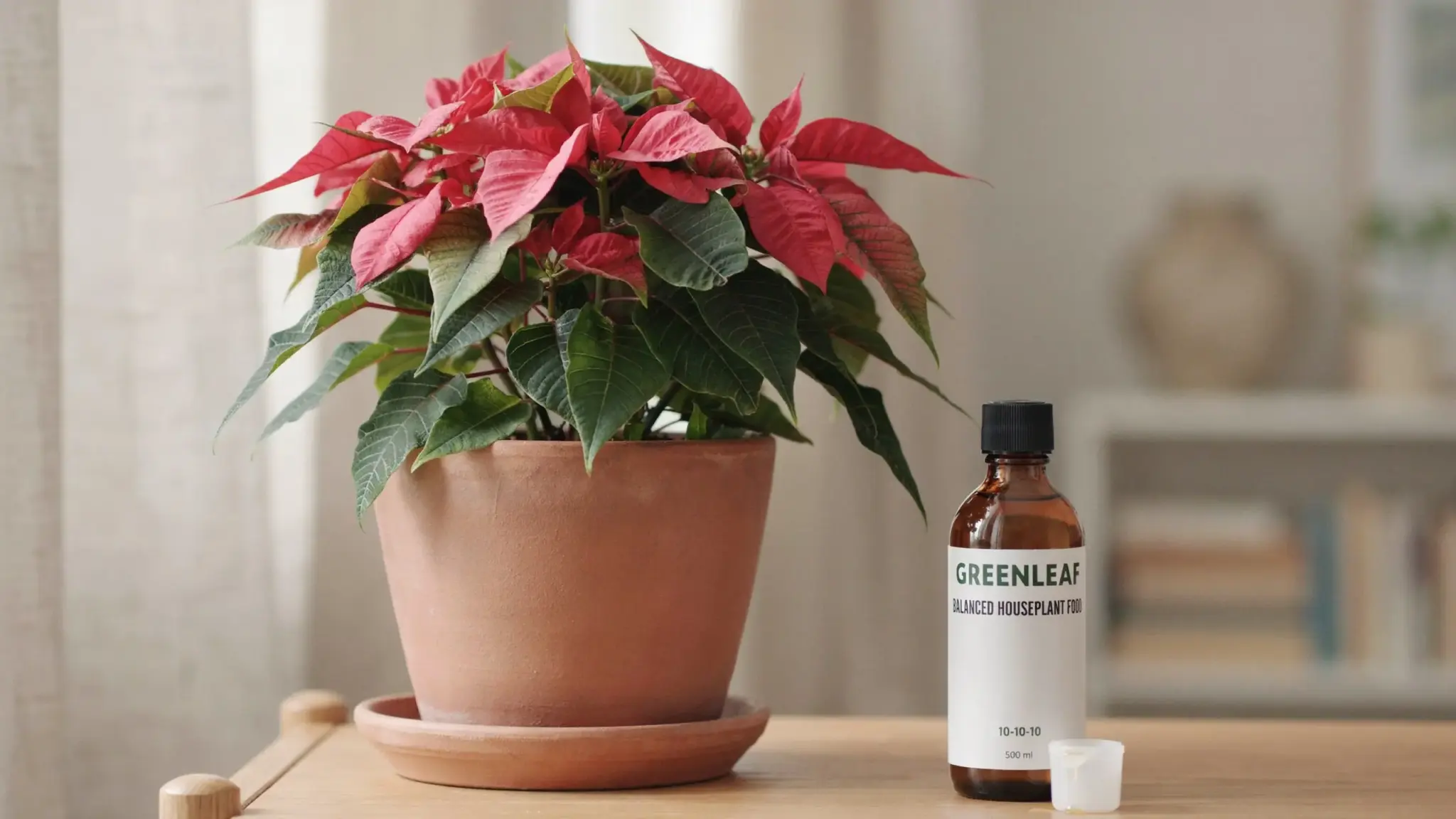
Skip the fertilizer while your poinsettia is in full bloom. It doesn’t need food during the holidays.
Once the bracts fade and new green growth appears, feed it with an all-purpose houseplant fertilizer mixed at half the label strength, about every three to four weeks. That schedule comes from University of Minnesota Extension, and I stick to it even when the plant looks hungry.
Troubleshooting Common Problems With Poinsettia
Improper watering is the most common cause of leaf drop, Iowa State University Extension says, and that includes too much water as well as too little.
What You See | Likely Cause | What To Do |
|---|---|---|
Lower leaves yellow and drop, soil still wet | Overwatering or root rot | Let the surface dry first and empty the saucer |
Wilting leaves, dry soil, leaves dropping | Underwatering | Water thoroughly and check the soil more often |
Sudden leaf drop within days of purchase | Cold exposure or too long in the sleeve | Remove the sleeve and move it away from drafts |
Fine speckling, light webbing, or sticky residue with tiny white flyers | Spider mites or whiteflies | Isolate it, wipe the leaves, and use insecticidal soap per the label |
Isolating the plant first matters for any bugs on indoor plants, since pests move to neighbors fast. My poinsettia’s new growth came back within three weeks once I moved it somewhere warmer.
How to Keep Your Poinsettia After the Holidays
When the bracts fade and the leaves drop, the plant isn’t dead. Water less and keep it somewhere cool, 50 to 60°F.
In March or April, cut the stems back to four to six inches. Once nights stay above 50 to 55°F, move the pot outdoors in part shade, then bring it back inside in late September, per Oklahoma State.
Getting It to Rebloom for Next Year
Poinsettias color up in response to long nights, not the calendar. They need about 14 hours of total darkness every night, starting in late September until the bracts show color. NC State Extension recommends that 14-hour schedule.
Each evening, move the plant to a closet, a dark room, or cover it with a box. Each morning, bring it back out to bright light. Any stray light at night, even a hallway lamp, can reset the process and delay the color change.
Here’s the honest trade-off. You’ll move the plant in and out of the dark for about two months, and Oklahoma State notes that buying a new one is easier.
Poinsettia Varieties Worth Knowing
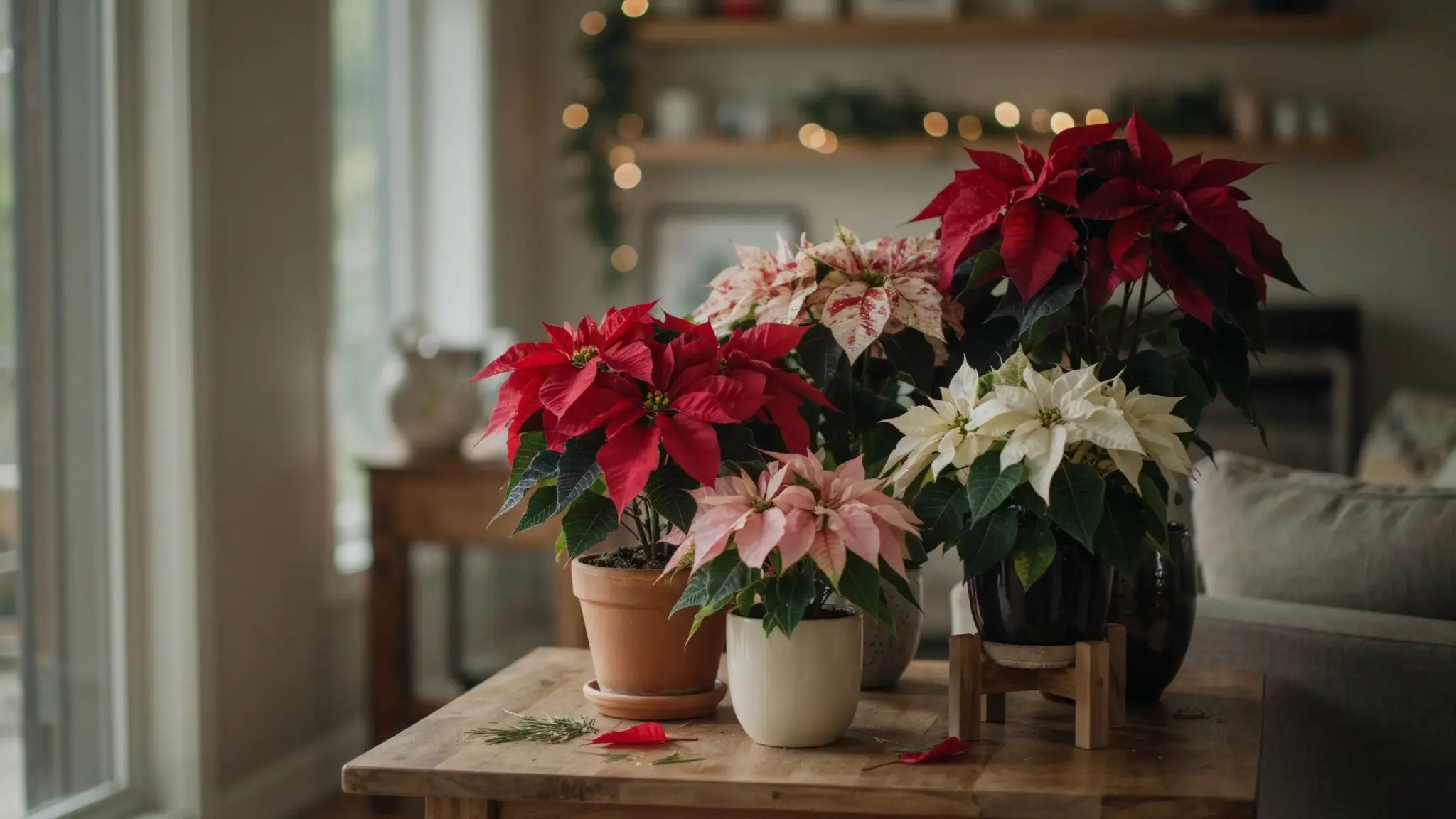
Classic red is still the most common, but plenty of other colors exist.
Even a Green Poinsettia Is Worth Keeping
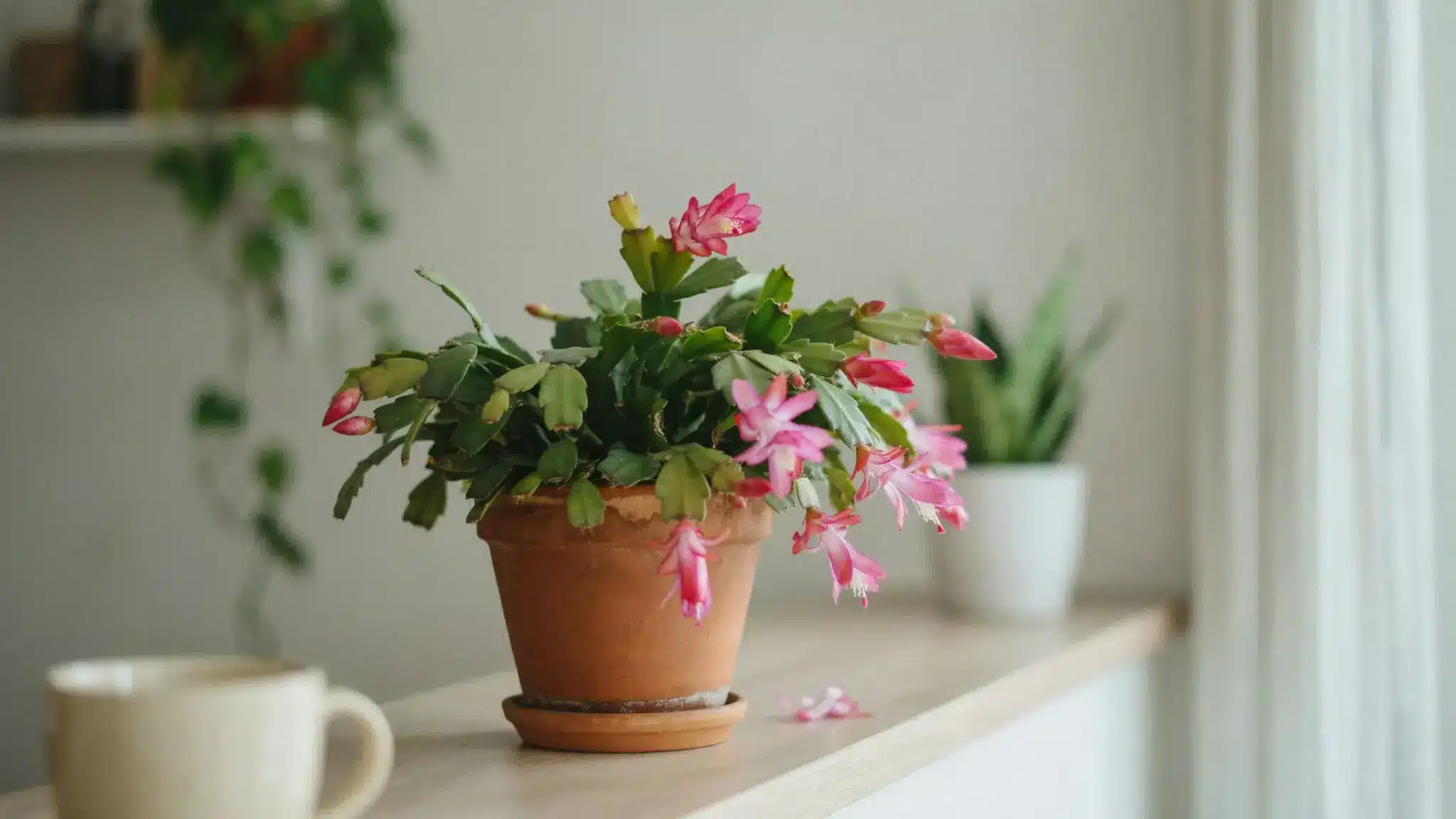
Most poinsettia trouble traces back to a cold ride home, a soggy pot, or a sleeve left on too long. Fix those and you get weeks of color, and a good green houseplant after. If the nightly closet routine sounds like too much, a Christmas cactus suits a bright window too.
Frequently Asked Questions
Are poinsettias poisonous to cats and dogs?
The ASPCA lists poinsettia as toxic to cats and dogs because of its irritating sap. Oklahoma State reports occasional stomach upset, so keep the plant out of reach.
How long does a poinsettia last indoors?
With good light, steady warmth, and careful watering, a poinsettia stays attractive for at least eight weeks, often into spring, per Oklahoma State.
Can You Give Miracle-Gro to Poinsettias?
Yes, once new green growth appears. Follow the label, use a houseplant formula, and hold off while the bracts are colored.