
You can propagate a money plant in three ways: separate rooted pups from the base, take a 2 to 3 inch stem cutting, or use a leaf cutting with a bit of main stem attached. Pups root fastest, usually in about two weeks. A leaf by itself will rot.
The first time I separated a Pilea pup, it died after four days. I used my fingers to pull it out instead of cutting it free, which tore the underground stem that was feeding it.
This mistake is the main reason most money plant propagation attempts fail.
The plant does most of the work for you. A healthy Pilea peperomioides naturally grows baby plants around its base, each already starting to root. Your main task is to avoid damaging them when you remove them.
This guide explains all three propagation methods, when to use each one, and how to keep your new plants healthy during their first month.
Which Money Plant Do You Have
Three different houseplants are known as money plants, and each one propagates differently.
The Chinese money plant, Pilea peperomioides, has round, flat leaves up to 4 inches wide on thin, upright stalks.
If your plant has trailing, heart-shaped leaves, it’s a pothos, which roots in water using a different and faster method. If it has a braided trunk and shiny, palm-shaped leaves, it’s a money tree (Pachira aquatica), which roots from woody stem cuttings.
Three Ways to Propagate a Money Plant
All three methods work. The best choice depends on what your plant is doing right now, which is true for most houseplant propagation.
| Method | Use it when | Time to roots |
|---|---|---|
| Pup division | Your plant has offsets at the base with leaves about the size of a dime | Already rooted, settles in 2 to 3 weeks |
| Stem cutting | The main stem has gone tall and bare and the plant is top heavy | 2 to 4 weeks |
| Leaf cutting | No pups yet, and you want to risk one leaf | 1 to 2 weeks to roots, longer for a plantlet |
What You Need
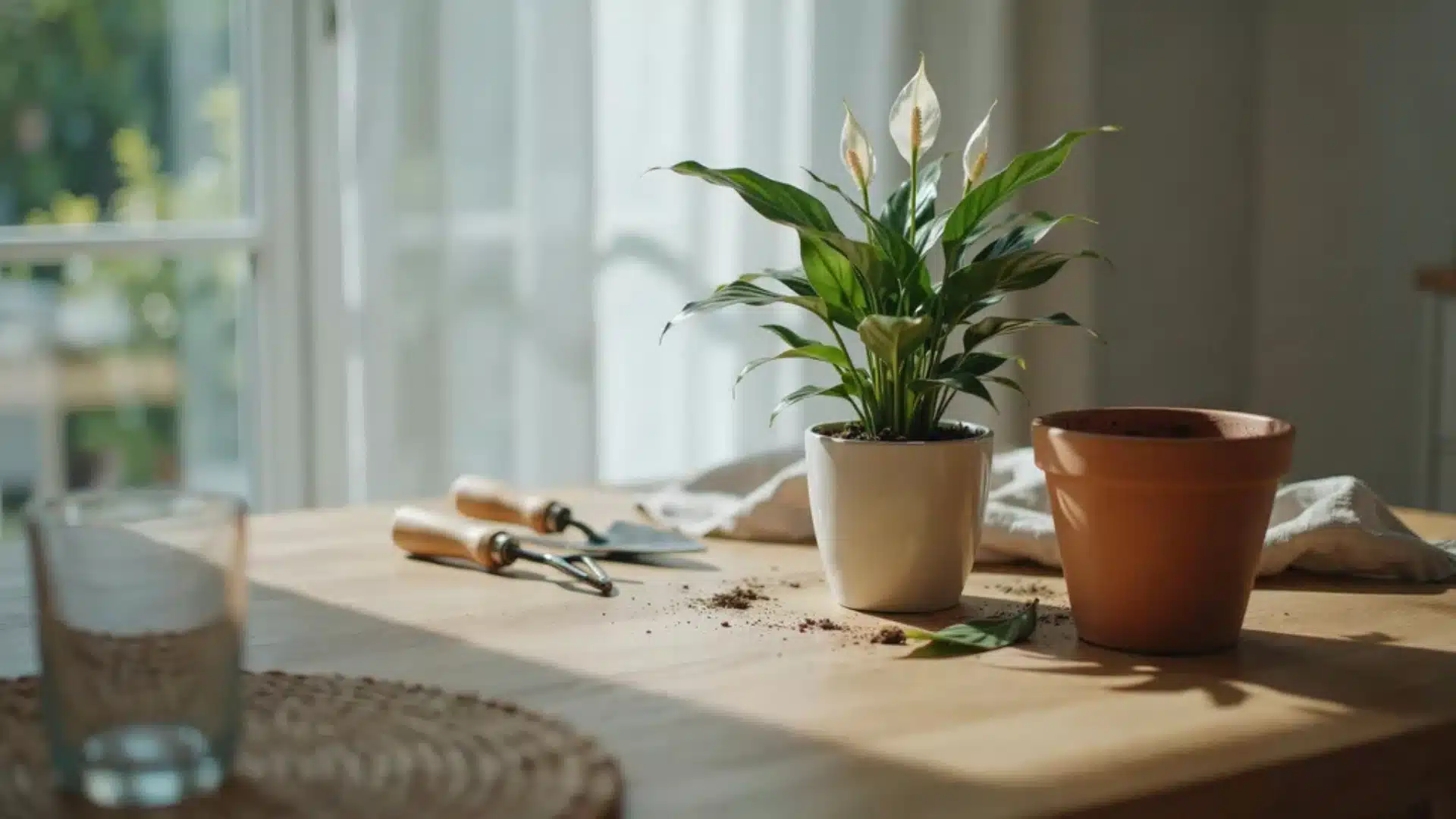
You don’t need much. Use a sharp, non-serrated knife or needle-nose snips, cleaned with isopropyl alcohol before cutting.
Have a 3 to 4 inch pot with drainage holes, a light mix of potting soil and perlite (about three parts to one), and a small jar if you want to root in water.
Regular pruning shears are usually too bulky to fit beside a pup without crushing it. Switching to a slimmer tool is worth it.
Separating Pups From the Mother Plant

Pups grow from a rhizome, which is a horizontal underground stem running out from the parent plant. They are not loose seedlings in the soil. They are attached, and you need to cut that connection.
Step 1: Wait Until the Leaves Reach Dime Size
A pup with leaves about as wide as a dime has enough roots to survive alone. If it’s smaller, leave it attached. The parent will keep feeding it, and waiting another two weeks won’t hurt.
Step 2: Uncover the Rhizome
Gently push the soil back around the pup using your fingers or the blunt end of a pencil until you see where the connecting stem leads to the parent. Avoid pulling on the leaves while doing this.
Step 3: Cut Close to the Parent
Cut through the rhizome as close to the mother plant as possible. The more rhizome that stays with the pup, the more surface it has to grow new roots. If you cut halfway, the pup is left with very little.
Step 4: Pot It or Water It
Place the pup in damp soil mix, burying the rhizome and keeping the leaf bases just above the surface. You don’t need rooting hormone since it already has roots. If you want to watch the roots grow, put the pup in a jar with water covering only the rhizome, not the leaf stalks.
Taking a Stem Cutting
This method comes with a trade-off. If your Pilea has a single central stem, cutting off the top removes its growing point, so the parent must regrow from lower buds. Use this method on a plant that has grown tall and bare at the bottom, where you would cut it back anyway.
Cut 2 to 3 inches off the top of the stem, just below a node. Remove all but the top three leaves so the bare stem has space to grow roots.
After that, you have two options. To root in water, place the bare end in a jar and change the water every few days, as you would with most soft-stemmed houseplants.
To root in soil, dip the cut end in rooting hormone, plant it in damp mix, and cover the pot with a clear plastic bag for two weeks. The bag keeps humidity around the leaves until roots form.
Roots usually appear in two to four weeks. If a cutting turns soft and dark at the base, it has rotted. This happens often enough that it’s a good idea to take two cuttings if you have enough stem.
The Leaf Cutting Nobody Gets Right the First Time

I tried the leaf-only method twice before I figured out why it kept failing. A Pilea leaf and its stalk placed in water alone will not root. They turn translucent and rot in about ten days.
This method only works if you take a small wedge of the main stem along with the leaf. Find a leaf and trace its stalk down to where it meets the central stem. Cut into the stem about a quarter inch above that spot, angled downward, then cut again a quarter inch below, angled upward, so a small sliver of stem comes away with the stalk attached.
Place that sliver in water. Roots will appear in one to two weeks. When they are about an inch long, plant it with the roots just covered by soil.
A small plantlet will grow from the top edge of the stem wedge, and the original leaf will yellow and drop off once the new plant takes over.
When to Propagate
The best time to propagate is in spring or early summer, when the plant is actively growing new leaves. Roots form faster, and the parent plant recovers more quickly.
You can propagate in November if you want, but growth will be slower. A cutting in cold, damp soil in a dim room is much more likely to rot than one taken in April. Pilea grows best between 55°F and 85°F. Below 50°F, it stops growing, so avoid placing new cuttings on a cold windowsill in winter.
The First Month After Propagation
Light
An east or west window is good for new plants. Direct midday sun from a south-facing window can bleach the leaves and dry the soil faster than young roots can handle. If you’re not sure what indirect light is, check the plant’s shadow. You want a soft, blurry-edged shadow.
Turn the pot a quarter turn every week. Pilea plants lean strongly toward light, and a new plant that starts leaning will keep that shape.
Water
Water when the top 1 to 2 inches of soil are dry. Check by pushing your finger in, since the surface dries out hours before the root zone does.
Overwatering is the most common reason new Pileas die. Their roots are short and thin during the first month, and too much moisture can rot them before they reach the sides of the pot.
Pot and Soil
Use a small pot. A 3 to 4 inch pot with drainage holes is best for a single pup. An 8 inch pot holds too much wet soil that the roots can’t reach, which can lead to rot.
Feeding
Wait until you see a new leaf before feeding. This shows the roots have taken hold. Before that, the plant can’t use nutrients, and salts just build up in the pot. Afterward, use a balanced liquid fertilizer at half strength every few weeks in spring and summer. A diluted homemade feed works as well as store-bought options.
Frequently Asked Questions
How many pups can a Chinese money plant produce?
A healthy mature plant commonly pushes out five to ten pups a year, in flushes rather than steadily. Older plants with more root mass produce more.
What soil is best after propagation?
Three parts indoor potting mix to one part perlite. Coco coir can replace some of the potting mix if yours holds water for more than a week.
Why is my Pilea cutting turning yellow?
Usually too much water or too little light. On a leaf cutting, yellowing that starts at the stalk end means rot has set in and the cutting is lost.
Why is my Chinese money plant not producing pups?
Plants under about a year old rarely offset. Low light is the next most common cause, followed by a pot so large the plant is putting energy into roots instead.
Is a Chinese money plant safe around cats and dogs?
Yes. The ASPCA lists Pilea peperomioides as non-toxic to both cats and dogs, so propagating it around pets carries no added risk.
Pot up more pups than you need. They root reliably, they’re the traditional pass-along gift for this plant, and a spare is useful the first time one of yours rots.