One time, I picked up an aloe plant at the grocery store, thinking it was aloe vera. It turned out I was wrong.
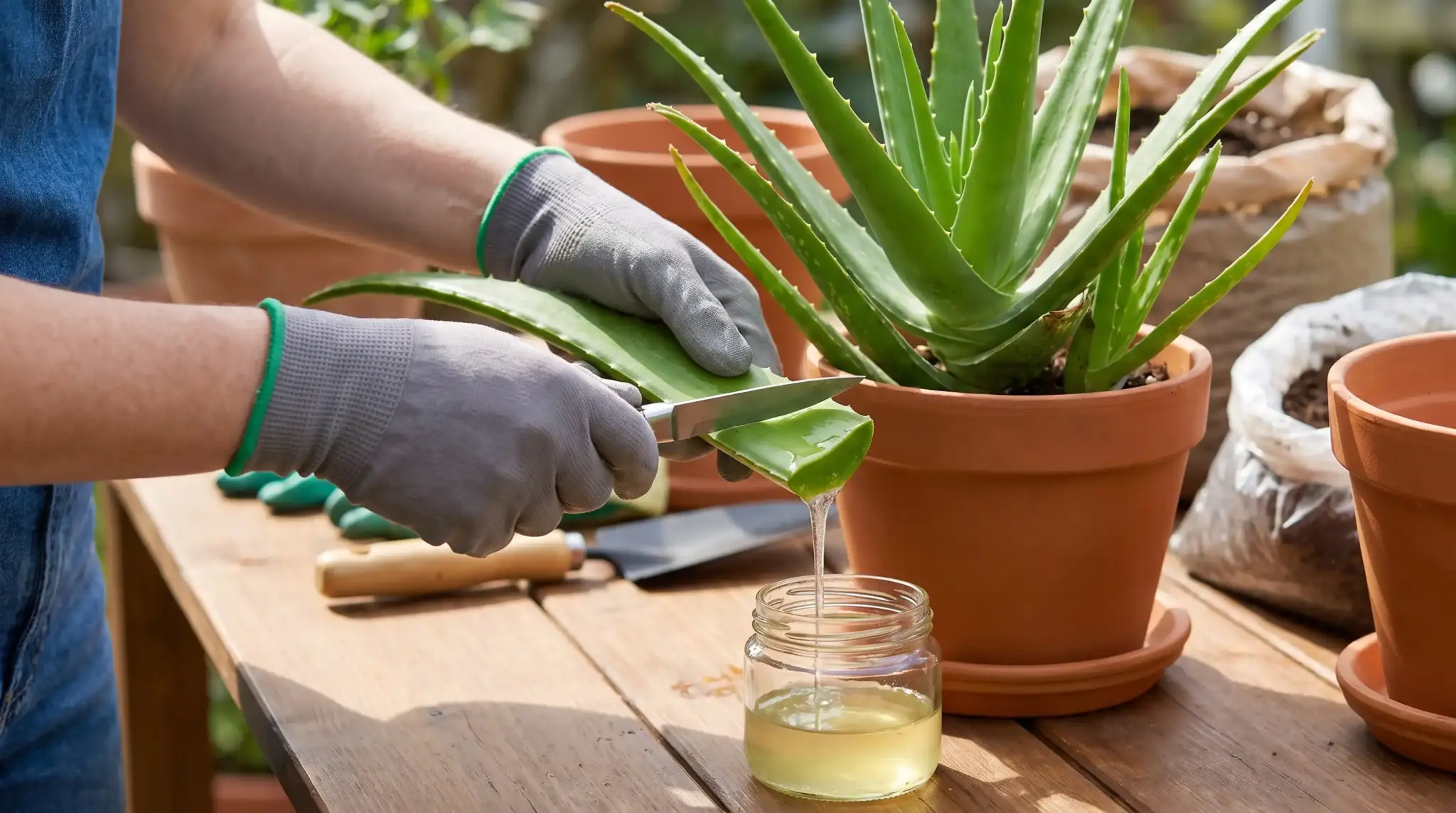
I only realized my mistake after trying to harvest aloe gel from the plant I’d had for two years. The gel smelled nothing like it should.
Garden centers and supermarkets often mislabel aloes because, on the shelf, every cluster of thick green leaves looks alike.
According to the World Checklist of Selected Plant Families at Kew, there are over 620 accepted species in the Aloe genus. Most of them have different care needs, cold tolerance, and skin-safe qualities.
This matters if you want to grow aloe for its gel. Not all species make gel you can use. Some even have compounds that can irritate your skin instead of soothing it.
If you have cats, dogs, or horses at home, it’s important to know that all aloe species are toxic to animals, not just aloe vera.
How are Aloe Plants Grouped?
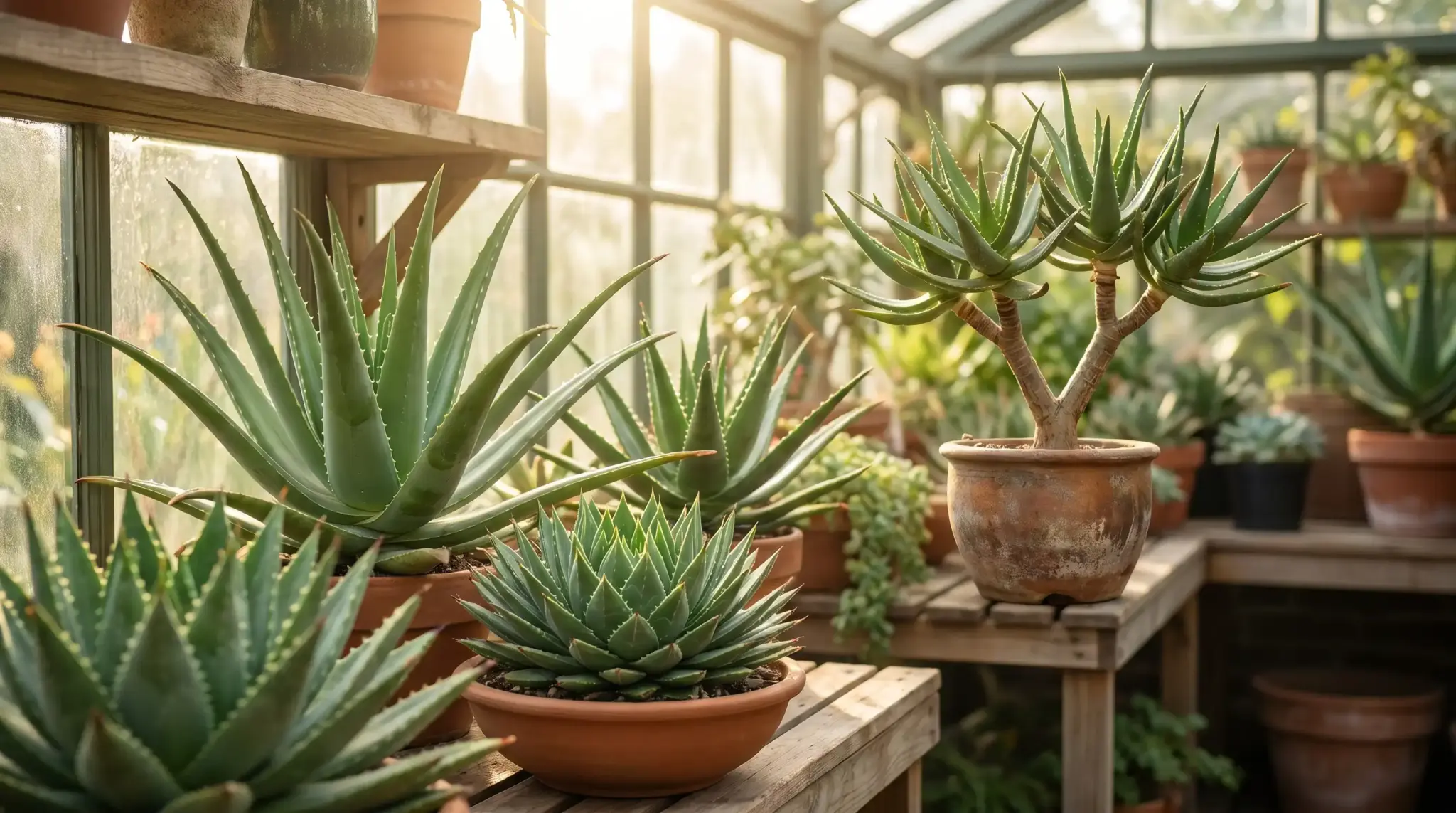
Aloes come in three main forms. Stemless rosette aloes grow flat on the ground and don’t have a visible trunk.
Clumping, or shrub, aloes spread by making offsets that form dense mounds. This is a type of plant propagation in which new plants grow from the parent through natural division.
Most aloes you find in US garden centers are either stemless or clumping types. Tree aloes are usually only available at specialty nurseries.
Most aloes can grow outdoors in USDA zones 9 to 11. If you live in a colder area, you’ll need to keep your aloe as a houseplant.
Most indoor aloes do well with basic aloe vera care: give them plenty of light, good drainage, and water them only occasionally.
12 Aloe Plant Types Worth Adding to Your Collection
These twelve types are organized by use case, which is how most people actually search for aloes.
Best Aloe Plants for Indoors and Beginners
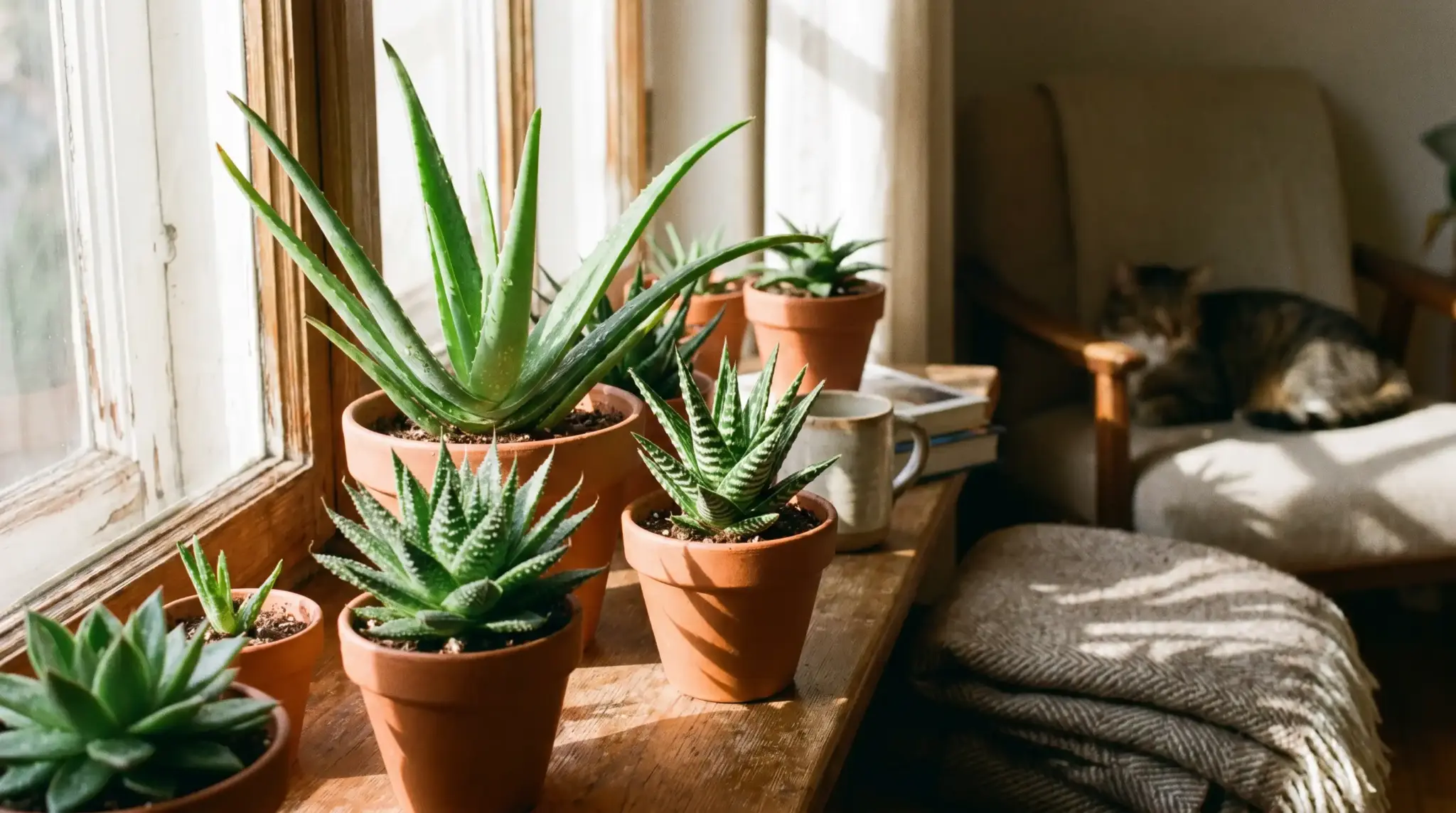
1. Aloe Vera (Aloe barbadensis)
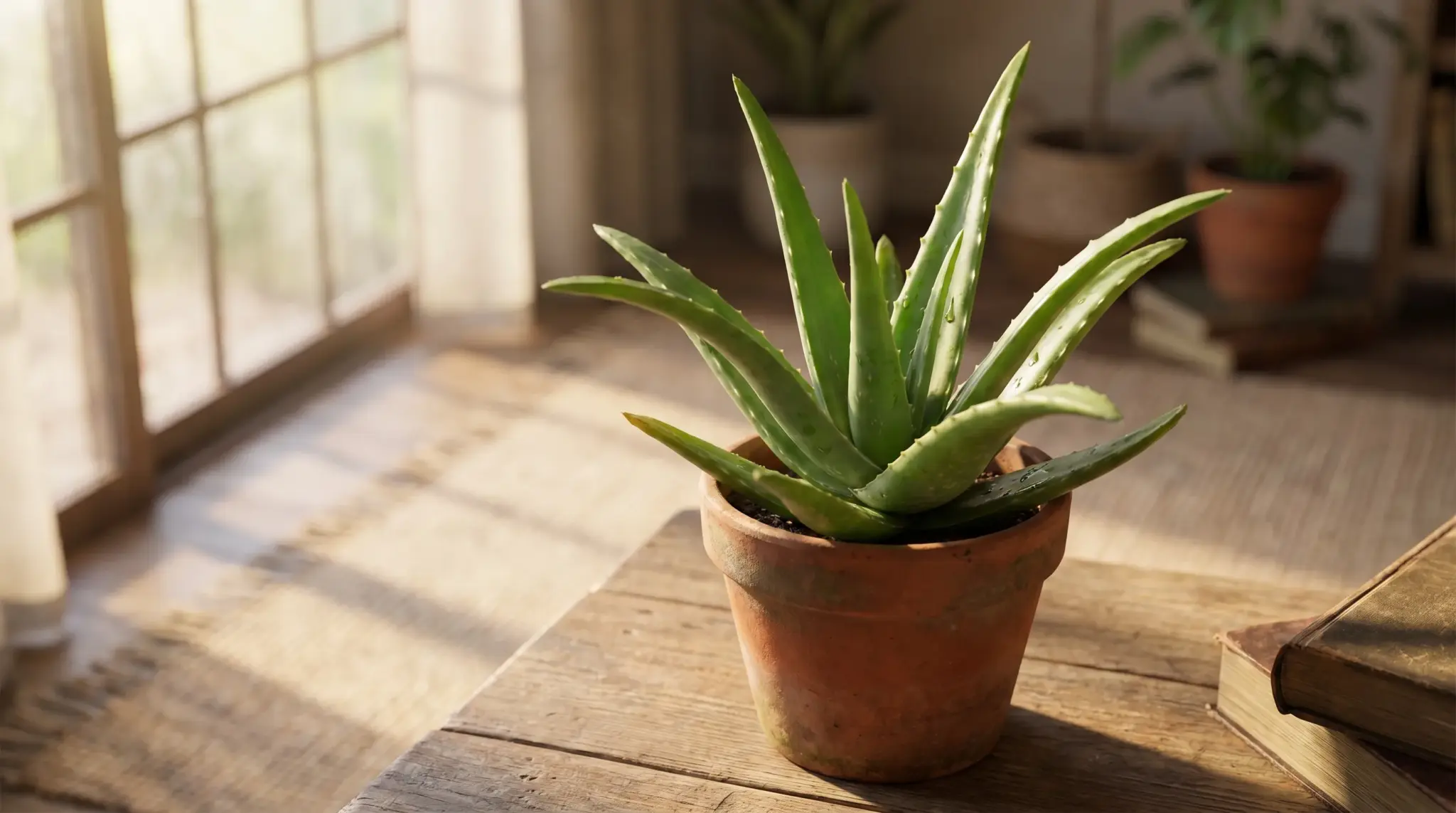
Aloe vera is the most common type of aloe plant, and the one most people picture when they hear the name. Its leaves are smooth, thick, gray-green, and grow upright in a rosette shape.
In the wild, mature leaves can grow 24 to 39 inches tall, but potted plants usually stay between 12 and 18 inches. The flowers are yellow-orange and bloom on tall spikes in summer.
Aloe vera is the main medicinal species, known for its topical use on burns and skin abrasions. It grows in USDA zones 8 to 11 and can handle neglect better than most succulents.
2. Lace Aloe (Aristaloe aristata)
Lace aloe is a great choice for beginners, especially in cooler climates. Its dark green leaves are covered in small white bumps, giving them a textured appearance.
The plant stays under 12 inches tall and remains compact, even after several years. It produces pink flowers in late summer.
Lace aloe can survive in zone 7, which is unusual for aloes. If your area gets light frost but not hard freezes, you can keep it outdoors in a sheltered spot with good drainage.
3. Tiger Aloe (Gonialoe variegata)
Tiger aloe has dark green leaves with pale stripes and a thin white line along the edges. It stays under 12 inches tall. Its flowers are coral-orange and bloom on slender spikes in winter or spring.
It does well with indoor light and is one of the most popular ornamental aloes in the US.
Best Aloe Plants for Outdoor Gardens
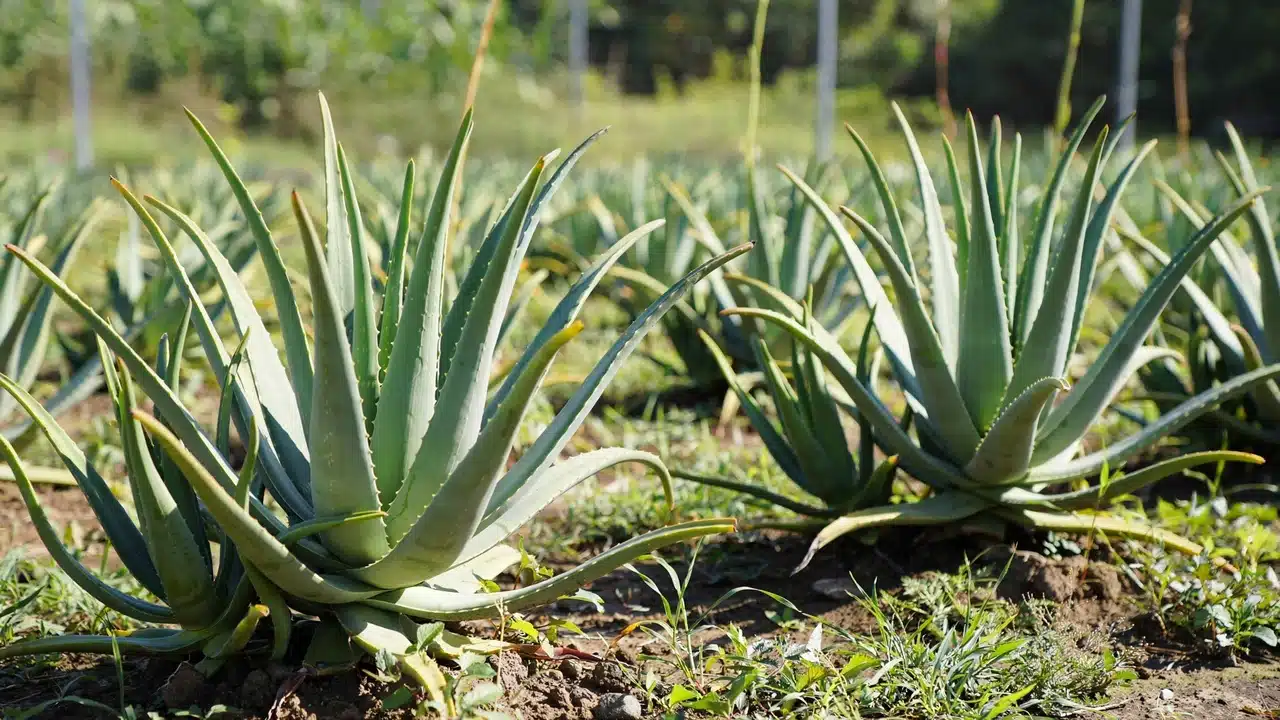
4. Candelabra Aloe (Aloe arborescens)
Candelabra aloe grows into a shrub with many branches and can reach 8 to 10 feet tall over time. Each branch ends in a rosette of toothed, blue-green leaves.
In winter, it produces scarlet flower spikes that stand out against the bare stems.
This is one of the most cold-tolerant large aloes. It can handle brief frost, so it can grow in zone 8 if given some protection.
Many gardeners in warm climates use it as a living fence.
5. Cape Aloe / Bitter Aloe
Cape aloe grows a single, unbranched trunk that can get taller than 10 feet. Its leaves are wide, stiff, and have reddish-brown teeth along the edges. In winter, it sends up tall, branched clusters of orange-red flowers that attract hummingbirds. hummingbirds.
Aloe ferox is important commercially and is the second most used aloe in skincare after aloe vera. It grows well in USDA zones 9 to 11.
6. Fan Aloe (Kumara plicatilis)
Fan aloe has paddle-shaped leaves that grow in flat, opposite pairs along each branch. Over time, it develops a woody trunk and can reach up to 15 feet tall. The leaves are smooth and blue-green.
Fan aloe is no longer classified in the Aloe genus. Its current accepted name is Kumara plicatilis.
Most nurseries still call it an aloe, which is important to know if you’re looking up care guides. It grows in zones 9 to 11.
Small and Dwarf Aloe Plants
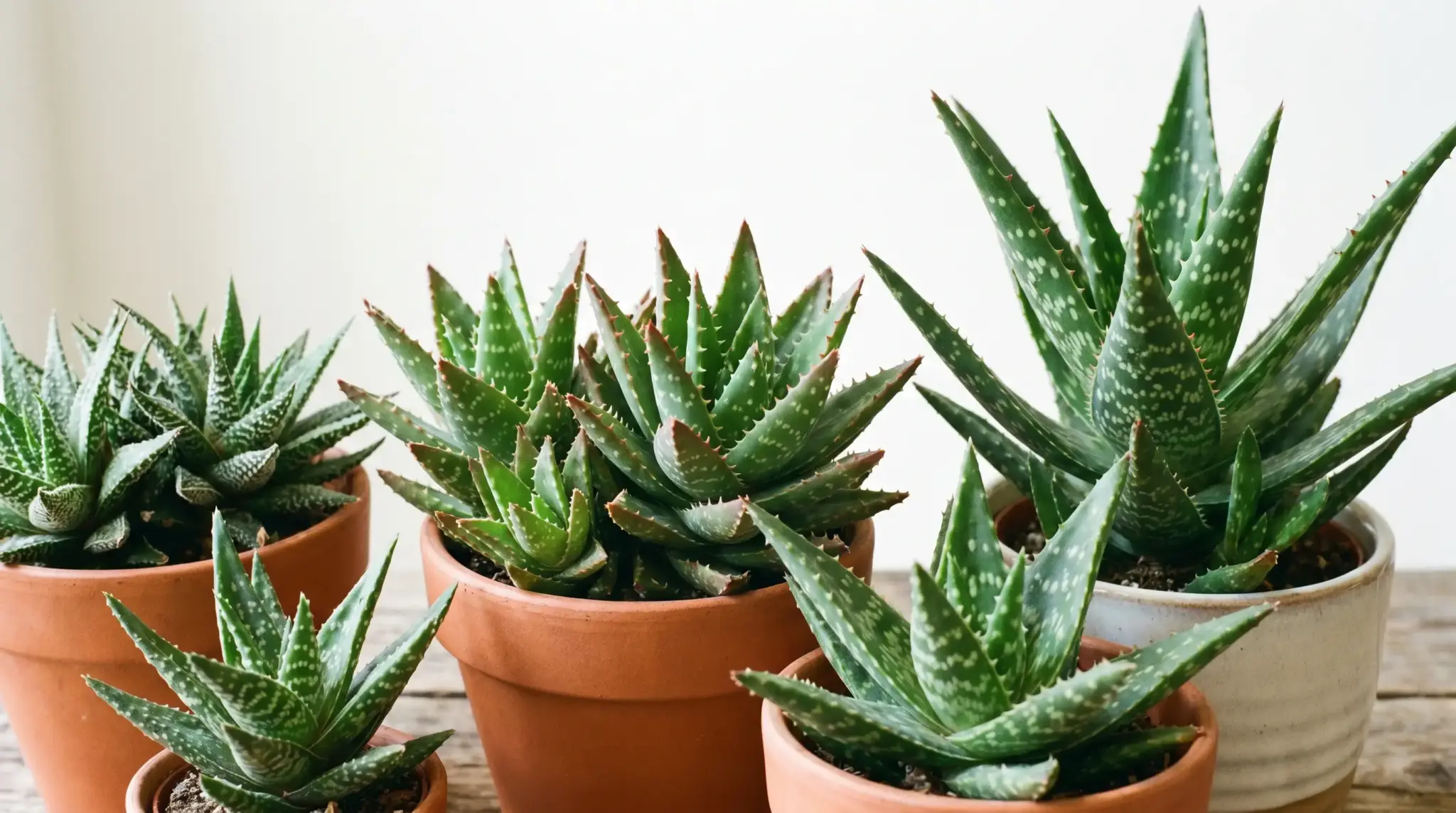
7. Short-Leaf Aloe (Aloe brevifolia)
Short-leaf aloe is a compact plant. Its blue-green rosette rarely grows larger than 8 inches. The thick leaves curve inward slightly and have small white teeth along the edges. It produces offsets easily.
Over time, one plant will turn into a cluster, which makes it great for filling gaps in rock gardens or containers.
It tolerates drought and doesn’t need frequent watering. You can grow it outdoors in USDA zones 9 to 11 or keep it in pots indoors.
8. Crosby’s Prolific Aloe (Aloe ‘Crosby’s Prolific’)
This hybrid grows between 6 and 12 inches tall and spreads quickly by making offsets.
In spring, it produces 18–inch spikes with orange-red flowers that attract hummingbirds.
The name fits—it makes new plants all the time. You can start with one and divide it every other season.
9. Soap Aloe (Aloe maculata)
Soap aloe can grow in zone 8, so it has a wider planting range than most aloes. Its leaves are flat, wide, and spotted, and the plant forms a low rosette about 18 inches across.
It’s called soap aloe because its sap makes a soapy lather when wet. It blooms in late winter, with orange tubular flowers on tall spikes.
Standout and Collector Aloe Varieties
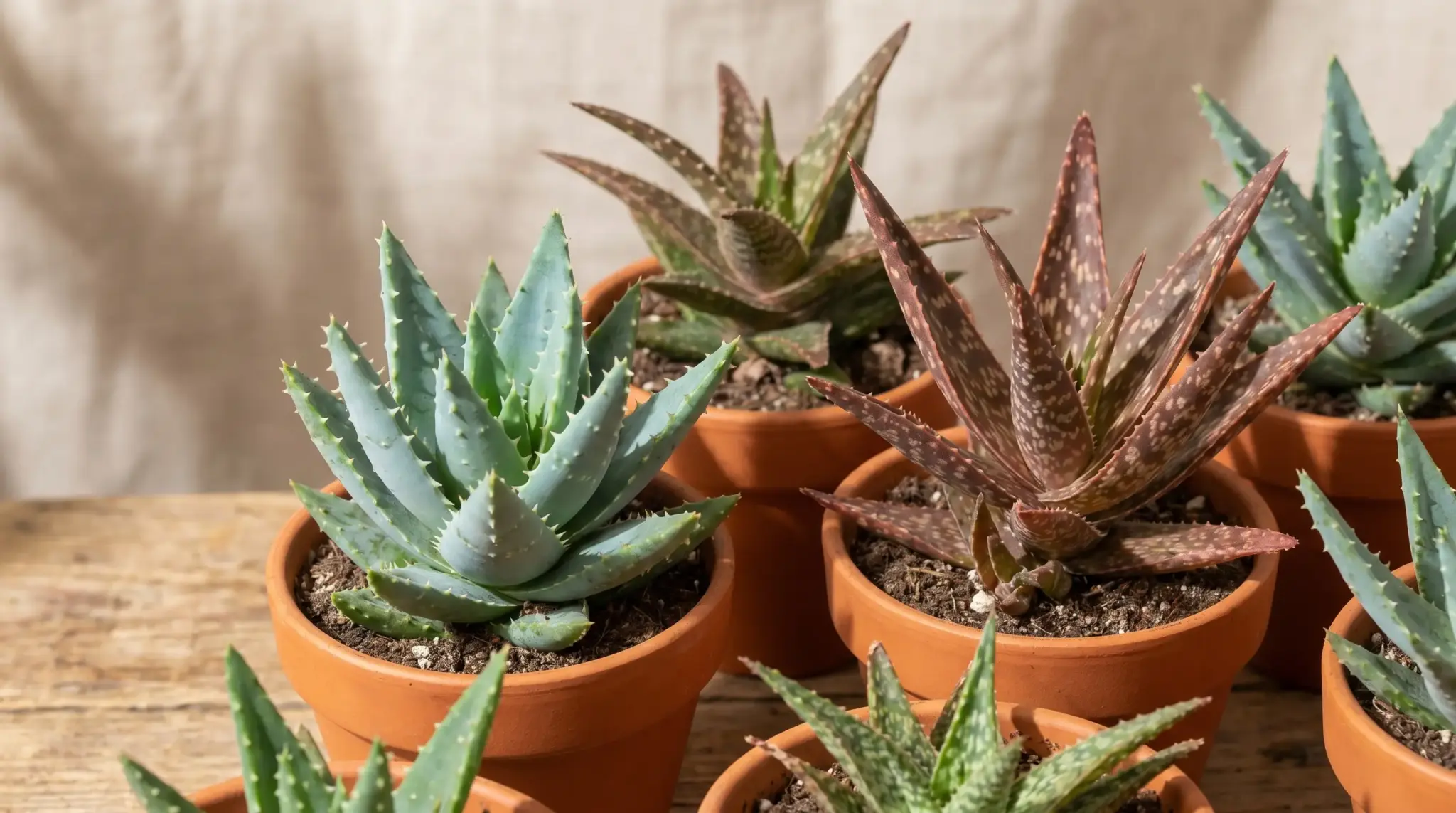
10. Spiral Aloe (Aloe polyphylla)
Spiral aloe stands out from other aloe plants. Its leaves grow in a perfect spiral, always forming five rows. This species comes from the highlands of Lesotho, where it grows above 7,000 feet.
It can survive cold down to zone 7b, but it doesn’t do well with heat or humidity. Hot places like Texas or Florida are tough for this plant.
It grows best in the Pacific Northwest and some areas of the Mountain West.
If you live in the right zone, spiral aloe is one of the most visually striking aloe plants you can grow.
11. Tree Aloe (Aloidendron barberae)
Tree aloe is the largest aloe species, growing over 30 feet tall if it has enough time and space. It’s best for large outdoor gardens in zones 9 to 11.
Its official botanical name is Aloidendron barberae, but most nurseries still call it tree aloe.
12. Arabian Aloe (Aloe rubroviolacea)
Arabian aloe is not used as much as it could be in warm-climate US gardens.
Its leaves are blue-green with red teeth along the edges. In full sun and cooler weather, the whole leaf turns red-violet.
It blooms in winter with tall spikes of orange-red flowers. Arabian aloe grows in USDA zones 9 to 11.
Is Aloe Safe for Pets?
All aloe species are toxic to cats, dogs, and horses. The harmful compound is aloin, a yellow latex found between the skin and the inner gel. If eaten, it can cause vomiting, tiredness, and diarrhea.
The ASPCA Animal Poison Control Center lists aloe as toxic to dogs, cats, and horses. Their hotline is (888) 426-4435.
No aloe variety is safe for pets. If your animals like to chew on plants, keep aloe pots on high shelves or pick a different kind of plant.
Haworthia and Gasteria are closely related to aloes, look similar, and are safe for pets.
Conclusion
With over 600 accepted species, aloe plants are more diverse than most people realize.
A small lace aloe on a windowsill and a 30-foot tree aloe in California are both aloes, but they have little else in common.
If you want aloe for its medicinal gel, choose aloe vera. For a small indoor plant, try tiger aloe or lace aloe.
For a dramatic look outdoors in a warm climate, Cape aloe and Arabian aloe are good choices. If you have pets, make sure to keep all aloes out of their reach.
If you have a question about an aloe type not listed here, leave a comment and I’ll do my best to help you identify it.
Frequently Asked Questions
1. How Do I Tell What Kind of Aloe I Have?
Look at the leaf shape, color, size, and markings. Compare these details with plant identification guides, since many aloe species look very similar.
2. How Long Do Aloe Plants Live?
With good care, aloe plants can live 10 to 25 years or even longer. Indoor aloes often thrive for decades if they get enough light, water, and well-draining soil.
3. Can Aloe Vera Heal Scars?
Aloe vera can help keep skin hydrated and support healing, which may reduce the look of some scars. However, it usually does not remove scars completely.