My first aloe came home from a Portland grocery store, the same shelf that started this whole collection seven years ago. I watered it every Sunday because that felt responsible. It was mush by February.
Aloe vera is built for dry, rocky ground and long stretches with no water at all. Those thick leaves are a full water tank.
Add more before the tank empties and the roots sit wet, rot, and the plant collapses from the base up.
Once that clicked, aloe became one of the three plants in my apartment I never think about. Everything below is what keeps one alive: pot and soil, light, watering, winter dormancy, fixing a plant that already looks bad, and harvesting the gel.
What an Aloe Vera Plant Actually Needs
Aloe vera is a succulent. It comes from hot, dry regions of Africa and the Arabian Peninsula and does best on very little attention.
NC State Extension counts more than 500 species in the Aloe genus, and only Aloe barbadensis Miller is sold as true aloe vera. Growth rate and gel yield shift between aloe plant types, so the label matters when you buy.
Care Factor | What Aloe Needs |
|---|---|
Light | 6+ hours of bright light daily |
Water | Every 2 to 3 weeks in summer, every 4 to 6 weeks in winter |
Soil | Cactus or succulent mix |
Pot | Terracotta with a drainage hole |
Temperature | 55°F to 85°F (SDSU Extension), above 50°F at night, USDA zones 8 to 11 outdoors |
Aloe vera grows outdoors year-round in USDA zones 8 through 11, which covers most of Texas, Florida, and Southern California. I am in zone 8b in Portland, and mine still cannot stay out through a wet winter. Cold rain does more damage here than cold air does. It goes out mid-June and comes back to the windowsill by late September.
The Right Pot and Soil for Aloe Vera
Pot and soil decide how fast the mix dries out, and drying speed decides almost everything else about this plant.
Terra cotta is the default for a reason. It is porous, so it pulls moisture out of the soil faster than plastic or glazed ceramic, and NC State Extension lists clay pots as the ideal choice for aloe.
The pot needs a drainage hole, and it should be only slightly bigger than the current root ball. Extra soil holds extra water the roots never reach.
For soil, buy a cactus or succulent mix, ideally one containing perlite, lava rock or bark, since those keep air moving around the roots. If all you have is standard potting soil, cut it half and half with coarse sand or perlite. Skip the gravel layer at the bottom of the pot. It does not improve drainage and it takes up room the roots could use.
How Much Light Does an Aloe Vera Plant Need?
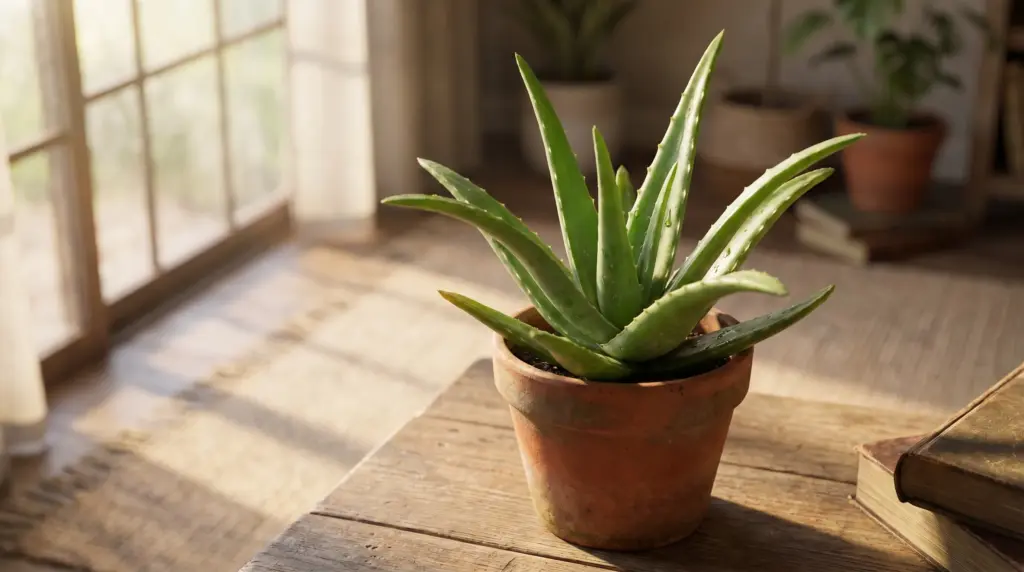
Aloe vera needs at least 6 hours of bright light per day. Indoors, a south-facing window is the best spot. East or west works when the light coming through is strong rather than filtered.
In low light, the leaves go thin and pale, growth stalls, and the plant leans hard toward the window. SDSU Extension describes the same pattern as leggy growth with weak, drooping leaves.
Summer outside is worth doing, but move it in stages. Taking an aloe from a dim corner straight into full afternoon sun burns the leaves within a day. Give it a week in partial shade, then add sun gradually. Rushing that transition is where brown and reddish patches come from.
A grow light covers the gap from October through March if your windows are weak. Mine runs about ten hours a day through the Pacific Northwest winter, which is the difference between a compact plant and a stretched one.
How to Water an Aloe Vera Plant
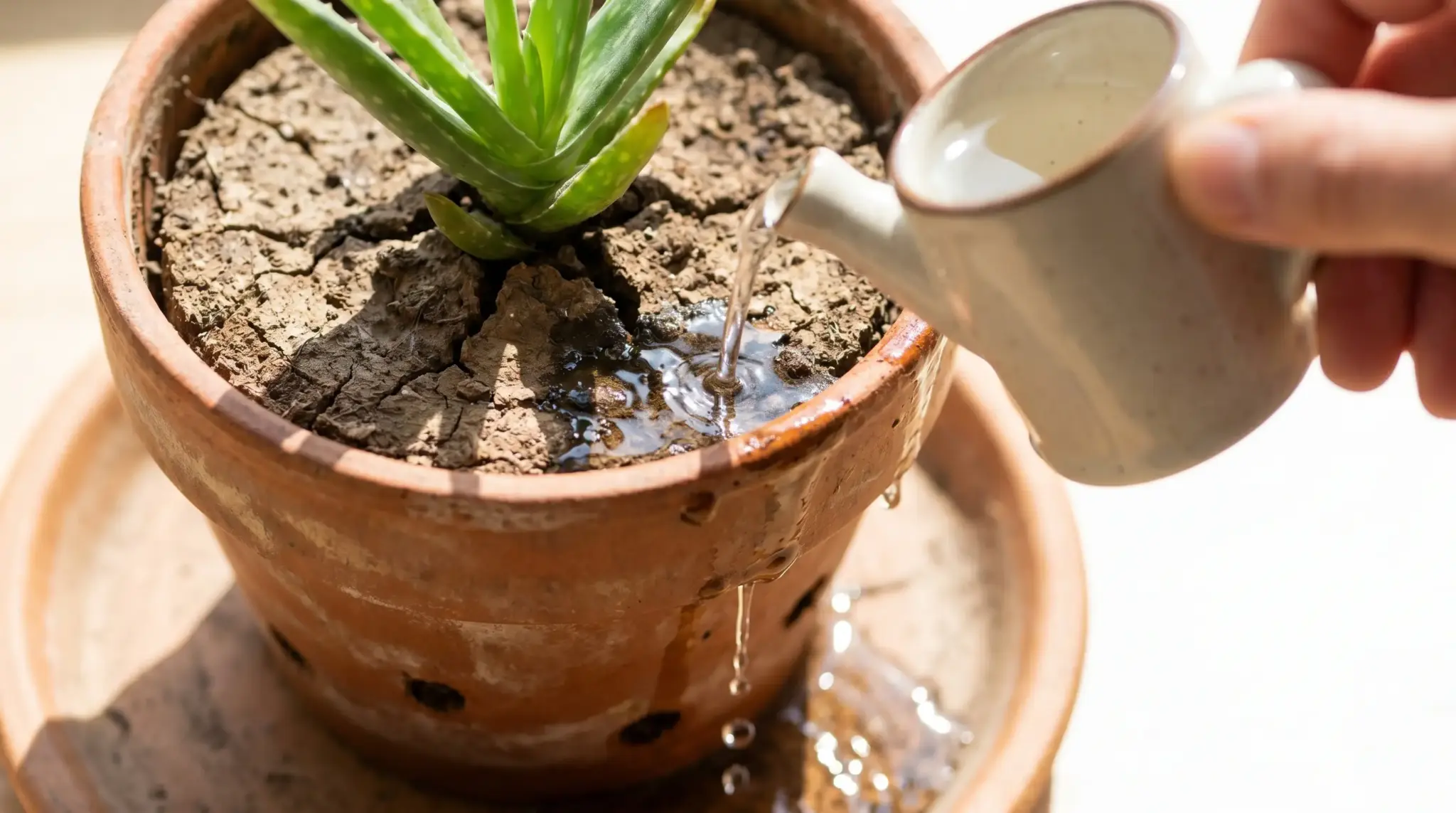
Overwatering is the number one reason aloe plants die. The plant already stores water in its leaves, so watering every few days just refills a tank that was never empty.
The rule: water deeply, but only when the soil is completely dry.
To check, push your finger two to three inches into the soil. Cool or damp means wait. Dry the whole way down means water.
Pour water slowly and evenly over the soil.
Water until it runs freely from the drainage hole.
Let the pot drain completely.
Pour off any water that has collected in the saucer within 30 minutes.
That last step matters. Water sitting in the saucer keeps the roots wet from below, which rots them the same way overwatering from the top does. Standing water in a saucer is the most common mistake I see when people water houseplants indoors, and aloe punishes it faster than most.
Through spring and summer, water every 2 to 3 weeks. Through fall and winter dormancy, water every 4 to 6 weeks. When you are unsure, wait longer. A thirsty aloe recovers within a week of a good soak, while a rotted one usually does not come back at all.
Underwatering shows too. SDSU Extension notes that too little water produces yellow, shriveled, puckered leaves, and that plants generally recover once watered again.
When Aloe Vera Actually Needs Fertilizer
Most aloe plants never need feeding at all. SDSU Extension points out that aloe naturally grows in nutrient-poor soil, and heavy fertilizing produces soft, floppy growth that looks lush and is structurally weak.
If you want to feed one anyway, use a balanced liquid succulent fertilizer once a year in spring, diluted to half the label strength, and nothing once the plant stops growing in fall.
Over-fertilizing causes the leaf tips to go mushy and start flopping outward. Cutting back and letting the plant rest for a few months usually fixes this. The same logic rules out coffee grounds around succulents, which hold moisture at exactly the spot where aloe roots need air.
How to Repot an Aloe Vera Plant
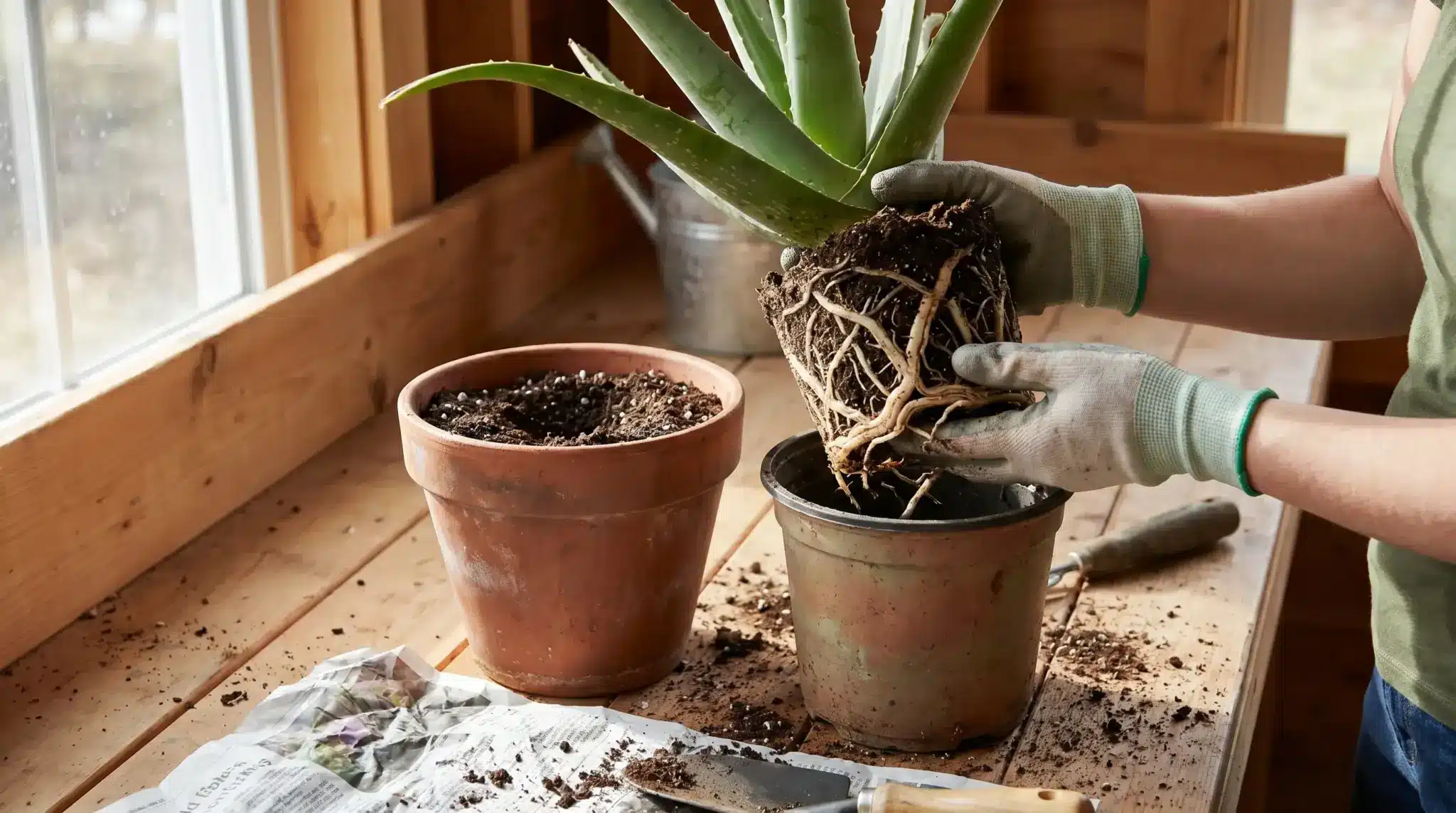
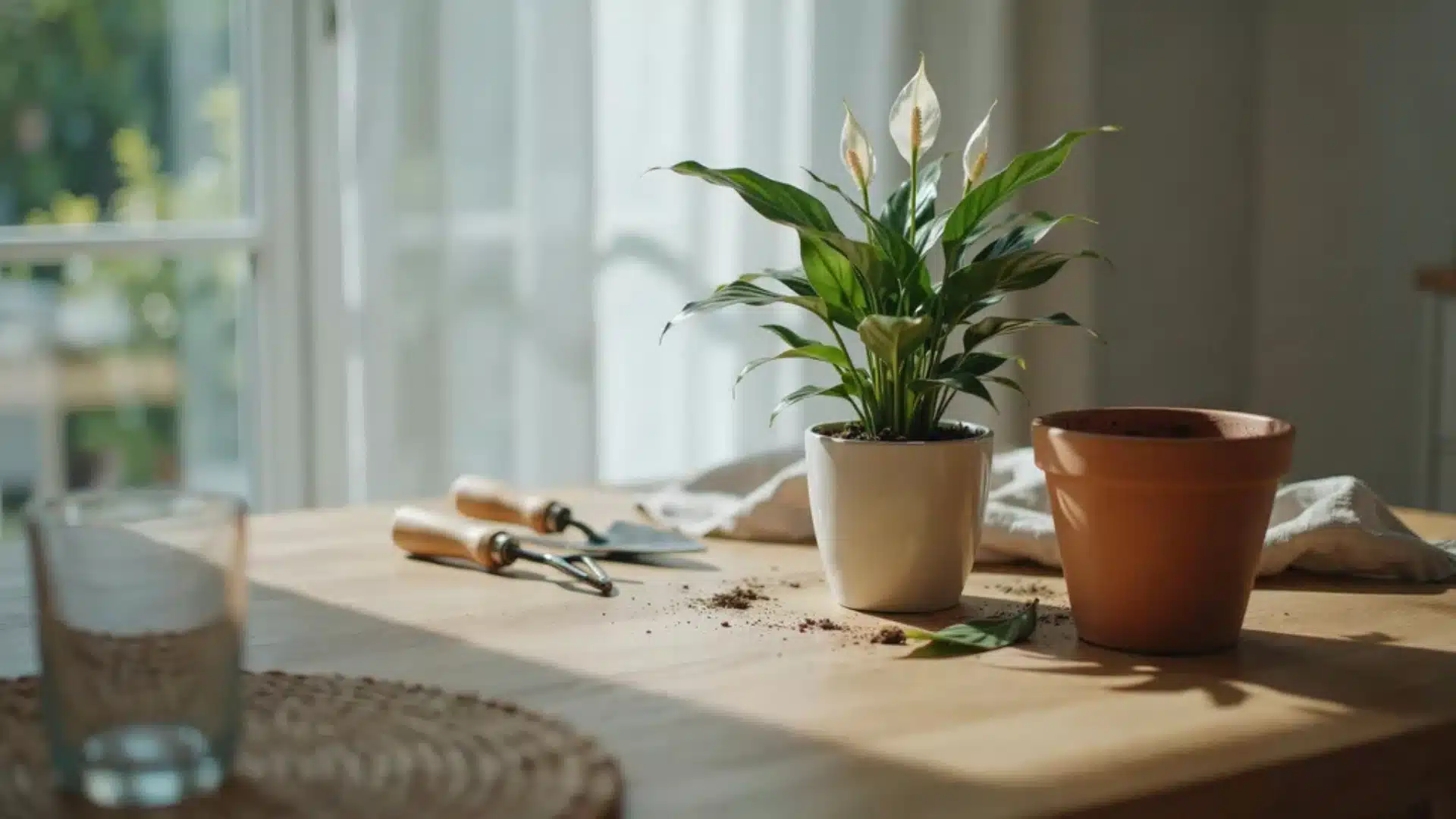
Repot your aloe every 1 to 2 years, or sooner if roots are pushing out of the drainage hole, the plant tips over easily, or pups are crowding the base. Go up one pot size, not three.
Water the plant one day before repotting. This makes the root ball easier to remove.
Gently tip the plant out and shake loose the old soil.
Check the roots. Healthy roots are white or light tan. Mushy, brown roots are rotted. Cut those off cleanly above the healthy part.
Let any cut ends dry for a few hours before replanting.
Set the plant so that the crown (where the leaves meet the roots) sits just above the soil line.
Do not water for 5 to 7 days after repotting. This gives small roots time to heal and protects against disease.
This is also a good time to separate any pups. Detach them with a sharp knife, let them sit in a bright spot for a few days to callous over, then pot them up separately. It is the easiest plant propagation you will do all year, and it costs nothing.
Common Aloe Vera Problems and How to Fix Them
Aloe is forgiving, but it shows stress in the leaves before anywhere else. White cottony clusters and small brown bumps are the two pests that find mine, and both are the same mealybugs and scale on indoor plants that turn up on every other pot in the room.
What You See | Most Likely Cause | Fix |
|---|---|---|
Soft, mushy, brown leaves | Overwatering or root rot | Let dry out fully, check roots, repot if needed |
Pale, stretching leaves | Not enough light | Move to a brighter spot gradually |
Brown or reddish leaf tips | Sunburn or sudden light change | Transition slowly between light levels |
Yellow leaves | Overwatering plus poor drainage | Reduce watering, check that the drainage hole is clear |
Shriveled, puckered leaves | Underwatering | Soak thoroughly, then drain fully |
Drooping leaves | Overwatering or underwatering | Check soil moisture first, adjust from there |
White cottony clusters | Mealybugs | Wipe with a cotton swab dipped in rubbing alcohol |
Small brown bumps, sticky leaves | Scale | Treat with neem oil or insecticidal soap |
The most common problem is overwatering. The leaves go soft and translucent, then collapse at the base. If caught early, repotting into a fresh, dry mix can save the plant. Once the roots are fully rotted, the better move is to take a healthy pup and start over.
For pests, a cotton swab dipped in rubbing alcohol handles a light mealybug population. Anything heavier responds better to diluted neem oil, applied in the evening so the leaves do not scorch while it sits on them.
Winter Care for Aloe Vera
Aloe vera goes dormant in the fall and winter. Growth slows or stops completely. This is normal. The plant is resting, not dying.
Bring your aloe indoors before nighttime temperatures drop below 50°F. Frost will kill it. SDSU Extension puts the comfortable range at 55°F to 85°F, which is roughly the range of an ordinary American house. Once inside, find the brightest window available or set up a grow light.
Watering: Every 4 to 6 weeks, or longer
Fertilizing: Stop completely until spring
Light: Keep as bright as possible to prevent leggy growth
A flat, dull-looking aloe in January is normal dormancy. By March, when the days get longer, it starts pushing out new leaves again.
How to Harvest Aloe Vera Gel at Home
The clear gel inside aloe vera leaves has evidence behind it for topical use. A review published in the Journal of Clinical and Aesthetic Dermatology found that topical aloe vera gel helps with wound healing, minor burns, and inflammatory skin conditions.
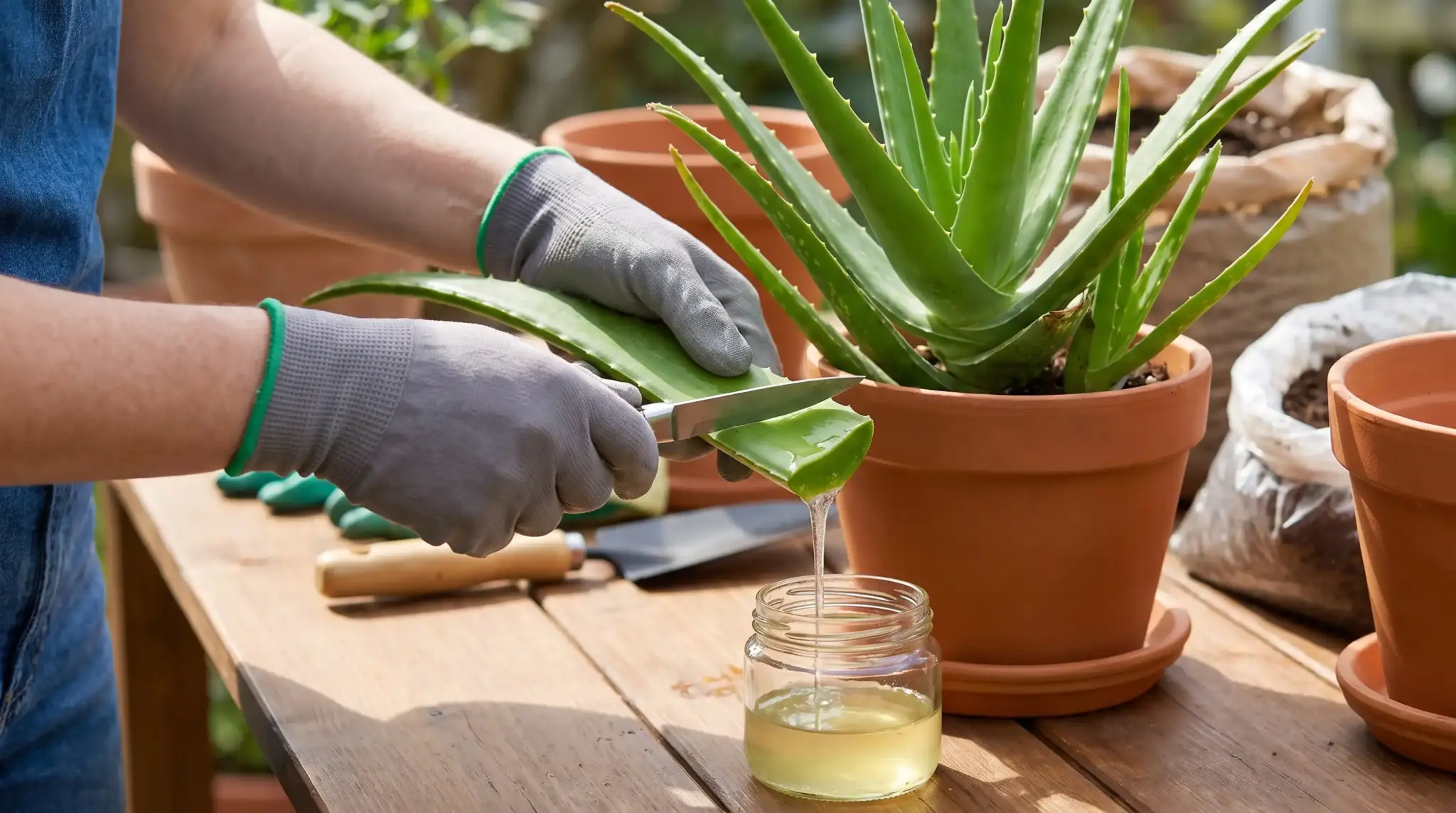
Choose a mature outer leaf that is at least 3 to 4 inches long. Do not take a young inner leaf.
Cut it as close to the base as possible using a clean, sharp knife. Scissors crush the tissue.
Stand the leaf upright in a small glass for about 10 minutes. This lets the yellow latex just under the skin drain out. That latex can irritate skin, so let it go.
Lay the leaf flat and slice it lengthwise.
Scoop or squeeze the clear gel onto the affected area.
Use it fresh on minor burns, sunburn, dry skin, or small cuts. It keeps in a sealed container in the fridge for about a week, and storing fresh aloe gel properly decides whether it is still usable on day five.
Important note: Only use gel from true aloe vera (Aloe barbadensis Miller). Some aloe relatives look similar but are not safe for use on the skin. Check the label when you buy your plant. Keep the yellow latex off your skin and out of your food. The FDA pulled aloe-based over-the-counter laxatives from the US market in 2002 over unresolved safety data.
The Two Things That Decide Everything
Aloe care comes down to light and water. A bright window, gritty soil in a pot that drains, and patience between waterings will carry a plant for years. Nearly every sick aloe I have seen traces back to one of those two.
It sits next to pothos and snake plants on my short list of houseplants that survive neglect, which is why it is usually the first plant I hand to someone who says they kill everything.
Got one that already looks bad? Describe what the leaves are doing in the comments and I will tell you which of the two it is.
Frequently Asked Questions
Can I cut the brown tips off my aloe plant?
Yes. Trim only the damaged tissue with clean scissors, following the leaf’s natural taper. Cutting into healthy green tissue opens a wider wound that scabs over and stays visible.
What does an overwatered aloe vera plant look like?
Soft, mushy, yellowing leaves that droop from the base. Squeeze one and it feels waterlogged rather than firm. Root rot follows if the soil stays wet.
Do coffee grounds help aloe plants?
No. Coffee grounds hold moisture against the roots and acidify the mix, both of which work against a plant that needs fast-draining, nutrient-poor soil.
How long does an aloe vera plant live?
Indoor aloes commonly live 5 to 25 years, and the pups they produce keep the same plant going indefinitely. Repotting every one to two years extends that.
Is aloe vera toxic to cats and dogs?
Yes. The ASPCA lists aloe as toxic to cats and dogs, causing vomiting and lethargy. The yellow latex under the leaf skin is the part responsible.