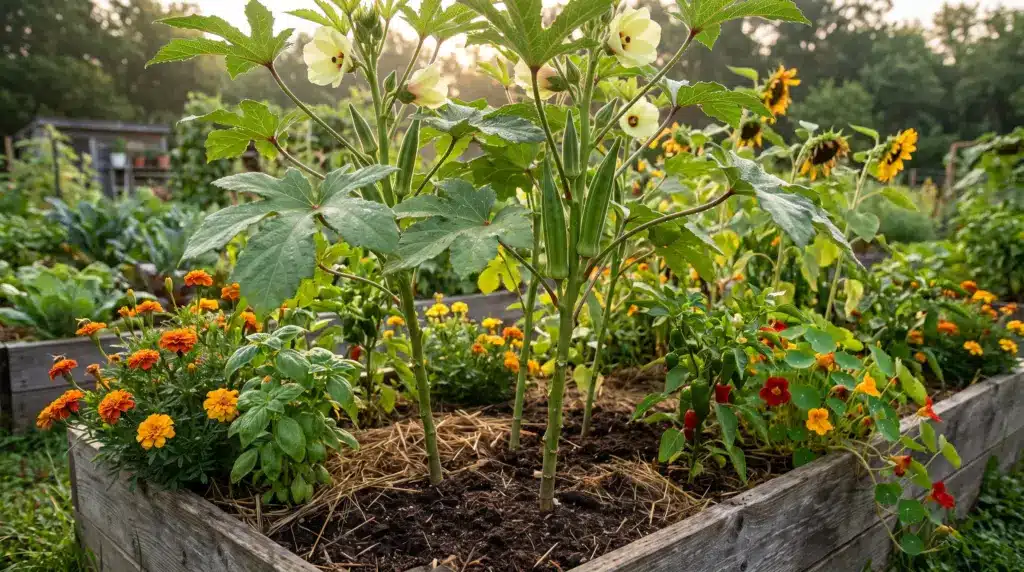
Some neighbors help okra thrive, and some quietly make life harder. The right okra companion plants can draw pollinators, support pest control, and put the shade of tall okra to good use.
Pick the wrong ones, though, and they compete for nutrients or share the same root-damaging pests. Many gardeners learn that the hard way.
You will see which plants earn a spot, which come with conditions, and which to skip, plus a rotation plan and a bed layout you can copy.
Okra Companion Planting Chart
The easiest okra companion plants to get right are basil, nasturtiums, calendula, dill, alliums, and sunflowers. Marigolds work best grown in the bed the season before okra. Peppers, radishes, cucumbers, beans and peas, cowpeas, lettuce, melons, and eggplant work with a condition, usually timing or a shared root pest. Squash, sweet potatoes, brassicas, tomatoes, and corn are the ones to skip.
A Best rating means the pairing has no major catch. Rotation means you grow the plant in the okra bed the season before, not beside okra. Conditional means the pairing works only with the step noted, usually because the plant shares root-knot nematodes with okra.
These tiny soil worms feed on roots. Avoid means the plant gives okra nothing back and adds a second problem, such as crowding it or competing for food.
Plant | Rating | Main Benefit | Watch Out For | Spacing Tip |
|---|---|---|---|---|
Basil | Best | Scent can slow aphid breeding | Mite claims are folklore | 12 inches from okra |
Marigolds | Rotation | Suppress nematodes in the soil | A border beside okra is unproven | Grow the season before okra |
Nasturtiums | Best | May trap aphids and flea beetles | Fade in prolonged heat | 12 to 18 inches from okra |
Calendula | Best | Draws beneficial insects | Fades in prolonged heat | Scatter through the bed |
Dill | Best | Draws predatory wasps | Gets tall and unruly | A few feet from seedlings |
Alliums | Best | Small, low-competition edging | Beetle repellent claim is folklore | Chives 8 to 10 inches apart |
Sunflowers | Best | Windbreak that may trap aphids | Tall, and may slow nearby seedlings | Outer edge of the bed |
Peppers | Conditional | Share okra’s sun and warm soil | Nematode host | 18 inches from okra |
Radishes | Conditional | Fast crop that loosens soil | Pull early, nematode host | Sow early in the bed |
Cucumbers | Conditional | Share water needs, get shade | Nematode host | Trellis, rows 4 to 6 feet apart |
Beans and peas | Conditional | Add nitrogen for later crops | Beans host nematodes | Bean rows 18 to 24 inches apart |
Cowpeas | Conditional | Love okra’s heat, may lift yield | Need matching bloom, nematode host | Sow 2 to 3 weeks after okra |
Lettuce | Conditional | Cool shoulder-season crop | Nematode host | Sow early or late, south side |
Melons | Conditional | Gain afternoon shade | Nematode host, needs room | Hills 4 to 6 feet apart |
Eggplant | Conditional | Similar water needs | Nematode host | 2 feet apart in its own row |
Squash | Avoid | None for okra | Nematode host, vines crowd okra | Keep out of the okra bed |
Sweet potatoes | Avoid | None for okra | Some nematode hosts, vines crowd okra | Keep out of the okra bed |
Broccoli and other brassicas | Avoid | None for okra | Heavy feeders in cool season | Grow in winter, then plant okra |
Tomatoes | Avoid | None for okra | Nematode host, tall and hungry | Keep out of the okra bed |
Corn | Avoid | None for okra | Heavy feeder that crowds okra | Keep out of the okra bed |
Okra companion planting chart showing which plants are best, conditional, rotation crops, or to avoid.
Best Companion Plants for Okra
These okra companion plants help attract beneficial insects, use garden space efficiently, and support healthy growth.
Herbs and Flowers
1. Basil
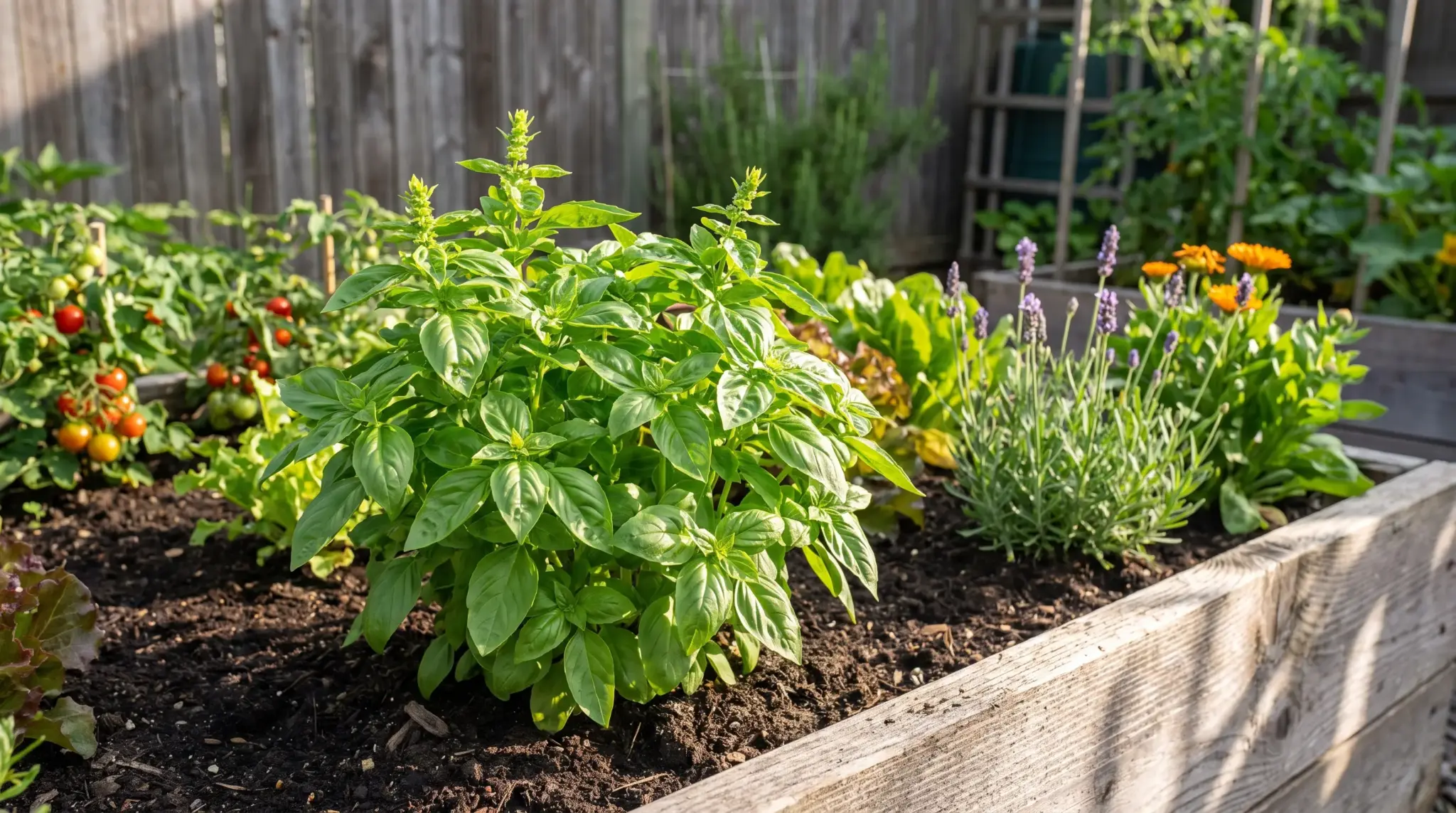
Basil is a popular okra companion plant for pest control. Lab tests show its scent can slow the breeding of green peach aphids. Gardeners also credit basil with confusing spider mites and whiteflies, but that part is garden lore.
In return, basil enjoys a break from harsh afternoon sun once okra grows tall enough to shade it.
2. Marigolds
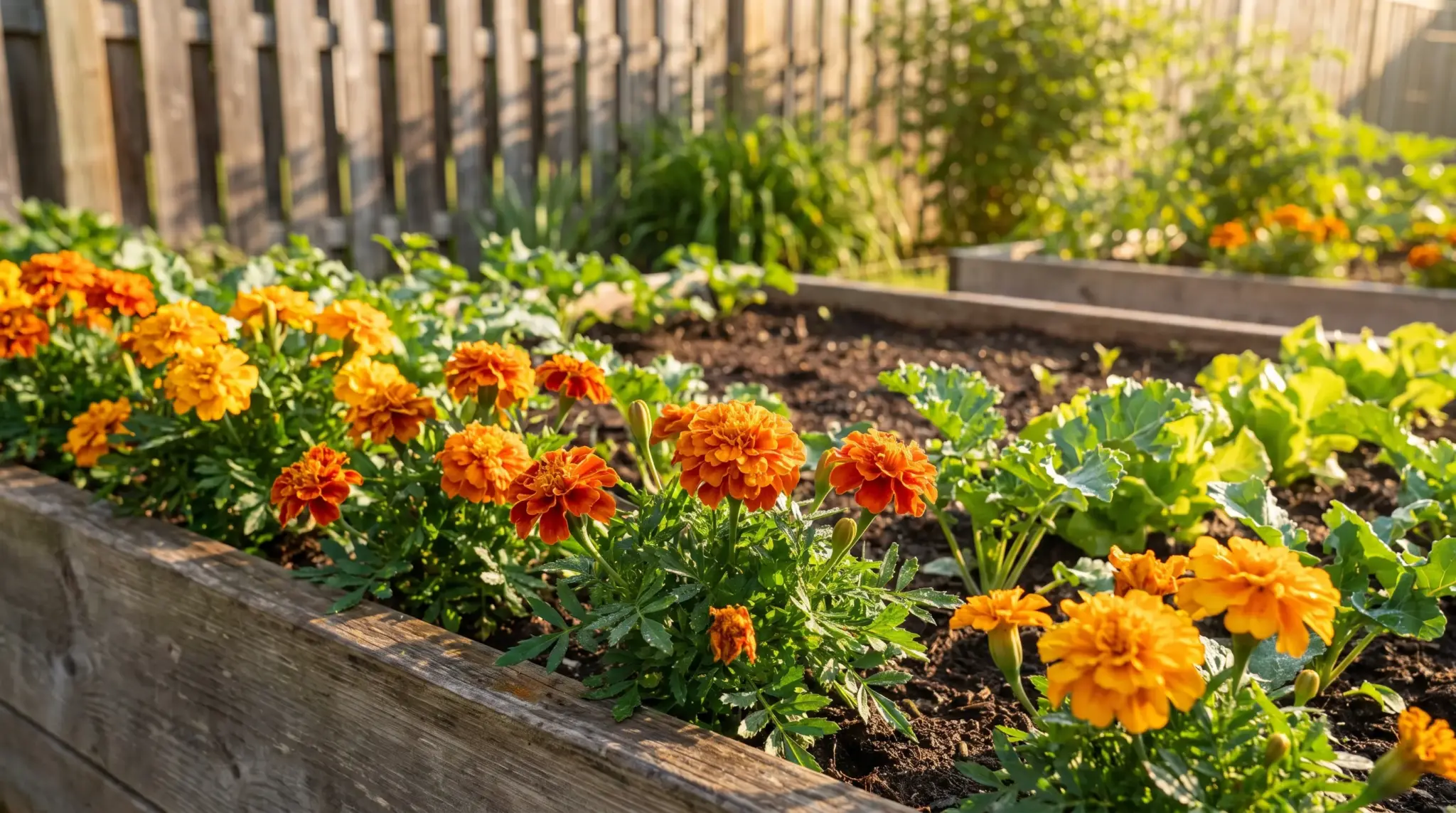
French marigolds are best known for their effect on root-knot nematodes. Grow them in the okra bed the season before okra goes in. Marigolds grown in rotation suppressed the nematodes in USDA trials, and the effect carried over to the next crop.
Many gardeners also grow marigolds as garden helpers in a border to repel pests, but border use is folklore, since those trials tested rotation, not borders.
3. Nasturtiums
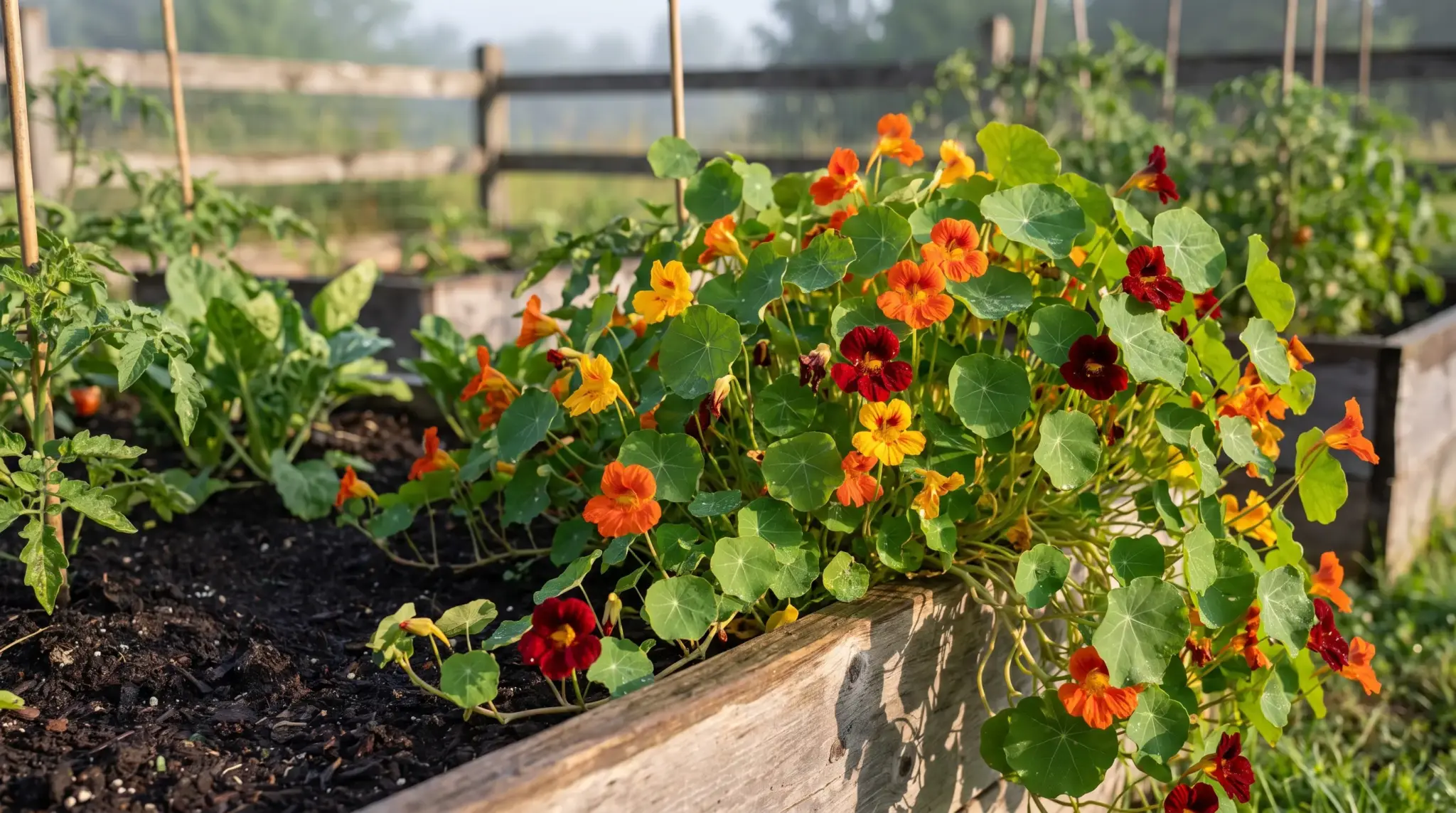
Many gardeners use nasturtiums as a trap crop and report that aphids and flea beetles settle on the leaves instead of the okra pods. Nasturtiums also add a splash of orange and yellow to an otherwise green bed.
They like cool summers, so give them afternoon shade where the heat runs high, as Missouri Botanical Garden advises.
4. Calendula
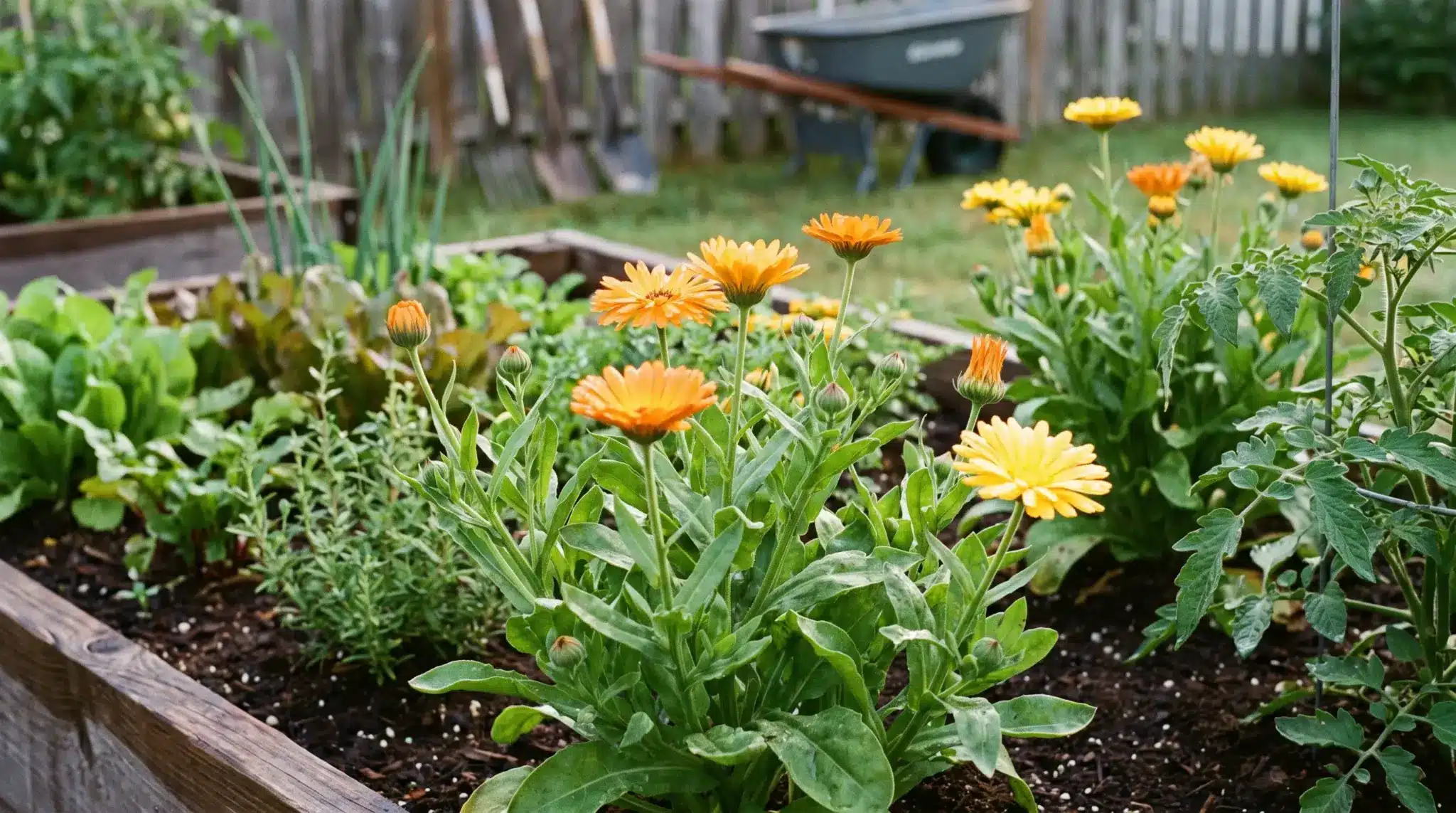
Calendula draws in pollinators and other beneficial insects that help control aphid populations naturally. It also blooms for much of the season, so you get color right alongside your harvest.
Calendula struggles in prolonged heat. In hot climates, plant it where it gets afternoon shade and cut it back if it languishes. That is the same advice Missouri Botanical Garden gives for calendula.
5. Dill
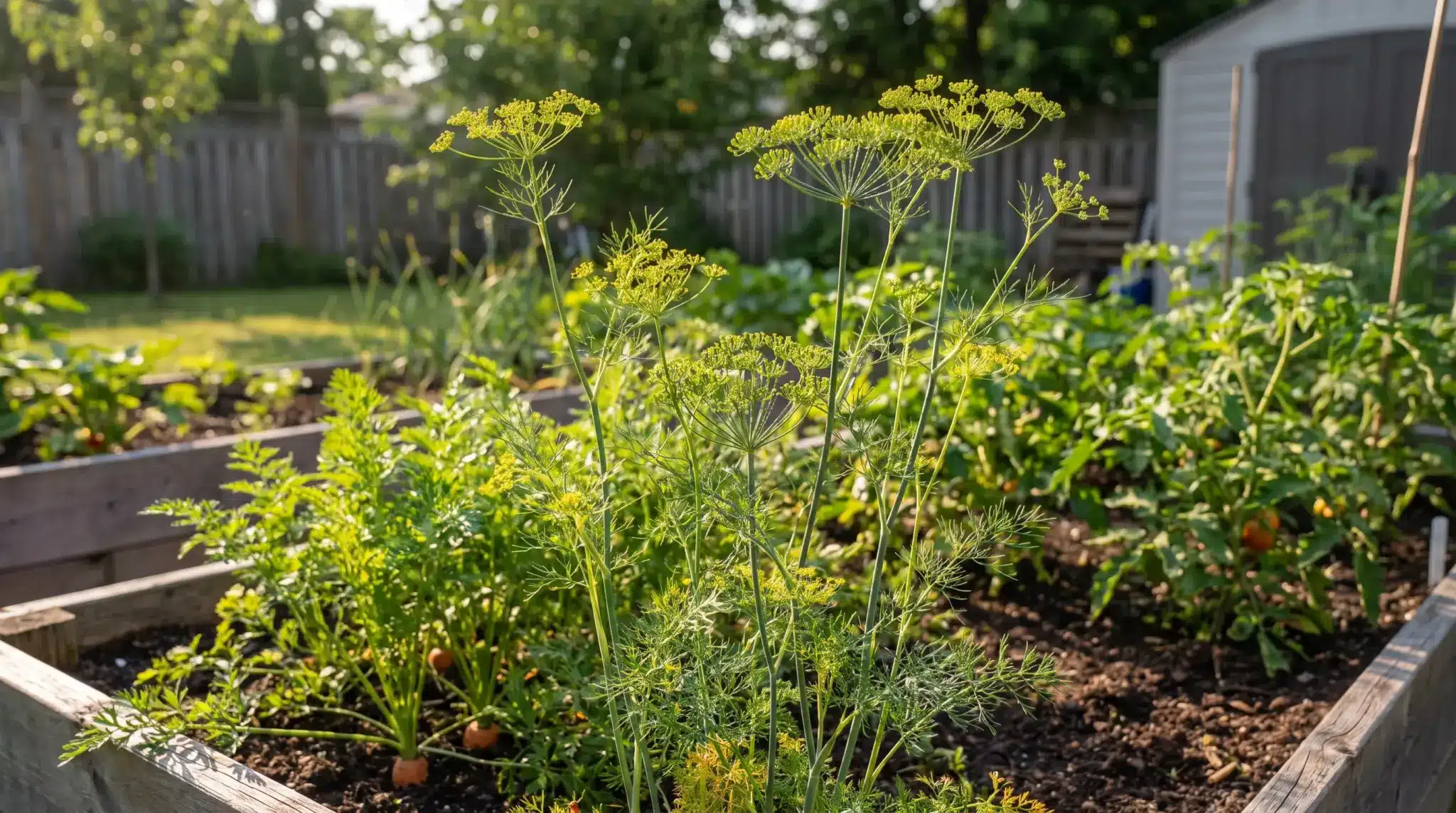
Dill attracts predatory wasps that hunt down caterpillars and other soft-bodied pests. Just keep it a few feet from okra seedlings, since dill can get tall and a little unruly.
6. Alliums (Chives, Garlic, and Onions)

Chives, garlic, and onions are small, tidy plants that will not shade or crowd okra. Garlic goes in during fall and comes out in early summer, so it only briefly overlaps with young okra.
Many gardeners plant alliums to keep Japanese beetles off their crops. A field trial on roses found that garlic chives did not cut Japanese beetle numbers. Okra was not part of that trial, so treat the beetle benefit as folklore.
Vegetables That Can Work Near Okra
Most of the vegetables below share one catch. They host the same root-knot nematodes that feed on okra roots, and the worms multiply when hosts return to the same soil. Root-knot nematodes cause losses of up to 25% in peppers and 22% in okra. Give okra and its vegetable neighbors a new spot each year.
7. Peppers
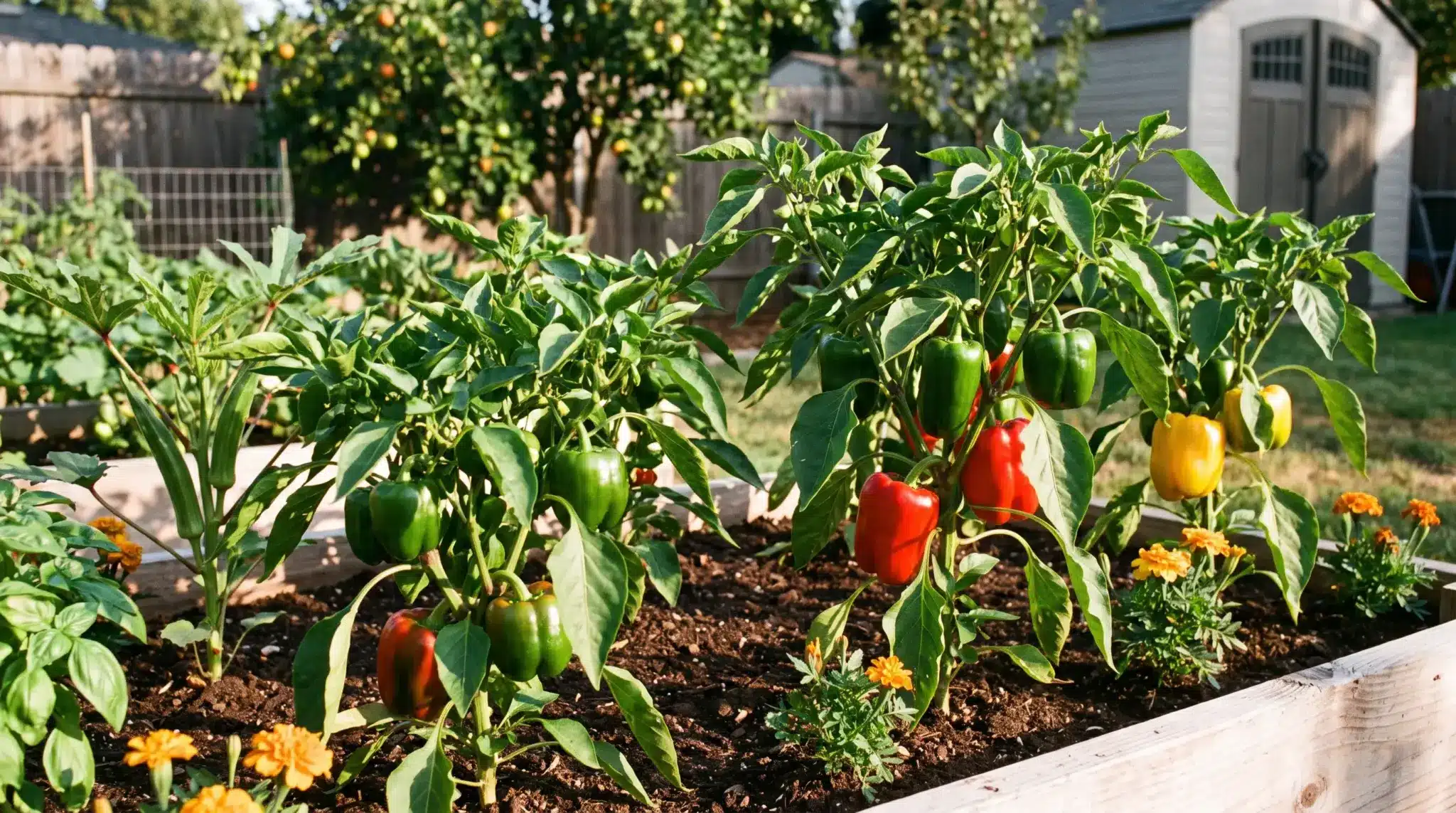
Both sweet and hot peppers can work as okra companion plants, since they share okra’s love of full sun and warm soil. Keep them 18 inches from okra. Set hot peppers 12 to 15 inches apart and bell types 15 to 18 inches apart.
8. Radishes
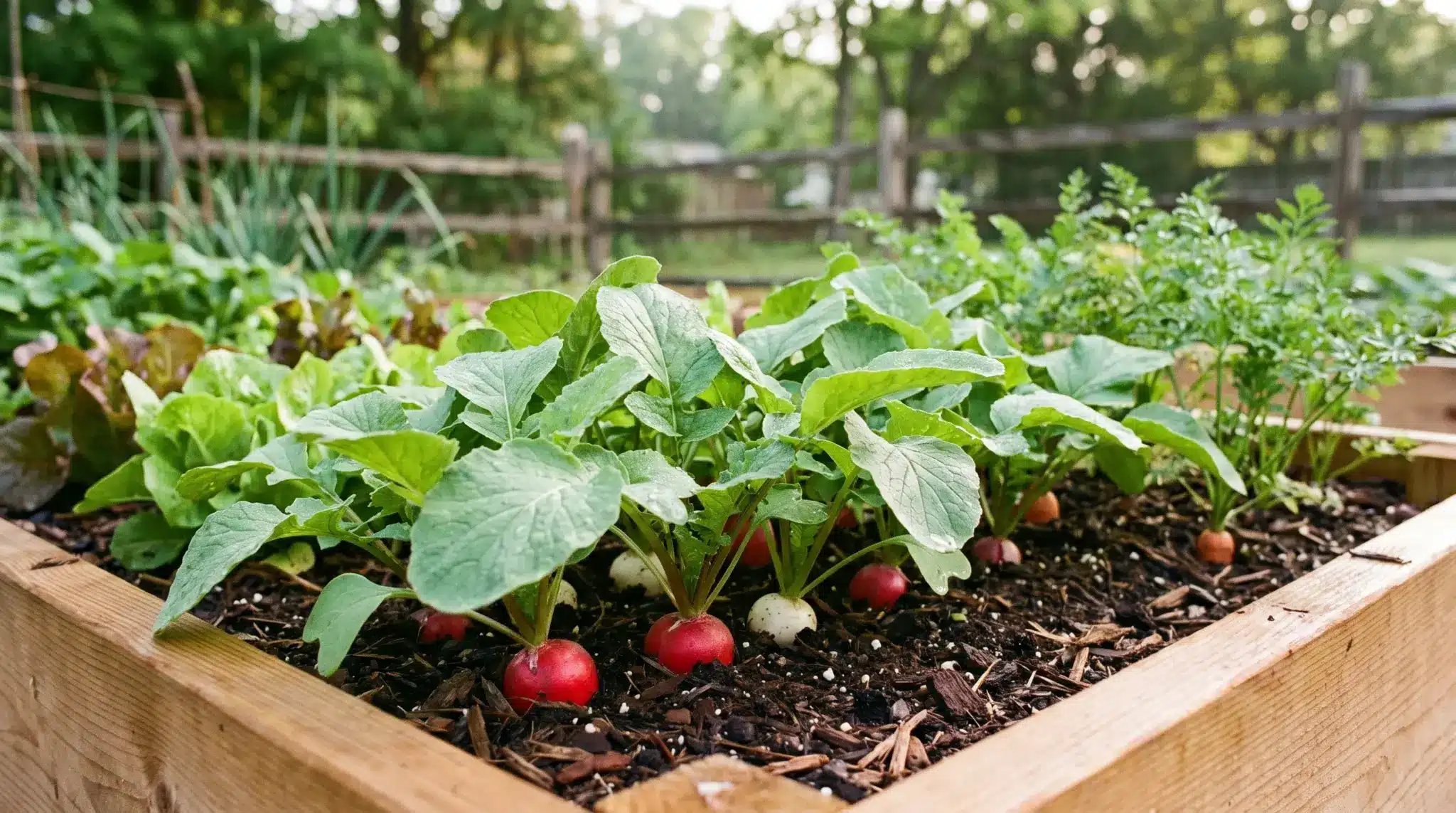
Radishes are a cool-season crop that grows fast. Sow them in the okra bed in early spring while the soil is still cool, then pull them before the okra goes in or needs the room.
Their taproots loosen the soil, which can make it easier for young okra roots to spread out. Radishes can also feed root-knot nematodes, so skip them in a bed with root problems.
9. Cucumbers
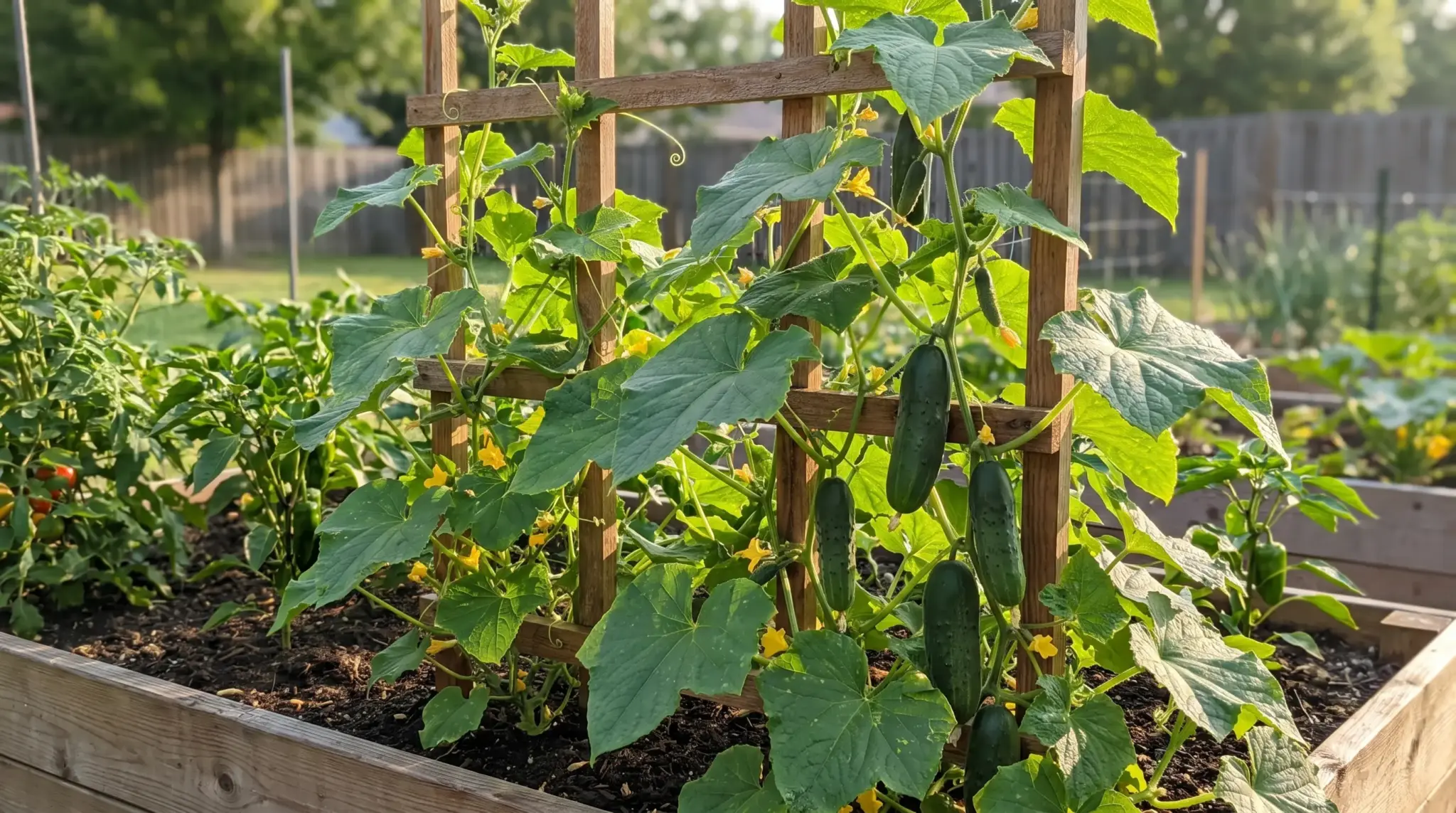
Cucumbers need plenty of water and rich soil, just like okra. Give them a trellis nearby and keep cucumber rows or hills 4 to 6 feet apart. Okra will return the favor by shading them during the hottest part of the day.
10. Beans and peas
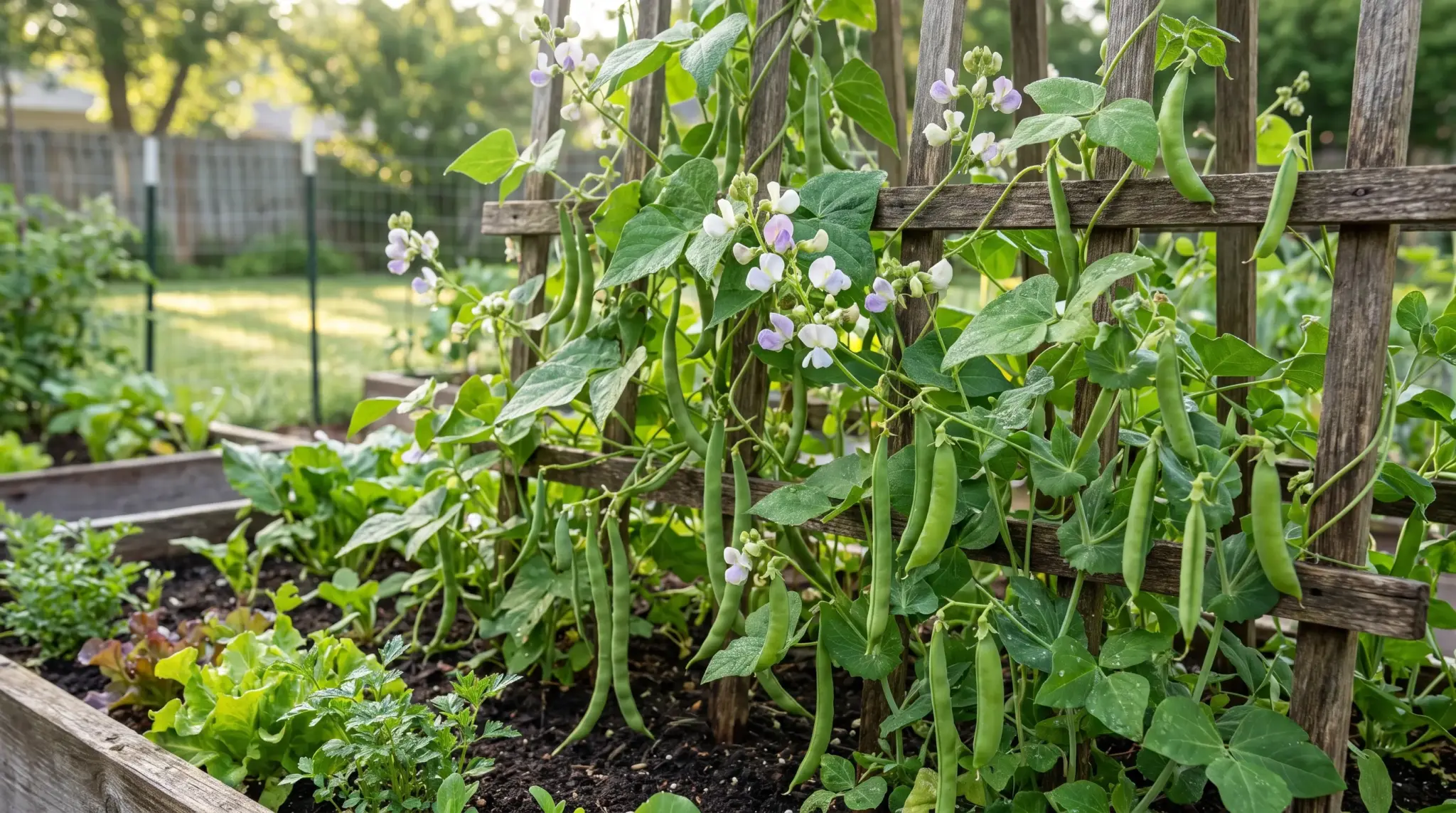
Beans and peas pull nitrogen from the air and add it back into the soil. That can help later plantings. Vining types will also climb okra’s sturdy stalks like a natural trellis. Space bean rows 18 to 24 inches apart.
11. Cowpeas (Southern Peas)

Cowpeas, also called southern peas or black-eyed peas, enjoy the same heat okra does. Plant them two to three weeks after okra so the two bloom together. A SARE-funded trial found okra yielded about 12% to 32% more with cowpeas between the rows in 2019, when bloom times lined up. The first year was mixed, so treat the gain as promising, not proven.
Cowpeas will not fix nematodes either. In the same trials, one variety held root-knot nematodes down at first, then turned quite susceptible by the third rotation.
12. Lettuce
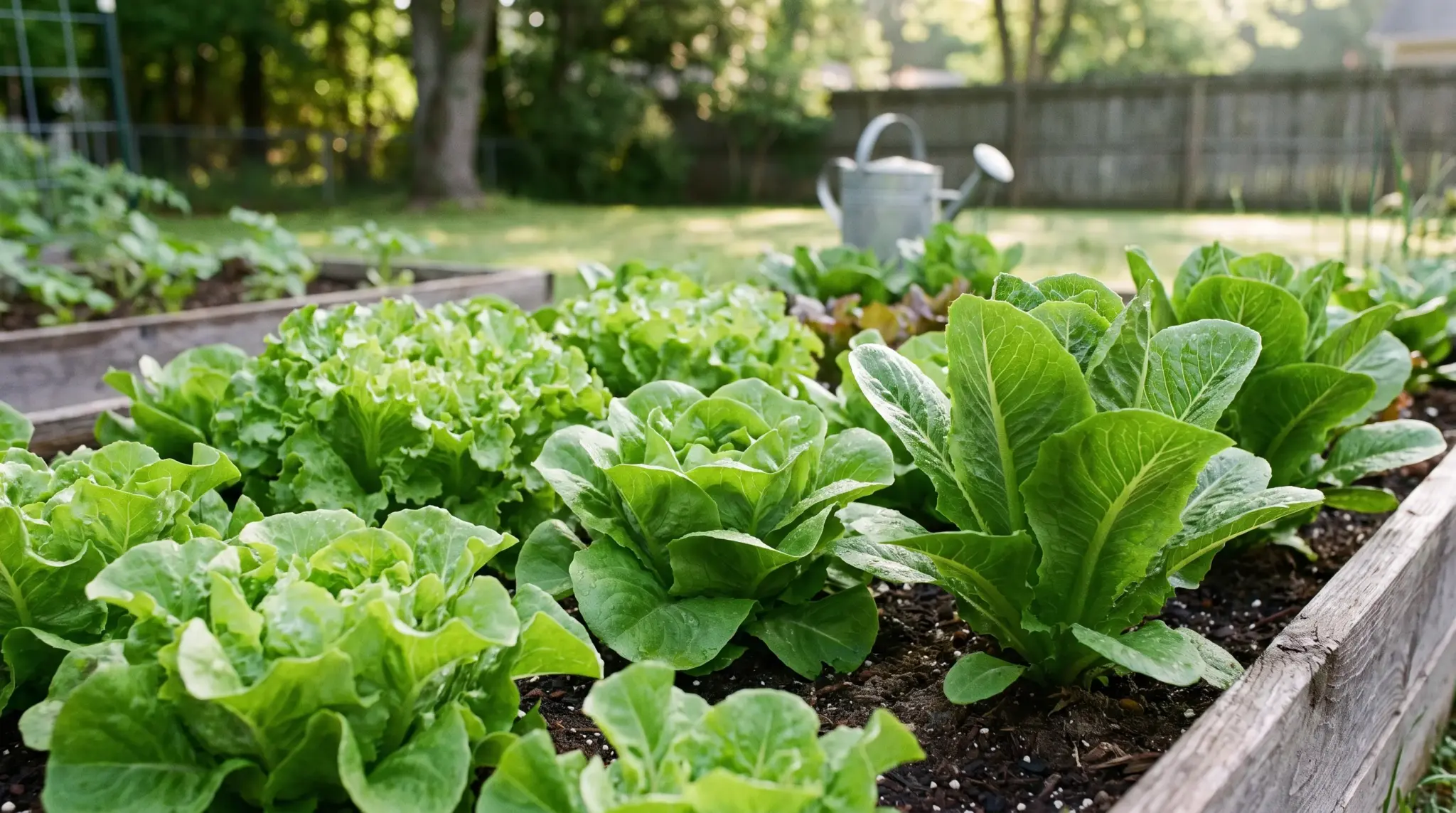
Lettuce is a cool-season crop, so it fits the shoulder seasons around okra. Sow it before the okra goes in, or in late summer once the heat eases and the okra shades the bed. Its shallow roots will not compete with okra for water or nutrients.
13. Melons
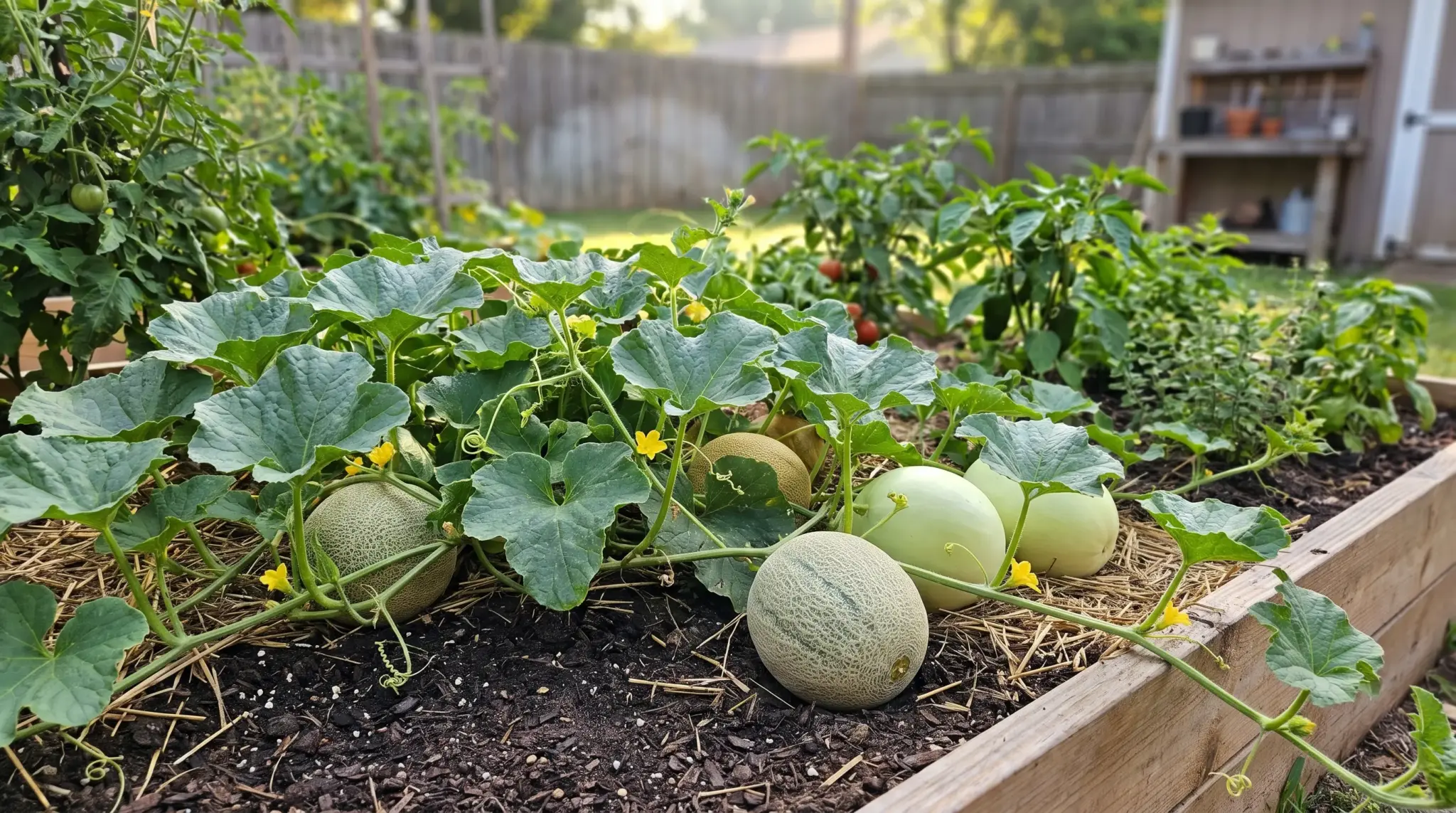
Melons appreciate the afternoon shade that tall okra provides during peak summer heat. Just give them enough room to sprawl without crowding your okra rows, with cantaloupe and honeydew hills 4 to 6 feet apart.
14. Eggplant
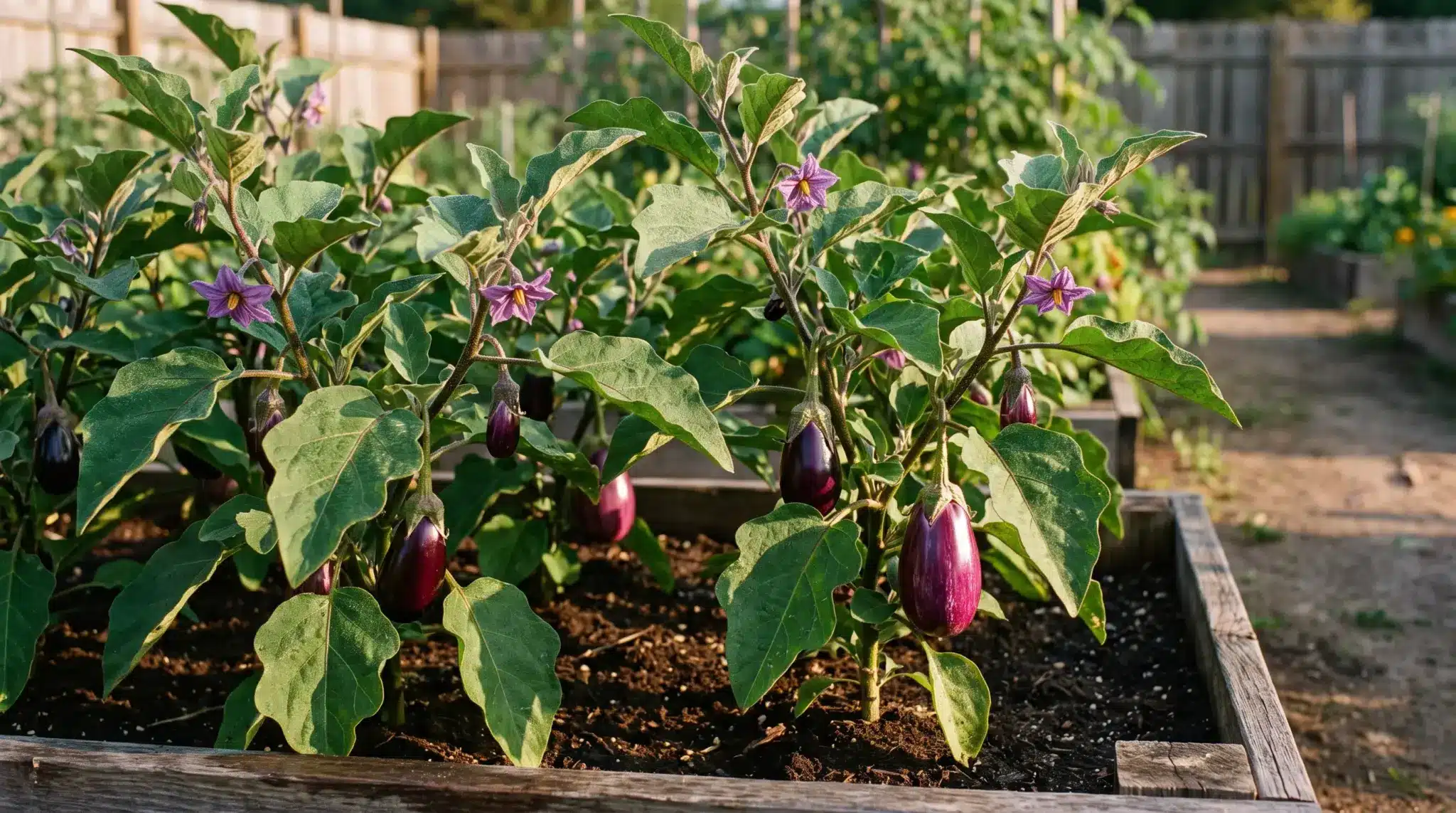
Eggplant shares okra’s thirst, and okra needs at least 1 inch of water per week. Eggplant also tolerates a bit of shade well. Plant it 2 feet apart in its own row, with rows 3 feet apart.
A Structural Companion for Okra
15. Sunflowers
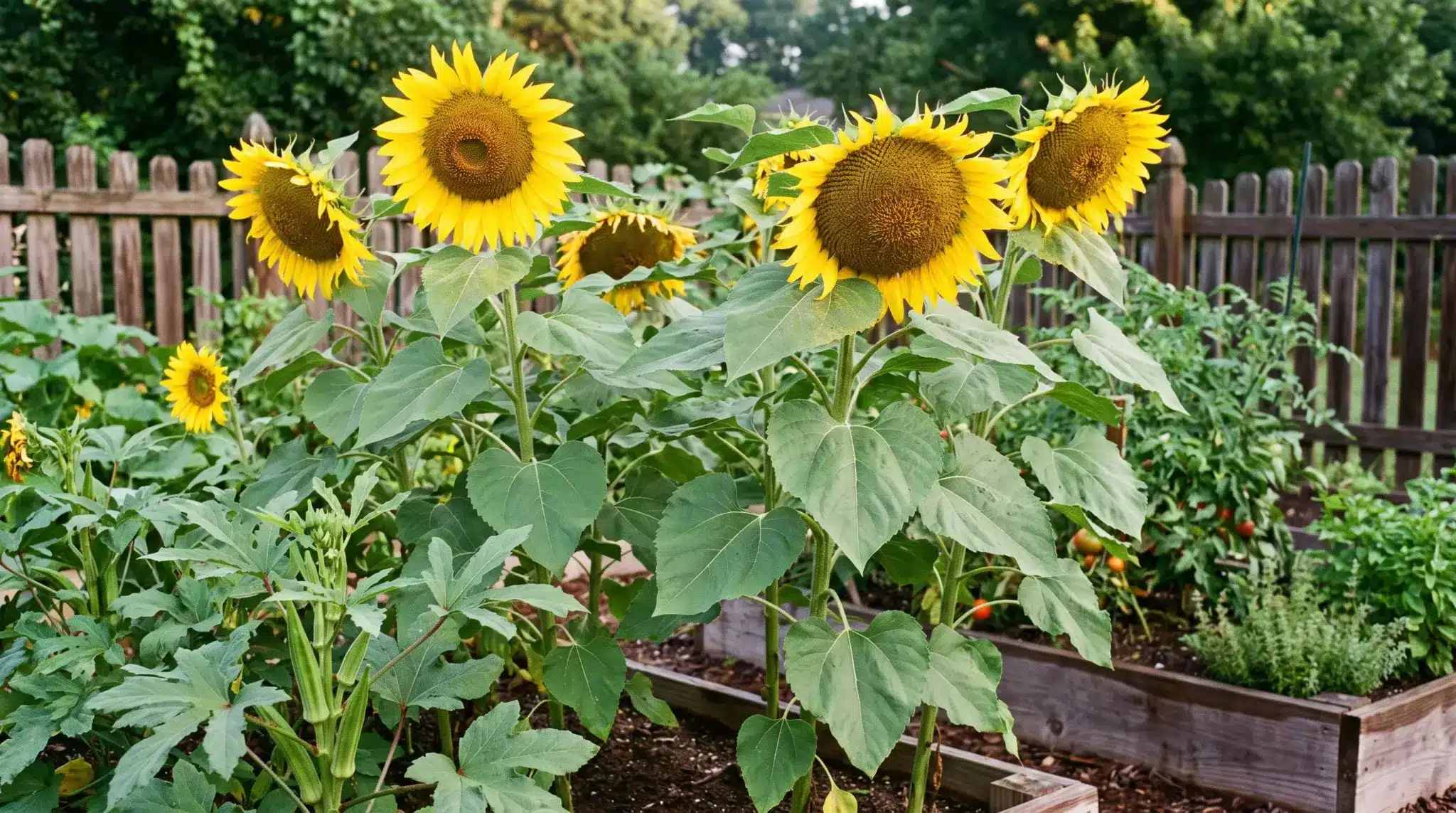
Many gardeners report that sunflowers pull aphids away from okra. Their tall stalks also work as a windbreak. That windbreak helps shield smaller plants nearby.
Sunflowers also release compounds that can slow other plants. In lab tests, strong sunflower extracts slowed pea seed germination. Okra was not tested, so keep sunflowers on the outer edge and sow okra seeds a couple of feet away.
Optional Extras

Cilantro
Cilantro belongs to the same plant family as dill, and its flowers draw similar helpful insects. Sow it in spring or early fall, since it bolts quickly in summer heat. Let a few plants flower.
Zinnias
Zinnias are a warm-season flower that handles okra’s heat and draws bees and butterflies. Pick single-flowered varieties, which give pollinators easier access to pollen.
Which Okra Pests Each Companion Helps With
Pest | Companions to try | Evidence |
|---|---|---|
Aphids | Basil, sunflowers, nasturtiums | Basil lab-tested, the rest gardener-reported |
Flea beetles | Nasturtiums | Gardener-reported |
Japanese beetles | Alliums | Folklore, failed in a rose trial |
Root-knot nematodes | Marigolds grown the season before okra | Field trials, rotation only |
5 Bad Companion Plants for Okra

Not every plant makes a good neighbor. These five crowd okra or compete with it for food, on top of any shared pests.
1. Squash
Squash hosts root-knot nematodes, the same pests that damage okra roots. Its big leaves and sprawling vines also crowd and shade young okra. Cucumbers share the same pest, but a trellis keeps their vines off the ground, so grow those instead.
2. Sweet Potatoes
Some sweet potato varieties host root-knot nematodes, the same risk squash carries. Their aggressive vines can also crowd out okra fast. If you want something low under okra, try lettuce in late summer.
3. Broccoli and Other Brassicas
Broccoli and other brassicas are cool-season crops, so they rarely share a bed with okra for long. They are also heavy feeders that compete directly with okra for nutrients in the soil whenever their seasons overlap. Grow them in winter, then follow with okra.
4. Tomatoes
Tomatoes are sometimes called a trap crop for stink bugs, but that idea only tells half the story. Tomatoes and okra are both good hosts for root-knot nematodes, and tall tomato vines compete with okra for light and food. If you want a herb next to okra, plant basil instead.
5. Corn
Corn is a heavy feeder that competes with okra for space and nutrients. If you want height on the edge of the bed, sunflowers fill that role.
Rotation and Cover Crops for Root-Knot Nematodes
Rotation does more than any single pairing. Okra feeds the nematodes too, so move it to a new bed each year. Follow okra and other hosts with a non-host crop or a cover crop.
Marigolds make the easiest cover crop for a home bed. Sunn hemp and velvetbean suppressed root-knot nematodes in those trials too, so any of the three can fill the gap.
Brassicas also fit here. Research on okra suggests growing cruciferous crops in winter, then planting okra in summer.
A Simple 4 by 8 Bed Layout for Okra
This layout assumes a bed 8 feet long from east to west and 4 feet deep, in the Northern Hemisphere. Okra goes on the north side so its height does not shade the shorter plants.
Spot | Plant | Count | Spacing |
|---|---|---|---|
North edge | Okra | 5 | 18 inches apart |
North corners | Sunflowers | 2 | One at each end of the okra row |
12 inches south of the okra row | Basil and nasturtiums | 4 basil and 4 nasturtiums | Alternate every 12 inches, starting 6 inches from the ends |
2 feet south of the okra row | Cowpeas | 22 | 4 inches apart, starting 6 inches from the ends, sown 2 to 3 weeks after okra |
South edge | Chives and calendula | 4 chives and 4 calendula | Alternate every 12 inches, starting 6 inches from the ends |
Peppers, cucumbers, beans, melons, and eggplant do better in a second bed. In year two, grow marigolds or a cover crop in the old okra bed. Move okra to ground that held none of the Conditional vegetables.
Wrapping Up Your Okra Garden Plan
Okra does not need many friends, just the right ones. Start with herbs and flowers, add conditional vegetables with care, and keep the problem plants out of the bed.
The best okra companion plants help most when you rotate them, because root-knot nematodes build up in the same soil year after year. Rotation keeps the soil healthier for the next crop.
Try a small change this season, such as growing marigolds ahead of okra. Then share what you notice in the comments.
Frequently Asked Questions
What Should Okra Not Be Planted Next To?
Keep okra away from squash, sweet potatoes, and tomatoes, which share its root-knot nematodes. Corn and broccoli are heavy feeders that compete with okra for nutrients, so skip them too.
What Veggies Pair Well With Okra?
Peppers, eggplant, cucumbers, melons, beans, cowpeas, and lettuce pair well with okra. Most share root-knot nematodes with it, so plant them in a different bed each year.
What Are Some Good Companion Plants for Okra?
Basil, nasturtiums, calendula, dill, chives, and sunflowers fit best beside okra. Grow marigolds in the bed the season before okra instead, since their nematode benefit comes from rotation.
What Can You Plant Under Okra?
Lettuce and other cool-season greens do best under okra, since its shade cools them. Sow them in late summer on the sunnier south side, where tall stalks block less light.
Can You Plant Okra and Tomatoes Together?
Skip the pairing. Tomatoes and okra both host root-knot nematodes, and tall, hungry tomato vines compete with okra for light and food. Give each its own bed.
Can You Plant Okra and Cucumbers Together?
Yes, with care. Cucumbers share okra’s love of water and heat, and a trellis keeps their vines off the ground. They host the same nematodes, so rotate beds yearly.