One flower can do what most sprays cannot. Marigolds fight pests from the roots up.
Aphids eat your lettuce. Nematodes destroy tomato roots. Whiteflies cloud your pepper plants.
These are problems that hit home vegetable gardens every single season. Marigolds address all three without chemicals.
The real advantage is knowing which plants to grow near them. Some pairings protect your crops all season. Others quietly set them back.
This blog covers the best companion plants for marigolds, which variety works best for your space, and which plants you should never plant near marigolds.
What Makes Marigolds Good Companion Plants?
Marigold roots release compounds called thiophenes. These chemicals target and kill root-knot nematodes in the soil.
Nematodes are microscopic pests. They destroy the root systems of tomatoes, peppers, and many other vegetables without any visible warning signs.
Above the soil, marigold scent confuses and deters aphids, whiteflies, and tomato hornworms. It also draws in bees and butterflies.
Those pollinators visit your vegetable plants and help them produce more fruit throughout the season.
Marigolds also work as trap crops. Slugs and spider mites go to marigolds first, before they ever reach your vegetables. That gives your crops a quiet layer of natural protection at you extra cost.
Marigolds are low-maintenance plants. They do not need much fertilizer. They do not compete hard for nutrients. Other plants in the bed get to keep more of what is in the soil.
17 Best Marigold Companion Plants
These 17 plants grow better when paired with marigolds. Start with the ones you already have in your garden this season.
Best Vegetables to Grow With Marigolds
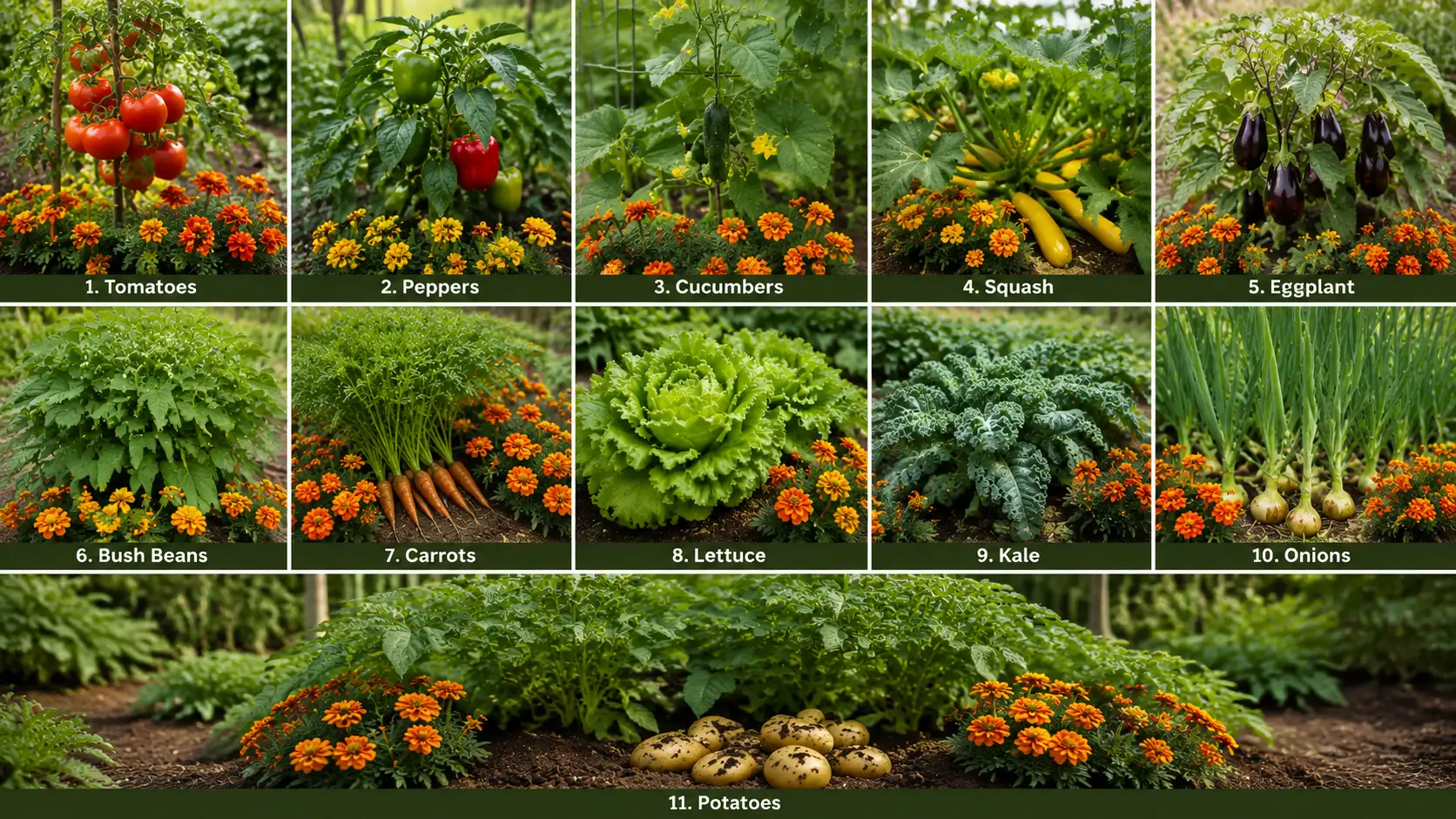
1. Tomatoes
Marigolds are one of the most proven pairings in vegetable gardening. French marigolds reliably deter aphids, whiteflies, and tomato hornworms.
They also suppress nematodes that damage tomato roots underground. Plant them at the base or along the edges of your tomato bed for full coverage.
2. Peppers
Marigolds block the aphids and whiteflies that pepper plants attract throughout the growing season.
Their root compounds also protect pepper roots from nematode damage below the surface. Both plants grow best in full sun and handle heat well.
Also read: Are Peppers a Fruit? Get to Know What Science Says
3. Cucumbers
Marigold scent deters cucumber beetles and aphids from settling on your vines.
The pollinators that marigolds attract also improve cucumber fruit set. That means better yields with less work on your part.
4. Squash
Squash has large, broad leaves that shade the soil around marigold roots and lock in moisture.
Marigolds return the favor by deterring squash bugs and vine borers from the edges of the bed all season long.
5. Eggplant
Eggplant roots are especially prone to nematode attack. French marigolds reduce that risk significantly.
Both plants love heat and full sun, so they grow side by side without any conflict in a warm bed.
6. Bush Beans
Bush beans fix nitrogen in the soil. That feeds every nearby plant without extra fertilizer. Marigolds deter bean beetles from settling around the roots.
The two work well together in any vegetable bed. Pole beans are a poor match for marigolds. Stick to bush varieties in this pairing.
7. Carrots
Marigold scent confuses carrot fly and masks the natural scent of carrots in the ground.
Carrot fly locates crops by smell, so this masking effect gives your roots a real layer of protection all season.
8. Lettuce
Slugs and aphids target lettuce quickly. Marigolds help keep both pests at bay throughout the season.
In hotter climates, taller marigold varieties can also give lettuce light afternoon shade during the warmest part of summer.
9. Kale
Kale picks up aphid infestations fast when left unprotected. Marigolds help reduce that pressure all season.
Kale grows well near marigolds. Full brassicas like cabbage and broccoli are a different story, though. That is covered in the next section.
10. Onions
Onion scent and marigold scent work well together as a double barrier against aphids.
Both plants prefer well-drained soil, handle heat comfortably, and grow at a similar pace throughout the season.
11. Potatoes
Marigolds planted around potato beds help deter Colorado potato beetles from the foliage.
French marigolds also protect potato roots from nematode damage in the soil around the root zone below the surface.
Best Herbs to Grow With Marigolds
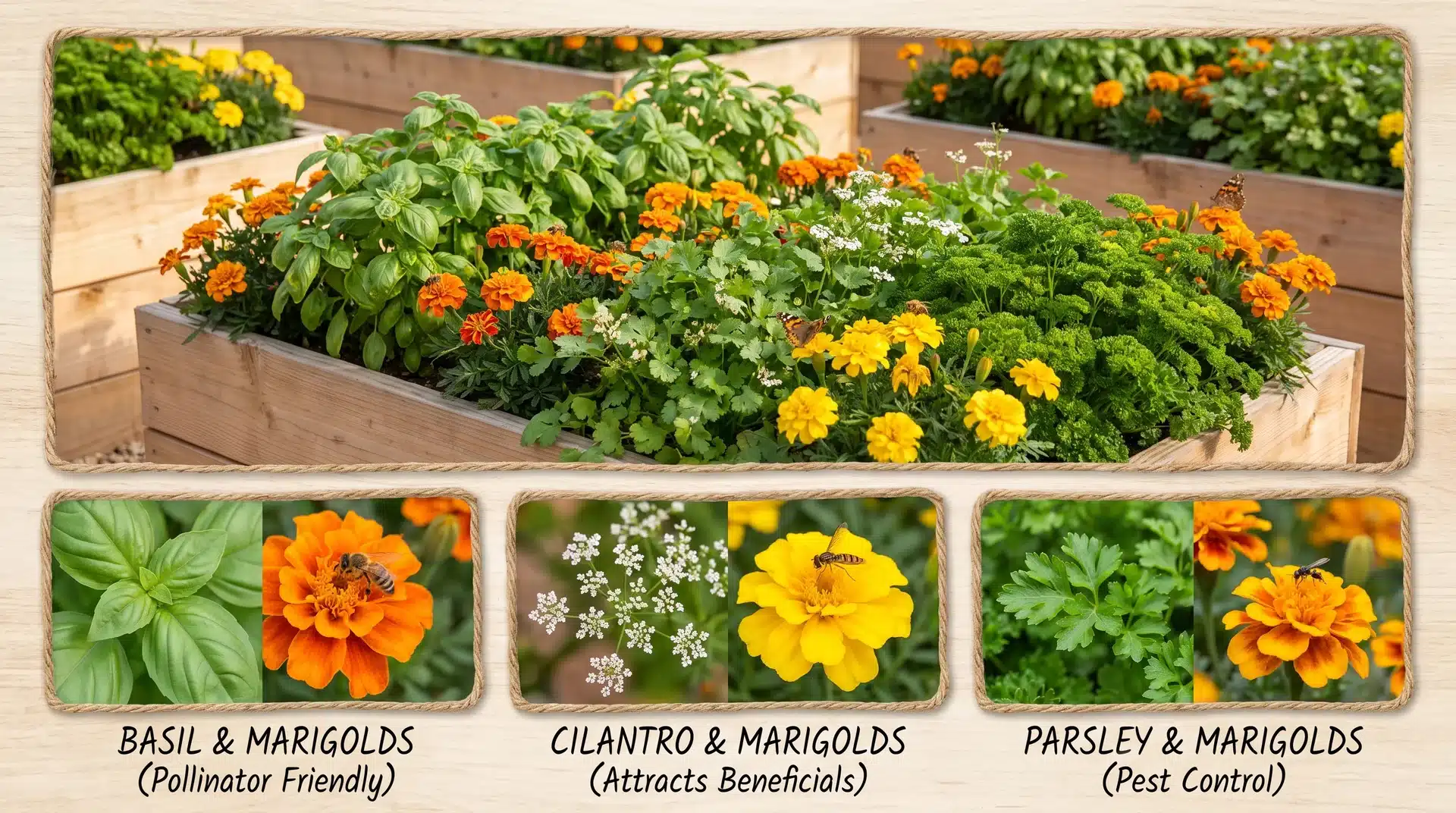
12. Basil
Basil and marigolds both repel aphids and whiteflies on their own. Together, they build a strong scent layer.
It draws a steady flow of beneficial insects into your beds from early summer through fall. Plant basil between marigold rows for a tight, pest-resistant pairing.
13. Cilantro
Cilantro attracts parasitic wasps and hoverflies to the garden. Pair it with marigolds near pest-prone crops to build a natural, two-layer pest defense around your beds without any sprays.
It also goes to seed fast, which keeps insects returning all season.
14. Parsley
Parsley draws in predatory insects, including parasitic wasps that target caterpillars and aphids.
Planted alongside marigolds, it forms a layered defense system that reduces pest pressure on the surrounding vegetables. Parsley is also a host plant for swallowtail butterfly larvae.
Best Flowers to Grow with Marigolds

15. Roses
Marigolds planted near rose bushes deter aphids and blackfly, two of the most persistent problems for roses.
Both plants grow well in full sun and well-drained soil.
That makes them a practical match in any garden bed or border. French marigolds work best here due to their compact size.
Also read: 13 Companion Plants for Roses to Keep Pests Away Naturally
16. Lavender
Lavender and marigolds both attract pollinators and deter common pests. Both prefer drier conditions once they are established.
They pair well in containers and borders, and they make a strong visual pairing too.
17. Strawberries
French marigolds suppress nematodes in strawberry beds, protecting the shallow root systems that make strawberries vulnerable to nematodes.
Marigold scent also deters thrips, which are a persistent problem for strawberry fruit. Plant them between rows for the best results. This pairing works especially well in raised beds.
Which Marigold Variety Should You Use?
Not all marigolds work the same way. Picking the right type for your space gives you much better results in the garden.
1. French Marigold (Tagetes patula): Best choice for nematode control. It stays compact and fits easily between vegetable rows or inside raised beds. Works best near tomatoes, peppers, and strawberries.
2. African Marigold (Tagetes erecta): Grows tall and releases a very strong scent. Best planted as a border around large vegetable beds. Most effective at pushing flying insects away at a distance.
3. Signet Marigold (Tagetes tenuifolia): Has fine, lacy foliage and edible flowers. Fits well in herb gardens and lettuce beds. A great fit for smaller spaces where a compact plant is needed.
What Not to Plant Near Marigolds
Marigolds are helpful in the right spots. The wrong ones can hold your plants back.
- Fennel: Fennel releases chemicals that suppress almost every plant around it, including marigolds. Keep fennel in its own isolated corner of the garden, well away from your vegetable beds. It really does better on its own.
- Pole Beans: Marigold root compounds stunt the growth of pole beans. Bush beans are fine near marigolds, but pole beans are not. Keep them well separated or remove one from the area entirely.
- Cabbage and Broccoli: Marigold volatile compounds can reduce the health and yield of full brassicas like cabbage and broccoli. They can also attract pests that already target these crops. Keep them in completely separate beds.
- Petunias and Zinnias: Chemical interactions between marigold roots and petunia or zinnia roots can cause stunted growth in both species. Avoid mixing them in the same bed or in the same container planting.
How to Place Marigolds in Your Garden
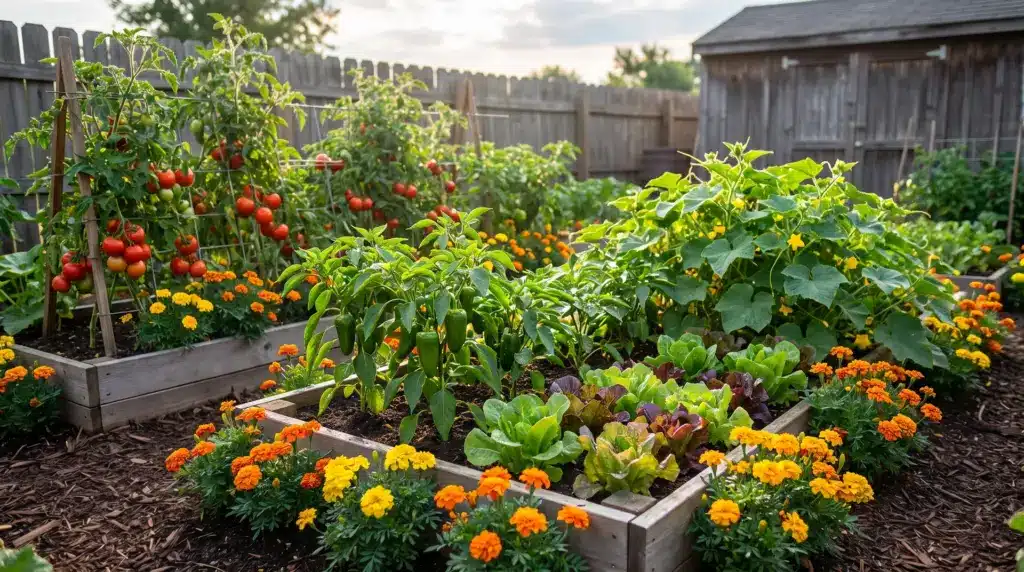
Where you put marigolds matters just as much as which plants you grow them near. Three placement methods get real results in home vegetable gardens.
1. The Border Method
Plant marigolds in a ring around the outside edge of your vegetable bed. This builds a pest-deterring perimeter around your crops.
African marigolds are particularly effective here because of their height and strong scent range. Space them roughly 10 to 12 inches apart around the perimeter.
2. The Interplanting Method
Alternate marigold plants between your vegetable rows, roughly one plant every two to three feet.
This spreads their scent across the full bed and draws pollinators deeper into your crops throughout the season.
French marigolds are the best fit for this method because of their compact size.
3. The Trap Crop Method
Plant a dense cluster of marigolds near your most pest-prone vegetables. Spider mites and slugs target marigolds first.
Check those plants every few days. Pull any heavily infested ones to completely remove pests from the garden.
One extra step worth adding: rotate your marigolds each season. Planting them in the same spot year after year lets root compounds build up in the soil. That buildup can harm the plants growing around them over time.
Conclusion
Marigold companion planting reduces pest pressure, protects roots, and attracts more pollinators to your garden without a single spray.
The strategy is pairing them with the right plants. Tomatoes, peppers, cucumbers, and basil all benefit from a nearby marigold. Fennel, pole beans, and full brassicas do not.
Pick the right variety for your space. French marigolds for tight beds and nematode control. African marigolds for borders and strong scent coverage. Signet marigolds for herbs and small containers.
Place them with a clear purpose. Rotate them every season to keep your soil healthy and your garden productive.
Which of these pairings are you trying first this season? Drop a comment below.
Frequently Asked Questions
1. How Many Marigolds Should I Plant around My Garden?
Plant marigolds 8–12 inches apart around your garden. For small gardens, 10–20 plants usually provide good coverage, while larger gardens may need 30 or more, depending on size and spacing.
2. Do Marigolds Like to Be Crowded?
No, marigolds grow best with proper spacing. Good airflow reduces the risk of disease and encourages healthier plants with more blooms.
3. What is the Secret to Growing Marigolds?
Grow marigolds in full sun in well-drained soil; water moderately and remove faded flowers regularly to promote continuous blooming and healthy growth.