Growing strawberries without a single scoop of soil sounds strange at first. But that’s exactly how hydroponic strawberries work.
Instead of soil, the roots sit in a nutrient-rich water solution. This water carries everything the plant needs to grow and produce fruit.
This growing method is gaining ground fast. Indoor farms use it to produce strawberries year-round, not just in a single season. Growers also get tighter control over water use, feeding, and pest problems.
By the end, you’ll know how these strawberries are grown. You’ll also learn how they compare to soil-grown fruit and whether growing your own is worth it.
What are Hydroponic Strawberries?
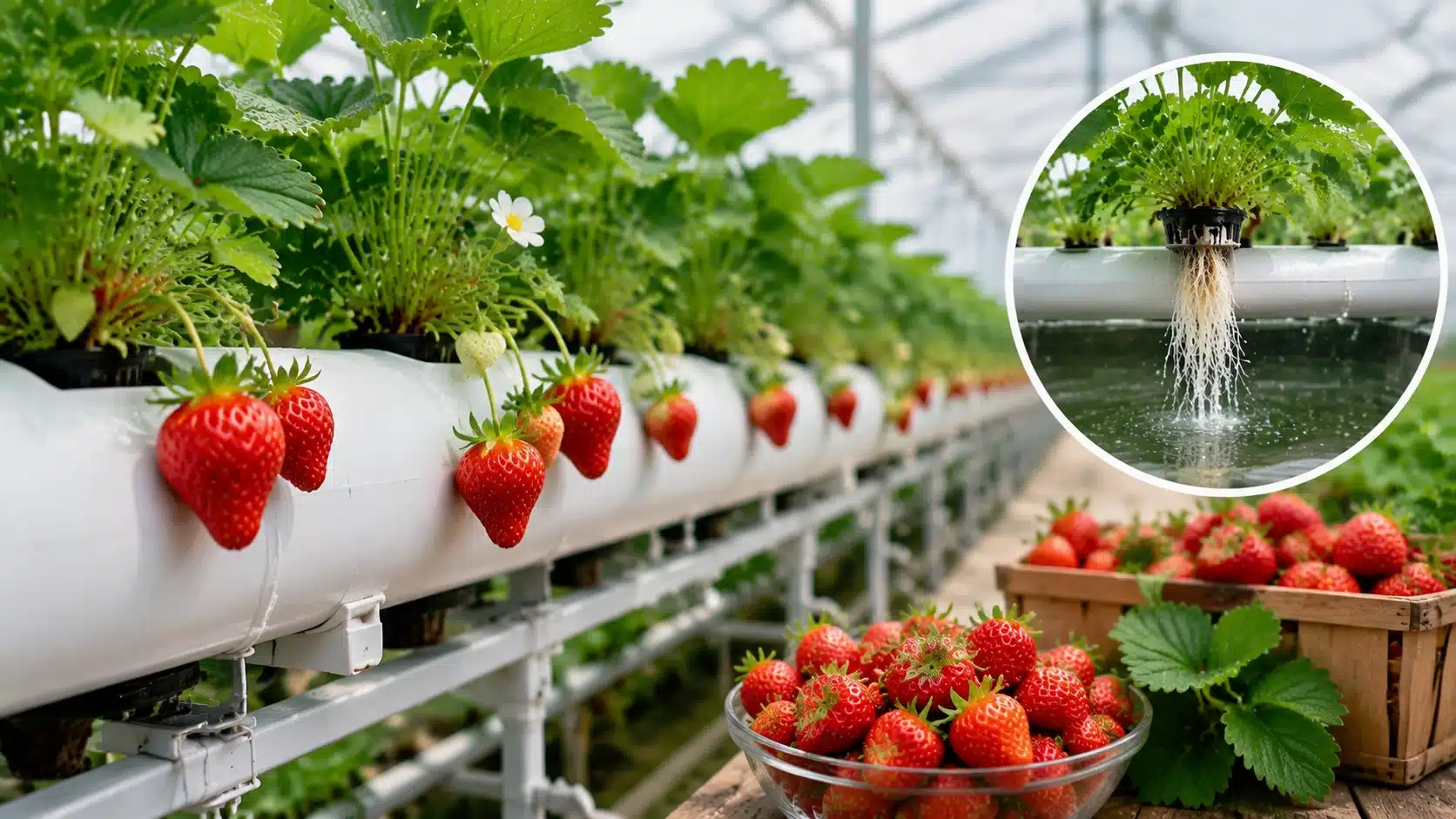
Hydroponic strawberries are strawberries grown in water instead of soil. The roots sit in a nutrient solution or get misted with one on a set schedule.
This water solution carries minerals the plant needs to grow. These include nitrogen, potassium, calcium, and several trace elements.
Growing without soil does not mean growing without care. Plants still need:
- Light, either from the sun or grow lamps
- Fresh air and steady oxygen around the roots
- A stable temperature range
- Pollination, since fruit will not form without it
Horticulture experts note that hydroponics changes how roots reach nutrients. It does not remove the plant’s need for daily care. A hydroponic strawberry plant still needs a grower who checks on it often.
How are Hydroponic Strawberries Grown?
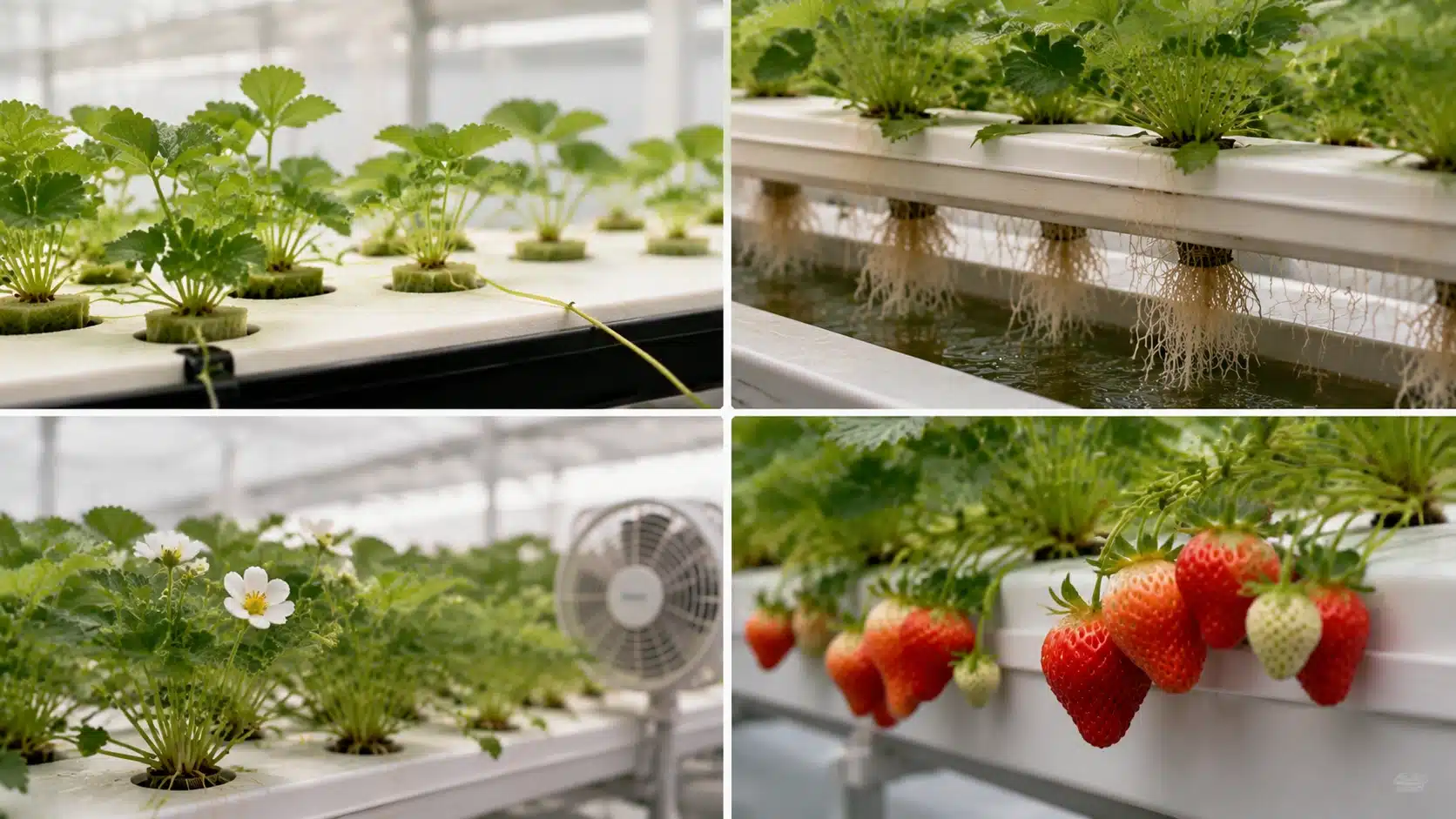
The growing process moves from young plant to ripe fruit in a few clear stages. Each stage builds on the last, starting with plant selection and ending with pollination and fruit set.
Step 1: Starting Strawberry Plants: Growersstart with runners, small offshoots from a parent plant. Some start from seed instead, though this takes longer to fruit. Growers pick healthy, disease-free plants first, then transplant them into the hydroponic system.
Step 2: Providing Nutrients Through Water: The nutrient solution acts as the plant’s only food source. Growers track pH level and electrical conductivity closely. Strawberries grow best within a pH range of about 5.5 to 6.5.
Step 3: Managing Light and Temperature: Indoor systems use grow lights tuned to the right intensity and duration. Growers also keep the room at a steady temperature, since strawberries dislike extreme heat or cold.
Step 4: Supporting Pollination: Pollination still needs to happen, even indoors. Growers use small fans, hand pollination, or natural pollinators in greenhouse setups.
Hydroponic vs Regular Strawberries
The fruit itself is still a strawberry. What changes is the growing method, not the plant’s basic biology.
| Feature | Hydroponic Strawberries | Soil-Grown Strawberries |
|---|---|---|
| Growing medium | No soil | Traditional soil |
| Nutrient control | Highly controlled | Depends on soil quality |
| Growing season | Can be extended | Usually seasonal |
| Water use | Lower water waste | Higher water requirements |
| Pest exposure | Often reduced | More exposure to soil pests |
The biggest gap between the two comes down to control. Growers manage feeding and conditions closely, but the fruit itself stays the same at its core.
Do Hydroponic Strawberries Taste Different?
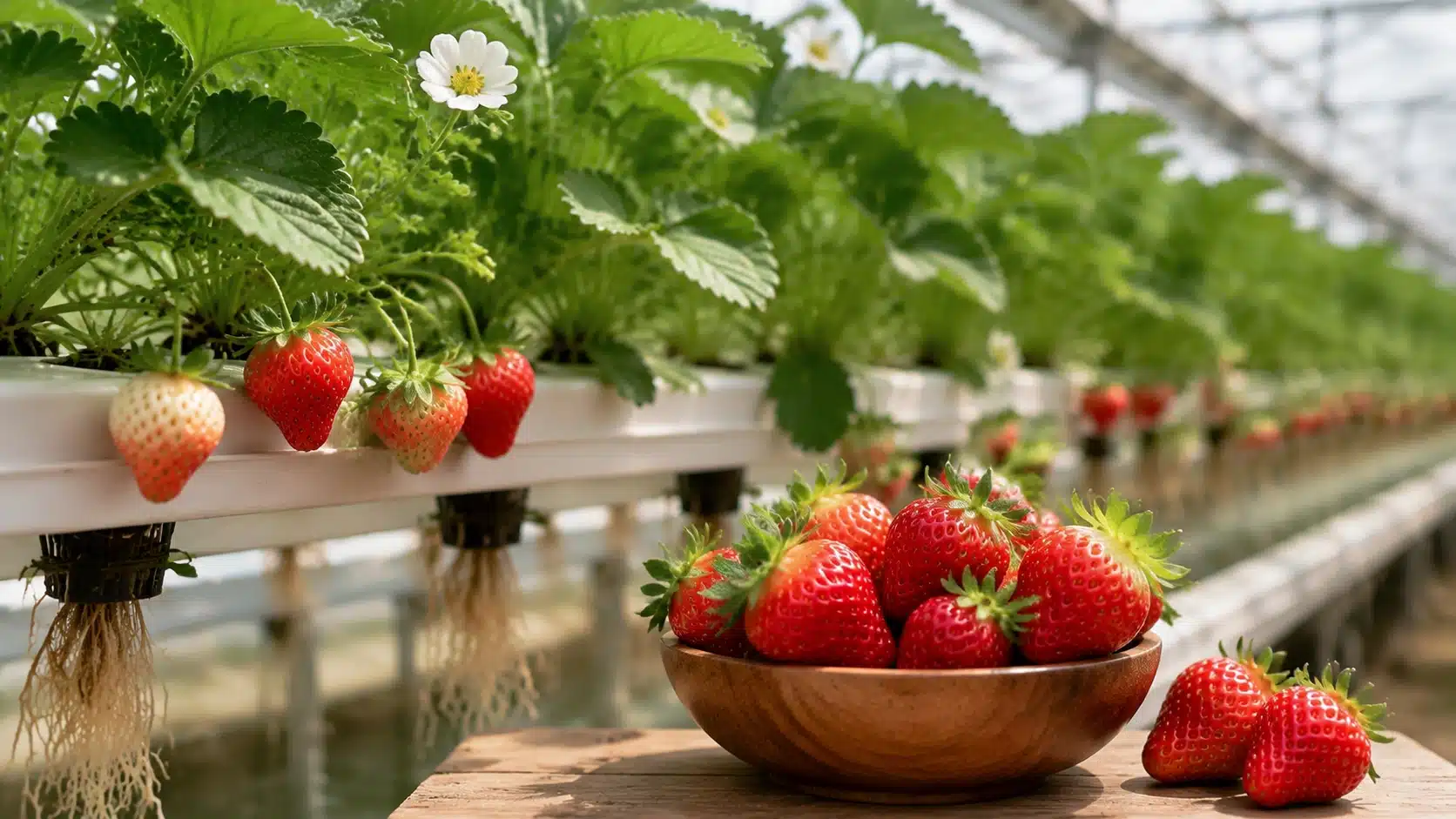
Several factors shape flavor, no matter how the plant is grown:
- The strawberry variety itself
- How ripe the fruit is at harvest
- The nutrient balance the plant received
- General growing conditions like light and temperature
Some hydroponic strawberries turn out sweeter because growers can fine-tune every input. On the other hand, poor nutrient management can leave the fruit tasting weak or watery.
Fruit quality depends more on strawberry variety and grower care. It matters less whether the plant grew in soil or water.
Are Hydroponic Strawberries Healthy and Safe to Eat?
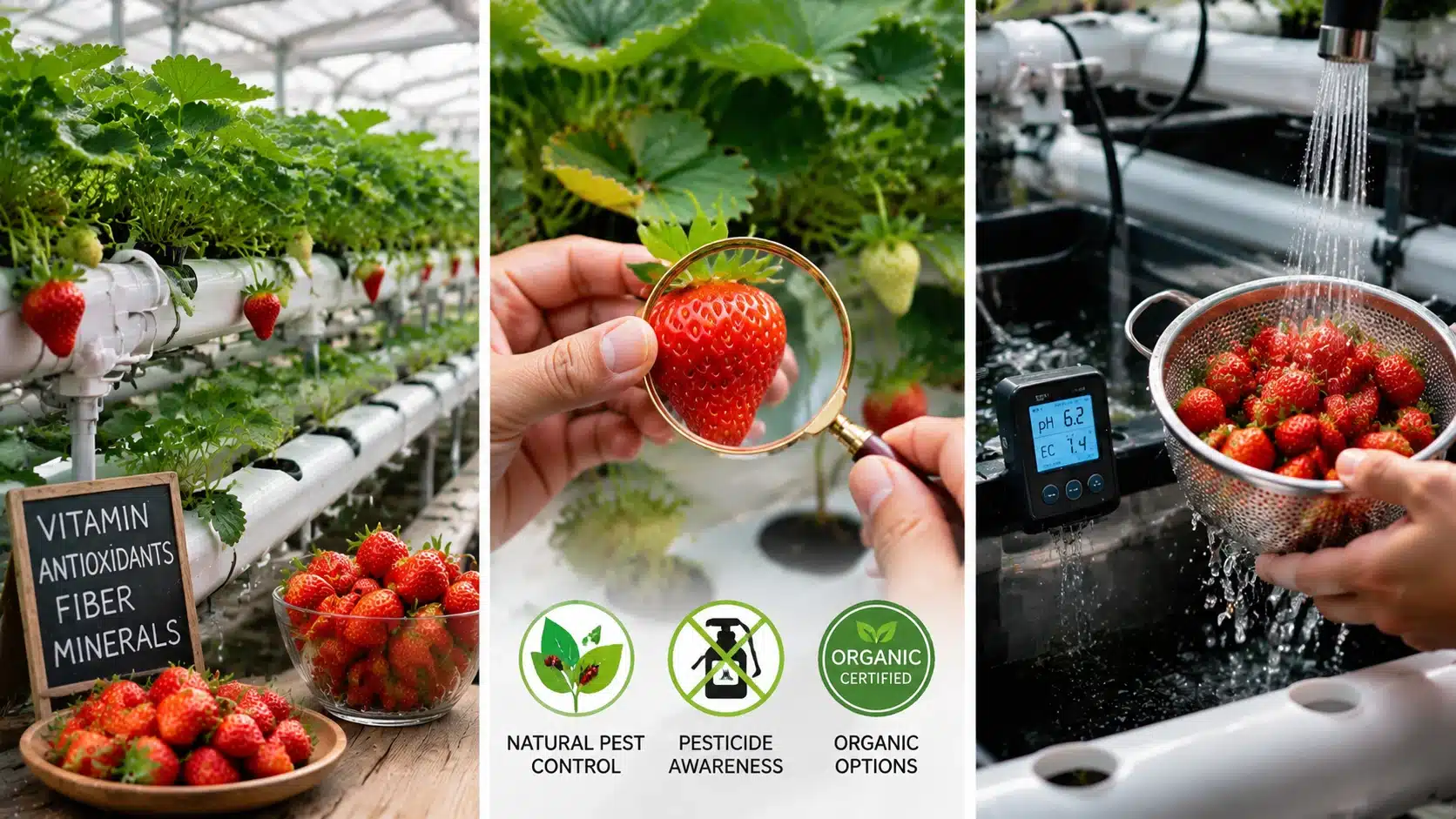
Hydroponic strawberries are safe to eat and offer the same basic nutrition as soil-grown fruit.
1. Nutritional Value of Hydroponic Strawberries?
Strawberries, hydroponic or not, provide vitamins, fiber, antioxidants, and minerals that support a healthy diet.
Growing method alone does not significantly increase or decrease these nutrients. The same basic nutritional profile carries over from soil to water-grown fruit.
Controlled conditions can support steady, healthy plant growth throughout the season. But hydroponic growing does not automatically make a strawberry more nutritious than a soil-grown one.
2. Are Hydroponic Strawberries Free From Pesticides?
Hydroponic does not always mean pesticide-free, since the growing medium is only one part of the process.
Greenhouse growers may still use pest control methods to protect their crop from insects and disease. Some rely on natural predators instead, while others use approved treatments when needed.
If pesticide-free fruit matters to you, look for certified organic labels or ask the grower directly.
3. Are Hydroponic Strawberries Safe From Contamination?
Hydroponic systems rely on clean water and sanitized equipment to keep strawberries safe to eat.
Bacteria can spread quickly through a shared nutrient reservoir if growers skip regular cleaning and water testing. This risk applies to any hydroponic crop, not just strawberries.
Washing fruit before eating remains a smart habit regardless of growing method. Buying from growers who follow food safety guidelines adds another layer of protection.
Benefits of Growing Strawberries Hydroponically
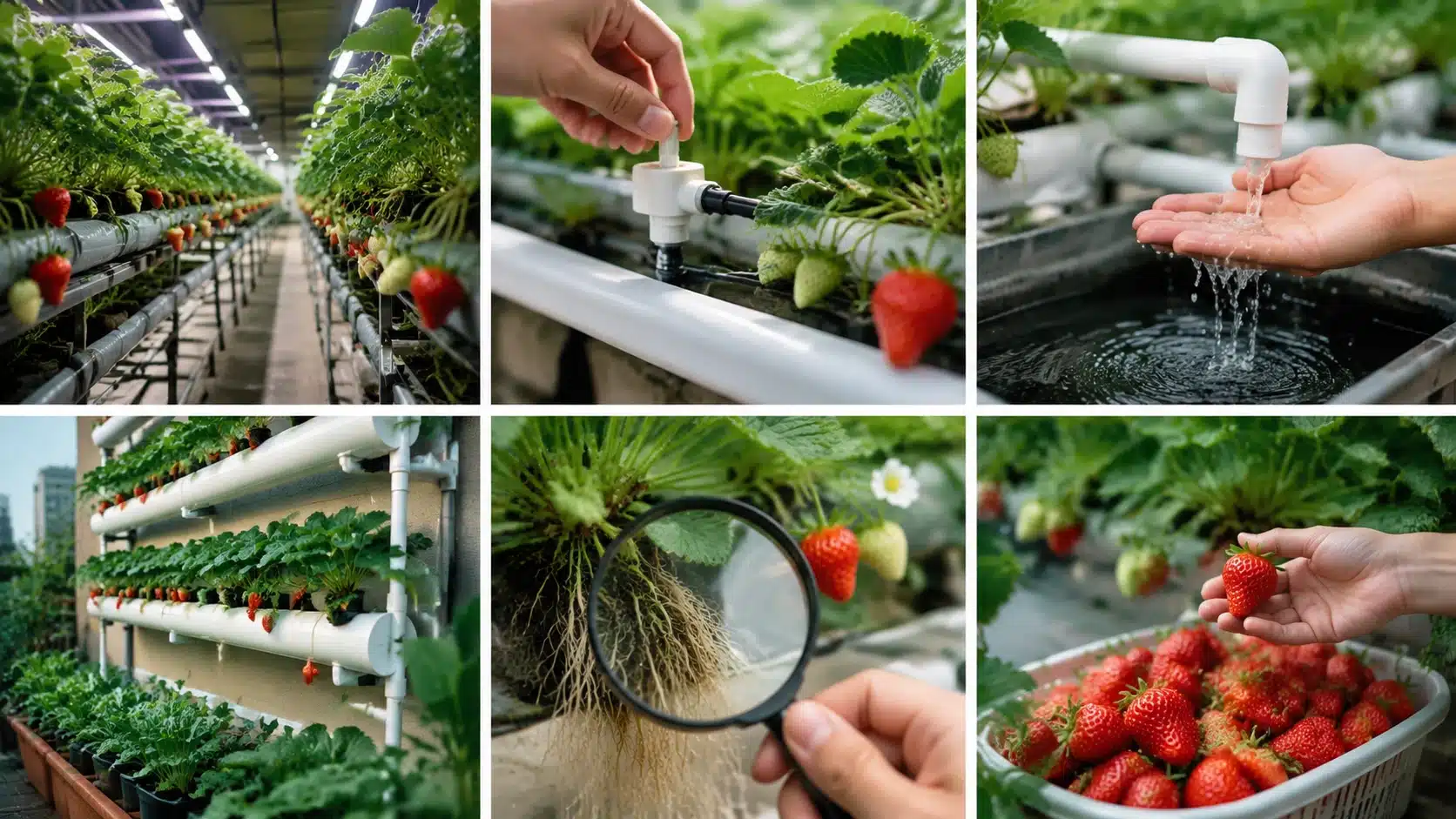
Growers gain more control over water, nutrients, and space while reducing common problems such as pests and inconsistent yields.
1. Year-Round Strawberry Production: Controlled environments let growers stretch harvests well beyond a normal outdoor cycle, regardless of weather.
2. Better Control Over Growing Conditions: Growers can fine-tune nutrients, water, and temperature closely, which helps prevent sudden disease outbreaks.
3. Uses Less Water Than Traditional Farming: Water gets reused instead of lost to runoff or evaporation, lowering bills over a full season.
4. Suitable for Small Spaces: Hydroponic systems fit well in apartments and indoor gardens, skipping the need for a large outdoor plot.
5. Reduced Pest and Disease Risk: Without soil, plants avoid common soil-borne pests, and visible roots make it easy to monitor problems.
What Hydroponic Systems are Used for Growing Strawberries?
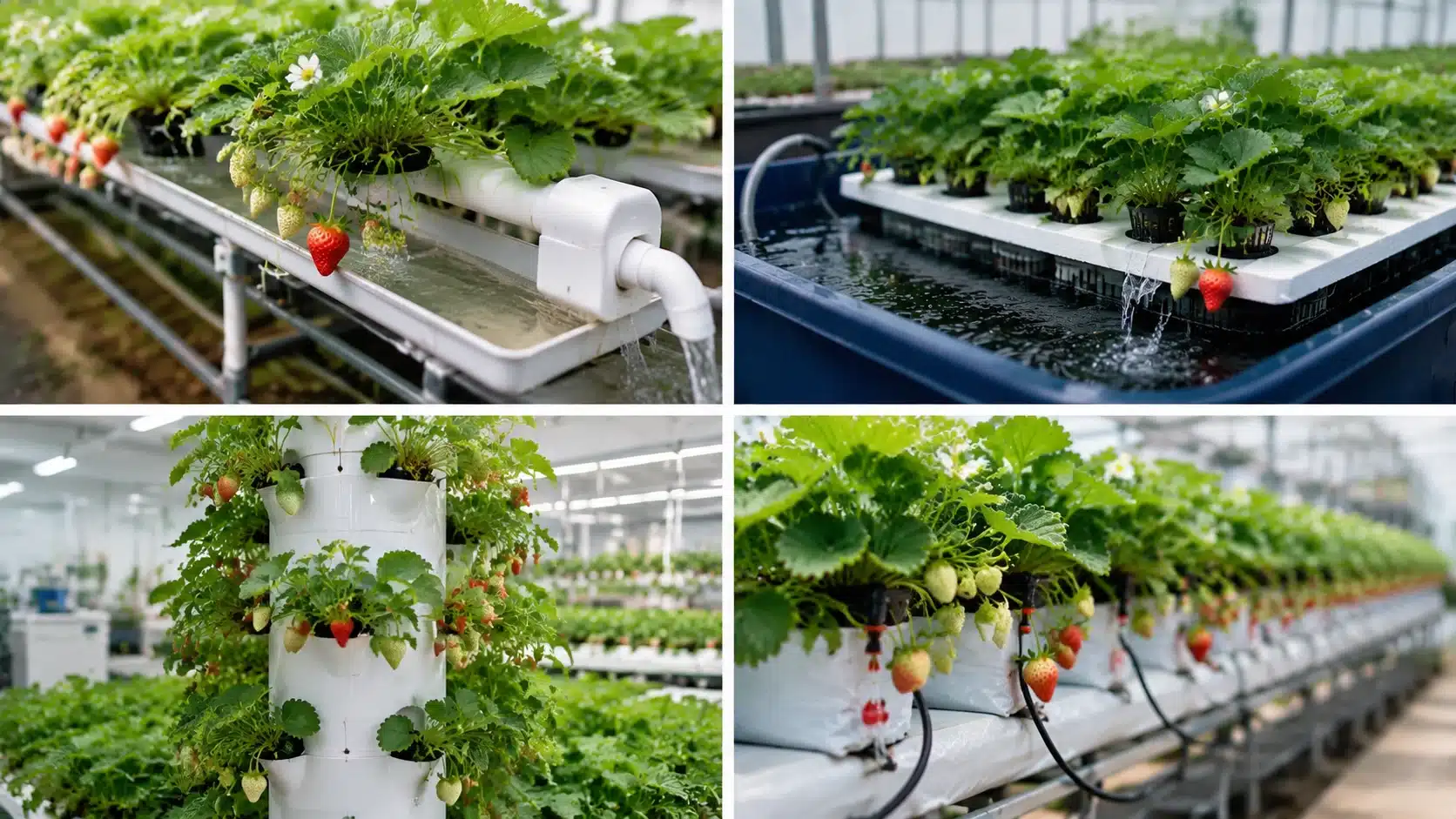
Several system types work for strawberries, each with its own strengths.
1. Nutrient Film Technique (NFT): In NFT systems, a thin stream of nutrient water flows over the roots. This uses water efficiently and is common in commercial strawberry operations.
2. Deep Water Culture (DWC): DWC systems suspend the roots in oxygenated nutrient water. It’s one of the simpler setups, which makes it a good starting point for beginners.
3. Vertical Hydroponic Systems: Vertical towers stack easy houseplants upward instead of spreading them out. This saves floor space and works well for urban farms with limited room.
4. Drip Hydroponic Systems: Drip systems deliver nutrient solution straight to each plant’s roots through small tubes. Greenhouse growers often use this method for precise, controlled feeding.
How Long Does It Take to Grow Hydroponic Strawberries?
Timelines vary by strawberry variety and growing system, but a general pattern holds across most home and commercial setups.
| Stage | Approximate Time | What Happens |
|---|---|---|
| Plant establishment | 2 to 4 weeks | Roots settle into the system, and the plant starts steady leaf growth |
| Flower development | Several weeks | Buds form and open into white flowers, ready for pollination |
| Fruit formation | 3 to 5 weeks after flowering | Pollinated flowers swell into green fruit that slowly ripens to red |
| Harvest cycles | Depends on the variety and conditions | Growers pick ripe strawberries, and the plant may flower again soon |
Everbearing varieties can produce fruit over several harvest cycles within a single season, giving growers more strawberries than a single harvest.
What are the Downsides of Hydroponic Strawberries?
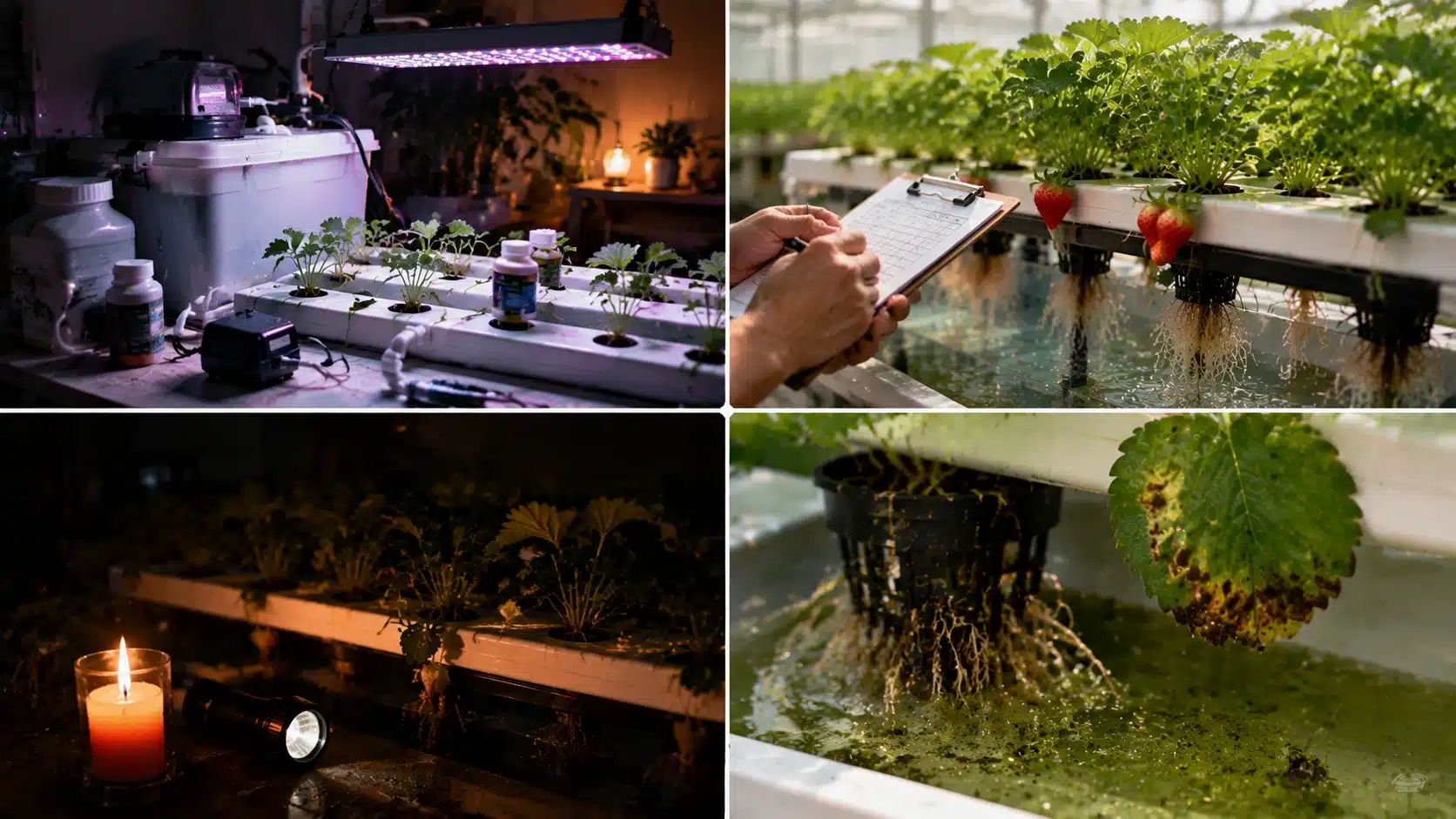
Hydroponic strawberries also come with real challenges, like higher costs and constant upkeep.
Higher setup costs come first, since equipment, lighting, and pumps raise costs above a soil garden. Regular monitoring also takes effort, as growers must check pH and manage water often.
System-wide problems can spread fast, since shared water lets one issue affect every plant. Water quality sensitivity matters too, since impure water can throw off nutrient balance fast.
Can You Grow Hydroponic Strawberries at Home?
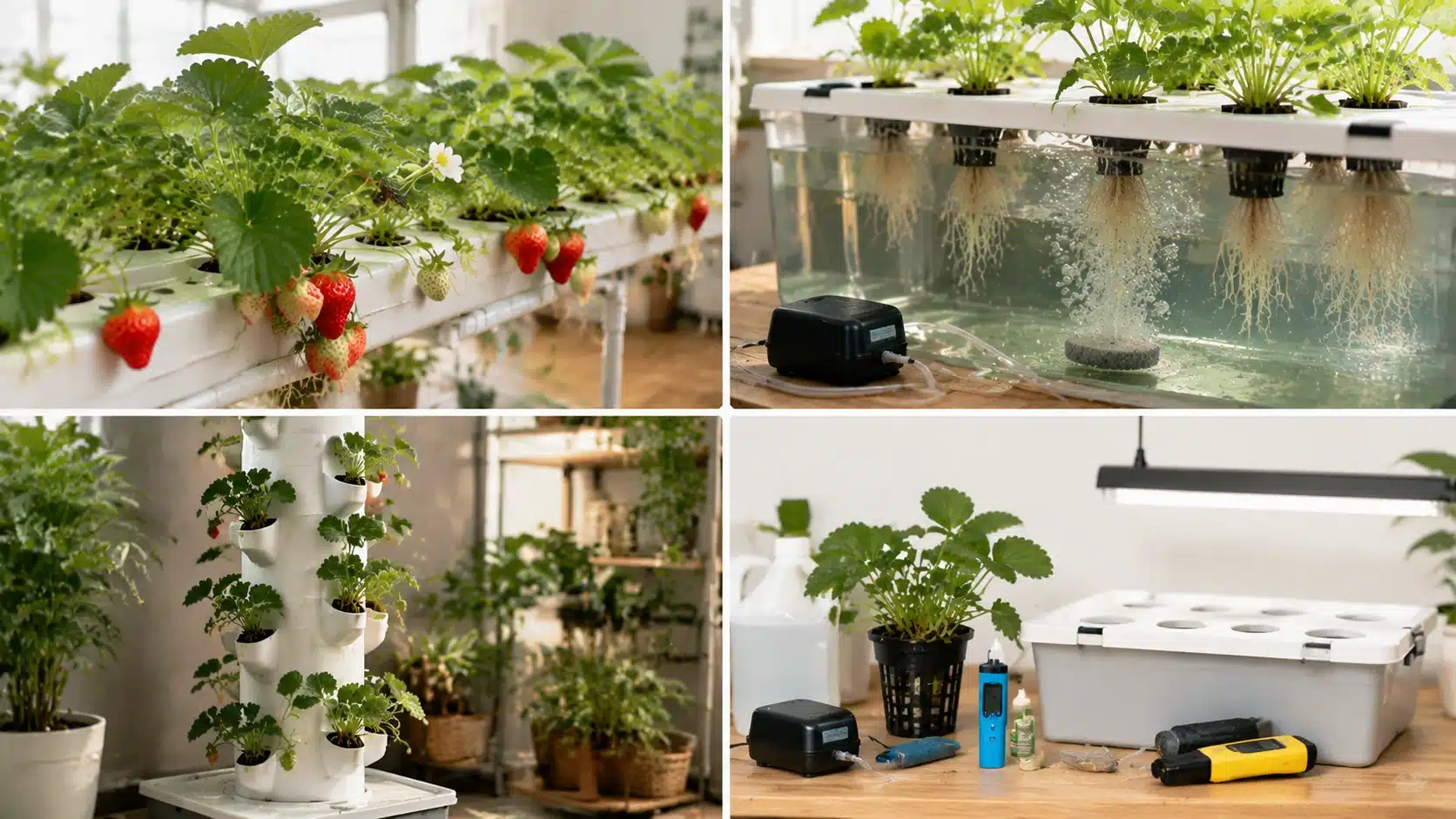
Yes, home growers can grow strawberries hydroponically without a large budget or years of experience. A simple setup is enough to get started, and beginners often begin with one of three options.
- Small DWC systems, where roots sit in oxygenated water and need very little assembly work
- Vertical towers, which stack plants upward and save floor space in small rooms or on balconies
- Ready-made hydroponic kits, which include most parts already, simplify the entire first setup
Tools and Supplies You’ll Need to Grow Hydroponic Strawberries:
| Item | Purpose |
|---|---|
| Strawberry plants | Fruit production |
| Hydroponic system | Holds roots and water |
| Nutrient solution | Provides minerals |
| Grow light | Supports indoor growth |
| pH meter | Checks water balance |
| Air pump | Adds oxygen |
Mistakes to Avoid When Growing Hydroponic Strawberries
New growers often run into the same few mistakes, especially early on.
Wrong nutrient concentration tops the list, since strong or weak solutions can burn roots. Ignoring pH levels causes trouble too, as roots struggle to absorb nutrients outside the ideal range.
Overcrowding plants weakens the system, since roots compete for nutrients and airflow. Poor airflow around plants raises the risk of mold and fungal disease.
Skipping pollination support often means flowers fail to set fruit indoors. Harvesting too early rounds out the list, since fruit never develops full flavor.
Frequently Asked Questions
Are Hydroponic Strawberries Grown Without Soil?
Yes, hydroponic strawberries grow with their roots in a nutrient-rich water solution instead of soil. The water delivers all the minerals the plant needs to grow and produce fruit.
Are Hydroponic Strawberries Organic?
Not automatically. Hydroponic only describes the growing method, not whether pesticides or synthetic inputs were used. Check for a certified organic label to confirm.
Do Hydroponic Strawberries Taste Better?
Taste depends more on variety, ripeness, and care than on the growing method. Well-managed hydroponic strawberries can taste just as sweet as soil-grown ones.
How Often Do Hydroponic Strawberries Produce Fruit?
This depends on the variety and system used. Everbearing strawberries can produce several harvest cycles in one season, while other varieties may fruit just once.
Can Strawberries Grow Only in Water?
Strawberries can grow with roots suspended in nutrient-rich water, as seen in Deep Water Culture systems. They still need light, oxygen, and pollination to produce fruit.
Are Hydroponic Strawberries Even Worth Growing?
Hydroponic strawberries grow in nutrient-rich water instead of soil. This gives growers close control over feeding, light, and overall plant conditions.
This method supports year-round harvests and fits well in small spaces. Indoor kits, vertical towers, and full greenhouse setups can all work well.
Taste and quality still come down to variety, ripeness, and how closely a grower manages the system day to day.
For commercial farms and home gardeners alike, hydroponic strawberries offer a practical way to grow fresh fruit. You don’t need a traditional garden bed to get started.
If you’re ready to try it yourself, start small with a Deep Water Culture kit. See how your first harvest turns out, and adjust from there.