When I say “jade plant” to a visitor eyeing my Portland windowsill, they usually think of one thing: the little green succulent your grandma had. The species does most of the heavy lifting for that image, but “jade plant” as a category is a lot bigger than one shape.
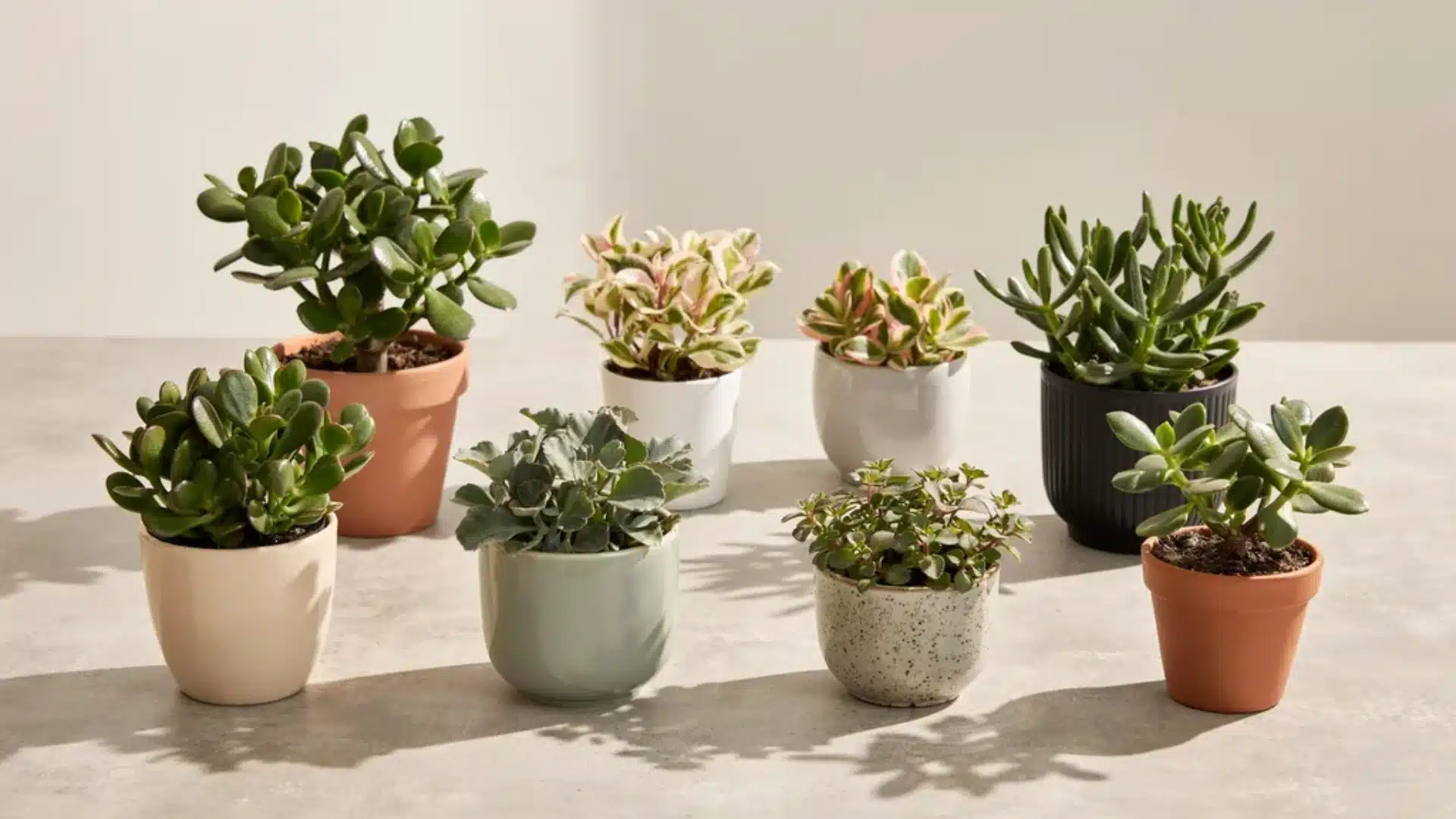
Jade plants come in dozens of forms. Tubular leaves, golden foliage, wavy edges, silver coatings, dwarf varieties that fit in a mug. Some stay under 10 inches tall. Others turn into 6-foot tree-like specimens over 30 or 40 years.
The variety matters more than most buyers realize. Pick one that wants full south-facing sun and put it in a north window, and it stretches into a leggy mess. Pick a dwarf for a tabletop and you can leave it there for a decade without a repot.
Below are 12 jade plant varieties worth knowing, what sets each apart, and a short guide to picking one that fits your space.
What Is a Jade Plant
Jade plants belong to the genus Crassula, a large succulent family native to South Africa and Mozambique.
The most important thing to know before buying is this: a true jade plant will have Crassula ovata in its botanical name. Cultivars sold under the “jade” label sometimes turn out to be a different Crassula species with similar care needs, which is fine, but the label affects identification and long-term size expectations.
A few of the plants on this list are close Crassula relatives, C. arborescens and C. perforata, that get sold alongside ovata cultivars and share the same care. I’ve called those out by their proper botanical name so you know what you’re actually taking home.
Jade plants store water in their thick, fleshy leaves. A short dry spell won’t kill them, which is why they’re one of the more forgiving succulents for anyone who forgets to water on schedule.
They’re also long-lived. With basic care, a jade plant can stay healthy for 50 to 100 years and develop the thick, tree-like trunk that makes older specimens so recognizable. The University of Wisconsin Horticulture Extension notes that mature C. ovata in warm climates can reach heights and forms that put most houseplants to shame.
12 Jade Plant Varieties Worth Knowing
Jade plants range from classic green ovals to tubular tubes, golden-red foliage, and silvery coins with a powder finish. Here are the 12 varieties I keep coming back to when someone asks me where to start.
1. Classic Jade Plant (Crassula ovata)
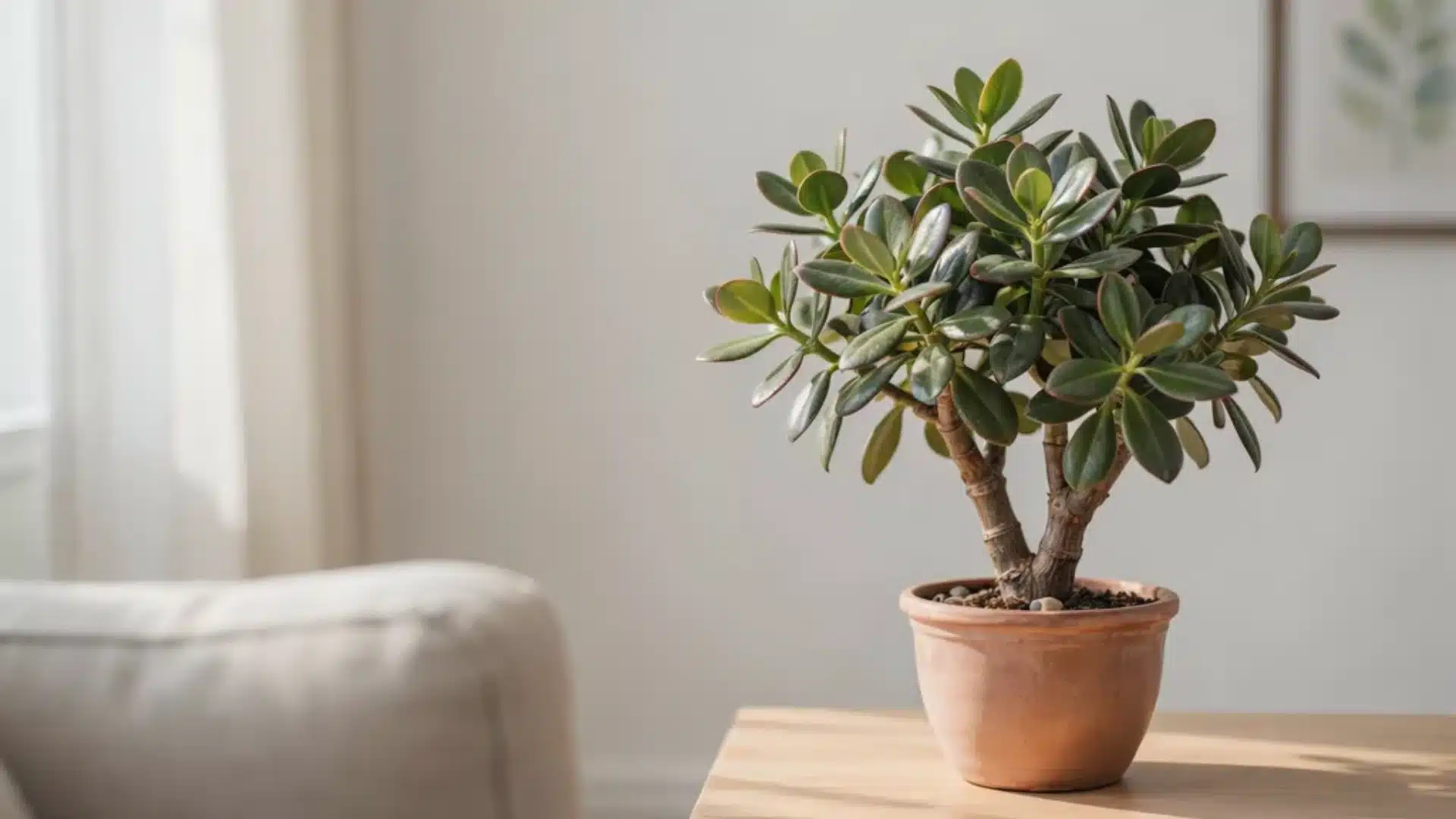
The classic jade plant is the most recognized variety. It has thick, oval, glossy green leaves on a woody stem that thickens and takes on a tree-like look as it ages.
Leaf color: deep glossy green, with red edges in direct sun
Max height: up to 6 feet indoors, up to 8 feet in-ground in warm climates
Growth rate: moderate
This is the best starting point for a new grower. It tolerates missed waterings, adapts to most indoor light, and can live for decades. It also tells you when something is wrong before it dies. Yellow leaves usually mean a watering problem, and if a jade drops leaves from the base, the roots need a look. Both are early warning signs, not death sentences.
2. Hummel’s Sunset (Crassula ovata ‘Hummel’s Sunset’)
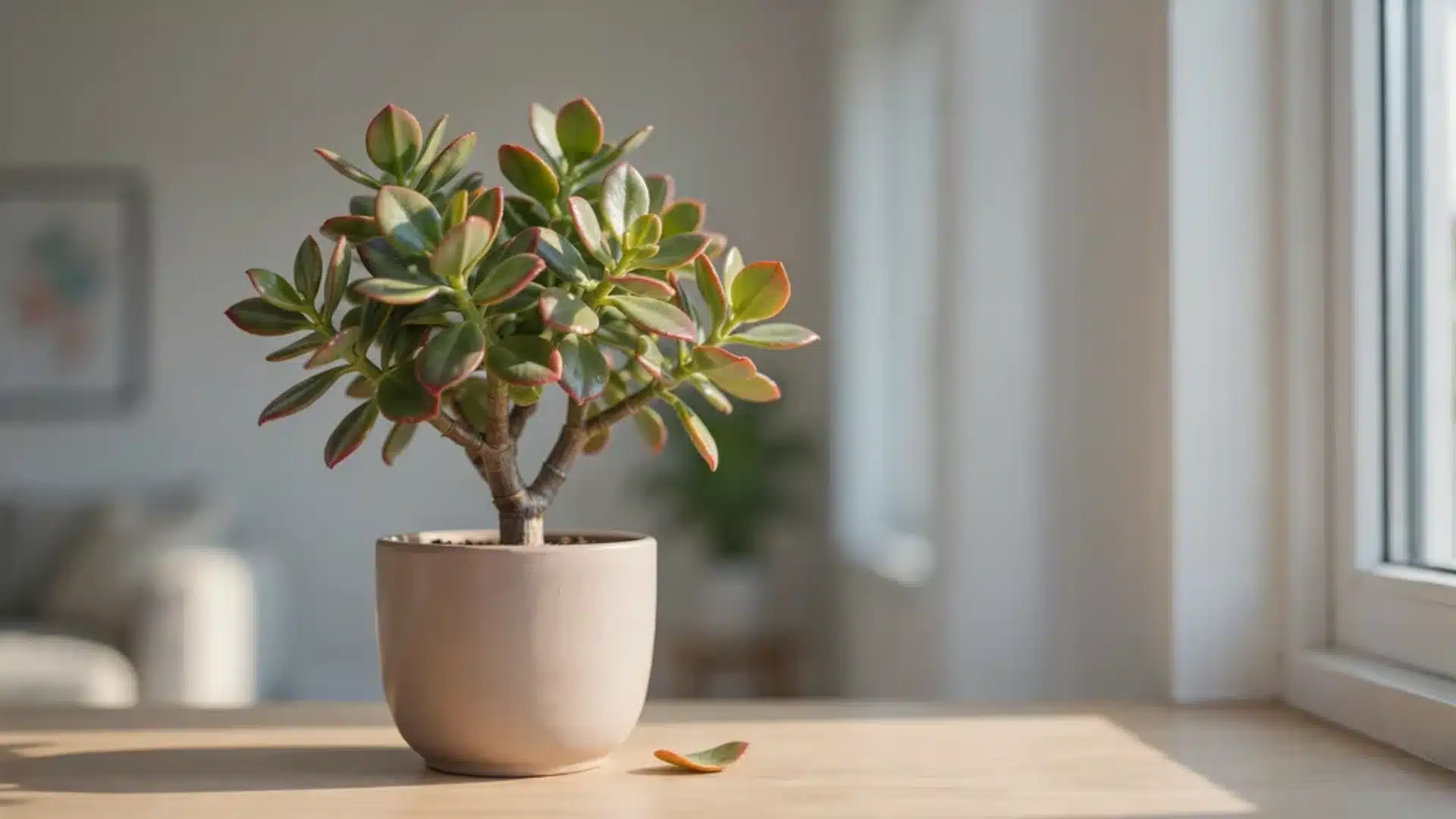
This variety stands out for its golden-yellow leaves tipped in bright red. The colors deepen in cool weather and under bright light. It received the Royal Horticultural Society’s Award of Garden Merit in 1993.
Leaf color: green that shifts to gold and red with more light
Max height: up to 3 feet
Best for: sunny south-facing windowsills, color lovers
The color change comes from stress pigments called anthocyanins. More direct sun means more color. In lower light, Hummel’s Sunset stays mostly green, and any red tint fades within a few weeks. Mine holds gold on the fire-escape side of my apartment through summer and reverts to green by January.
3. Gollum Jade (Crassula ovata ‘Gollum’)
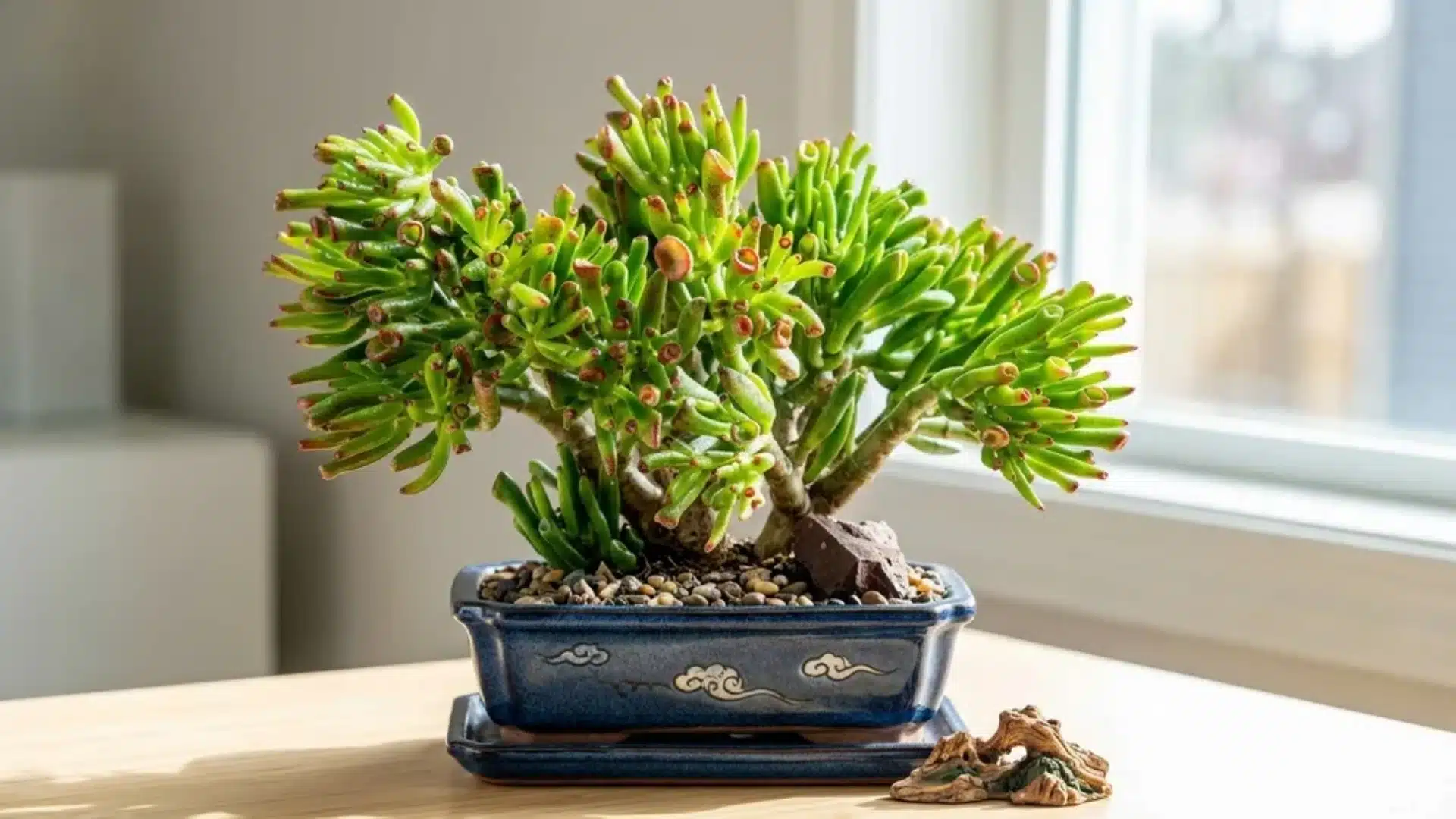
Gollum jade has long, tubular leaves that flare open at the tip in a trumpet or suction-cup shape. The tips turn red in bright light. It’s named after the character from Tolkien.
Leaf shape: cylindrical tubes with flared, cup-like openings at the tip
Max height: up to 3 feet
Best for: modern spaces, bonsai styling, collectors
It develops a thick, sculptural trunk over time, which makes it a popular pick for bonsai-style arrangements. It grows at a moderate pace and stays compact, so a small pot lasts it years.
4. Hobbit Jade (Crassula ovata ‘Hobbit’)
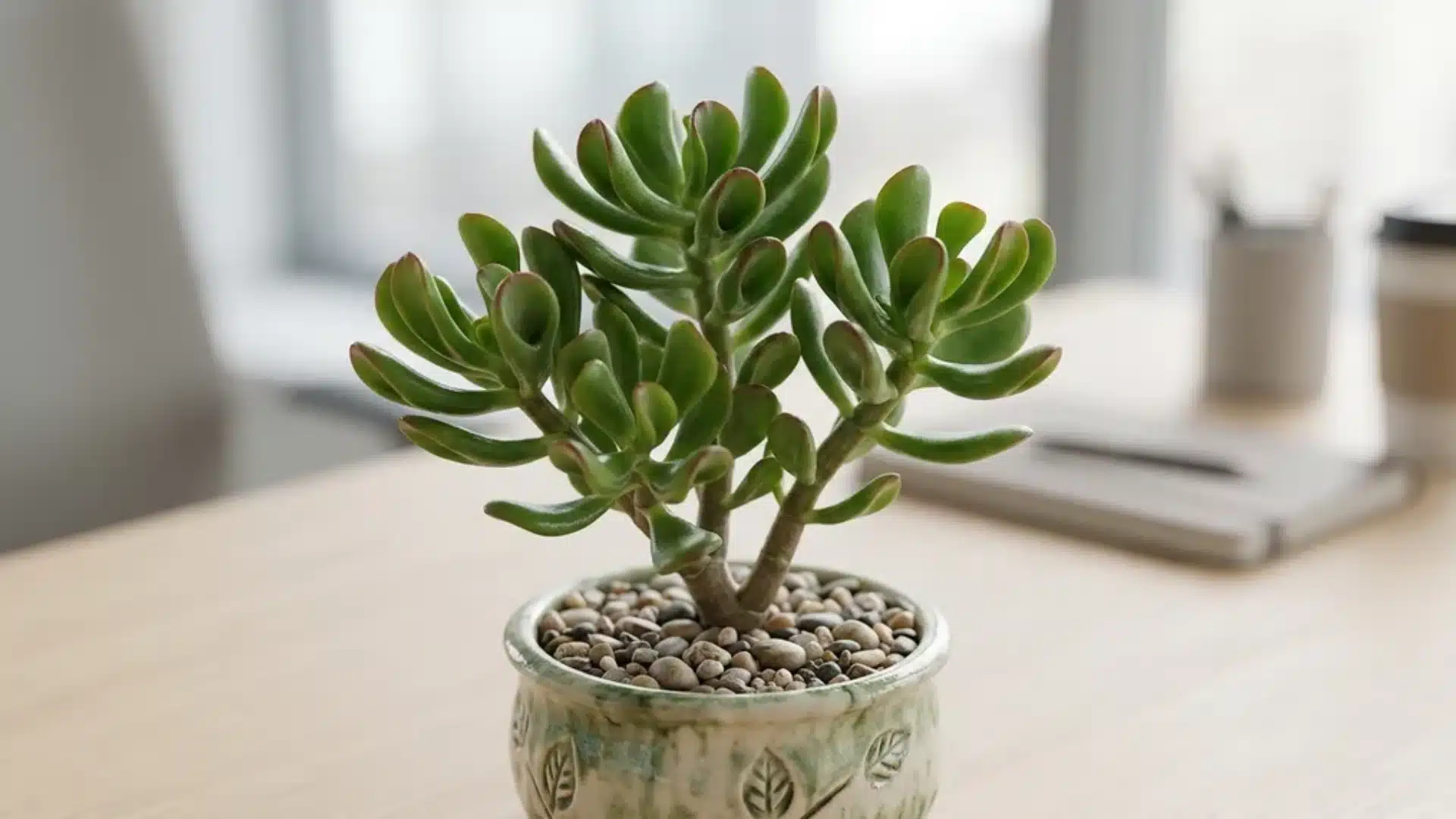
Hobbit jade looks similar to Gollum at first glance, but the leaves are different. Instead of forming a full tube, Hobbit leaves curl backward at the edges, which gives them a spoon-like shape.
Leaf shape: curled, spoon-like, less tubular than Gollum
Max height: up to 3 feet
Best for: indoor décor, small containers, fantasy-themed plant collections
Both Gollum and Hobbit are compact and slow-growing. The tell is the leaf shape: Gollum’s leaves are tubular, Hobbit’s are curled. If a plant is labeled one but the leaves look like the other, trust the leaves, not the label.
5. Silver Dollar Jade / Blue Buddha Bush (Crassula arborescens)
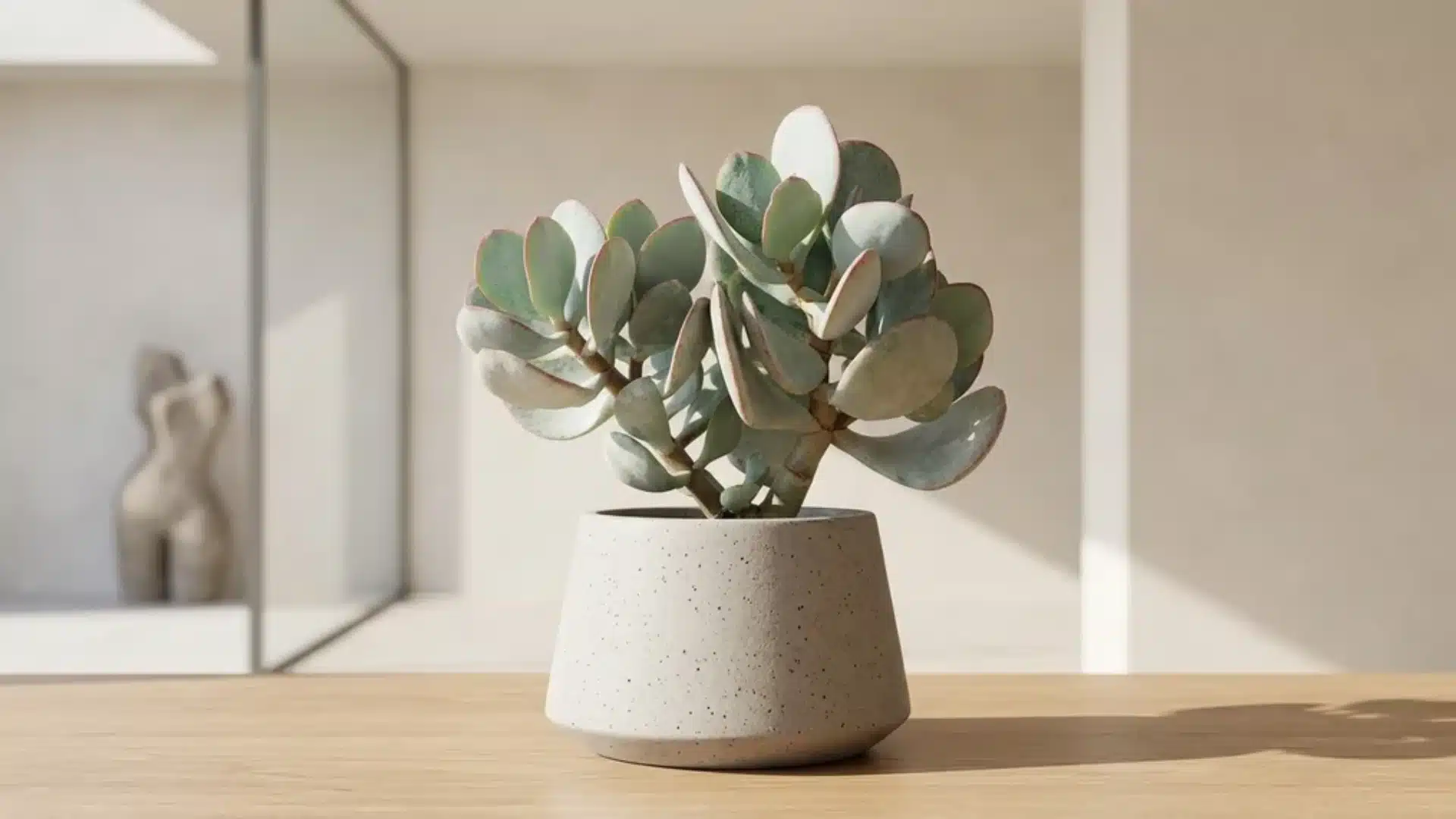
This variety has round, flat, silvery-blue leaves with a powdery coating. The edges pick up a red tint in direct sun. It grows in a shrub-like form and can get quite wide outdoors.
Leaf color: blue-gray to silver, with red edges in sun
Max height: up to 4 feet indoors
Best for: modern or minimalist décor, outdoor landscaping in warm climates
It’s sometimes sold as “Blue Buddha Bush” or “Blue Bird.” The matte, powdery leaf finish makes a nice contrast against glossier jades if you like grouping succulents on one shelf.
6. Variegated Jade (Crassula ovata ‘Variegata’)
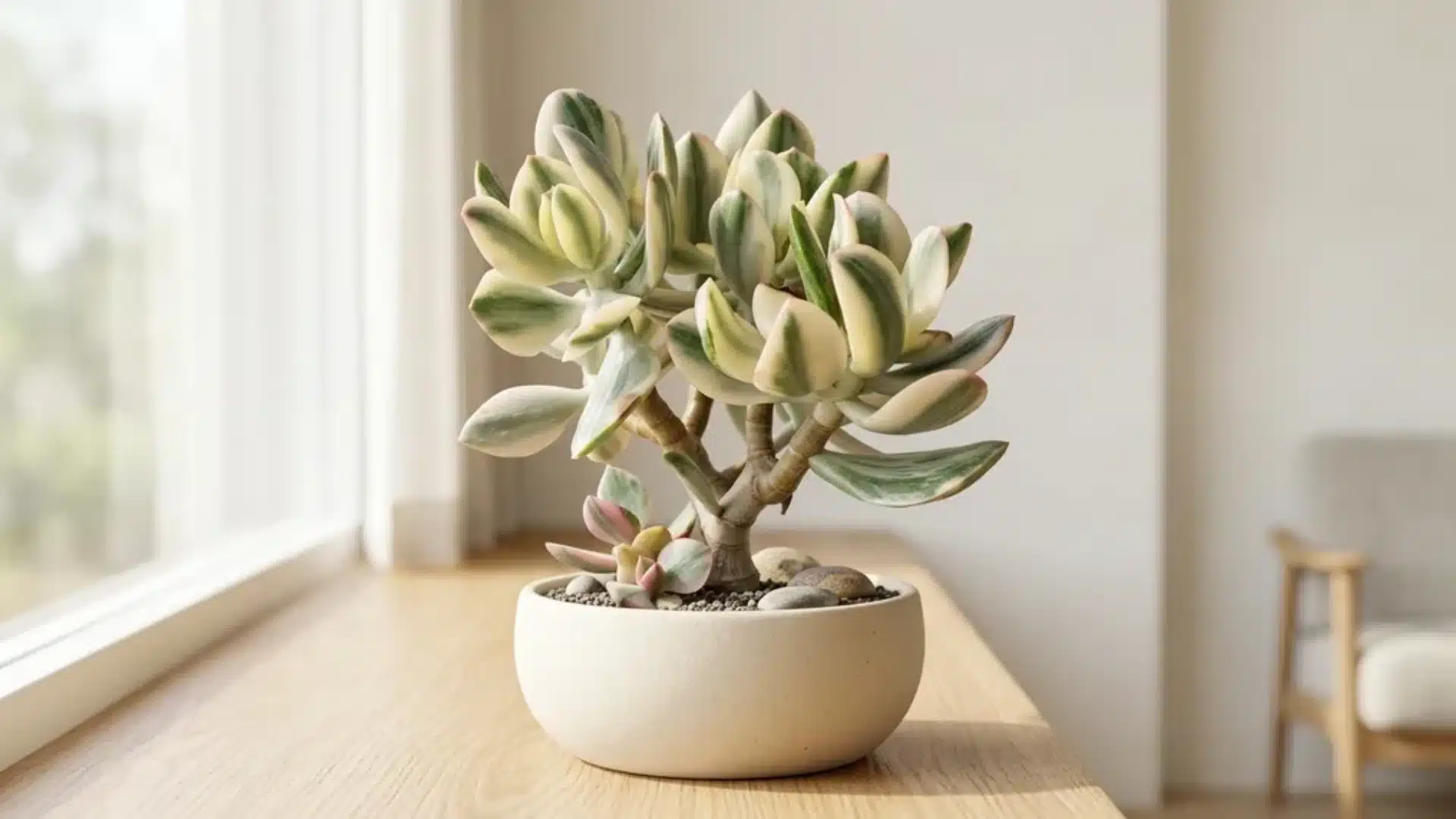
Variegated jade has green leaves streaked with creamy white or pale yellow, and the edges pick up pink in bright light.
Leaf color: green with cream or yellow stripes, pink edges possible in sun
Max height: around 3 feet
Best for: collectors who prefer patterned foliage
Variegated jade grows more slowly than the classic variety. The white and yellow portions of the leaves contain less chlorophyll, so the plant captures less light energy and grows more slowly to compensate. That’s a feature, not a defect. With basic care, a variegated jade can live 70 years or more.
7. Ripple Jade / Curly Jade (Crassula arborescens undulatifolia)
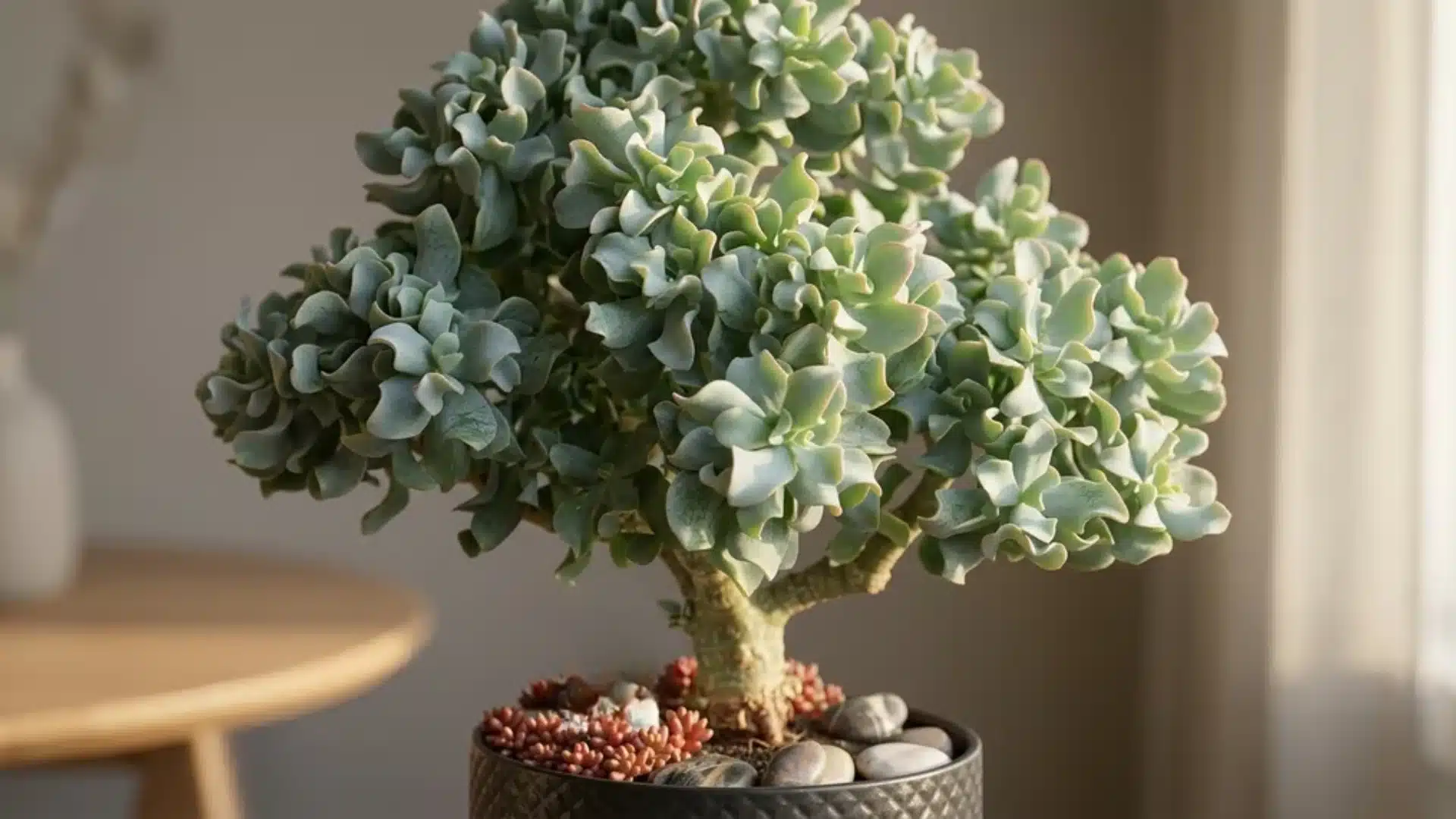
Ripple jade has wavy, ruffled blue-green leaves on sturdy upright branches. At maturity, it develops a structure that closely resembles a bonsai tree.
Leaf color: Blue-green; slight red tint in full sun
Max height: 2 to 3 feet
Best for: Texture lovers, indoodécoror, bonsai-style displays
It rarely flowers indoors. When it does produce blooms, they appear as white-to-pink star-shaped flowers. It’s slower-growing than most ovata cultivars, but it makes a strong visual statement in a container.
8. Crosby’s Compact (Crassula ovata ‘ Crosby’s Compact’)
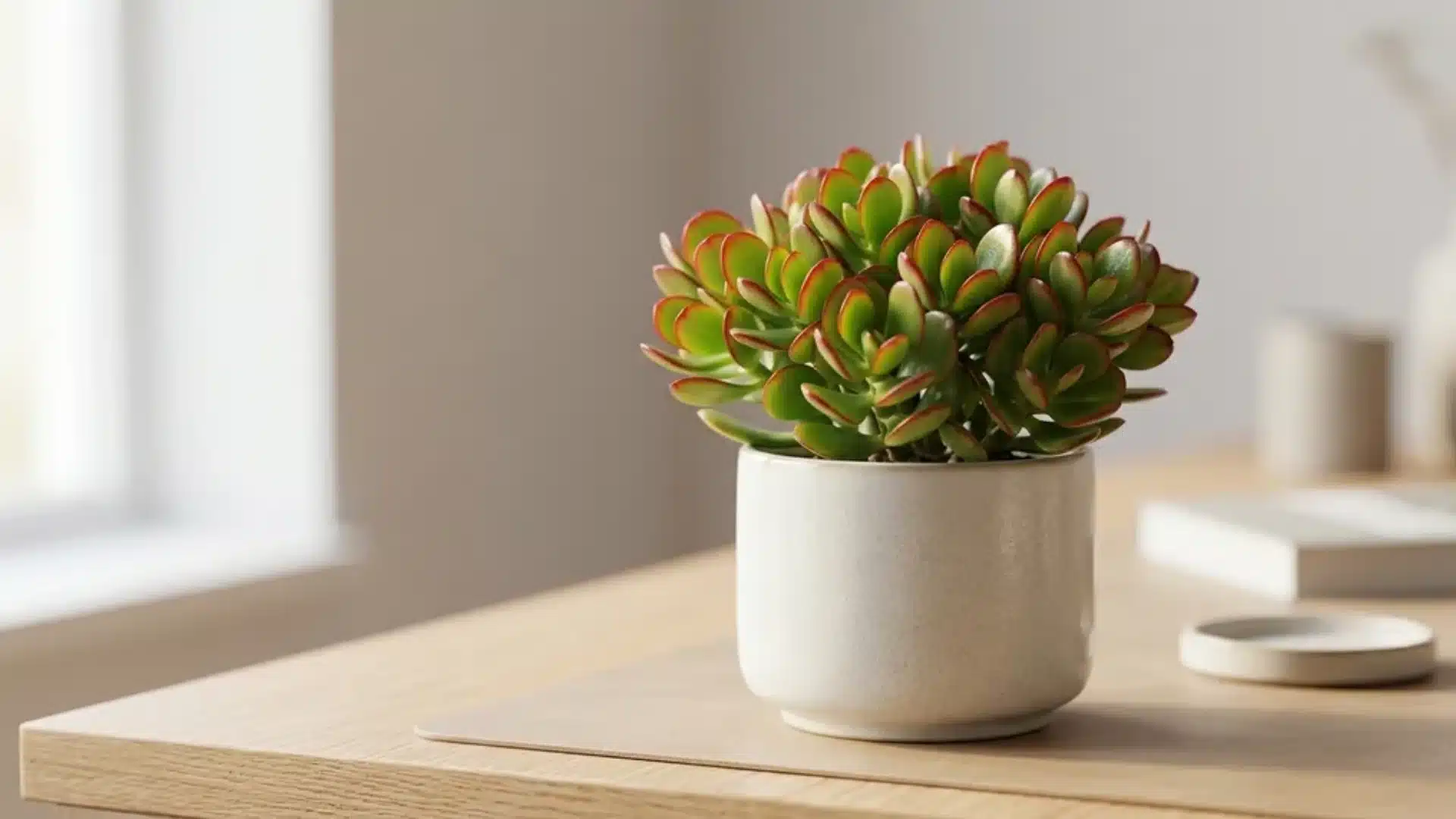
This dwarf variety has light green, tear-shaped leaves with red edges. It stays short and bushy, making it ideal for small spaces.
Leaf color: Light green with red edges
Max height: Around 2 feet
Best for: Tabletops, small containers, beginners with limited space
It’s one of the most forgiving varieties of jade plant for new plant owners. The compact growth habit means it won’t outgrow a small pot quickly. It tolerates occasional missed waterings and adapts to average indoor light.
9. Pink Jade / Pink Beauty
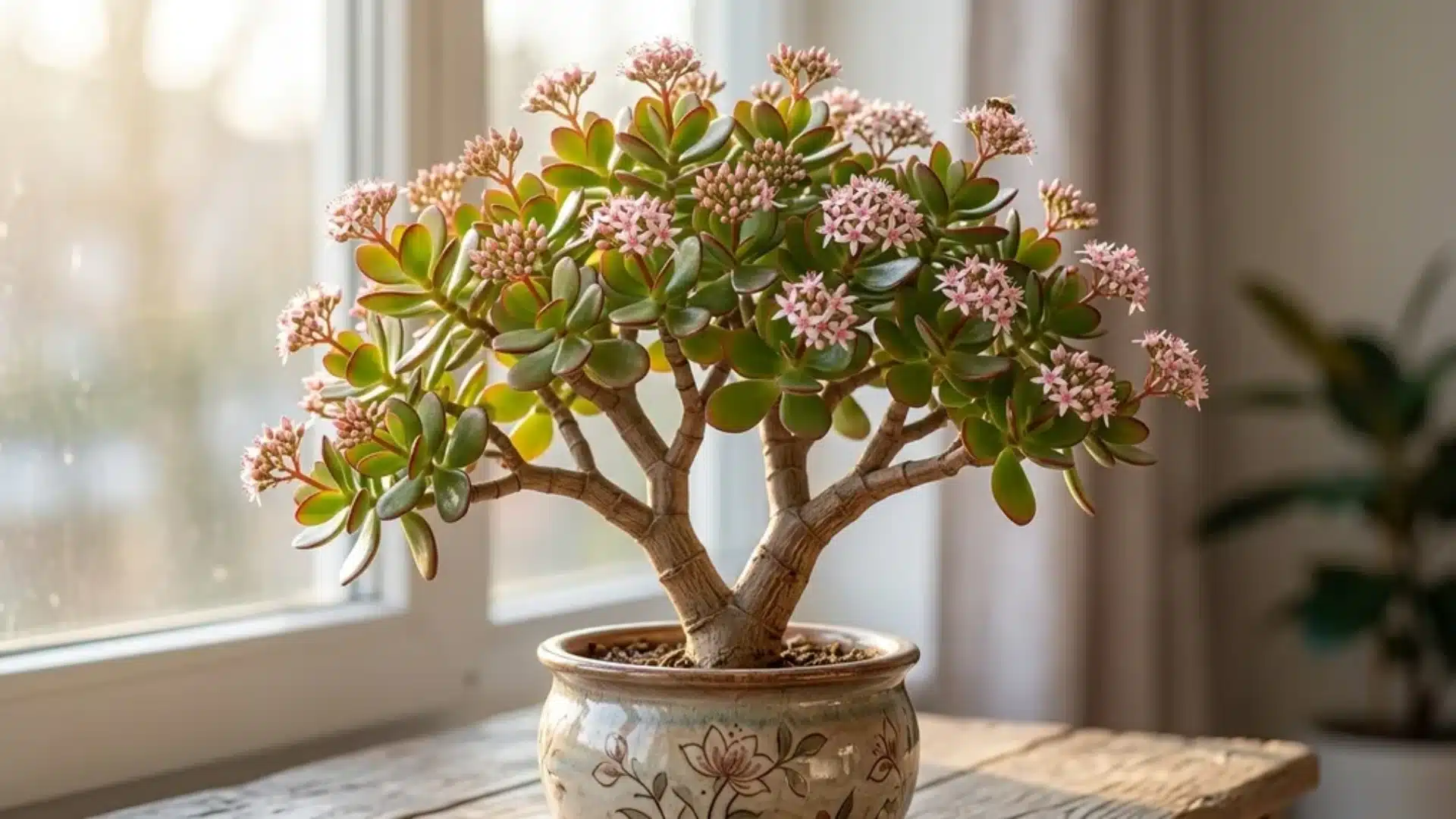
Pink Beauty has glossy green, club-shaped leaves tinged red at the edges. On healthy plants, it can produce fragrant, star-shaped pink flowers in winter.
Leaf color: Glossy green with red edges
Bloom color: Pink, star-shaped, fragrant
Max height: Up to 5 feet
Best for: Those who want a flowering jade plant indoors
Pink Beauty is also one of the few jade types that flowers reliably indoors, and those fragrant pink blooms are one of the lesser-known benefits of this plantthat most people only notice after owning one for a few seasons.
10. Tricolor Jade (Crassula ovata Tricolor’)
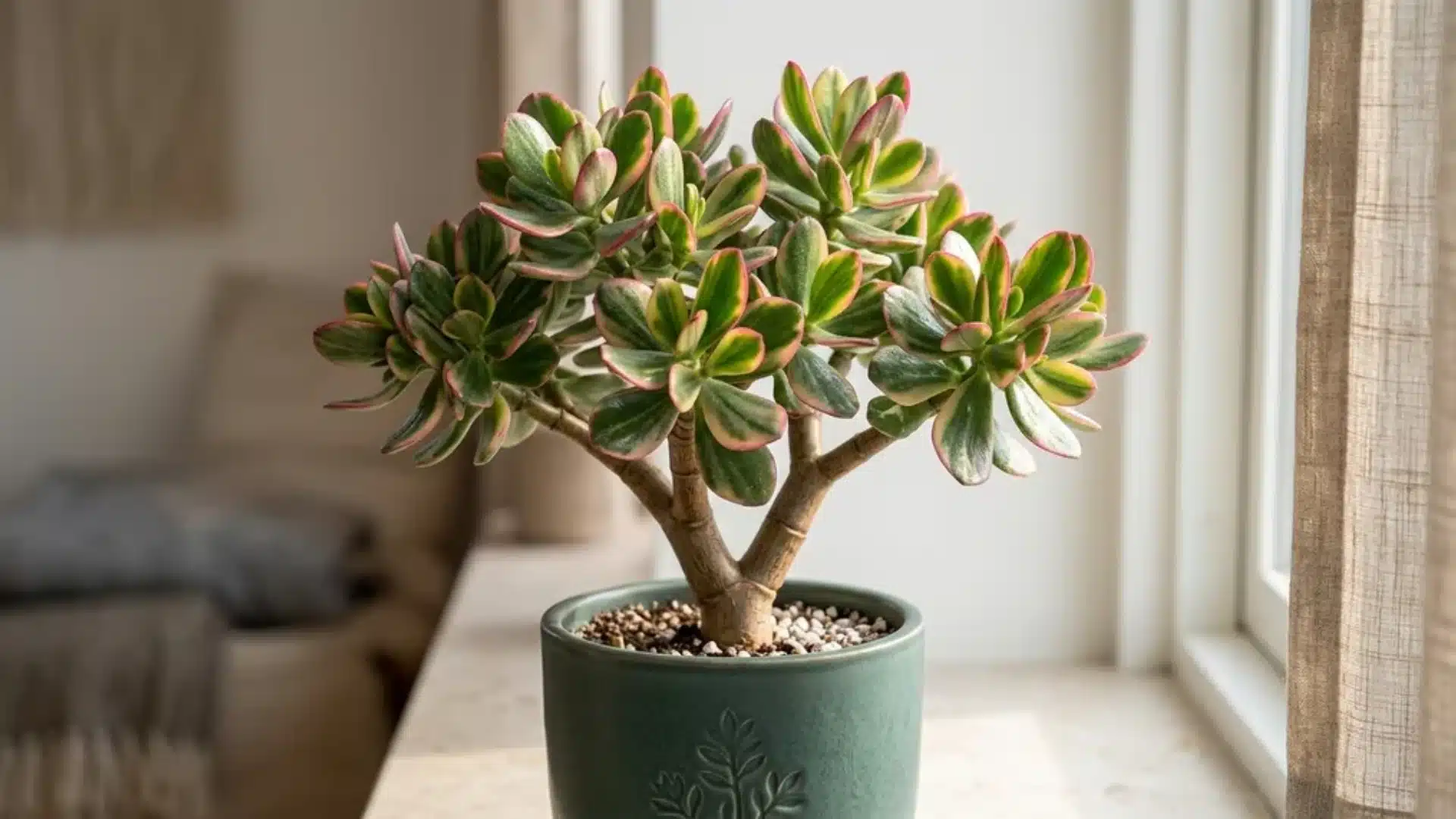
Tricolor jade has leaves that show three colors at once: green, cream, and pink or red. The intensity of the pink and red tones shifts depending on how much light the plant receives.
Leaf color: Green, cream, and pink or red
Max height: Around 3 feet
Best for: Those who want color that changes with the seasons
This is a good pick if you want a plant that looks different through the year. In low light, the leaves stay mostly green with a cream tint. Move it to bright direct light, and the pink and red tones come back strongly.
11. String of Buttons (Crassula perforata)
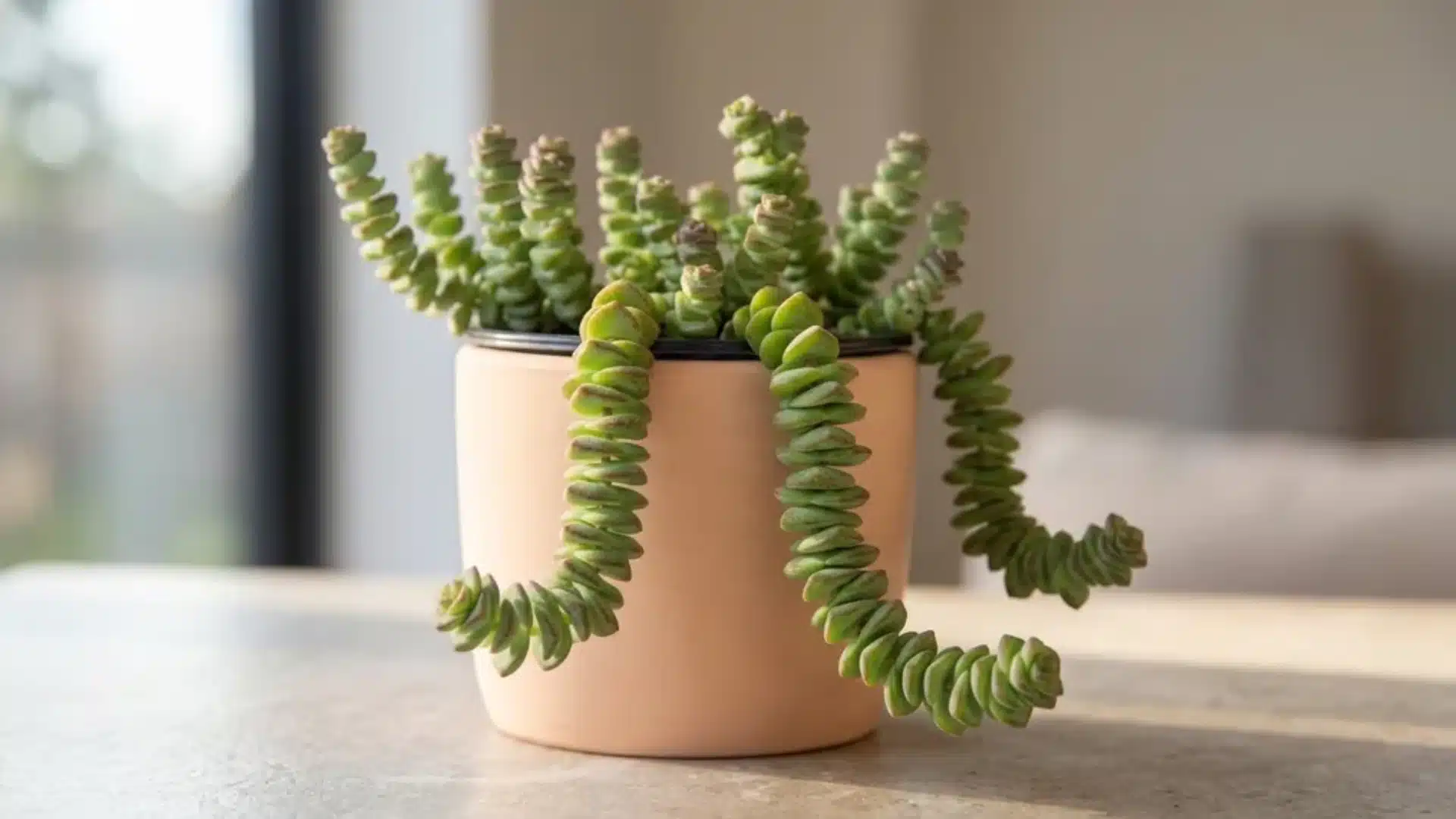
String of Buttons has small, triangular leaves arranged in a spiral on upright stems. The leaf edges turn pink in sunlight.
Leaf color: Green with pink edges in the sun
Max height: Up to 2 feet
Growth habit: Starts upright, then trails as it matures
This is something not to leave out: String of Buttons does not stay upright forever. As the plant grows, the weight of the stacked leaves causes the stems to lean and eventually trail over the edges of a pot.
This makes it a good fit for hanging baskets or shelf edges once it matures. It produces pink-to-white flowers in spring and summer.
12. Miniature Jade / Tom Thumb (Crassula ovata Minima’)
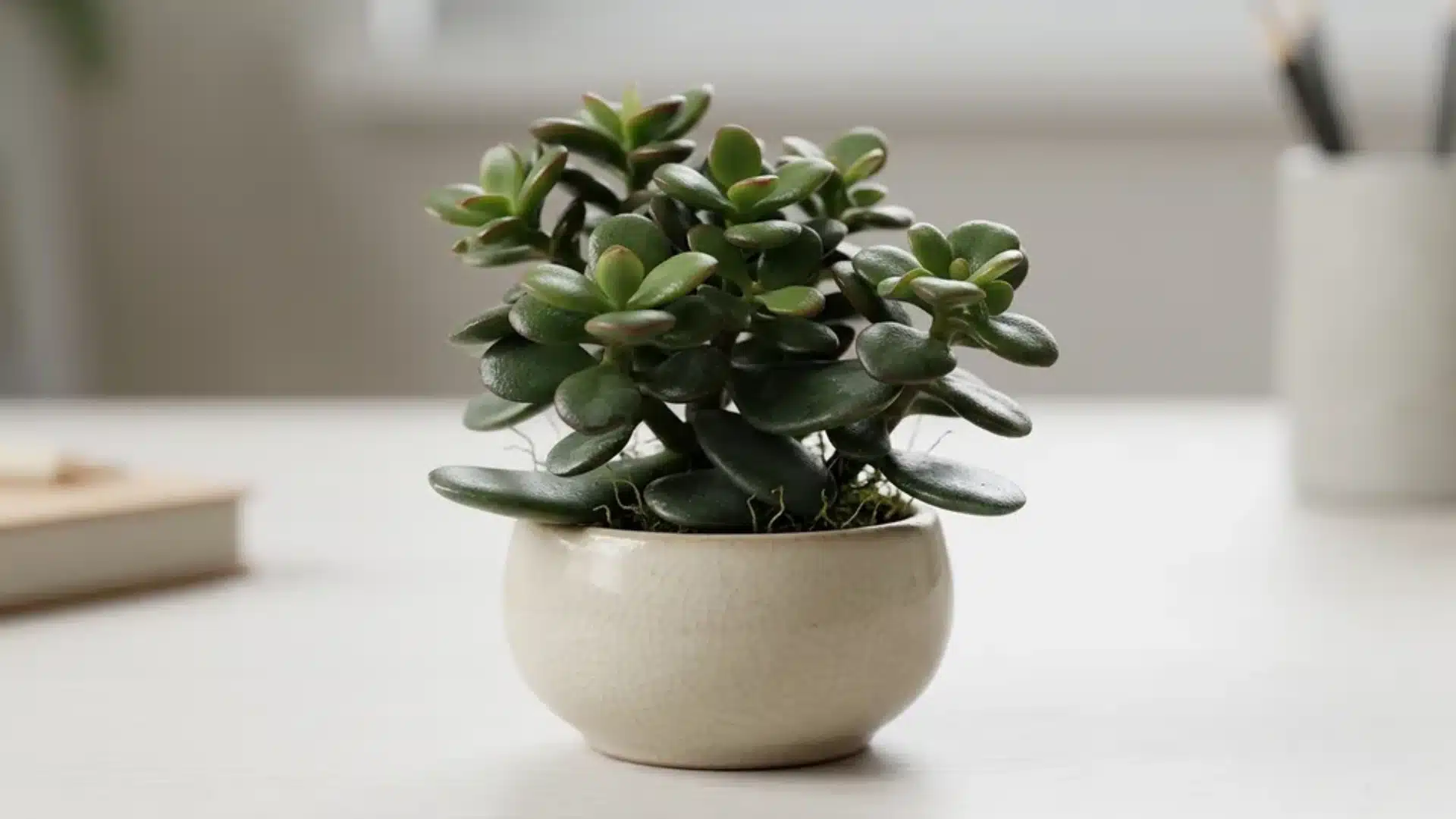
Tom Thumb is a dwarf variety that stays very small. It grows only 6 to 10 inches tall and has small dark green leaves with red tips.
Leaf color: Dark green with red tips
Max height: 6 to 10 inches
Best for: Tabletops, tiny spaces, children, beginners
It’s the smallest of the common jade plant and one of the slowest growers. New leaves are mostly red and darken to green as they mature. It works well as a starter plant or as part of a small succulent arrangement.
Picking the Right Jade for Your Space
With 12 options in play, the shortcut is to start with your space, then narrow to color.
If your growing space is limited, a bathroom windowsill, an office desk, a shelf, Tom Thumb, Hobbit, or Crosby’s Compact will all fit and stay put for years. If you want height eventually, Classic Jade and Pink Beauty are the two that build a real tree-like trunk over a decade or two. If a hanging basket is what you’re after, String of Buttons is the one that trails naturally as it matures.
On color, Hummel’s Sunset and Tricolor deliver the boldest shifts through the seasons, both driven by light. Gollum and Ripple Jade are the sculptural picks, plants you buy for their leaves and stems, not their color. Variegated Jade and Silver Dollar sit in between, with subtle patterns that read best up close.
One safety note that applies to every variety on this list: jade plants are toxic to cats and dogs. The ASPCA lists Crassula ovata as toxic to both, with ingestion causing vomiting, lethargy, and loss of coordination. Keep every variety out of pets’ reach, and pick a shelf your cat can’t reach if you have one.
Jade Plant Care Basics
All jade plant varieties share the same core care requirements. Get these right, and your plant will stay healthy regardless of which type you pick.
Light: Aim for at least 4 to 6 hours of bright light daily. Most varieties handle direct sun well. In a dim corner, yellow leaves usually show up before any other warning sign, and if that happens, either move the plant closer to a window or check whether yellowing jade leaves are a sign of overwatering instead of low light. Variegated types can scorch if the light is too intense, so keep those a step back from a south-facing window.
Water: Use the soak-and-dry watering method. Getting this right matters more than any other care step. Overwatering is the single biggest reason healthy jade plants fail indoors. Water deeply only when the top layer of soil has fully dried out, then let all excess drain away before the next round.
Soil: Use a well-draining cactus or succulent mix. Standard potting soil holds too much moisture for a succulent.
Temperature: Keep the plant between 65°F and 75°F (18°C to 24°C). Below 50°F the roots can take damage, so protect it from frost and from a cold draft.
Which jade plant are you thinking of adding to your collection? Drop your pick in the comments.
Frequently Asked Questions
What is the best jade plant for beginners?
Crassula ovata is the most widely grown jade. Its glossy oval leaves, tree-like trunk, and forgiving nature make it the easiest for beginners and long-lived indoor growers.
How long do jade plants live?
A well-kept jade plant can live 50 to 100 years. Some heirloom specimens have been documented at over a century old and reach striking tree-like size in warm climates.
What should you never do with a jade plant?
The biggest mistake is overwatering in poorly draining soil, which rots the roots fast. Keep it in a cactus mix, and water only when the top inch of soil is fully dry.
Are jade plants toxic to pets?
Yes. The ASPCA lists jade plants as toxic to both cats and dogs. Ingestion causes vomiting, lethargy, and loss of coordination. Keep every variety out of pets’ reach.
How can you tell jade plant varieties apart?
Check for Crassula ovata in the plant name first. Round oval leaves signal the classic form. Tubular leaves point to Gollum or Hobbit. Wavy leaves point to Ripple Jade.