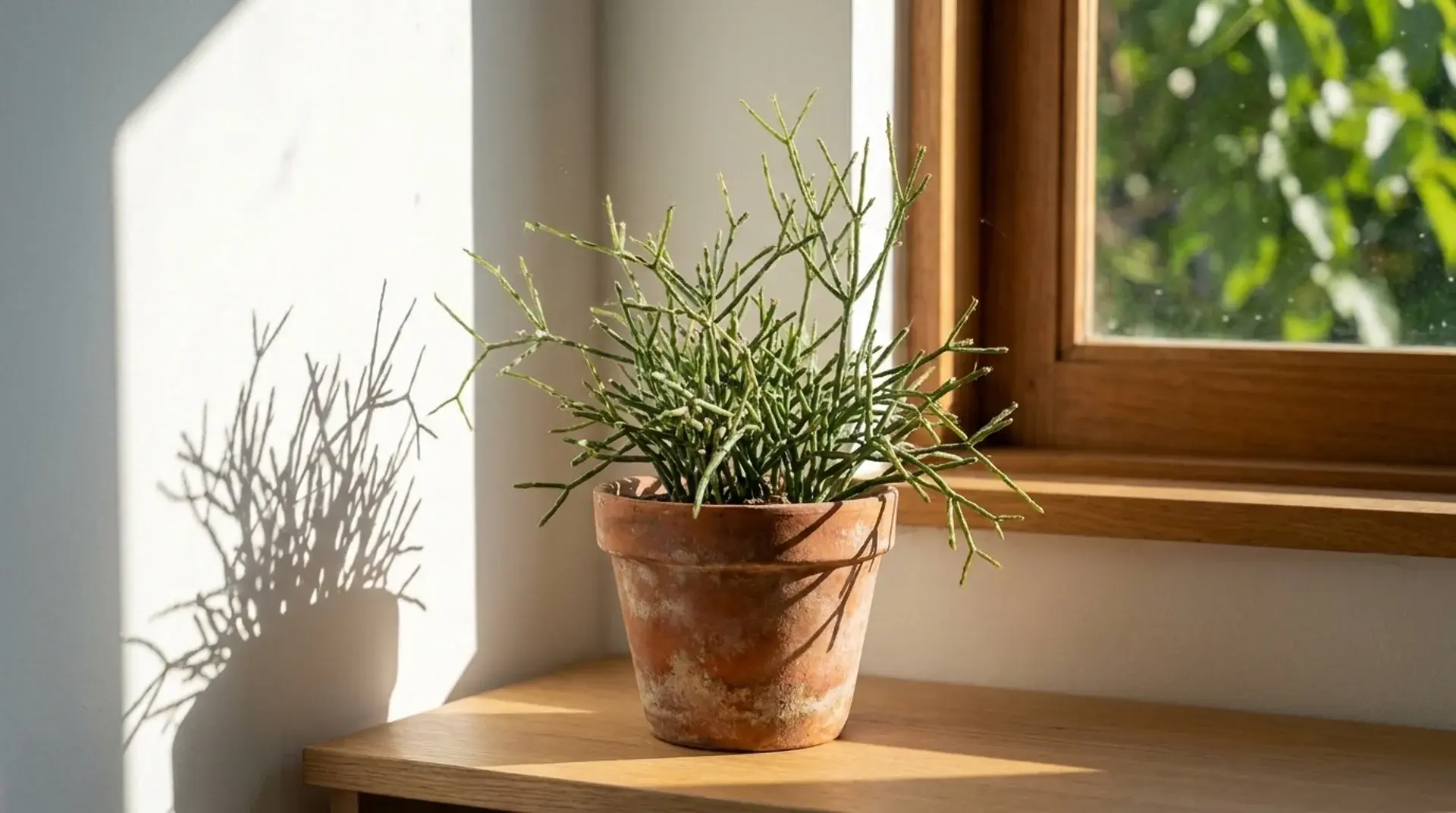

This cute little cactus is Acanthocereus Tetragonus, commonly known as the fairy castle cactus! It gets its common name from its miniature spire-like growth.
I’ve spent years keeping tropical plants alive, mostly by watering houseplants a little too often and hoping for the best. Then a fairy castle cactus joined my windowsill, and that habit nearly finished it off.
It’s easy to see its resemblance to a tiny castle perfectly suited for a fairy! It’s a great first cactus if you have a very bright spot, and the learning curve is gentler than you’d expect.
How to Care for Acanthocereus Tetragonus
If you’re used to keeping tropical houseplants, there can be a bit of a learning curve when it comes to cacti. These five basics cover what matters most.
1. Light Requirements
Acanthocereus tetragonus needs very bright indirect light or direct sun to truly thrive. Mine gets the sunniest window in my apartment, with a grow light filling in through Portland’s gray winters.
Outdoors in direct sun, protect your plant from harsh afternoon sun, which can sunburn it. Pale, stretched, or leaning stems usually mean it wants more light, so slide it a little closer to the glass.
2. Water Tips for Acanthocereus Tetragonus
Let the soil go completely dry between waterings, then give it a good soak. Plants being grown indoors will need to be watered much less frequently than those grown outdoors, and I stretch the gap even longer in winter.
When I’m unsure, I wait a few more days. A thirsty cactus bounces back fast, but a soggy one starts rotting from the base. Check with your finger first.
3. The Best Soil for Acanthocereus Tetragonus
This cactus comes from sandy coastal ground, so it wants a quick-draining cactus or succulent mix. If yours feels heavy, stir in extra pumice or coarse sand. Pick a pot with a drainage hole, and always empty the saucer after watering.
Unglazed terracotta helps the mix dry out faster, which is exactly what we want here. Any gritty, coarse mix from a garden center works well.
4. Temperature and Winter Care
The Wildflower Center lists the wild species as hardy to about 20°F, but that number doesn’t automatically cover a small potted cultivar. I bring mine indoors well before any frost and keep it off cold windowsills on winter nights.
A Thanksgiving cactus grows on trees in the wild and prefers gentler light, so its routine doesn’t carry over to this one. Drafty glass at night is the main risk.
5. Repotting and Handling the Spines
This cactus grows slowly, so repot only when the roots crowd the pot, and do it in spring. Go up just one pot size, since a roomy pot holds wet soil too long.
The spines are painful, so wear thick gloves and lift the plant with folded newspaper or kitchen tongs. Leave it dry for a few days after repotting before the first watering. Take your time here.
Flowering and Stem Cutting Propagation
Fairy castle cactus rarely flowers indoors, but it’s one of the easier cacti to multiply. Stem cuttings are the simplest route.
Wear gloves, and use a clean, sharp knife to cut off a stem section a few inches long. Set it somewhere dry and shaded for a few days until the cut end seals over, then press it into dry cactus mix. Water lightly once it settles in, and be patient, since roots form slowly.
The same ideas behind plant propagation apply here: clean tools and a light hand with water. Seeds work too, but cuttings are faster.
Common Problems With Acanthocereus Tetragonus
Most of the trouble with this cactus traces back to light or water, and the stems usually tell you which.
Yellowing stems: Usually too little light or too much water. Check the soil first, then the window.
White fluffy patches: Mealybugs. Dab them with a cotton swab dipped in rubbing alcohol, the same way you’d treat most bugs on indoor plants.
Soft, mushy stems: Rot from soggy soil. Stop watering, cut away the damaged part with a clean knife, and let the plant dry out.
Reddish stems: Sun or cold stress, so shade it from harsh midday sun or move it away from cold glass.
Stretched, leaning growth: It wants more light.
Is Acanthocereus Tetragonus Pet Safe?
It’s best to keep Acanthocereus tetragonus away from pets because of its sharp spikes.
Set it on a high shelf or in a room your pets can’t reach, and keep it away from walkways where a sleeve or a tail might brush past. I’m covering the spines here, not toxicity.
My first fairy castle taught me that a plant can look fussy and still be forgiving. Give it a bright window, a dry spell between drinks, and a pot that drains, and it keeps building its tiny towers without much fuss.
If it wins you over, a few more easy houseplants are waiting for you.
Frequently Asked Questions
How fast do Fairy Castle Cacti grow?
Fairy castle cacti (Acanthocereus tetragonus cultivar) are slow-growing plants that typically grow about 1 to 2 inches (2.5 to 5 cm) per year. Instead of shooting up fast, they put their energy into branching out.
Should you water cactus from the top or bottom?
You can water a cactus from either the top or the bottom, as both methods work well depending on your setup. However, top watering is generally preferred by most growers because it mimics natural rainfall and flushes out built-up minerals.
What does a thirsty cactus look like?
A thirsty cactus looks shriveled, wrinkled, and slightly deflated as it uses up the water stored in its tissues. The outer skin pulls inward. You will notice fine lines, puckering, or a pleated texture.