Quick Answer: Jade plant drops leaves most often because of overwatering, which causes soft, mushy leaves that fall at the lightest touch. Underwatering, too little light, sunburn, cold drafts, pests, poor soil drainage, and fertilizer problems can all cause it too.
Your jade plant was doing fine. Then the leaves started falling.
One, then three, then a whole handful, and now you’re staring at bare stems, wondering what went wrong.
This has happened to more than one of my 70-plus plants over the years, and the cause is rarely a mystery once you know what to check.
If your jade plant is dropping leaves, the fix is almost always simple. This post covers all eight real causes, how to spot each one fast, and what to do about it.
Is It Normal for a Jade Plant to Drop Leaves
Yes, sometimes. Mature jade plants naturally shed older, lower leaves, which is how they build that signature bare, woody trunk.
Jade plants also live for decades indoors, and that longevity is one of the biggest jade plant benefits, part of why this one still has a spot on my shelf even through a rough patch of leaf drop.
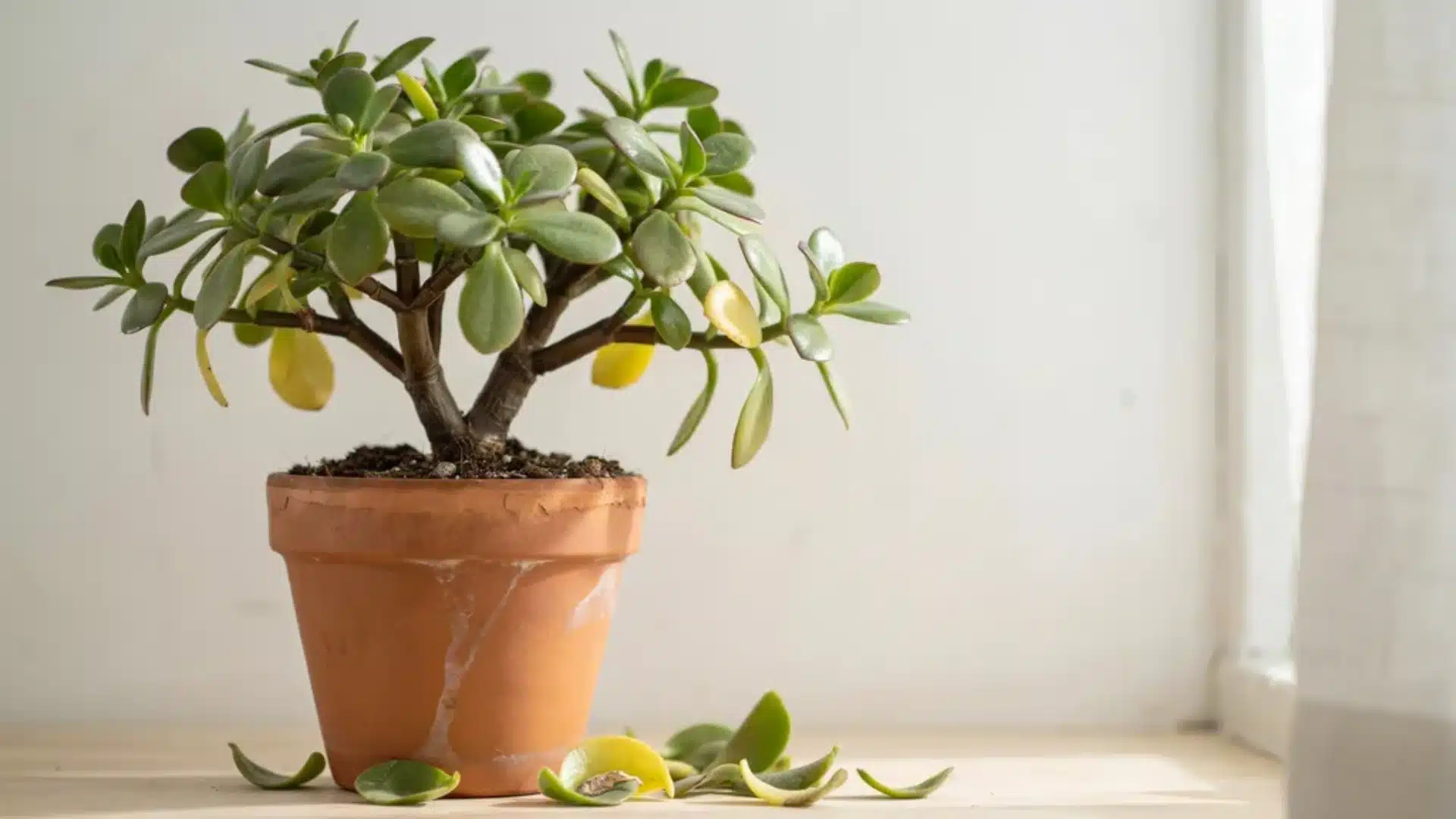
A few bottom leaves yellowing and dropping over two to three weeks is normal aging, no action needed. The problem starts when leaf drop is sudden, spreads across the whole plant, or the fallen leaves look mushy, bone-dry, or spotted.
Quick check: a slow drop of just the lowest leaves on an otherwise healthy plant is natural. Leaves falling from all over mean something in the care routine needs to change.
8 Real Causes of Jade Plant Leaf Drop
Most jade plant leaf drop comes down to one of these eight causes. Check the signs under each one and your plant will tell you exactly which fits.
1. Overwatering
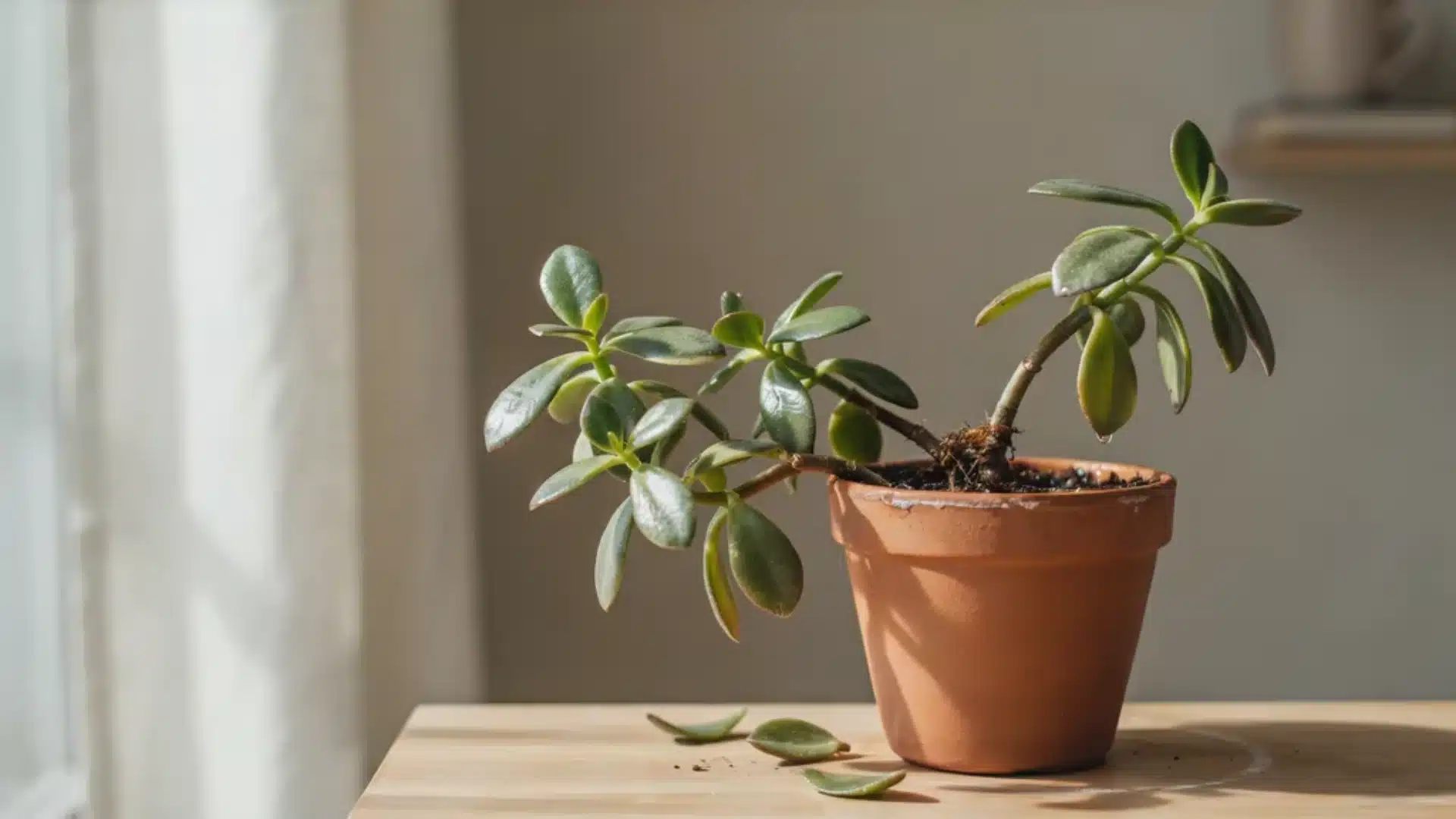
Overwatering is the top reason jade plants drop leaves. Jade plants (Crassula ovata) come from dry regions of South Africa, and their roots need oxygen between waterings.
Soil that stays wet for more than 48 hours starts root rot, and the leaves swell, turn soft and yellow, and fall at the lightest touch.
Signs: soft, mushy, or translucent leaves that drop easily, plus a foul smell from the soil.
Fix: Stop watering. Check the roots — white and firm is healthy, brown, black, and slimy needs trimming. Repot into fresh succulent mix with drainage holes, then hold water for 5 to 7 days before restarting a soak-and-dry routine.
Most jade plants need water only once every two weeks in summer and once a month in winter, though it depends on pot size, soil, and season. Getting watering jade plants right matters more than following a fixed schedule.
2. Underwatering
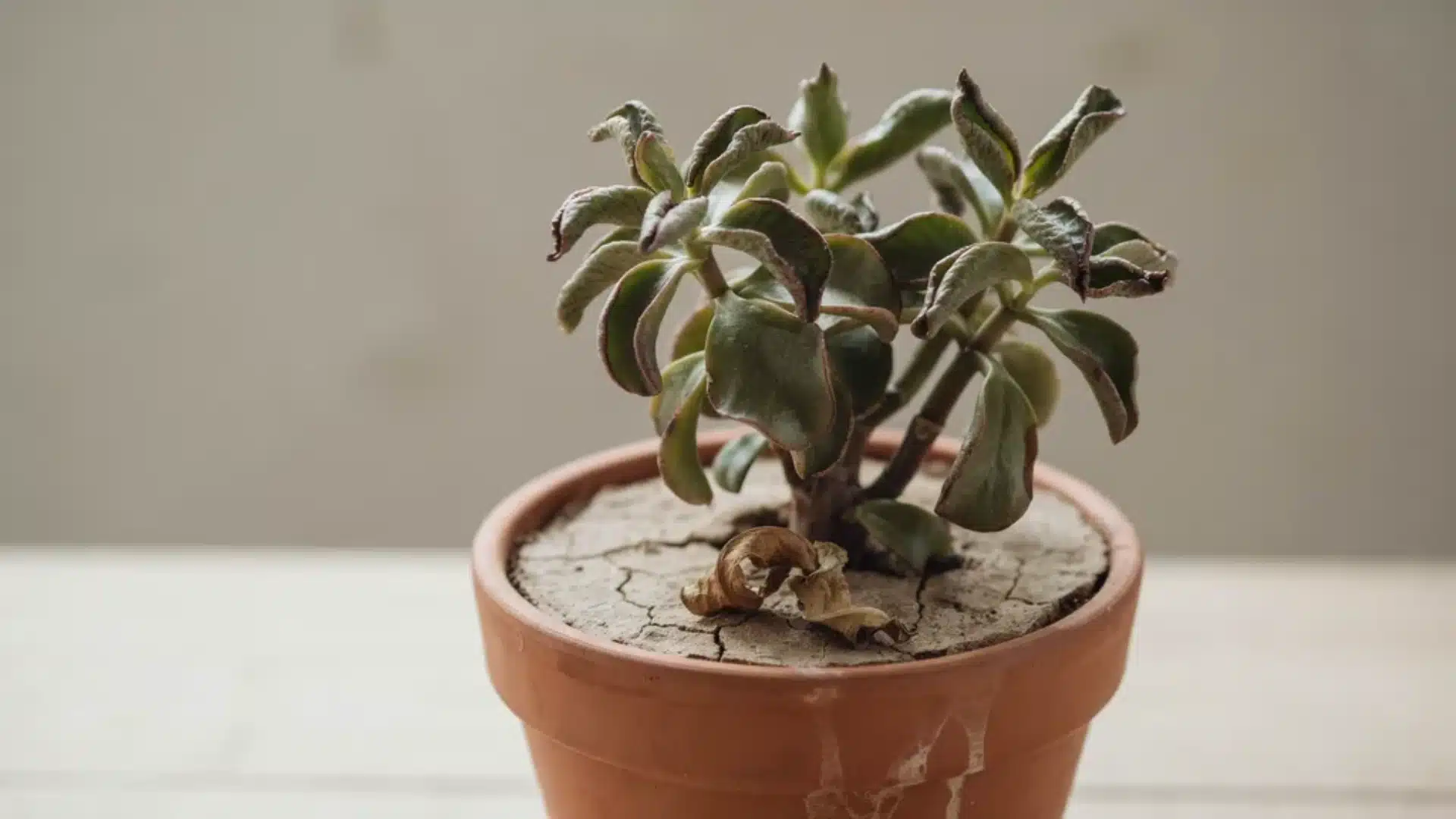
Long gaps between waterings starve the plant of moisture, and leaves wrinkle, shrivel, brown at the edges, and fall off.
Signs: dry, crispy leaves and soil pulling away from the pot edges.
Fix: Water deeply until it drains from the bottom. Skip shallow watering — the roots need a full soak. Firm leaves mean enough water; soft, bending ones mean it’s time again.
3. Not Enough Light
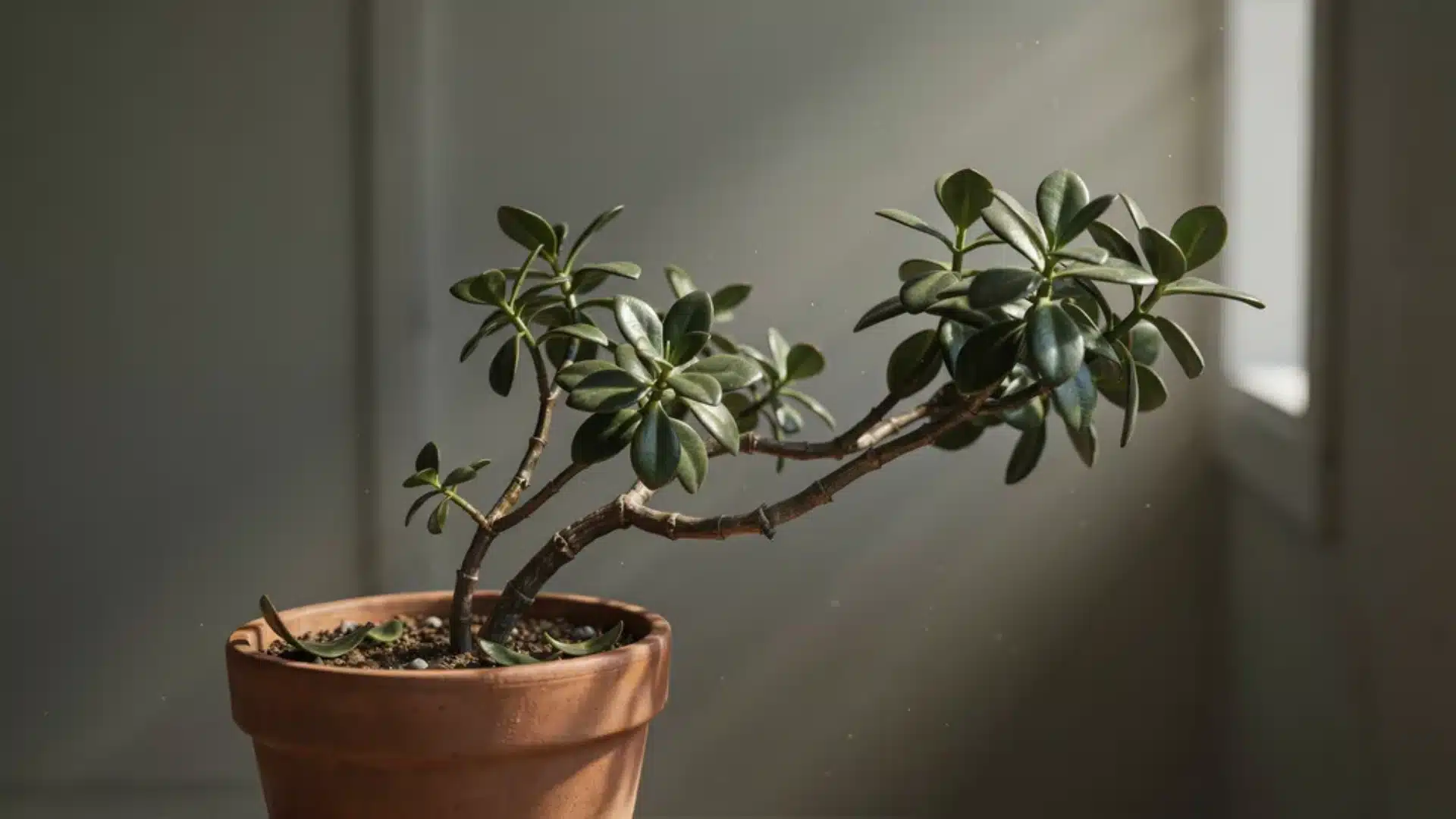
Jade plants need 4 to 6 hours of bright light daily indoors. Without it, the plant drops lower leaves to save energy and stretches toward the nearest window.
Signs: leggy stems, dark limp leaves, and lower leaves falling as the plant leans toward light.
Fix: Move it to a south- or west-facing window, or add an LED grow light in a dim room. Increase light gradually over a week to avoid shock.
4. Sunburn
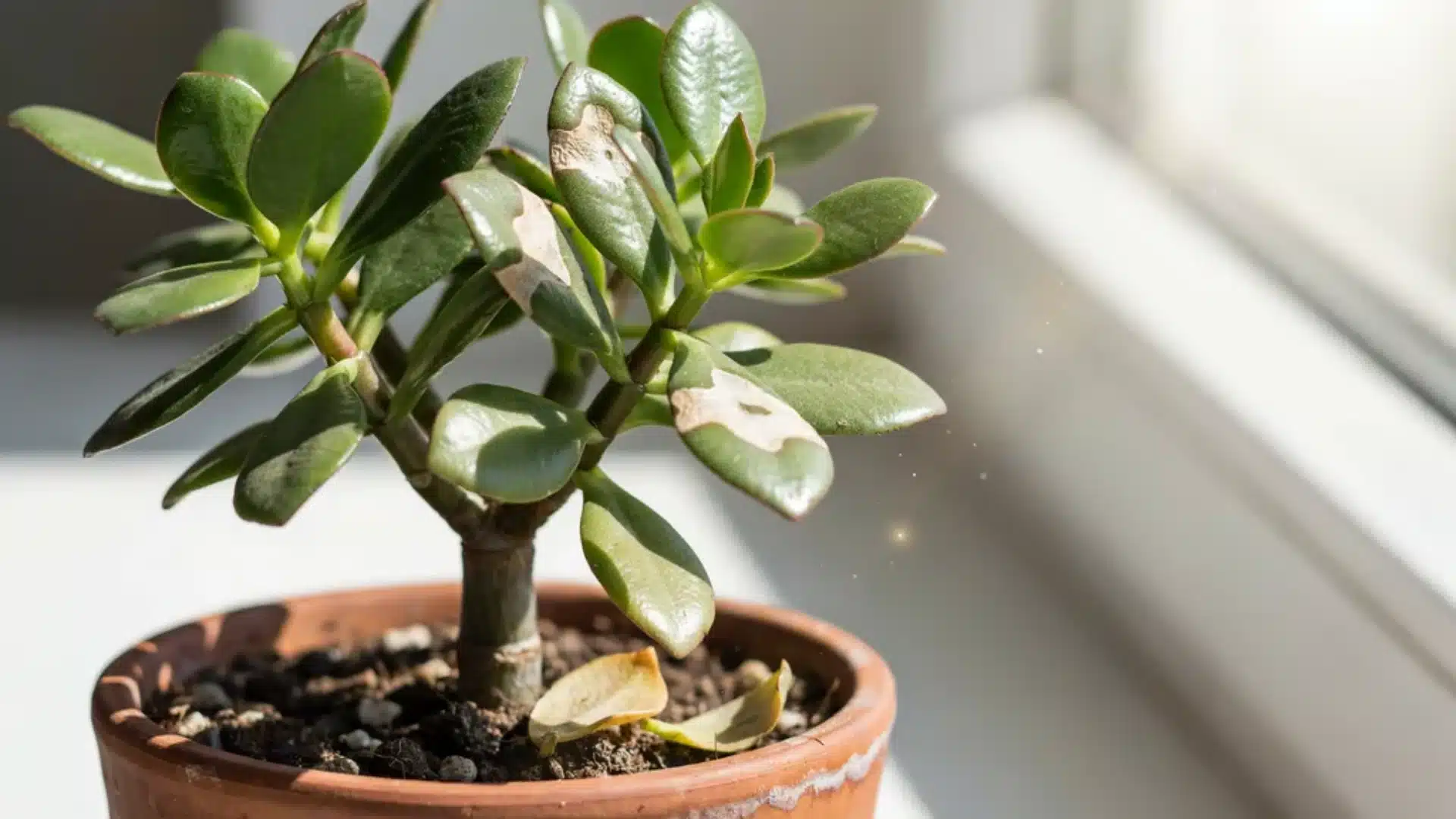
Too much direct sun scorches leaves, and they fall off.
Signs: white, tan, or brown patches and crispy spots that never turn green again, especially after a move to a brighter spot.
Fix: Move to bright indirect light near a south-facing window, away from harsh afternoon rays. Never jump from shade straight into full sun.
5. Temperature Stress and Cold Drafts
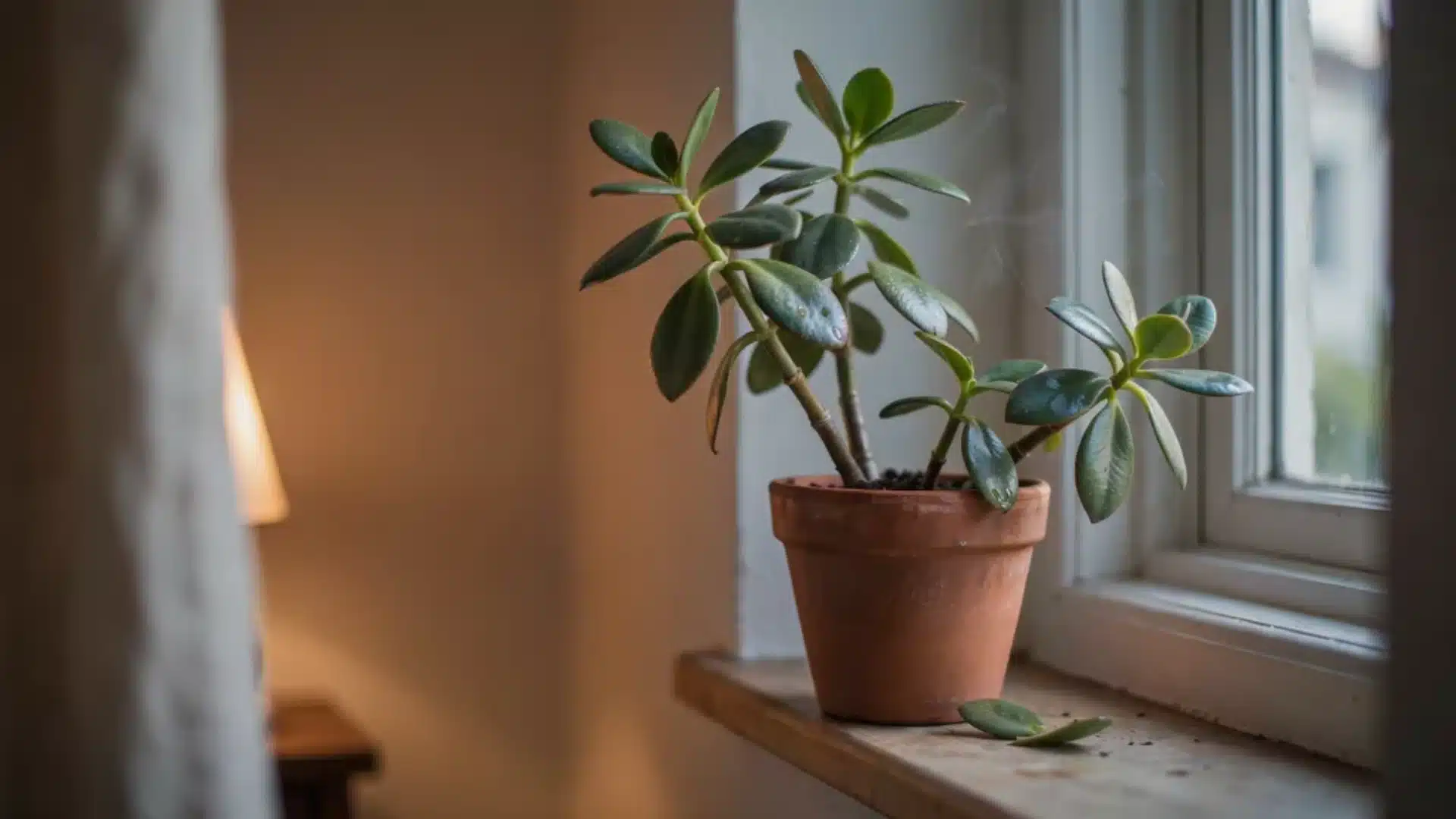
Jade plants do best between 60°F and 75°F (18°C to 24°C) by day and 50°F to 55°F at night. Sudden swings, even above freezing, trigger leaf drop.
Signs: soft or limp leaves without yellowing, water-soaked spots after cold exposure, and drooping branches near vents or windows.
Fix: Keep the plant clear of drafty windows, AC vents, and heaters, and avoid quick moves between warm and cold spots.
6. Pests
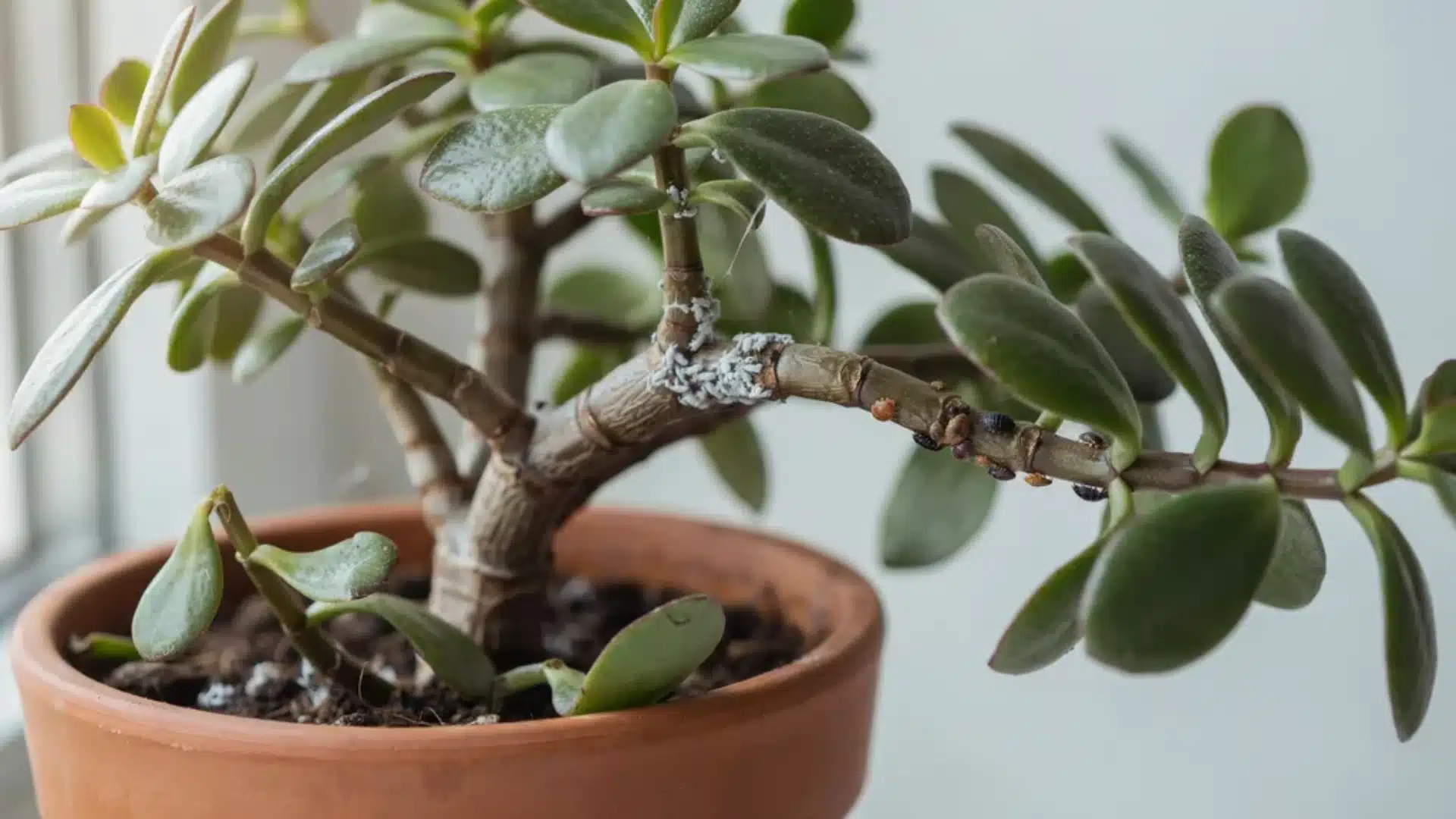
Sap-sucking mealybugs, scale, and spider mites drain moisture and nutrients, causing leaf drop.
Signs: cottony white patches (mealybugs), small brown bumps that don’t move (scale), or fine stippling and webs (spider mites).
Fix: Dab pests with a cotton swab soaked in 70% isopropyl alcohol, isolate the plant, and repeat every few days. Skip insecticidal soap — it can damage jade. Quarantine new plants before adding them to your collection.
7. Poor Soil and Drainage
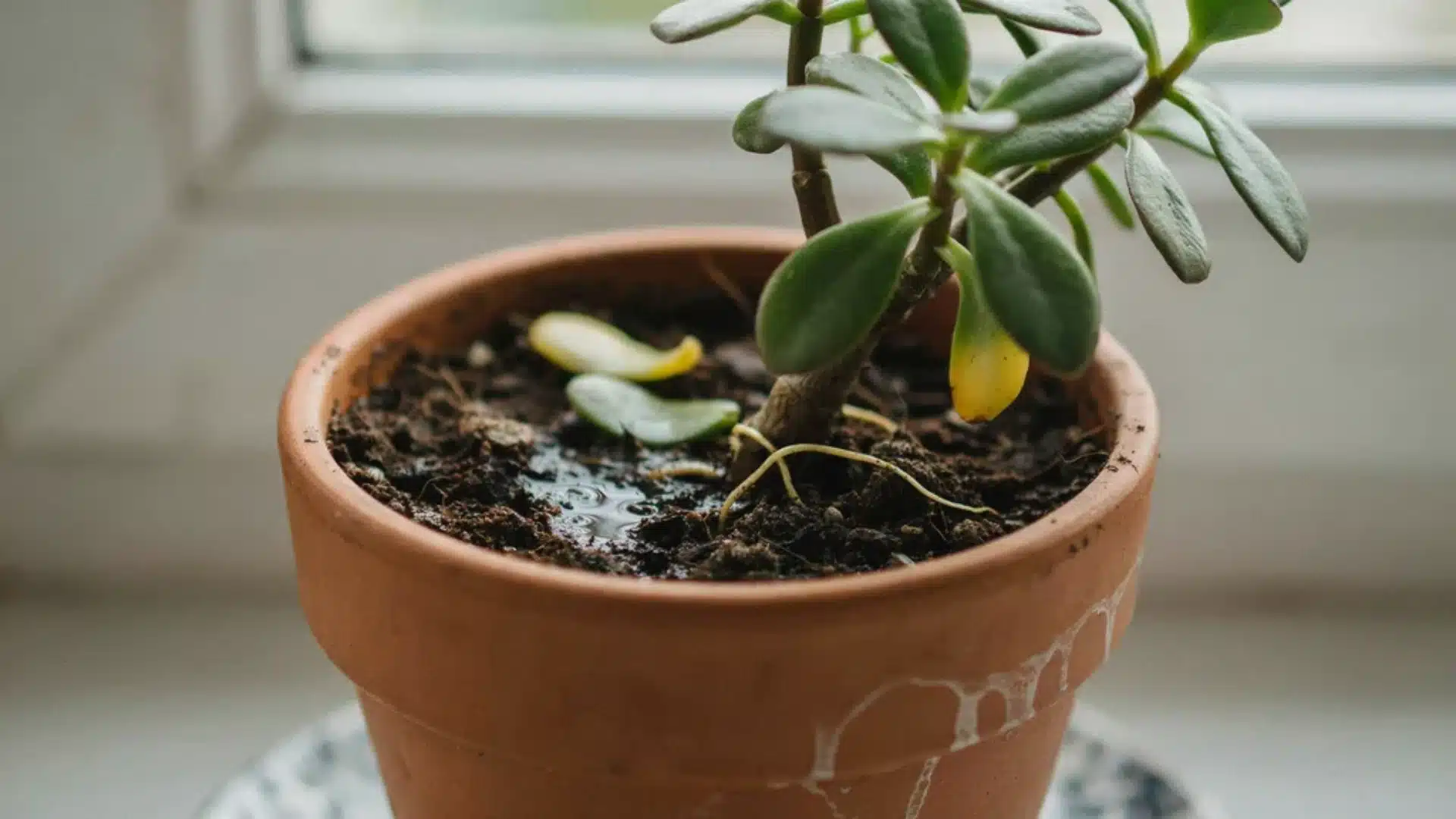
Regular potting mix holds too much moisture for a jade plant, and roots in wet, dense soil suffocate and rot.
Signs: soil that stays wet, water pooling on the surface, or roots growing out of the drainage hole.
Fix: Use a cactus or succulent mix, or blend 60% coarse sand, 30% cactus soil, and 10% perlite, and always use a pot with drainage holes.
8. Fertilizer Problems
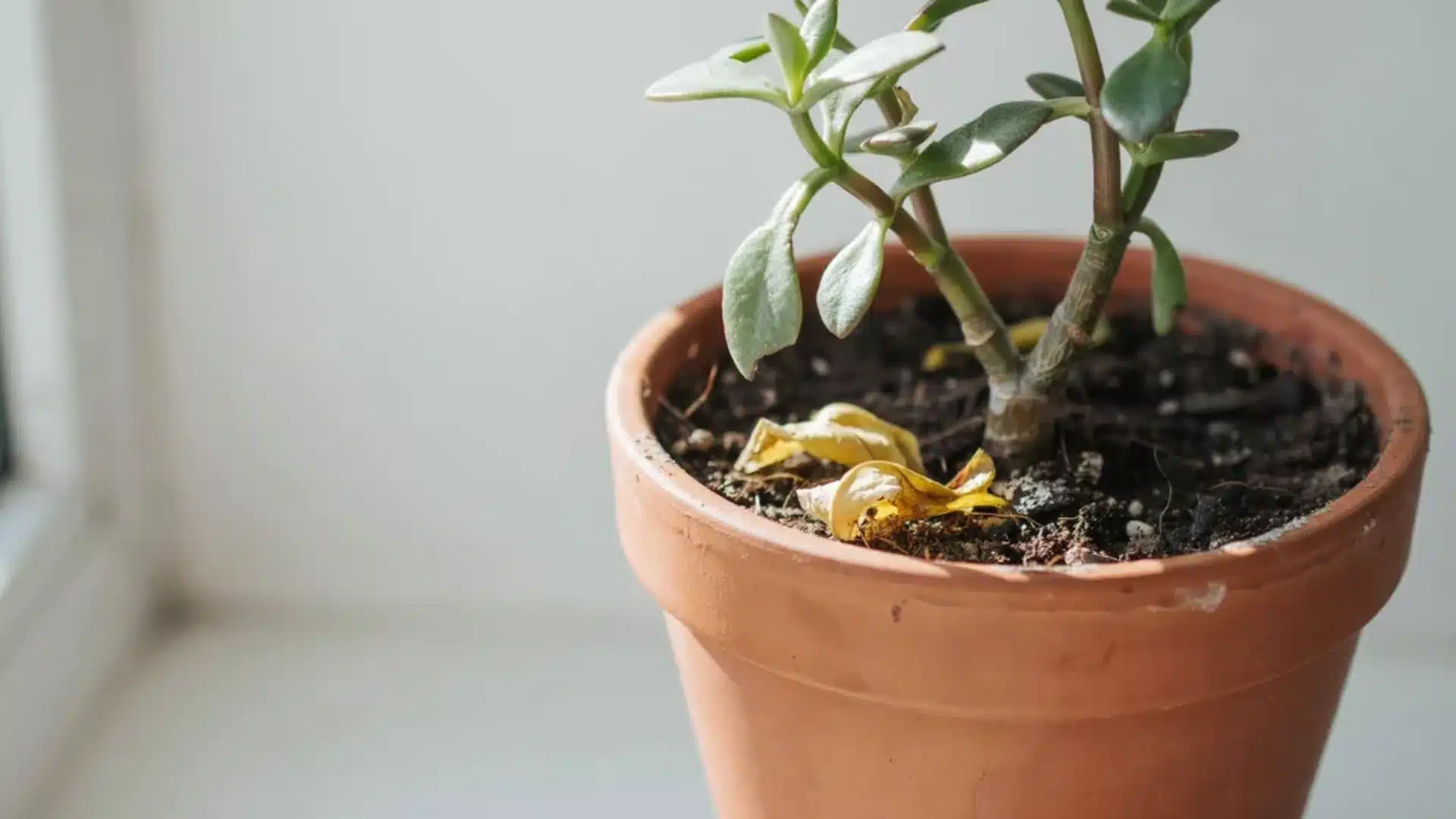
Too much fertilizer, especially high-nitrogen, causes fast, weak growth and leaf drop. Too little starves older leaves, which drop gradually.
Signs: leggy growth and a salt crust on the soil (too much), or slow, pale growth (too little).
Fix: Feed once a season, spring through summer, at half strength. I feed mine once a year and skip it entirely from fall through winter.
Leaf Drop by Season and After Repotting
The same plant can drop leaves for different reasons depending on the time of year, or right after a repot.
Winter: Low light slows water uptake, so soil stays wet longer and root rot speeds up, and cold drafts add to it. Move the plant to your brightest spot, water less, and keep it off cold glass.
After repotting: Root disturbance causes short-term shock, and a few mature leaves may drop within a week. That’s normal. Withhold water for 5 to 7 days, repot only in spring, and size up the pot by just 1 to 2 inches.
Summer: Heat above 85°F (29°C), overwatering, or pests are the usual causes. Check drainage, ease off watering, check for bugs, and move the plant out of intense afternoon sun.
How to Prevent Jade Plant Leaf Drop
Once the immediate problem is fixed, these habits keep a jade plant stable and stop leaf drop from coming back.
- Water only when the top 2 inches of soil are completely dry.
- Use well-draining succulent soil and a pot with drainage holes.
- Give it 4 to 6 hours of bright, indirect light each day.
- Keep temperatures steady between 60°F and 75°F.
- Fertilize lightly, once per growing season only.
- Check leaves and stems for pests every two weeks.
- Repot every 2 to 3 years, in spring only.
Jade plants come in more than one form, and some jade plant varieties are more compact and handle lower light better, so the one you started with affects how much care it actually needs.
Most of the time, a jade plant dropping leaves comes down to adjusting one thing — water, light, or temperature. Match what you’re seeing to the causes above and the fix is usually quick.
If the leaves are changing color before they fall, that’s usually still overwatering or light stress at the root of it, just with a couple of extra signs worth checking on yellowing jade leaves.
Got a jade doing something weird? Tell me about it in the comments.
Frequently Asked Questions
What Does an Overwatered Jade Look Like?
Look for leaves that turn soft, mushy, or slightly see-through, and that drop with barely a touch. Mushy stems near the soil are also a sign.
Will Baking Soda Help My Jade Plant?
Baking soda can help treat powdery mildew on a jade plant, but it’s a harsh salt. Used too often, it causes leaf burn and speeds up leaf drop.
How Can You Tell If a Jade Plant Is Thirsty?
A thirsty jade plant loses its shine. Leaves feel soft or slightly flexible instead of firm, and the lowest ones may start to wrinkle.