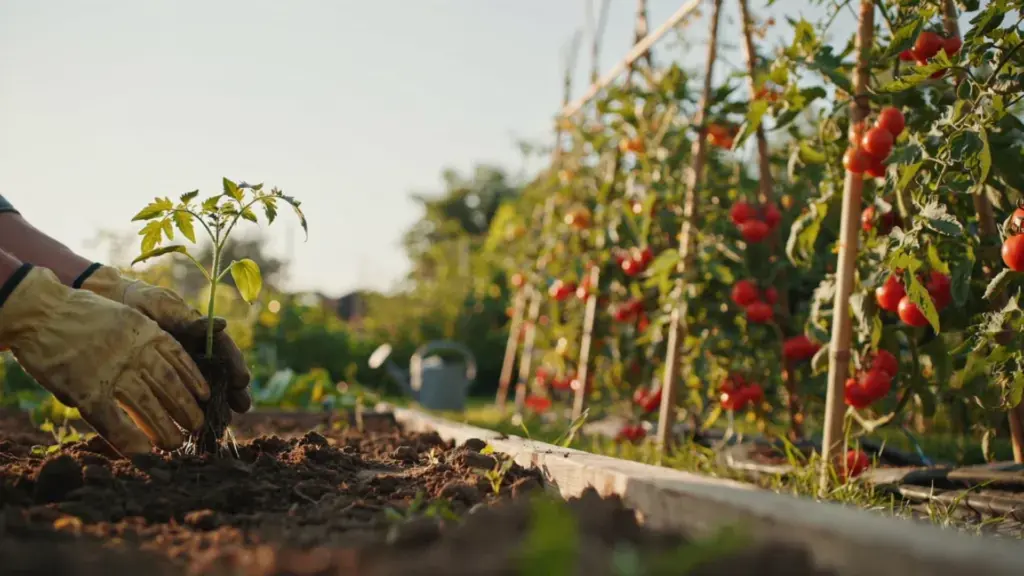
Here’s the rule I want you to carry out in the garden this spring: bury two-thirds of your tomato transplant, stem and all.
If you’ve got a 10-inch seedling in your hand, only the top three or four inches should be sticking up above the soil line when you’re done. The rest of it goes underground, all of it.
I think it’s the most-skipped step in growing tomatoes, and I say that with love.
You can pick the perfect variety, spend a whole weekend amending your soil, and water like a champ all summer, and none of it will make up for a tomato you planted too shallow. None of it. I have done exactly that, more than once.
So let’s fix that. We’ll cover how deep to go in the ground, in a raised bed, and in a pot, the trench trick for those floppy seedlings you’re embarrassed about, and the soil temperature mistake that quietly wrecks half of everyone’s May plantings.
Why Depth Works for Tomatoes and Almost Nothing Else
If you bury most vegetables up to their necks, they will sulk, rot, or die outright. Try it with a pepper or a cucumber sometime and let me know how that goes. Tomatoes are the exception, and it is worth understanding why.
Their stems are covered in tiny hairs, and when you bury those hairs in damp soil, they turn into roots. Actual roots (they’re called adventitious roots), and they’ll form along the entire buried section of stem. You aren’t burying a plant so much as manufacturing a root system.
More roots means more water and more nutrients pulled in over the season. It means a plant that stands up straight instead of leaning into your basil (speaking of which, pairing tomatoes with the right neighbors matters almost as much as depth)., and it means a plant that shrugs off a hot week and a windy afternoon instead of wilting dramatically every time the weather does something. Depth matters more for tomatoes than for nearly any other vegetable in our gardens.
The Vertical Method vs. the Trench Method
Both of these work, and neither one is the “right” one. Which you pick depends on the seedling in your hand and the dirt you’re putting it in.
The Vertical Method (Deep Hole)
This is for the compact, sturdy, well-behaved transplants, the ones that actually look like the picture on the seed packet. It also suits loose, well-draining soil, because you’re asking the plant to send roots way down there.
If you garden somewhere hot or dry, this is a really good pick, since those deep roots reach cooler, moister soil that doesn’t bake by July.
Strip the lower leaves off every part of the stem that’s going underground.
Dig a hole deep enough to swallow two-thirds of the plant’s total height.
Set the plant in, backfill, and firm the soil down around it.
The Trench Method
This one’s for the leggy seedlings. The tall ones, the bent ones, the ones that stretched toward a window all March and now flop over if you look at them wrong.
Dig a shallow trench, roughly 6 inches deep, and lay the plant down in it sideways. Only the top cluster of leaves stays above ground, gently pointed upward.
Now, I know what you’re thinking. “Tracey, my seedling is a disaster, how is that helping me?”
Because roots form along the whole buried stem. A longer stem means more surface area to root from, which means that gangly, embarrassing seedling is actually the better plant. Your problem child just became your best performer, thank you very much.
There’s a bonus, too. Those new roots sit in the warmer upper layer of soil rather than down in the cold, so the plant establishes quite a bit faster. If you’re in a cool or short-season spot, this is your method.
Dig a trench about 6 inches deep and long enough for the whole stem.
Pull the leaves off the section you’re burying.
Lay the plant flat and gently bend the top leaf cluster upward.
Cover the stem with soil, and mark where the root ball end is.
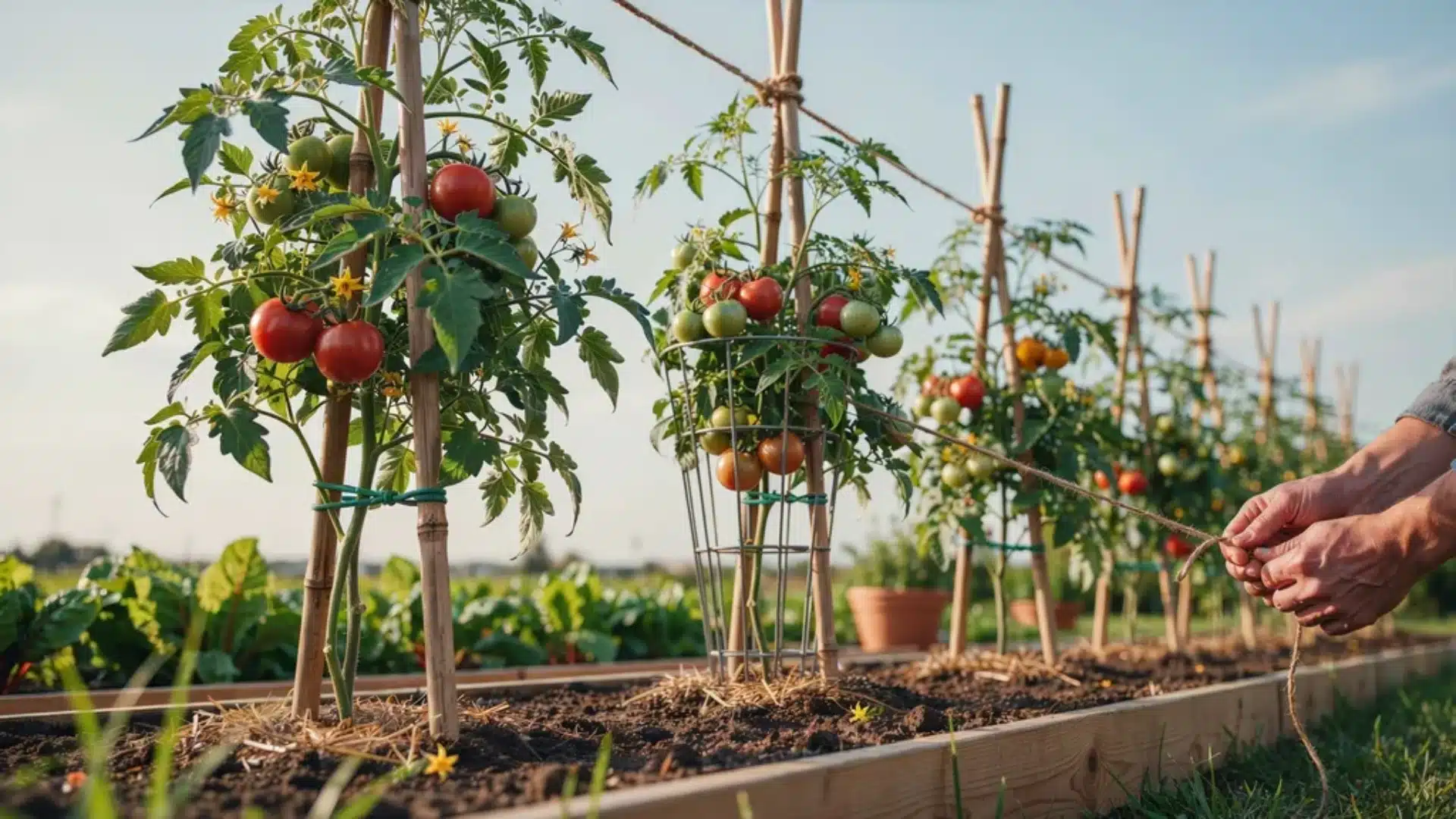
Pro tip: Put your stake or cage in before you backfill (I cover this in more detail in staking tomato plants). Driving a stake into a trench-planted tomato later is how you shred a whole stem’s worth of new roots without ever knowing you did it.
Feature | Vertical Method | Trench Method |
|---|---|---|
Best for | Compact, healthy transplants | Leggy or tall transplants |
Root depth | Deeper in the soil | Nearer the surface |
Soil warmth | Cooler down deep | Warmer near the top |
Best climate | Hot or dry regions | Cool or short-season areas |
How Deep Should a Raised Bed Be?
Raised beds give you control over your soil quality and drainage, which is why so many of us love them. But the depth of the bed itself is doing a lot of quiet work here.
At a minimum, you want 12 inches of loose, fertile soil for compact and determinate types. Better is 16 to 18 inches, which covers most home garden tomatoes, and best is 18 to 24 inches for indeterminate vining varieties.
If your bed sits directly on native soil rather than on concrete or pavers, you have got some leeway, because roots will keep traveling downward on their own.
Still, aim for at least 12 to 18 inches of prepared depth. Mix compost in before you plant. Tomatoes are heavy feeders, and loose, fertile soil keeps roots growing steadily all season instead of hitting a wall in July.
One more reason to go deep: blossom end rot is one of the most common tomato problems out there, and it usually traces back to uneven watering. Shallow roots dry out fast and then get flooded, over and over. A deeper bed cuts that risk way down. Same thinking applies to pots, with one adjustment.
Container Depth
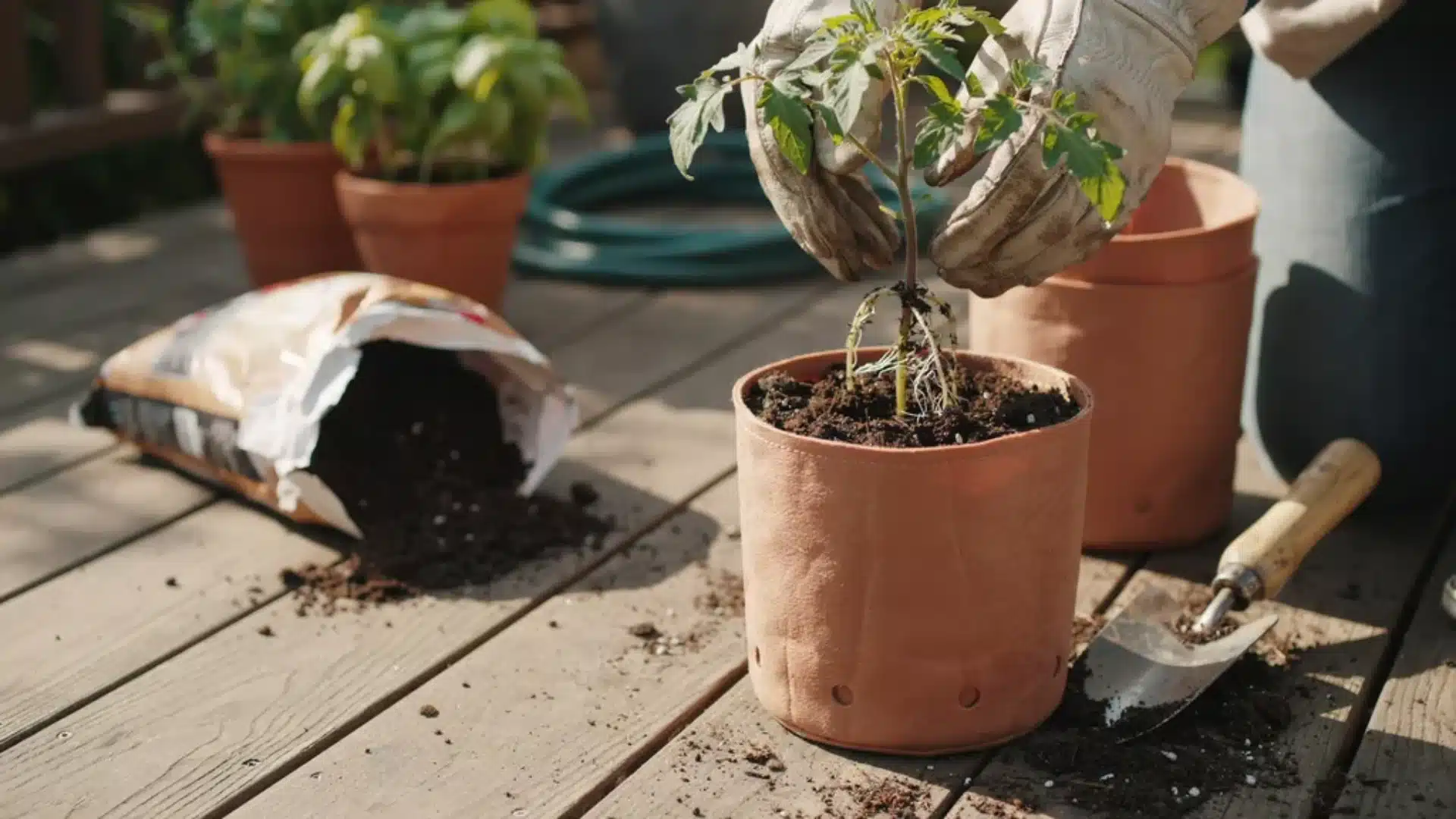
The two-thirds rule does not change in a container; what changes is the pot. Determinate and compact varieties need a pot at least 12 inches deep, while indeterminate and vining types want 20 to 22 inches.
Drainage holes are non-negotiable. Waterlogged soil gives you root rot and disease, and there’s no fixing that once it starts.
Use a quality potting mix, never garden soil. Garden soil is too dense for a pot; it packs down around the roots and stops them from developing.
When you’ve got a tall transplant and a deep pot, coil the root ball at the bottom, run the long stem up along the inside wall of the container, and fill with potting mix. The stem roots the whole way along, and the plant straightens itself out as it grows.
When you’ve got a tall transplant and a deep pot, the coiling trick I use for growing tomatoes in containers works well here too.
Planting Depth for Tomato Seeds
Seeds play by completely different rules, so do not get clever here. Sow them 1/4 inch deep, no deeper, and use a fine seed-starting mix rather than heavy garden soil.
If you plant a tomato seed too deep, it may simply run out of energy before it reaches the surface. All it needs is a light covering of mix and steady moisture.
For germination, you want soil between 70 and 80°F, and you’ll start indoors 6 to 8 weeks before your last frost date.
When your seedlings hit 6 to 10 inches tall with two or three sets of true leaves, they are ready to go outside. That’s when the two-thirds rule takes over.
Planting Depth by Tomato Type
Determinate (bush): These grow to a set height, usually 3 to 4 feet, then stop and set their fruit in one concentrated window. Raised bed depth of 12 to 16 inches works. A 12-inch container is your floor, not your goal.
Indeterminate (vining): These keep growing all season and get seriously tall. Think Brandywine, Black Krim, Cherokee Purple. They’ve got vigorous root systems and they respond especially well to deep planting. Give them 18 to 24 inches of bed depth, or a container no shallower than 20 inches.
Cherry tomatoes: Lighter plants with smaller root systems. Same two-thirds rule at transplant time, and they get the same stability payoff.
Those indeterminate vines put on weight fast, so getting your stakes in early matters just as much as getting your depth right.
Six Mistakes to Avoid
Planting too shallow: Skip the two-thirds rule and you’ve got fewer roots and a weaker plant from day one.
Cold soil: Below 60°F at planting depth, root development stalls and your whole season runs late.
Leaving leaves on the buried stem: They rot underground and invite soil-borne disease.
Garden soil in containers: Too dense, compacts around the roots, blocks water and oxygen.
A raised bed under 12 inches: Restricted roots, stressed plants, miserable August.
Staking after trench planting: Very common, very damaging. Supports go in first.
Get the Depth Right, and the Rest Gets Easier
Depth is one of the simplest levers we’ve got for a bigger harvest, and it costs you nothing but a deeper hole.
Bury two-thirds, strip the leaves off the buried stem, wait for 60°F soil, and match your bed or container depth to the variety you’re growing. Vertical or trench, you’re after the same thing: more roots, more stability, more tomatoes.
Now I want to hear from you. Which method do you swear by? Drop it in the comments.
Frequently Asked Questions
Can tomatoes be planted too deep?
Essentially, no. Those tiny hairs along the stem keep turning into roots, so the more stem you bury, the bigger and stronger the root system you end up with.
Can you trim a tomato plant that gets too tall?
Yes, absolutely.
What does putting an egg under a tomato plant do?
A whole raw egg placed in the planting hole breaks down slowly and acts as a slow-release fertilizer.