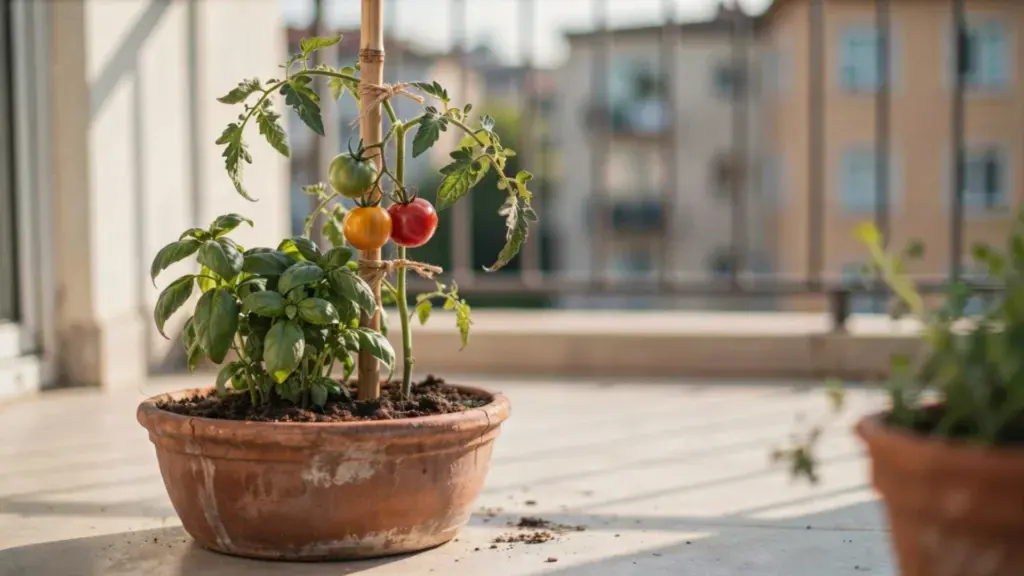
I get why gardeners get excited about tomato companion plants. You read a chart, tuck in some basil, scatter a few marigolds, and wait for magic.
Then the aphids show up anyway. Here is the truth: companion planting works, but not in the way most guides suggest.
The right plant neighbors protect your tomatoes, fill space in the bed, and bring in useful insects.
The wrong ones quietly compete for nutrients, spread disease, or stunt your crop. I cover both sides clearly in this post, no guesswork, no myths.
What is Companion Planting for Tomatoes?
Companion planting means growing specific plants near your tomatoes so each one supports the other. This method has existed for thousands of years.
Indigenous farmers used the Three Sisters method, corn, beans, and squash, where each plant served a purpose for the others.
In my experience, the right tomato neighbors can do a few practical things:
- Attract insects that eat common pests
- Draw pests away from tomatoes and toward themselves (trap cropping)
- Attract pollinators that improve fruit set
- Fill the space in the bed without competing for nutrients
One thing I want to get clear upfront: companion planting does not replace good care. Tomatoes still need full sun, consistent water, correct spacing, and healthy soil.
A crowded bed with poor airflow will still struggle, even with the “right” companions around it.
The most useful companion planting setups I have tried stay simple. A few well-placed plants around the edges of a bed do more than a tightly packed mix of a dozen species in the center.
Best Tomato Companion Plants
Not every plant on a companion planting chart earns its spot. These have real, practical benefits backed by evidence or consistent results in my garden.
Herbs That Work Well With Tomatoes
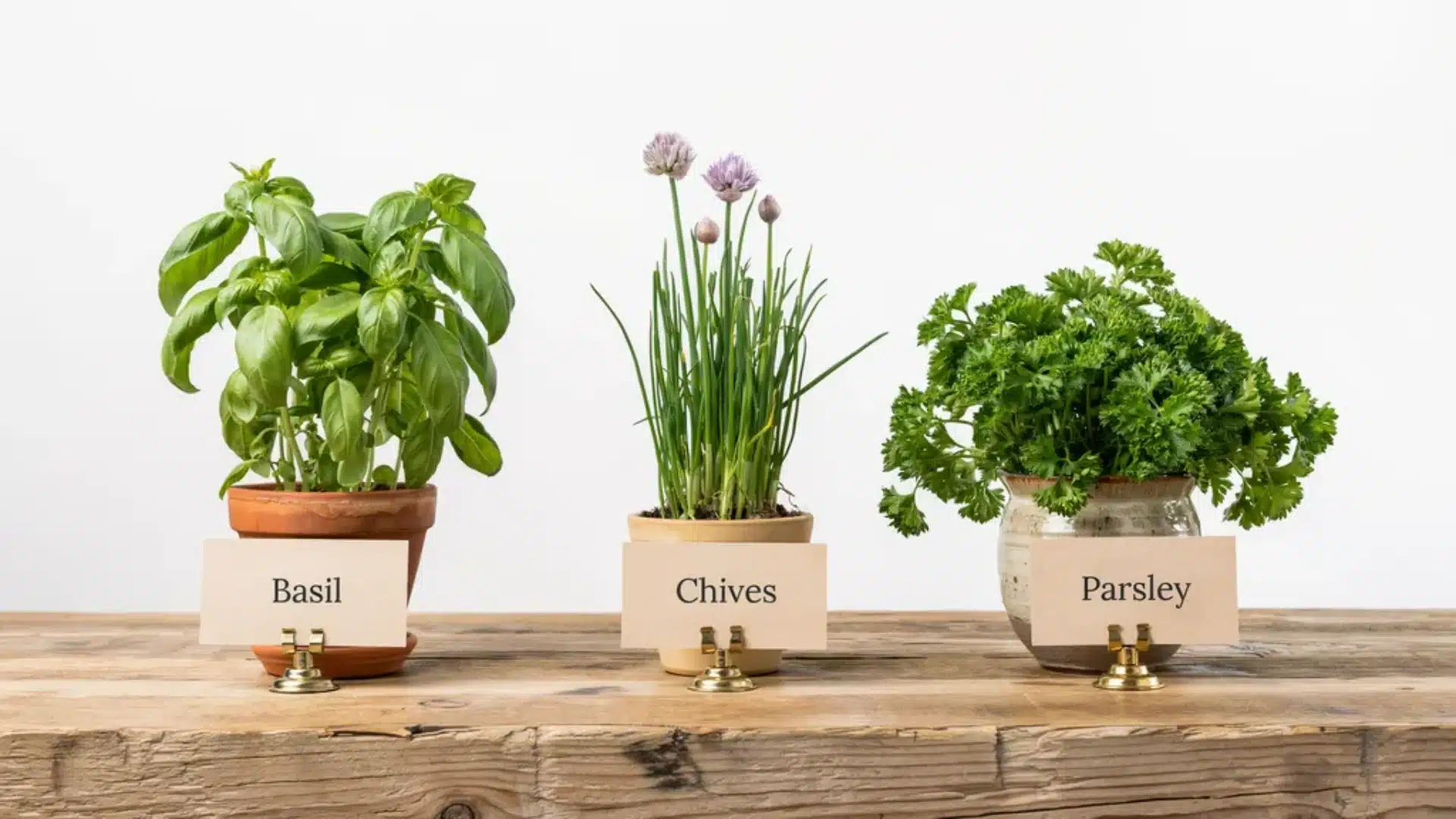
1. Basil is the most reliable herb I grow with tomatoes. A 2024 study from Kagoshima University found that volatile compounds released by basil plants actively trigger tomato defense responses before pest damage even occurs.
Basil also deters hawk moths, which lay eggs that hatch into tomato hornworms. I plant basil in clusters near the base of tomato plants; proximity matters here. A single basil plant in a far corner of the garden does very little.
2. Chives have a strong scent that discourages aphids and whiteflies. They are compact, easy to grow, and work well tucked into gaps between tomato plants without competing for light.
3. Parsley attracts predatory insects that feed on common tomato pests. It also stays small enough to fit under the canopy of a mature tomato plant.
Flowers That Help Tomatoes
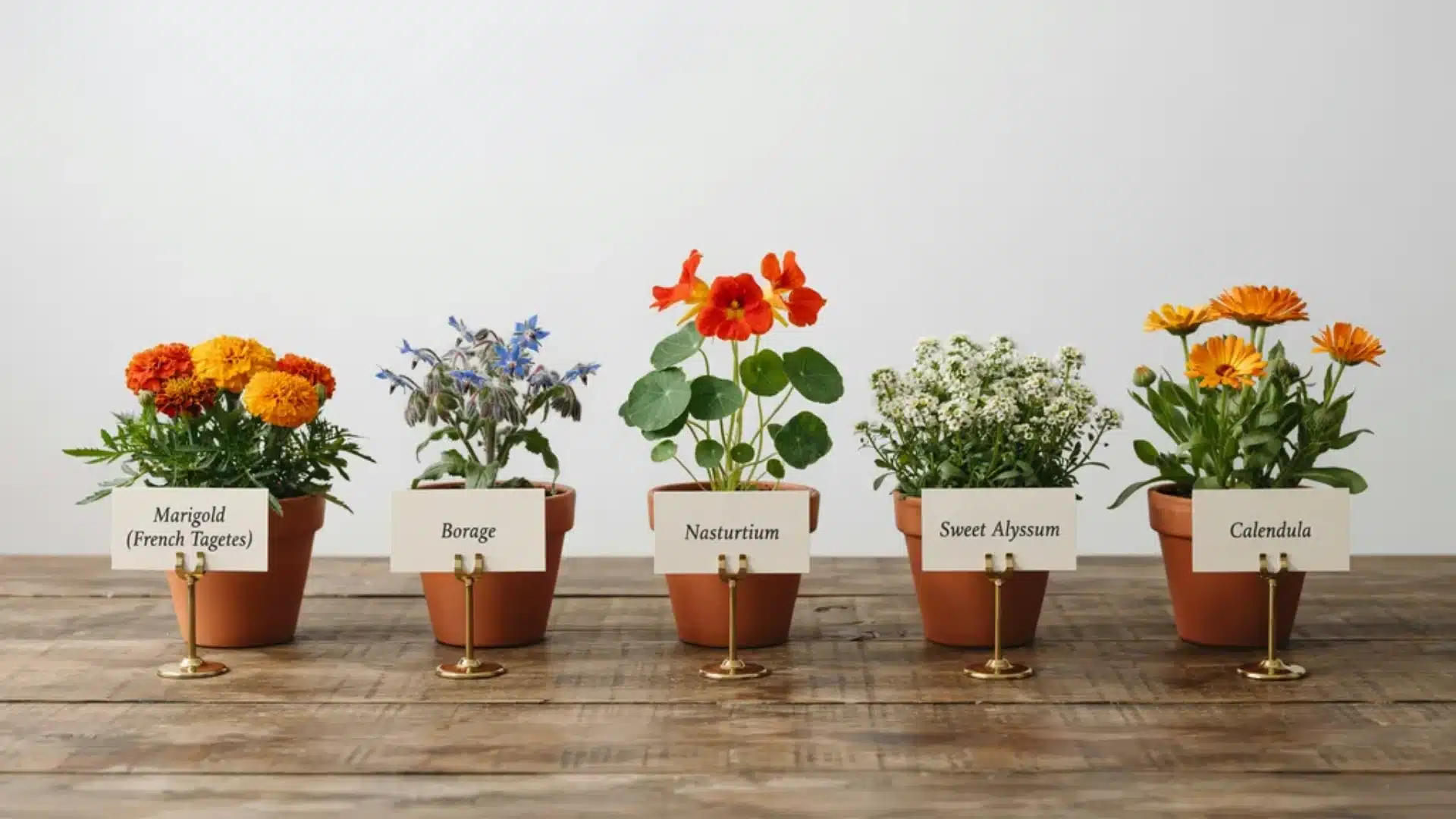
4. Marigolds (French Tagetes varieties) are the most recommended tomato companion flower and the most misunderstood.
A few marigolds scattered around the bed will not create a pest shield. What they do well is attract beneficial hoverflies, whose larvae eat aphids.
Their root compounds can also suppress soil nematodes over a full growing season when planted consistently. I plant them along the border of the tomato bed, not just as random single plants.
5. Borage attracts a parasitoid, Aphidius colemani, that keeps aphid populations under control.
It also deters tomato hornworms and keeps pollinators coming through the bed. Borage grows large, so I leave plenty of space between borage and my tomato plants.
6. Nasturtiums are one of the most useful trap crops I grow. Aphids strongly prefer nasturtiums over tomatoes.
Planting nasturtiums at the edges of the bed draws aphids away from the crop and concentrates them where I can deal with them.
7. Sweet Alyssum is a low-growing flower that attracts parasitic wasps and predatory beetles.
It also forms a living mulch at the base of tomato plants, suppressing weeds and holding soil moisture. I find it especially useful in raised beds and containers.
8. Calendula attracts pollinators and beneficial insects that improve fruit set on tomato plants. It is a reliable, low-maintenance companion I keep coming back to every season.
Vegetables That Grow Well Near Tomatoes
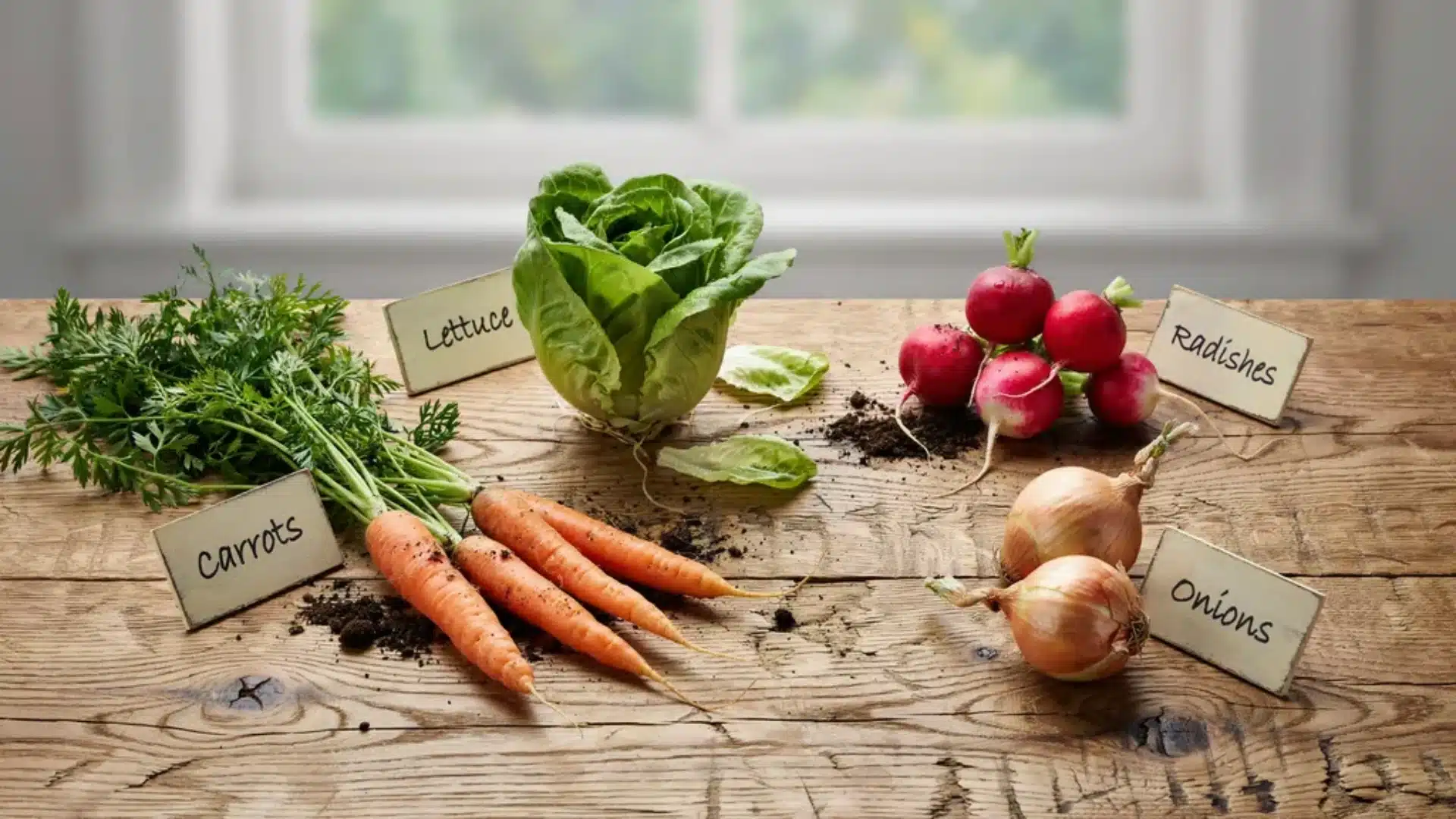
9. Carrots stay underground and do not compete with tomatoes for light. They break up soil near tomato roots, which improves drainage and root access.
They are one of the few vegetables I grow in the same bed as tomatoes without any issues.
10. Lettuce and Spinach are shade-tolerant and grow well under the canopy of larger tomato plants.
They use the space that would otherwise sit empty once tomatoes grow tall. They do not compete for the same nutrients.
11. Radishes grow fast and fill gaps in the bed. They can deter some soil insects, and I harvest them long before tomatoes need the space.
12. Onions and Garlic have a strong scent that discourages many common pests.
One exception I always flag: if your garden has a thrips problem, avoid these. Both are also susceptible to thrips, and planting them near tomatoes can concentrate the problem.
What Not to Plant With Tomatoes
In my experience, knowing what not to plant with tomatoes matters just as much as knowing what helps. These plants either compete for the same resources, spread shared diseases, or actively harm tomato growth.
Plants That Compete for Nutrients
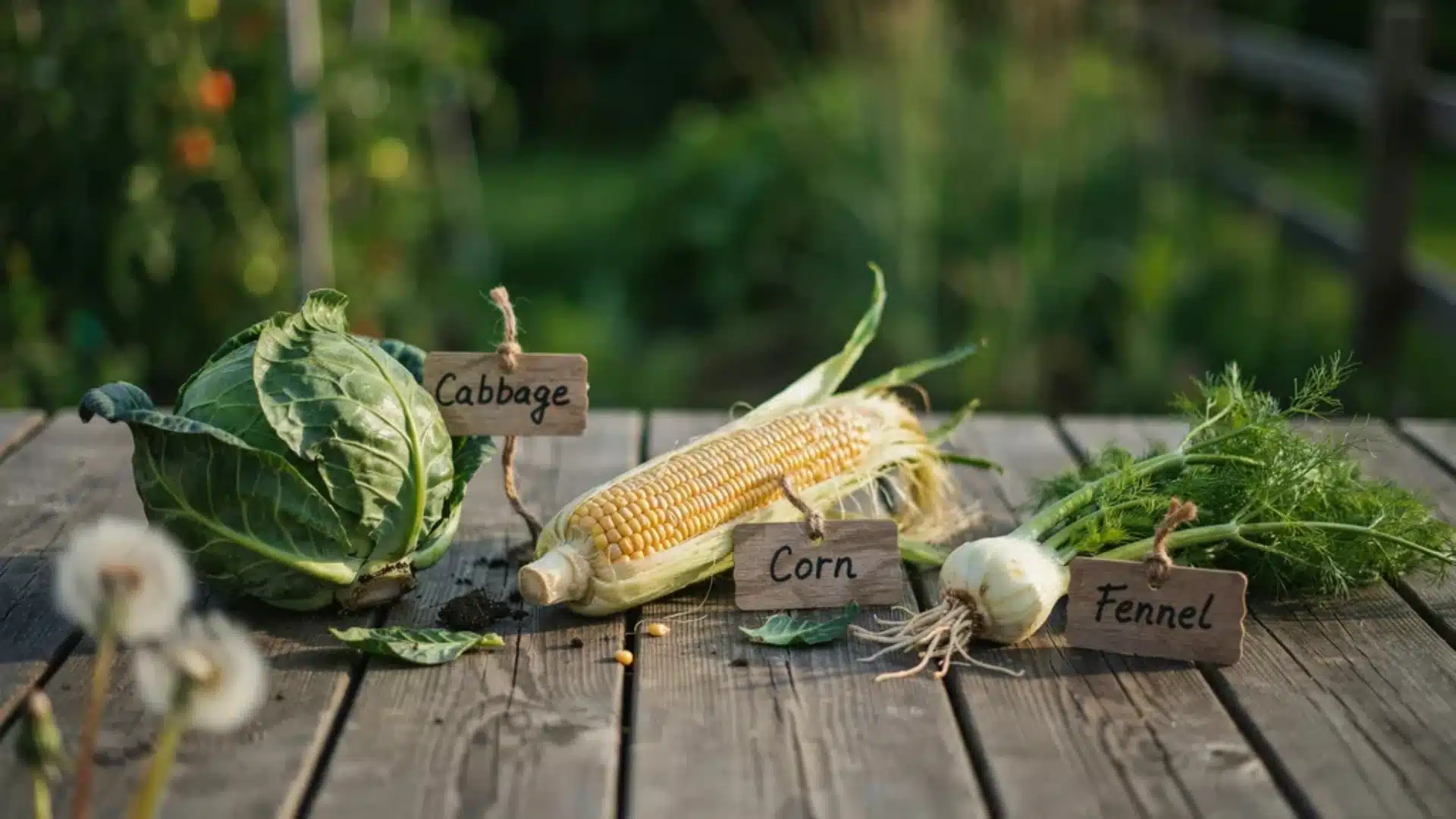
1. Brassicas: cabbage, broccoli, cauliflower, kale, and Brussels sprouts are heavy feeders.
They pull the same nutrients from the soil that tomatoes need. When planted nearby, one plant suffers. It is usually the tomato. You may end up with no buds, no fruit, and a wasted growing season.
2. Corn needs deep roots and consumes large amounts of soil nutrients. It also grows tall enough to shade out sun-loving tomatoes.
Corn and tomatoes share the same pest: the corn earworm, also known as the tomato fruitworm. An infestation can damage both crops at once.
3. Fennel is one of the worst neighbors I have come across for almost any vegetable, including tomatoes. It releases natural chemicals into the soil that suppress nearby plant growth.
Even at a distance, fennel competes for nutrients and space. I keep it in a completely separate part of my garden.
Plants That Spread Disease to Tomatoes
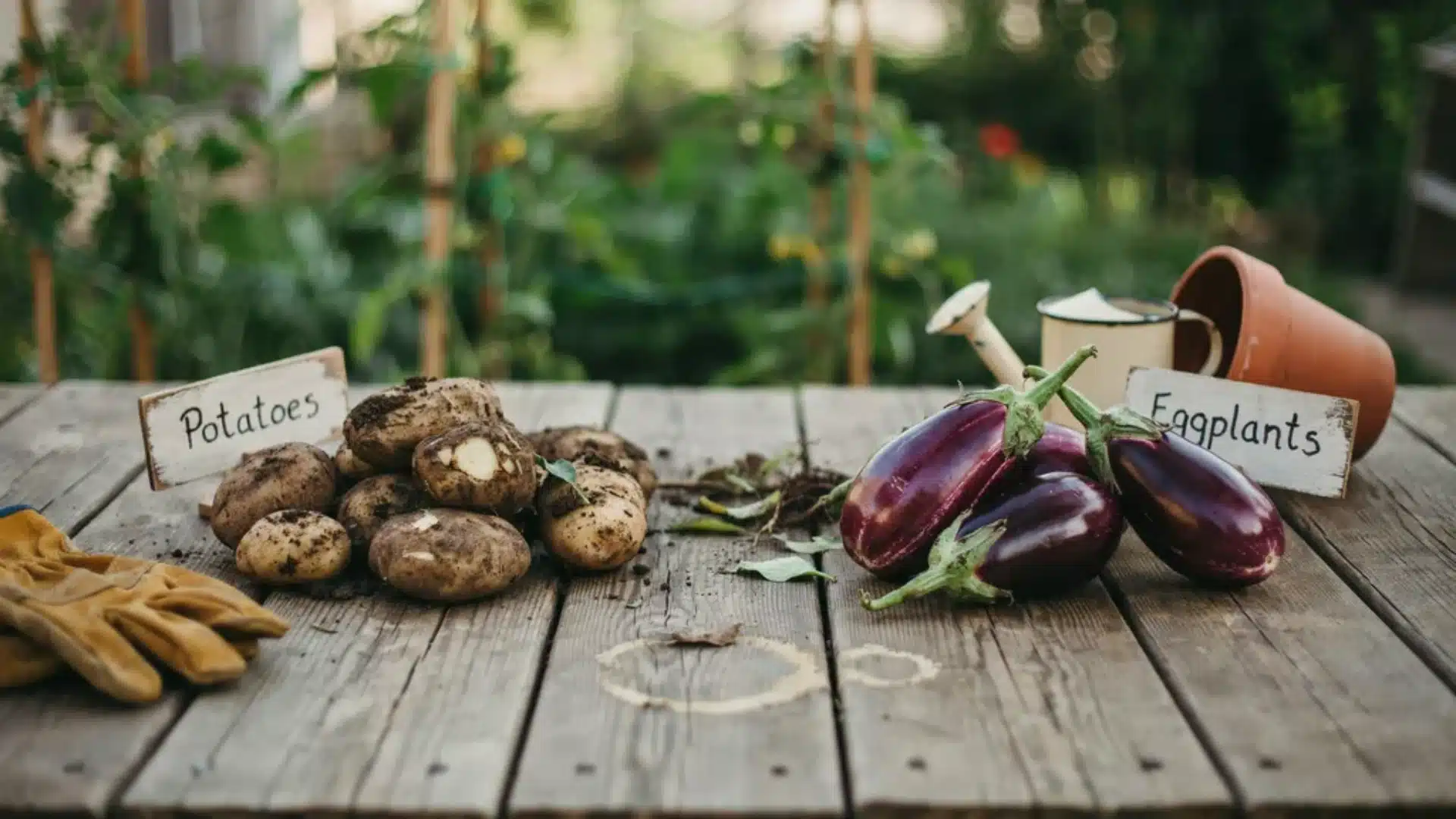
4. Potatoes belong to the same plant family as tomatoes, the nightshade family (Solanaceae). Both are highly vulnerable to late blight.
Growing them close together makes a disease outbreak far more likely, because the infection moves easily between plants of the same family.
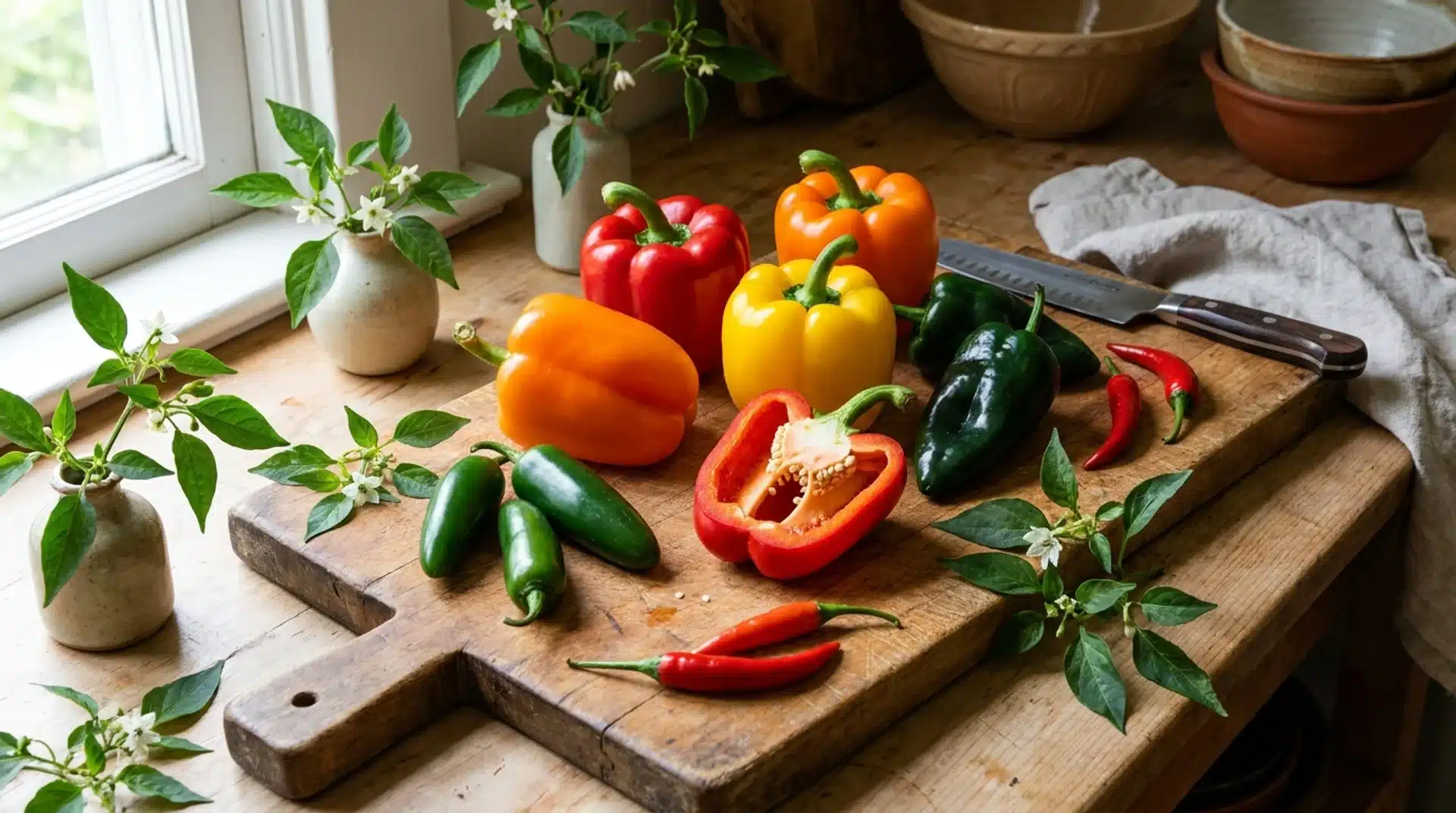
5. Eggplants and Peppers are also members of the nightshade family. When crowded near tomatoes, they raise the risk of shared blight and wilt diseases.
All three are heavy feeders as well. Overlapping root systems under crowded conditions lead to stress and reduced fruit on all three plants. I give them separate beds or leave generous space between them.
Plants That Damage Tomato Roots or Growth
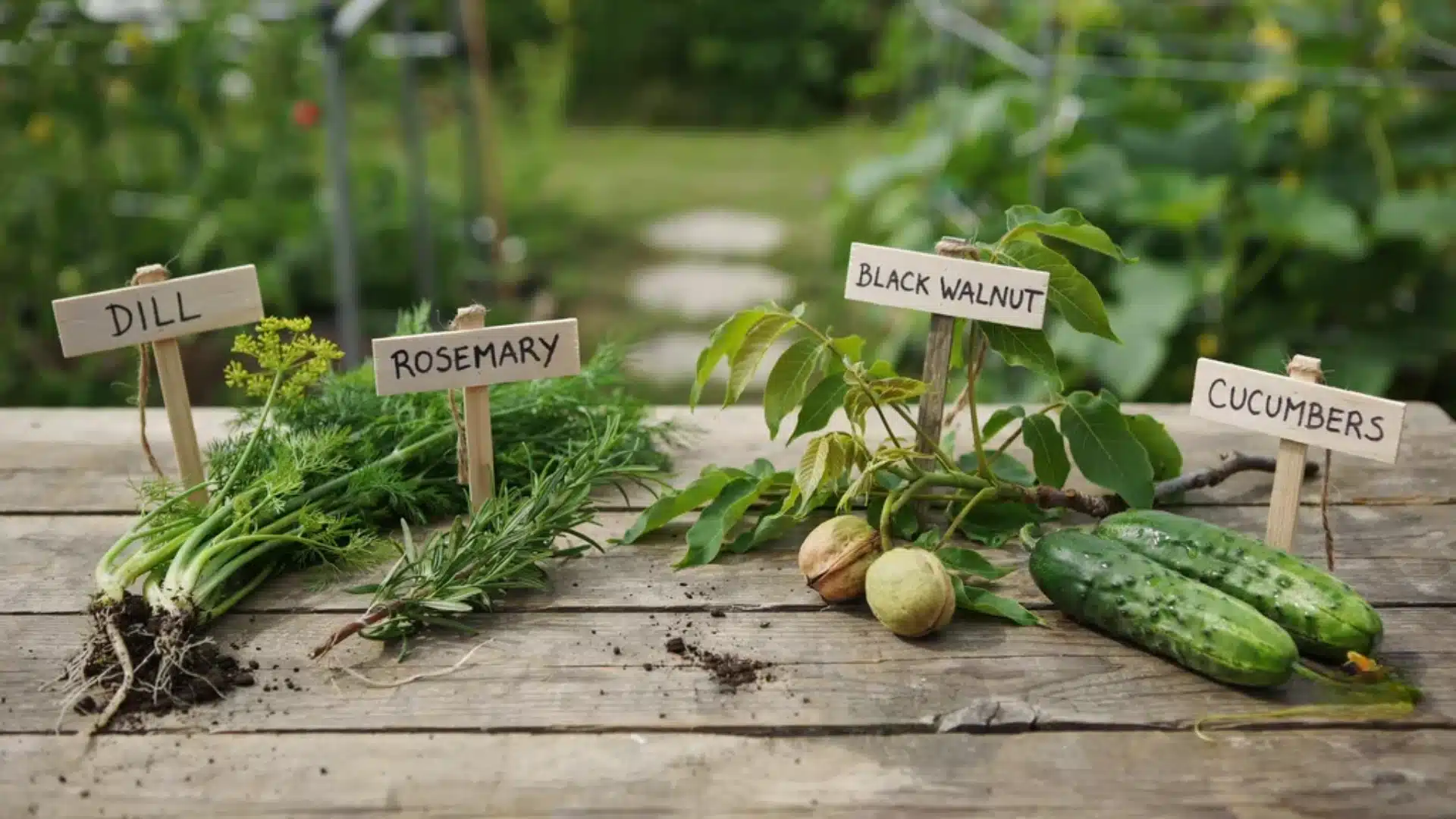
6. Mature Dill is a conditional bad companion, and this is the nuance most gardening charts skip. Young dill can help deter some pest insects early in the season.
Once dill matures, it releases compounds that slow tomato growth and can damage tomato roots. If you want to grow dill, harvest it while it is still young, or grow it in a separate container away from your tomatoes.
7. Rosemary needs very different growing conditions compared to tomatoes. One plant will always be in suboptimal conditions when these two are grown together, and the one that suffers is usually the tomato.
8. Black Walnut Trees are in a different category entirely. They release a chemical called juglone directly into the soil. Juglone is toxic to tomato plants.
If there is a black walnut tree in your yard, keep your tomato bed well away from its root zone, which extends far beyond the canopy of the tree.
9. Cucumbers require full sun and heat, just like tomatoes. Growing them together creates conditions where both are prone to mildew at the same time, and the combination also attracts spider mites.
When either crop shows signs of mildew, the other is at immediate risk.
Companion Planting by Tomato Type
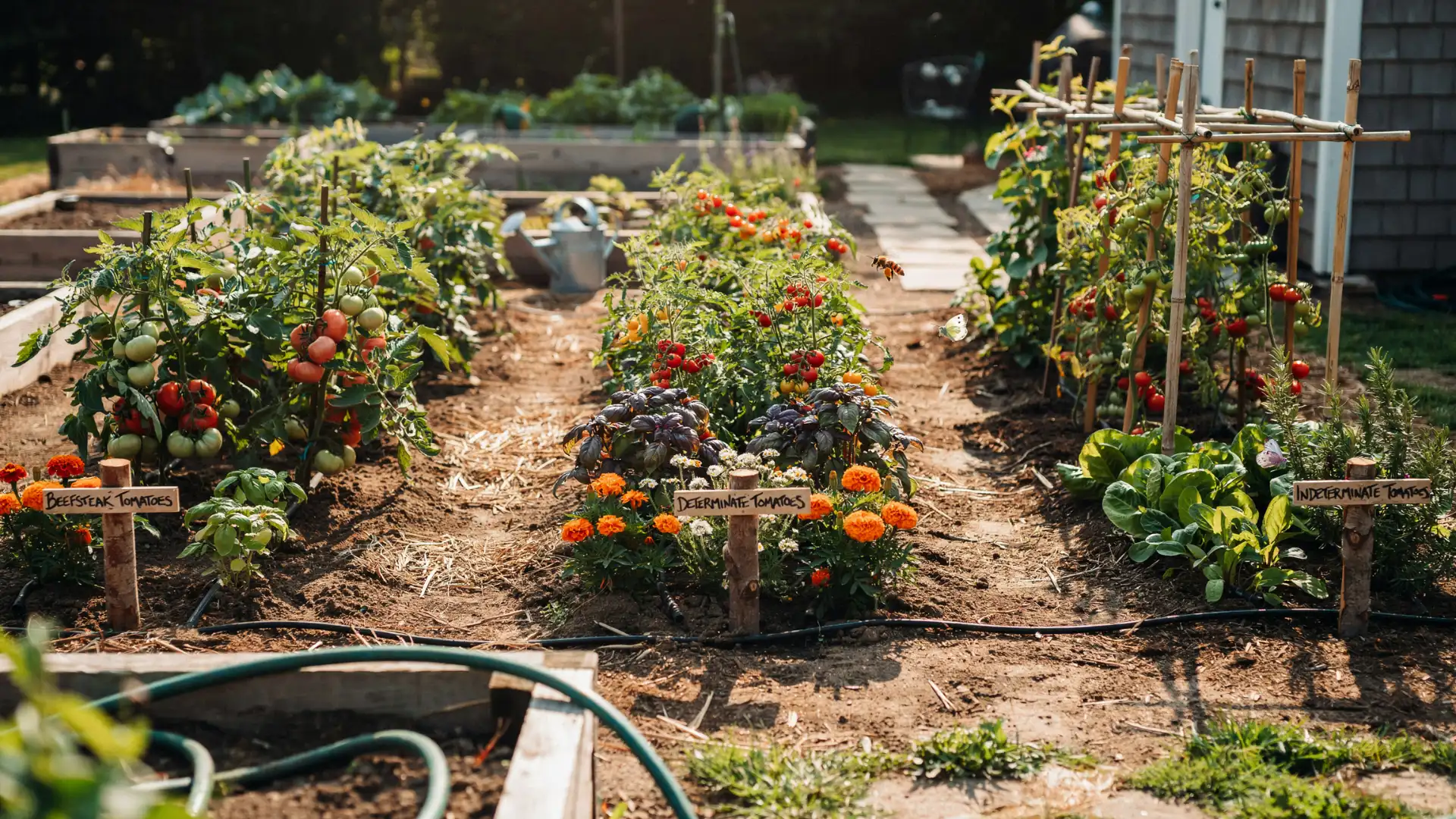
The variety of tomato you grow affects how much space companions have and how close they can get.
Cherry tomatoes allow closer companion planting than determinate or indeterminate beefsteak varieties, simply because their canopy and root zone stay smaller.
1. Beefsteak tomatoes demand more personal space. I use only low-growing companions placed at the outer edges of the bed. Avoid anything that competes for nutrients or blocks light.
2. Determinate varieties stop growing at a set height. They work well with marigolds, basil, and sweet alyssum planted around the base without risk of being overtaken.
3. Indeterminate varieties keep growing tall throughout the season. I position sun-loving companions to the south or east of the plants for morning light.
Shade-tolerant greens like lettuce or spinach go on the north side where the tomato canopy provides natural shade.
Companions establish best when your tomatoes go in at the right time. Tomato planting timing varies by region and variety, and a late start means companions have less time to take hold before summer heat arrives.
Companion Planting in Raised Beds
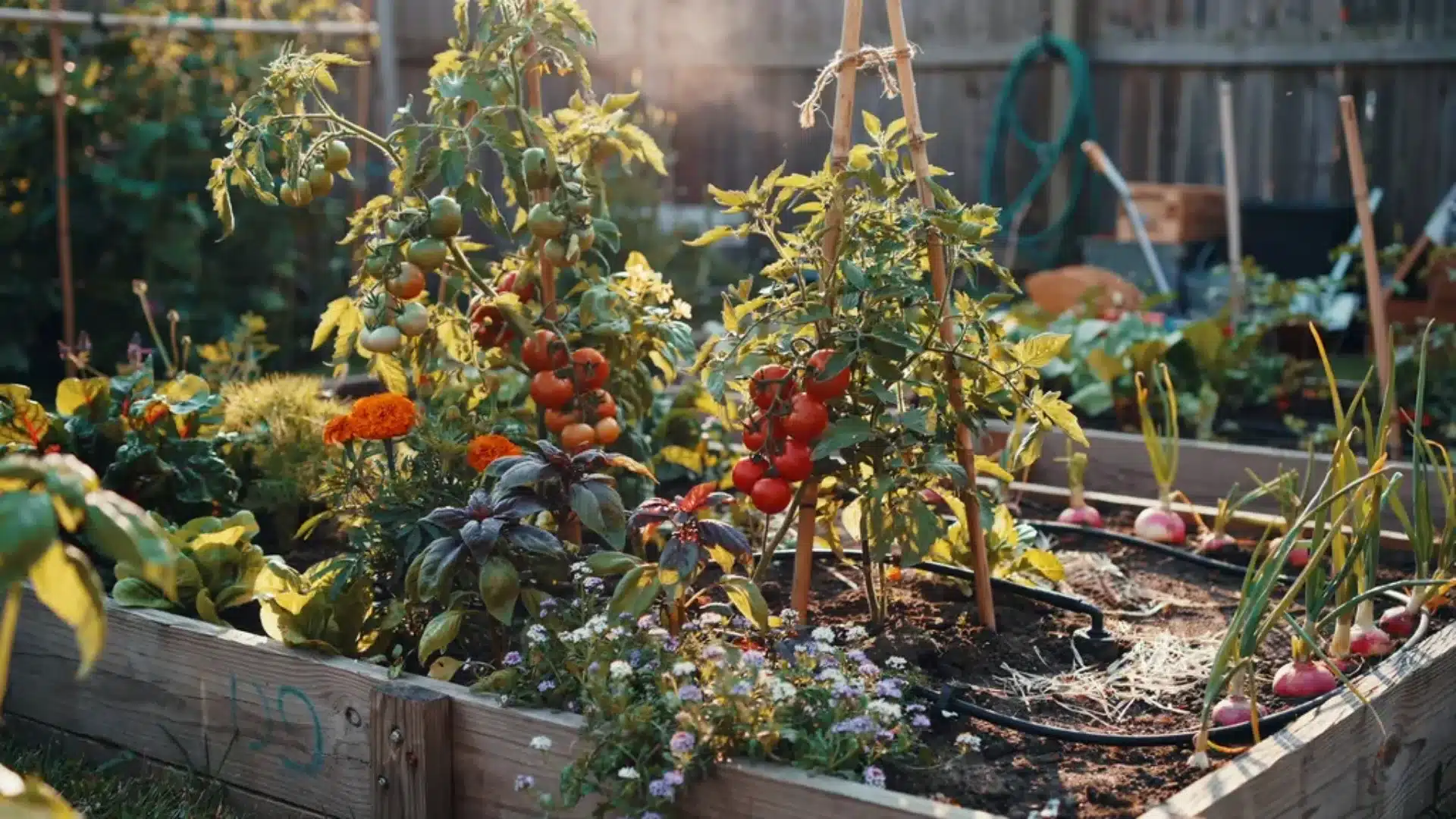
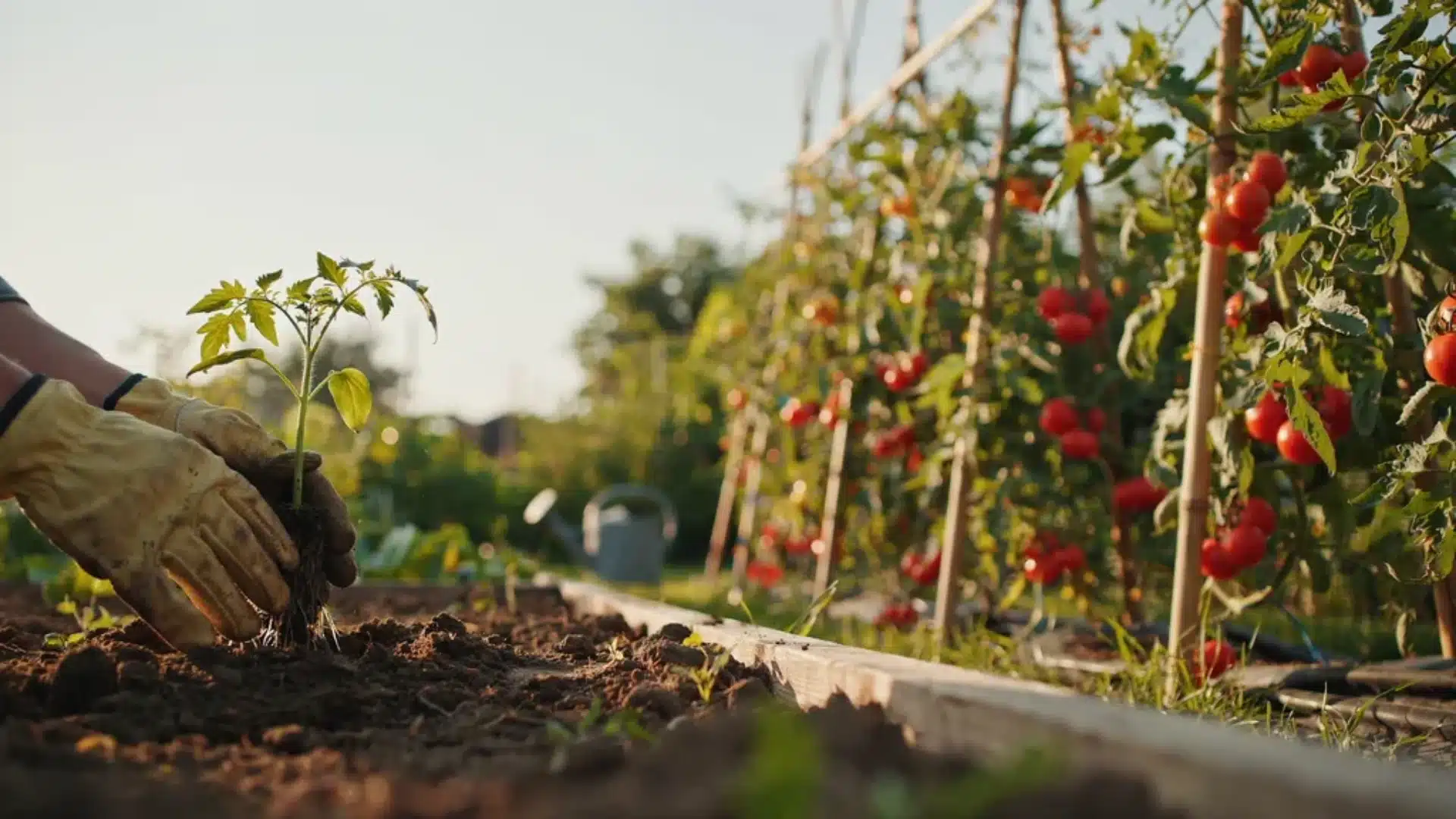
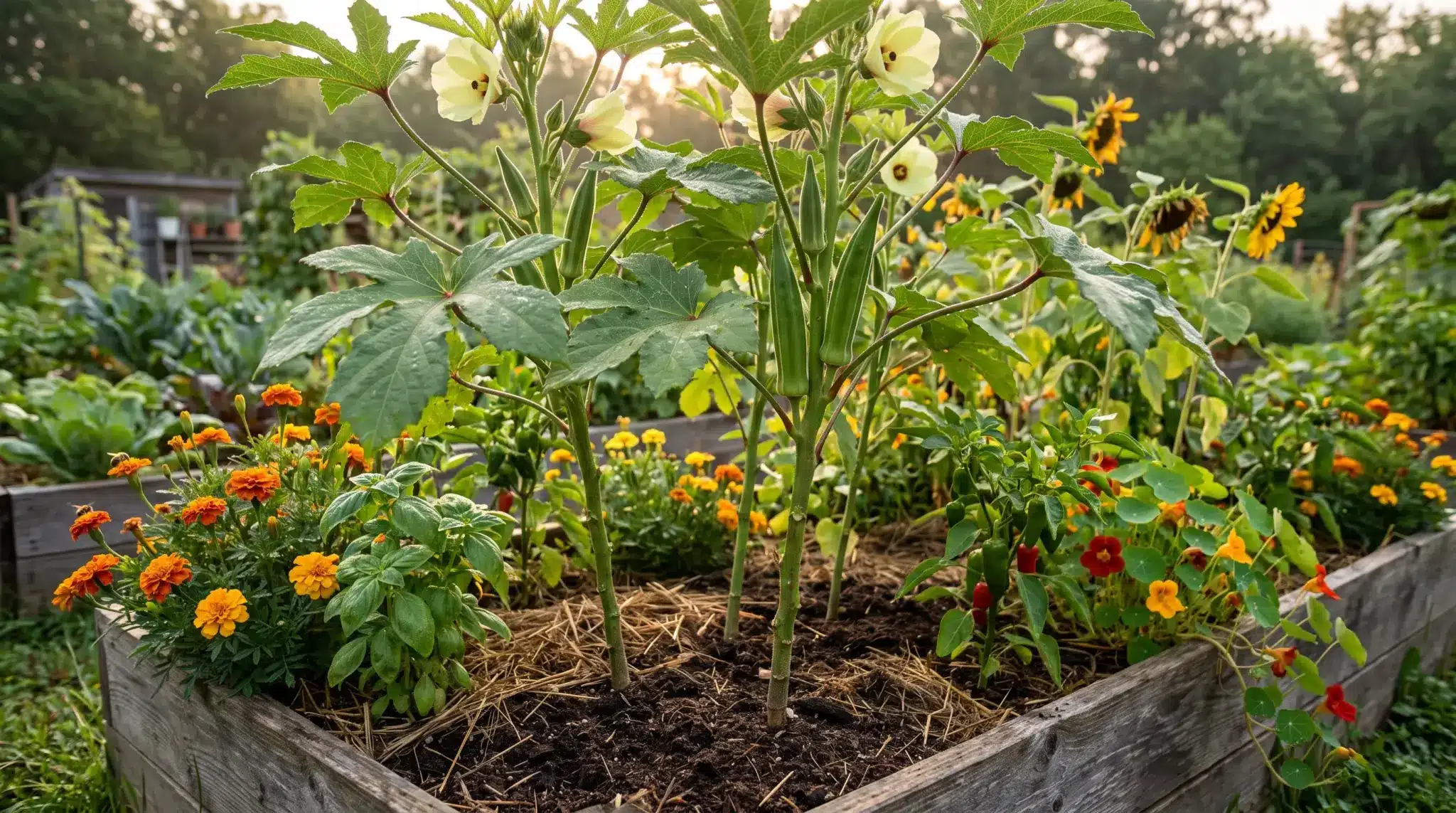
Raised beds are one of my favorite setups for growing tomatoes with companions. The soil is controlled, drainage is better, and I can plan the layout precisely.
Most gardeners who grow tomatoes in raised beds start seeds indoors 6 to 8 weeks before the last frost, which also gives companion flower seedlings time to be started alongside the tomato seeds.
A few things I keep in mind:
- Raised beds dry out faster than in-ground gardens. When companions fill the bed, moisture competition increases. I check soil moisture often.
- I plant companions along the edges or in gaps between tomato plants while the tomatoes are still young. Once the canopy fills in, there is less usable light for companions in the center.
- Space indeterminate tomatoes 18 to 24 inches apart. Determinate types need 12 to 18 inches. Allow at least 6 to 8 inches between tomato plants and their companions.
- The best companions for raised beds I keep coming back to are basil, chives, onions, sweet alyssum, marigolds, lettuce, spinach, and radishes. All stay compact and do not overcrowd the center.
I avoid packing too many plants into the center of a raised bed. Poor airflow in a tight space promotes fungal disease, which spreads fast in a contained bed.
Once the canopy fills in and leaves start overlapping, pruning tomato plants regularly opens up airflow and lowers the risk of fungal disease spreading between plants.
Companion Planting in Containers
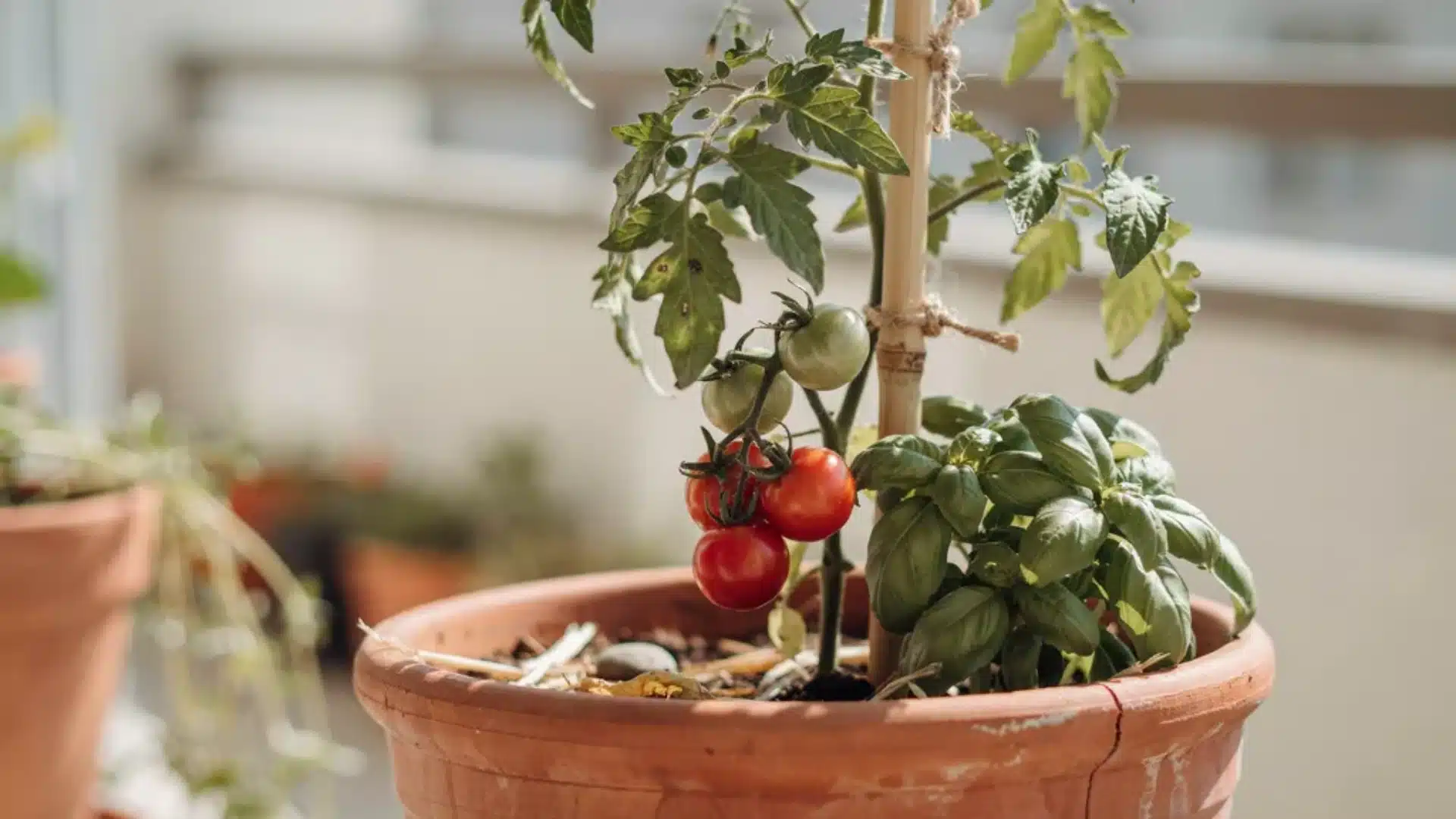
Container companion planting is something I keep simple. Tomatoes develop large root systems, and a crowded container dries out fast during summer heat.
I use a pot that is at least 14 inches wide. One tomato plant per container works best.
At the base, I add:
- Basil (most useful, proven pest defense benefits)
- Chives (compact, good pest deterrent)
- Small parsley plants
- Low-growing sweet alyssum
I skip fennel, corn, or any large plant in the same container. They will compete directly with the tomato, and one of them will lose.
Conclusion
Tomato companion plants work best when you keep them practical. Basil, marigolds, nasturtiums, and borage offer real, testable benefits.
Fennel, potatoes, brassicas, and mature dill cause real problems. The plants in between are worth trying in your own setup. What works in my garden does not always work in another.
The goal is a bed where your tomatoes have the space, light, and soil they need, with a few well-chosen neighbors that support rather than compete.
Try one or two new companions this season and see what you get. Which pairing has worked best in your garden? Leave a comment below.
Frequently Asked Questions
How Many Tomato Plants to Put in A 5-Gallon Bucket?
You should only put one tomato plant per 5-gallon bucket.
Can You Plant Tomatoes and Peppers Together?
Yes, you can absolutely plant tomatoes and peppers together.
Why Should You Sprinkle Baking Soda Around Your Tomato Plants?
It reduces soil acidity for sweeter fruit, deters pests such as slugs and aphids, and prevents fungal diseases such as blight and powdery mildew.