I brought home my first Cape sundew to deal with a fungus gnat problem. Then I watered it from the tap, and the fungus gnat problem was gone within weeks. That mistake shaped most of this post on sundew plant care.
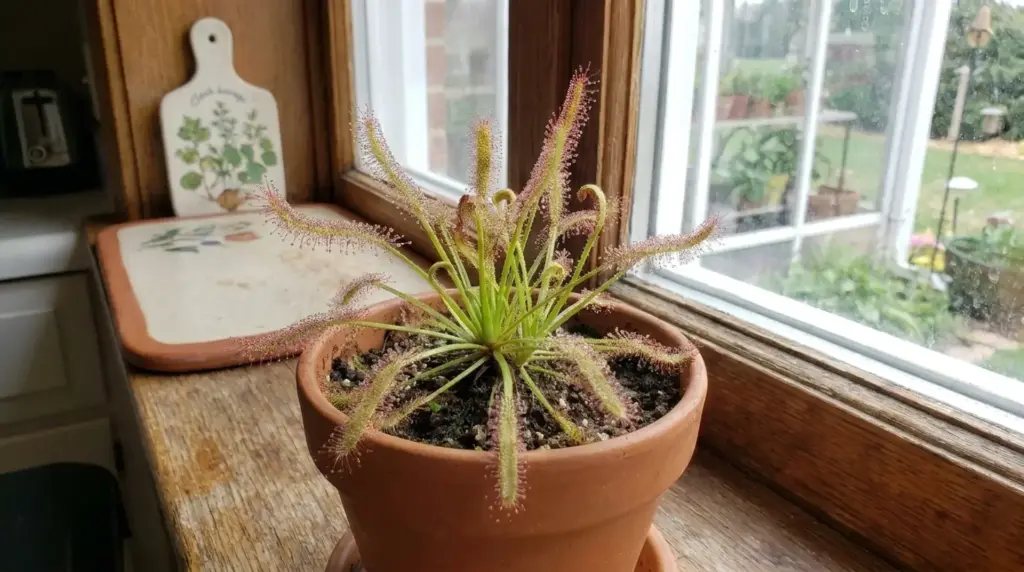
Commonly called a ‘Cape Sundew’, Drosera capensis is a carnivorous plant, which means it traps insects and uses them as fertilizer.
Sticky droplets form on the hair-like tentacles of its leaves, and once an insect is stuck, the leaf rolls around it to digest it.
There are many species of Drosera, but D. capensis is one of the easiest to grow and the one you will most often find for sale. In the wild, it lives in open bogs, so at home we copy those conditions.
How to Care for Drosera Capensis
Cape sundew care comes down to four things: strong light, mineral-free water, lean soil, and the occasional insect.
1. Light Requirements for Drosera Capensis
Sundews need direct sun for at least 6 hours a day indoors, so use a sunny windowsill. Outdoors, give it full sun to partial shade.
If your sundew isn’t producing dew droplets, it likely needs more sun. It also does best with slightly cooler nights.
2. Watering Tips for Drosera Capensis
Because Drosera grow in wet bogs, the soil should always be damp. The easiest method is to stand the pot in a saucer holding about ½ to 1 inch of distilled, reverse osmosis, or rainwater.
Most carnivorous plants are very sensitive to the minerals in tap water, so use mineral-free water. The growing notes from Kirstenbosch National Botanical Garden call for a shallow saucer that stays filled.
3. The Best Soil for Drosera Capensis
Copy the nutrient-poor bog where the plant grows. A mix of peat moss with sand, perlite, or pumice works well, and the plant tolerates a range of soils as long as they stay low in nutrients.
For a typical potted Cape sundew watered in a shallow tray, 4:1 peat to perlite is the safer, more forgiving choice.
4. Feeding Drosera Capensis
A sundew that can catch flies, gnats, fruit flies, or mosquitoes feeds itself and needs no supplemental insects or fertilizer. Indoors, a plant that catches nothing can use a few tiny insects, such as wingless fruit flies, a few times a month.
If gnats are the reason you bought it, it also helps to keep fungus gnats in check with good watering habits for your other plants.

Troubleshooting Cape Sundew Problems
A sundew shows trouble in its leaves first, and most fixes come back to light or water.
No Dew: This usually means too little direct sun, so move the pot to a brighter window. Dew also pauses after repotting or after curious fingers touch the leaves (yes, even one poke to test the stickiness), and new leaves bring it back.
Crispy or Drooping Leaves: The soil is most likely too dry, or the air needs more humidity. Refill the saucer, and Kirstenbosch notes that steady moisture revives drooping plants.
Black Leaves: New leaves that blacken quickly may point to minerals in your water, so switch to distilled water. Older leaves die off now and then, and young shoots usually grow from the base, so wait a few weeks before tossing the plant.
Stunted New Growth: Aphids, mealybugs, and thrips can deform new leaves. Remove them by hand, and never use a soap-based insecticide.
How to Style Drosera Capensis
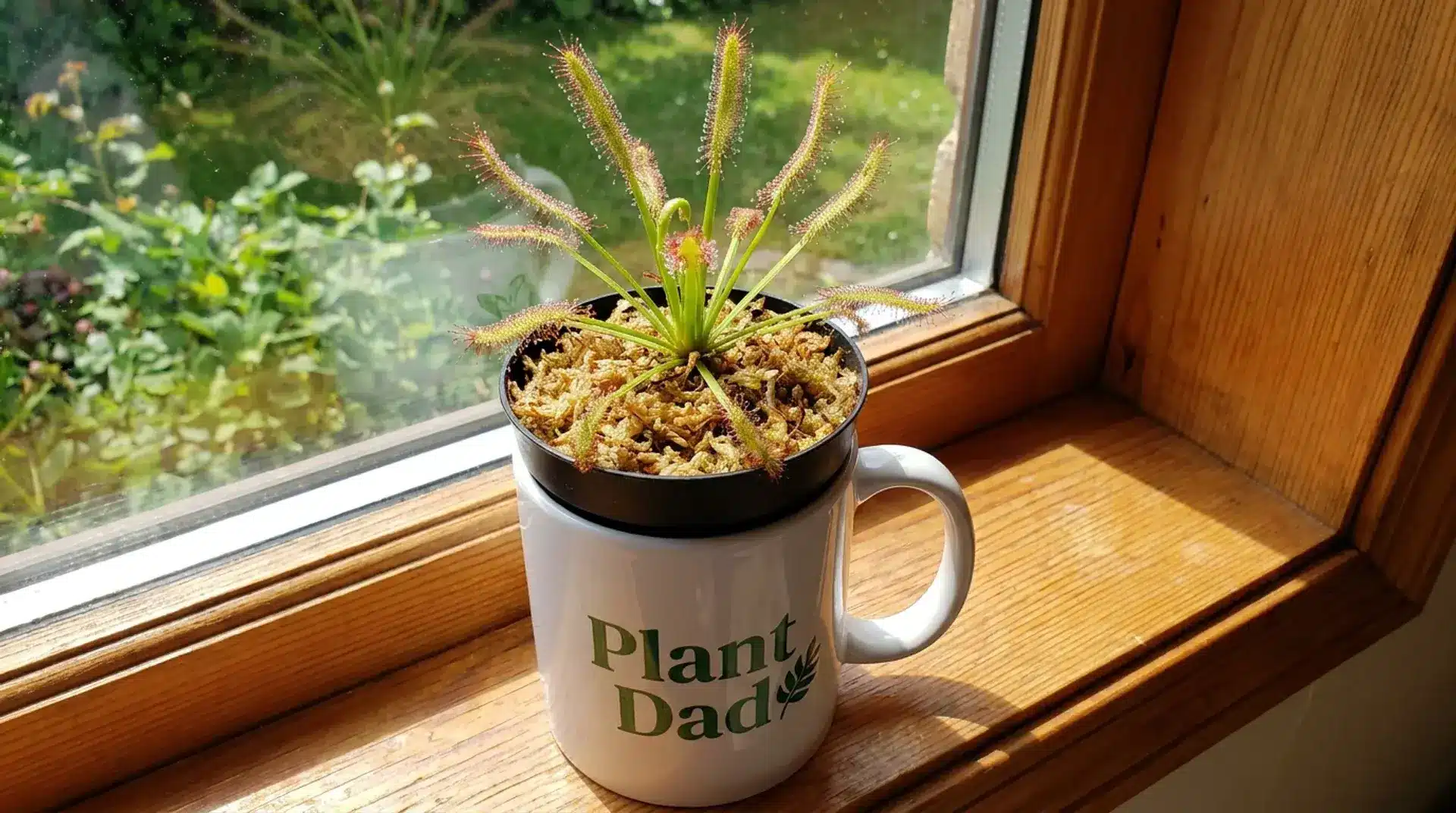
A sundew sits in standing water, so the tray becomes part of the look. We love them grouped with other carnivorous plants that share the same needs, set together in one cute tray.
Grouping works because most carnivorous plants want the same direct sun and mineral-free water, so one tray on one sunny sill covers them all.
A pot keeps a Cape sundew right where you put it. It has naturalized in California, so I leave mine in its tray and never plant it out in the yard.
Is Drosera Capensis Pet-Safe?
Sundews are generally considered non-toxic to cats and dogs, but as always, monitor your pets if they’ve ingested plants, just in case.
You can double-check any plant on the ASPCA’s plant list.
Other Sundews and Dormancy
Drosera is a big genus, and the way a sundew handles winter depends on where its type comes from.
Sundew Type | Dormancy | What to Do |
|---|---|---|
Tropical (including Cape sundew) | No dormancy. Grows year-round | Maintain the same care routine throughout the year. |
Temperate | Winter dormancy. A winter bud forms in late fall. | Keep the soil evenly moist but slightly drier than usual. Some types require winter freezes. |
Pygmy | Brief summer rest during hot weather; dormancy is not essential. | Maintain the same care routine. |
Summer-dormant types | Summer dormancy. | Keep the soil completely dry during the dormant period. |
A Cape sundew asks for sun, clean water, and a full saucer, and it pays you back in dew and a smaller gnat count. Mine went dewless for a month on tap water, then glistened again after I switched.
A plant that shows its mood in its leaves is easy to read.
Frequently Asked Questions
Are sundews hard to keep alive?
No, most sundews are not hard to keep alive, especially beginner-friendly types like the Cape sundew (Drosera capensis). As long as you avoid common pitfalls related to their unique biology, they grow quite easily.
What is the lifespan of a sundew plant?
Most sundew (Drosera) plants are perennials that can live for several years to decades under proper care, though lifespan varies significantly by species and type.
Do sundews attract mosquitoes?
Sundews do not specifically attract mosquitoes, though they will trap and eat them if they land on the plant. Once a mosquito touches its sticky tentacles, it becomes stuck & the leaf curls around it.