My first peace lily lived in a hallway with almost no windows for two years. It survived. It never once put out a flower.
That is the plant’s whole personality in one story. Peace lily care indoors is not complicated, but almost every problem, drooping leaves, brown tips, a plant that refuses to bloom, traces back to one of a handful of fixable habits.
This guide covers light, watering, humidity, soil, feeding, repotting, and fixes for the most common problems, all worked out on my own plants in a Portland apartment that does not get much direct sun for half the year.
What Is a Peace Lily?
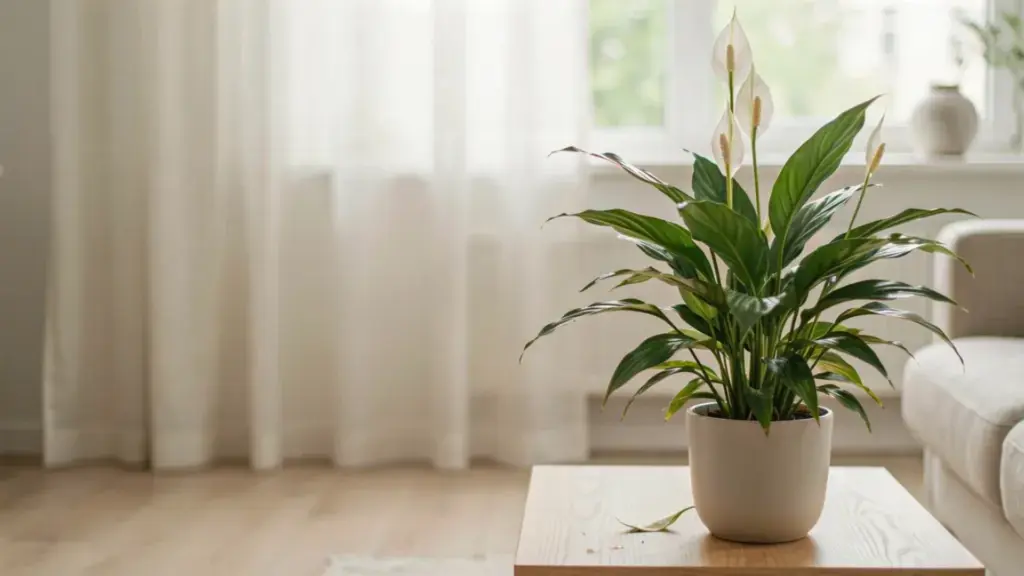
The peace lily (Spathiphyllum) is a tropical plant native to the forest floor of Central and South America.
It grows under a thick tree canopy, where light comes filtered, soil stays consistently moist, and humidity sits high. That native environment explains nearly every care decision below.
It is not a true lily. It belongs to the Araceae family, the same family as caladiums and elephant ears.
Most indoor varieties reach 10 to 16 inches tall. Larger types, like ‘Sensation,’ can grow 4 to 6 feet.
One important note: all parts of the plant contain calcium oxalate crystals. Clemson University’s Cooperative Extension notes that this makes the plant mildly toxic to pets and children if chewed. Keep it out of reach of both.
Peace Lily Light Requirements Indoors
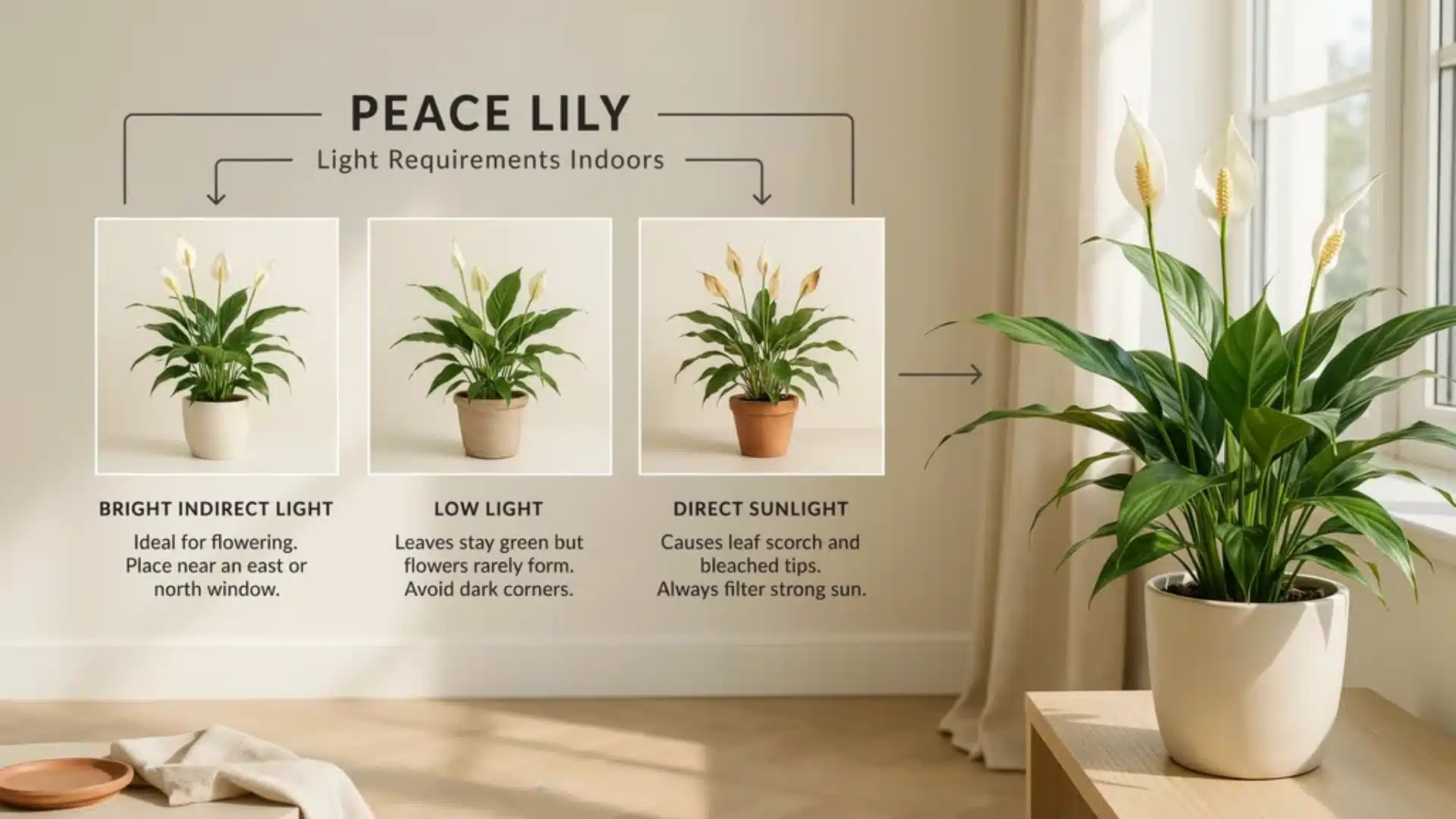
Light is the part of peace lily care indoors that trips up the most owners. Low light will not kill the plant, but it will keep it from flowering.
The best spot: an east-facing window. It gives the plant gentle morning sun without the risk of leaf scorch.
Here is what happens at different light levels:
- Bright indirect light: healthy growth and regular flowers
- Low light: green leaves, few or no flowers
- Direct sun: bleached, papery brown patches
If your plant has not flowered in months, move it closer to a bright window and give it two to three months before judging the result. A south or west-facing window works too, as long as the plant sits a few feet back from the glass.
Also read: Peace Lily Light Requirements: How Much Light Do They Actually Need
How to Water a Peace Lily Indoors
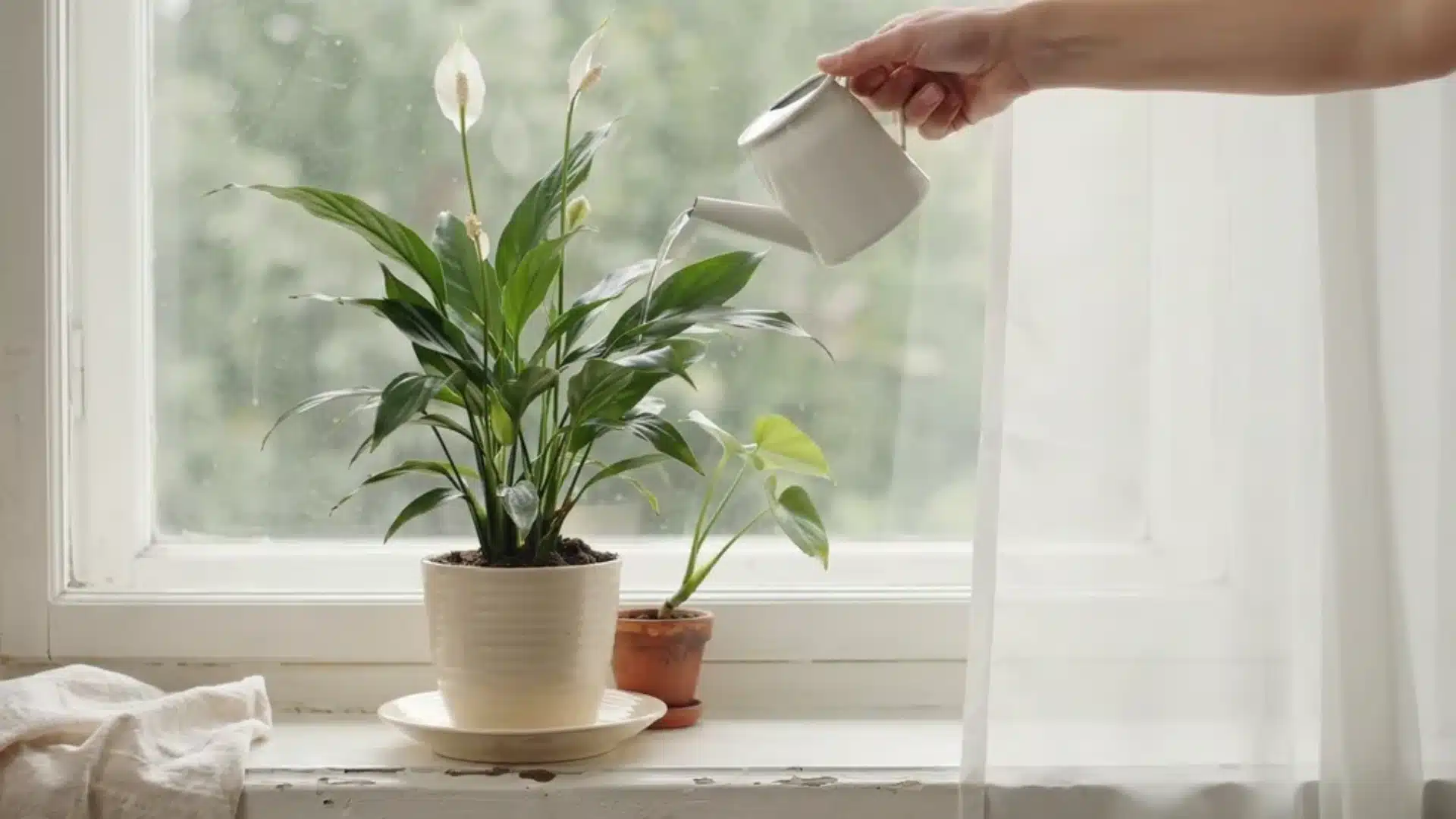
Water when the top one to two inches of soil feel dry. Water thoroughly until water drains from the bottom of the pot, then empty the saucer. Never let the plant sit in standing water.
Tap water is the hidden problem. Peace lilies are sensitive to the fluoride and chlorine in most municipal water. Those minerals travel up through the plant and collect at the leaf tips, showing up as crisp brown edges with a sharp yellow border.
Switch to filtered, distilled, or rainwater when you can. If tap water is all you have, let it sit out overnight before using it, and flush the pot with clean water every few months to clear salt buildup from the soil.
The plant will droop when it gets thirsty. That is the built-in signal. Water it, and the leaves stand back up within one to two hours.
I still keep mine on a set schedule rather than waiting for the droop. Watering frequency shifts by season, which the full watering breakdown covers in more detail.
Humidity and Temperature for Peace Lily
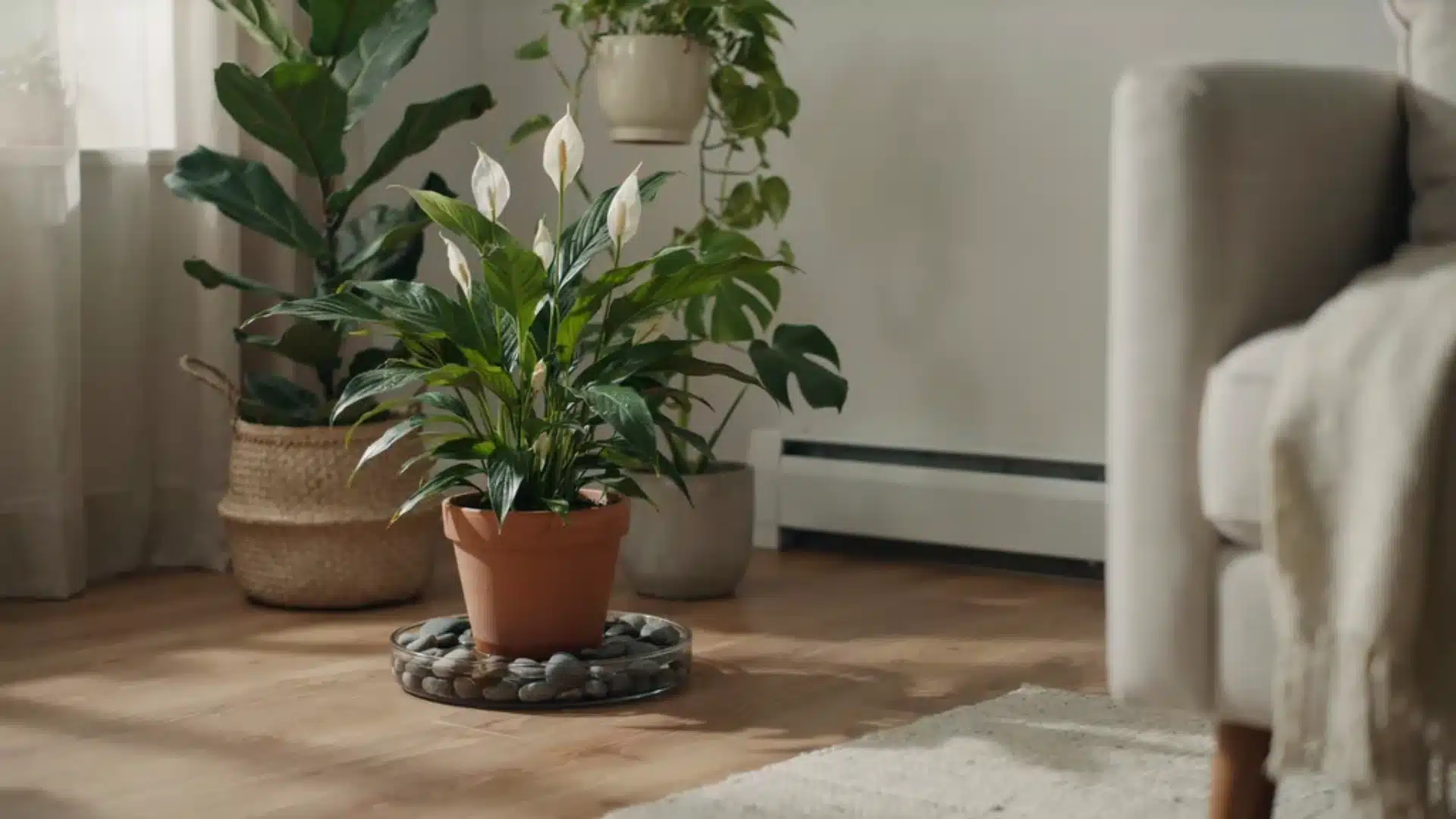
Peace lilies are comfortable at the same temperatures most people keep their homes: 65 to 85°F (18 to 29°C).
Keep the plant away from heating vents, air-conditioning drafts, and uninsulated windows in winter.
Aim for humidity above 50 percent. Indoor air, especially in a heated house in winter, is usually much drier than that.
A few easy ways to raise it:
- Mist the leaves every two to three days
- Set the pot on a tray of pebbles filled with water, keeping the water level just below the pebbles
- Group it with other houseplants so they create a shared humid pocket
Soil and Fertilizer for Peace Lily
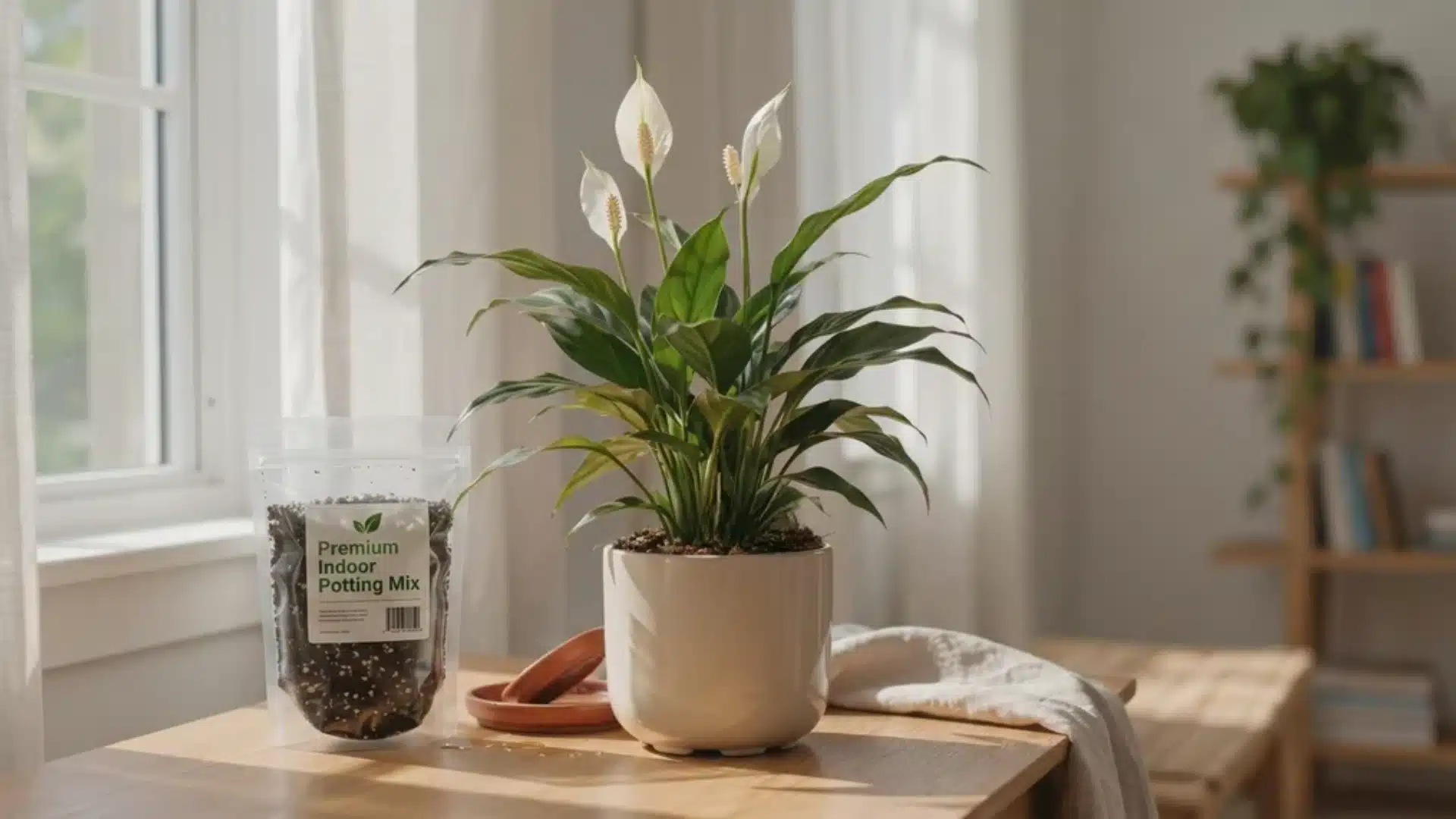
Use a well-draining indoor potting mix rich in organic matter. The goal is soil that holds some moisture without staying waterlogged.
Skip mixes made for succulents or cacti. They dry out too fast for this plant. The pot needs drainage holes, or water will collect at the bottom and cause root rot.
For feeding, less is more. Fertilize once a month in spring and summer with a balanced liquid fertilizer at half strength. Stop feeding in fall and winter, when growth slows on its own.
Signs of over-feeding include brown leaf tips, green flowers instead of white, and a salt crust on the soil surface.
If your plant is not flowering, switch to a fertilizer higher in phosphorus (e.g., 10-30-10) in early spring. Apply it once and watch the plant over the following weeks.
How to Get a Peace Lily to Flower Indoors
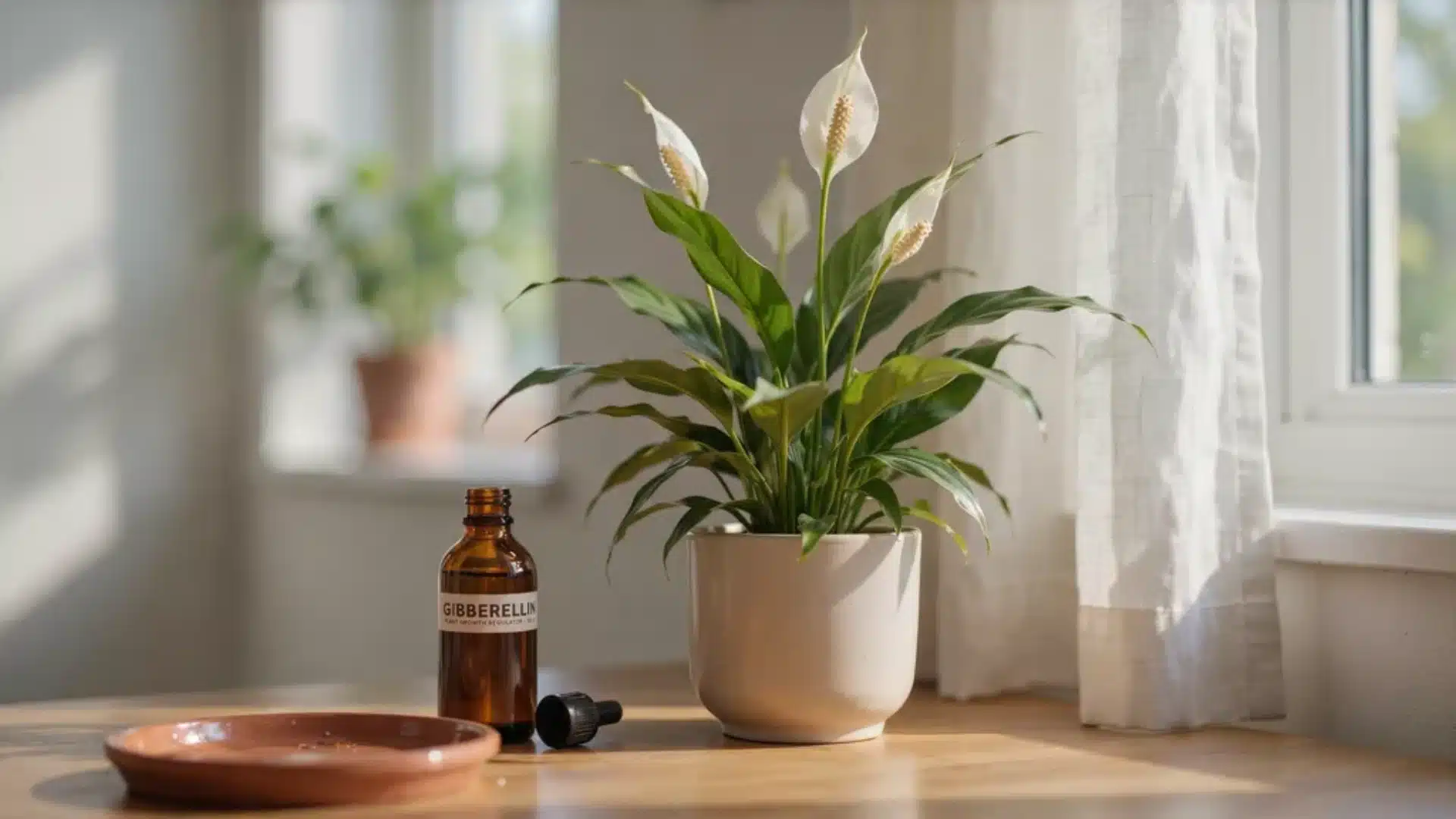
Nurseries often treat peace lilies with gibberellic acid before they hit the shelves. This hormone forces an early flush of flowers.
Once that flush fades, the plant settles into its natural rhythm and needs real bright indirect light to bloom again.
A few other reasons a peace lily stalls out on flowers:
- Young age: plants under two years old put their energy into leaves first.
- A pot that is too big: slightly root-bound plants tend to flower more.
- Cold temperatures, below 65°F, suppress blooming.
Move the plant to a brighter spot, apply a high-phosphorus fertilizer once in early spring, and give it time. Most plants respond within two to three months.
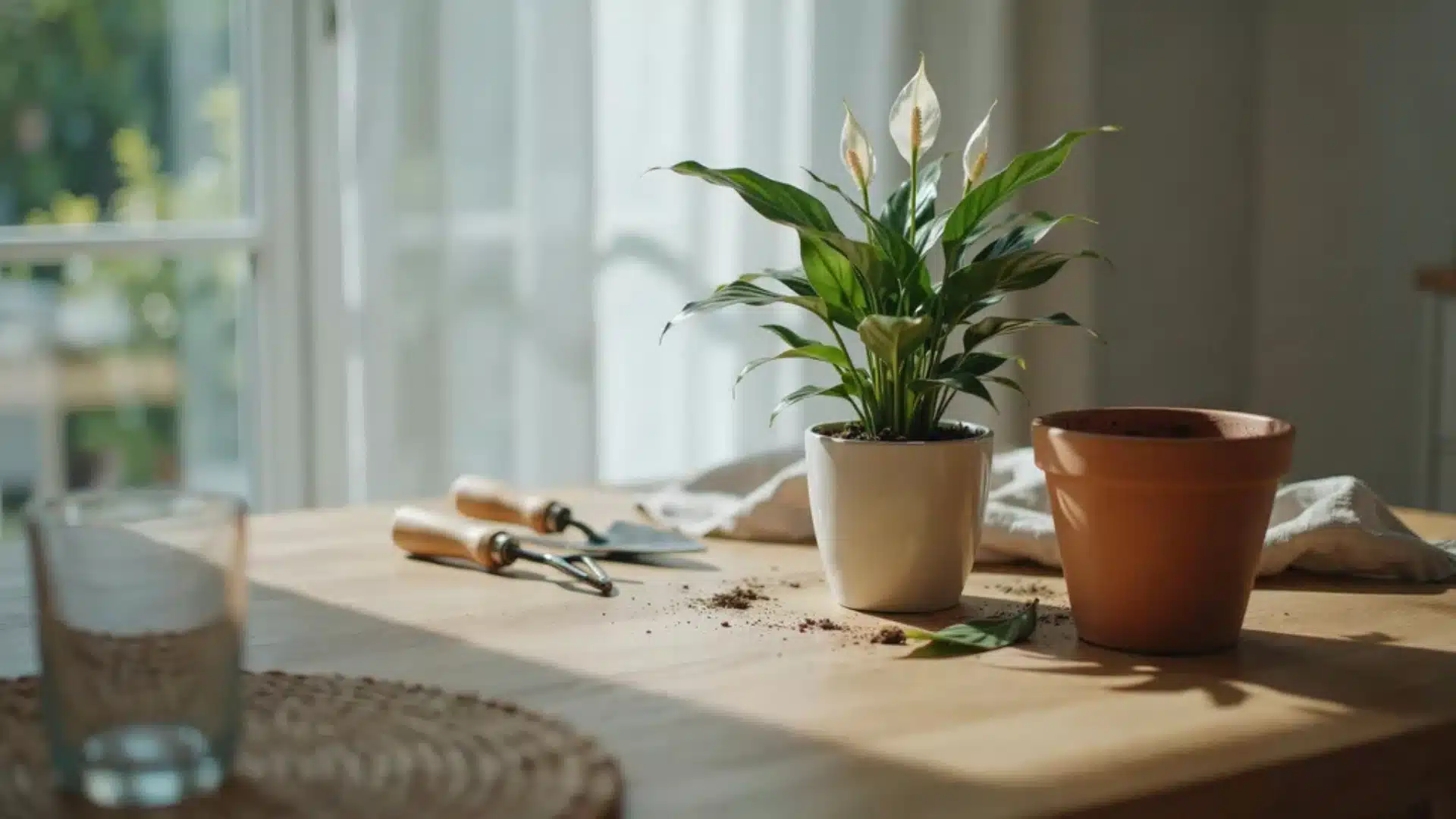
How to Repot a Peace Lily
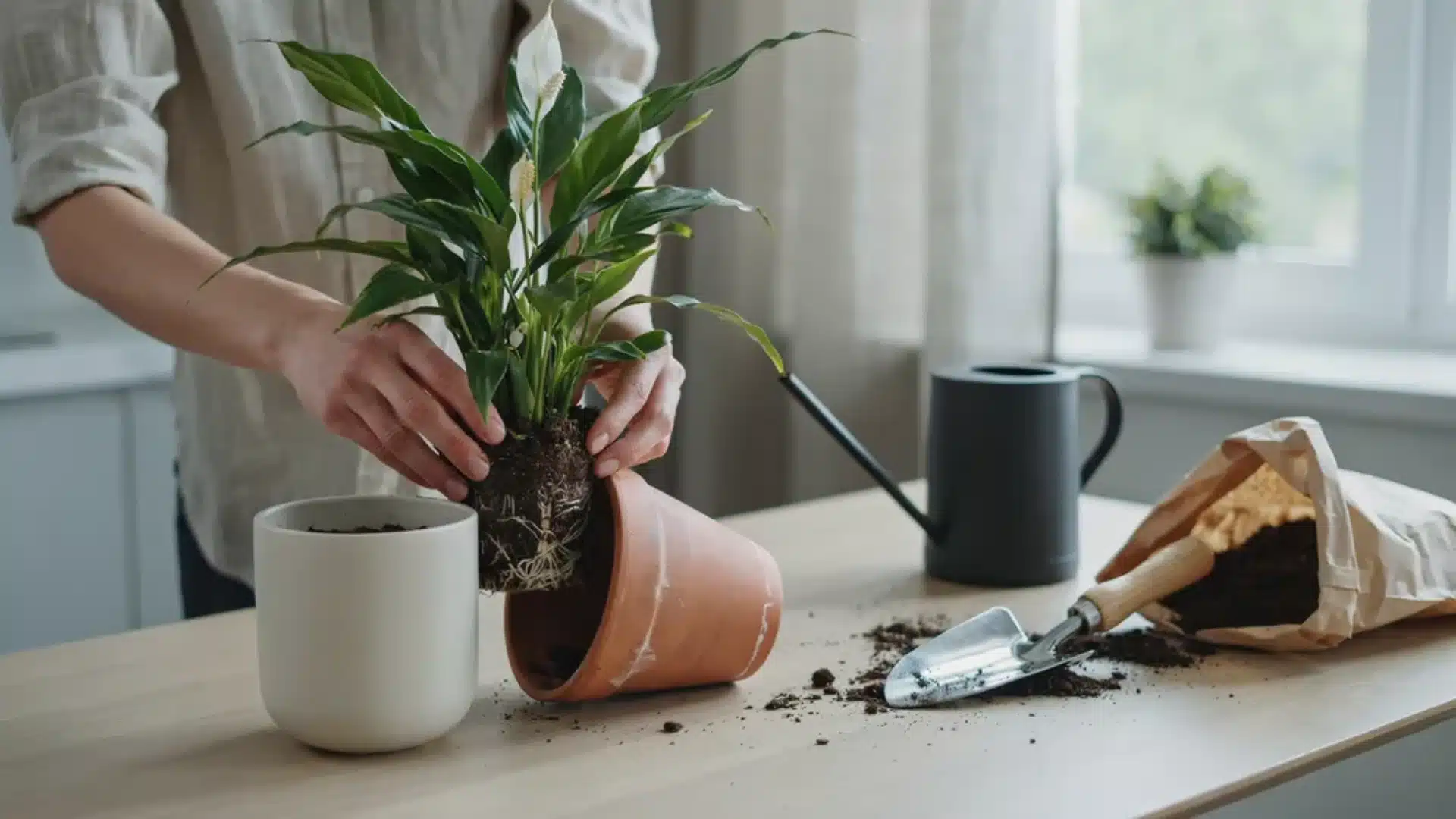
Peace lilies like being a little root-bound, so there is no rush to size up the pot. You will know it is time when roots poke through the drainage holes or the plant wilts faster than usual after watering.
- Repot in late winter or early spring
- Choose a new pot only one to two inches larger than the root ball
- Use fresh, well-draining indoor potting mix
- Water well after repotting and place in bright indirect light
Expect a short pause in flowering afterward. That is a normal stress response and passes within a few weeks. The step-by-step version, including how to divide overcrowded roots, is in this full repotting guide.
Common Peace Lily Problems and Fixes
Yellowing leaves is the issue I hear about most. In most cases, the cause is one of these:
- Overwatering: soil stays soggy, roots turn mushy, and stop pulling nutrients
- Underwatering: soil is bone dry, with tips browning at the same time
- Tap water chemicals build up in the soil over weeks
- Aging leaves: one or two yellowing outer leaves a month is normal
Brown leaf tips usually trace back to fluoride in tap water, low humidity, or over-fertilizing. Trim them with clean scissors, following the natural curve of the leaf. More detail on each cause is in this brown tips guide.
Drooping leaves most often mean the plant is thirsty. Water it and check again in an hour. If the soil is already wet and it is still drooping, root rot is the likely cause. Healthy roots are white and firm. Cut away anything mushy and brown, then replant in fresh soil right away.
Pests: spider mites, mealybugs, and scale occasionally show up. Wipe leaves with a damp cloth and treat with neem oil.
The Short Version
Peace lily care indoors comes down to four habits: bright indirect light, occasional watering with clean water, humidity above 50 percent, and light monthly feeding in the growing season.
If something looks off, check those four things first. A plant that will not bloom almost always needs more light. A plant with yellow or drooping leaves almost always needs a look at the soil.
Mine still surprises me after seven years of houseplants. It is one of the few plants in my apartment that tells you exactly what it needs, you just have to catch the signal early.
Got a specific problem with yours? Drop it in the comments, and I will help you sort it out.
Frequently Asked Questions
Should I Cut the Brown Tips Off My Peace Lily Leaves?
Yes. Use clean scissors and follow the natural outline of the leaf, trimming only the brown part.
What Are the Disadvantages of a Peace Lily?
It is prone to root rot in overwatered soil, and all parts are toxic to pets and children if ingested.
What Is the Lifespan of a peace lily indoors?
Most peace lilies live 3 to 5 years with basic care. With repotting and consistent light, many last two decades or longer.