Shady spots in the garden look sad by midsummer. Green goes flat. Color disappears. You try plant after plant, and nothing holds.
That is the exact problem coral bells solve. This low-maintenance perennial stays colorful through spring, summer, and fall with very little from you.
Good coral bells care comes down to a few non-negotiable rules: the right light, well-draining soil, and knowing when to divide.
Get those right, and your heuchera plant will come back stronger every year. This post covers everything from planting to pests, so you can skip the trial and error.
What Is Coral Bells (Heuchera)?
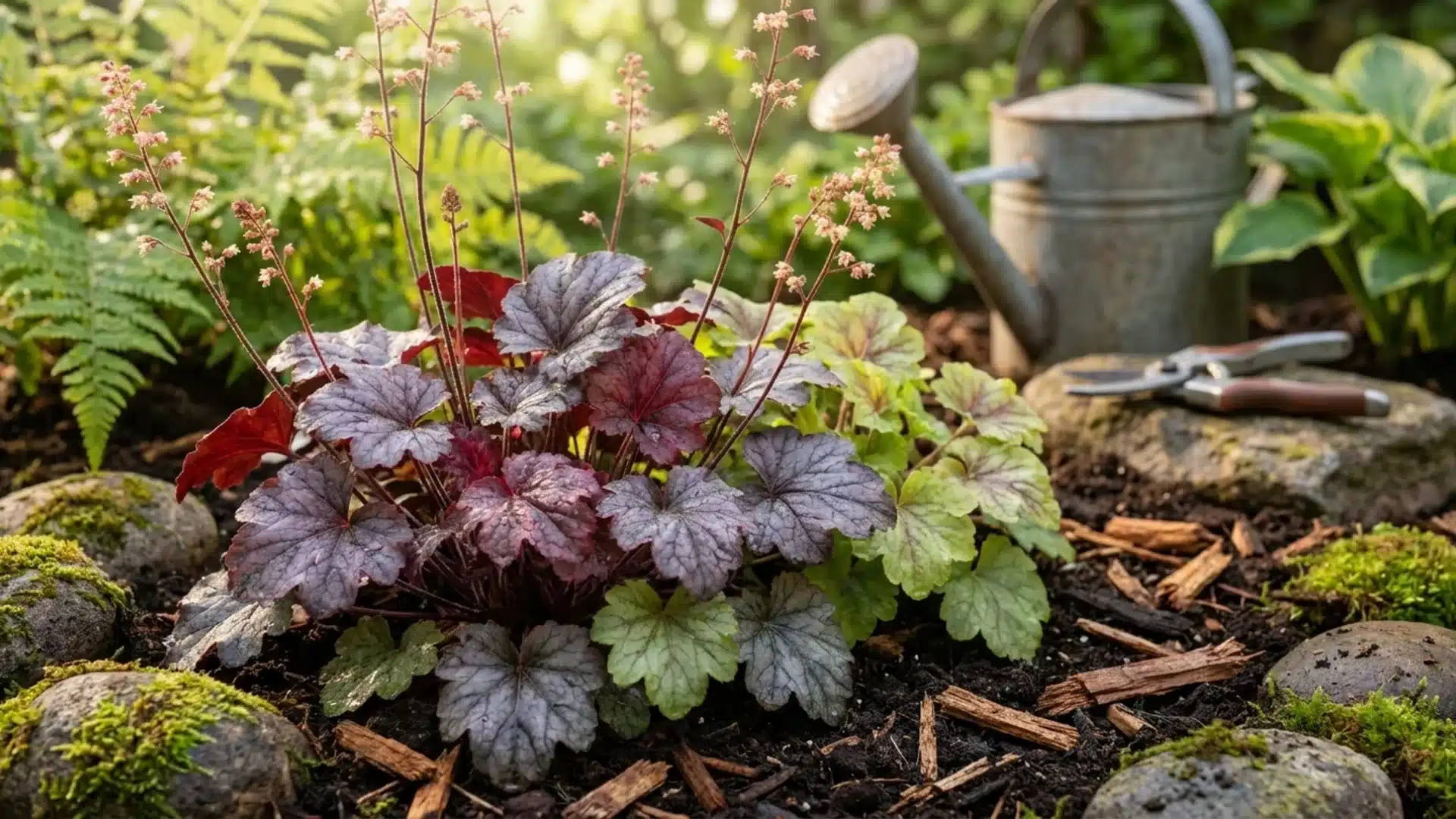
Coral bells, known botanically as Heuchera, is a native North American perennial grown mostly for its foliage. Most varieties grow 6 to 18 inches tall and spread 1 to 3 feet wide, forming low, tidy mounds.
They are hardy in USDA Zones 4 through 9 and stay evergreen in warm climates and semi-evergreen in colder ones.
The foliage is the real draw. Leaf colors run from chartreuse and bright green to silver, burgundy, deep purple, and near-black.
Wide varieties have contrasting veining, ruffled edges, or multicolored patterns. In late spring and early summer, thin flower stems rise above the foliage, carrying small bell-shaped flowers in coral, pink, red, or white.
Those flowers attract hummingbirds and butterflies.
Light Requirements for Coral Bells
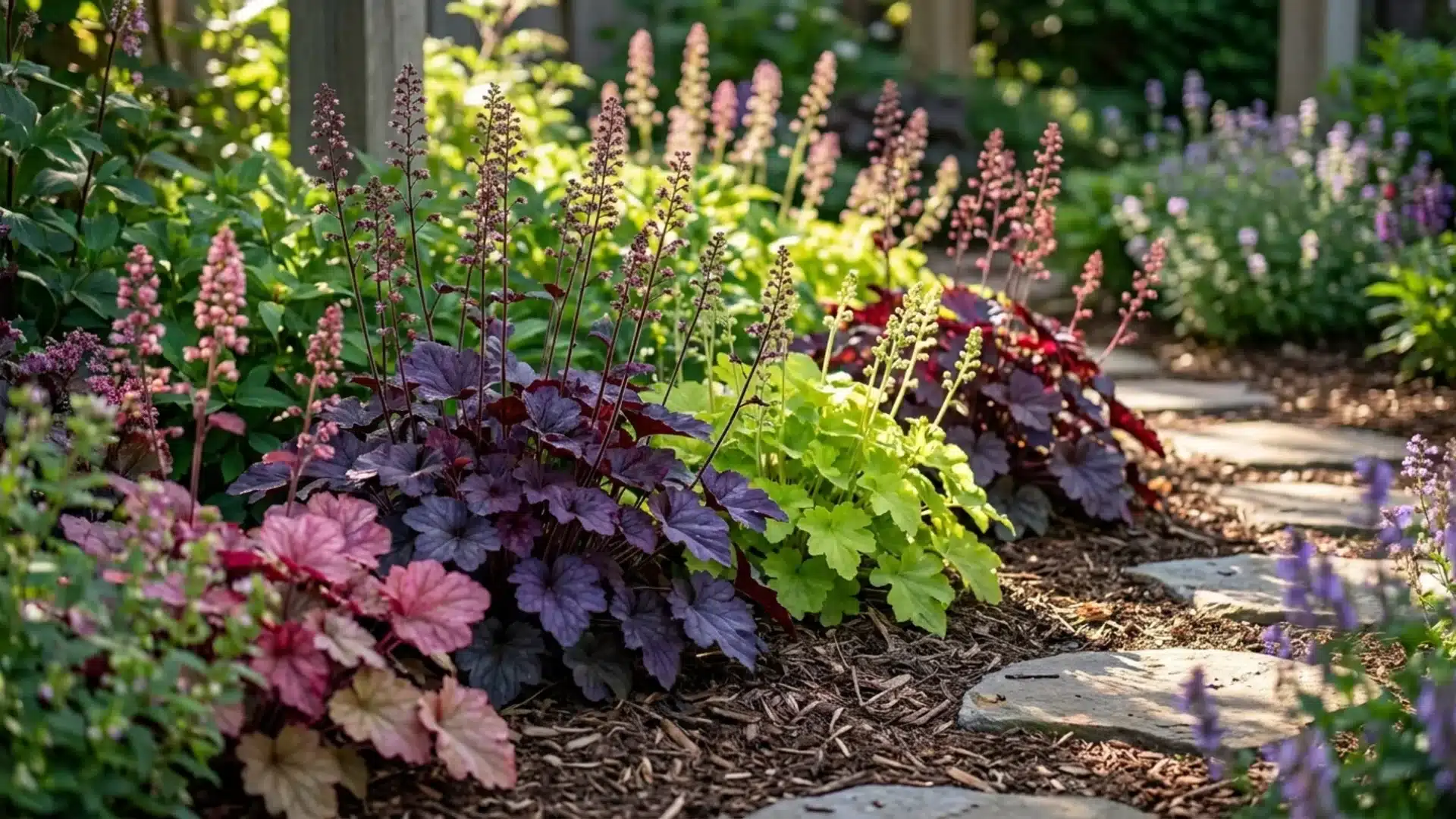
Part shade is the best starting point for coral bells care. Morning sun with afternoon shade gives you the strongest foliage color and the best flowering. Aim for 4 to 6 hours of bright indirect light each day.
In hot climates, strong afternoon sun causes leaf scorch, especially on bright lime, pink, and light-colored varieties.
Darker-leaved varieties in purple or near-black tend to handle more direct sun without damage. Full shade is fine but can reduce flower production and slow the intensity of foliage color over time.
Pro Tip: If you see pale, washed-out leaves in summer, the plant is getting too much sun. Move it to a spot with more afternoon cover.
Soil and Planting Tips for Heuchera
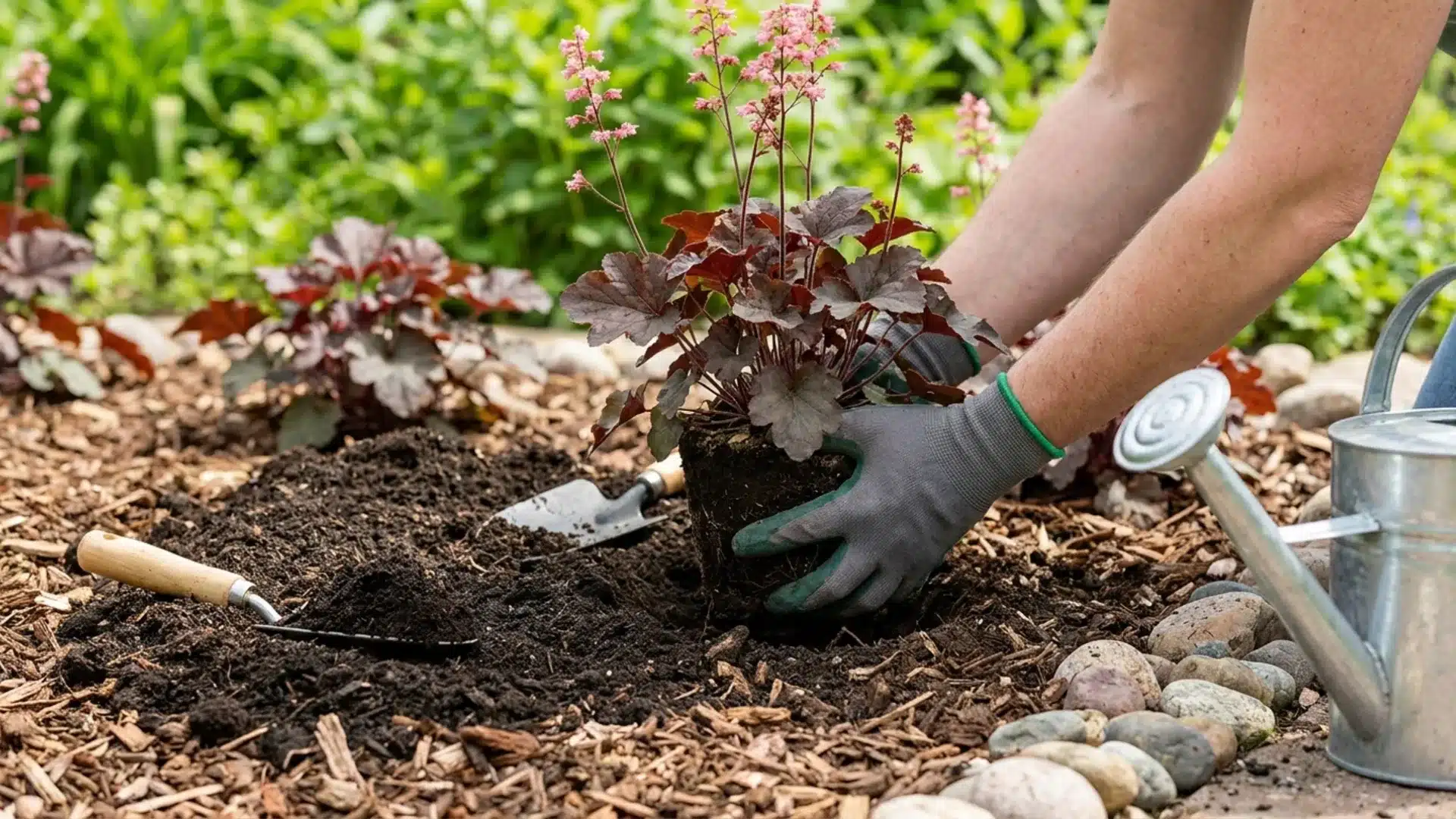
Coral bells do best in humus-rich, well-draining soil with a slightly acidic to neutral pH of 6.0 to 7.0.
They tolerate clay and rocky soils, but heavy clay needs to be amended with compost before you plant. Soggy, wet soil causes crown rot, which is one of the fastest ways to lose a heuchera plant.
When you plant:
- Dig a hole slightly larger than the root ball.
- Set the crown at or just above ground level. Burying the crown leads to rot.
- Space plants 12 to 18 inches apart to allow good airflow.
- Backfill gently and water well to settle the roots.
If your garden has poor drainage, raised beds work well. Heuchera planted in raised beds drains freely and is much less likely to suffer from crown rot.
How Often to Water Coral Bells
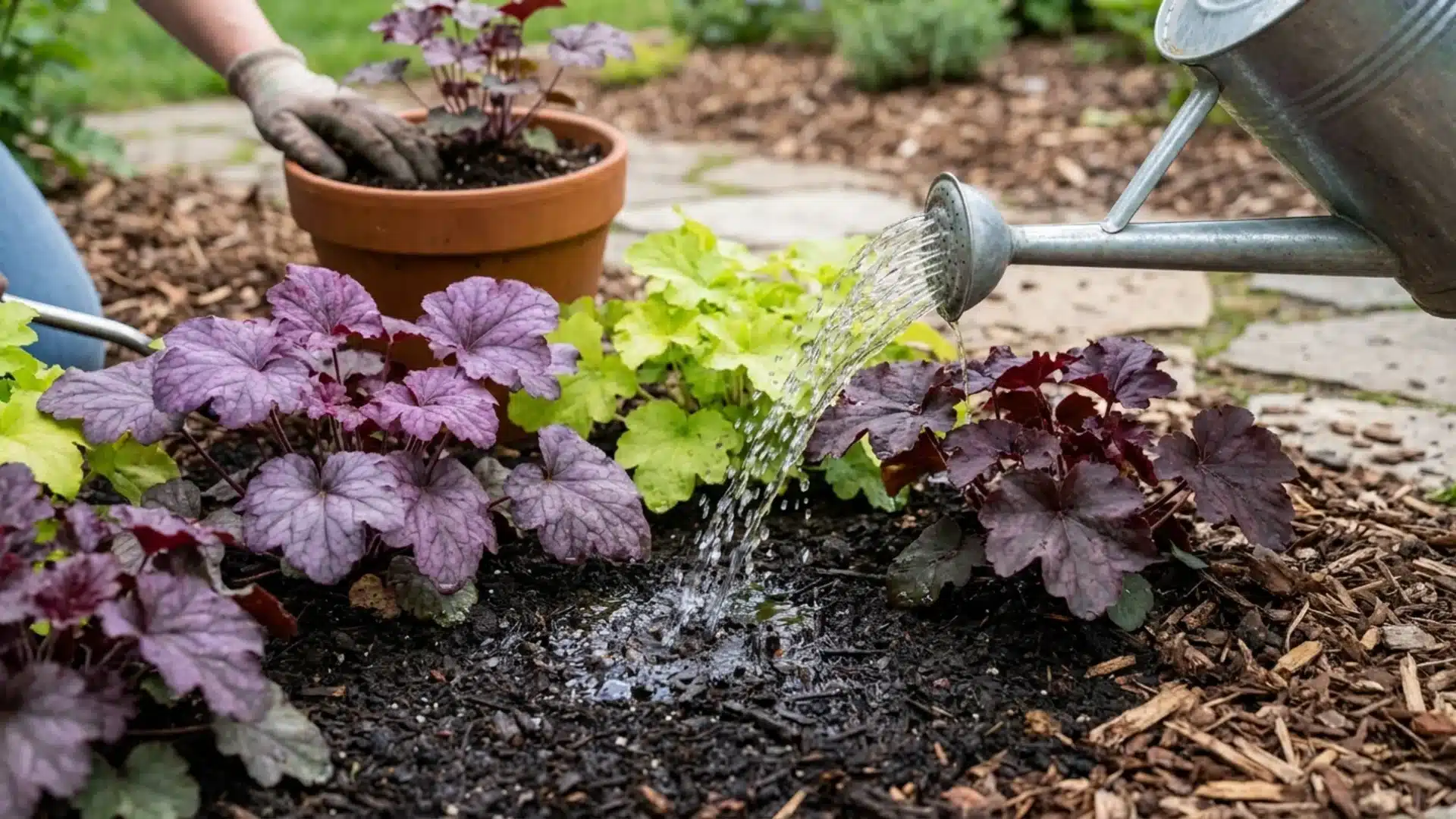
Keep the soil evenly moist but not waterlogged. Once established, heuchera is fairly drought-tolerant, but that does not mean you can ignore it through summer dry spells.
Because the roots are shallow, plants need about one inch of water per week during hot weather.
Always water at the base of the plant. Wet foliage encourages powdery mildew and other fungal issues. During fall and winter, little to no watering is needed.
Container-grown coral bells dry out faster than in-ground plants. Check the soil every few days in warm weather and water before it dries out completely.
The most common mistake with coral bells? Overwatering. If the leaves look soft and wilted but the soil feels wet, poor drainage is the issue, not lack of water. Improve drainage first before adding more water.
Fertilizing Coral Bells the Right Way
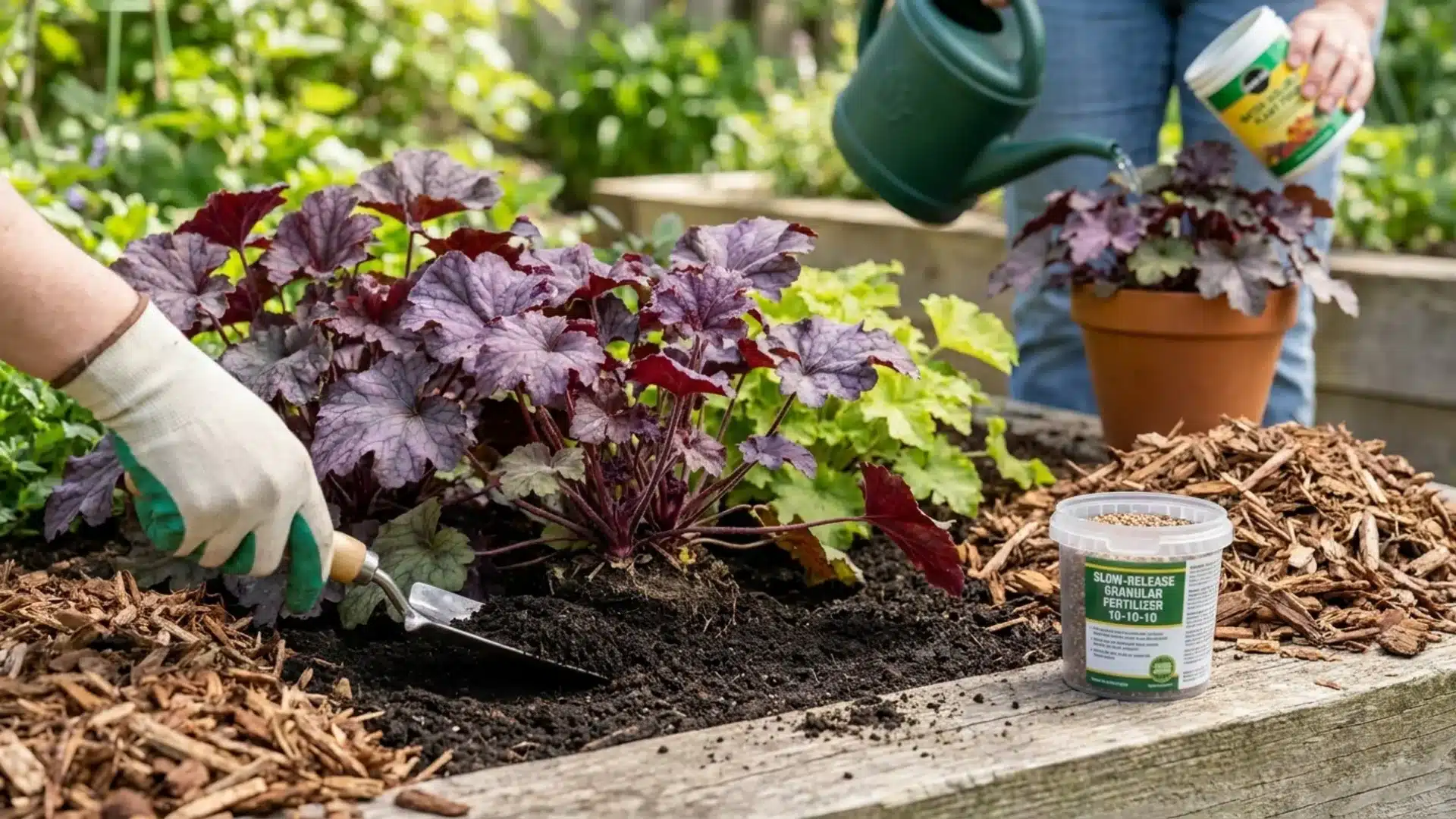
Coral bells do not need heavy feeding. In spring, spread a thin layer of compost around the base of the plant.
Skipping this step over multiple seasons can lead to signs of nutrient deficiency, such as yellowing or pale, washed-out foliage.
You can also apply a balanced, slow-release granular fertilizer at this time.
For container plants, a water-soluble fertilizer applied according to the product label is more effective than granular options since nutrients in pots flush out faster.
Do not fertilize in fall or winter. The plant does not need it, and feeding late in the season can push new growth that gets damaged by frost.
One more thing: keep mulch away from the crown. Mulch piled directly on the crown traps moisture and creates the damp conditions that lead to rot.
Pruning and Grooming Coral Bells
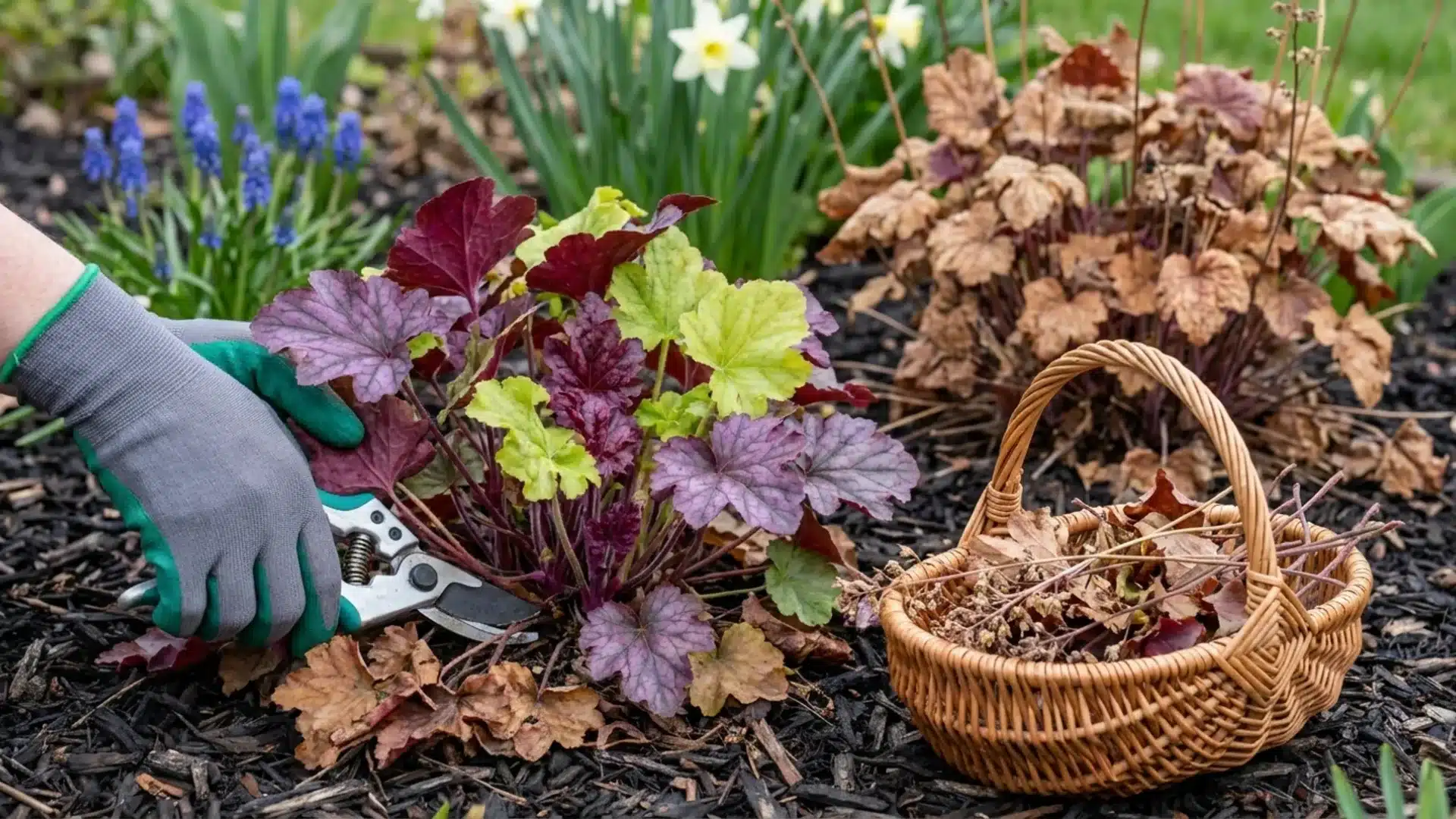
Pruning for coral bells care is simple. In early spring, before new growth appears, trim back any tattered, dead, or damaged leaves from the previous season.
This clears the way for fresh growth and keeps the plant looking tidy.
During the growing season, you can remove damaged leaves at any time. After the flower spikes finish blooming, cut them back to keep the plant looking clean.
Do not do a hard cut in the fall. Old foliage provides light frost protection for the crown and roots through winter, and removing it too early leaves the plant more vulnerable to cold damage and heaving.
How and When to Divide Coral Bells
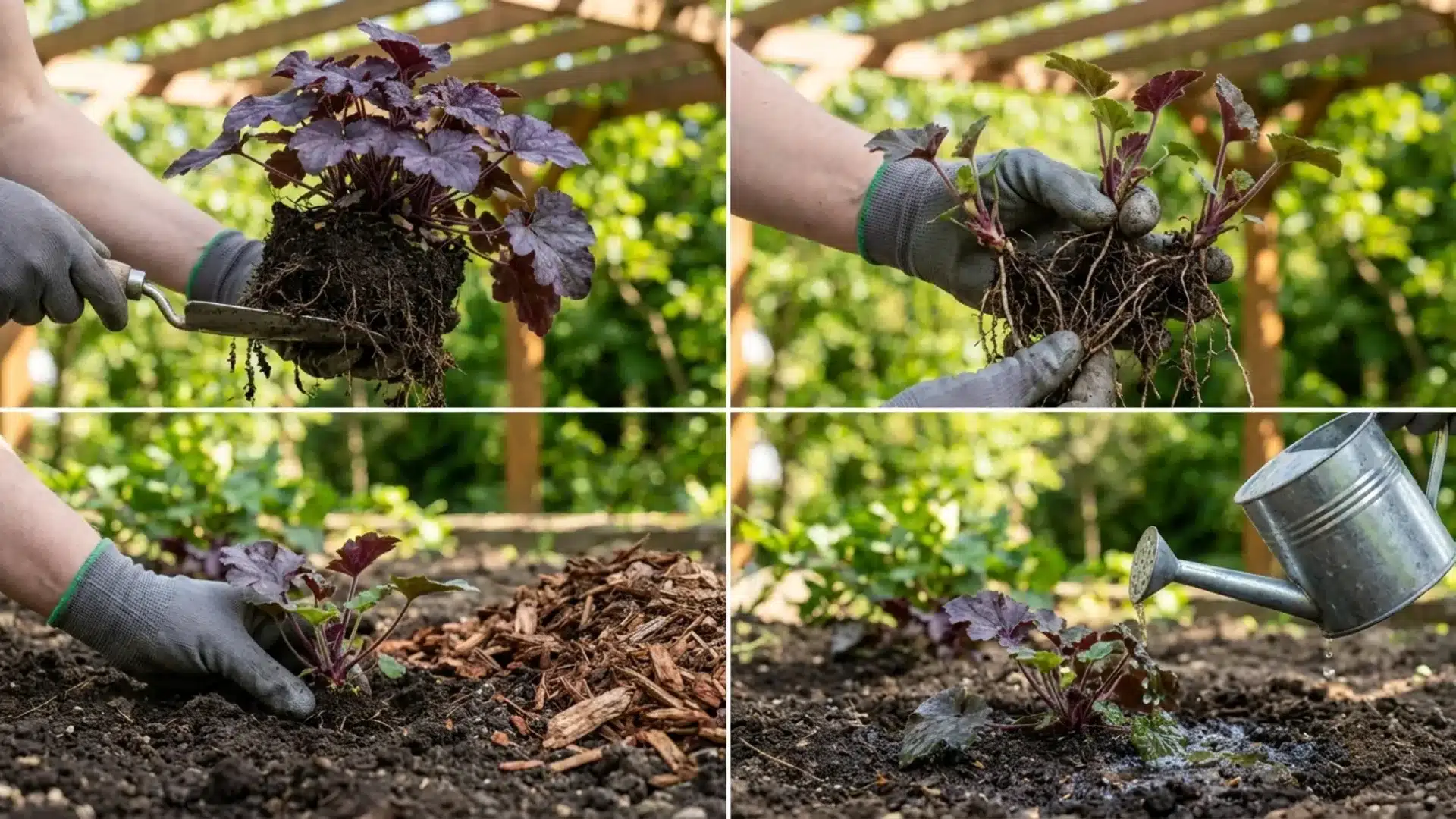
Coral bells need dividing every 3 to 4 years. After a few seasons, the center of the plant becomes woody, and growth slows down. Dividing solves this and gives you more plants for free.
The best time to divide is early spring, just as new growth appears. Early fall works too, but give the plant at least six weeks to settle in before the first frost.
How to divide:
- Dig up the entire clump with a trowel or spade.
- Gently pull or cut the plant into sections. Each section needs healthy roots and at least one crown.
- Replant each division with the crown at ground level, not buried.
- Water thoroughly right after planting and keep in partial shade while the roots establish.
Overwintering Coral Bells: What to Do Before Frost
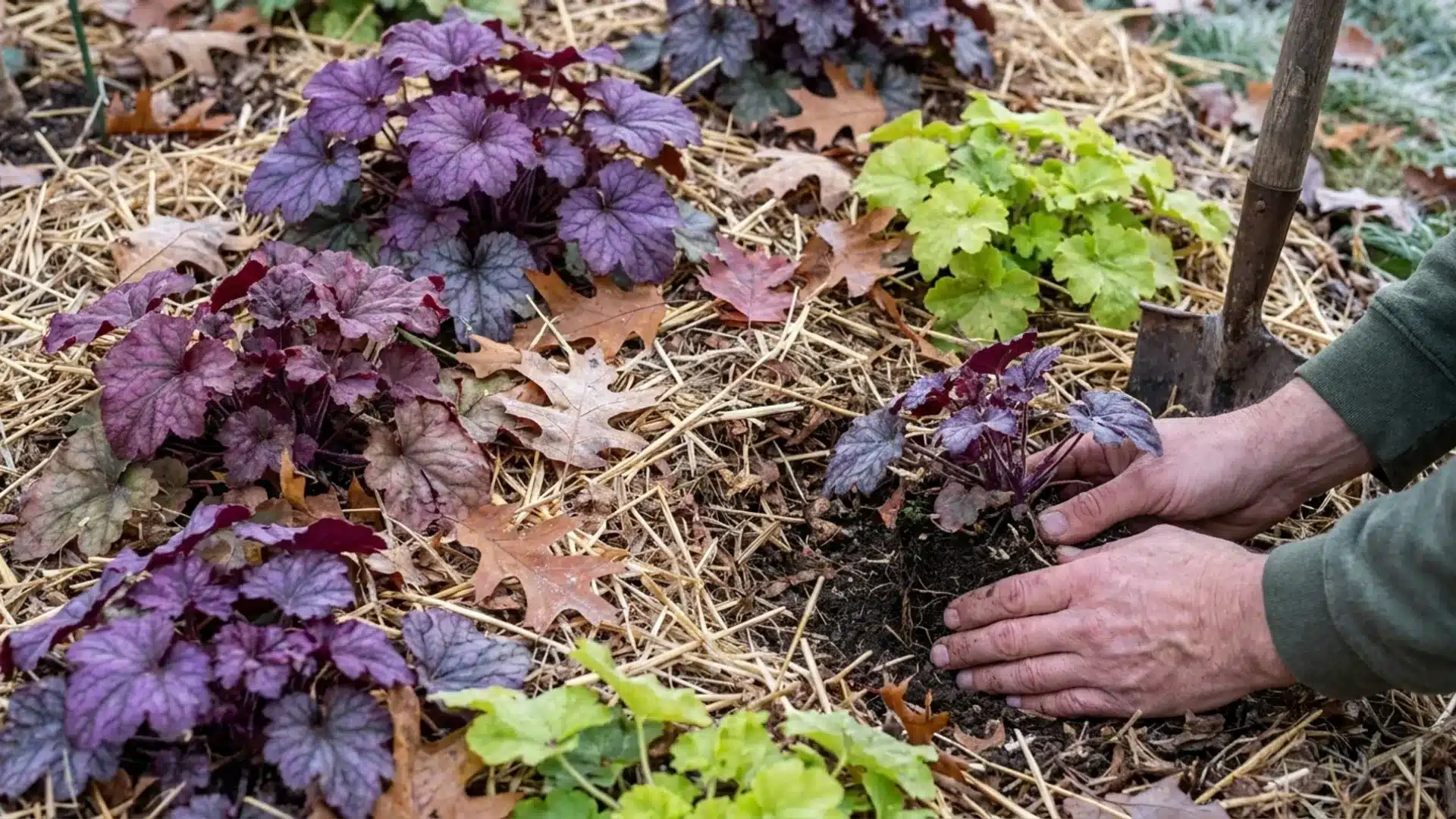
In Zones 4 through 9, coral bells survive winter outdoors. The biggest risk is frost heaving, a problem that most guides skip entirely. Heuchera has shallow roots.
When soil repeatedly freezes and thaws, it can physically push the root ball up and out of the ground. Left exposed, those roots dry out, and the plant dies.
To prevent frost heaving:
- After the first hard frost, apply 2 to 4 inches of mulch, such as straw or shredded leaves, which work well.
- Place mulch around the base of the plant, not on top of the crown.
- In spring, pull the mulch back before new growth starts.
If you notice a plant has been pushed up, press the roots back into the soil as soon as the ground is workable. Do not wait.
For container plants: choose varieties rated hardy to at least two zones colder than your zone. In Zone 6, that means Zone 4-rated varieties.
Move pots to a sheltered location in colder climates and add light insulation around the outside of the pot.
Landscaping with Coral Bells: Design Ideas That Work
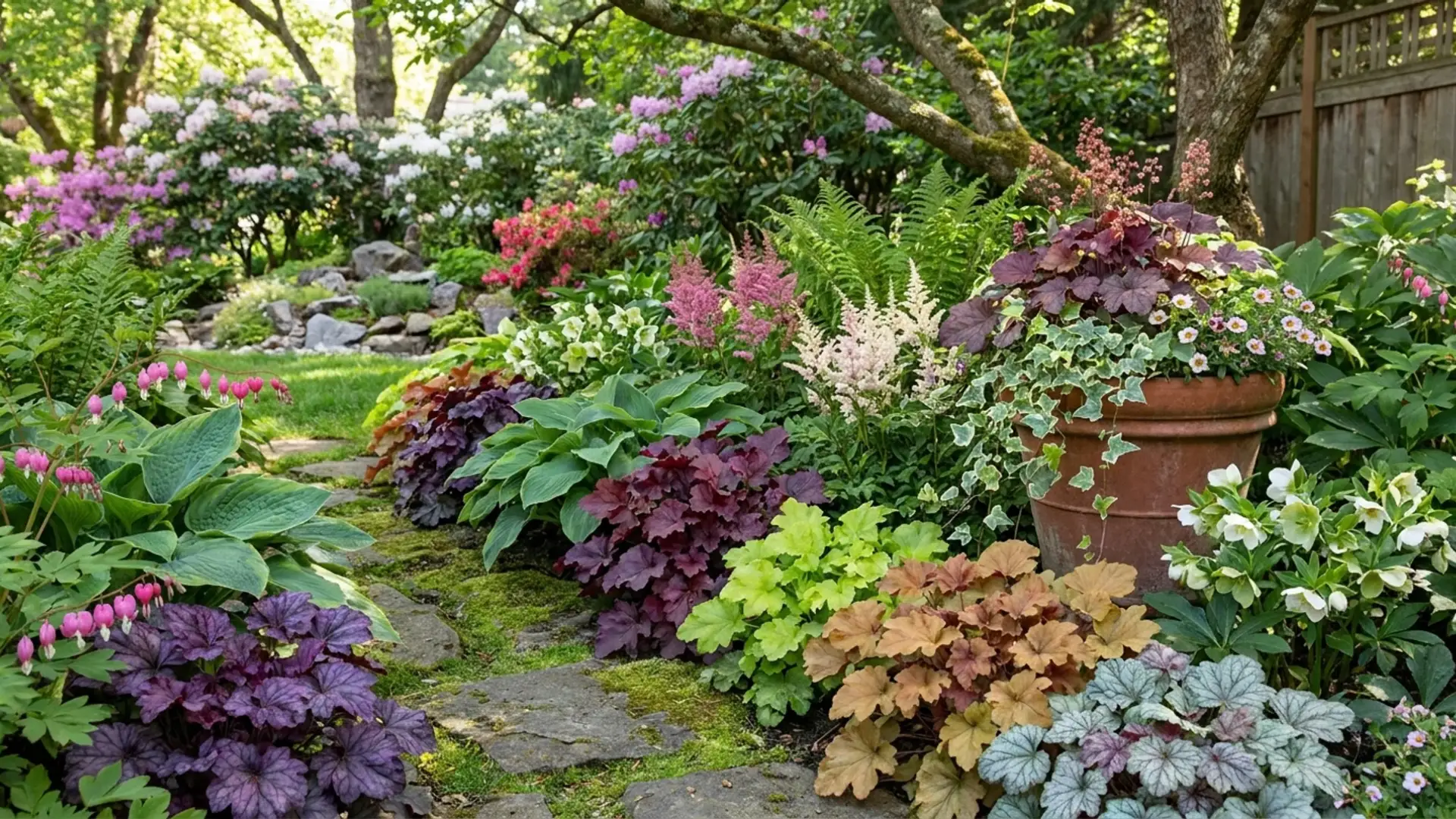
Landscaping with coral bells is one of the easiest ways to add long-season color to shaded or part-shaded beds.
Because they stay low, they work best at the front of a border or along the edges of a path. Plant them in groups of three or five for the most visual impact.
Ways to use heuchera in your garden:
- Mass plant along shaded slopes as a low-maintenance ground cover
- Place under shrubs like rhododendrons or azaleas as an understory filler
- Use in rock gardens alongside alpines and low-growing succulents
- Add to containers as a stand-alone plant or mix with trailing annuals
- Line shaded walkways with a single repeated variety for a clean look
Best companion plants:
- Hostas: similar light and soil needs; bold leaf contrast next to heuchera’s smaller mounds
- Ferns: lacy, feathery texture pairs well with coral bells’ solid, colorful leaves
- Astilbe: tall flower plumes add vertical height above low heuchera mounds
- Hellebores: early spring bloomers that share the same woodland conditions
- Bleeding heart: spring color with the same part-shade preference
Coral Bells Pests and Diseases: What to Watch For
Coral bells are generally trouble-free. Still, a few problems show up regularly.
Pests to watch for:
| Pest | Signs | Solution |
|---|---|---|
| Black vine weevil | Notched leaf edges; plant collapses at the crown | Apply beneficial nematodes to the soil |
| Slugs and snails | Irregular holes in leaves | Beer traps or diatomaceous earth around the base |
| Spider mites | Yellowing, stippled leaves in hot, dry weather | Rinse leaves; increase moisture around the plant |
| Mealybugs | White clusters at leaf bases and stems | Dab with an alcohol-soaked cotton swab |
Disease issues:
- Crown rot: the result of soggy soil; always plant with the crown above soil level
- Powdery or downy mildew: caused by overhead watering; improve airflow and water at the base
- Leaf rust (Puccinia heucherae): orange pustules on leaf undersides; remove and destroy all infected leaves immediately; do not compost them
- Root rot: prevent with good drainage; heavy clay soil that stays wet is the biggest risk factor
Conclusion
Coral bells care is not complicated. Give your heuchera plant well-draining soil, the right amount of light, and water at the base, not on the leaves.
Divide it every few years before the center goes woody. Mulch it before winter to stop frost heaving from pulling the roots out of the ground.
Do those things, and you will have healthy, colorful plants that come back season after season.
The most common mistakes, soggy soil, burying the crown, and skipping division, are all easy to avoid once you know what to watch for.
Now you do. Which variety are you planning to grow? Drop it in the comments below.
Frequently Asked Questions
Why Do My Coral Bells Keep Dying?
Coral bells (Heuchera) typically die from root rot caused by soggy, poorly draining soil or from heat stress and sun scorch.
How Many Years Do Coral Bells Last?
Coral bells typically last for about 3 to 4 years in the garden before their woody stems get too long and the plant’s vigor naturally declines.
Are Coffee Grounds Good for Coral Bells?
Yes, coral bells (Heuchera) can benefit from coffee grounds, but they should only be used in moderation.