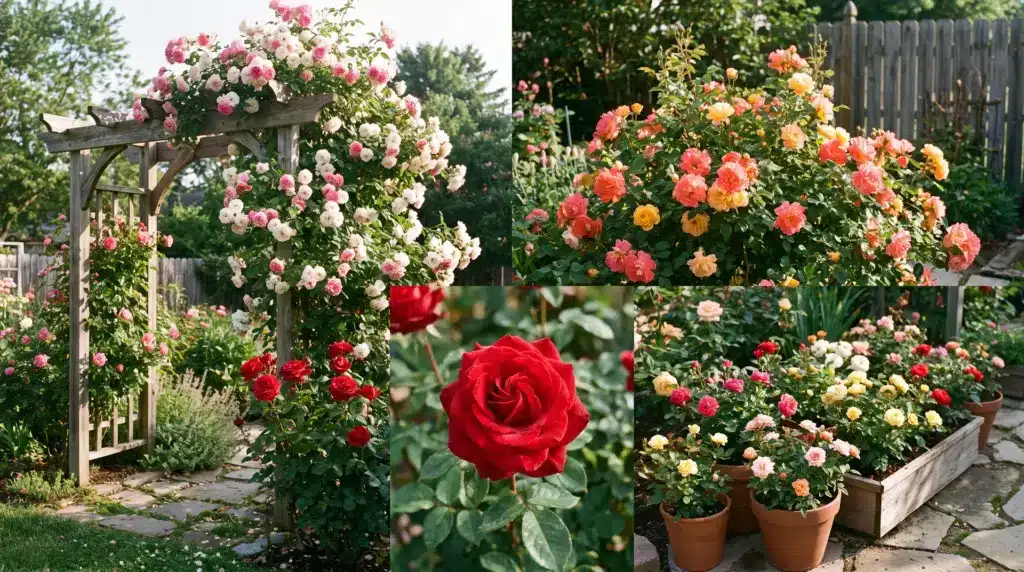
You walk into a garden center. The rose tags alone could fill a notebook.
Hybrid tea, Floribunda, Rambler, Old Garden… a lot of people grab the prettiest color and hope for the best.
Then it dies. Or it blooms once and goes quiet for the rest of the summer (this sounds frustrating, right? Trust me, it is way more irritating than it sounds)
There are over 40 recognized rose classes. The best rose for your garden depends on three things.
These are your intended use, growing conditions, and personal taste. This post breaks down 8 different types of roses.
Each entry covers what the rose looks like, how it grows, and where it fits best.
What Are All the Types of Roses?
Here is a quick look at the 8 different types of roses and what sets each one apart.
| Rose Type | Bloom Season | What Makes It Unique |
|---|---|---|
| Wild (Species) Rose | Once, in early summer | Grows naturally; produces edible rose hips in fall |
| Old Garden Rose | Once or repeat (class-dependent) | Bred before 1867; the most fragrant rose group |
| Hybrid Tea | Spring through fall | One large, high-centered bloom per long stem |
| Floribunda | Spring through fall | Bloom clusters per cane; hardier than hybrid teas |
| Grandiflora | Spring through fall | Tall plants with large blooms in smaller clusters |
| Climbing Rose | Repeat or once (variety-dependent) | Long canes (12-20 ft) trained on support structures |
| Shrub Rose | Spring through fall | Low-maintenance; includes Knock Out and David Austin |
| Miniature Rose | Spring through fall | Compact form (15-30 in tall); suited to containers |
These eight types span three rose groups: Wild, Old Garden, and Modern. Modern roses were bred after 1867 for continuous bloom and stronger disease resistance.
Some types, like shrub roses and miniature roses, need very little from the gardener. Others, like hybrid teas and old garden roses, reward more hands-on care.
1. Wild Roses
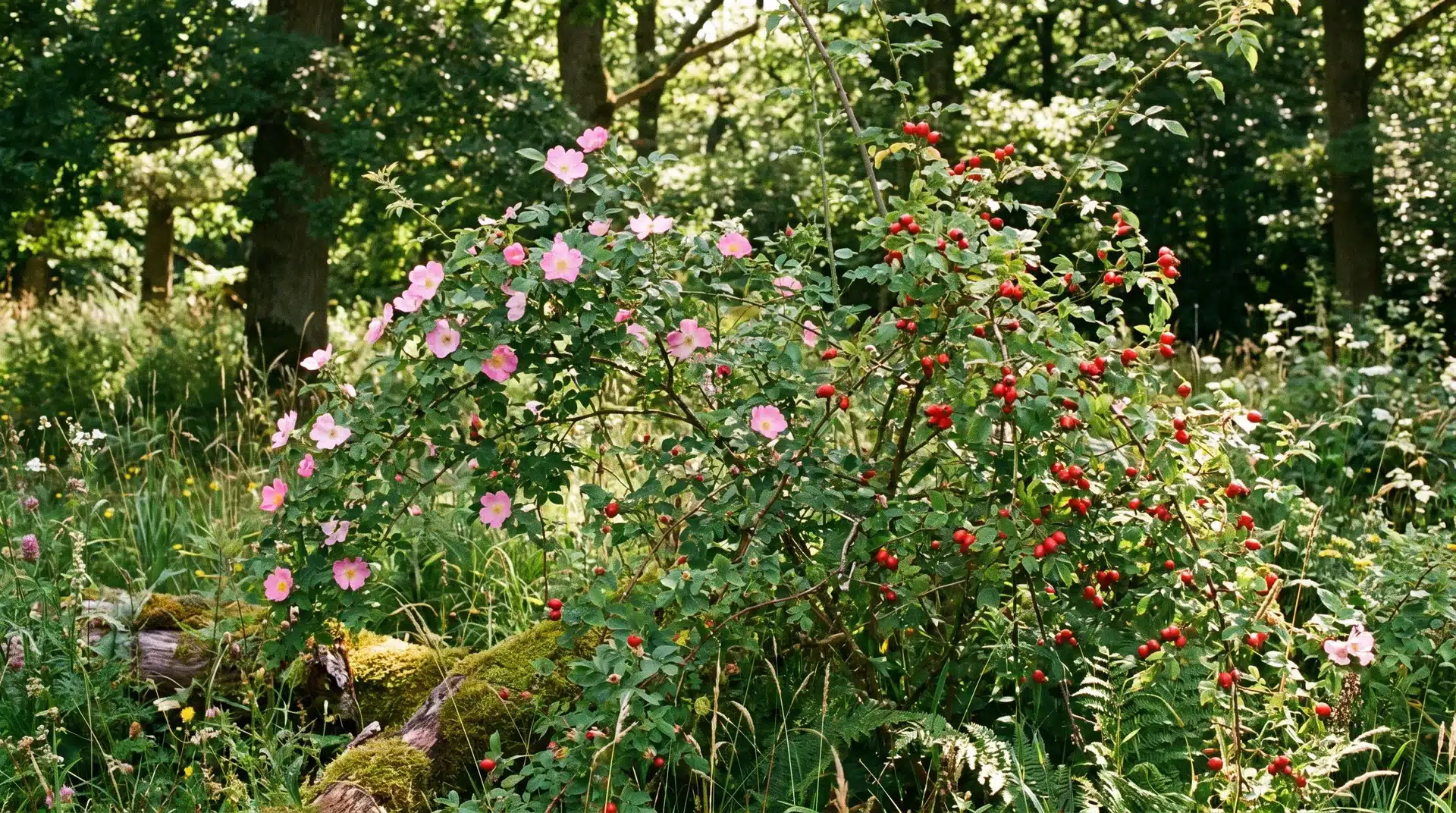
Wild roses, also called species roses, are the most natural form of the plant.
They grow without cross breeding or hybridization. Each bloom is simple: a single ring of five petals, almost always pink. Red, white, or yellow wild roses are quite rare.
They bloom once in early summer. After blooming, they produce rose hips. These are colorful, round fruits that feed birds and other wildlife through fall and winter.
The rose hips are also edible and used in teas, jams, and jellies. They add seasonal interest to the garden long after the blooms are gone.
These roses need very little care. They resist disease naturally and thrive without complicated feeding or spraying. Two good examples are Rosa rugosa (tough, very fragrant) and Rosa carolina, a native that forms a natural hedge.
Best for: Wildlife gardens, naturalized areas, and hedgerows.
2. Old Garden Roses
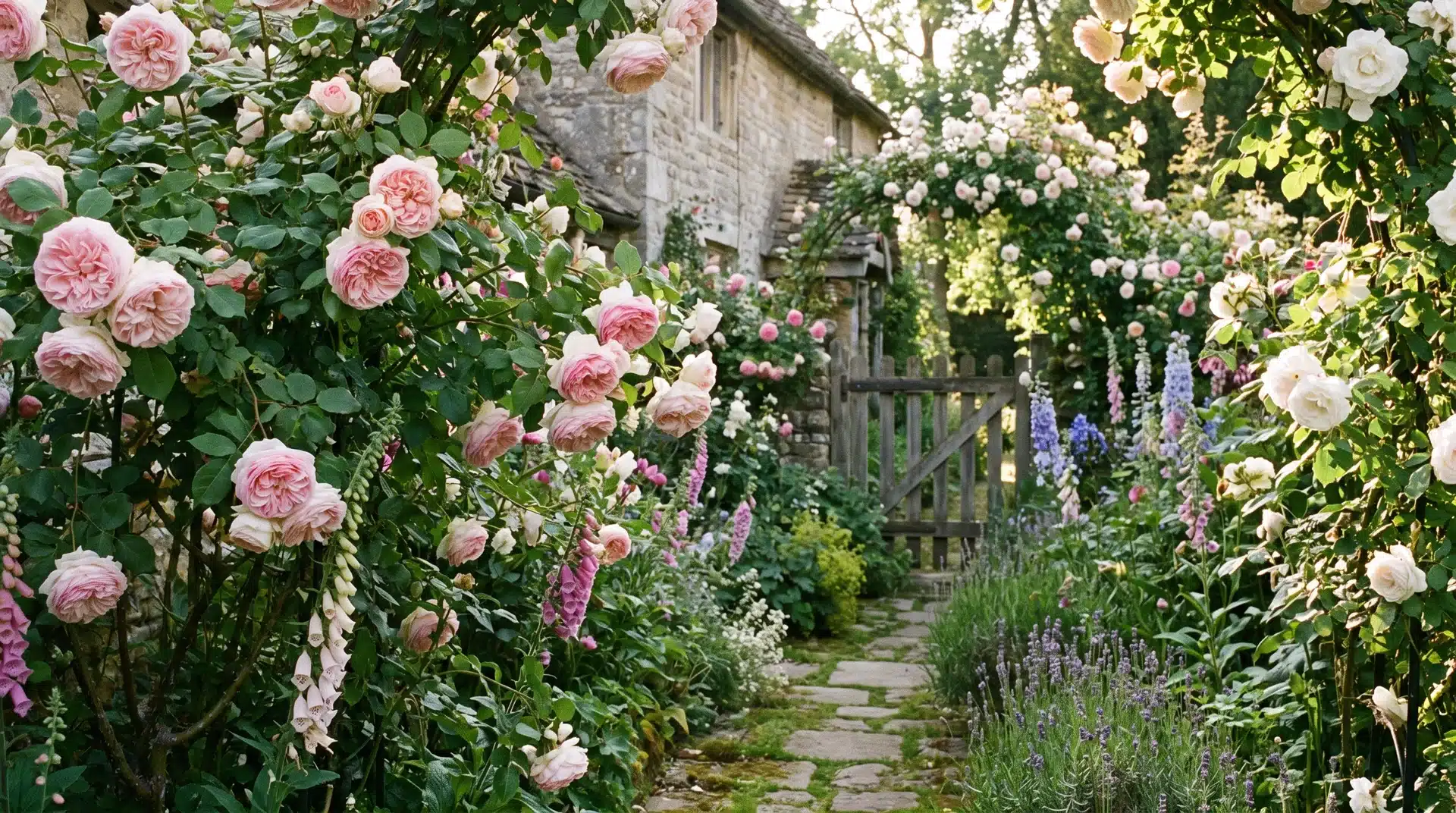
Old Garden roses were bred before 1867. Their defining quality is intense fragrance, which most Modern roses cannot match.
They are also called antique or heirloom roses. Most Old Garden types bloom once in summer. A few classes, like Bourbon and China, repeat-bloom through the season.
They are generally harder and more disease-resistant than Modern roses because centuries of natural selection gave them that edge. If fragrance is your top priority, this is the group to look at first.
There are five notable classes within this group:
- Gallica: Short and bushy. One of the oldest garden roses. Blooms once in early summer in shades of pink, red, and purple. Strongly fragrant. Used in perfumes since the 12th century.
- Damask: Split into Summer Damask (blooms once) and Autumn Damask (repeats in summer and fall). Grown commercially for rose oil and rose water.
- Alba: White or pale pink flowers. Extremely cold-hardy and disease-resistant. Grows well in partial shade. A strong pick for colder climates.
- Centifolia (Cabbage Rose): Large, globe-shaped, tightly packed blooms. Very fragrant, stems sometimes droop under the weight of the flower head.
- Bourbon: Nearly thornless, reliable repeat bloomer and richly fragrant. Works well along pathways and garden entrances.
Best for: Cottage gardens, heritage plantings, and fragrance-focused gardens.
3. Hybrid Tea Roses
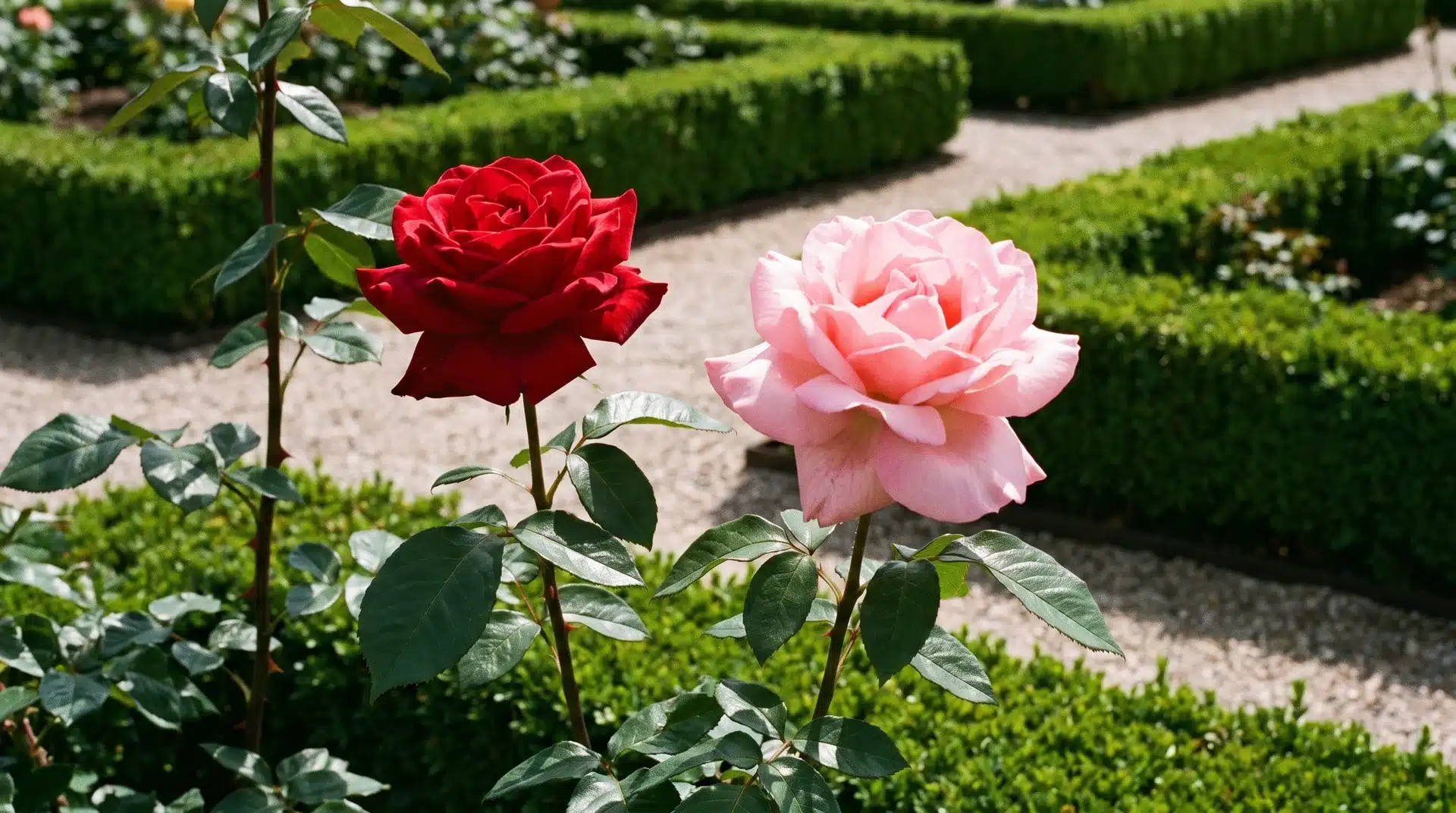
Hybrid tea roses are the long stemmed roses most people picture when they think of a cut flower.
Each stem carries one large, high-centered bloom with 30 to 50 petals. Plants grow 2 to 6 feet tall and bloom from early summer through fall.
They come in nearly every color except blue. Wide varieties are fragrant, but not all. Always check the label if scent matters to you before buying.
Florists rely on hybrid teas for their long stems and reliable vase life. They are the top pick for formal rose beds and cutting gardens.
They do need more attention than most other types. Hybrid teas are more prone to pests and disease, so pairing them with companion plants cuts down on how often you need to spray.
They suit gardeners with some rose-growing experience rather than complete beginners.
Popular named varieties include ‘Mr. Lincoln’ (deep red, highly fragrant), ‘Peace’ (classic yellow-pink blend), and ‘Cherry Parfait’ (bi-color, known for cold hardiness).
Best for: Cutting gardens, formal rose beds, and exhibition use.
4. Floribunda Roses
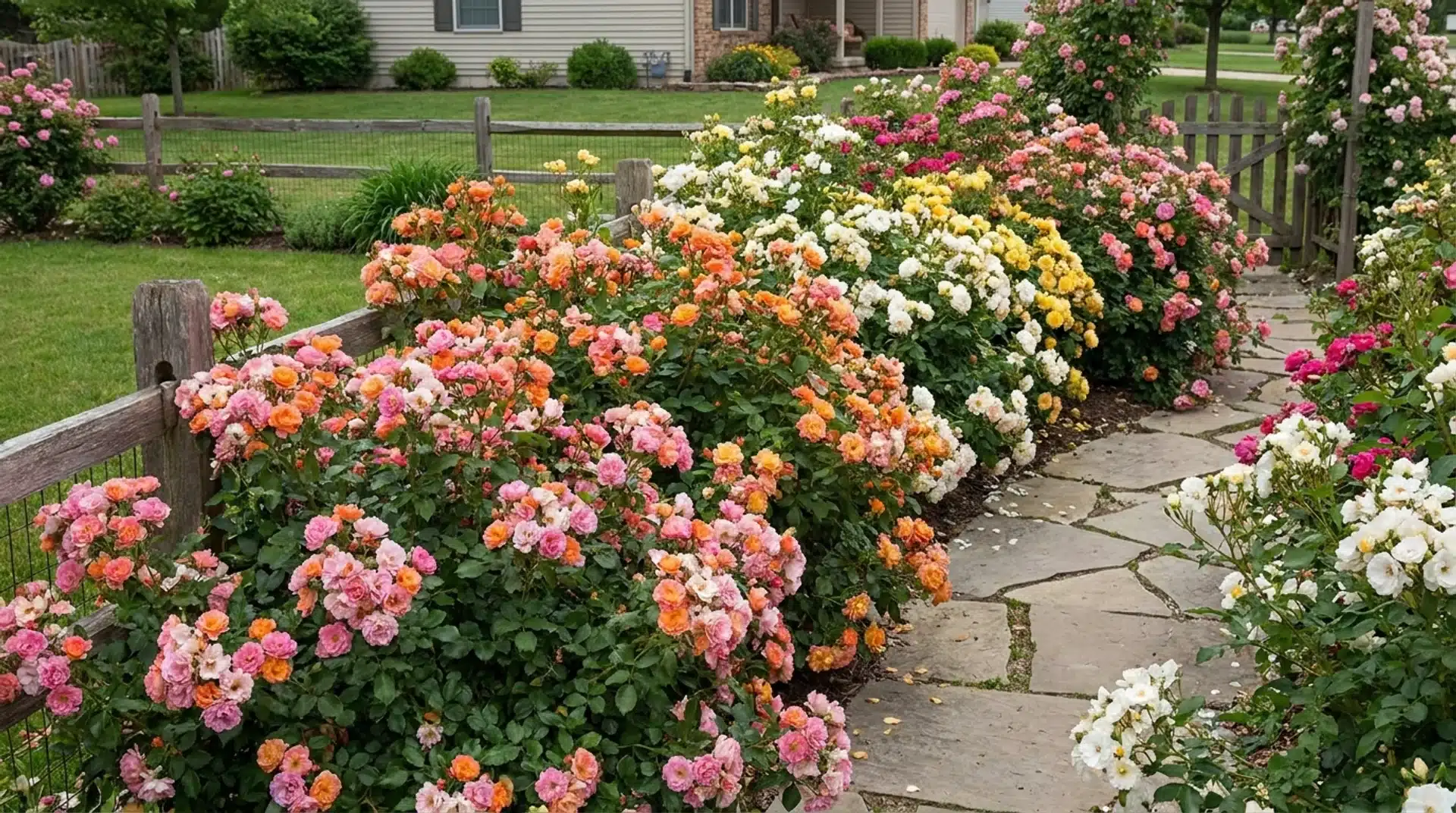
Floribunda roses produce large clusters of blooms on every cane rather than one bloom per stem.
They are a cross between hybrid tea and polyantha roses. The aim was to combine showy flowers with cluster growth and season-long color.
Floribundas repeat-bloom from late spring through fall. They are harder and more disease-resistant than hybrid teas, which makes them a solid pick for most home yards.
One thing to check is that many floribunda varieties have little to no fragrance. If scent is a priority, read the label before you buy.
Floribundas grow 2 to 5 feet tall, with a bushy, outward-spreading habit. They perform well in borders, garden beds, mixed containers, and on slopes where erosion control is needed.
Their continuous bloom makes them one of the better options for gardeners who want color with minimal intervention.
Popular varieties include ‘Iceberg’ (white, very prolific), ‘Julia Child’ (yellow, fragrant), and ‘Cinco de Mayo’ (rust-orange, award-winning).
Best for: Border color, mass planting, and erosion control on slopes.
5. Grandiflora Roses
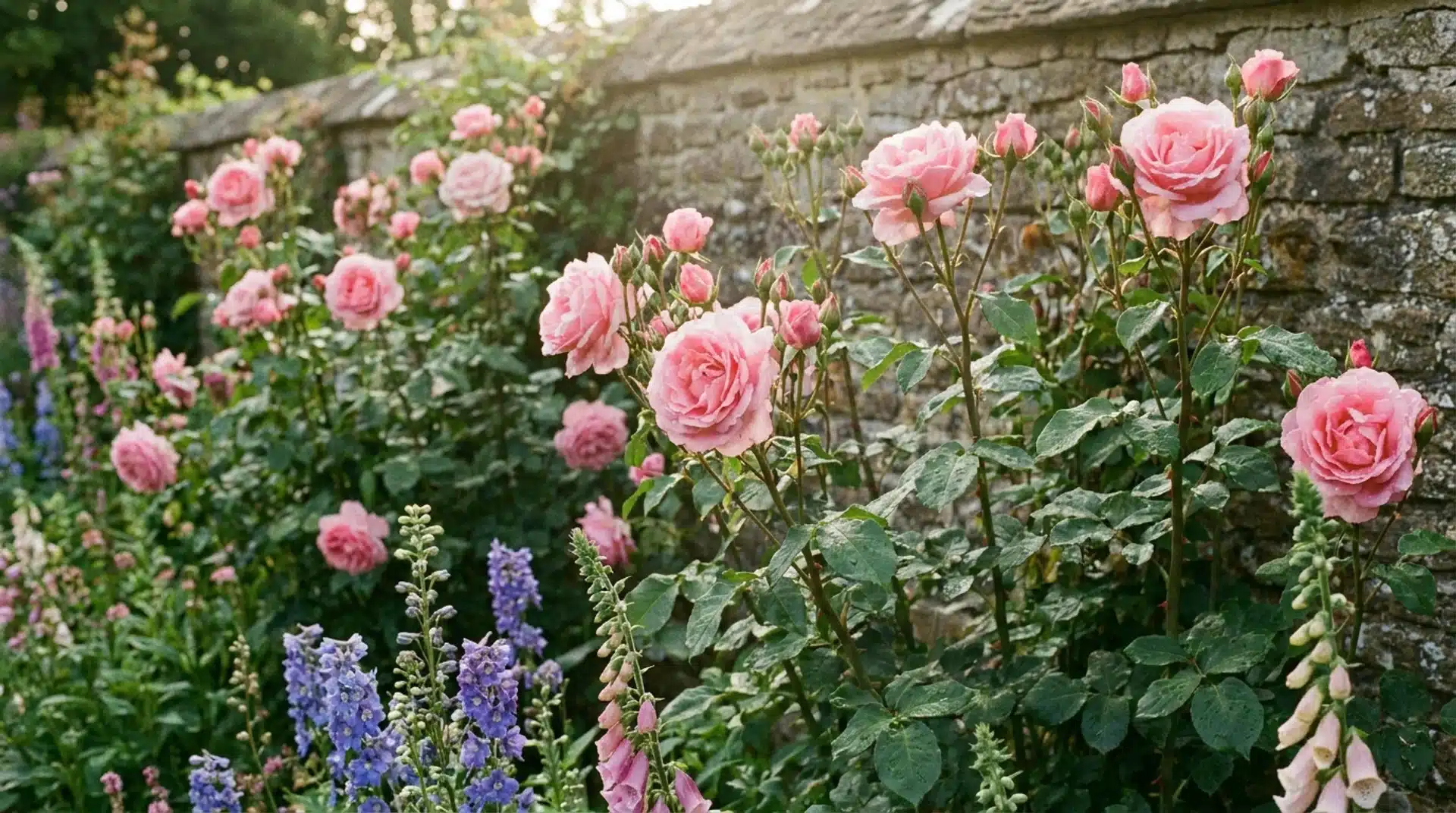
Grandiflora roses combine the best of two worlds: hybrid tea and floribunda.
Breeders created the class in 1954. The first grandiflora, ‘Queen Elizabeth,’ came from a cross between the hybrid tea ‘Charlotte Armstrong’ and the floribunda Floradora.’
The rose was named for Queen Elizabeth II. It won so many awards that growers needed a new class just to describe it.
Grandifloras take their high-centered, long-stemmed blooms from hybrid teas. They take their cluster growth and repeat blooming from floribundas.
Blooms usually appear in small clusters of three to five, though some stems carry a single flower. Flower size sits between a hybrid tea and a floribunda.
Plants grow tall, usually 4 to 6 feet, with some reaching up to 8 feet. That height makes them a strong choice for the back of a border or as a flowering hedge.
They bloom in flushes from late spring through fall. Most varieties carry a light to moderate fragrance.
Grandifloras need care similar to hybrid teas. Regular feeding, watering, and some disease monitoring keep them healthy through the season.
‘Queen Elizabeth’ remains the most famous variety, prized for its clear pink blooms. Other options include ‘Gold Medal’ (golden yellow) and ‘Dick Clark’ (cream edged in red).
Best for: Back-of-border planting, flowering hedges, and cut flowers with extra height.
6. Climbing Roses
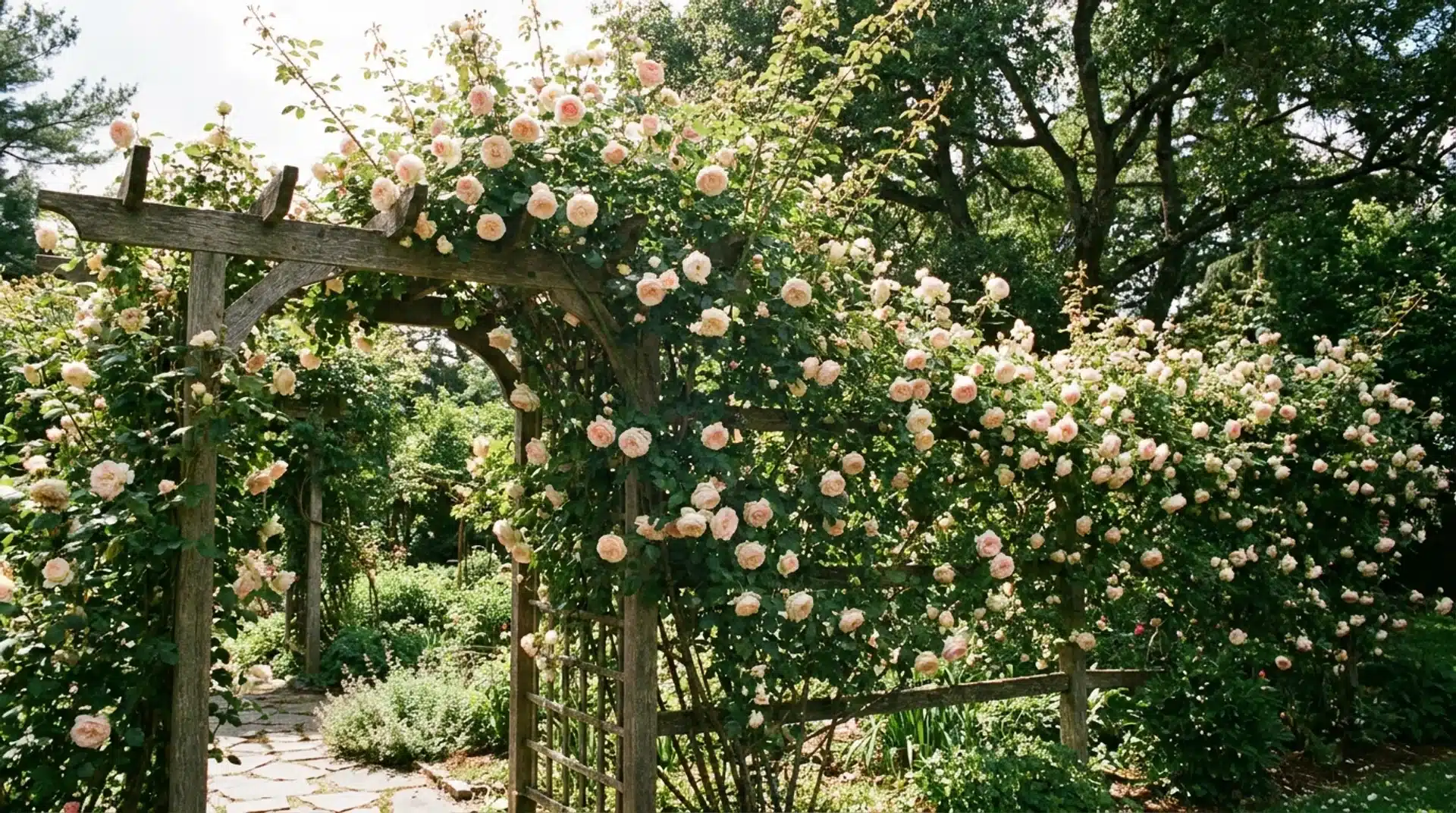
Climbing roses do not self-climb. They need to be trained onto a support structure such as a trellis, pergola, arbor, or fence.
Canes grow 12 to 20 feet long. When trained horizontally rather than vertically, they produce more flowers.
Climbing is a growth form, not a separate rose class. Any rose type can have a climbing version, including hybrid teas and floribundas. Most modern climbing roses repeat-bloom, most are fragrant.
Many gardeners confuse climbers and ramblers. They are not the same. Let’s understand the difference:
- Climbing roses grow in a more structured way. They bloom on new canes each year and repeat-flower. They are well-suited to arches and pergolas.
- Rambling roses are more vigorous and harder to manage. They bloom once in June and July on last year’s growth. They work better for covering large walls, fences, or trees.
Ramblers need less structured pruning and guidance and are generally the simpler starting point. Popular varieties include ‘Fourth of July’ (red-white striped, repeat-blooming), ‘Eden’ (soft pink, repeat-blooming), and ‘New Dawn’ (pale pink rambler).
Best for: Vertical interest, fences, walls, and pergola features.
7. Shrub Roses
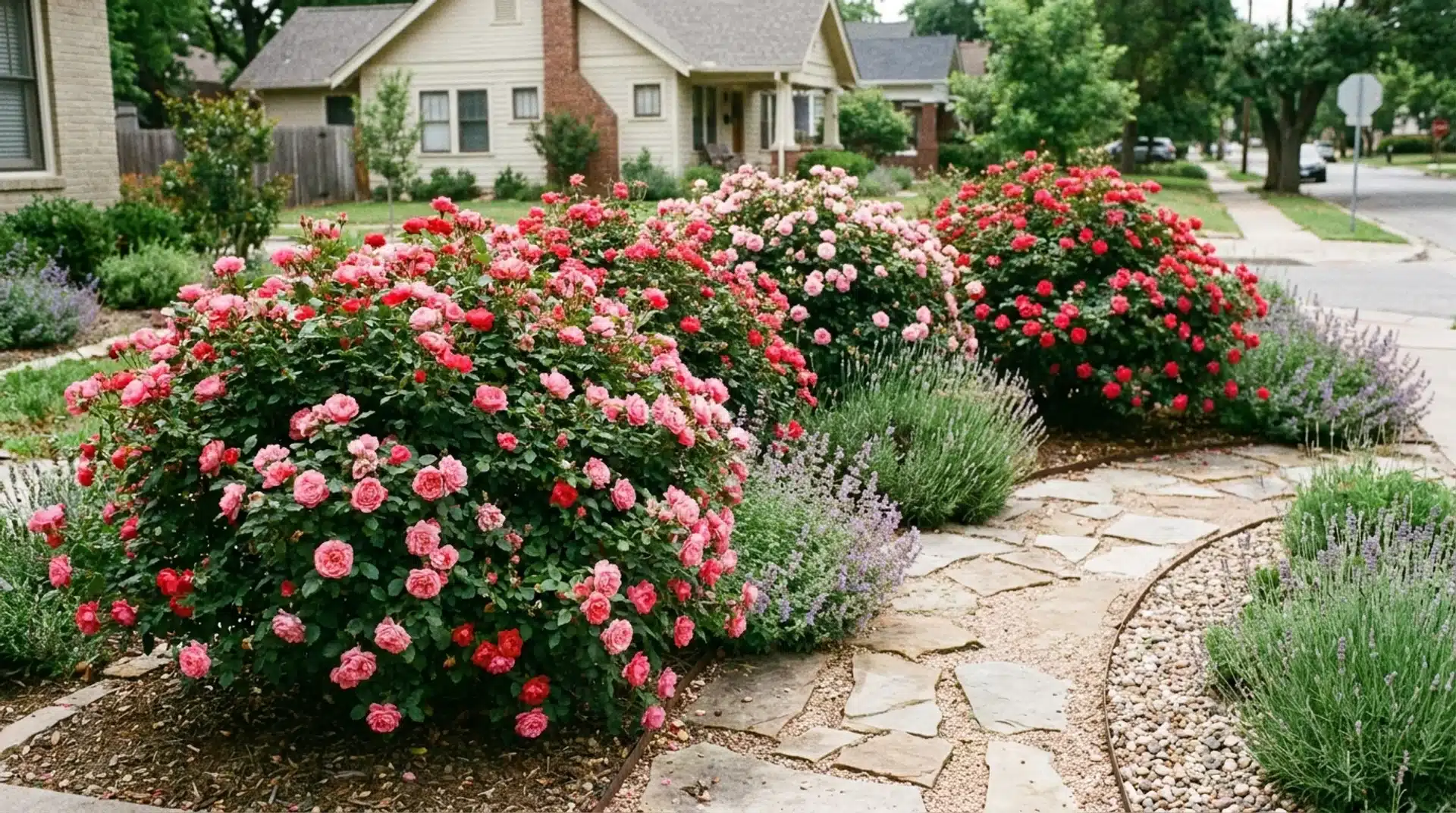
For those planting roses at home, shrub roses offer the best balance of color, hardiness, and low upkeep.
Shrub roses are a broad modern category. They do not fit cleanly into classes like hybrid tea or floribunda. What they share is strong disease resistance, repeat bloom from spring through fall, and reliable performance in most garden settings.
They grow in an open, outward-reaching shape. Size ranges from 2 to 8 feet tall depending on the variety.
The Knock Out® rose series was introduced in 2000 and quickly became the best-selling rose in the US. It resists disease, requires minimal pruning, and blooms without deadheading. It comes in several colors, including red, pink, and yellow.
One term that confuses many shoppers is “English rose.” It is not an official class. It is a marketing name for David Austin roses.
These shrub roses combine the fragrant, full-petal form of Old Garden roses with the repeat bloom of Modern roses. They perform best in milder regions with cooler summers.
Popular varieties include ‘Knock Out’ (red, low-maintenance), ‘Graham Thomas’ (yellow, richly fragrant, David Austin), and ‘Berliner Morgen’ (pink, bushy).
Best for: Borders, hedges, front yards, and low-maintenance landscapes.
8. Miniature Roses
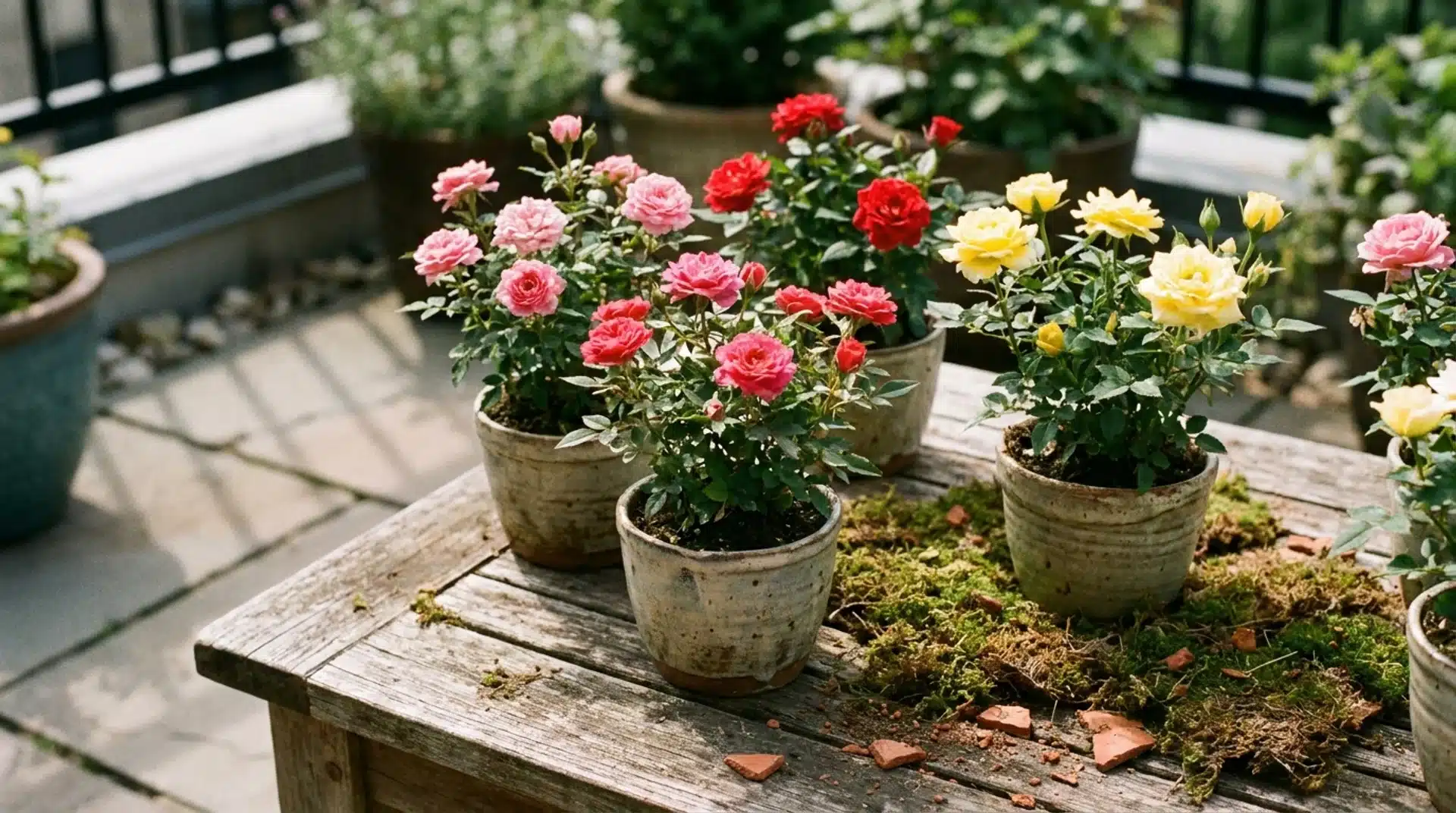
Miniature roses are small in size but not in output. They grow 15 to 30 inches tall and follow hybrid tea or floribunda forms at a smaller scale.
They bloom in clusters repeatedly through the season. Colors range widely, and some varieties are fragrant.
They are well-suited to containers, patio planters, raised beds, and small garden spaces. Pruning is straightforward, and they resist pests and diseases better than hybrid teas.
A popular variety is ‘Sweet Sunblaze,’ which produces tiny pink double blooms on an 18-inch plant. Miniature roses also work well on a sunny windowsill with strong, direct natural light. They are one of the most beginner-friendly types available.
Best for: Containers, patios, small yards, and first-time rose growers.
Which Type of Rose Fits Your Garden?
The right rose comes down to one question: what do you need it to do?
Use this table to match your goal to the right type:
| Your garden goal | Best rose type |
|---|---|
| Cut flowers with long stems | Hybrid Tea |
| Season-long color with little effort | Floribunda or Shrub Rose |
| Cover a fence, wall, or pergola | Climbing or Rambling Rose |
| Strong fragrance and old-world charm | Old Garden Rose (Damask or Bourbon) |
| Container or patio planting | Miniature Rose |
| Wildlife-friendly yard | Wild or Species Rose |
| Low-maintenance hedge or border | Shrub Rose |
| Cold-climate garden | Alba or Shrub Rose |
Your USDA hardiness zone also matters. A variety that performs in zone 7 may not survive zone 4. Check zone compatibility before buying, especially for hybrid teas and old garden roses.
Pick the Goal, Then Pick the Rose
The different types of roses each solve a specific gardening problem.
A floribunda fills a border with color all season. A hybrid tea gives you long-stemmed cut flowers. A shrub rose like Knock Out needs almost no care and blooms without deadheading.
An old garden rose brings fragrance that modern breeding rarely matches. A miniature rose fits a patio pot. A wild rose supports birds and pollinators without asking much in return.
Pick based on purpose first. Color comes second. That order will save you money, time, and the frustration of a plant that never performs the way you hoped.
Take your time comparing the types before you buy. The right match is worth the extra five minutes of research. Which type of rose are you planning to try this season? Share your pick in the comments.
Frequently Asked Questions
What Animal Eats Roses at Night?
Deer, rabbits, possums, and some insects commonly feed on roses after dark. Chewed leaves, missing buds, or stripped stems often help identify the nighttime visitor damaging your rose plants.
What Does Epsom Salt Do to Roses?
Epsom salt provides magnesium, which supports healthy foliage and flower production when the soil lacks this nutrient. Use it sparingly, as excessive application can disrupt soil balance and plant health.
What are the Tiny Bugs that Feed on Roses?
Common tiny rose pests include aphids, thrips, spider mites, and whiteflies. These insects feed on sap, causing curled leaves, distorted blooms, yellowing foliage, and reduced plant vigor if untreated.