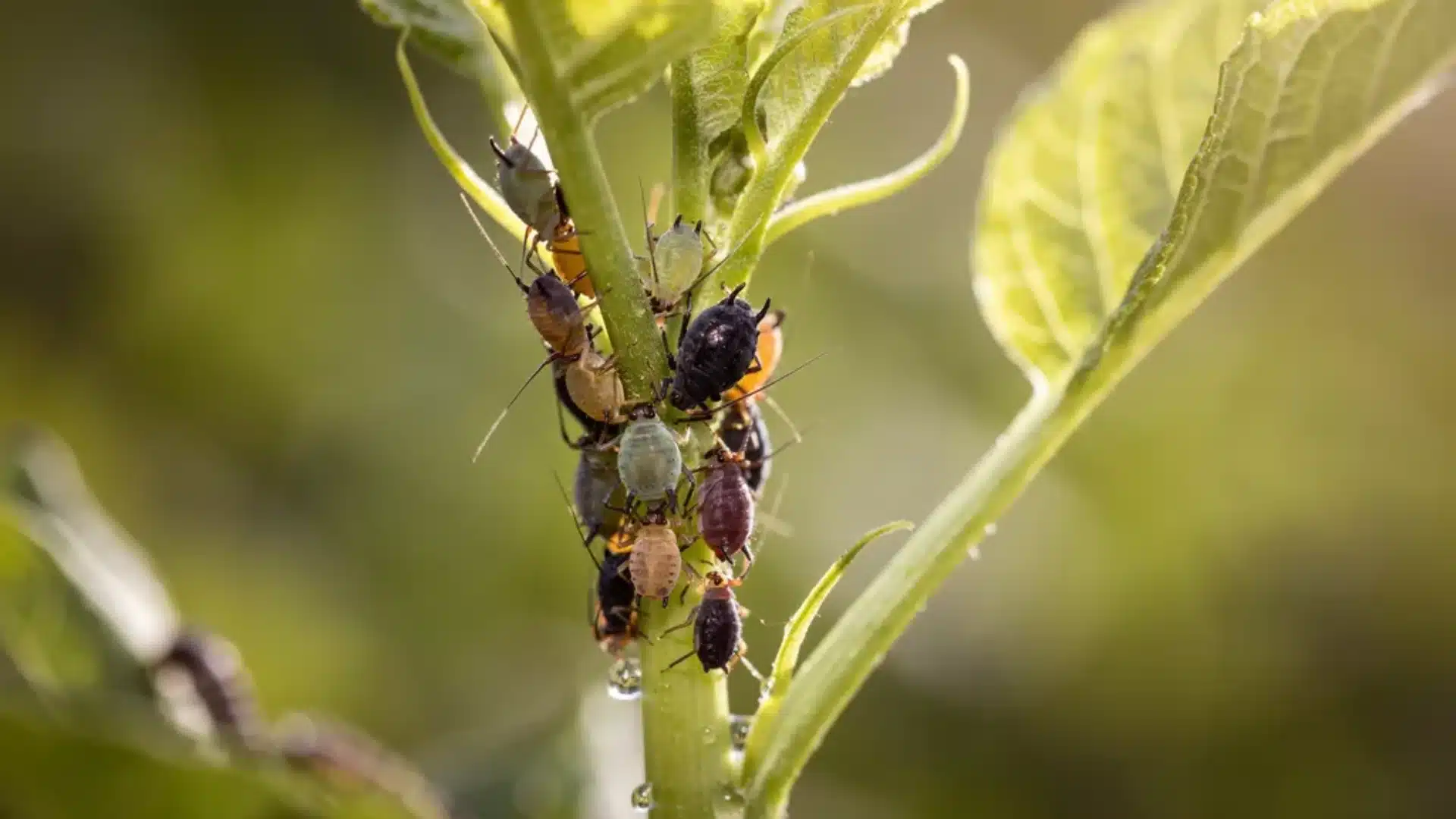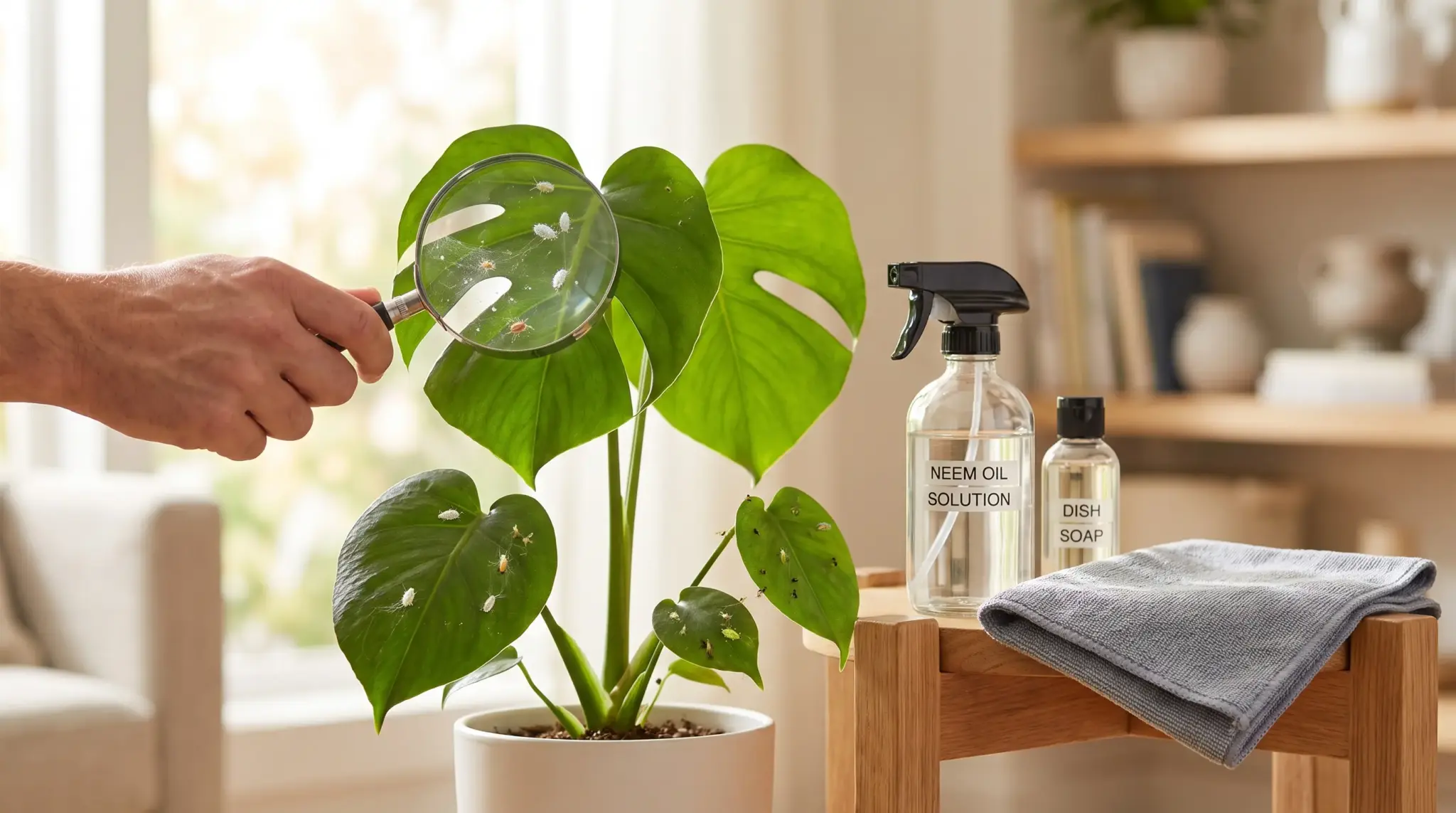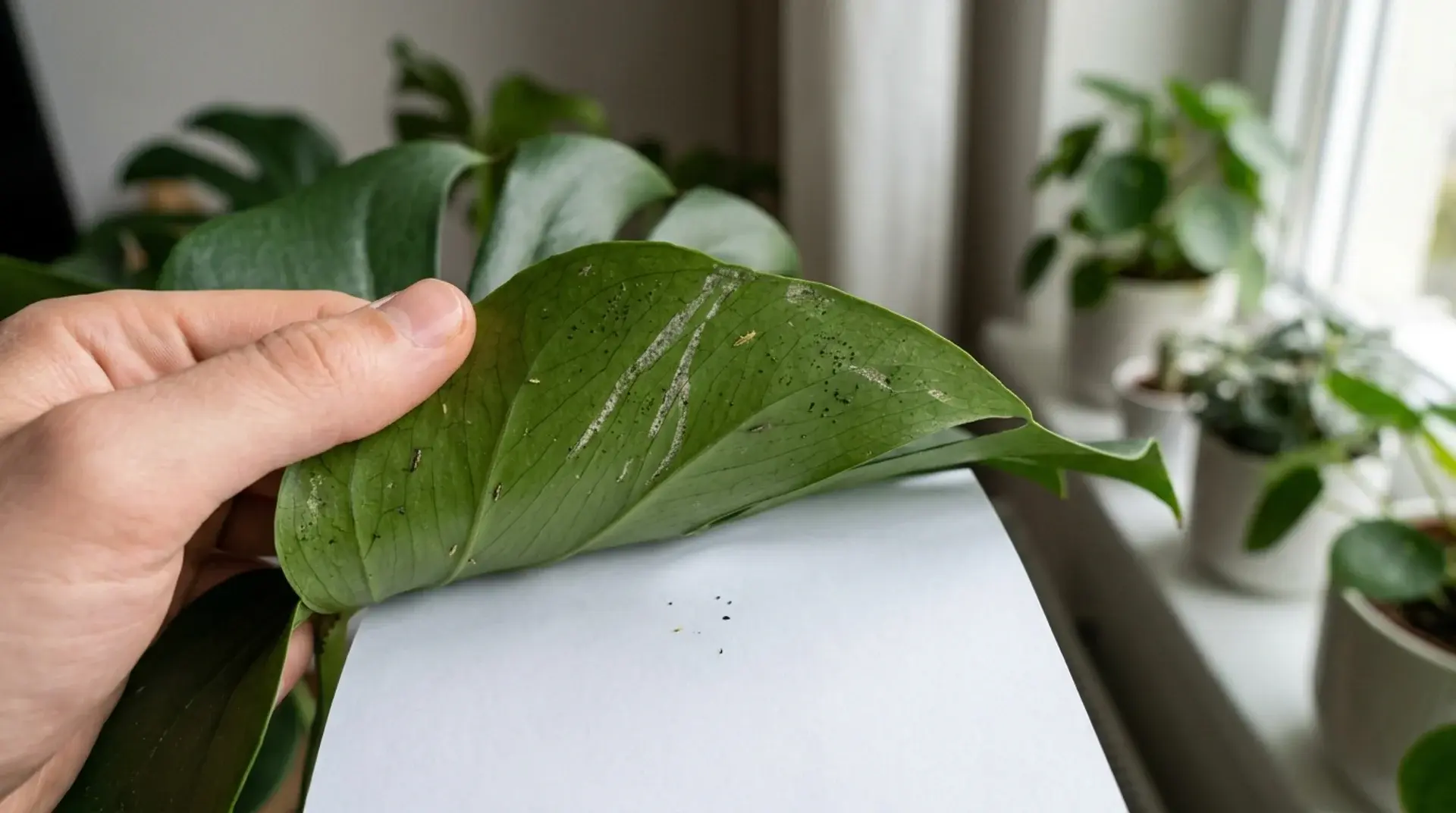

Roses are a favorite target for stubborn garden pests. Aphids cluster on new stems almost overnight. Japanese beetles strip leaves clean before you notice.
Nematodes weaken roots underground with no visible signs above the soil. Reaching for a chemical spray feels like the only answer, but it is not.
Many gardeners find that the plants growing next to their roses matter more than any product in a bottle.
Garlic and chives are known to repel common garden pests when planted nearby.
Companion plants discourage pests through natural compounds in their leaves and roots.
Here are various companion plants for roses to keep pests away, grouped by how each one works.
13 Powerful Companion Plants for Roses to Keep Pests Away
These 13 companion plants for roses to keep pests away are grouped by how they work. Picking at least one plant from each group gives your rose bed layered protection through the full growing season.
Plants That Repel Pests With Scent
Aromatic companions release strong-smelling oils that confuse insects searching for your roses.
These scent-based defenses are also widely used in vegetable gardens, especially in systems like marigold companion planting, where soil and scent protection work together across multiple crops.
1. Garlic
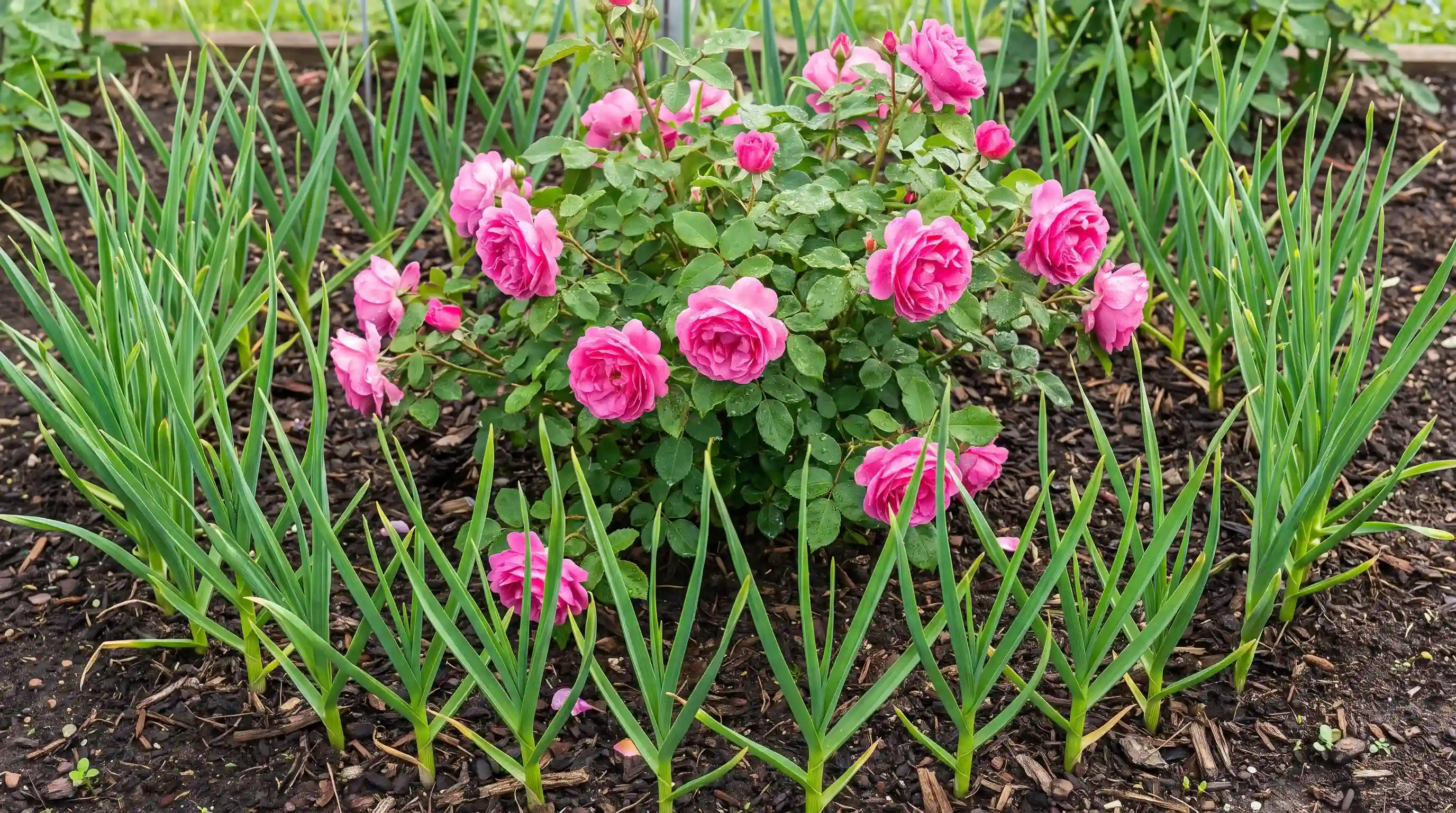
Garlic is one of the strongest pest deterring plants you can grow near roses. Its sulfur compounds repel aphids, ants, and snails through scent alone.
This same principle is also seen in plants that repel Japanese beetles, where strong plant chemistry disrupts insect feeding behavior.
Garlic also carries antifungal properties that help stop black spot disease from spreading across rose leaves. Plant individual cloves around the drip line of each rose bush.
As a bonus, garlic grown near roses tends to make their blooms smell sweeter.
2. Lavender
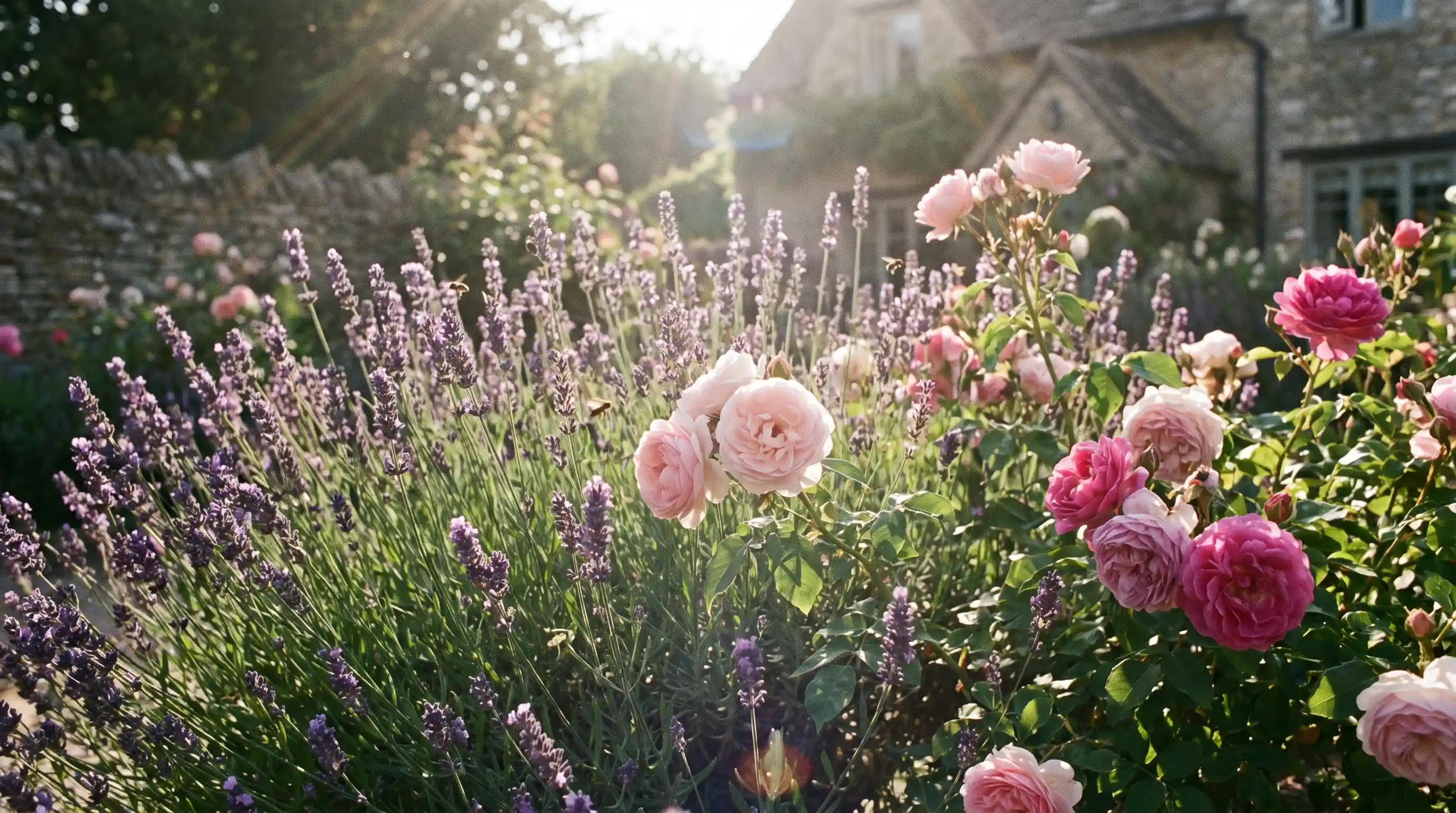
Lavender deters aphids and rabbits with its strong, persistent fragrance. It pulls in bees and other pollinators throughout the growing season.
Both lavender and roses need full sun and well drained soil. They share growing conditions without competing for resources.
English lavender varieties grow well across most US hardiness zones. They return each year with very little attention required.
3. Catmint (Nepeta)
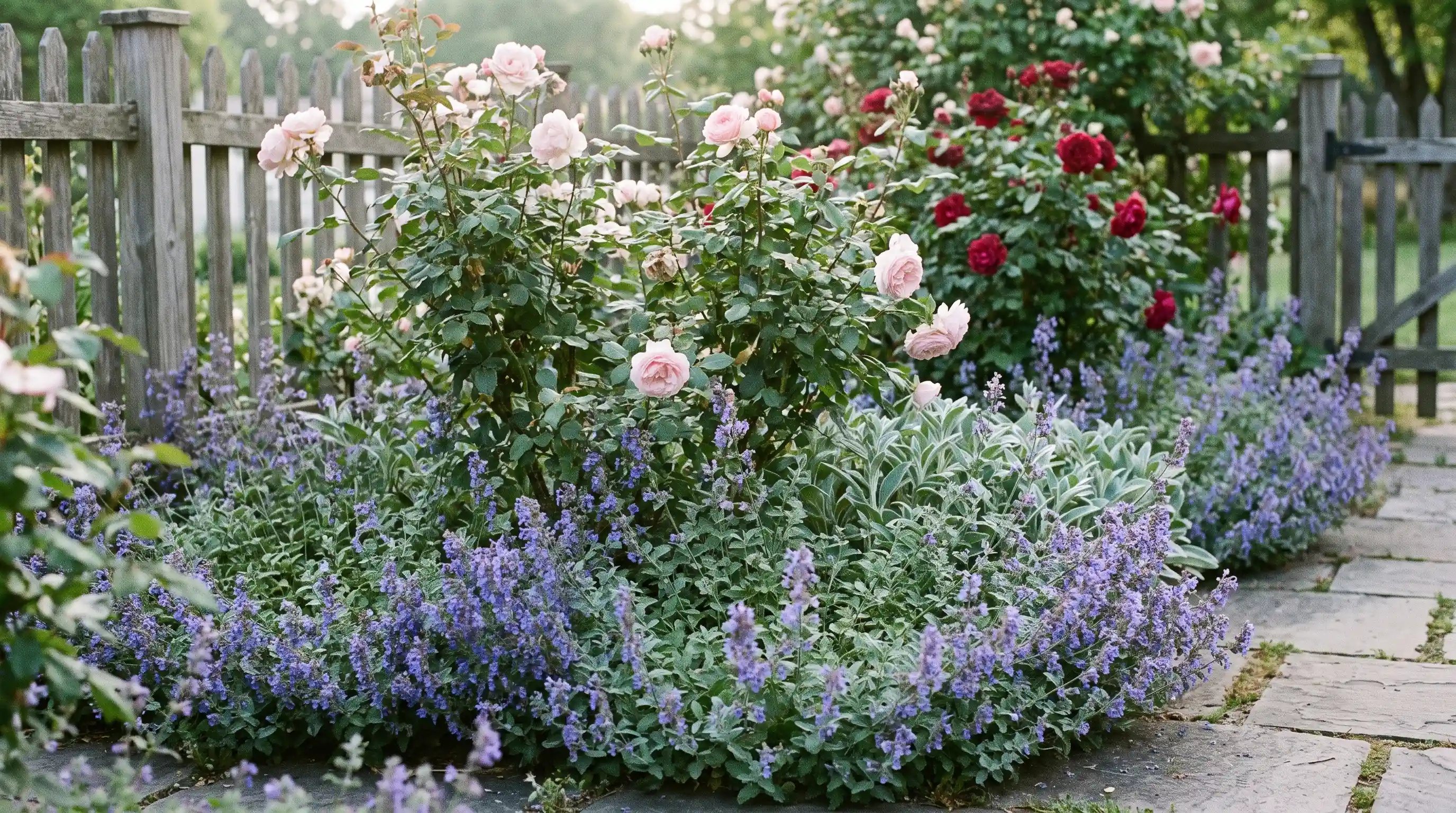
Catmint produces a scent that specifically repels Japanese beetles and aphids. Its spreading habit works well under rose canes.
Similar pest-resistant planting combinations are often used in marigold companion systems, where ground-level plantings help create layered protection in garden beds.
It blooms in soft waves of blue-purple flowers and needs almost no maintenance after the first growing season.
Cut it back after the first flush of blooms, and it comes back fuller.
4. Rosemary
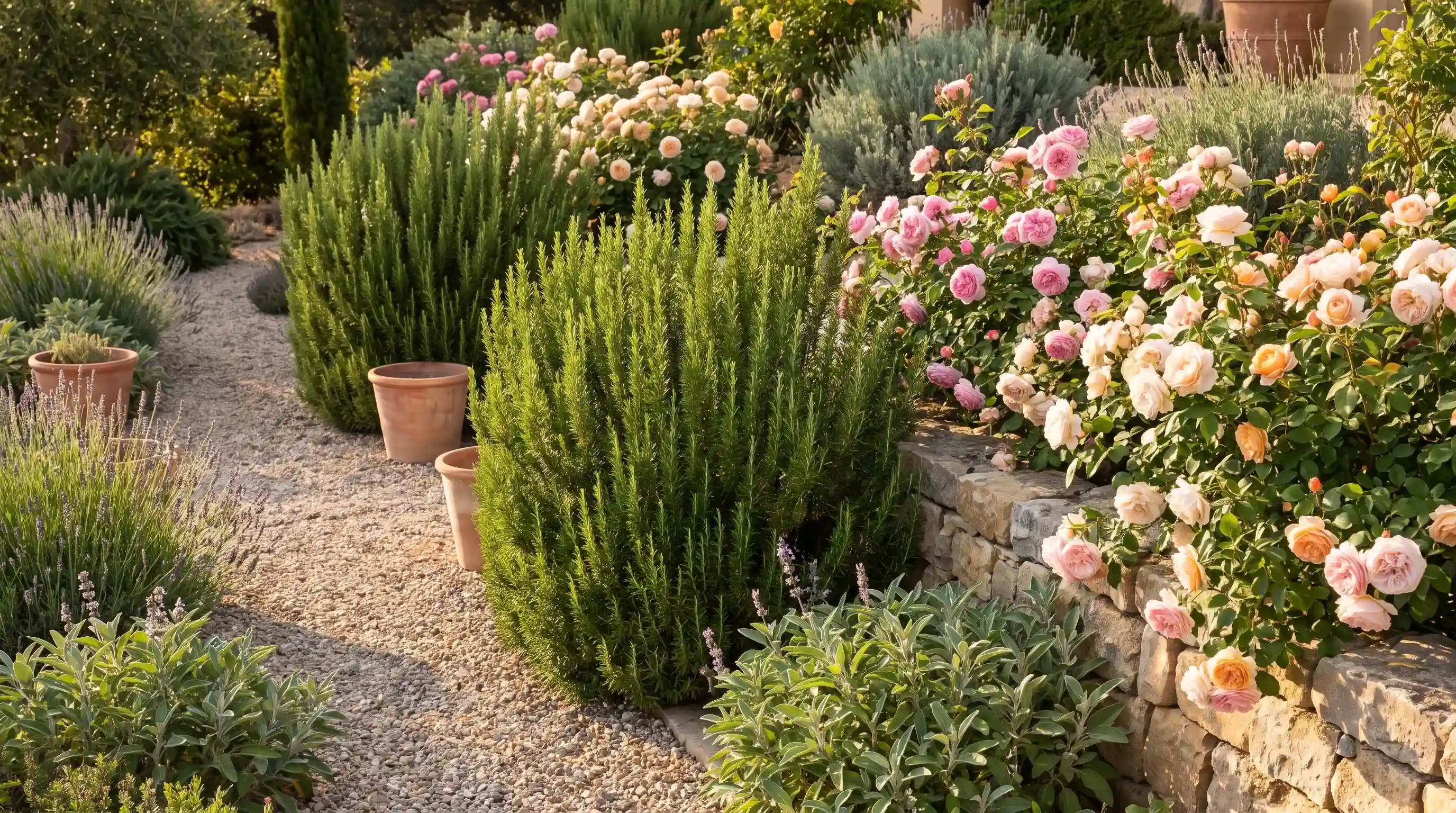
Rosemary deters aphids, spider mites, and beetles through its intense herbal scent. It is drought-tolerant once established, making it a practical partner for roses in hot and dry US climates.
Its upright form provides good visual contrast next to rose blooms without taking over the bed. Rosemary grows well in USDA zones 7 through 10 without winter protection.
5. Marigolds

Marigold roots release a natural compound that kills nearby soil-dwelling nematodes. Their scent also deters aphids from plants growing around them.
French marigolds (Tagetes patula) deliver the strongest nematode-fighting effect. They are annuals, so plan to replant each spring.
For best results, ring your rose bed with marigolds from late spring through the first fall frost.
6. Chives
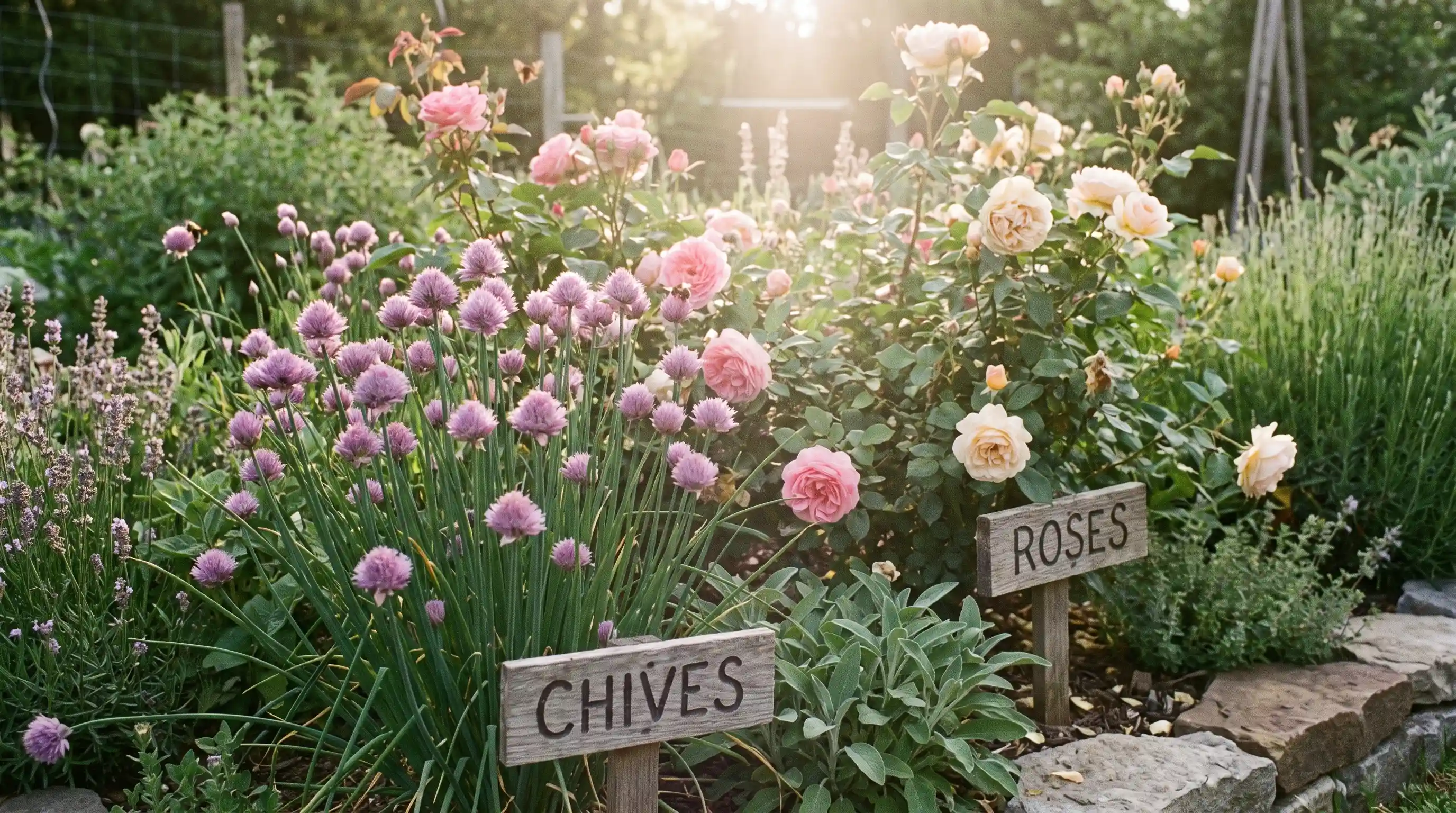
Chives belong to the Allium family, the same group as garlic and onions. Their strong scent wards off aphids and Japanese beetles from nearby roses.
They return each year reliably and look charming when planted in clusters around shrub roses.
Chive flowers also attract pollinators from late spring into early summer, adding useful insect activity during that period.
How Trap Plants Draw Pests Away
A trap crop works by pulling pests toward itself before they reach your roses.
Aphids and other insects move to the trap plant first, leaving your roses undisturbed. These three plants are the most reliable trap crops to use alongside a rose bed.
7. Nasturtiums
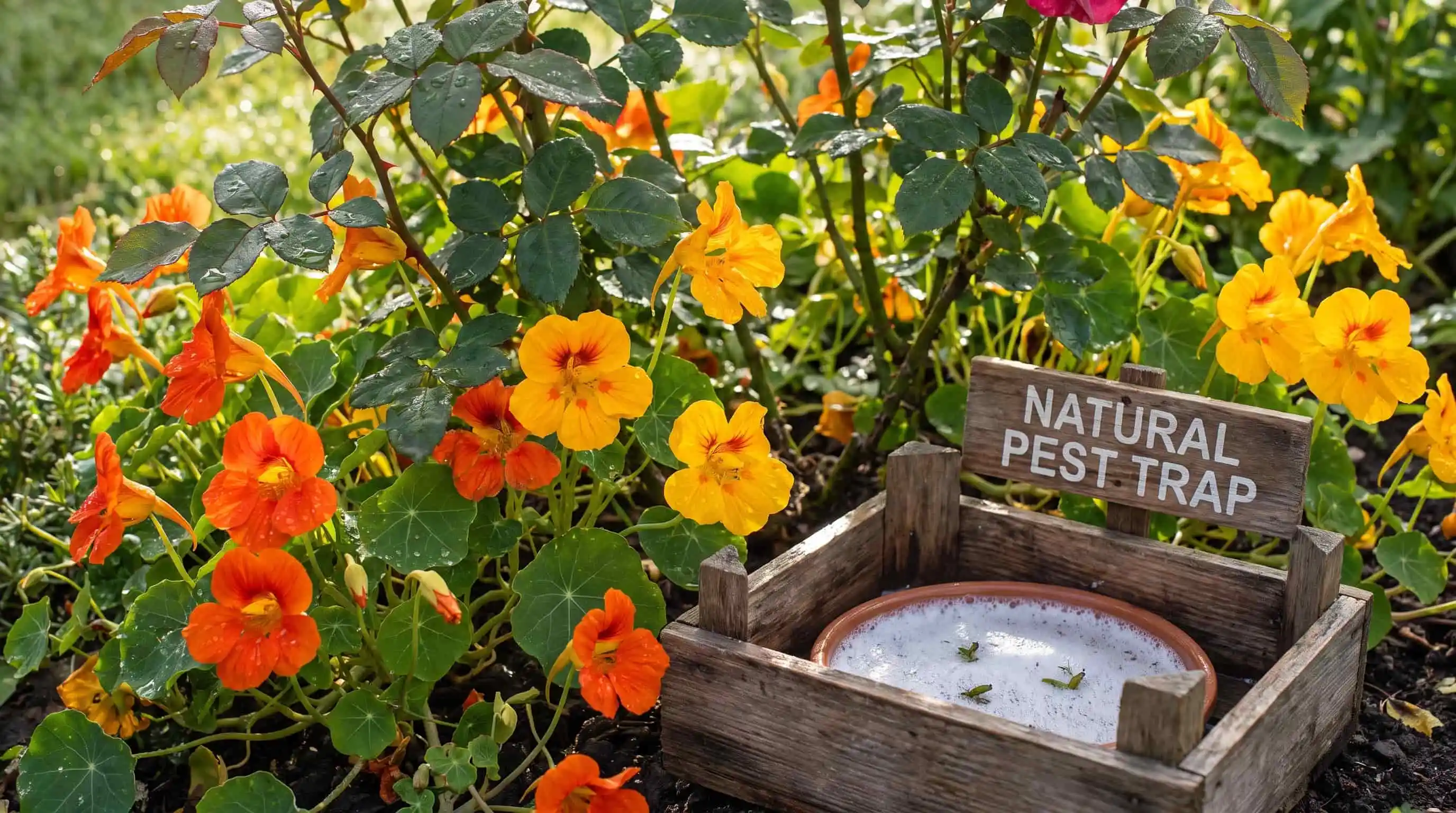
Nasturtiums are the most effective aphid trap crop for rose gardens. Aphids move to nasturtium leaves in large numbers and leave nearby roses alone.
They grow fast from seed, need very little water, and thrive in full sun. The flowers and leaves are both edible, adding a peppery bite to salads.
Plant them after your last frost date for season-long coverage near your roses.
8. Sunflowers

Sunflowers act as a trap for aphids and whiteflies during peak summer months. Pests are drawn to their large, thick stems first, pulling pressure away from nearby roses.
Plant sunflowers toward the back of your bed so their height does not shade the roses.
When aphid colonies gather on the stalks, remove and discard those stalks to cut the pest population.
9. Fennel
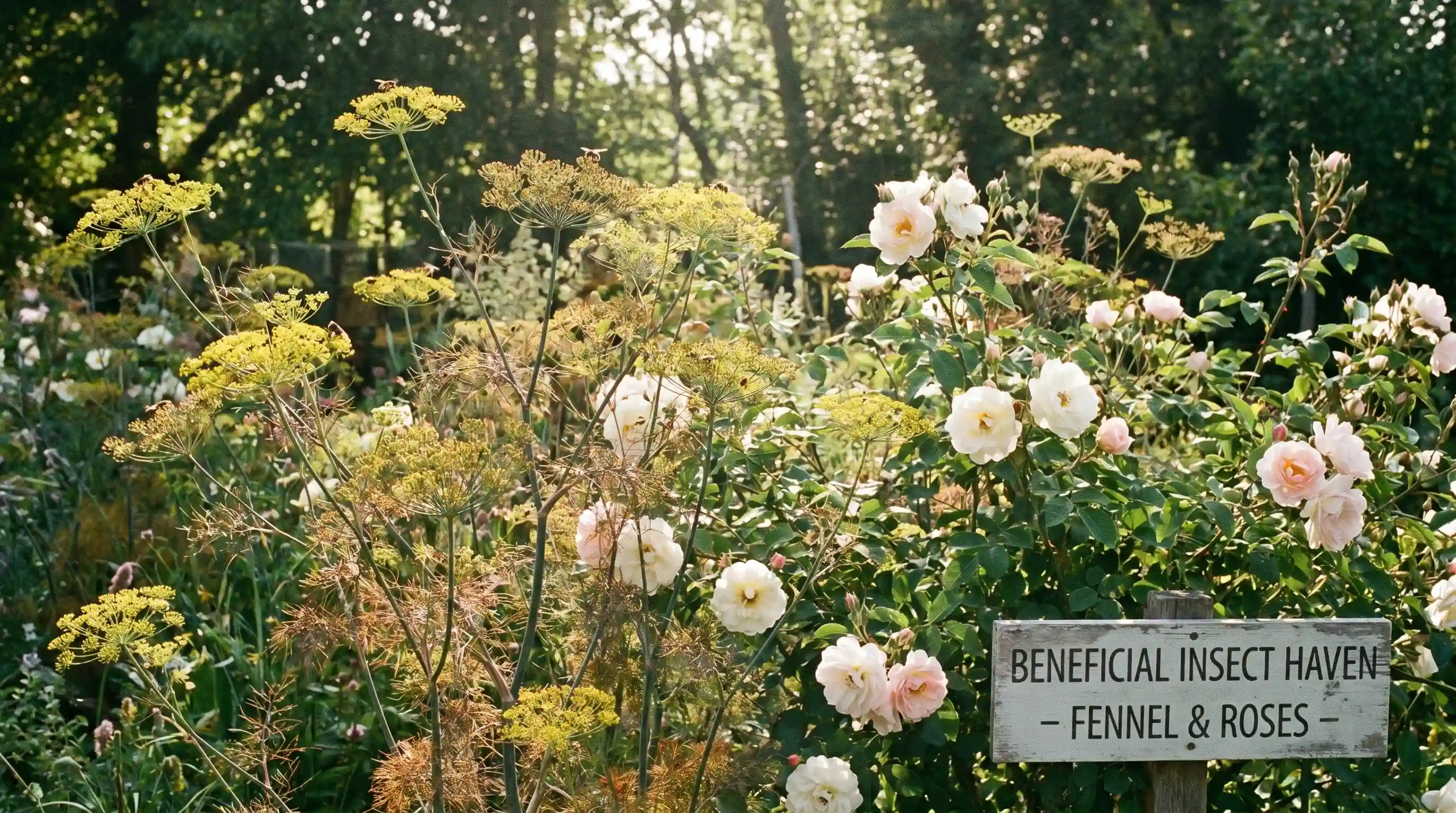
Fennel attracts aphids throughout the summer, serving as an effective trap crop with a secondary benefit.
Its open flower heads also attract parasitic wasps and ladybugs that prey on rose pests.
Plant fennel at the edge of your rose garden rather than in the center. Keep it away from vegetable beds, as fennel can slow the growth of many vegetable crops.
Plants That Bring in Pest-Eating Insects
These plants do not repel pests directly. They attract the natural predators that hunt and eat them.
Adult hoverflies, ladybugs, and parasitic wasps need flower nectar to thrive. Their larvae feed on aphids and other rose pests at high rates.
10. Yarrow
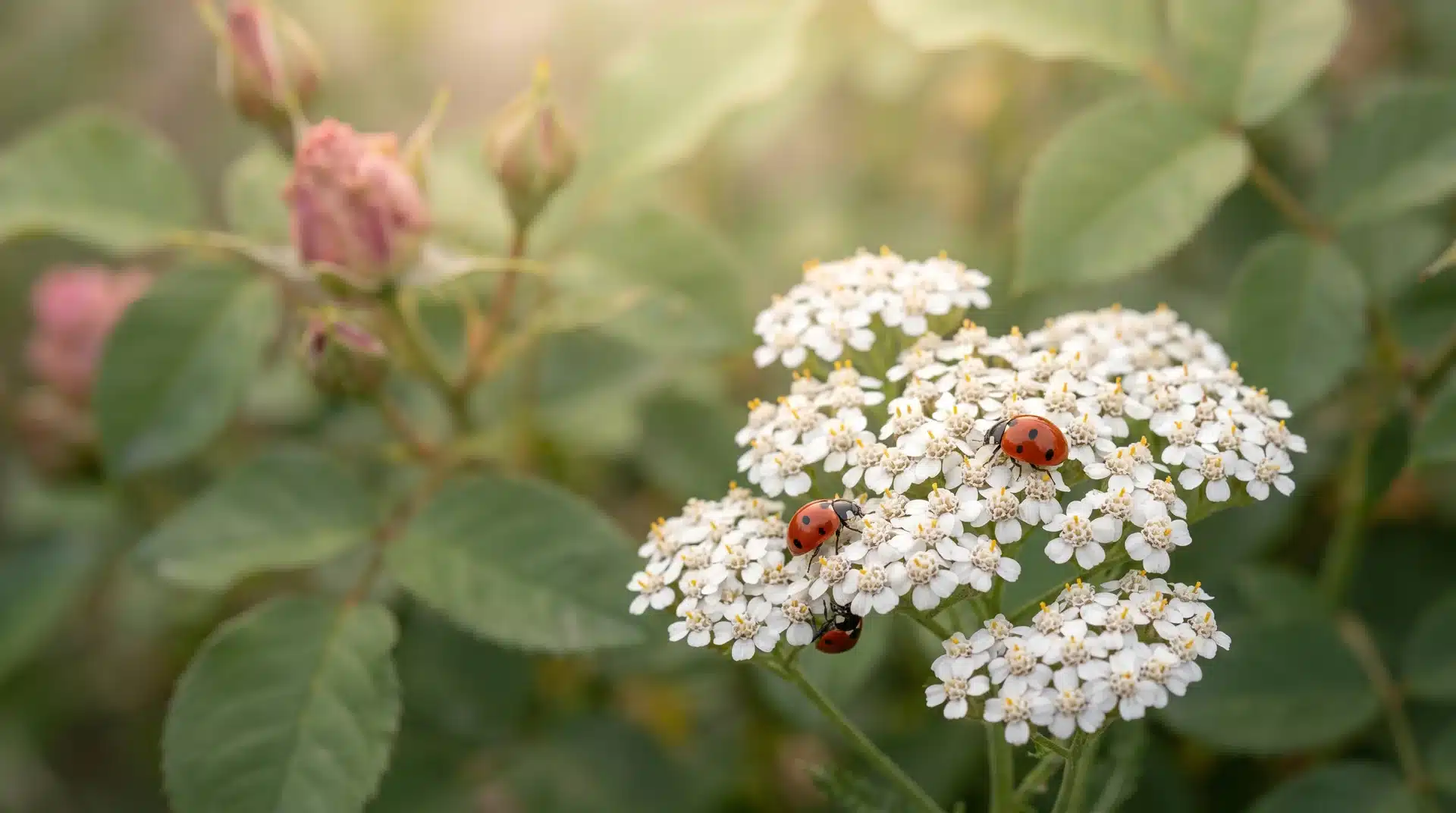
Yarrow’s flat topped flower clusters give small beneficial insects an easy landing surface. It is one of the strongest attractors for ladybugs, which eat aphids in large quantities daily.
Yarrow also draws parasitic wasps that target many common rose pests.
It grows well in full sun with very little watering once established. It is a low-effort addition to any rose bed.
11. Parsley
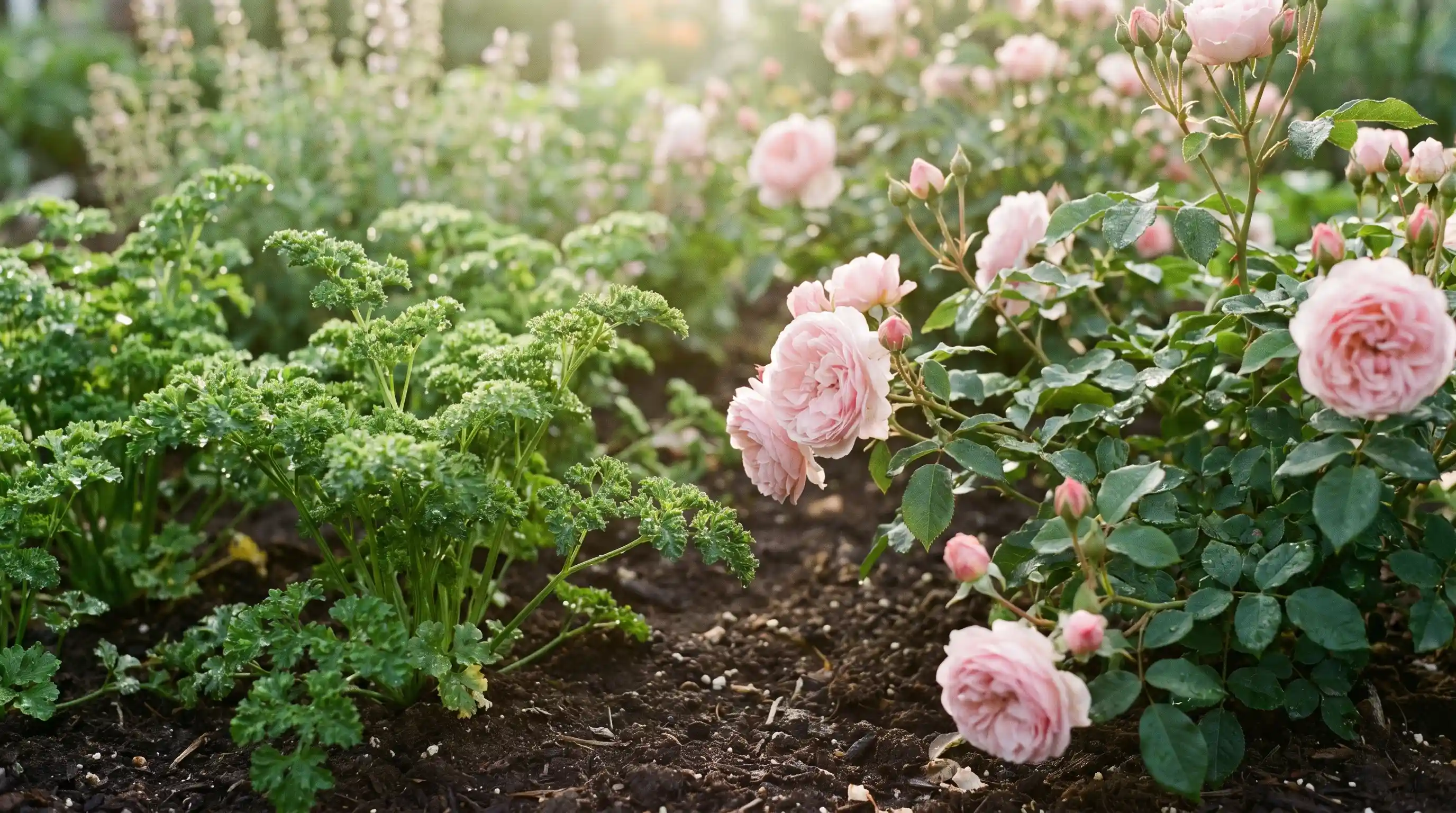
Parsley attracts hoverflies, whose larvae actively feed on aphids, thrips, and harmful beetles.
It also draws swallowtail butterflies, which add visible life to your garden through the summer.
Like garlic, parsley planted near roses is believed to improve the fragrance of the roses’ blooms over time. It grows well in the same full-sun conditions that roses prefer.
12. Borage
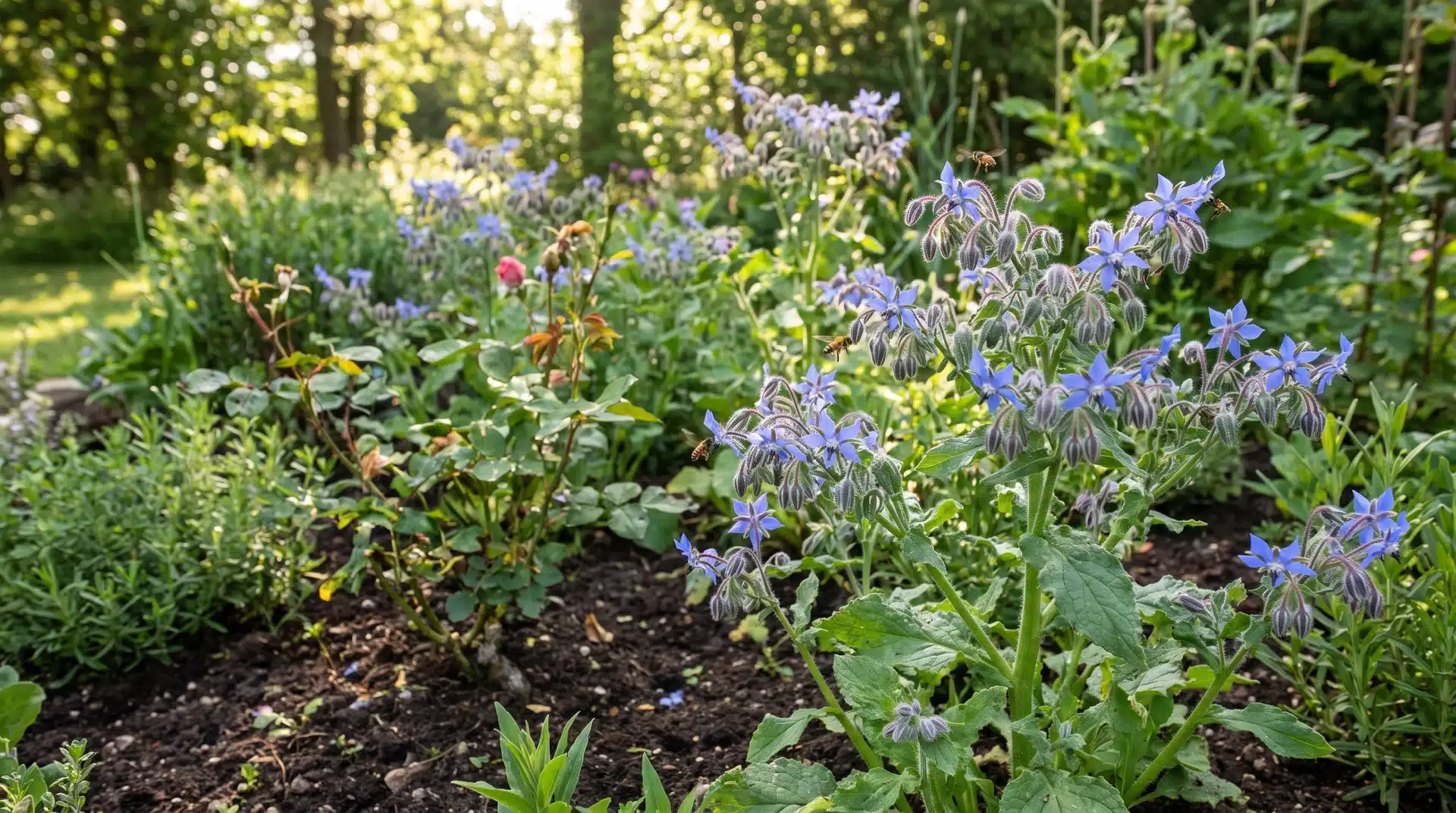
Borage produces bright blue, star-shaped flowers that draw parasitic wasps, hoverflies, and lacewings. All three are active aphid predators that reduce pest populations without extra effort.
As its leaves break down, borage returns trace minerals to the soil.
Nearby rose roots get a small nutritional benefit. It self-seeds freely, so one planting may return on its own the following season.
13. Scented Geraniums (Pelargonium)
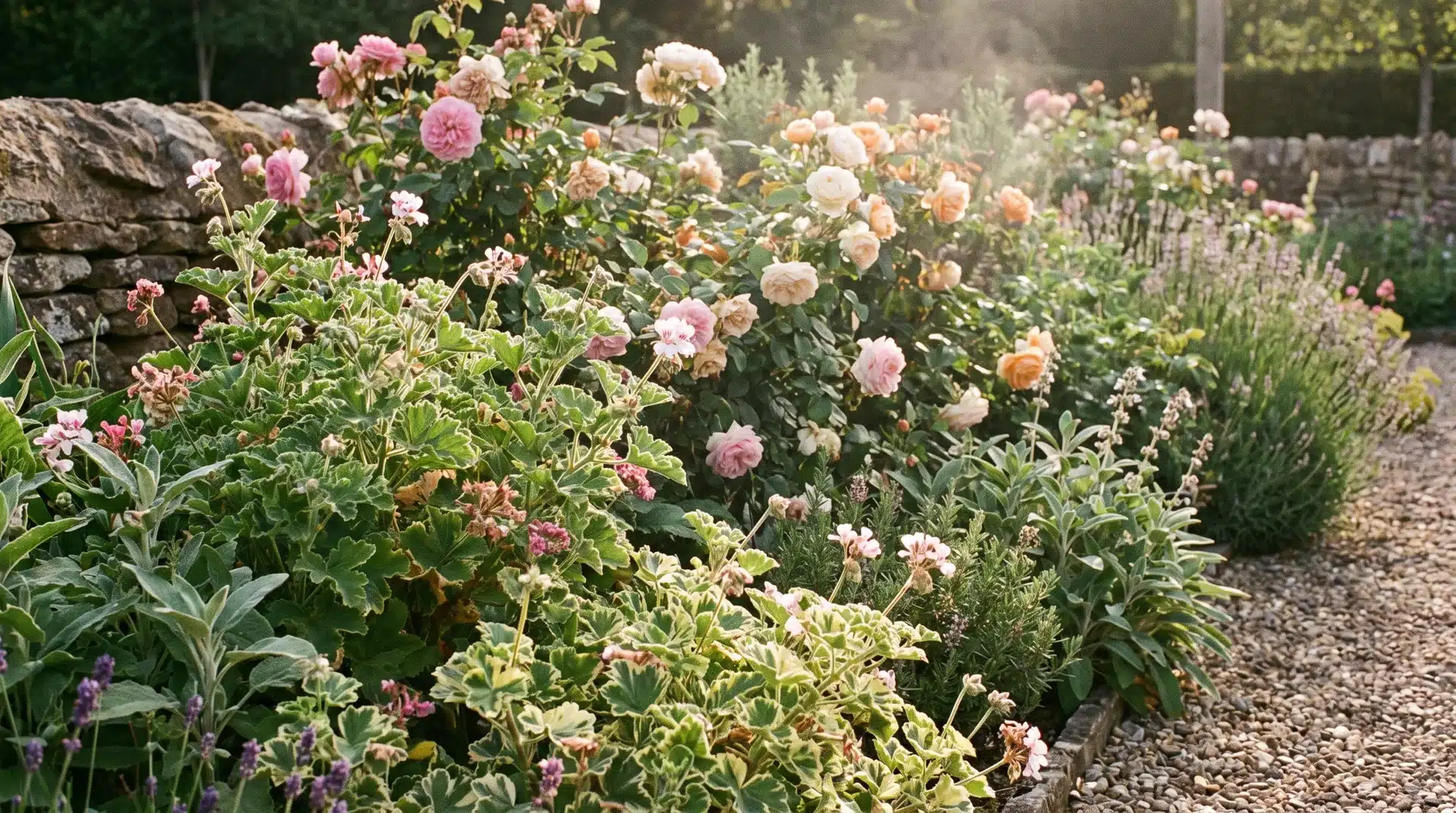
Scented geraniums repel Japanese beetles and other damaging insects that target rose bushes. They fill the mid-level space around rose canes without competing hard for nutrients or water.
Scented geraniums are recognized as effective rose companions. They offer pest protection, along with useful texture and fragrance at ground level.
They grow well in full sun and can be brought indoors over winter in colder climates.
Ideal Distance Between Roses and Companion Plants
Placement matters as much as plant selection when it comes to protecting your roses. Placing companion plants too close together creates airflow problems and forces roots into direct competition.
- Plant all companions 12 to 18 inches away from the base of each rose bush.
- Place low-growing plants like catmint, chives, and parsley around the front of the rose canes.
- Put taller plants like sunflowers, fennel, and borage toward the back so they do not shade the roses.
- Never crowd the base of a rose bush. Good air circulation stops black spots and powdery mildew from taking hold.
What Plants Should You Avoid Planting?
Some plants cause more problems than they solve when grown near roses. Knowing what to skip saves you from avoidable issues later in the season.
- Large Ornamental Grasses and Aggressive Shrubs: Their root systems compete directly with rose roots for water and nutrients. This weakens your roses over time without an obvious cause.
- Mint Planted in the Ground: Mint appears on many companion plant lists. But it spreads fast and can crowd out rose canes within a single season. Grow it in a container and place it near the bed instead.
- Fennel near Vegetables: Fennel works at the edge of a rose garden but can slow vegetable growth nearby. Keep it away from your kitchen garden entirely.
How Do Companion Plants Repel Pests?
Not every companion plant works the same way. Some mask your roses from pest detection.
Others pull pests toward themselves. A third group draws in predatory insects that hunt and eat rose pests before they reach your flowers.
- Scent Masking: Strongly scented plants release oils that disrupt an insect’s ability to locate your roses by smell. Most rose pests find host plants by following scent trails in the air.
- Trap Cropping: Some plants attract pests more powerfully than roses do. Aphids and whiteflies move toward the trap plant first. Your roses stay undisturbed while pests focus elsewhere.
- Beneficial Insect Hosting: Certain flowering plants attract ladybugs, hoverflies, and parasitic wasps. These insects eat aphids and other rose pests. They build a natural pest reduction system right in your garden.
Which Pests Attack Roses the Most?
Knowing what you are up against makes choosing the right companion plant much simpler. These five pests cause the most damage to rose gardens across the United States.
- Aphids: Cluster on new growth and stems. The most common rose pest in most US regions.
- Japanese Beetles: Chew through petals and skeletonize leaves quickly.
- Spider Mites: Thrive in hot, dry weather. Leave fine webbing across leaf surfaces.
- Root-knot Nematodes live in the soil. Damage roots before symptoms show above ground.
- Whiteflies: Gather under leaves and drain plant sap, gradually weakening roses.
Conclusion
Growing the right companions changes how your whole rose bed performs. Scent repellers like garlic and lavender mask your roses from pest detection.
Trap crops like nasturtiums and sunflowers pull pests away before they reach your blooms.
Beneficial insect hosts like yarrow and borage build a pest control system that works without sprays or interventions.
These companion plants for roses to keep pests away give you a natural defense that builds each season. Start with one plant from each group.
Watch what changes in your garden and adjust from there. Which companion worked best for your roses? Leave a comment below and let us know.
Frequently Asked Questions
1. What’s the Best Thing to Put Around Rose Bushes?
Organic mulch like compost, well-rotted manure, wood chips, or shredded bark. It helps retain moisture, suppress weeds, regulate soil temperature, and slowly improve soil fertility.
2. What Do Coffee Grounds Do for Rose Bushes?
Coffee grounds add organic matter and slightly improve soil structure. In small amounts, they may help microbial activity, but they are not a strong fertilizer and should be used sparingly.
3. Is Dawn Dish Soap Good for Rose Bushes?
Diluted dish soap can act as a mild insecticidal spray against aphids and mites. However, too strong a mix can damage leaves, so it must be heavily diluted and used carefully.