You bought a compact zinnia. You gave it everything it needed. By August, it was taller than your knee.
That is not a fluke. It happens in gardens across the country every summer.
Seed packet heights are starting points, not guarantees. Soil richness, light exposure, and plant spacing all change how tall your zinnias actually grow.
Zinnias generally range from 6 inches to 4 feet tall depending on variety and conditions.
This blog breaks down every size category, the real heights of named varieties, and how to match the right one to your space.
How Tall Can Zinnias Grow in Your Garden?
Zinnia height depends entirely on which variety you plant. The range is wide, from 6-inch mounding dwarfs to towering 4-foot cut flower types.
Knowing this range before you plant can save a lot of trial and error and redesign later.
Most standard garden zinnias fall between 1 and 3 feet tall. Most varieties grow within this range and branch freely once established in full sun and warm soil.
Here is a quick reference by size category:
| Size Category | Height Range | Best Use |
|---|---|---|
| Dwarf | 6-12 inches | Containers, edging, borders |
| Medium | 1-2.5 feet | Mixed beds, mid-border |
| Tall | 3-4+ feet | Cut flowers, back-of-border |
What Zinnia Height Looks Like by Variety
The size category on a seed packet tells you the broad range. But the named variety tells you the real number. Here is what the most popular zinnias actually reach at full height, broken down by size.
1. Dwarf Zinnias (6-12 inches)
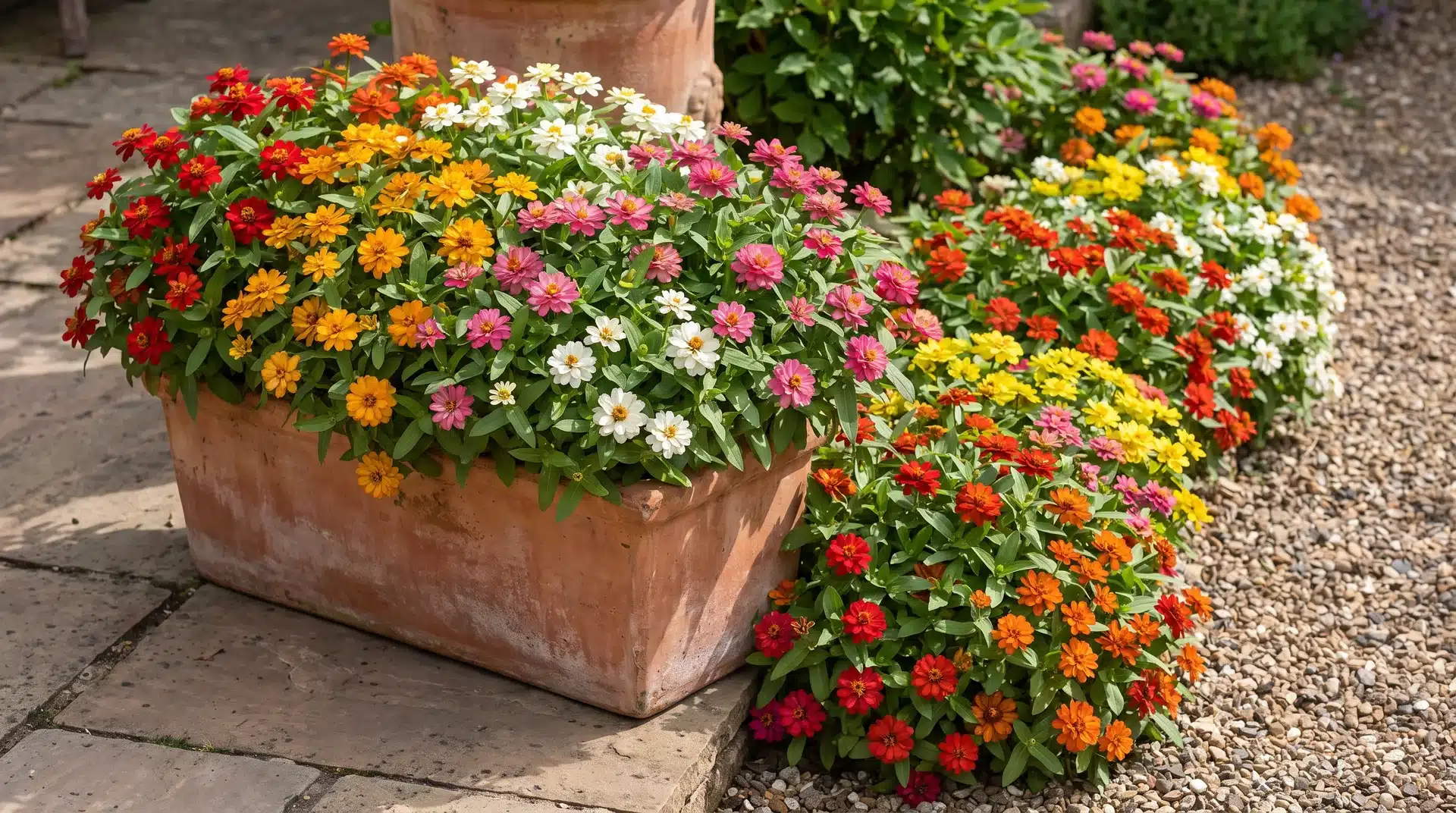
These compact types work best in containers and along garden edges. They stay tidy all season and rarely need staking.
- Thumbelina Mix: Grows 6-8 inches tall, with small, fully double blooms in a wide range of colors. One of the truest dwarfs available.
- Magellan: Reaches 9-12 inches with large, dahlia-like flowers on a low, full plant. A strong choice for pots because of its compact shape.
- Profusion Series: Tops out at about 12 inches with the best disease resistance of any compact zinnia variety.
- Zahara Series: Grows 8-12 inches in a mounding, spreading habit. Handles heat and drought well once it establishes.
2. Medium Zinnias (1-2.5 feet)
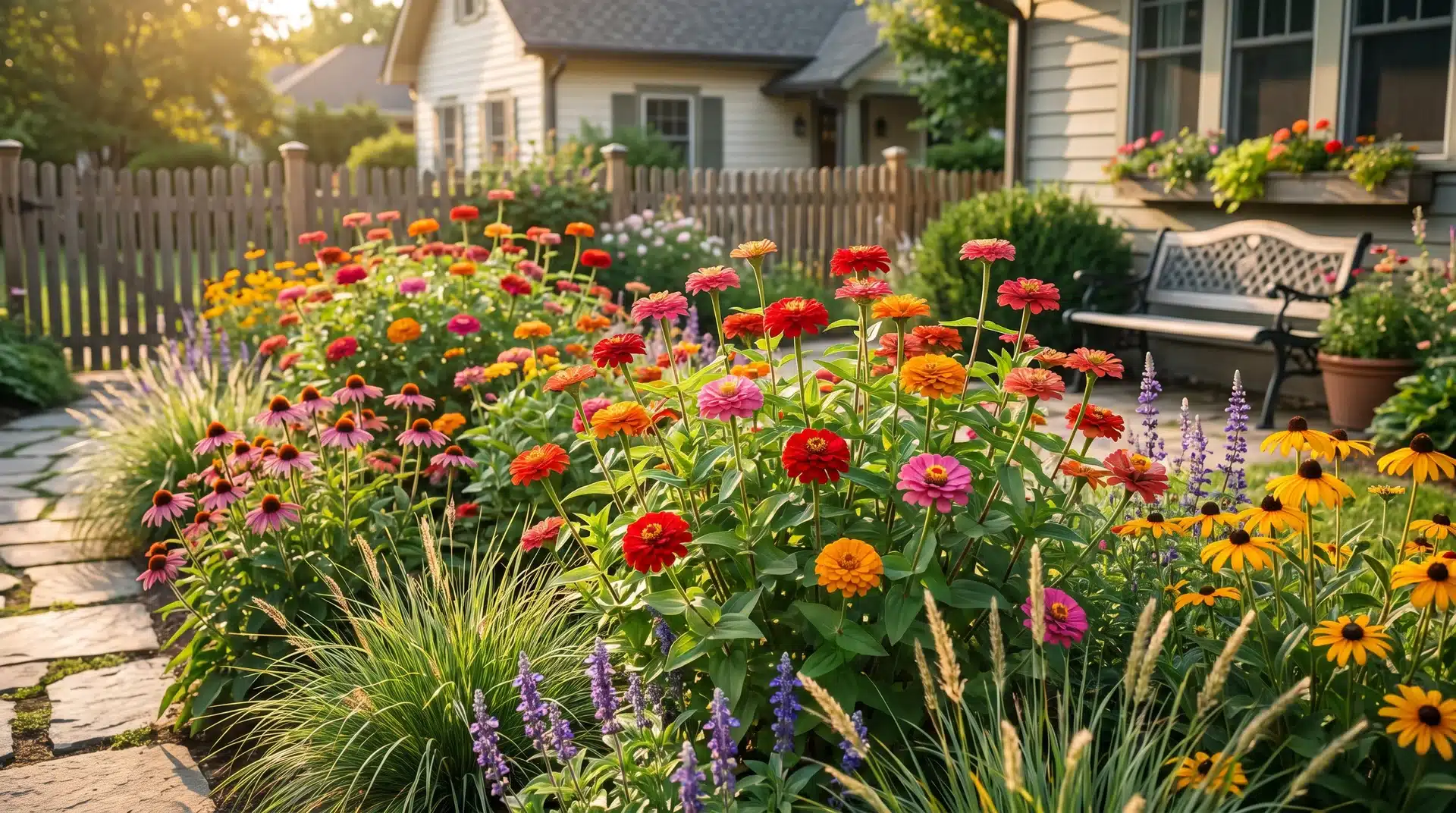
These mid-height types give you color and flexibility. They bloom heavily, rarely need staking, and work in most garden positions without overwhelming nearby smaller plants.
- Cut and Come Again: Reaches 18-24 inches. A prolific bloomer that keeps producing stems all the way through the season.
- Oklahoma Series: Grows 30-40 inches with higher powdery mildew resistance than most. It is a strong cut flower with a long vase life.
- Lilliput: Tops out at 12-14 inches with neat, semi-double pom-pom blooms in a tidy, upright form.
- Queen series: Grows 18-24 inches with rich, antique-toned blooms and good branching for a full, bushy plant.
3. Tall Zinnias (3-4 feet)
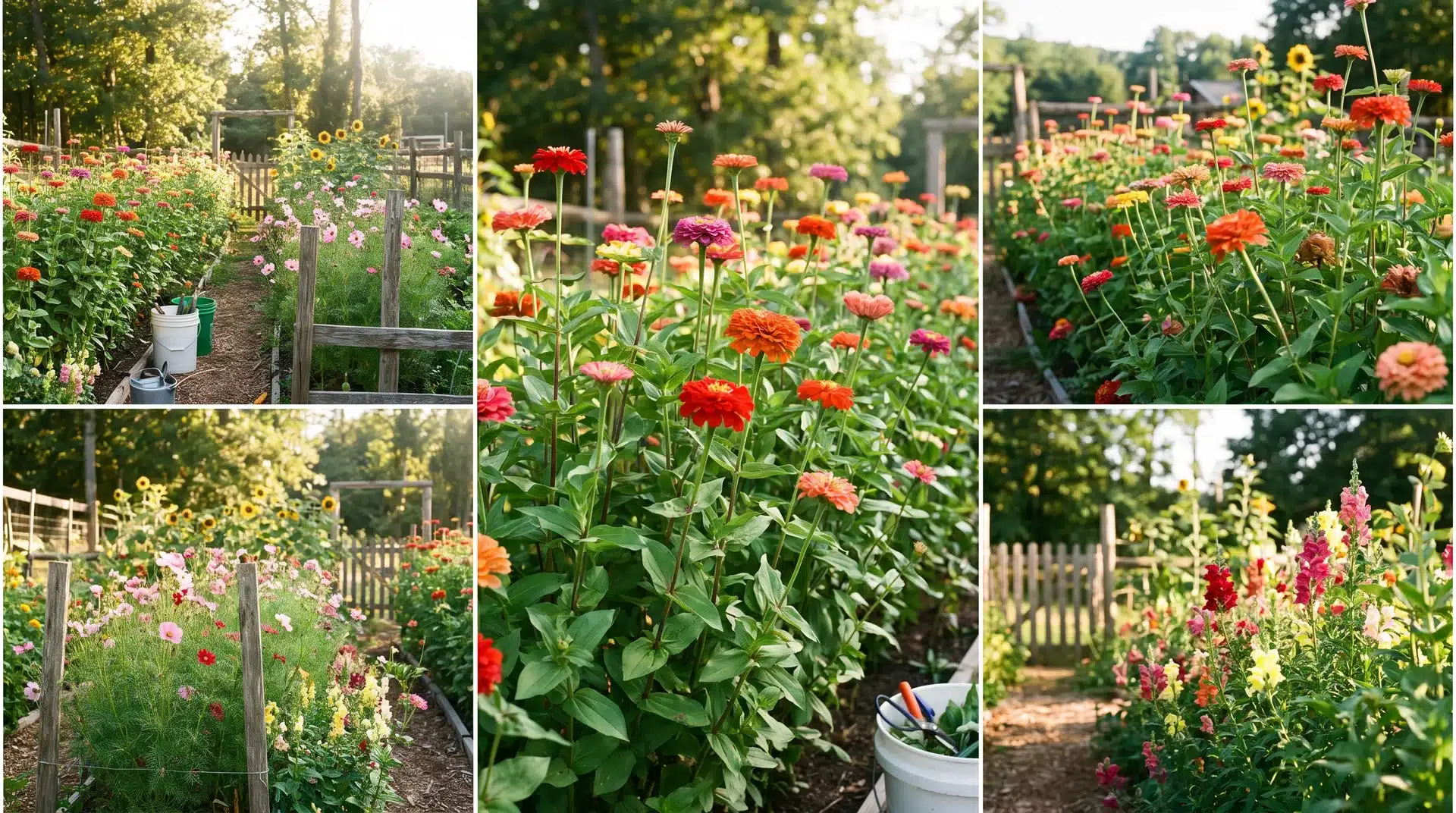
These are the cut flower workhorses of any summer garden. They need the most space, often require staking, and produce the most impressive blooms.
- Benary’s Giant: The benchmark tall zinnia. Plants reach 36–42 inches tall on strong stems, making them well-suited for cut-flower production. This series is known for improved vase life and sturdy stems, making it a popular choice among gardeners growing flowers for arrangements.
- State Fair Mix: Grows 3-4 feet tall with massive blooms up to 5 inches across, in a wide range of colors.
- California Giant Mix: An older heirloom variety hitting 3-4 feet. Large, double flowers in a generous mix of colors.
How Do Sunlight and Soil Affect Zinnia Height?
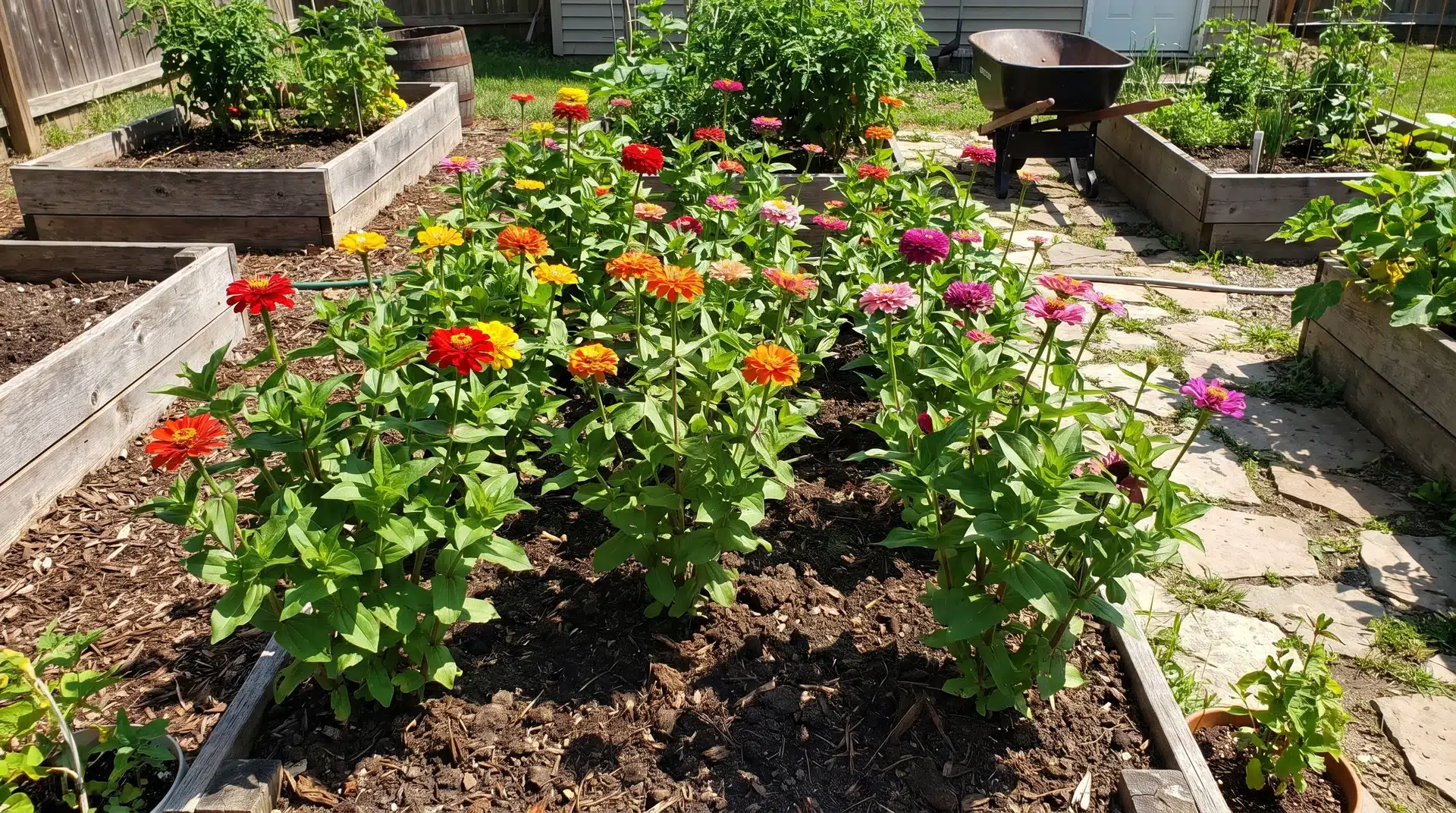
Two factors shape zinnia height more than any others. Direct sun and soil quality determine how tall your plants actually grow. Get these right, and most varieties reach their full potential.
Getting the basics right starts even before seedlings appear. Proper zinnia seed planting timing, spacing, and soil preparation help plants develop strong roots and reach their expected height
- Full sun (6-8 hours minimum): Zinnias need this to grow compact and strong. In less light, they stretch toward it and produce tall but floppy stems with fewer blooms.
- Soil pH 5.5-7.5: Outside this range, plants struggle to absorb nutrients. Growth slows even when other conditions look fine.
- Well-draining soil with compost: This supports deep root development. Tall varieties need it to stay upright all season. Heavy clay or overly sandy soil limits how tall plants grow.
- Water at soil level only: Wet foliage promotes powdery mildew, which stresses plants and slows growth. Aim for 1 inch per week, delivered at the base of the plant.
- Balanced fertilizer, not high-nitrogen: Feed every 3-4 weeks with a balanced formula. High-nitrogen mixes push leafy green growth over flowers and create tall, structurally weak stems.
Why Zinnias Grow Taller or Shorter
Your seed packet height is a best guess under average conditions. Several factors push zinnias above or below their listed height. Knowing them helps you predict what your garden will actually look like.
Here is what shifts zinnia height in practice:
- Nitrogen-rich soil: Too much nitrogen drives fast, leafy vertical growth. Stems get tall but are structurally weak. Avoid fresh manure or high-nitrogen fertilizers in zinnia beds.
- Low sunlight: Zinnias in partial shade stretch upward to find light. This creates taller but spindly, weak-stemmed plants with fewer blooms and less color.
- Overcrowding: Plants packed too close compete for light and nutrients. They grow taller and leggier than their genetic height, with thinner stems that bend easily.
- Warm climate and long growing season: In zones 8-10, zinnias simply have more time to grow. Gardeners in the South often find tall varieties exceeding their packet height by a foot or more.
- Poor indoor start: Seedlings grown on a windowsill without a grow light stretch thin before they reach your garden. This early leggy growth carries through the season.
Pro Tip: Cross-check your seed packet height with data from a university extension service. Clemson Extension and Wisconsin Horticulture both publish trial-based heights for specific named varieties.
Can You Control How Tall Zinnias Grow?
Yes. Two techniques give you real control over zinnia height. Use pinching if you want shorter, bushier plants. Use staking if you want to support tall varieties and keep them upright for cutting.
Pinching for shorter, bushier growth:
Pinching is the most reliable way to keep zinnias compact and encourage branching. Here is how to do it correctly:
- Wait until plants reach 6-8 inches tall.
- Snip off the top 3-4 inches of the main stem just above a leaf node.
- The plant will push outward into multiple branches rather than grow taller.
- Expect a 2-3 week delay in first blooms. This tradeoff is worth it for a longer, fuller season.
For tall varieties like Benary’s Giant, wait until plants reach 12-18 inches before pinching.
Staking tall varieties:
- Start staking when plants reach 12-18 inches, before their stems begin to lean.
- Use bamboo stakes with soft jute twine, or run pea netting across entire rows for a cutting-garden setup.
- Tall varieties with heavy blooms will flop without support after heavy rain. Staking early prevents stem damage at the base.
Which Zinnia Height Should You Choose for Your Garden?
Matching zinnia height to your planting location saves time and prevents the frustration of mid-season replanting or rearranging. The right size depends on where you are planting and what you need the flowers for.
Here is how to match height to purpose:
- Containers and Pots: Choose dwarf types (6-12 inches). Profusion and Magellan stay compact without staking all season. Use a pot with a diameter of at least 10 inches and solid drainage holes.
- Front of Border or Edging: Go with dwarf to medium types (6-18 inches). Zahara works as a low, mounding edge plant that handles heat well.
- Mid-border: Medium types (18-30 inches) give strong color without blocking shorter plants in front of them. Oklahoma and Queen series both work well in this position.
- Back-of-border or Cutting Garden: Tall types (3-4 feet) belong at the back. Plant Benary’s Giant on the north side of vegetable beds to attract pollinators without shading your crops.
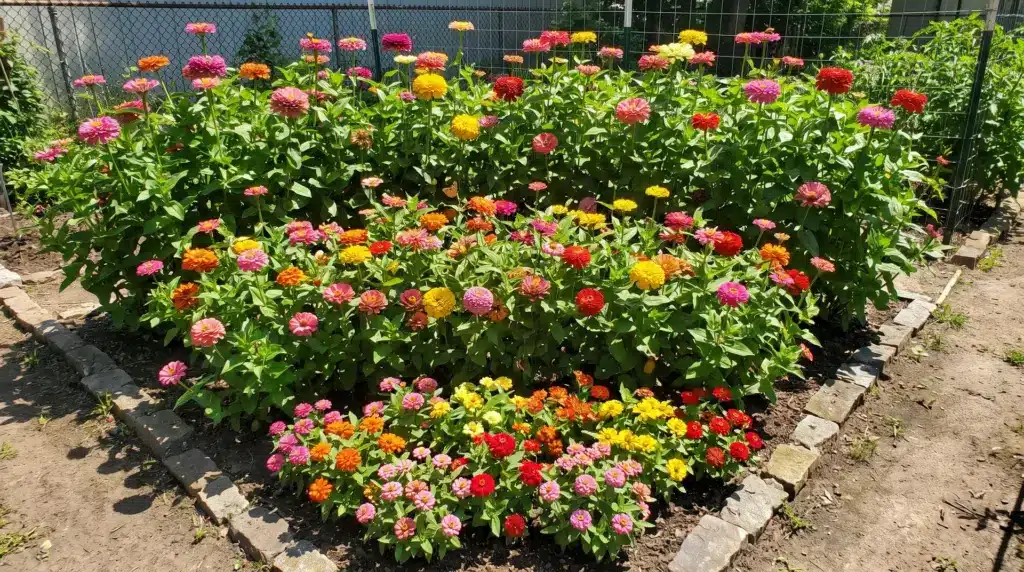
- Layered bed formula: Place dwarf zinnias, such as Zahara, at the front. Put medium types like Oklahoma in the middle. Set tall varieties like Benary’s Giant at the back. Each tier gets full sun, and no variety blocks the one in front of it.
Conclusion
Zinnias are among the most versatile summer flowers because they come in sizes that fit almost any garden space.
From compact container varieties to tall cut-flower types, choosing the right variety makes all the difference.
Before planting, consider your available space, sunlight, and how you want to use the blooms.
A small border may need a dwarf variety, while a cutting garden benefits from taller types with strong stems.
When you match the variety to the location and provide the right growing conditions, your zinnias will stay healthier, produce more flowers, and create the look you planned from the start.
Frequently Asked Questions
1. Do Zinnias Spread?
Most zinnias grow upright in clumps rather than spreading. However, they can self-seed, producing new plants nearby the following growing season if spent flowers are left on the plant.
2. Do Zinnias Do Better in Pots or in the Ground?
Zinnias thrive in both pots and garden beds. They generally grow larger in the ground, while containers work well with proper sunlight, drainage, and regular watering.
3. Why Don’t Deer Eat Zinnias?
Deer usually avoid zinnias because of their rough, slightly coarse foliage and preference for more tender plants. However, hungry deer may still nibble them when other food is scarce.