Zinnia seeds are often considered easy to grow, but even these reliable flowers can fail to sprout when a few small details are missed.
Problems usually come down to three things: planting in soil that is still too cold, sowing seeds too deeply, or leaving young seedlings too crowded without enough airflow.
I have made these mistakes myself, especially when rushing the planting process. Once I started paying attention to the right timing, planting depth, and spacing, my zinnia seedlings became much stronger and more consistent.
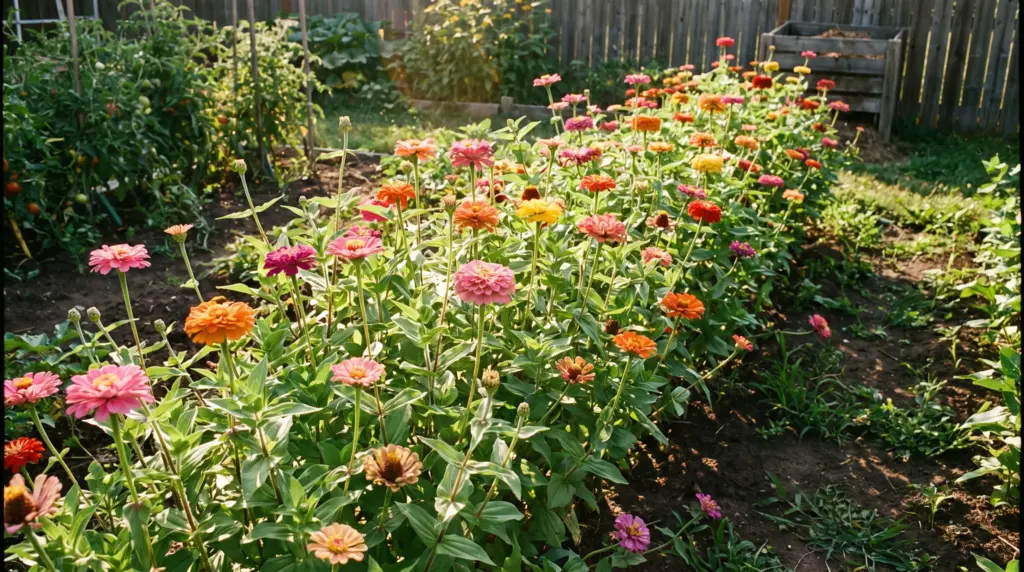
Since then, my zinnia beds have filled out evenly with healthy plants and plenty of blooms each season.
When to Plant Zinnia Seeds
Zinnias are warm-weather flowers, so timing matters more than most beginners expect. Plant too early into cold soil and seeds will stall or rot before they get a chance to sprout.
Wait until frost danger has passed and soil sits at 60°F or warmer before sowing. NC State Extension recommends waiting until soil and air temperatures both climb toward 70°F for the most even germination.
In most regions, that lands somewhere in mid-to-late spring. If your growing season runs short, start seeds indoors instead.
Sow indoors 4 to 6 weeks before your average last frost date, then move seedlings outside once the weather warms.
I sow a new batch of seeds every 2 to 3 weeks through early summer, which keeps blooms coming from June through the first frost.
The same wait-for-warm-soil approach applies if you’re also timing out your gladiolus bulbs for the same cutting bed.
Zinnias flower fast, in about 60 to 70 days from seed. A few small, staggered plantings beat one large planting for steady color.
How Deep and How Far Apart to Plant Zinnia Seeds
Planting depth is where a lot of beginners go wrong. Zinnia seeds only need to sit about ¼ to ½ inch under the soil. Bury them any deeper and they may not have the strength to push through.
Spacing depends on the type you’re growing:
- Dwarf varieties (under 18 inches tall): space 8 to 9 inches apart
- Standard and tall varieties (2 to 4 feet): space 12 to 24 inches apart
- Rows: leave about 12 inches between rows for airflow
Tight spacing is the top cause of powdery mildew on zinnias. Give plants room to breathe, since the leaves dry out faster after rain or watering, which keeps fungal problems away.
How to Direct Sow Zinnia Seeds Outdoors
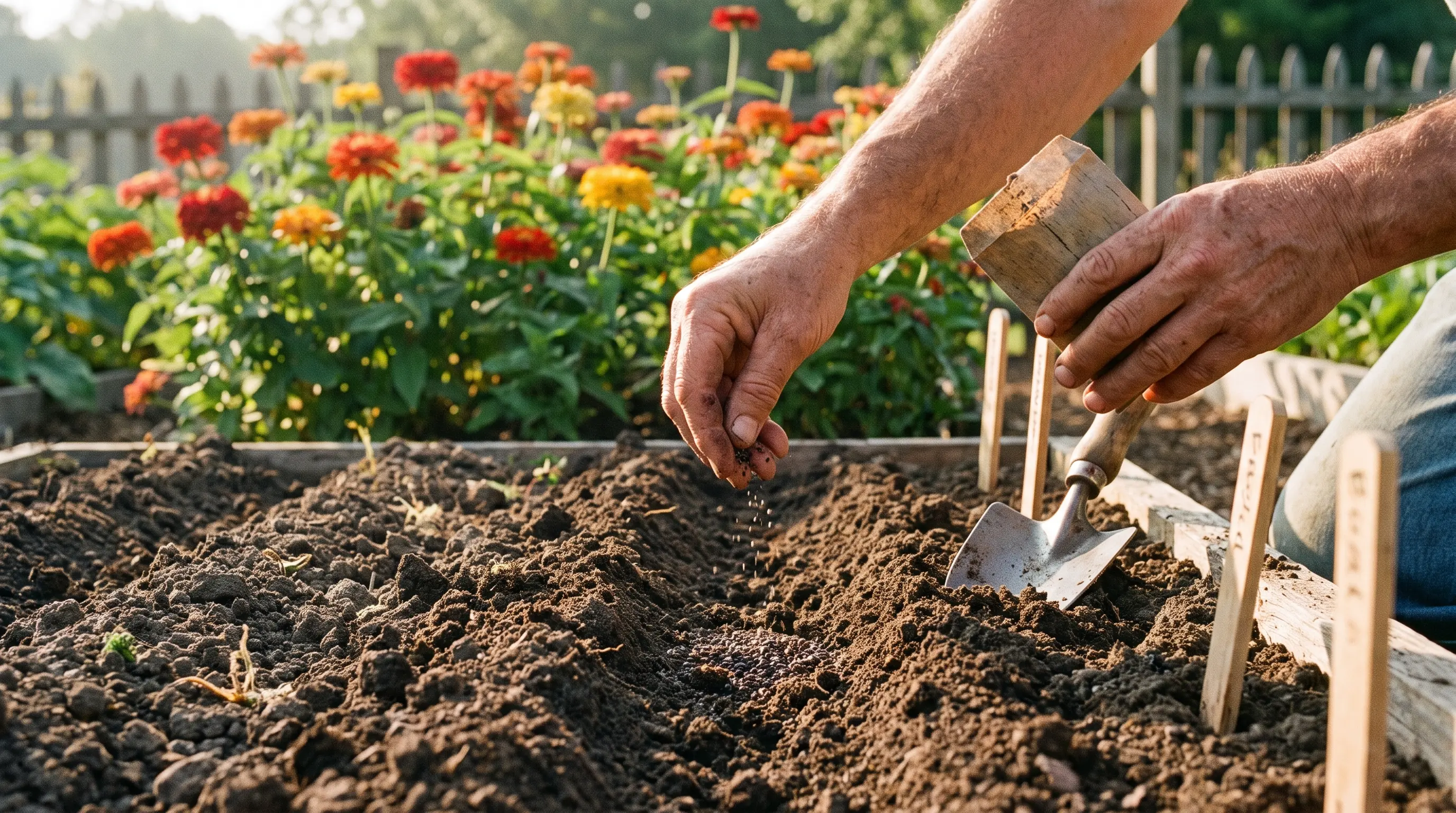
Direct sowing is the easier of the two methods. It’s also the one most zinnias prefer, since they don’t love having their roots disturbed later.
- Loosen the top 6 to 8 inches of soil and mix in 2 to 3 inches of compost.
- Sow seeds ¼ to ½ inch deep, following the spacing guide above.
- Water gently right after planting to settle the soil around each seed.
- Maintain lightly moist soil, not soggy, until seedlings emerge in 4 to 7 days.
- Once seedlings reach about 3 inches tall, thin them to their final spacing.
That last step feels wasteful the first time you do it. Pulling healthy little seedlings out of the ground goes against every instinct. But crowded zinnias almost always end up smaller and more prone to disease, so thinning early pays off later.
How to Start Zinnia Seeds Indoors
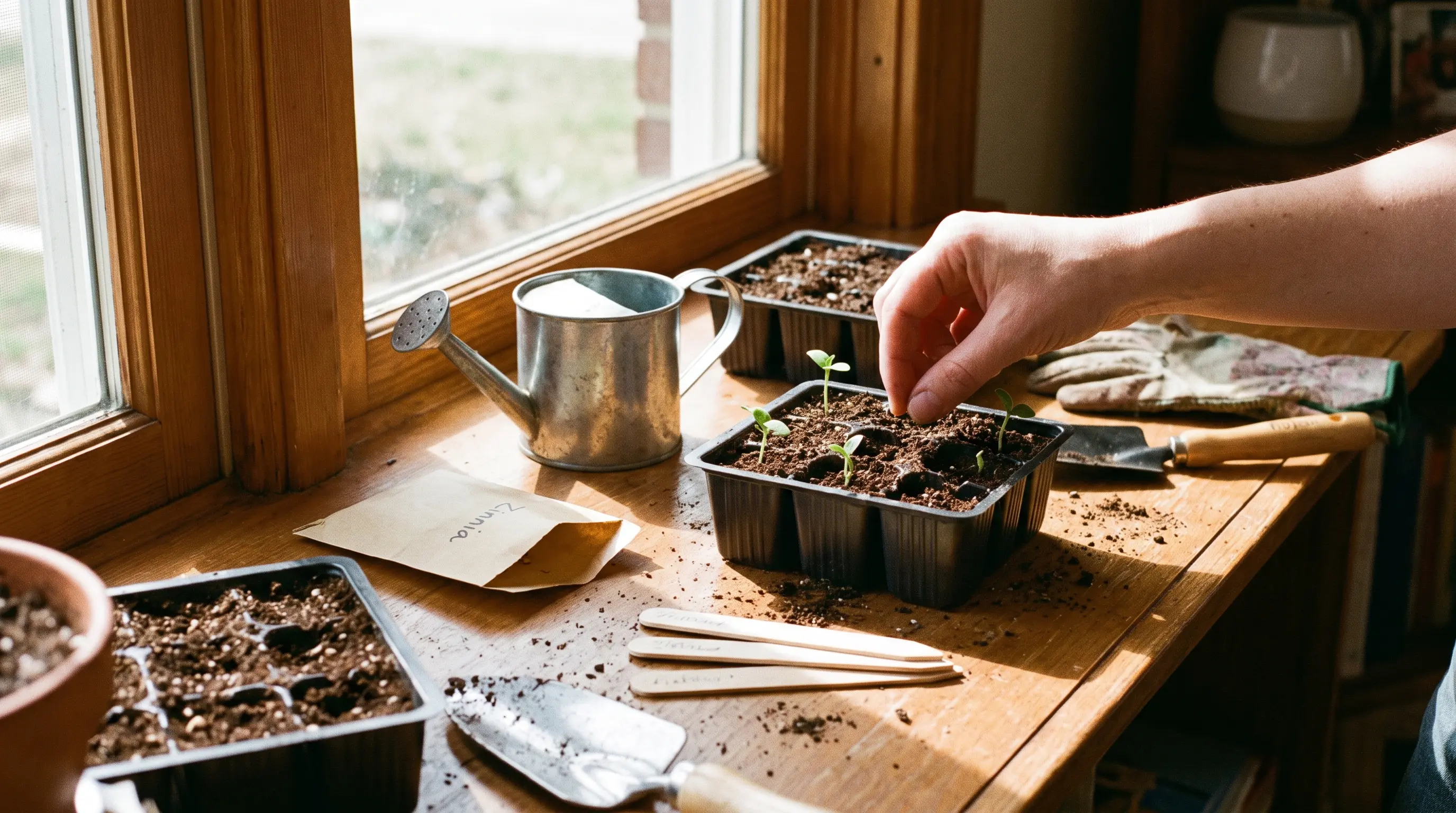
Starting seeds indoors gives you a head start on the season. This matters most if your last frost date lands in late May or June.
- Fill trays or small pots with a seed-starting mix (not garden soil).
- Place 1 to 2 seeds per cell, about ¼ to ½ inch deep.
- Set the trays somewhere consistently warm, around 65 to 70 degrees Fahrenheit, with plenty of light. A grow light running 14 to 16 hours a day works well too.
- Maintain even moisture in the mix and monitor it daily. Germination takes 7 to 10 days indoors.
- Once seedlings have their second set of leaves, thin to the strongest one per cell.
- About a week before transplanting, start hardening seedlings off. Set them outside for 2 to 3 hours the first day, then add an hour more each following day.
Skipping the hardening-off process is a common mistake among beginners. Seedlings moved straight from a warm windowsill into full sun and wind often wilt.
Some stall for a week or more before they recover. A little patience during this transition saves the whole batch.
Zinnia Growth Stages: What to Expect After Planting
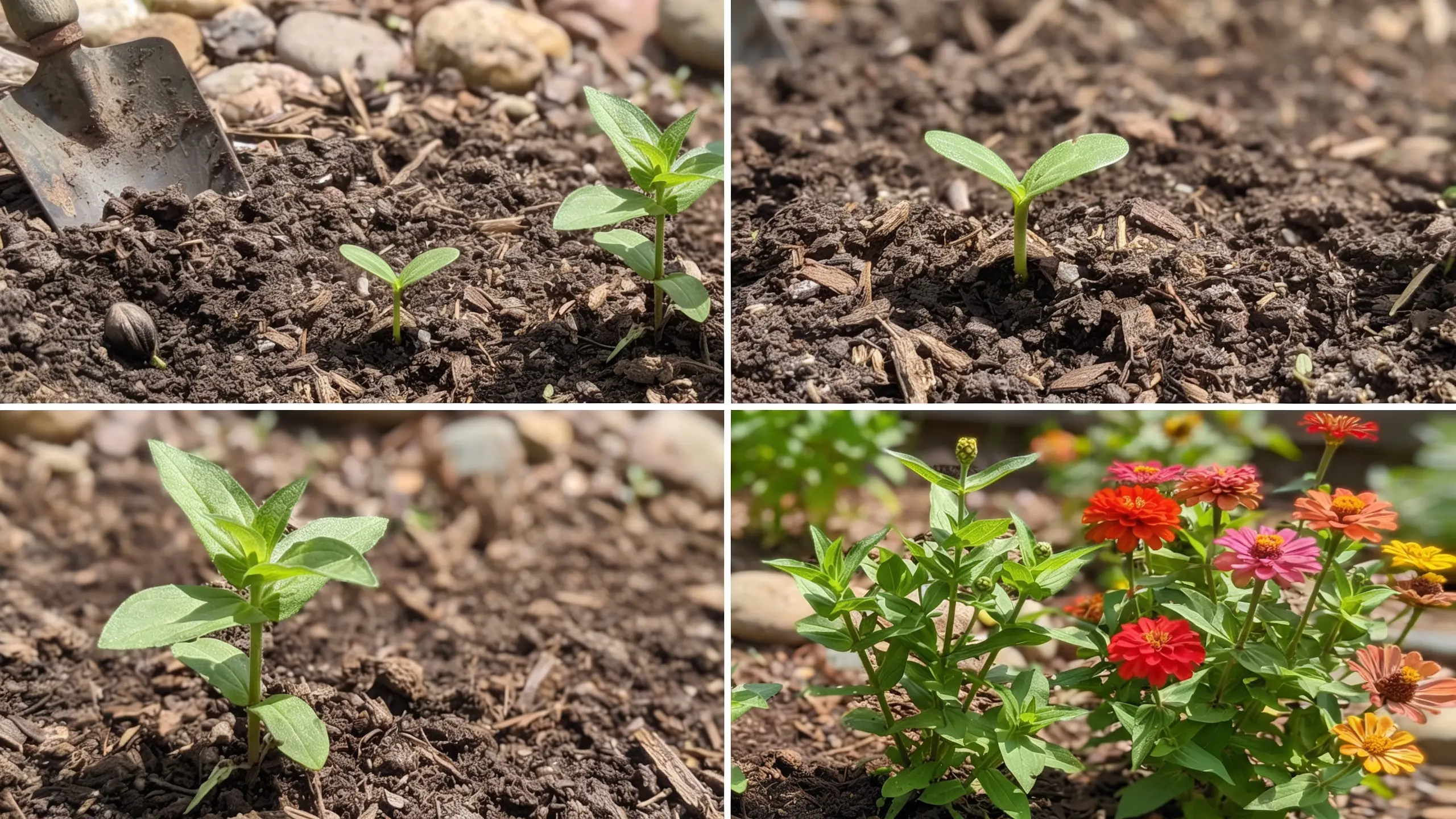
Knowing the zinnia growth stages ahead of time makes it easier to distinguish normal progress from an actual problem.
- Germination (days 1–7): the seed absorbs water and sends down a root, then a stem breaks the surface.
- Seedling stage (weeks 1–3): the first set of true leaves appears after the rounded seed leaves. This is when thinning happens.
- Vegetative growth (weeks 3–6): the plant builds height, branches out, and fills in leaves.
- Budding (around week 6–8): small flower buds form at the stem tips.
- Blooming (week 8–10 onward): flowers open and keep coming as long as you deadhead spent blooms.
Most zinnias move through these growth stages in about 60 to 70 days, from seed to first bloom. Cooler weather or crowding can slow that timeline down.
Caring for Zinnia Seedlings After Planting
Once seedlings are established, a few habits keep them moving toward healthy blooms.
- Water at the base, not overhead. Wet leaves are an open invitation to leaf spot and mildew.
- Feed lightly every 3 weeks with a balanced liquid fertilizer once seedlings have a few true leaves.
- Deadhead spent flowers regularly. This signals the plant to keep producing new blooms instead of setting seed early.
- Watch for pests like aphids and thrips. A strong spray of water from a garden hose usually knocks small infestations back.
Zinnias are also one of the better options if you want flowers that draw in butterflies, along with bees and hummingbirds, once they start blooming. That makes the extra care worth it in a pollinator-friendly garden.
Common Zinnia Seed-Starting Problems (and Fixes)
Even careful gardeners run into trouble with zinnia seeds and seedlings from time to time. These fixes address the issues that come up most often.
| Problem | Possible Cause | Fix |
|---|---|---|
| Seeds never sprouted | Soil was too cold or seeds were planted too deep | Wait until the soil warms up and plant seeds at the correct depth for better germination. |
| Seedlings are tall, thin, and floppy | Lack of sufficient light | Move seed trays closer to a bright window or add a grow light to encourage stronger growth. |
| Seedlings collapsed at the base | Damping off caused by soggy soil and poor airflow | Use a sterile seed-starting mix, improve air circulation, and avoid overwatering. |
| Plants are crowded with spotty leaves | Seedlings were not thinned early enough, causing poor airflow | Thin plants sooner and provide enough spacing to reduce competition and disease risk. |
| Few blooms despite healthy leaves | Too much shade or excess nitrogen fertilizer encouraging leaf growth | Move plants to a full-sun location and use a fertilizer that supports flower production. |
Saving Zinnia Seeds to Replant Next Year
To save zinnia seeds for the next growing season, start by cutting the dried flower heads and gently pulling them apart over a bowl or paper plate.
Separate the small arrow-shaped seeds from the petals and leftover flower debris, then spread the seeds out in a single layer to air dry for about 4 to 5 days.
Once they are fully dry, store them in a labeled paper envelope and keep them in a cool, dry place until you are ready to plant them again.
Saved seeds usually stay good for 2 to 3 years. One season of zinnias can supply your next few years of planting without buying a single new packet.
Achieve a Vibrant and Even Zinnia Garden
Planting zinnia seeds isn’t complicated once you understand the timing, depth, and spacing involved.
Warm soil, a shallow planting depth, and enough room between seedlings carry you through every growth stage without much trouble.
A garden bed or a couple of pots on a patio both work well for this flower. Either way, a packet of zinnia seeds remains one of the easiest routes to a full season of cut-worthy blooms.
Frequently Asked Questions
How Many Zinnia Seeds Do You Plant in One Hole?
Plant 1 to 2 zinnia seeds per hole to improve the chances of germination. Once seedlings emerge, thin them to keep the strongest plant and provide enough space for healthy growth.
Can You Just Throw out Zinnia Seeds?
Yes, you can scatter zinnia seeds directly in your garden, but it is better to lightly cover them with a thin layer of soil. They need sunlight, warmth, and consistent moisture to germinate successfully.
Should I Soak Zinnia Seeds in Water?
No, you do not need to soak zinnia seeds before planting. They germinate well when sown directly into warm, moist soil with proper depth and spacing.