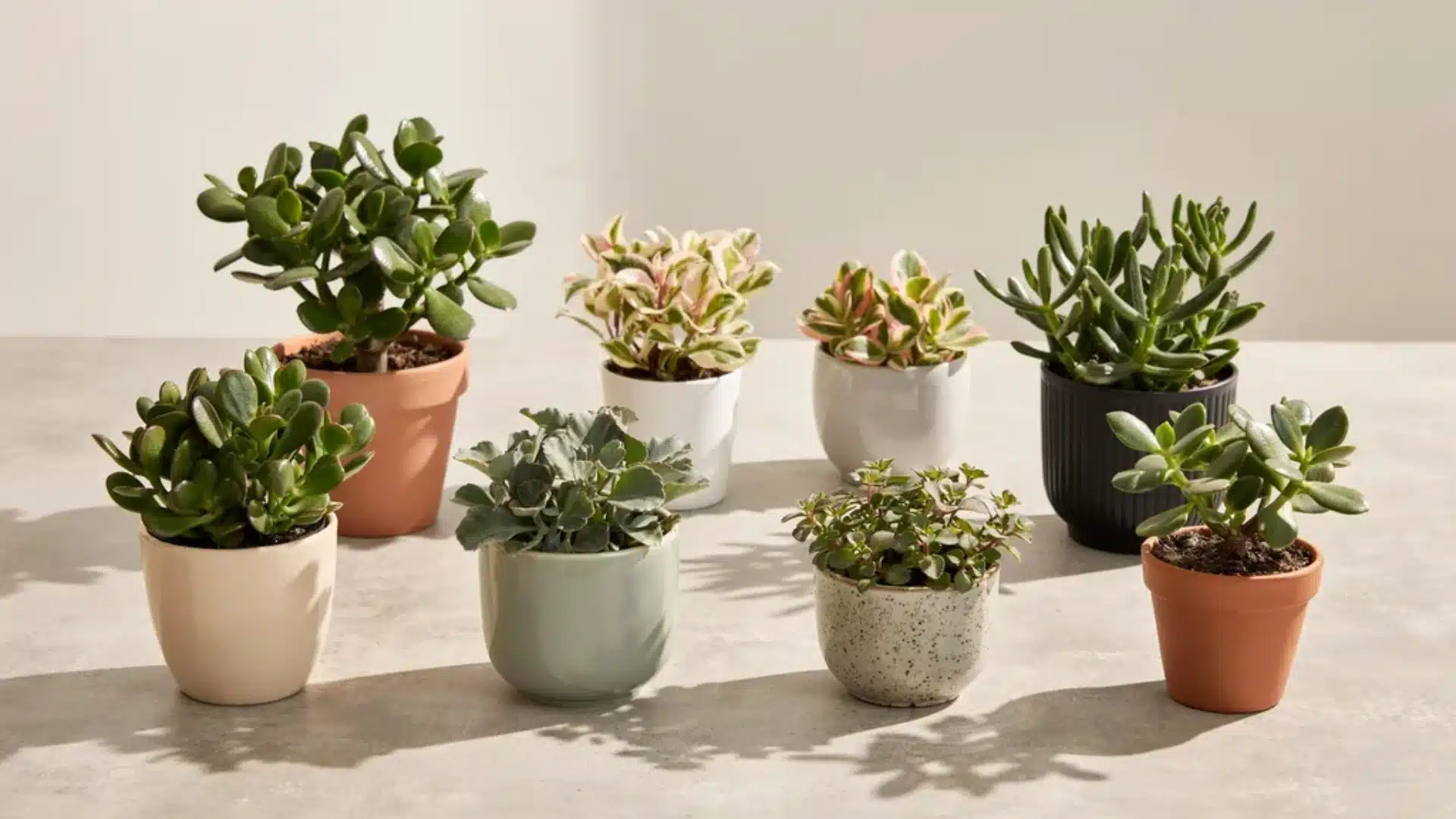
In Ghana, this plant is called Tameawu. The name roughly translates to “Hate me, you die.” Few houseplants come with a threat attached.
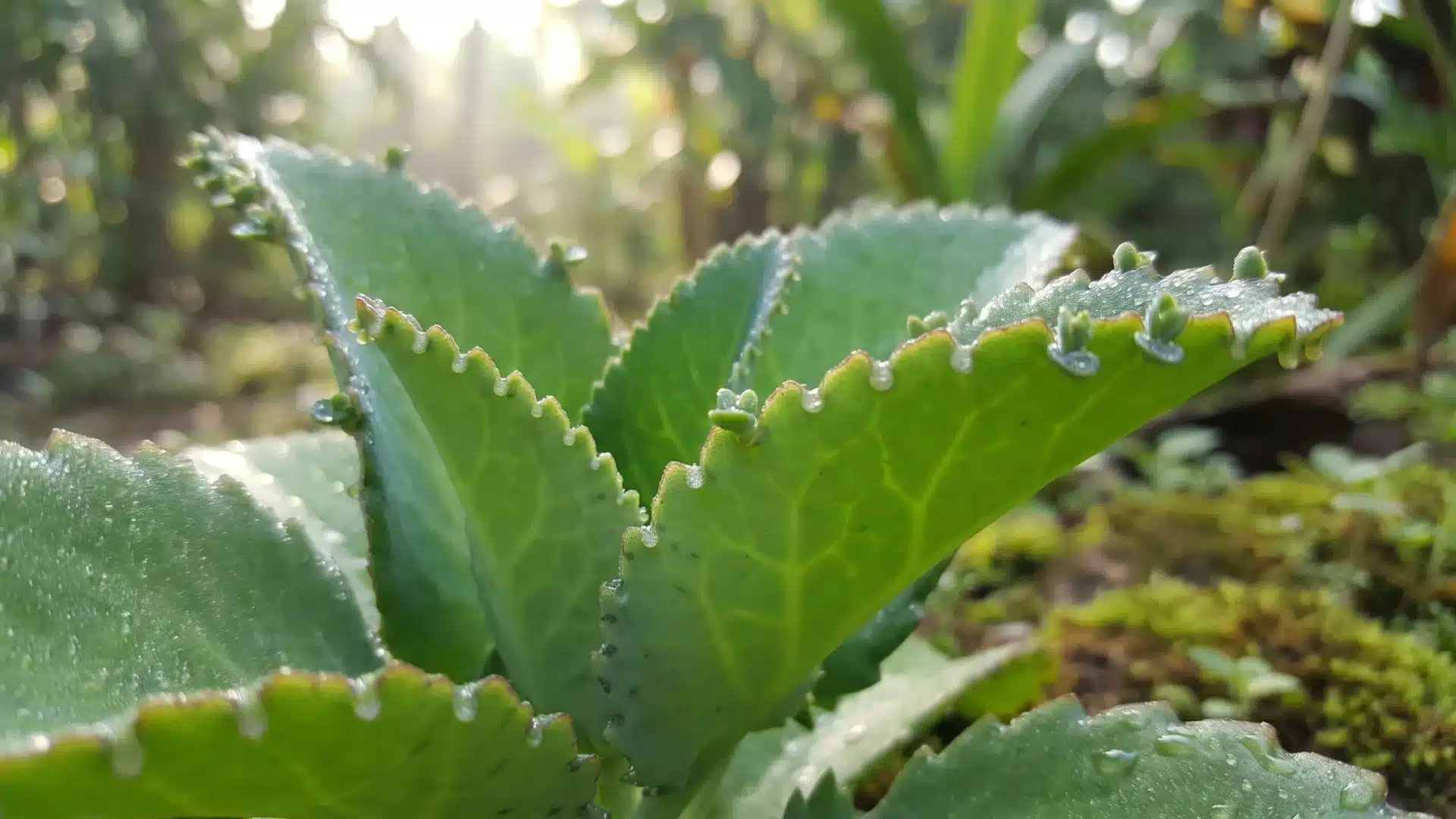
The reputation makes sense once you try to kill one. A leaf torn off and left on a dry shelf will sprout babies along its own edges. No soil, no water, no help from you. It grows the next generation out of a wound.
That refusal to die is why the plant collected so many names. Leaf of life. Miracle leaf. Cathedral bells. Live forever. Botanists settled on Kalanchoe pinnata, and older books list it as Bryophyllum pinnatum.
This post covers what the plant is used for and how people prepare it. It also covers what studies show and who should avoid it.
What Is the Leaf of Life Plant?
It is a succulent perennial herb with thick, fleshy leaves. The edges look scalloped or jagged, almost like soft teeth. Mature plants reach about 3 to 6 feet tall.
The drooping bell-shaped flowers come in pink, red, yellow, or pale green. Blooms usually show up in the cooler months.
The odd part is what happens along the leaf margins. Tiny plantlets sprout right in the notches, drop off, and root themselves wherever they land. The leaves also hold water like a sponge, which is why the plant survives long dry spells.
It came from Madagascar and now grows wild across the Caribbean, India, Brazil, Florida, and Hawaii. You will also hear it called air plant, live forever, life plant, Goethe plant, or Tameawu in Ghana.
Leaf of Life Plant Potential Benefits
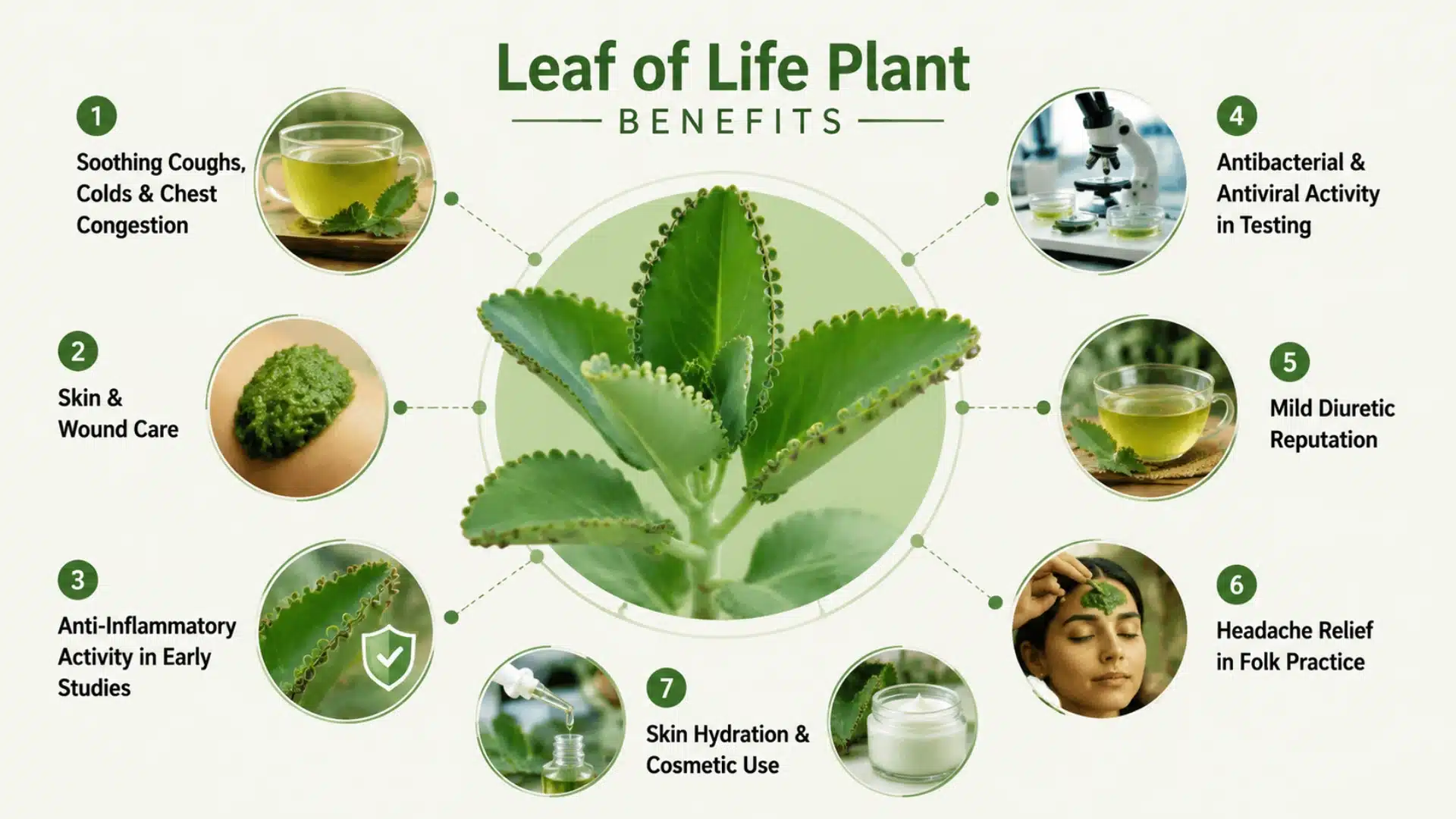
These uses come from folk medicine. Early research supports some of them to different degrees.
1. Soothing Coughs, Colds and Chest Congestion
This is the best-known use in Jamaica, the wider Caribbean, and West Africa. People steep the leaves as tea or take the raw juice by the spoon.
Some pick a leaf and chew it straight off the plant. The juice tastes sour and slightly bitter, so honey helps.
Households treat it as a two- or three-day remedy, not a routine drink.
2. Skin and Wound Care
Crushed leaves are applied as a poultice over small cuts, scrapes, and minor burns. Lab and animal research has looked at wound healing in Kalanchoe pinnata extracts, with early positive results.
The thick sap holds moisture against the skin, which is likely part of why it feels soothing.
Deep wounds and anything showing signs of infection need a doctor instead.
3. Anti-Inflammatory Activity in Early Studies
Animal models have shown less swelling after treatment with leaf extracts. That work happened in labs and on animals, not in people.
Researchers point to flavonoids and other plant compounds as the likely reason. No human trials have confirmed the same effect yet.
4. Antibacterial and Antiviral Activity in Testing
Researchers have tested leaf extracts against E. coli, Staphylococcus aureus, and Pseudomonas aeruginosa. Other screening has covered herpes simplex and hepatitis B viruses.
These are test tube results. A dish in a lab is not the same as tea in a cup.
The extracts used in those tests are far stronger than anything you brew at home. Treat this as background on the plant, not a reason to skip antibiotics.
5. Mild Diuretic Reputation
Caribbean and Indian home medicine has long used the tea as a diuretic. The tea also has a reputation for being mildly sedative.
Anyone on blood pressure or heart medication should consult a doctor first. Losing extra fluid can shift how those drugs behave in your body.
The drowsy effect also catches people off guard if they drink it during the day.
6. Headache Relief in Folk Practice
People crush the leaves, mix them with coconut oil, and rub the paste on the forehead or temples.
The cool sap and the slow massage probably do as much work as the plant itself. It stays a topical remedy in every version I have come across, never a swallowed one.
7. Skin Hydration and Cosmetic Use
The plant’s water-holding sap now shows up in commercial skincare. Clarins lists organic leaf of life extract in its ingredient library.
Formulators like it because the sap pulls in and holds water. That is the same trait that keeps the plant alive through a dry season.
How to Use the Leaf of Life Plant at Home

Treat all of this as general background, not a prescription.
Making leaf of life tea: Pick mature leaves and rinse them well. Steep them in hot water for a few minutes, then strain and drink warm. Keep servings small and occasional. A pharmacist or doctor should set any amount you take regularly.
Making a crushed leaf poultice: Wash the leaf, then bruise or crush it until the sap runs. Some people warm the leaf briefly to soften it first. Apply to clean skin and cover lightly. Patch test a small area first and stop if the skin reacts.
Taking the raw leaf juice: Caribbean households blend or squeeze the leaf and take the juice plain. Folk practice keeps the amount very small.
Which part to use: Use the leaves, not the flowers. Flowers hold a much higher concentration of the plant’s heart-acting glycosides. Choose older mature leaves over fresh young growth. Never use a plant that has been sprayed.
How to Grow and Propagate Leaf of Life
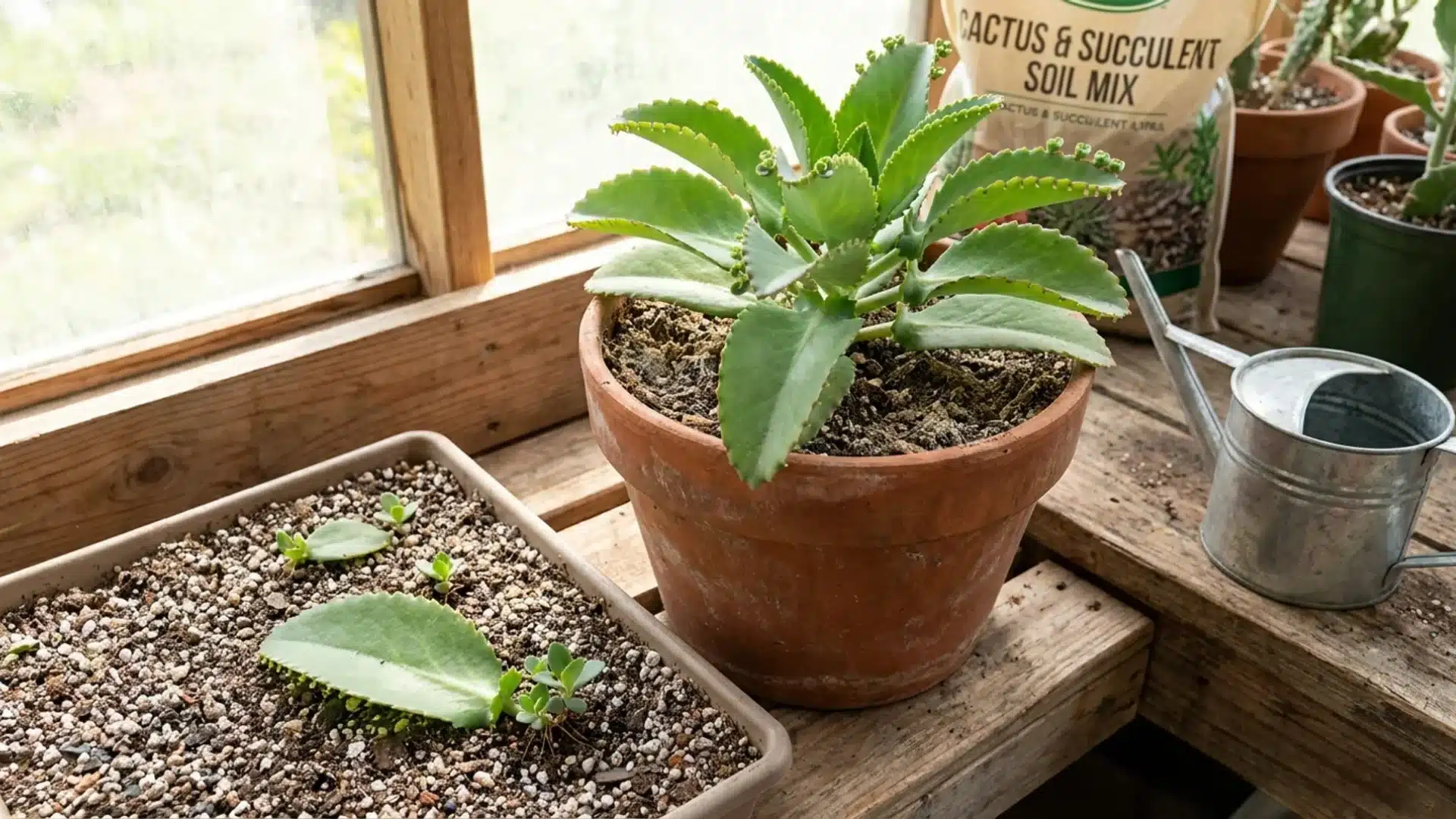
The plant asks for almost nothing. Give it bright light, though it tolerates partial shade.
Use a well-draining cactus or succulent mix and water only after the soil dries out completely. Feed it lightly or skip feeding altogether.
It lives outdoors year-round in USDA zones 10 and 11. In colder areas, keep it as a houseplant. It is also one of the simplest succulents to grow from leaves. Rest a mature leaf flat on damp soil and wait for the plantlets to root.
One warning for warm states. It spreads fast outdoors and counts as invasive in parts of Florida and Hawaii. Keep it in a pot if you live there.
Leaf of Life Plant vs Mother of Thousands
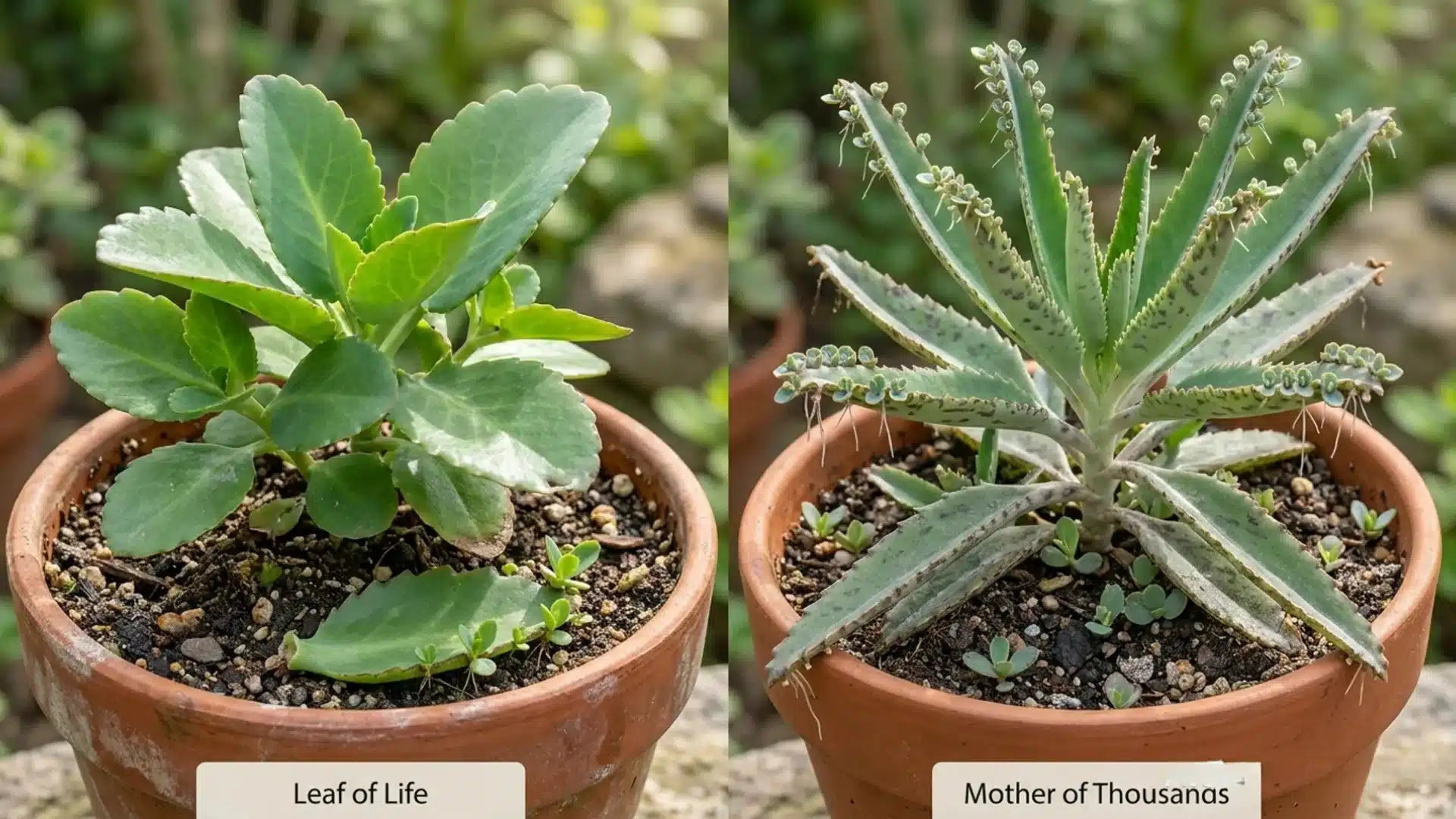
Both sit in the Kalanchoe genus, so the mix-up makes sense. Only one has a real remedy tradition.
Mother of thousandsis a succulent with narrow arrow-shaped leaves that grow tiny plantlets along both edges, dropping them to root wherever they land.
| Feature | Leaf of life | Mother of thousands |
|---|---|---|
| Botanical name | Kalanchoe pinnata | Kalanchoe daigremontiana |
| Leaf shape | Wide and oval with scalloped edges | Narrow and pointed like an arrowhead |
| Leaf markings | Plain green on both sides | Purple or brown blotches underneath |
| Where plantlets form | Only in the edge notches | All along both margins |
| Mature height | Roughly 3 to 6 feet | Roughly 1.5 to 3 feet |
| Remedy tradition | Long history of tea and poultice use | Almost none |
Mother of thousands drops babies from every leaf edge without any prompting at all. Leaf of Life waits until a leaf is old, damaged, or lying flat on soil.
Side Effects and Who Should Avoid Leaf of Life
Warnings around this plant come down to its effect on the heart and its interactions with medication.
The leaves hold cardiac glycosides, the same family of compounds found in digitalis drugs. That is the reason a plant with a gentle reputation still deserves real caution.
- Skip it during pregnancy and while breastfeeding, and do not give it to children.
- Avoid it if you take heart medication, aspirin, or blood thinners
- The mild sedative effect makes it a poor match with sleep or anxiety medication
- Get medical clearance if you have kidney, liver, or heart problems
The pregnancy warning shows up across almost every traditional source that uses this plant. Older herbal texts link it to uterine activity, so households there leave it alone entirely.
Larger amounts can upset your stomach. Nausea, cramping, and loose stools are the usual first signs that you have had too much. Stop at that point rather than pushing through it.
Watch for anything that feels like a heart symptom. A racing or skipping pulse, unusual weakness, or dizziness means you should stop and call a doctor.
Bring the plant name with you, since Kalanchoe pinnata is not something most clinics see often.
Medical disclaimer: This article shares general information. Leaf of life is a home remedy, not a proven treatment. Talk to a doctor or pharmacist before you use it.
Is Leaf of Life Safe Around Pets?
No. The ASPCA lists Kalanchoe species as toxic to both cats and dogs. The compounds behind that are bufadienolides, cardiac glycosides that act somewhat like digoxin.
Vomiting and diarrhea are the usual signs. Large amounts can cause an abnormal heart rhythm, weakness, or collapse, though that stays rare.
Flowers carry more glycosides than the leaves or stems, so a blooming plant deserves extra caution.
Keep the pot well out of reach of cats, dogs, and birds. Call your vet or the ASPCA Animal Poison Control Center at 888-426-4435 if a pet eats any part of it.
Final Thoughts
Leaf of life plant benefits sit somewhere between real and unproven. The cough tea, the crushed leaf on a cut, the headache paste- all of that has centuries behind it.
The lab work is early and mostly done on extracts, not on what you brew in a mug.
That gap is worth respecting, not ignoring. Use the leaves in small amounts. Skip the flowers. Keep the pot away from pets and away from anyone on heart medication.
The plant itself asks for nothing. One leaf on damp soil turns into five plants while you forget about it.
Frequently Asked Questions
Can I Eat the Leaf of Life Raw?
Yes, the Leaf of Life (scientifically known as Kalanchoe pinnata or Bryophyllum pinnatum) can be eaten raw, but it should be consumed in strict moderation.
How to Drink the Leaf of Life?
You can brew the leaves as a tea, extract and drink the fresh juice, or chew them raw with a pinch of salt.
What Do You Use Leaf of Life For?
The Leaf of Life (Bryophyllum pinnatum) is a hardy succulent primarily used in traditional folk medicine and modern skincare.