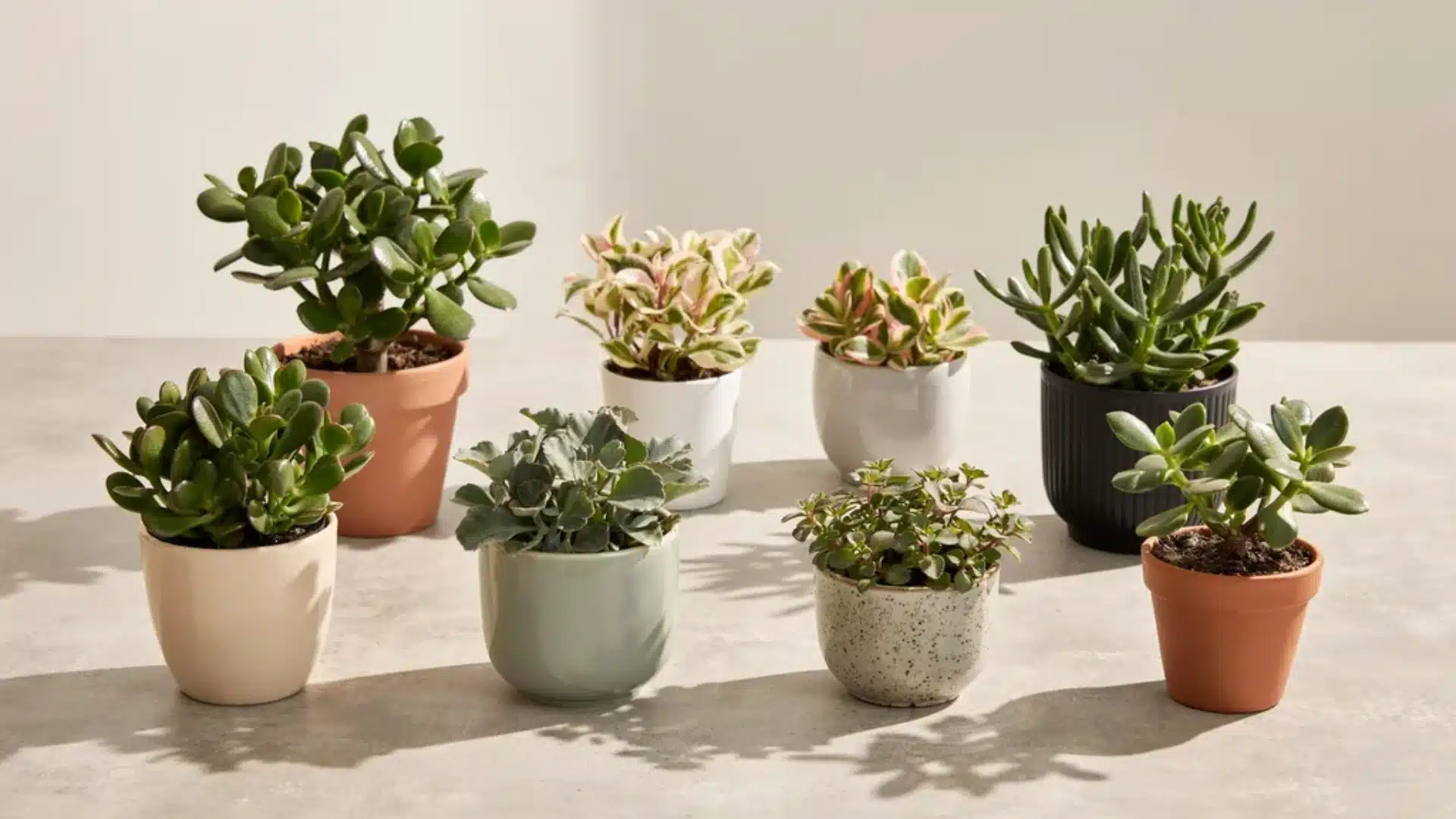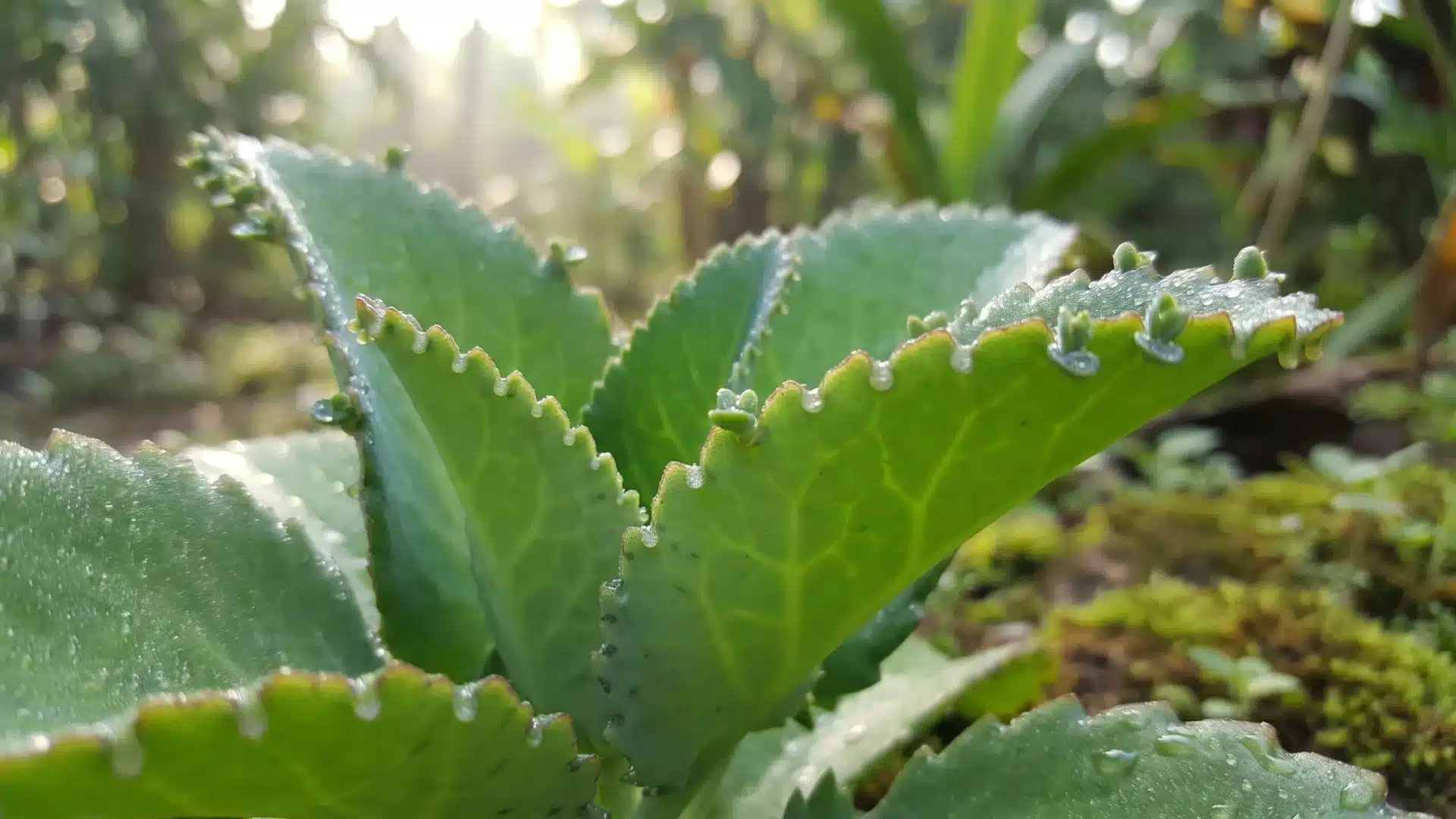

| Mother of Thousands is Kalanchoe daigremontiana, a succulent native to southwest Madagascar. It produces tiny plantlets along the serrated edges of its broad, blue-green leaves. It’s frequently confused with Kalanchoe delagoensis (Mother of Millions), Kalanchoe laetivirens, and the natural hybrid Kalanchoe × houghtonii. |
I got my first Mother of Thousands plant from a neighbor who called it “that plant that makes babies.”
Helpful description, not a great scientific name. When I looked it up, I found three different plants going by the same common name, two spelling variations of the Latin, and care guides describing completely different species.
Turns out, they kind of were. “Mother of Thousands” is one of those names stretched to cover too much.
Half the tags in nurseries have the Latin wrong. A few sellers list a different species under the same name without knowing it.
This guide covers identification first, how to confirm which species you actually have, and how to tell it apart from its lookalikes.
What Is the Mother of Thousands Plant?
Kalanchoe daigremontiana. That’s the scientific name, spelled d-a-i-g-r-e-m-o-n-t-i-a-n-a. It’s misspelled constantly. “diagremontiana” shows up on plant tags, in care guides, and across several nursery websites.
If you see that spelling on a tag, it’s almost always the same plant. The name just got garbled somewhere along the way.
The species was named in honor of Madame and Monsieur Daigremont, members of the Botanical Society of France. It was formerly classified as Bryophyllum daigremontianum.
You’ll still see that name on some older resources. Bryophyllum was once treated as a separate genus but is now included within Kalanchoe.
Common names include Mother of Thousands, Alligator Plant, Devil’s Backbone, and Mexican Hat Plant. You may also see it called Maternity Plant.
Avoid “Piggyback Plant” too. That name belongs to an unrelated species, Tolmiea menziesii, and using it for Kalanchoe just adds to the confusion.
How to Confirm You Have the Right Plant
The four most frequently confused:
Plant | Leaf Shape | Where Plantlets Form | Underside Colour |
K. daigremontiana (Mother of Thousands) | Broad, flat, lance-shaped or triangular, up to 8 in. | Along all the serrated leaf margins | Purple-brown blotches |
K. delagoensis (Mother of Millions) | Narrow, cylindrical, tube-shaped | Only at the leaf tips | Grey-green with reddish “tiger” stripes |
K. × houghtonii (natural hybrid of the two above) | Boat-shaped, between the two parents | Margins and tips both | Intermediate colouring |
K. laetivirens (mislabeled as Mother of Thousands) | Broader, more rounded, and scalloped | Along the margins | Solid green, no purple |
The fastest single check: flip a leaf over.
- Purple-brown blotches = true K. daigremontiana.
- Solid green underside = most likely K. laetivirens, which several online sellers and even some retail nurseries label as “Mother of Thousands” incorrectly.
- Narrow tube-shaped leaves = K. delagoensis. If scientific accuracy matters to you, do this check before you buy, not after you get home.
Is “Mother of Thousands” Toxic?

Yes, and it’s worth taking seriously rather than dismissing as “mild.”
All parts of the plant contain bufadienolides, a class of cardiac glycosides. The ASPCA lists Kalanchoe species as toxic to both cats and dogs. Clinical signs include vomiting, diarrhea, and (less commonly) abnormal heart rhythm.
The minimum threshold for toxicity in pets isn’t precisely established, which is an argument for not testing it.
Keep it out of reach of pets and small children. Don’t let dropped plantlets scatter into reachable areas. Treat any ingestion by a pet as a vet call. The ASPCA Animal Poison Control number is (888) 426-4435.
Handling the plant can also cause contact dermatitis in sensitive individuals. Wearing gloves when propagating or pruning is a sensible habit.
How to Take Care of Your Mother of Thousands Plant

I’ve seen this plant survive in conditions that would finish off most succulents. It handles neglect well, which makes it a decent choice if you’re not yet confident with the watering side of things.
- Light: Mother of Thousands prefers bright indirect light indoors, with a south-facing window being ideal. Introduce direct sun gradually, as sudden exposure can scorch leaves.
- Water: Water deeply, then allow the top two inches of soil to dry before watering again. Reduce watering in winter, as overwatering causes root rot.
- Soil: Use a fast-draining cactus or succulent mix with added perlite or pumice. Avoid regular potting soil because it retains excess moisture around roots.
- Temperature: Keep Mother of Thousands between 65–80°F. It is not frost-tolerant and should be brought indoors when temperatures drop below 40°F.
- Fertilizer: Feed with a diluted succulent fertilizer once monthly during spring and summer. Avoid fertilizing in the fall and winter, when growth naturally slows.
- Repotting: Repot only when roots emerge from drainage holes. This shallow-rooted plant prefers being slightly pot-bound, so move it to a container one size larger.
- Pruning: Pruning is not necessary for plant health. Remove dead leaves regularly, or pinch the growing tips in spring to encourage branching rather than upright growth.
Common problems:
- Leggy, stretched growth means not enough light. Move it closer to a window.
- Mushy leaves or base means overwatering or root rot.
- Brown leaf tips or spots can be caused by sunburn or underwatering. Check the soil moisture and the light situation.
- Pests: Mealybugs and aphids are the usual suspects. A cotton swab dipped in rubbing alcohol clears visible insects. Avoid insecticides that coat the leaves, since they can damage the waxy surface.
Does It Flower?

Rarely indoors, and not predictably.
Flowering tends to happen in early winter on plants that were outdoors for the summer. The flowers are small, bell-shaped, and greyish-pink to orange, arranged in an umbrella-like cluster on a tall central stalk.
Here’s the part that surprises most people: this plant is monocarpic. The main stem dies after it flowers. The first time it happens, it looks like a disaster.
By the time it flowers, the plant has already distributed hundreds of plantlets around your windowsill. The main stem’s job is essentially done.
If you want a Kalanchoe that blooms reliably and repeatedly, Flaming Katy (K. blossfeldiana) is the genus choice.
Mother of Thousands is grown for its foliage and its propagation habit, not its flowers.
How to Propagate Mother of Thousands

This is the part most people are here for, and it’s genuinely as easy as advertised. Mother of Thousands is incredibly easy to propagate, and you can grow a new succulent from its tiny plantlets with minimal effort
- Wait until the plant has several full-sized leaves with visible plantlets along the edges.
- Gently pluck one or two plantlets from the leaf margin. Most already have tiny root buds forming.
- Place them on the surface of a barely moist cactus or succulent mix. Don’t bury them. Don’t push them in.
- Keep the mix lightly moist but not wet until roots establish, which usually takes a couple of weeks.
- Once established, care is the same as for a mature plant.
One thing worth flagging: plantlets that fall off the parent plant will root wherever they land. Keep the parent plant on its own. If it’s near other pots, you’ll find small seedlings rooting in them all.
This isn’t harmful, but it can take over a pot fast. Keep the parent plant on its own, or at least away from pots you don’t want colonized.
You can also set a shallow tray of soil beneath the plant and let the plantlets fall in. Transplant the rooted ones later. Less effort, same result.
Is Mother-of-Thousands Invasive?

Outdoors in warm climates, yes.
In parts of Florida, Hawaii, the Mediterranean, and other subtropical regions, K. daigremontiana has escaped from gardens and established itself where it wasn’t planted.
It spreads by dropped plantlets and seeds. It’s hard to eradicate once established; it can regrow from small fragments.
It also releases compounds that suppress nearby plant growth. This isn’t a concern in a pot, but worth knowing before ground planting.
Indoors or in containers in temperate climates, none of this is a practical issue. But if you’re in zones 9-11 and thinking about putting it in the ground, don’t.
Container only, and use a wide-brimmed pot to catch falling plantlets before they hit the soil.
Clearing the Confusion
The name confusion around this plant is worth sorting out once rather than discovering mid-purchase.
Leaf-flip, purple-brown underside: that’s the fastest confirmation that you have the true K. daigremontiana rather than one of its look-alikes.
Beyond that, the care is straightforward. Water sparingly, give it a bright window, keep it well away from pets and children, and don’t put it anywhere near pots you’d rather not colonize.
It will do the rest on its own.
I’ve found this plant in people’s collections more often than they remember buying it, which tells you something about how well it looks after itself and how reliably those plantlets find their way somewhere new.
Frequently Asked Questions
What Is the Correct Scientific Name for Mother of Thousands?
The scientific name is Kalanchoe daigremontiana. It was previously classified as Bryophyllum daigremontianum. The common misspelling “diagremontiana” refers to the same species.
What Is the Difference Between Mother of Thousands and Mother of Millions?
Mother of Thousands (Kalanchoe daigremontiana) has broad leaves with plantlets along the edges. Mother of Millions (Kalanchoe delagoensis) has narrow leaves with plantlets only at the tips.
Is Mother of Thousands Toxic to Cats and Dogs?
Yes, Mother of Thousands is toxic to cats and dogs. It contains bufadienolides that may cause vomiting, diarrhea, and, rarely, abnormal heart rhythms after ingestion.
Why Is My Mother of Thousands Plant Dying After Flowering?
This is normal because Mother of Thousands is monocarpic. The main stem naturally dies after flowering, while the plantlets continue to grow and replace it.
How Do I Tell If I Have a Real Mother-of-Thousands or a Different Kalanchoe?
Check the underside of the leaf for purple-brown spots. Real Mother of Thousands has marked leaves, while solid green undersides may indicate related Kalanchoe species.