I have three jade plants in my Portland apartment, and I’ve gone almost a month without watering two of them. They didn’t care. That’s part of the appeal, but it’s not the whole story.
Crassula ovata, the succulent most people just call a jade plant, does more than survive neglect.
It cleans indoor air, raises humidity in dry rooms, and carries centuries of cultural meaning in Feng Shui and Vastu practice. Some of its compounds even show up in traditional medicine.
Here’s what the benefits actually look like, how to keep the plant healthy enough to get them, and what to watch for before you bring one home.
What Is a Jade Plant?
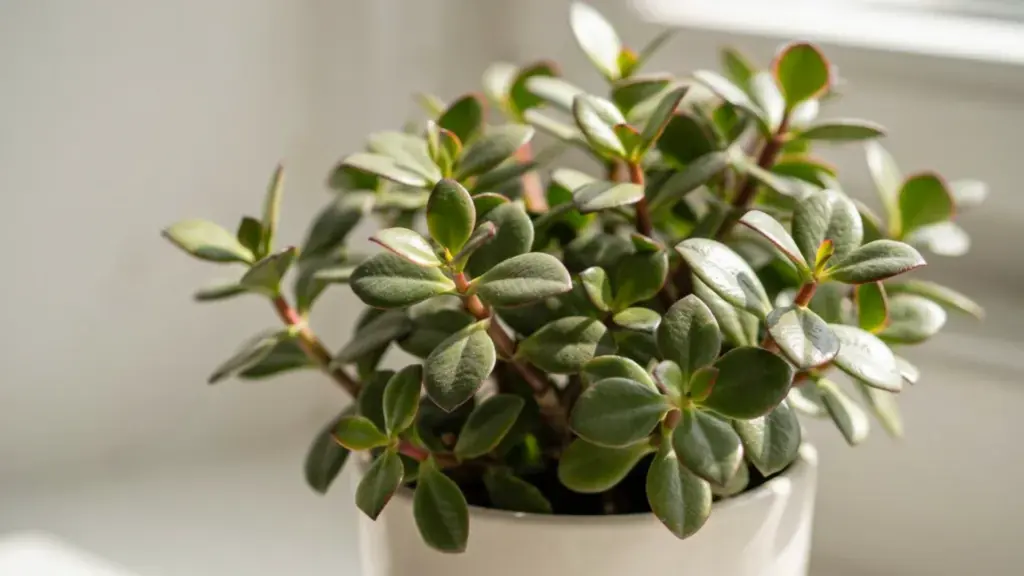
Jade plant (Crassula ovata) is a succulent native to the arid regions of South Africa. It has thick, fleshy, oval-shaped leaves on woody stems.
It grows slowly and can reach up to three feet tall indoors. A well-cared-for plant can live for decades.
One of mine started as a single leaf a friend gave me after hers got leggy, and it’s outlived two apartment moves since.
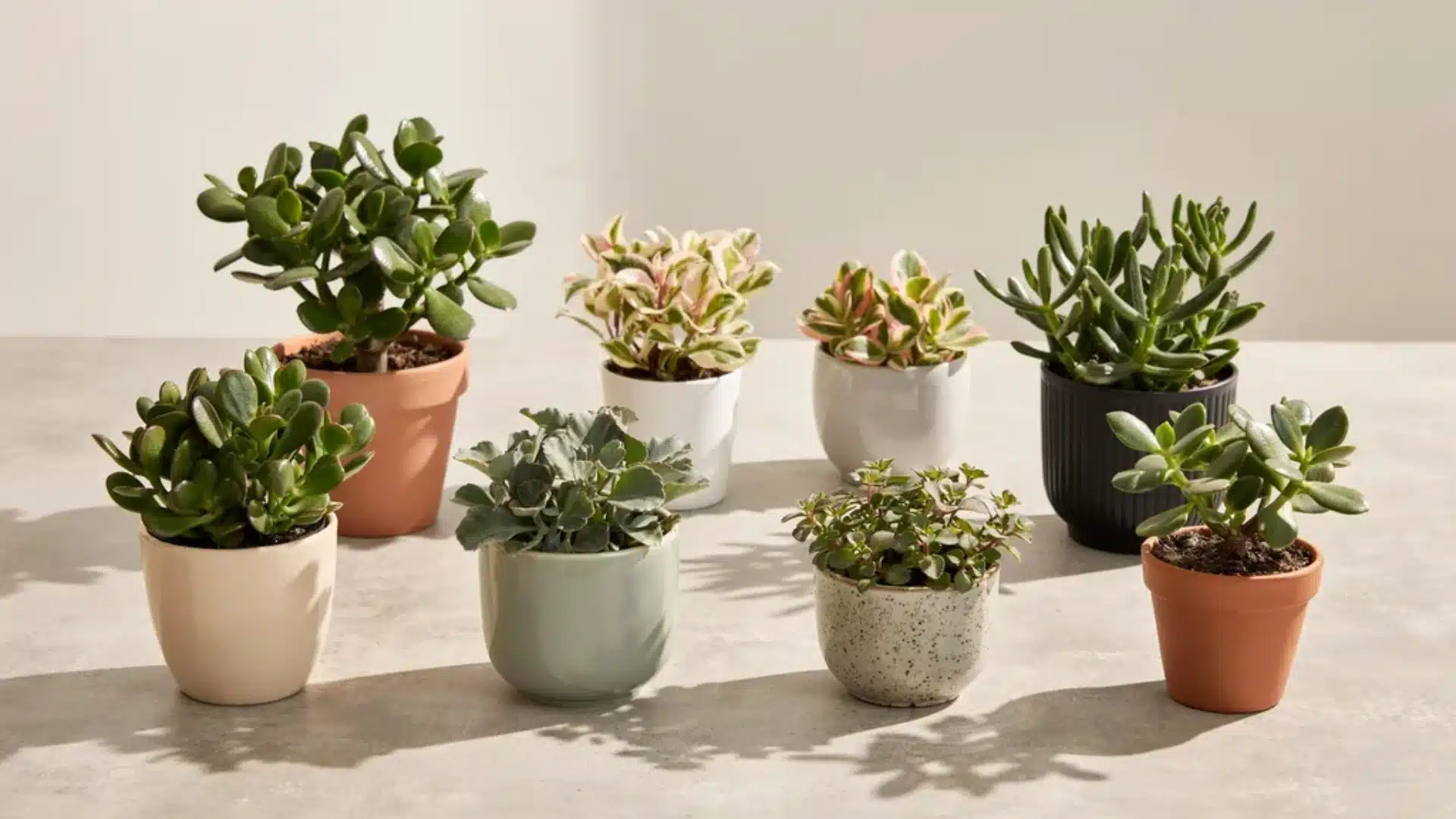
From the classic green form to gold and tricolor cultivars, the different varieties of jade plant all share the same low-maintenance habit, which is why it shows up so often among easy houseplants for people who kill everything else.
Benefits of a Jade Plant
Jade plants offer more than most people expect from a small indoor succulent. Each benefit below comes from real, documented use, whether scientific, traditional, or cultural.
1. Air Purification
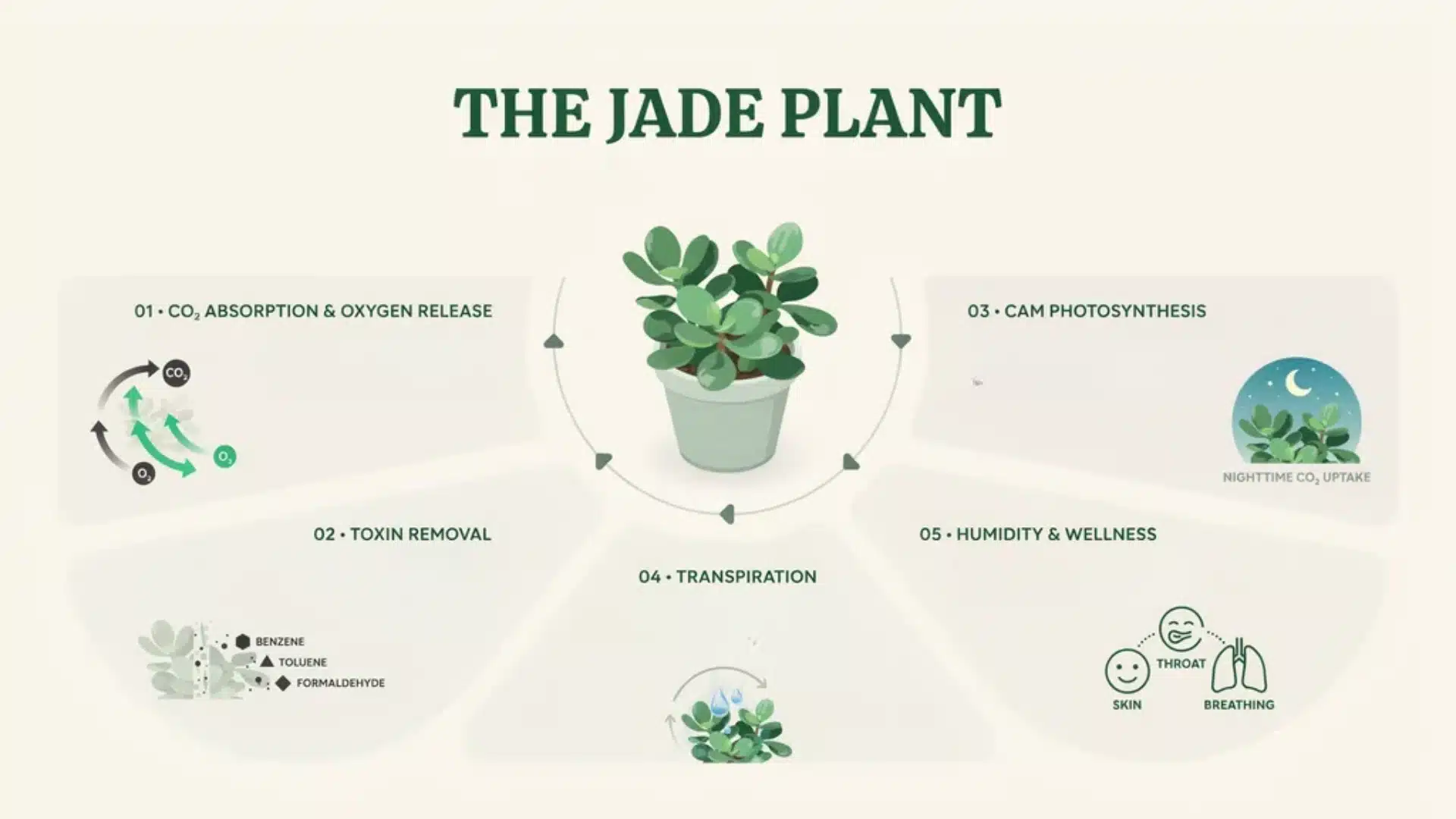
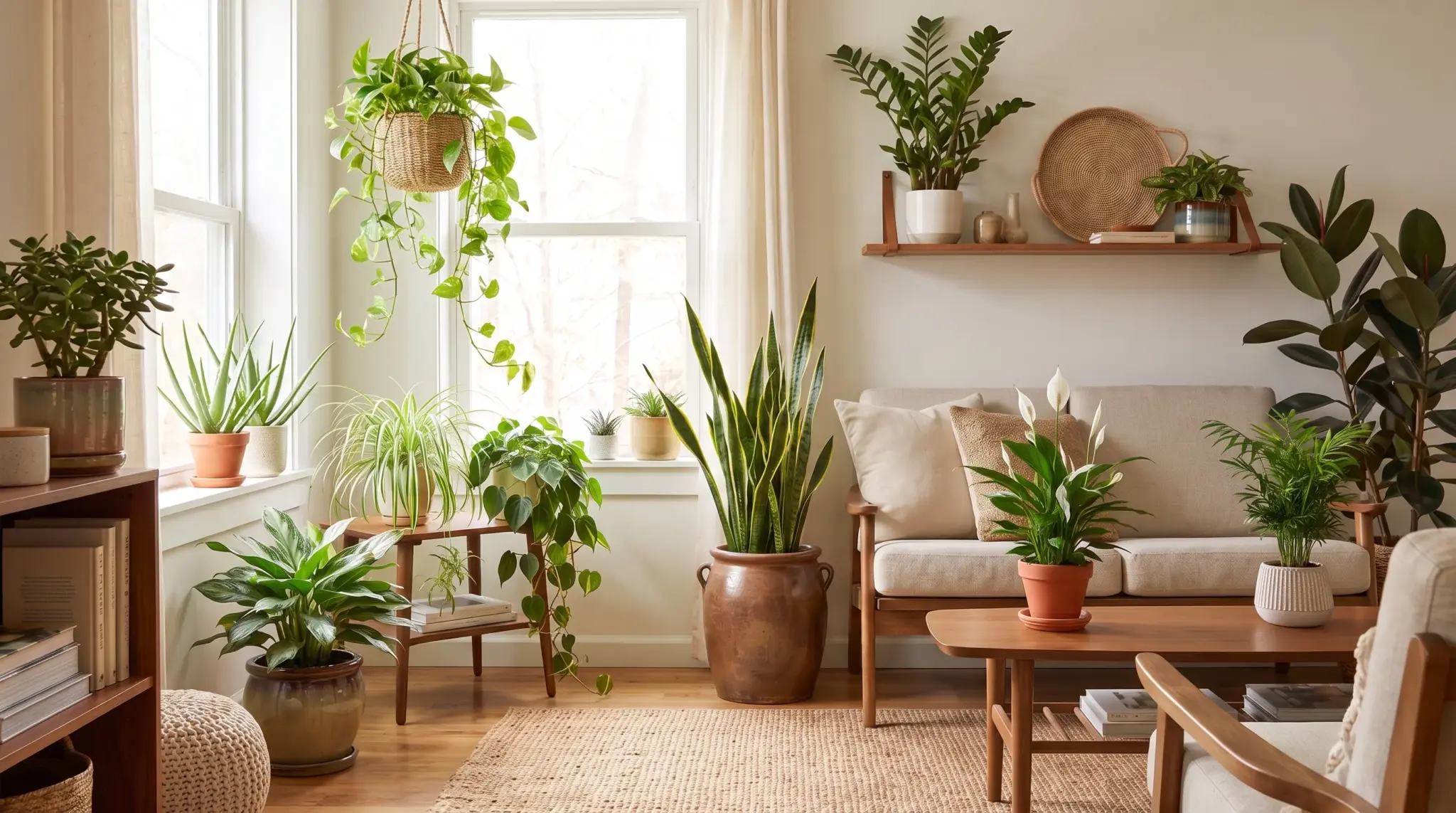
One of the most practical jade plant benefits is what it does to your indoor air. Here’s what it does:
- It absorbs carbon dioxide and releases oxygen, keeping indoor air fresher.
- It removes toxins such as benzene, toluene, and formaldehyde, which are found in furniture, cleaning products, and paints.
- It uses CAM photosynthesis, meaning it absorbs CO2 at night rather than during the day. Most houseplants don’t do this, which makes it a genuinely useful plant for a bedroom.
- It releases water vapor through its leaves via transpiration, raising indoor humidity.
- Higher humidity helps reduce dry skin, throat irritation, and minor respiratory discomfort, especially in heated or air-conditioned rooms.
2. Mental Health and Focus
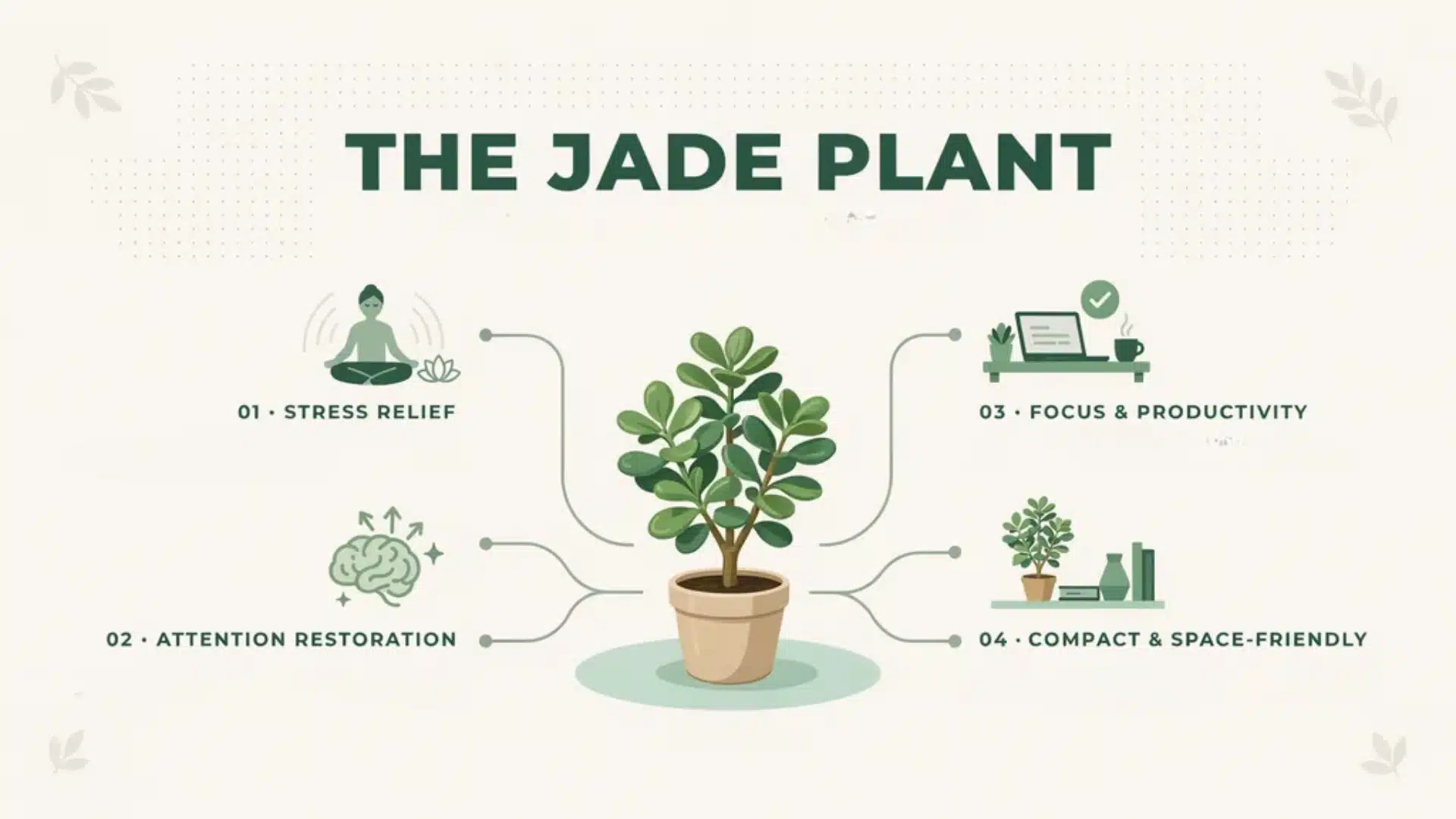
A University of Technology Sydney study on indoor plants in workspaces found that adding greenery reduced reported stress and fatigue among office workers. My own desk plant does the same job on a smaller scale.
Here’s how a jade plant supports focus and mood:
- Its low-maintenance nature means you get the benefit of a living plant without the stress of keeping it alive.
- The visual presence of its deep green leaves helps with attention restoration, the mental process of recovering focus after a period of strain.
- Having one on your desk or a nearby shelf can improve concentration for people who work from home.
- Its compact shape fits easily into small spaces without cluttering a room.
3. Feng Shui and Vastu Benefits
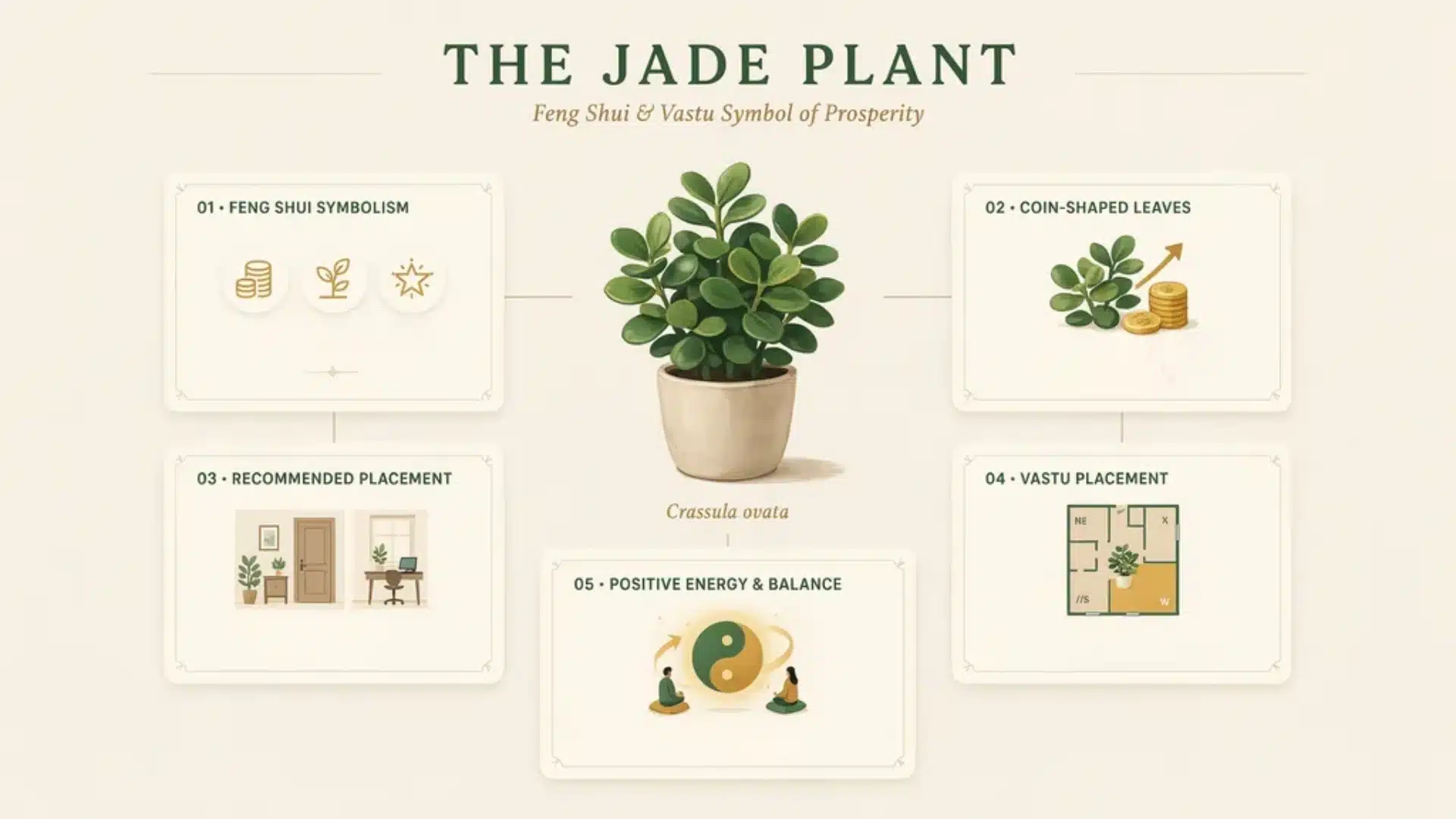
This plant has carried symbolic meaning across cultures for a long time. This part isn’t something I can test the way I test a watering schedule, but the cultural weight behind it is real, passed down through generations across multiple countries.
- In Feng Shui, it represents wealth, vitality, and prosperity.
- Its coin-shaped leaves are thought to attract financial growth, making it a popular gift for new businesses, homes, and offices.
- The recommended Feng Shui placement is near your front entrance or in a workspace.
- In Vastu, the south-east corner of the home is the ideal spot.
- Both traditions treat this plant as a carrier of positive energy and balance.
4. Traditional Medicinal Uses
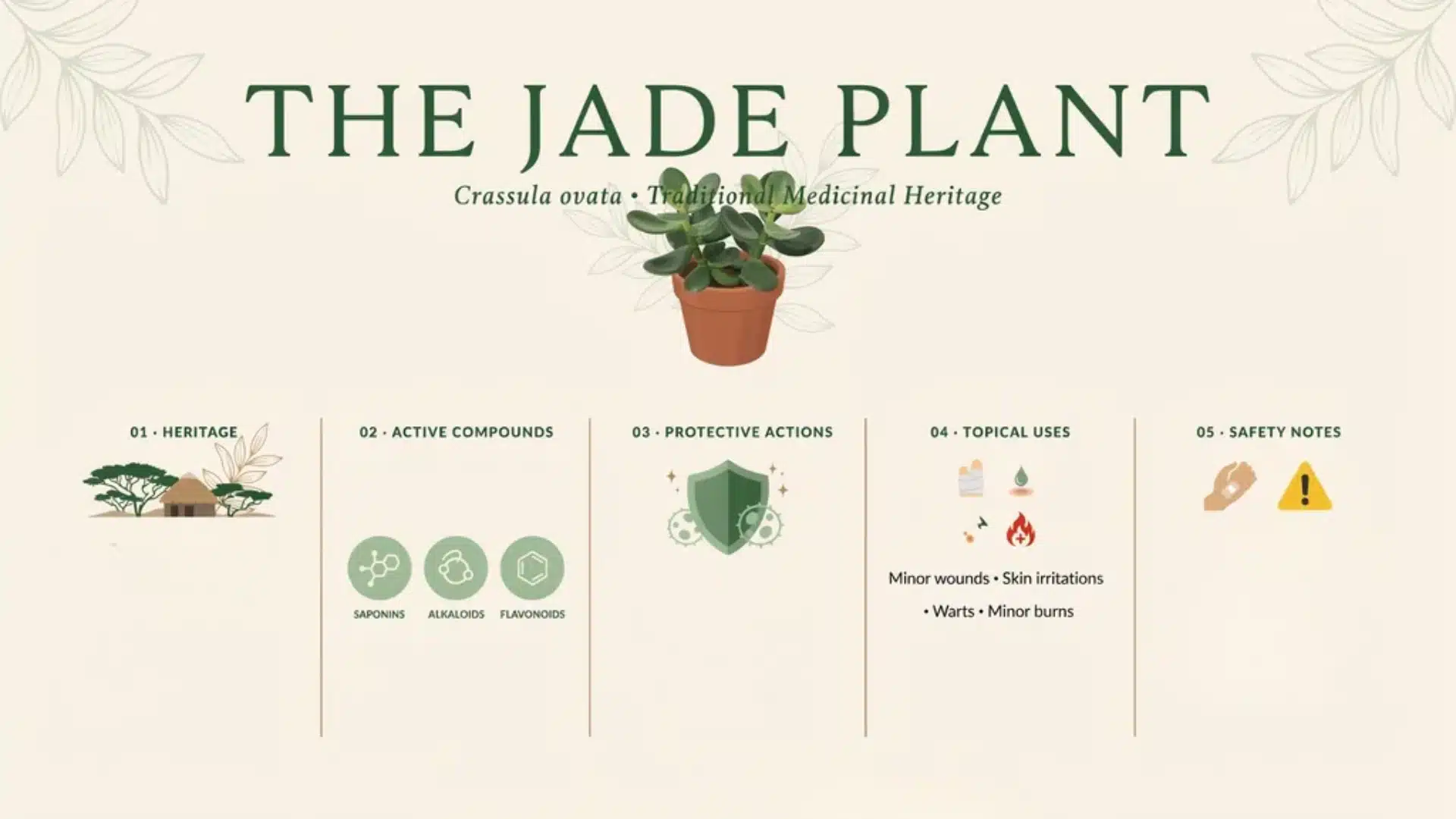
The plant contains saponins, alkaloids, and flavonoids. Phytochemical studies on the Crassulaceae family have identified antimicrobial and antioxidant activity in these compounds, though most of that research is limited to lab and animal studies, not human trials.
Traditional topical uses include:
- Soothing minor wounds and skin irritations
- Treating warts and minor burns
- Topical application with a patch test is the most supported use
A clear note on safety: don’t ingest jade plant leaves or sap. The plant contains bufadienolide, which can cause nausea, vomiting, and, in large amounts, more serious symptoms. The sap can also irritate skin, so wear gloves when handling damaged or stressed leaves.
Sap irritation is a different problem from a plant that’s struggling. If your jade plant leaves turning yellow instead, that’s almost always about water or light, not toxicity.
This plant is also toxic to cats and dogs. Both the ASPCA and veterinary sources confirm this. If a pet ingests any part of it, contact a vet immediately.
How to Care for a Jade Plant Indoors
You don’t need to do much. That’s genuinely the best thing about this plant.
1. Watering is where most people go wrong. This succulent stores water in its leaves. Water only when the top inch of soil is completely dry.
Knowing watering a jade plant right comes down to one rule: when in doubt, wait another day. Overwatering causes root rot, and root rot stays quiet until it doesn’t.
2. Light: Give it at least four to six hours of bright, indirect sunlight daily. A south- or east-facing window works well. Without enough light, the stems stretch out and the plant gets weak and leggy.
3. Soil and pot: Use a well-draining succulent mix. A terracotta pot with drainage holes is the best option. It lets excess water escape and the soil dry out between waterings.
4. Pests: Mealybugs and spider mites are the most common. Wipe leaves with a damp cloth, or treat minor infestations with diluted neem oil.
If the plant sheds leaves without any visible pest problem, sudden temperature swings or inconsistent watering are the usual cause. Why jade plant drops leaves is one of the most common questions I get, and the answer is almost always in the roots or the light.
Is a Jade Plant Worth Growing?
For three feet of eventual growth and almost no maintenance, yes.
A jade plant cleans the air at night instead of during the day, tolerates the kind of neglect that kills other houseplants, and carries enough cultural weight that it’s still a standard housewarming gift.
Mine have outlasted three apartments and at least one truly terrible month of forgetting they existed. If you want a plant that works quietly in the background, this is a solid one to start with.
Already growing one? Drop a comment and let me know where you’ve got it placed.
Frequently Asked Questions
Is a Jade Plant Lucky for the Home?
Yes. In Feng Shui and Vastu, the jade plant is considered an auspicious houseplant across many cultures.
How Does a Jade Plant Attract Money?
Its round leaves resemble jade coins, which is where the wealth and prosperity symbolism comes from in Feng Shui.
Where Should I Put a Jade Plant in My House?
A south- or east-facing window works best, with four to six hours of bright, indirect sunlight daily.
Are There Any Downsides to a Jade Plant?
It’s toxic to cats and dogs, and the sap can irritate skin. It also needs a few hours of direct light or it gets leggy and weak.