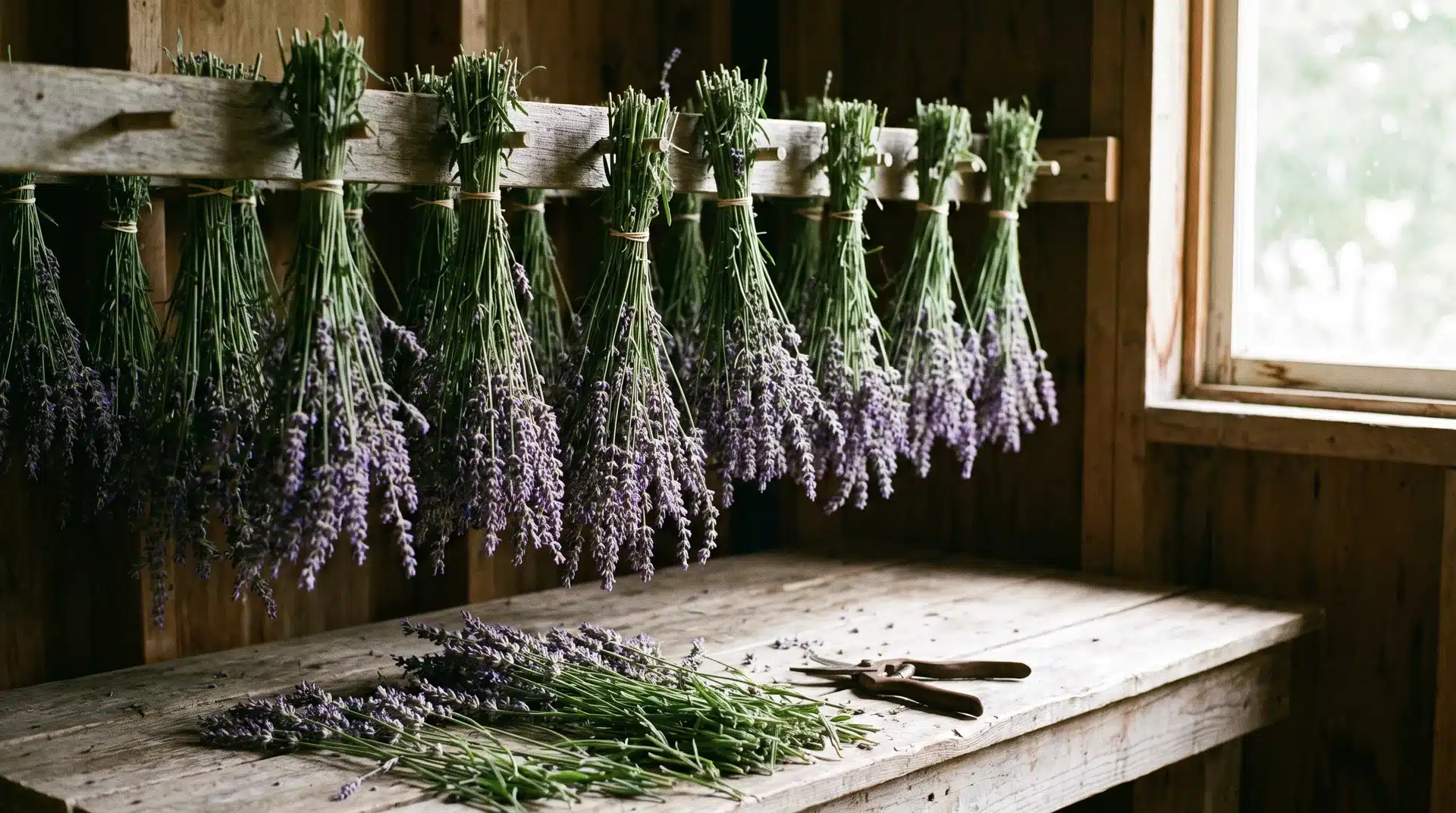
Quick Answer: To dry lavender, cut the stems when about 10% of the flowers have opened, bundle 15 to 20 stems with a rubber band, and hang them upside down in a dark, well-ventilated spot for 2 to 4 weeks. A food dehydrator or a low oven works faster, drying lavender in 1 to 4 hours, if you need it sooner.
I’ve pulled dried lavender out of storage that had gone completely brown and lost nearly all its scent. The stems looked fine hanging in my kitchen. I’d just cut them about a week too late.
Cut lavender too late, and the essential oils are already fading by the time it dries. Cut it on a damp morning, and the stems can mold before they finish.
On my flower farm here in North Carolina, lavender goes into my cut flower garden every spring, and cutting time is still the thing that makes or breaks a batch.
This post covers four ways to dry lavender, when to harvest it, how to bundle and store it, and what to do with it once it’s ready. When done right, the scent lasts for up to three years.
How to Dry Lavender in 4 Different Ways
The right method depends on your space, your timeline, and what you plan to do with the dried lavender.
Method 1: Hang Drying
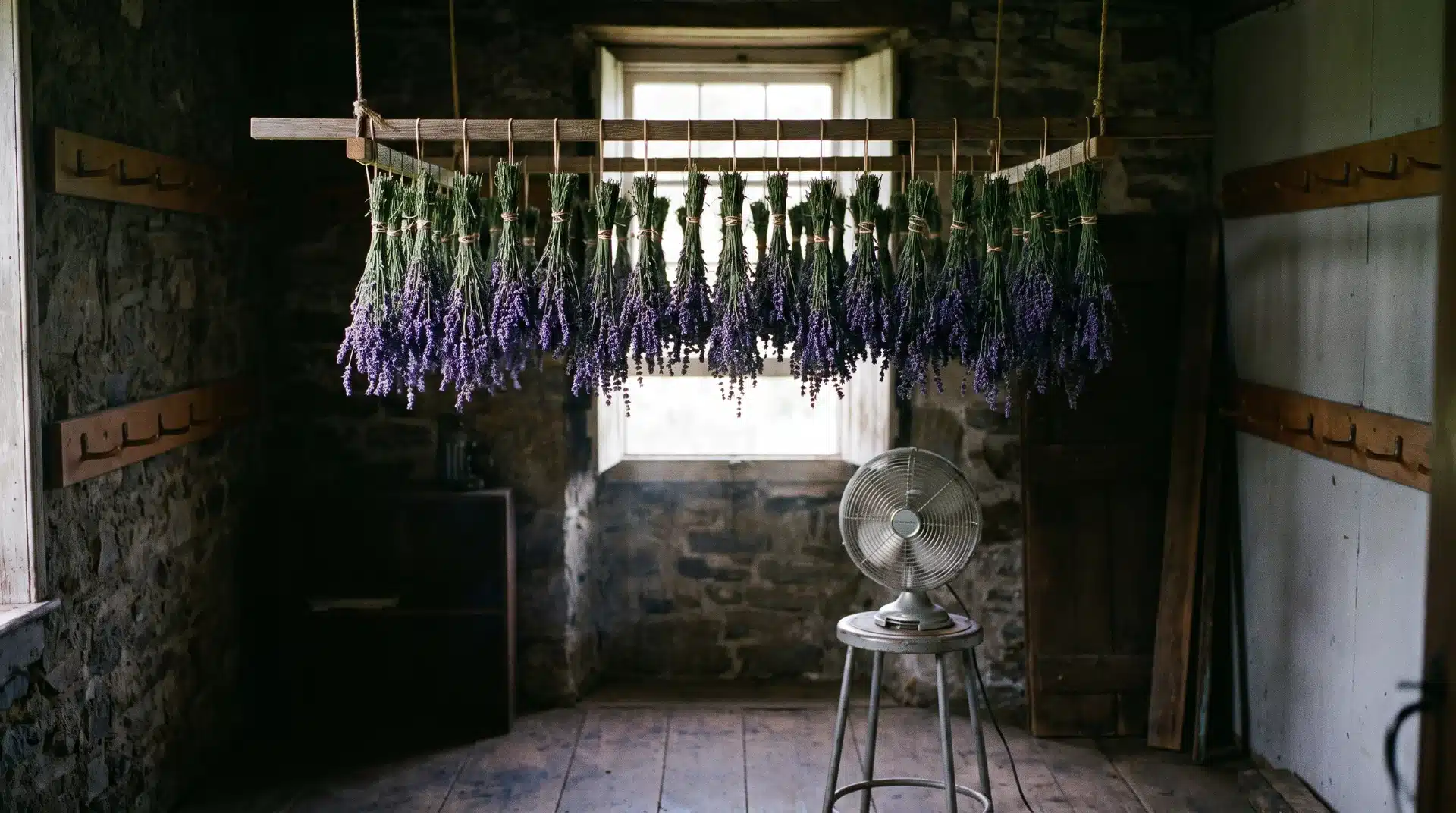
This is the classic approach and the best one for a long-lasting scent.
Hang your bundles upside down in a cool, dark, well-ventilated spot. A closet, pantry, garage, or windowless laundry room all work well.
Keep them away from direct sunlight. UV light fades the purple to a dull brown and pulls the fragrance out fast.
Drying time: 2 to 4 weeks depending on the humidity in your space.
In humid climates like the Southeast or the Pacific Northwest, place a small fan nearby. Humid air slows drying and raises the risk of mold. A little extra airflow fixes that fast.
How to check if it’s done: snap a stem. If it breaks cleanly, the bundle is ready. If it bends without breaking, give it more time.
Method 2: Flat Rack Drying
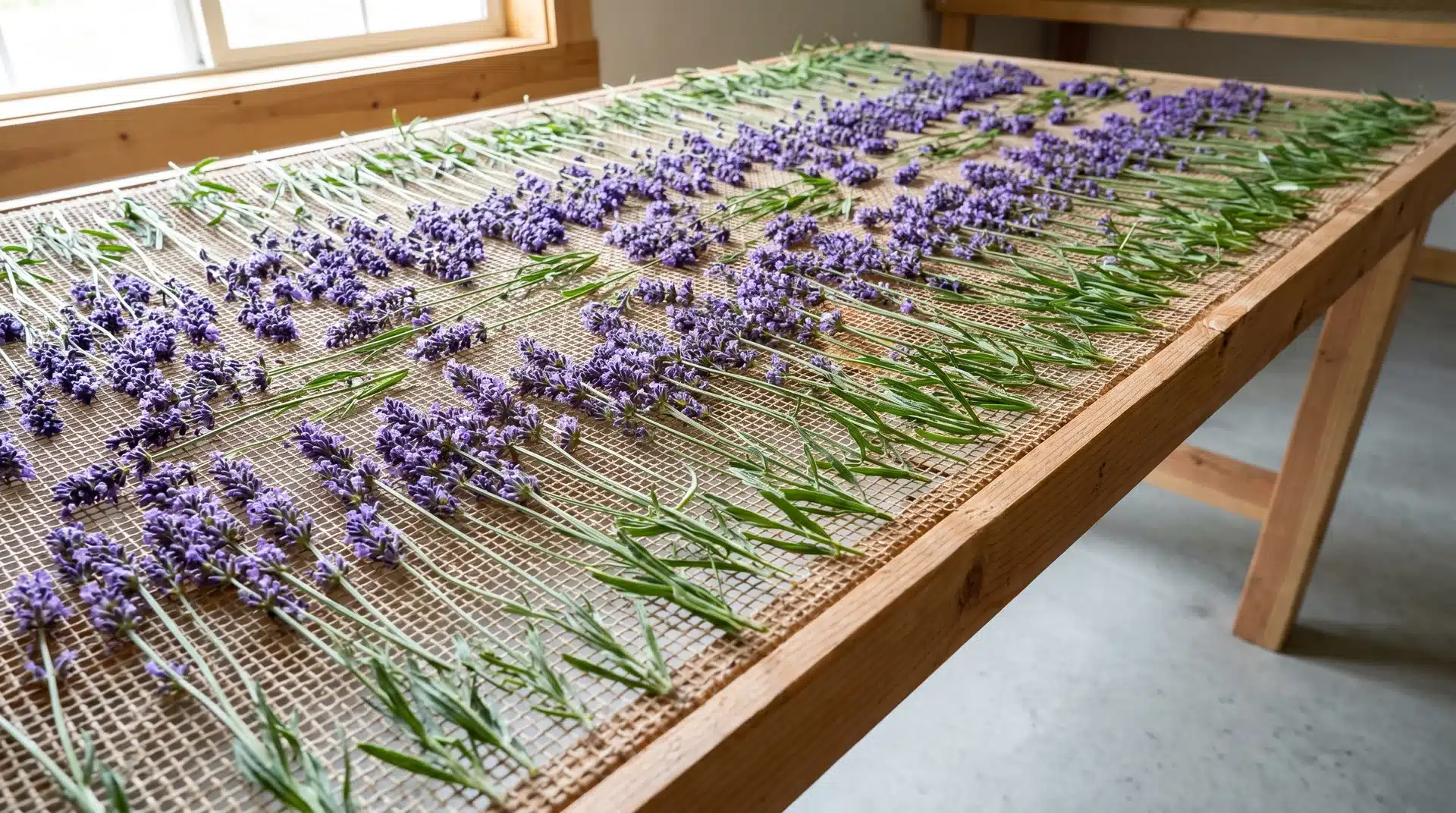
Spread the stems in a single layer across a mesh drying rack or an old window screen. Prop both ends of the screen up on books or folded towels so air moves underneath as well as above.
Turn the stems every two to three days for even drying. This method takes roughly the same amount of time as hanging but needs a bit more attention.
Method 3: Dehydrator
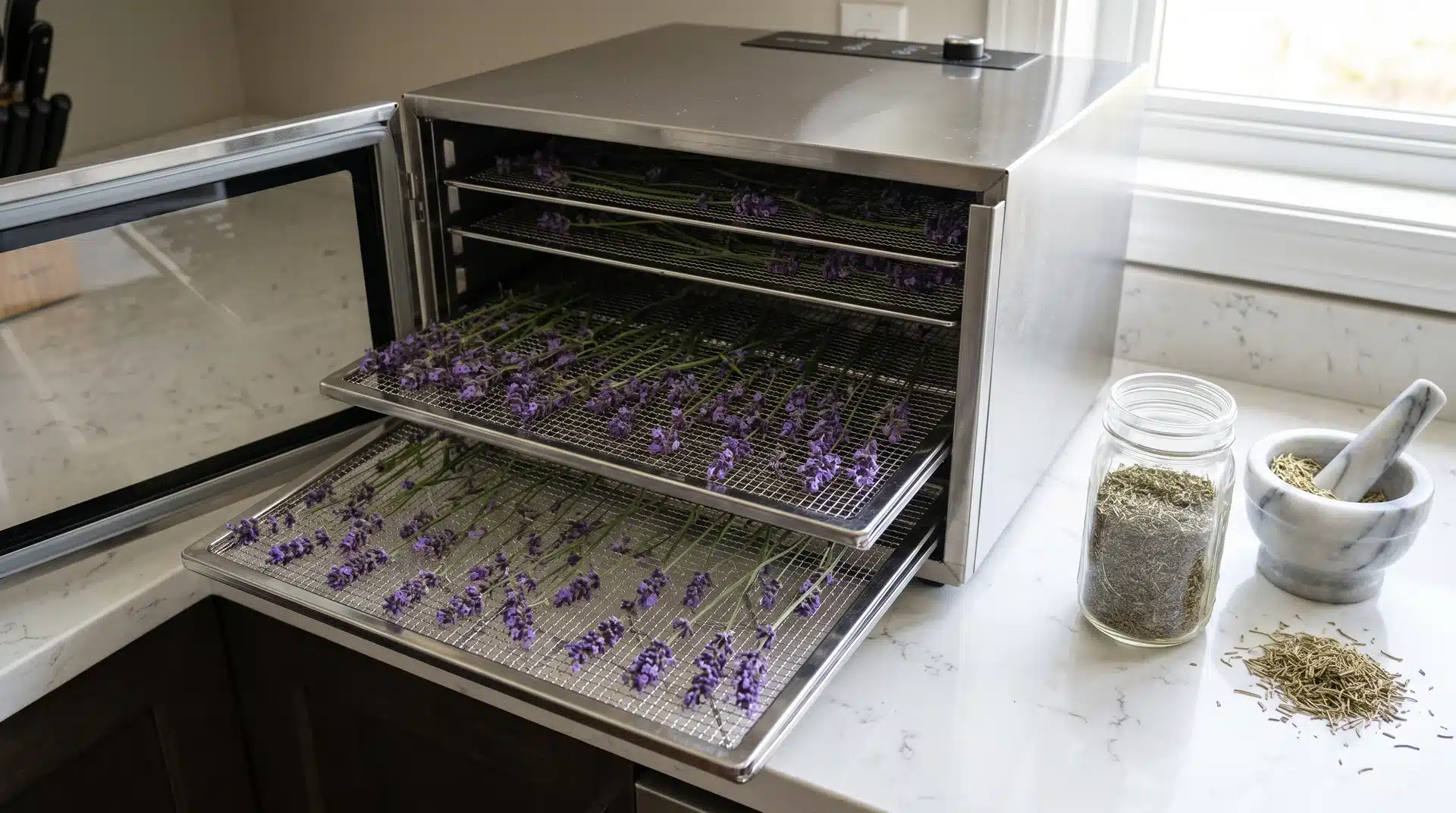
If you have a food dehydrator, this is the fastest, most reliable option you’ve got.
Spread lavender loosely across the trays. Don’t let stems overlap. Use the lowest setting, or the herb preset if your model has one.
Check every 30 to 60 minutes. Most batches finish in 1 to 4 hours. Low, controlled heat preserves the oils better than an oven does. Scent stays strong, and the color holds up well.
Method 4: Oven Drying
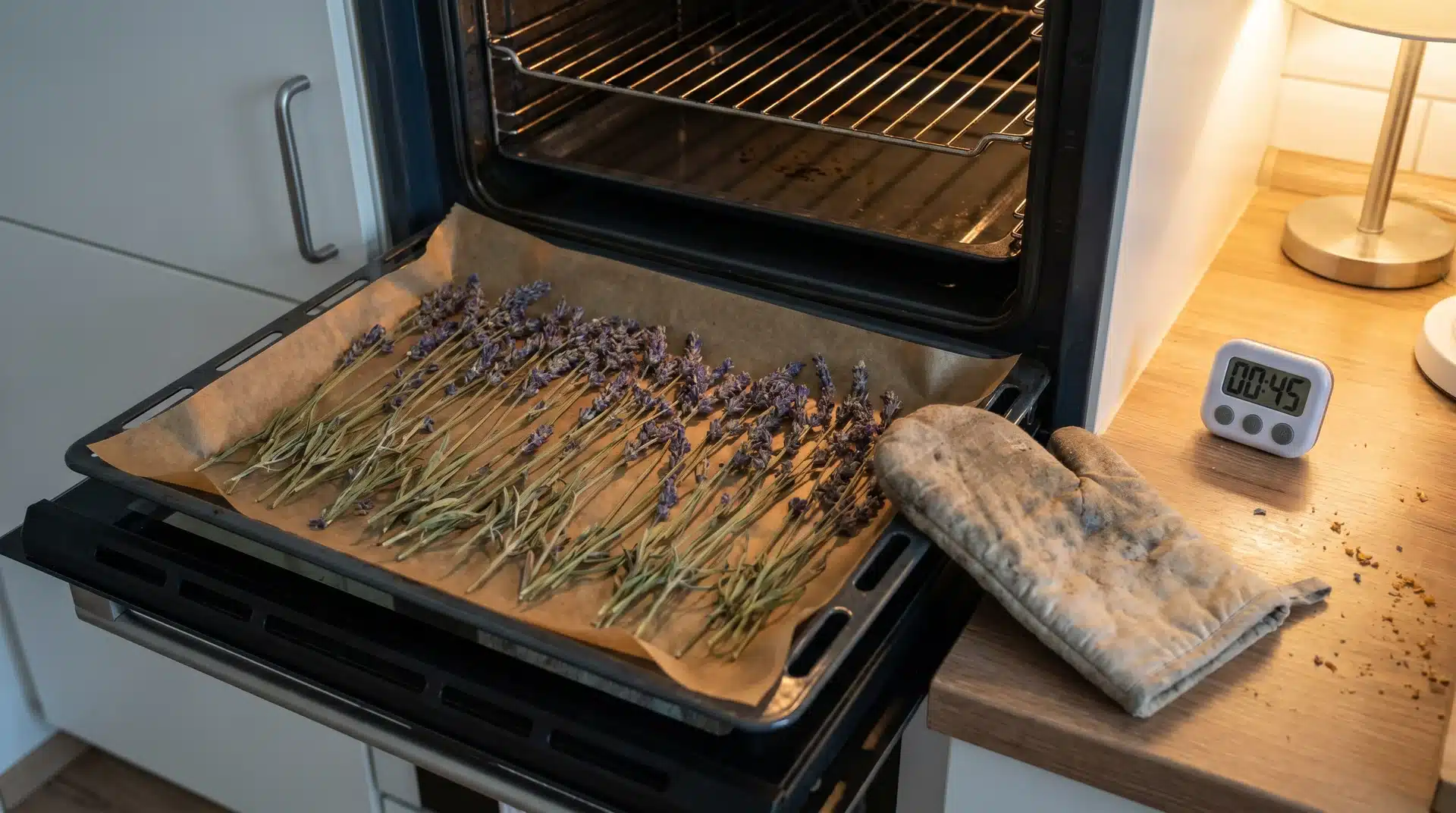
Preheat your oven to 100°F and leave the door slightly ajar for the whole process.
Spread stems in a single layer on a baking sheet. Check every 15 minutes. Pull them out once the stems snap cleanly.
The whole process takes 30 minutes to one hour. The scent ends up a little less intense than air-dried lavender, but the result works fine for sachets, potpourri, and cooking.
What Is the Best Time to Harvest Lavender for Drying?
Timing your harvest is the single most important step in this whole process.
The window you want: cut when about 10% of the flowers on each stem have opened. At that stage, the plant holds its highest concentration of essential oils. Wait until the flowers are fully open and those oils drop off fast.
The color fades during drying, too. You end up with brown, flat stems that smell like very little.
A trick I use on my own beds: watch the bees. When bees start landing on the lavender more often, the buds are hitting peak fragrance and oil content. That’s my signal to grab the scissors.
Cut in the morning. Oils build up overnight but dissipate as temperatures rise through the day. Let the morning dew dry on the plant first. Wet stems are a mold risk, so skip harvesting right after rain, too.
Use sharp pruners or kitchen shears. Clean cuts matter more than you’d think. Never break stems by hand. Cut above a leaf node, not into the woody base of the plant. Cutting into wood can slow or stop regrowth entirely.
How Do You Prepare Lavender Bundles for Drying?
Strip the lower 2 to 3 inches of each stem before bundling. Remove any leaves from that section. This keeps the bottom of your bundle clean and lets air reach the stems while they dry.
Keep bundles small, about 15 to 20 stems each. A small bundle dries evenly. A large, thick bundle traps moisture in the center, which is where mold starts.
The stems shrink as they dry, so tie them with a rubber band rather than twine. Twine loosens as the stems narrow. Rubber bands contract along with them and stay snug.
Slip a small cloth bag or paper bag loosely over each bundle before hanging. As the buds dry, some fall off the stem on their own.
Without the bag, they scatter across the floor. With it, every bud drops into the bag, and nothing goes to waste. Loop a bent paper clip or an S-hook through the rubber band for easy hanging.
How to Store Dried Lavender So It Stays Fragrant
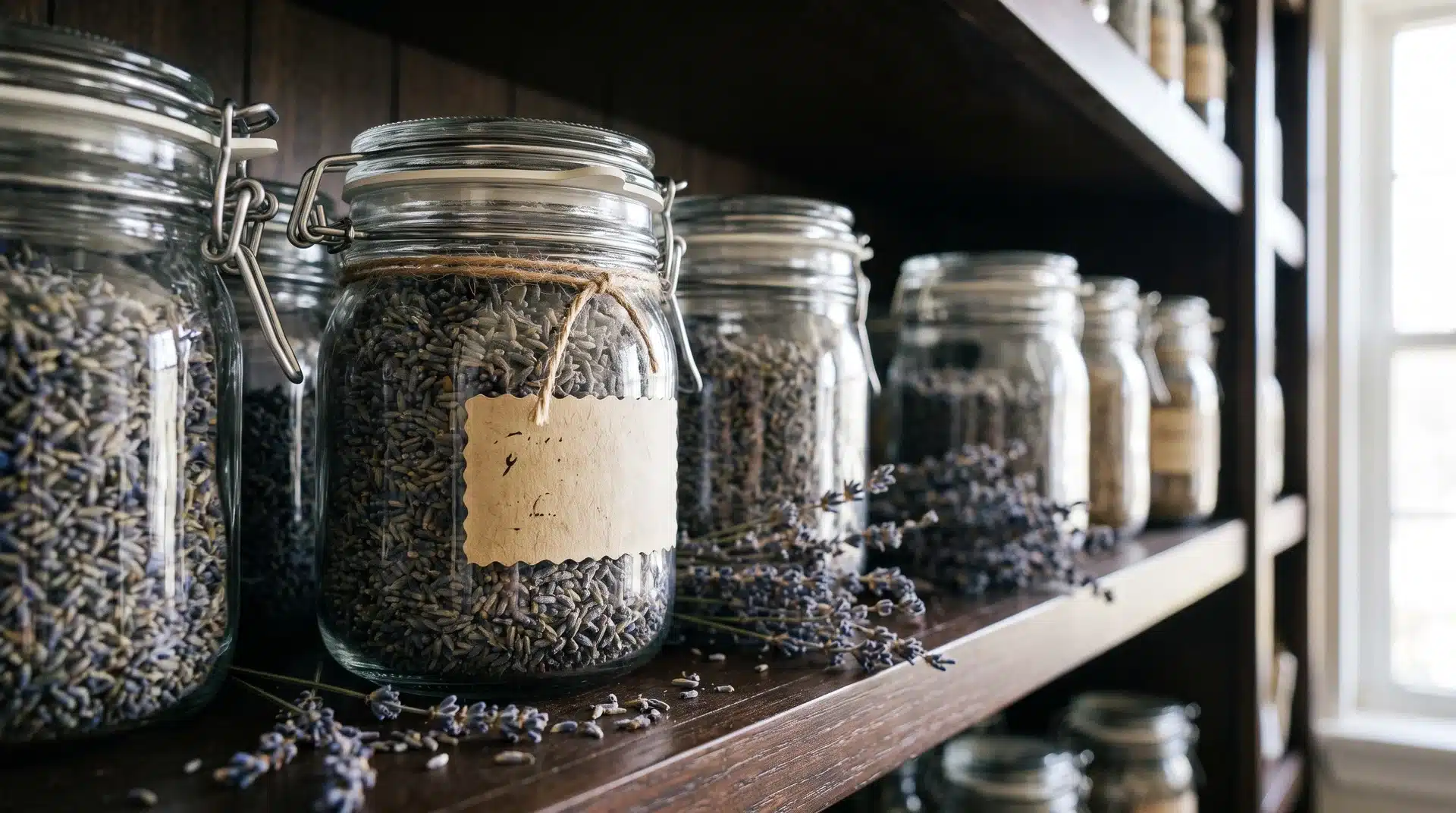
Once the lavender is fully dry, how you store it decides how long the scent lasts.
To strip the buds from the stems, hold a dried bunch over a bowl. Make a loose fist around the bud end, then slide your hand firmly down the stem.
The buds fall cleanly into the bowl below. Keep the leaves and buds in separate bowls. They have different uses, and you’ll want to tell them apart later.
Pack the buds into an airtight glass jar. A standard Mason jar works well. Store the jar in a cool, dark cabinet or pantry shelf. Write the date and variety on a label before you seal it.
For culinary use, dried lavender buds hold their best flavor for up to one year. Sachets and decor keep their scent for two to three years.
If you plan to use lavender in a dried-flower arrangement, leave the stems on and stand the stems upright in a dry vase without water, away from direct sunlight.
A shelf of low-maintenance houseplants makes good company for a dried arrangement like this, since both need almost no upkeep between waterings.
I’ve got a full rundown of easy houseplants for beginners if you want to build out that corner.
What if You Have Store-Bought Lavender?
Fresh lavender from a store or farmers’ market dries exactly the same way as garden-cut lavender. The process doesn’t change.
Before bundling, trim the bottom inch of each stem. That’s the part that sat in water and is usually soft or discolored.
Re-tie the bundle tightly with a rubber band. Most store bouquets are large, so split them into two or three smaller bundles for better airflow. Then hang or rack dry as you normally would.
One thing worth checking before cooking with store-bought lavender: confirm it’s labeled culinary-grade or food-safe. Not every variety sold as a decorative bouquet is safe to eat.
What Can You Do With Dried Lavender?
Once you’ve got a full jar of dried lavender, it’s good for a lot more than one thing.
- Sachets: Fill small cloth bags with dried buds and tuck them into drawers, closets, or pillowcases. Lavender works as a natural moth deterrent. A 2023 systematic review published on the National Library of Medicine’s PMC database also found that inhaling lavender essential oil is a safe, effective way to ease anxiety.
- Cooking and baking: Use only English lavender (Lavandula angustifolia) for food. It has a milder, sweeter flavor than French or Spanish varieties. A good starting ratio for lavender tea is 1/2 teaspoon of dried buds per cup of hot water.
- Potpourri: Mix dried buds with a few drops of lavender essential oil to refresh the fragrance of older dried stock. The oil stretches the scent out and keeps the mix useful for longer.
- Dried bouquets: Lavender pairs well with other flowers you’ve dried from the garden. Mix a few stems in with dried rose petals for a bouquet that holds its color and scent for months.
- Bath products: Add a small handful of dried buds to a muslin sachet and drop it into a warm bath. You can also blend them into homemade bath salts with Epsom salt and a carrier oil, such as jojoba or almond.
Ready to Dry Lavender This Season?
The two things that matter most when you dry lavender are when you cut it and how small you keep your bundles. Cut at the right moment, roughly when 10% of the flowers have opened, and the oil stays where it belongs.
Keep the bundles small, dry them in a dark, well-ventilated space, and the color and scent will hold for years.
Lavender you dry yourself almost always smells stronger than anything sold pre-dried in a store. The oils haven’t had months to fade on a shelf somewhere.
One good harvest from three or four plants gives you a full year of sachets, tea, and home fragrance. If peonies are also part of your cutting garden, the same low-heat drying approach works for those too.
What are you planning to make with your dried lavender this season? Drop it in the comments below.
Frequently Asked Questions
What Is the 8-8-8 Rule for Lavender?
The 8-8-8 rule means pruning lavender by about one-third, leaving at least 8 inches of healthy growth, and avoiding cuts into old woody stems to encourage regrowth.
Can You Dry Lavender in a Vase?
Yes. Stand freshly cut stems upright in a dry vase, without water, in a cool, well-ventilated spot until they’re fully dry.
Can You Cut Back Lavender Too Hard?
Yes. Cutting into old, woody stems with little or no green growth can stop lavender from regrowing and may permanently damage or kill the plant.
Can You Dry Lavender and Roses Together?
You can dry them at the same time, but keep the bundles separate. Rose petals dry faster than lavender stems, which need longer airflow to hold their scent.