Peonies fall into three plant types: herbaceous (soft stems that die back each winter, the most common garden peony), tree (woody-stemmed shrubs that keep their stems year-round), and Itoh hybrids (herbaceous habit with tree-peony-sized blooms). The American Peony Society recognizes six flower forms and lists more than 6,500 registered cultivars.
The first peonies I planted on my North Carolina farm were three Sarah Bernhardt roots I ordered because I liked the name. Twelve years later, those same plants still bloom every May, and the row has grown to more than 40 plants across all three cultivar groups.
Peonies are flowering perennials in the genus Paeonia, native to Asia, Europe, and parts of North America. Centuries of breeding have turned that one genus into hundreds of named cultivars in a wide range of colors, sizes, and flower shapes.
The plant type is the first decision, since it shapes spacing, pruning, and how the plant behaves in winter. Cultivar name and flower form come after that.
What Are the Main Types of Peonies?
Peonies fall into three plant types and six recognized flower forms. Picking the right one starts with knowing the difference between the plant types, because that decision shapes everything from bed spacing to winter care.
Most peony cultivars are herbaceous, growing about three feet high and up to four feet wide with blooms up to eight inches across, and they die back to the ground each winter.
Tree peonies work differently. These woody-stemmed shrubs keep their structure through winter and typically reach around five feet, with blossoms that can hit a full foot across.
The third group came later. Itoh peonies started as a hybridizer’s ambition to cross tree peonies with herbaceous ones and combine the best traits of both.
That goal took years to achieve, partly because the two parent types bloom weeks apart and aren’t closely related genetically. Japanese horticulturist Toichi Itoh first made the cross successfully in the 1960s, and it took decades for the resulting hybrids to reach home gardeners.
Here’s how the three plant types stack up at a glance:
Type | Stem Type | Height | Bloom Time | Best For |
|---|---|---|---|---|
Herbaceous Peony | Soft stems die back yearly | 2–4 ft | Late spring | Flower beds, cutting gardens |
Tree Peony | Woody stems stay year-round | 3–7 ft | Early spring | Shrub borders, statement plants |
Itoh Peony | Hybrid habit | 2–3 ft | Late spring | Small gardens, long bloom |
Once you know which plant type suits your space, choosing a specific cultivar gets a lot easier.
1. Herbaceous Peonies
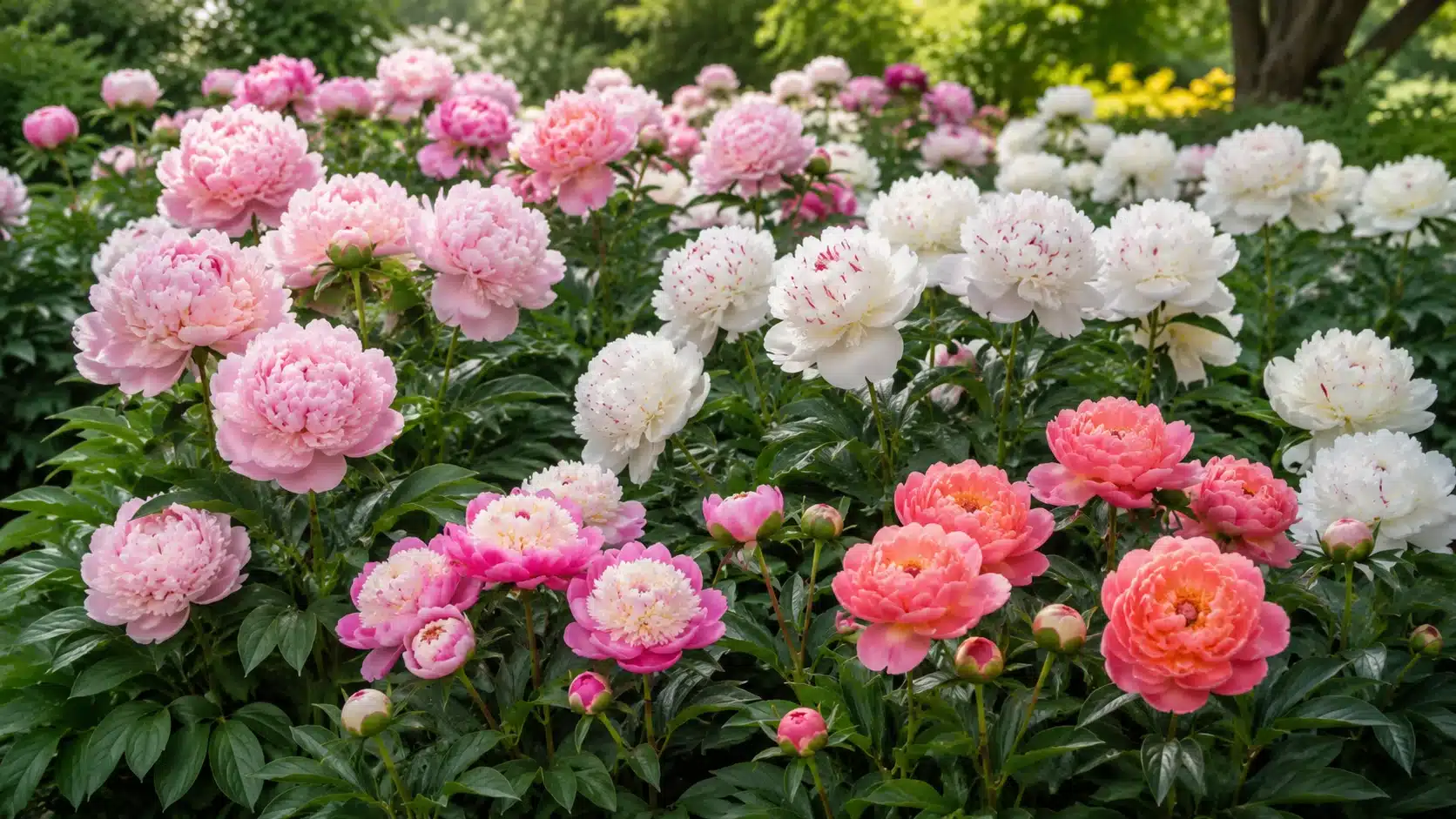
Herbaceous peonies are what most people picture when they hear the word “peony.” They’re the most common garden peony and the type most prized as cut flowers. On my farm, they make up about 80% of what goes into the May and early-June bouquet boxes.
Because they die back completely in winter and regrow from underground roots each spring, they suit colder climates especially well.
Popular Herbaceous Peony Varieties:
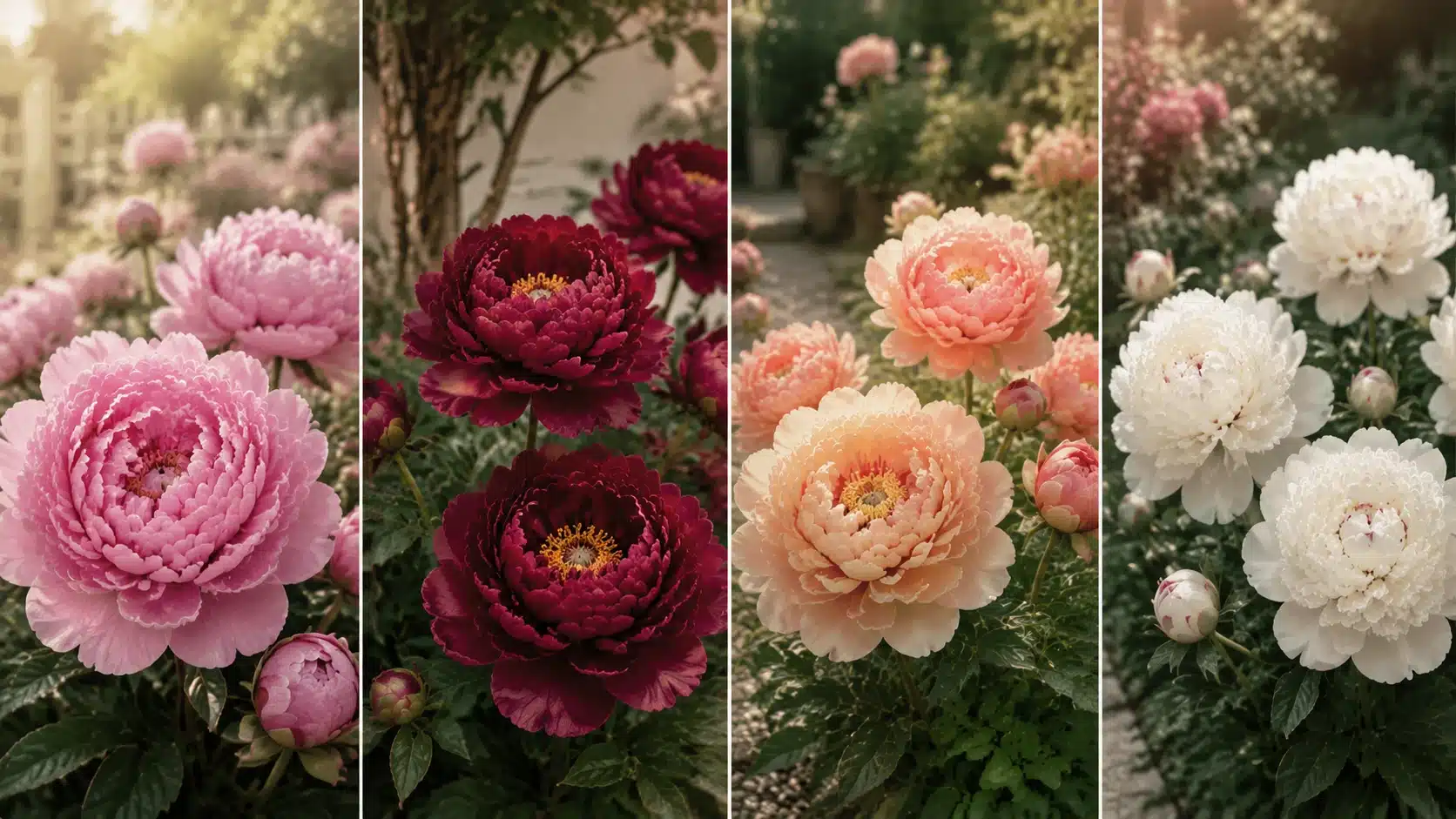
1. Sarah Bernhardt is probably the most recognized peony cultivar in the US, with soft pink double blooms and a strong fragrance that makes it a florist favorite.
2. Festiva Maxima has been a garden staple for generations, with white petals streaked with crimson flecks near the center.
3. Coral Charm blooms early and shifts color as it opens, starting deep coral and fading to a soft peach.
4. Bowl of Beauty stands out structurally, with pink outer petals surrounding a creamy, almost anemone-style center.
These four are the workhorses most flower farmers keep in the ground long-term.
2. Tree Peonies
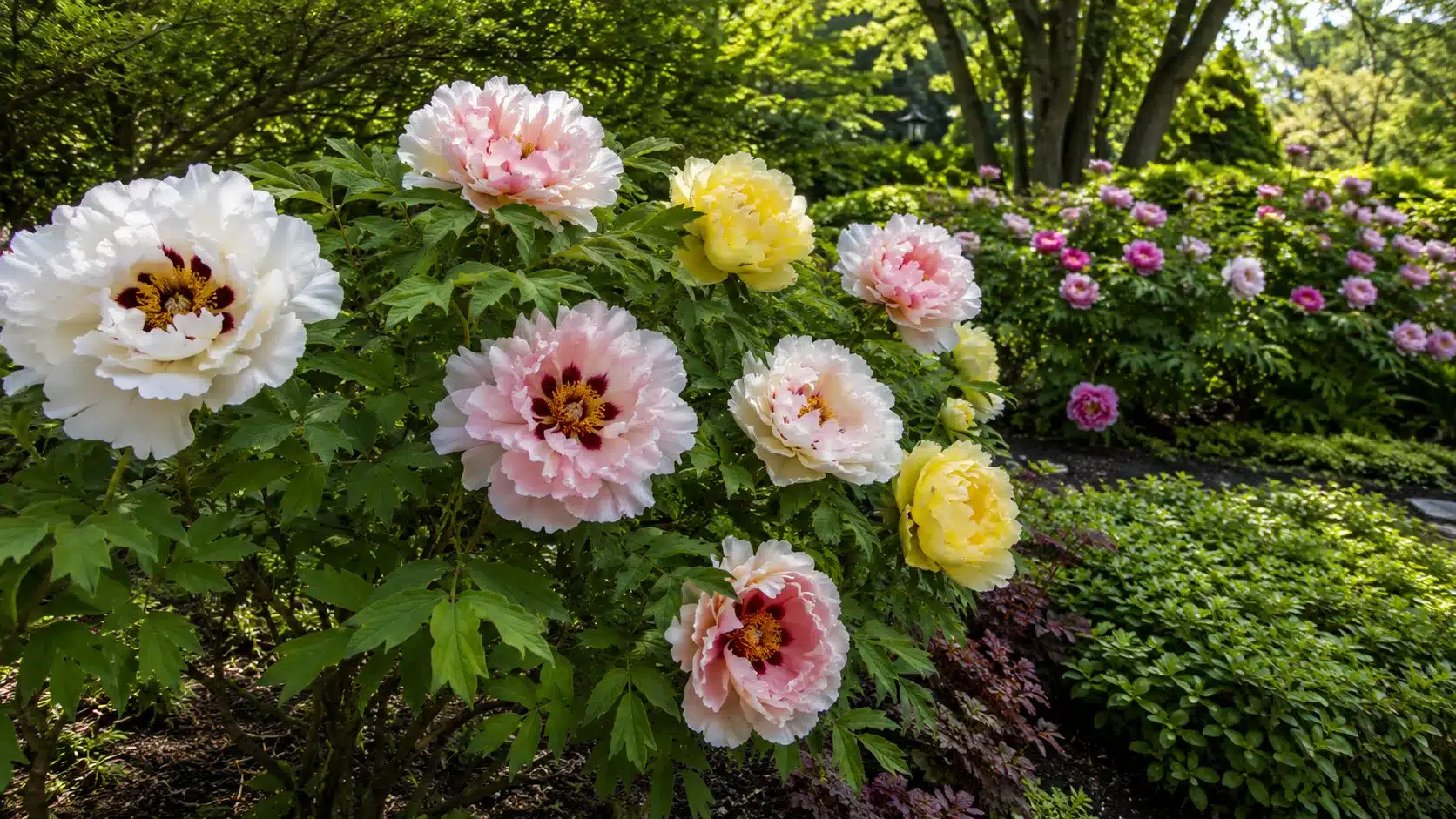
Tree peonies grow like woody shrubs rather than dying back each year. They don’t require freezing temperatures the way herbaceous peonies do, but they still need a dormancy period, and in mild-winter regions that dormancy can be forced by trimming off the leaves.
They also bloom earlier in the season and produce noticeably larger flowers.
Features of Tree Peonies:
Larger flowers, often reaching 8 to 10 inches across
A taller, more permanent structure in the garden
Longer-lived once established
Need more horizontal space than herbaceous types
Popular Tree Peony Varieties:
5. Rock’s Peony is known for large white blooms with dark maroon flares at the center.
6. High Noon produces buttery yellow flowers and is one of the more sought-after yellow tree peonies in cultivation.
Japanese tree peony cultivars, developed over centuries in Japan, are prized for unusual petal textures and color combinations rarely seen in Western breeding lines.
3. Itoh Peonies (Intersectional Hybrids)
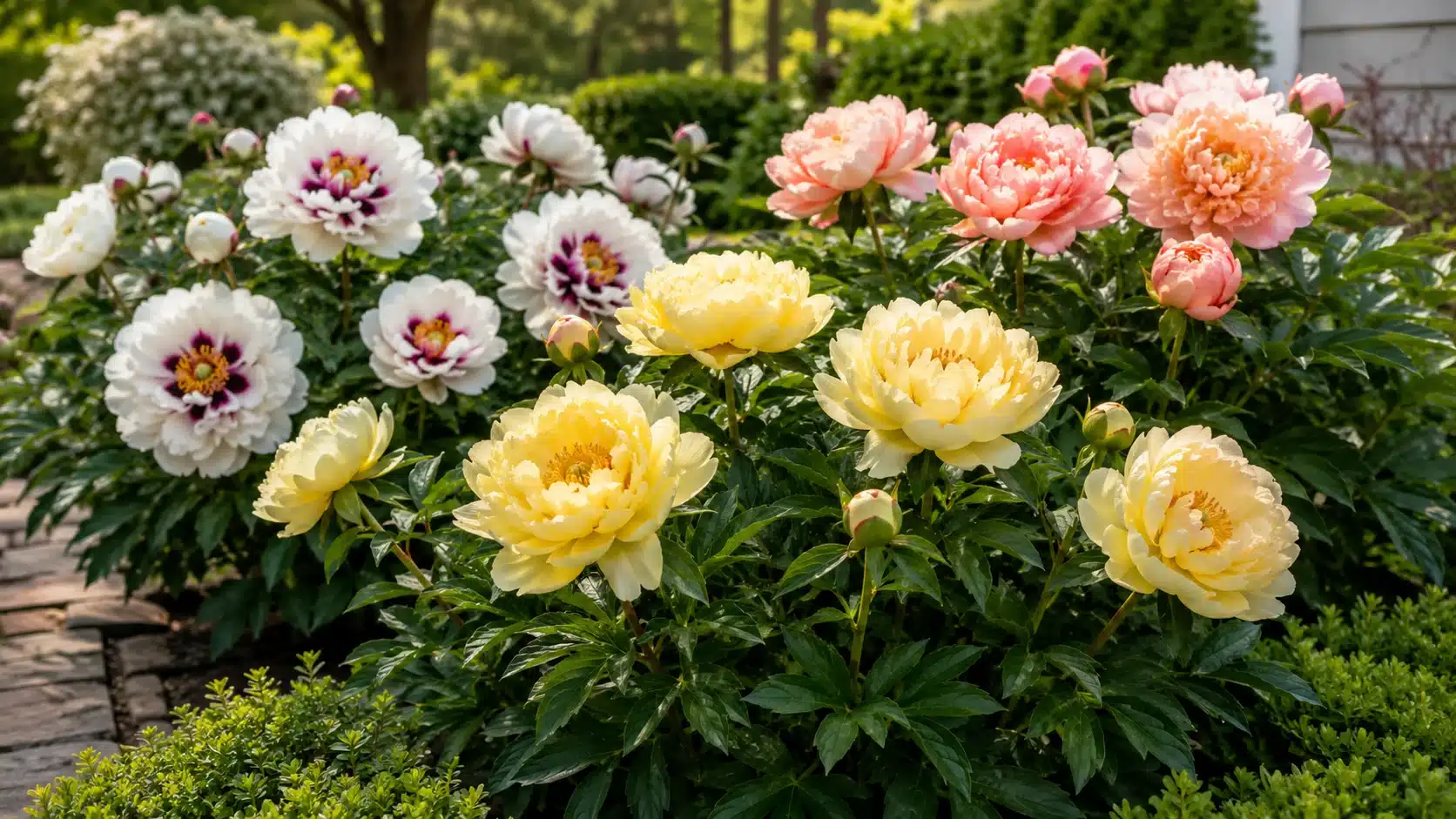
Itoh peonies have the mounded growth habit of herbaceous peonies and die back to the ground in winter, yet they also produce the immense flowers typical of tree peonies, up to eight inches across.
That combination is what makes them so popular with gardeners who want tree-peony drama without the shrub-sized footprint.
Just as herbaceous peonies are winding down for the season, Itoh hybrids come into bloom, extending the overall peony season by a couple of weeks.
They’re also sturdier. The stems hold up the heavy flowers without flopping, which is a common problem with herbaceous doubles once the blooms are wet from an afternoon storm.
Popular Itoh Peony Varieties:
7. Bartzella is one of the most planted Itoh cultivars, with bright yellow, fully double blooms.
8. Cora Louise offers white petals with a purple flare at the center, a striking contrast against dark green foliage.
9. Julia Rose changes color as it matures, opening in warm peach tones before settling into soft pink.
Peony Types Based on Flower Shape
The American Peony Society’s official standard recognizes six forms: single, Japanese, anemone, semi-double, bomb, and full double.
Single peonies have one or two rows of broad petals around a visible center of stamens, giving them a natural, unfussy look.
Japanese peonies look similar to singles at first glance, but they produce visible staminodes instead of true stamens and carpels, which gives the center a slightly different texture.
Anemone peonies have flat outer petals with a denser, more textured center.
Semi-double peonies, like the popular Coral Charm, carry three or four whorls of petals while the central mass of stamens is still easily visible.
Bomb peonies have a rounded, mounded center that sits distinctly above the outer petals.
Double (or full double) peonies are the classic florist style. Cultivars like Sarah Bernhardt, Karl Rosenfield, and Felix Crousse have spherical flowers packed with overlapping petals.
Some blooms carry more than a hundred petals to a single flower.
Flower Form | Appearance | Best Use |
|---|---|---|
Single | Simple, open bloom | Pollinator gardens |
Japanese | Open bloom with staminode center | Mixed borders, pollinators |
Anemone | Flat outer petals, dense inner ruff | Statement planting |
Semi-double | Layered petals, visible stamens | Mixed borders |
Bomb | Rounded center mound | Statement planting |
Double | Full, layered petals | Cut flowers |
Best Peony Varieties by Color
Color is often the first thing gardeners shop by, so here’s a quick breakdown of which cultivars best deliver each shade.
Pink: Sarah Bernhardt and Bowl of Beauty are reliable, widely available pink bloomers with strong fragrance and classic form.
White: Duchesse de Nemours and Festiva Maxima offer crisp white petals, with Festiva Maxima’s faint crimson flecks adding subtle contrast.
Red: Karl Rosenfield and Felix Crousse produce deep, saturated red-to-magenta blooms that read as true red in most garden settings.
Yellow: True yellow is rare in peonies. Bartzella (an Itoh) and High Noon (a tree peony) are two of the most dependable sources.
Coral and peach: Coral Charm and Julia Rose both shift color as they age, opening in warm coral or peach tones before softening.
Peonies aren’t the only cut-flower staple that comes in this many named varieties. If you’re planning a whole cutting garden around color, the range of rose types works the same way. Pick two or three you’ll actually use before falling down the cultivar rabbit hole.
Best Types of Peonies for Different Garden Needs
Not every variety suits every garden. Matching the choice to your specific goal (beginner-friendly care, cut flowers, a tight bed, or fragrance) narrows the field fast.
For a first peony, I steer people toward Sarah Bernhardt, Festiva Maxima, or Bartzella. All three tolerate a bit of neglect while you learn the plant’s rhythm, and they’re easy to source from any decent mail-order nursery.
Cut-flower growers should lean on double forms with strong stems and fragrance, since those hold up best in a vase. Sarah Bernhardt and Duchesse de Nemours are the classic picks for arrangements, and they’re the two I pull first when I’m building a peony-forward bouquet.
For a smaller garden, Itoh hybrids and compact tree peony cultivars deliver a big bloom without eating up bed space.
Fragrance is a category all its own. Festiva Maxima, Duchesse de Nemours, and Sarah Bernhardt are the three names that keep showing up on fragrance rankings.
A quick real-world example. A gardener in USDA zone 6 who plants Coral Charm (early), Sarah Bernhardt (mid), and Bowl of Beauty (late) can stretch peony blooms across nearly six weeks instead of watching everything open and fade inside a two-week window.
Early, Mid, and Late Season Peony Varieties
Planting a single peony variety means a short, two-week bloom window. Choosing cultivars from different bloom seasons instead stretches color across your garden for well over a month.
Bloom Season | Examples |
|---|---|
Early | Coral Charm |
Mid-season | Sarah Bernhardt |
Late | Bowl of Beauty |
Mixing bloom times is one of the simplest ways to get more value out of a peony bed without adding more plants, just more variety in timing.
Once the last Itoh finishes in early summer, the cutting-garden schedule needs to hand off to something else. On my farm, the next crop to open is zinnias, which start blooming as peonies exit and keep going into fall. Their mature height matters more than most gardeners think when you’re planning a bed that transitions from spring to summer color.
How to Choose the Right Type of Peony
Picking the right peony comes down to a few practical factors: your climate, available space, how you’ll use the flowers, and how much upkeep you’re willing to give.
Climate: Herbaceous peonies need a certain amount of cold weather to flower well, so southern gardeners should lean toward early-blooming varieties. Tree peonies don’t demand freezing temperatures, but they still need a dormant period.
Garden space: Tree peonies need real room to spread. Itoh hybrids are the better fit for tighter beds or smaller yards.
Flower purpose: Decide whether you want cut flowers, landscape structure, or a pollinator-friendly bed. That decision shapes which forms and cultivars make sense. Pollinators can’t reach nectar through the packed petals of a double, so if you want bees on your peonies, plant singles or Japanese forms.
Maintenance level: Herbaceous varieties need a seasonal cutback each fall. Tree peonies need far less annual pruning but more patience while they establish.
Are All Peonies Perennials?
Yes, all three plant types come back every year, but they do it differently.
Herbaceous peonies die back to the ground each winter and return from underground roots each spring.
Tree peonies keep their woody stems above ground through dormancy, growing a bit taller and wider every year they’re left undisturbed.
Itoh hybrids die back like herbaceous peonies while still producing tree-peony-sized blooms, giving them the best of both parent types.
All three are long-lived perennials. A well-sited peony can keep blooming for decades with minimal fuss. Established plants often outlast the gardener who planted them, which is why old farmhouses in the Southeast almost always have a row of peonies still holding their spot along the driveway a century later.
Frequently Asked Questions
What Are the Three Main Types of Peonies?
Herbaceous, tree, and Itoh peonies are the three major plant categories, each with distinct growth habits, bloom times, and care needs suited to different garden types.
Which Type of Peony Blooms the Longest?
Itoh peonies often extend the season the most, since they bloom right as herbaceous types finish, adding a couple of extra weeks of color to the garden.
What Is the Most Popular Peony Variety?
Sarah Bernhardt is widely considered the most popular peony variety, thanks to its fragrant, soft pink double blooms and long history as a favorite cut flower.
Which Peony Is Easiest to Grow?
Herbaceous peonies are generally the easiest starting point for beginners, since they tolerate a range of soil types and need only minimal care once established.
Do Tree Peonies Come Back Every Year?
Yes. Their woody stems stay above ground and continue growing each season without dying back, unlike herbaceous peonies, which get cut back every fall.
How Many Peony Cultivars Exist?
The American Peony Society registry lists more than 6,500 cultivars, so the varieties stocked by any single nursery are only a small slice of what’s out there.
Where to Start With Peonies
Peonies come in three plant types, six flower forms, and hundreds of cultivars. The right choice comes down to your climate, the space you have, and whether you want flowers for cutting, for structure, or for the spring show.
If you’re not sure where to start, pick one reliable variety from each of the three plant groups and plant them in the same bed. A season of watching them grow, bloom, and hold up in your own soil will settle the question of which style you actually want more of. If you’re planting for the vase specifically, come back to a proper cut-flower garden plan before you order roots for a second season.