Quick Answer: A pergola’s purpose is to define an outdoor space without walls, providing a structure for dining, lounging, or growing climbing plants across the overhead beams. Attached pergolas extend living space from the house, while freestanding ones anchor a fire pit, hot tub, or garden seating area on their own.
I’ve sketched more backyard layouts than I can count, and a pergola shows up in nearly every one of them.
It has no solid roof, barely filters the sun, and installed versions can run several thousand dollars. Clients ask me all the time if it’s worth it.
A pergola does something most flat, empty yards need without anyone realizing it: it gives the space a reason to get used every day.
According to the International Casual Furnishings Association’s 2025 Outdoor Living Trend Report, 77% of homeowners say they don’t spend as much time outside as they’d like.
A pergola is one of the most effective ways to change that.
This post covers what a pergola is, what it actually does, when it adds resale value, and when a different structure works better.
What Is a Pergola?
A pergola is one of the simplest outdoor structures you can add to a home, but it works in ways that are easy to overlook.
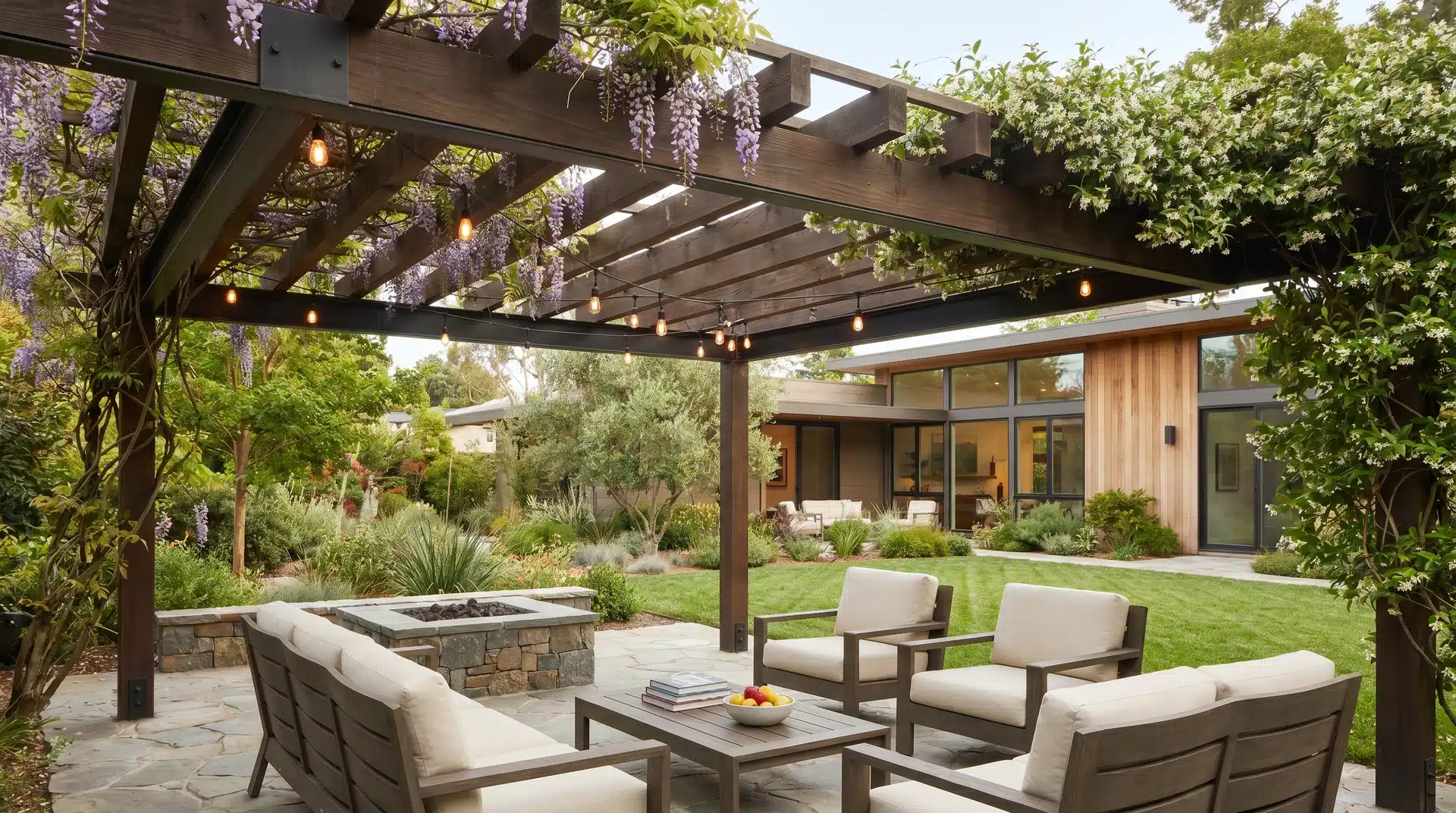
A pergola is an open-air structure built with four vertical posts. Those posts support a set of horizontal beams and cross-rafters overhead.
The roof is open, not solid. That is what sets it apart from a covered patio or a pavilion.
Pergolas come in two main setups. An attached pergola connects directly to your home’s exterior wall, often above a deck or back door.
A freestanding pergola stands on its own four posts anywhere in the yard. Both serve different purposes, which this post covers below.
Common materials include wood such as cedar, redwood, and pine, as well as vinyl, aluminum, and fiberglass. Each one brings a different look, maintenance requirement, and expected lifespan.
The word itself comes from the Latin pergula, meaning a projecting eave. Pergolas have appeared in gardens since medieval Italy, and the basic structure has changed very little. What has changed is how many ways you can use one.
What Is the Purpose of a Pergola
The purpose of a pergola goes well past shade. Here’s what homeowners actually use them for on a regular basis.
1. To Define Outdoor Living Zones
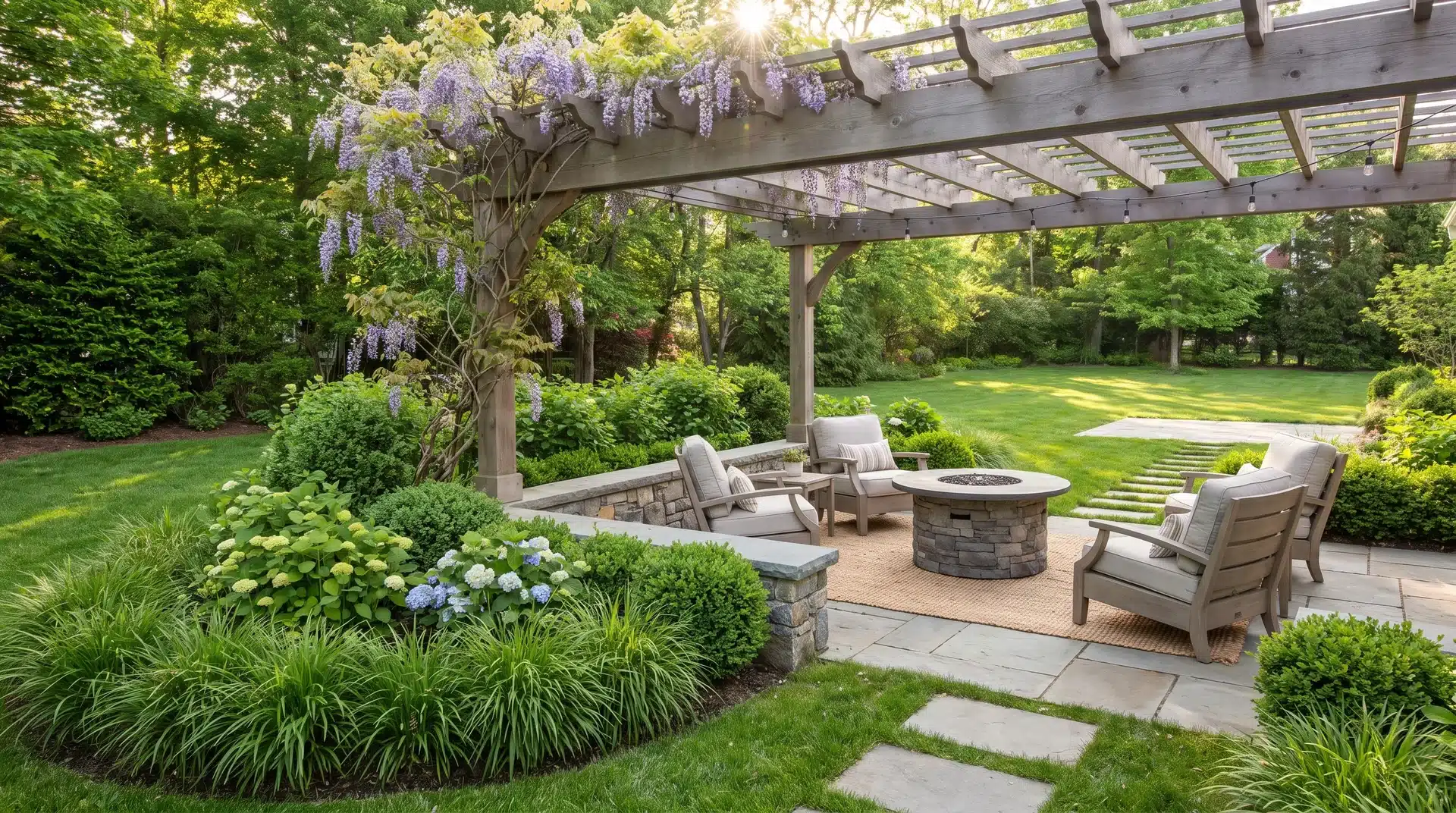
A pergola turns an open backyard into something that feels planned and intentional. The structure creates a clear boundary without walls or fencing.
One corner can read as the dining spot and another as a place to sit and unwind, all without closing anything off.
This is useful in large, flat yards where everything blends together. When I lay out a client’s backyard, dropping a pergola over the patio gives that section a defined purpose and a reason to spend time there every day.
2. To Create an Entertaining and Gathering Space
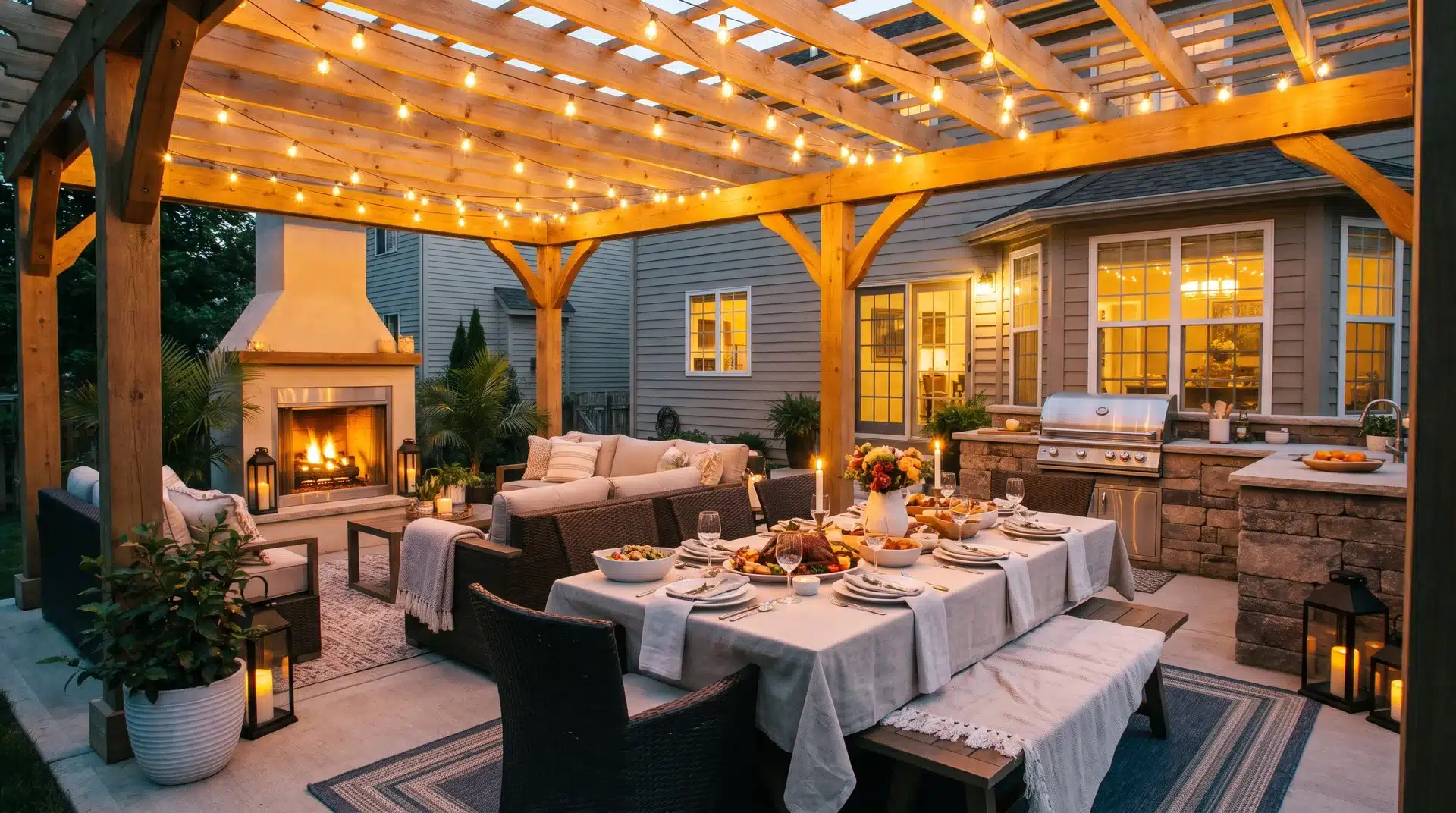
A pergola is built to hold things. You can hang string lights from the beams. You can mount a ceiling fan in the center. You can attach hanging planters at the posts.
Below, you have a natural anchor for patio furniture, a dining set, a fire pit, or a hot tub. It creates a spot that draws people in and feels like a room, even though you are completely outside.
3. To Support Climbing Plants and Garden Features
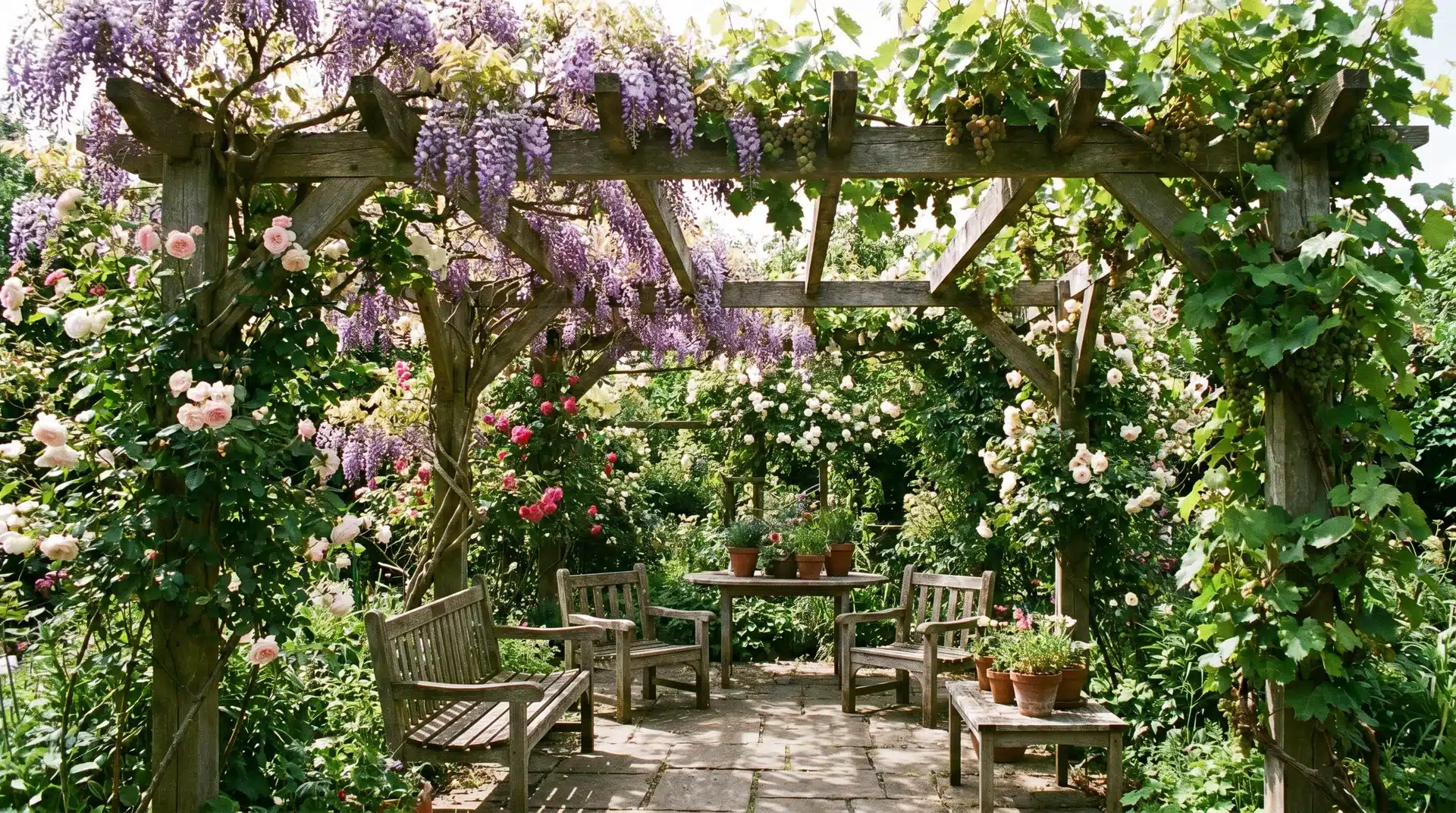
This purpose gets overlooked, and it may be the best one. A pergola is one of the most useful structures in a garden for training climbing plants.
Woody vines like wisteria, climbing roses, trumpet vine, honeysuckle, and grapevines grow up the posts and spread across the roof beams.
After two to three growing seasons, they form a full living canopy above your head. You get shade, fragrance, and visual interest from a single structure.
The posts and cross-beams give these plants the support they need. You do not have to build a separate trellis. The pergola is the trellis.
Does a Pergola Provide Shade
A traditional open-rafter pergola offers only partial shade. Sunlight filters through the gaps between the slats.
The more closely spaced the rafters are, the more shade is created. But most standard pergolas are not built to block the sun on their own.
That does not mean you are stuck with heat and glare. You have several good options:
- Retractable canopies: Fabric panels that roll out when you need shade and retract when you do not
- Shade sails or fabric covers: A lower-cost option that attaches directly to the beams
- Climbing plants: Wisteria, grapevines, and climbing roses grow across the roof over two to three seasons and create a natural, living canopy
- Louvered pergolas: A modern design with motorized slats that open and close, giving full rain and sun control at the touch of a button
If you want full shade from day one, a covered or louvered pergola is the right pick. If you prefer the open-air look, you can add coverage gradually as your needs change.
Does a Pergola Add Value to Your Home
Home value is one of the top reasons homeowners consider a pergola, but the return depends on how it is built and where it is placed.
A well-installed pergola typically returns 50 to 80 percent of its cost at resale, according to the National Association of Realtors’ Remodeling Impact Report.
In outdoor-heavy markets like Florida, Texas, and California, high-quality aluminum or louvered systems have been reported to recover close to their full build cost.
Three factors drive that return:
- Permanence: I always spec footings below the frost line on my builds. A pergola anchored that way reads as a home improvement to an appraiser. A prefab kit sitting loosely on a deck gets treated more like patio furniture.
- Materials: Aluminum and vinyl last 25 to 30 years with minimal upkeep. Cedar and redwood look good but need sanding and staining every two years. If the structure shows rot or rust, buyers will factor in the cost of taking it down.
- Integration: A pergola tied into a finished patio, deck, or outdoor kitchen reads as part of the home. One sitting in the middle of bare grass does not carry the same weight.
The AIA 2025 Home Design Trends Survey found that outdoor living spaces have been the most requested residential design feature for several consecutive years.
Buyers already expect outdoor rooms. A pergola that delivers one is a real advantage during a showing.
Which Pergola Type Fits Your Needs
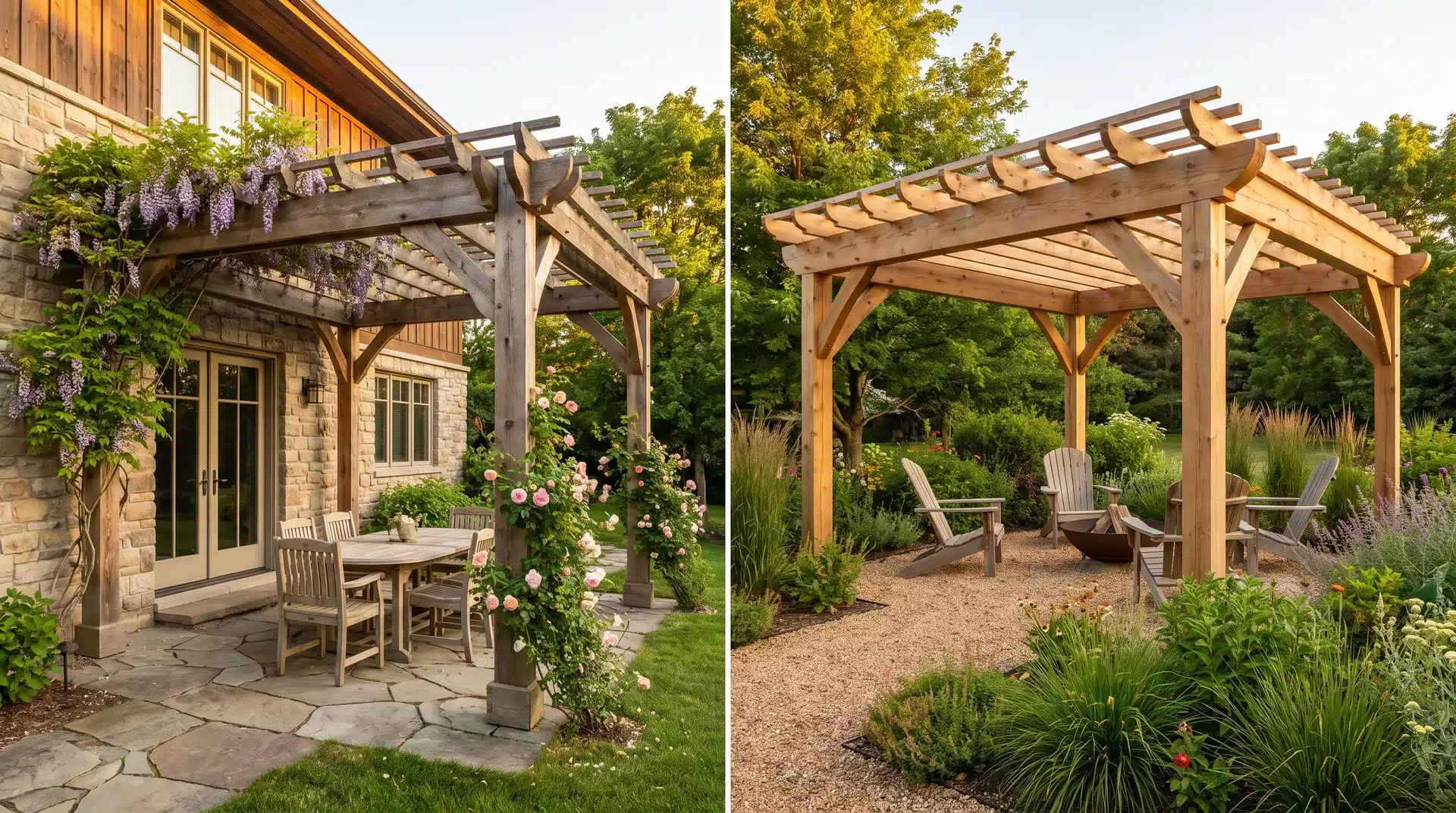
Attached and freestanding pergolas look similar, but they serve very different purposes. Picking the wrong type is a common mistake that costs both money and function.
An attached pergola is bolted to your home’s exterior wall. It is best when you want to extend your living space directly from the house.
I draw this option most often for clients who already have, or are planning, a finished patio, since the two work as one continuous space rather than two separate projects.
A freestanding pergola stands on four posts with no connection to the house. It works better as a destination in the yard.
Use one over a hot tub, garden seating spot, or fire pit area to give that space a sense of place. Freestanding designs are also easier to adjust if your yard layout changes over time.
| Feature | Attached | Freestanding |
|---|---|---|
| Best for | Outdoor dining, kitchen extensions | Pool area, fire pit, garden retreat |
| Resale impact | Higher reads as a home addition | Good, depends on placement |
| Flexibility | Fixed to the home | Can be placed anywhere |
When Should You Not Choose a Pergola
A pergola is a solid choice for most backyards, but it is not the right fit for every situation.
Here are four cases where another structure makes more sense:
- You need a full weatherproof cover from day one. A pavilion with a solid roof and open sides keeps you dry without any add-ons.
- You want privacy and protection from insects. A gazebo with built-in screens handles that better than a standard pergola.
- You want wood but cannot commit to regular upkeep. Cedar needs attention every two years, and pine needs even more. Aluminum or vinyl saves you both time and money over the long run.
- Your yard is small. A full pergola can feel overpowering in a tight space. I’ll usually sketch an arbor, a wall-mounted trellis, or a simple shade sail instead. Any of those gives the same vertical interest without boxing in a small yard.
None of this makes a pergola a bad investment. It just means the structure needs to match what you actually want from your yard.
Picking the Right Structure for Your Yard
The purpose of a pergola comes down to one thing. It turns an open, underused backyard into a space people actually want to sit in.
It defines areas, holds string lights and hanging planters, and gives climbing plants somewhere to grow. Built and placed well, it can also strengthen your home’s resale appeal.
Before you commit, think about how you’ll actually use the space. A quiet reading nook needs a different layout than a full outdoor dining room, and the pergola that works for one won’t always work for the other.
If you’re weighing a gazebo instead, the choice usually comes down to how much full weather protection you want against how open you want the space to feel.
Which purpose matters most to you: shade, entertaining, or garden support? Let us know in the comments below.
Frequently Asked Questions
How long does a pergola last?
Most pergolas last 15 to 30 years. Aluminum and steel hold up longest with the least upkeep, while wood needs staining or sealing every couple of years.
Do I need a permit for a pergola?
Most cities require a permit for anything bolted to a foundation or taller than a set height. Check your local building department before you dig footings.
Is an attached or freestanding pergola better?
Attached works best over a patio already connected to your house. Freestanding fits better as its own destination, like over a fire pit or hot tub.