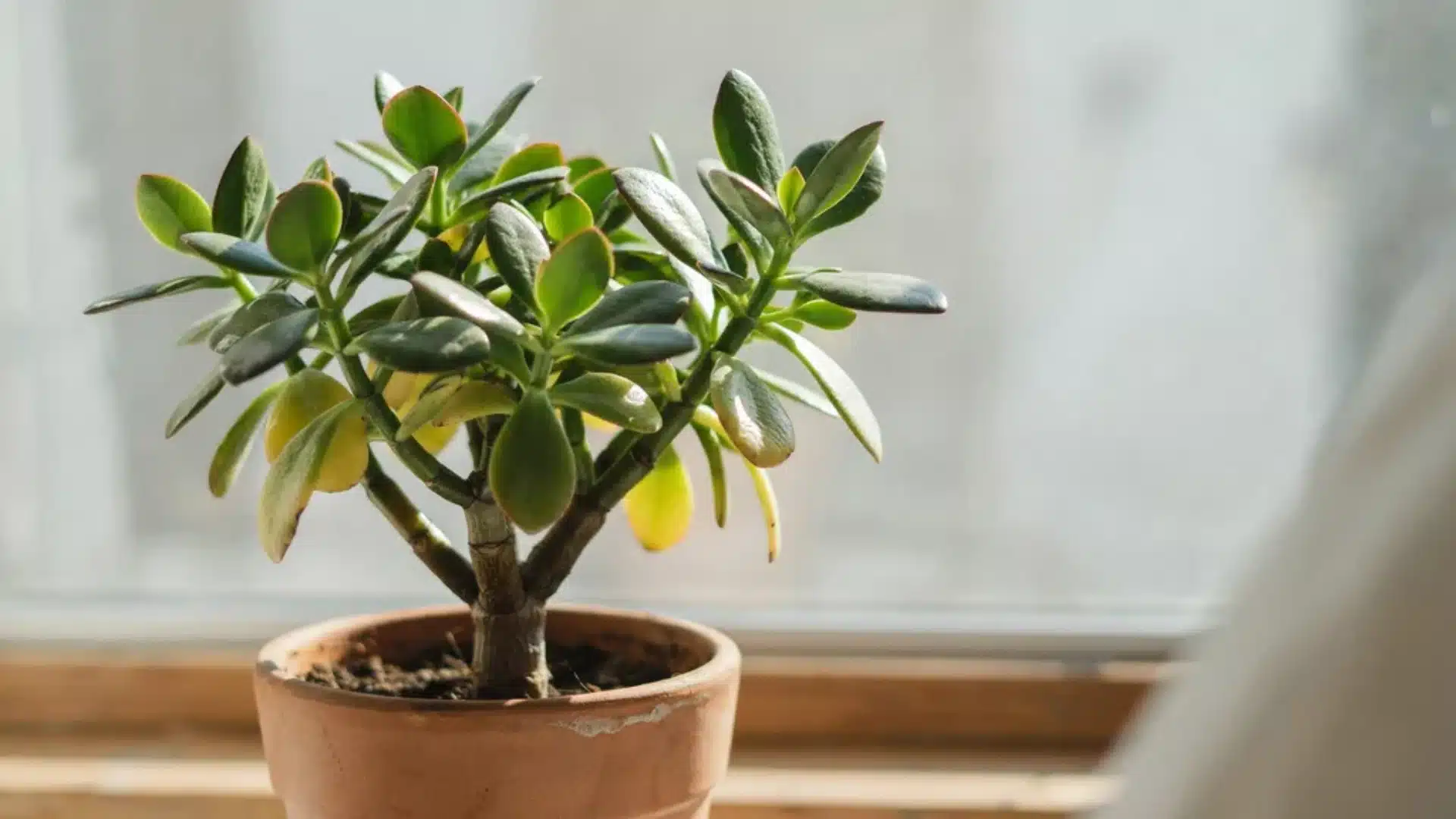
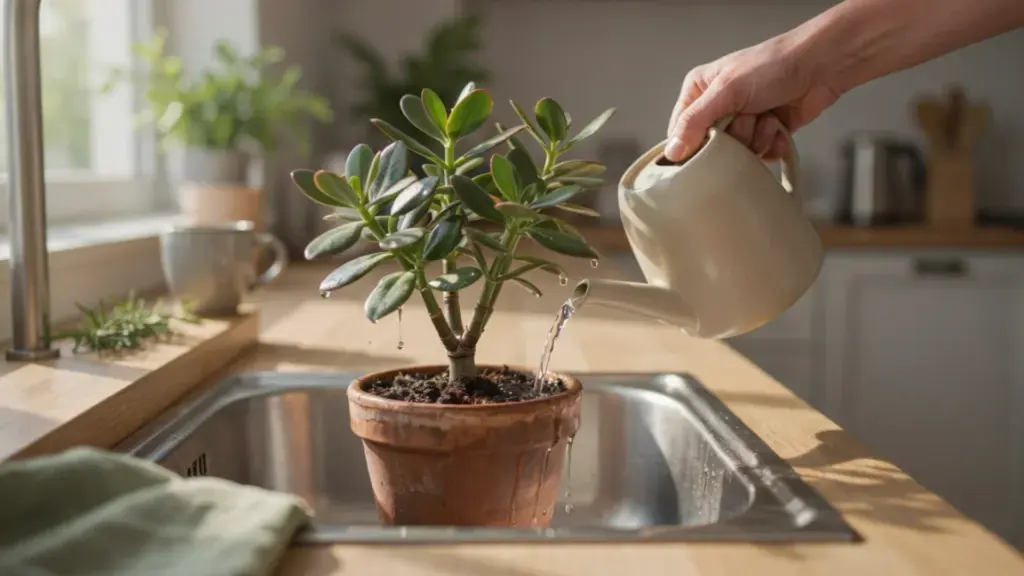
To water a jade plant, wait until the top 2 inches of soil are completely dry, then soak it until water runs out of the drainage holes and empty the saucer. That usually works out to every 10 to 21 days in spring and summer and every 3 to 6 weeks in fall and winter.My jade plant came home in a 4-inch plastic nursery pot, and for its first winter in my apartment, I watered it every Sunday along with everything else on the shelf.
By February the lower leaves had gone soft and yellow, and two of them fell off when I brushed past.
The soil had never dried out once. Portland winters are gray and damp, and that little plastic pot just sat there wet for weeks.
That jade taught me how to water a jade plant properly. We check the soil, not the calendar. Here’s the routine I use now, how often it works out to by season, and how to spot trouble early.
How Often to Water a Jade Plant
I water my jade only when the top 2 inches of soil feel completely dry. A jade stores water in its thick leaves and stems, so it can wait much longer between drinks than most houseplants. Iowa State University Extension names overwatering as the most common jade plant problem, and that matches every mistake I’ve made with mine.
That usually means every 10 to 21 days in spring and summer and every 3 to 6 weeks in fall and winter. The soil still gets the final say.
Here’s how I check.
The finger test: Push a finger into the soil up to the second knuckle (that’s about 2 inches). If it feels cool or damp, wait. If it feels like dry sand all the way down, water.
The pot-weight test: Lift the pot right after watering, then again a week later. A dry jade feels noticeably lighter, and after a few rounds we can tell by feel.
The leaf check: Plump, firm, glossy leaves mean the plant is fine. Slightly soft or wrinkled leaves on a plant with dry soil mean it’s thirsty.
How to Water a Jade Plant, Step by Step
I use the soak-and-dry method. The plant gets one deep drink, then nothing until the soil dries out again. It’s the same rhythm I follow when watering houseplants with thick leaves, just on a slower clock.
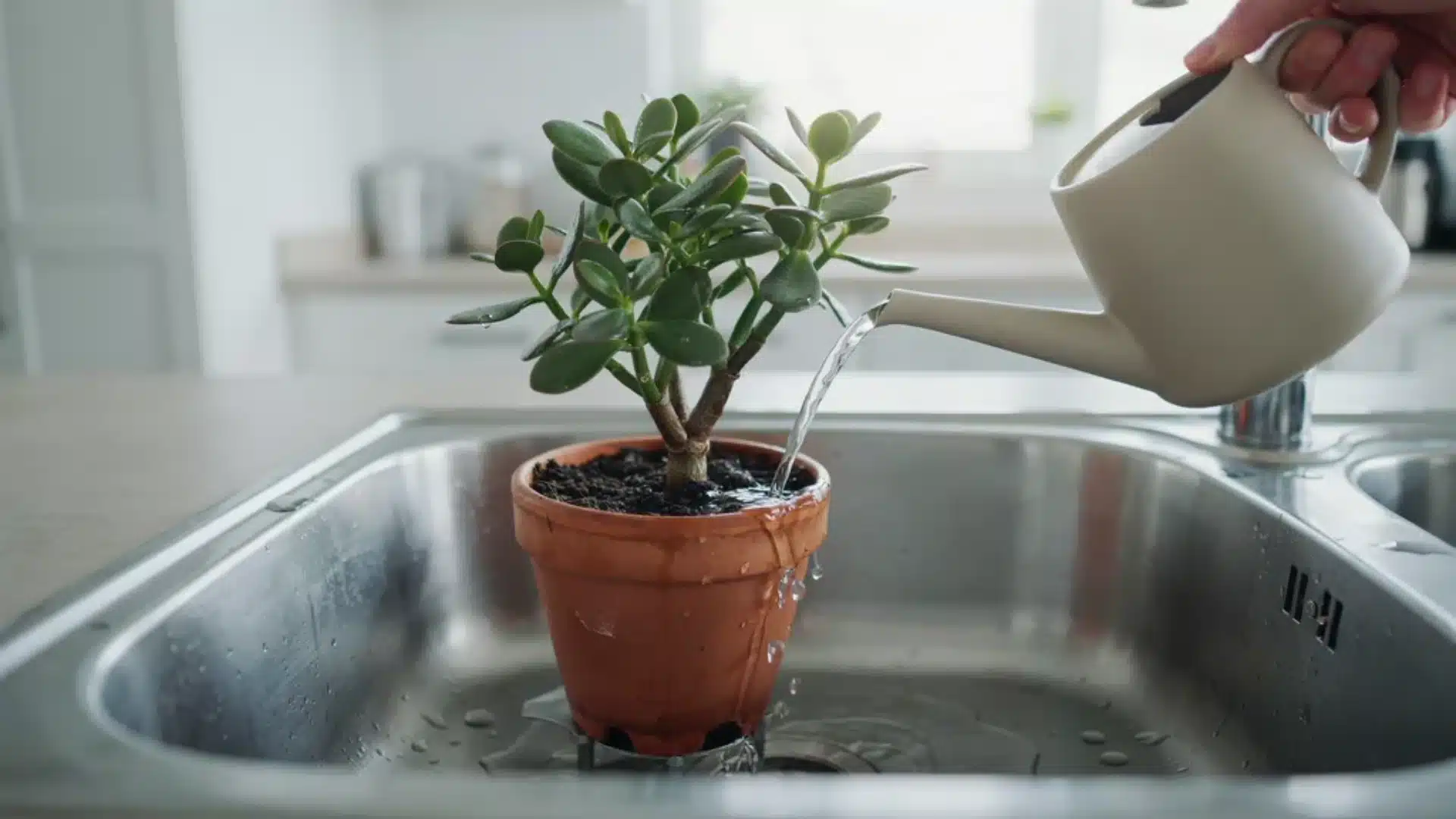
Sink watering keeps the mess off the windowsill and lets the pot drain properly.
Carry the plant to a sink or bathtub.
Pour room-temperature water slowly over the soil until it flows out of the drainage holes.
Wait about 5 minutes, then give it one more light pass so the whole root ball gets wet.
Let it drain for at least 30 minutes.
Empty the saucer before the plant goes back. A jade sitting in a puddle is how root rot starts.
Bottom watering is my backup plan. If the soil has shrunk away from the sides of the pot and water runs straight down the gap, I set the pot in a bowl of room-temperature water for about 30 minutes, until the top of the soil darkens. I don’t do this every time, because it makes it harder to tell how wet the deeper soil is.
How Often I Actually Water Mine, Season by Season
Same plant, very different thirst in July and January.
Jade plants grow in spring and summer and rest in fall and winter. Portland’s long gray winters stretch my gaps out even further.
Spring and summer: I check the soil every 7 days and usually end up watering about every 2 weeks.
Fall and winter: I check every 2 weeks and water roughly every 4 to 5 weeks (my longest gap was 7 weeks one January). NC State Extension also advises cutting back on water from fall to late winter.
My jade gets about 4 hours of direct sun in a south-facing window, the minimum University of Wisconsin–Madison Extension recommends for jade plants. A jade in a sunnier spot or under a grow light dries out faster, so check it more often.
What Changes How Fast the Soil Dries
Pot, soil, heat, and light all change how fast the mix dries.
These are the four things I watch.
1. Pot material: Terracotta pulls moisture through its walls, so the soil dries faster. Plastic holds water longer. I moved my jade into terracotta after that soggy first winter and haven’t lost a leaf to rot since.
2. Pot size: Pots 6 inches across or smaller dry out fast, so I check those weekly. Bigger pots hold water longer.
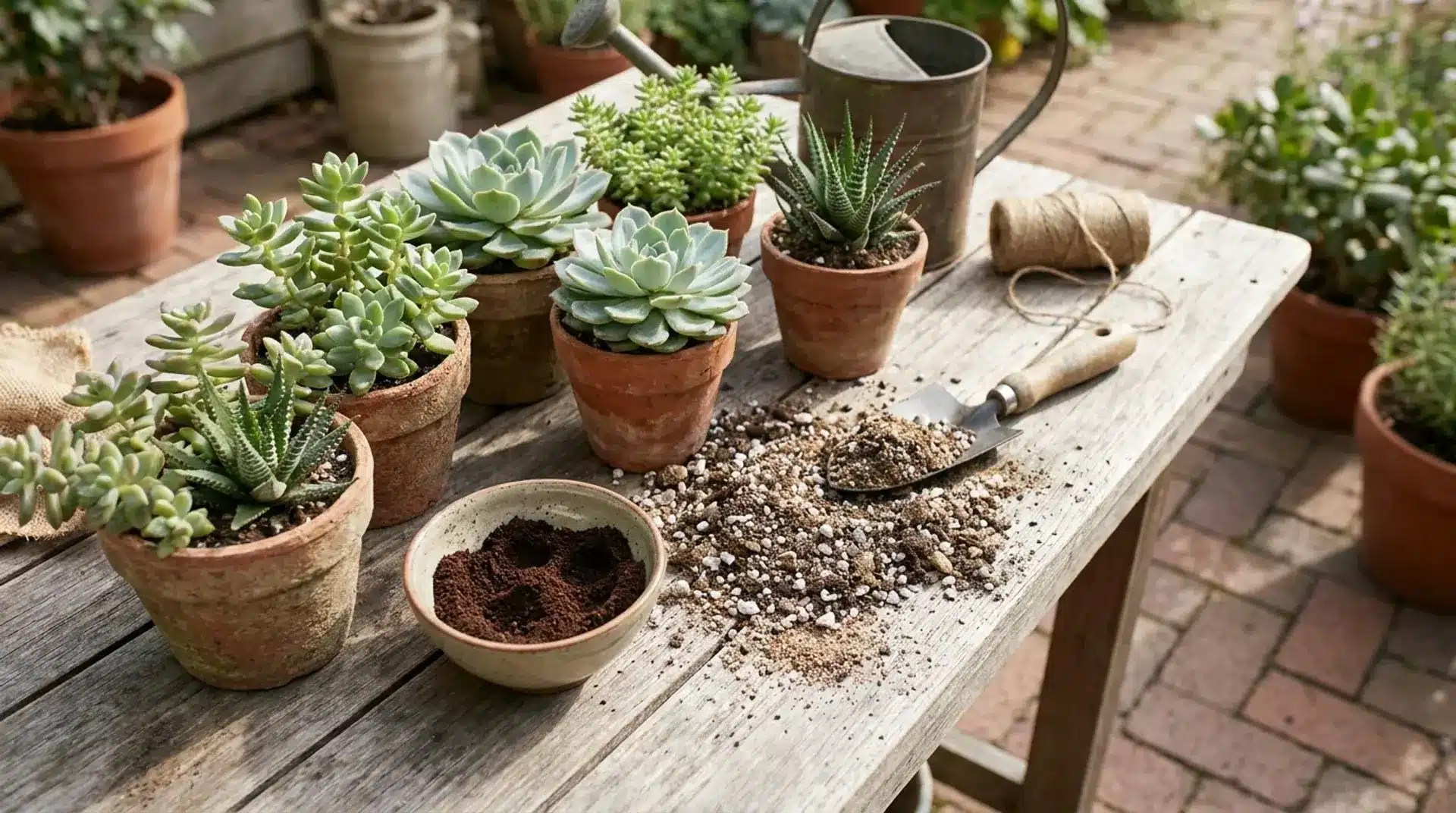
3. Soil mix: A cactus and succulent mix drains quickly. Regular potting soil stays wet too long for a jade, so I use cactus mix or stir in perlite until it makes up about a third of the blend.
4. Heat and humidity: Warm, dry rooms speed up drying, and humid rooms slow it down.
Compact jade plant varieties like ‘Baby Jade’ and ‘Gollum’ often live in small pots, so they dry out fastest of all.
What Kind of Water Jade Plants Like
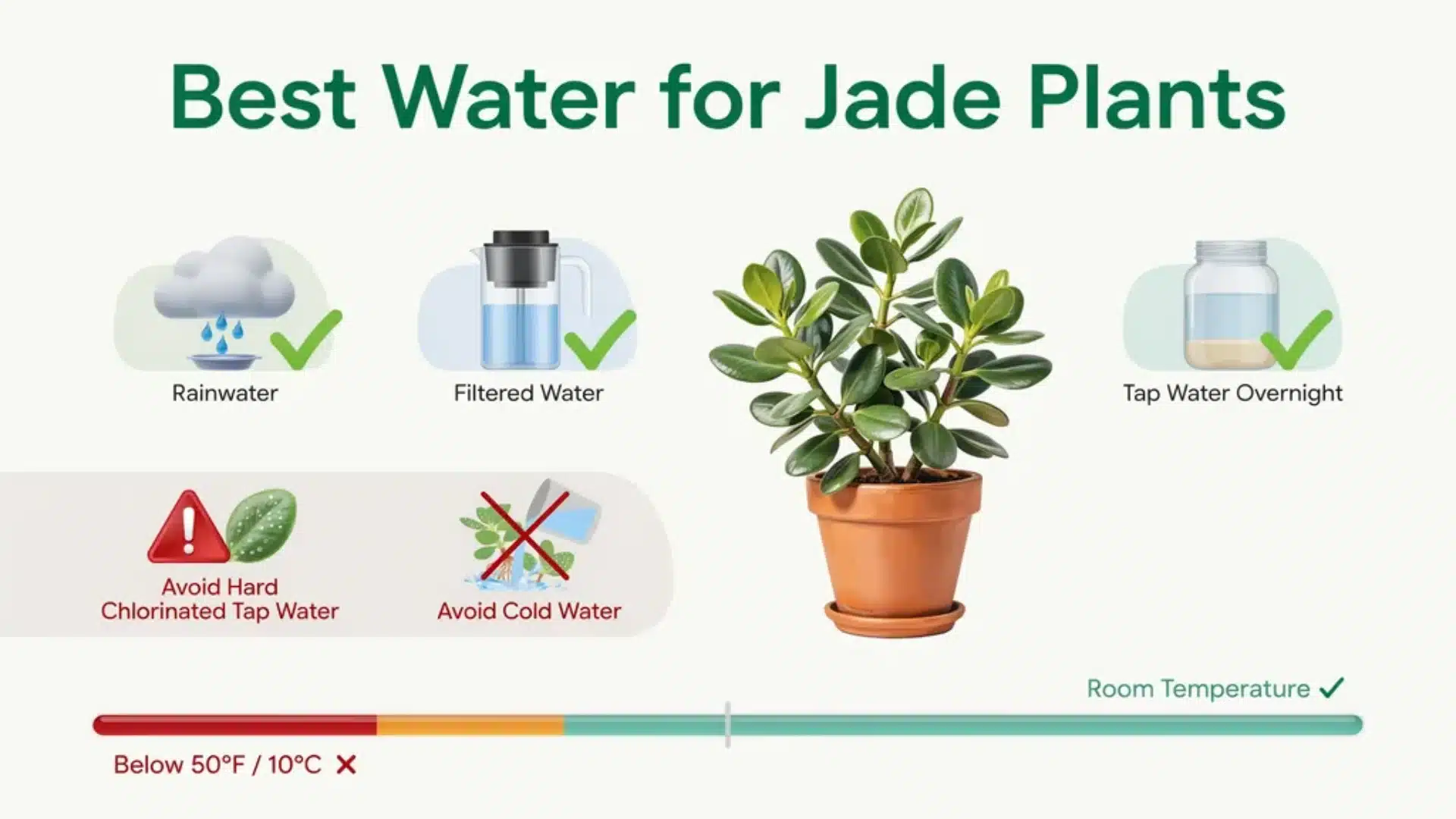
Room-temperature water, every single time.
Jade plants aren’t fussy about water, but hard tap water can leave white mineral spots on the leaves and a crust on the soil. These all work well for mine.
Filtered water
Rainwater (I collect it off the balcony railing, and in Portland that’s most of the year)
Tap water that sat out overnight
Letting tap water sit overnight brings it to room temperature and lets plain chlorine escape. It doesn’t remove chloramine, which many US cities use instead, so a filter is the better fix if white spots keep showing up.
Temperature matters more than the source. Ice-cold tap water can stress the roots, so I always use room-temperature water.
Signs of Overwatering and Underwatering a Jade Plant
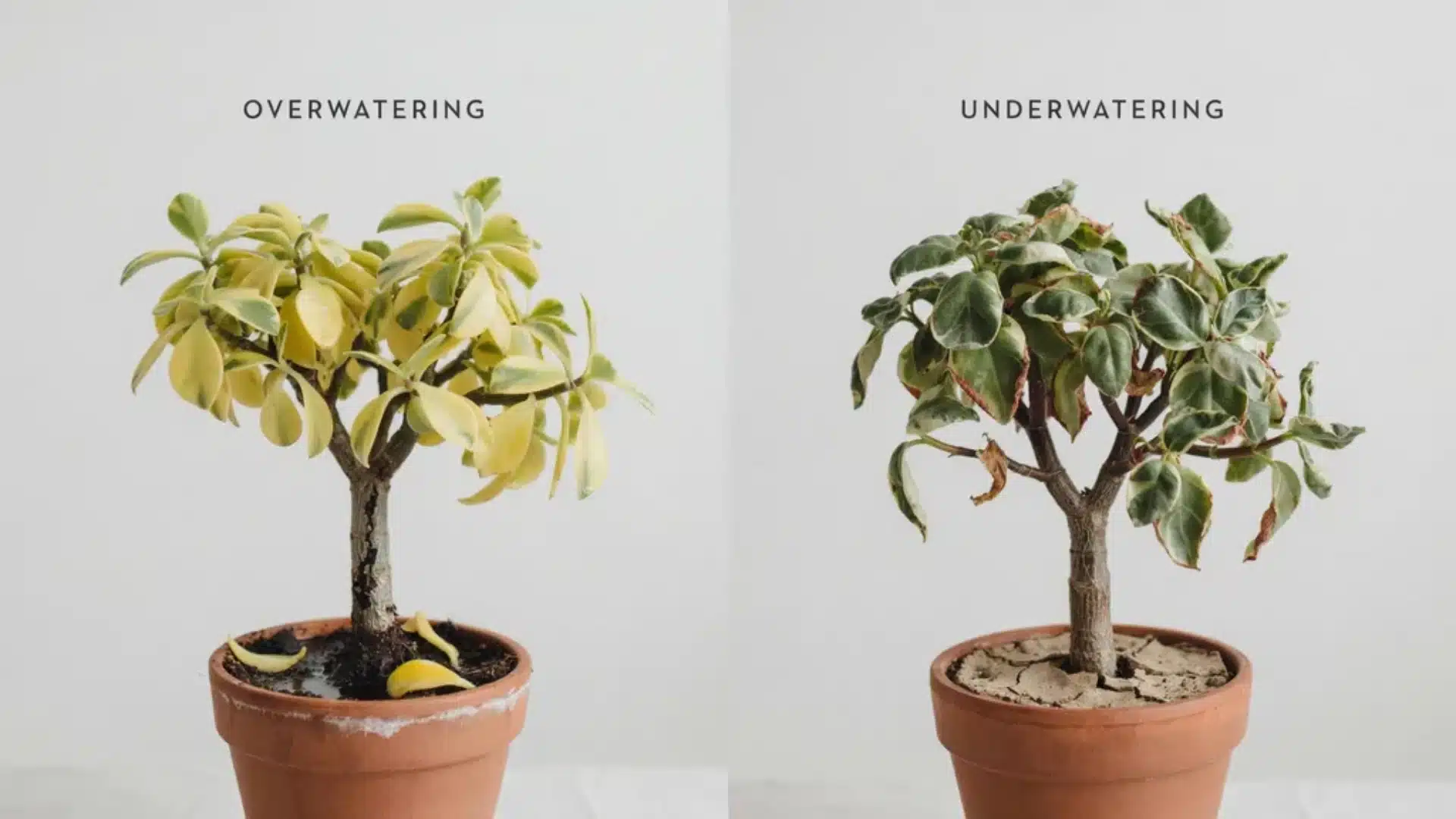
Mushy and yellow on one side, wrinkled on the other. Both are fixable when caught early.
Overwatering does its damage below the soil line before the leaves show it. NC State Extension lists leaf fall and root rot as the result. Here’s what I watch for.
Yellow or translucent leaves
Soft, mushy leaves that feel waterlogged
Black, soft spots at the base of the stem
Leaves that drop at the lightest touch
Soil that stays wet for more than 3 weeks
Yellow leaves are often the first sign. When I see jade leaves turning yellow and the pot still feels heavy, I know there’s water sitting deeper down.
If the stem is still firm, I stop watering and let the soil dry out completely. If the stem feels soft or the soil smells sour, I unpot the plant, trim any brown, mushy roots, and repot it in fresh, dry cactus mix.
Underwatering is less common, but it happens in bright, warm spots. Signs your jade plant needs water:
Wrinkled or shriveled leaves
Drooping branches
Soil pulling away from the sides of the pot
Give it a full soak-and-dry watering. Most jades plump back up within 1 to 2 days.
Red edges on the leaves usually aren’t thirst. Jade leaves often blush red in strong sun, which is a light response, not a watering problem.
Leaf drop can come from water, cold drafts, or low light. If your jade is dropping leaves, check the soil first, because water is the easiest cause to rule out.
Jade Plant Watering Mistakes I’ve Made
1. Watering on a schedule: My Sunday routine is how that first jade got soggy. Now the soil decides.
2. Misting the leaves: I misted my jade for weeks because I misted everything else. Jades take up very little water through their leaves, and damp leaves in a cool room can grow fungal spots.
3. Leaving water in the saucer: I empty it every time now, even when I’m running late.
4. Watering right after repotting: I wait 7 to 10 days so any roots damaged in the move can heal over before they get wet.
A Jade Plant Can Outlive Your Lease
That soggy first jade is still with me, three pots and one terracotta upgrade later. Jade plants can live for decades, which is one of my favorite jade plant benefits. Once the watering clicks, it’s one of the easiest plants on my shelf.
Got a question about your jade plant? Drop it in the comments.
Frequently Asked Questions
Should You Water a Jade Plant From the Top or the Bottom?
From the top, for regular watering. It soaks the whole root ball and flushes out salt buildup. Bottom watering helps when dry soil has pulled away from the pot.
How Much Water Does a Jade Plant Need?
Enough to soak the soil until water runs out of the drainage holes. Then nothing until the top 2 inches dry out again.
Can a Jade Plant Go 2 Weeks Without Water?
Yes. A healthy jade stores water in its leaves and stems, so 2 weeks without water is normal. In winter, it can go 4 to 6 weeks.
What Does a Jade Plant Look Like When It Needs Water?
Its leaves look slightly wrinkled or soft instead of plump, and the soil feels dry about 2 inches down. Branches may droop if it goes much longer.
Do Jade Plants Need Sunlight?
Yes. Jade plants grow best with at least 4 hours of direct sun a day. More sun means the soil dries faster, so check it more often.