Too much water kills more houseplants than anything else.
I found that out with the $4 pothos I bought at a grocery store seven years ago, which eventually turned into the 70-plus plant collection crammed into my Portland apartment now.
I watered it every Sunday like clockwork, and three months in, half its leaves had gone yellow and mushy from sitting in wet soil.
Watering on a fixed schedule is one of the biggest reasons healthy plants go downhill fast, since soil dries out at different speeds depending on the pot, the light, the season, and the plant itself.
A watering day circled on the calendar does not account for any of that.
Checking the soil instead of the clock makes keeping plants alive a lot simpler. This post covers when to water, what tools to use, how much to give, and how to catch trouble early.
Why There Is No Universal Watering Schedule
The most common mistake new plant owners make is watering on a fixed day every week. “Water every Tuesday” sounds organized, but plants do not follow a calendar.
How often you need to water depends on several things at once:
- Pot size: smaller pots dry out faster than large ones
- Soil type: perlite-heavy mixes drain quickly. Dense potting soil holds water longer
- Light levels: a plant near a bright window loses moisture faster than one in a dim corner
- Season: plants slow down in winter and need far less water
- Humidity: dry indoor air speeds up soil evaporation
- Pot material: terracotta pulls moisture out of soil faster than plastic or glazed ceramic
A snake plant sitting in a terracotta pot on a sunny windowsill in July needs water far more often than the same snake plant in a plastic pot in a shadowy corner in January. Same plant, completely different needs.
The fix is simple: check the soil, not the date.
How to Check If Your Plant Needs Water
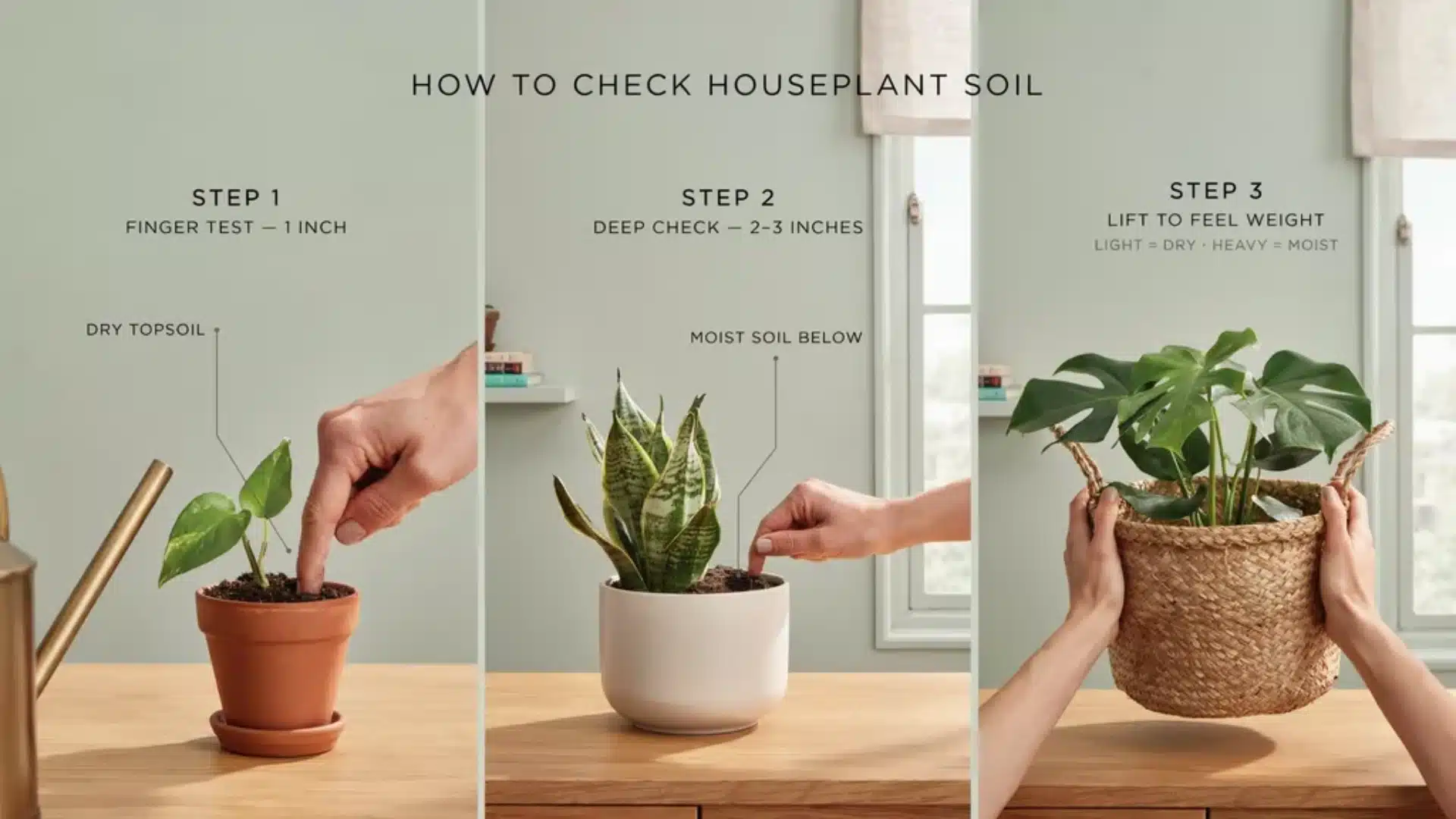
Before watering houseplants, always check the soil. Do not go by how the surface looks. The top can appear dry while the lower soil is still wet.
For small pots (under 6 inches wide): push a finger about 1 inch into the soil. If it feels damp and cool, wait a few more days.
For larger pots: go 2 to 3 inches deep. If the soil feels dry that far down, it is time to water.
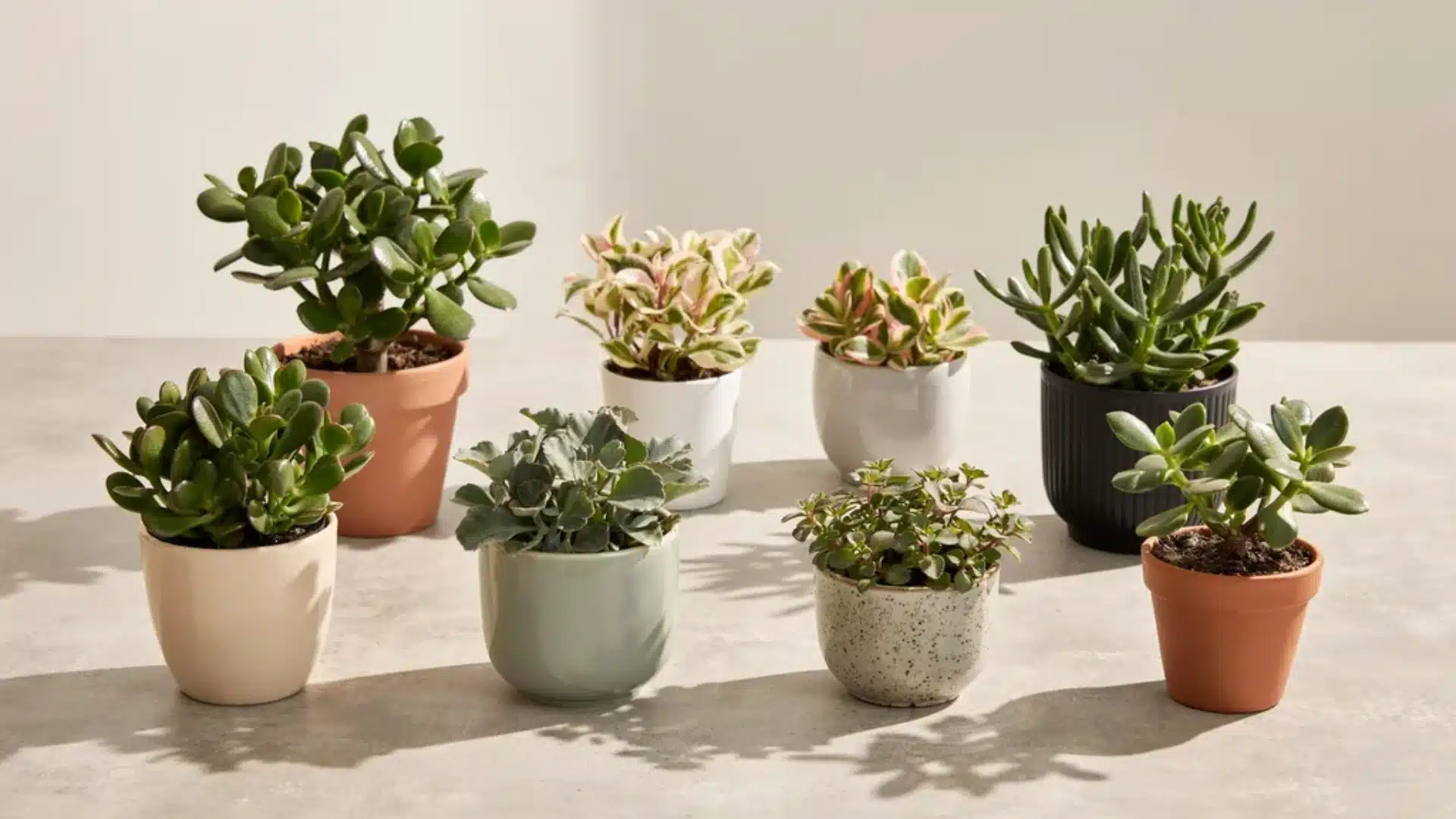
This deep check matters even more for a jade plant, which needs its soil to dry out almost completely before the next watering.
You can also lift the pot. A dry pot feels noticeably lighter than a wet one, and with practice you will know the difference in seconds.
How to Water Houseplants Properly: Two Main Methods
There is no single right way to water houseplants. It depends on the plant in front of you. These two methods cover most of what you will ever need.
1. Top Watering
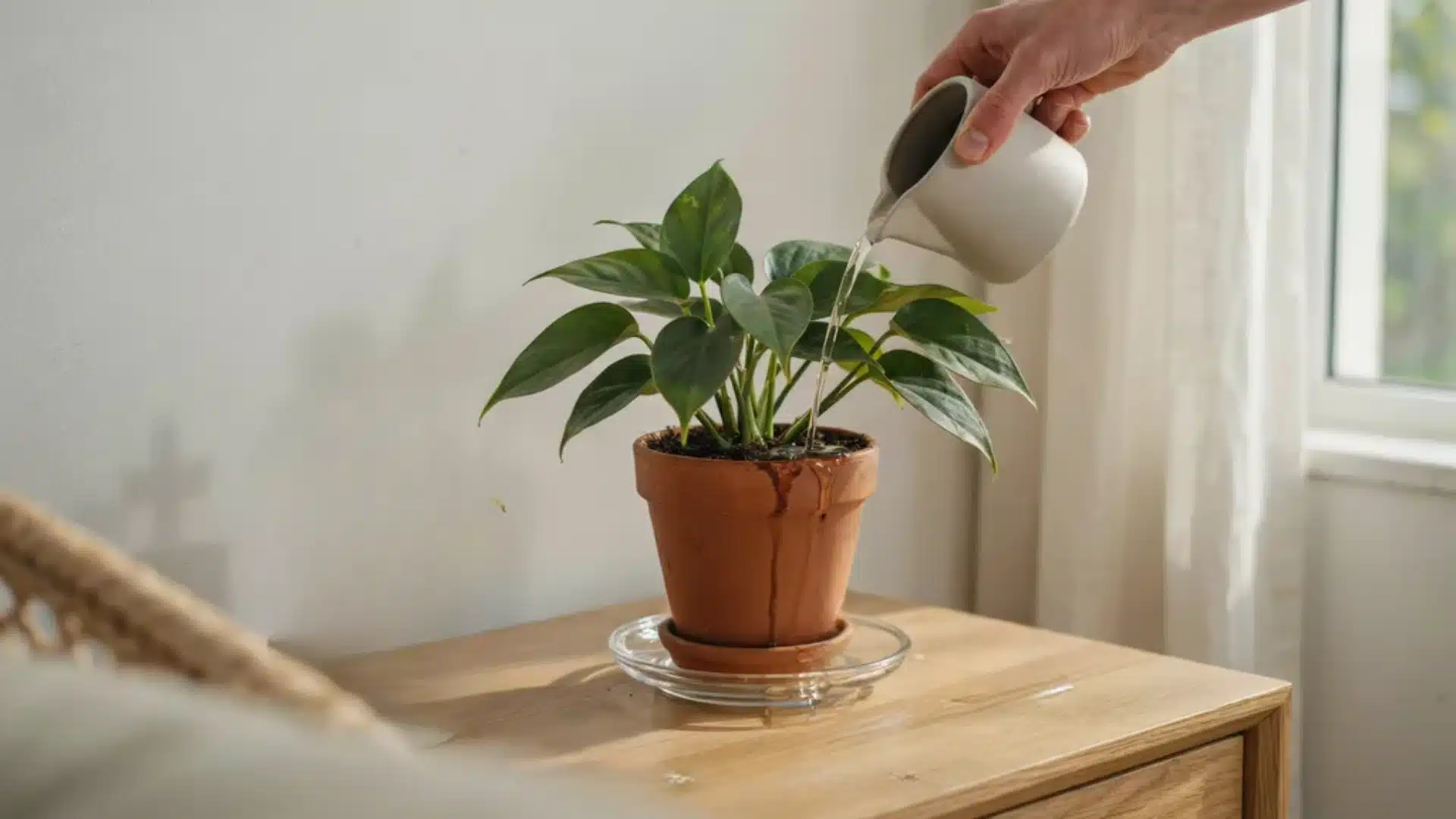
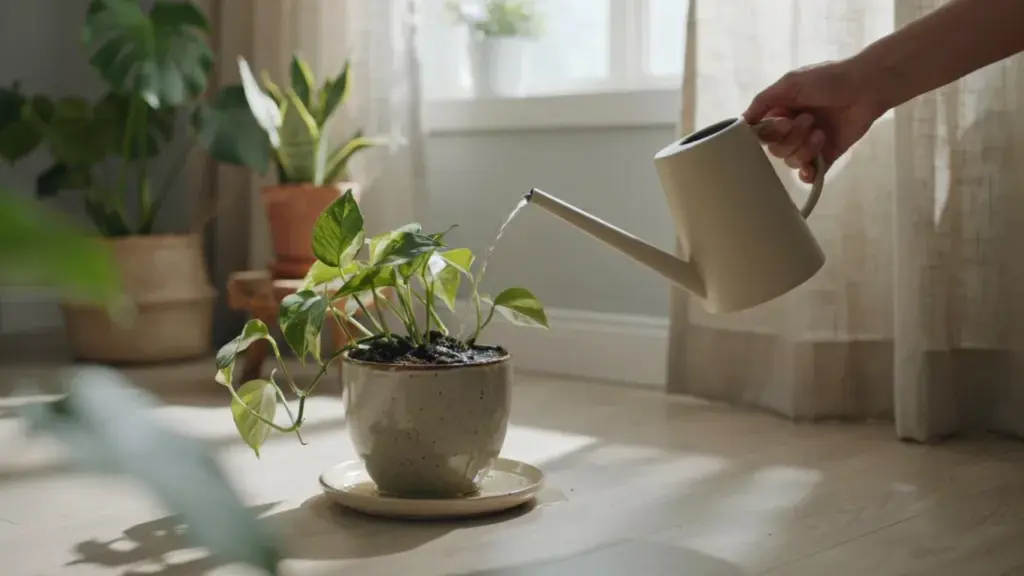
Top watering works well for most indoor plants. Pour room-temperature water slowly onto the soil surface until it drains out of the holes at the bottom of the pot.
Let the pot sit for a few minutes, then empty the saucer. Do not let any plant sit in standing water for more than 30 minutes.
Top watering also flushes out salt buildup from fertilizers. The white crust you sometimes see on soil or pot rims is mineral buildup, and a thorough soak once in a while washes it out.
Always water the soil, not the leaves: Wet leaves can cause fungal problems on plants like African violets and other fuzzy or velvety foliage, and water sitting in the center crown of a bromeliad can rot the whole plant from the inside.
2. Bottom Watering
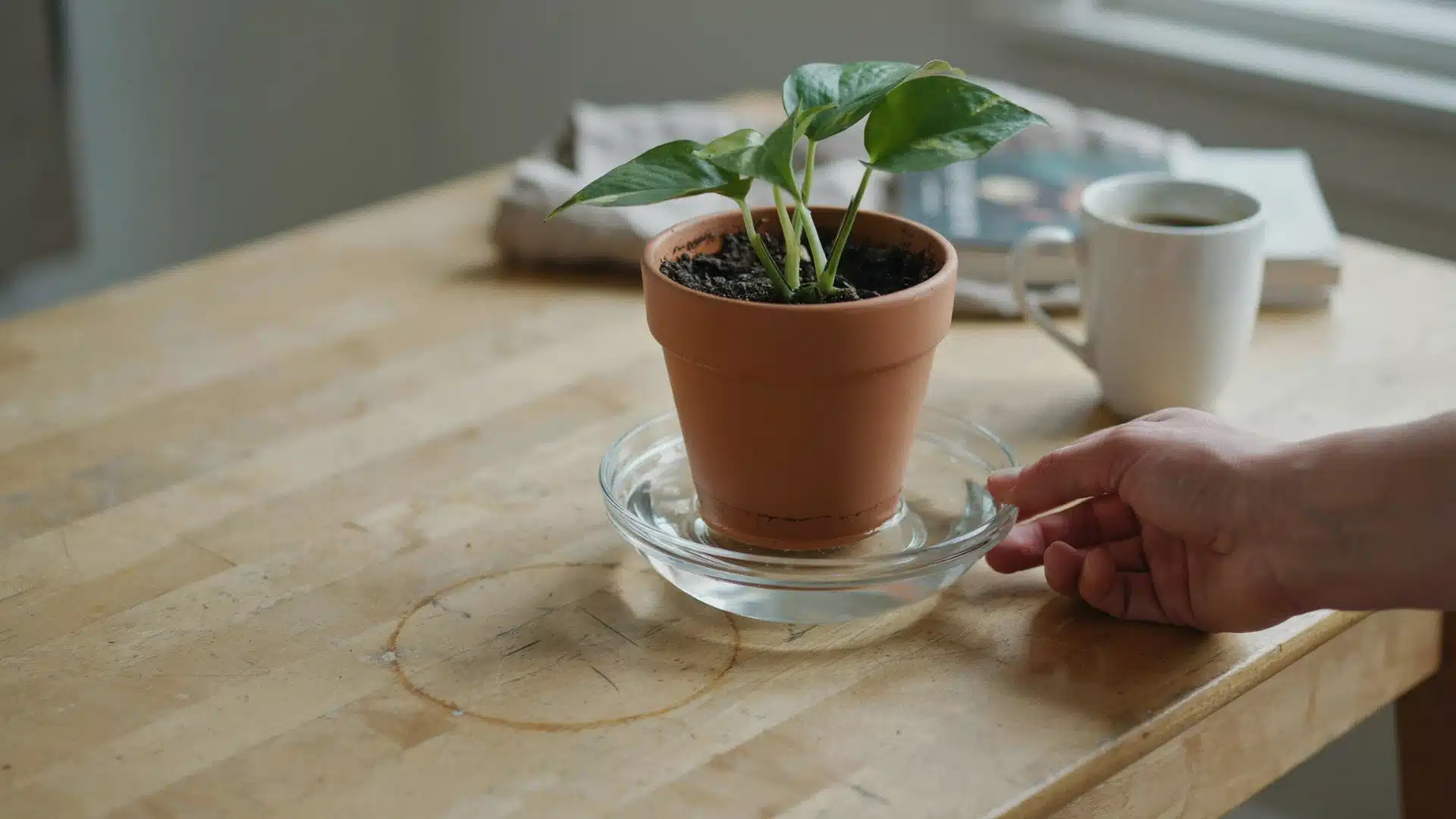
Bottom watering means placing the pot in a tray with 1 to 2 inches of water and letting the soil pull moisture up through the drainage holes on its own. Leave it for 15 to 30 minutes, then remove the pot and let it drain fully.
This method works especially well for succulents, cacti, and plants like aloe vera that hate wet leaves, and it encourages roots to grow downward, which makes plants stronger over time.
It does not flush salt buildup the way top watering does, though, so do a regular top-water every few weeks even if you mostly bottom-water.
What Do You Use to Water Plants?
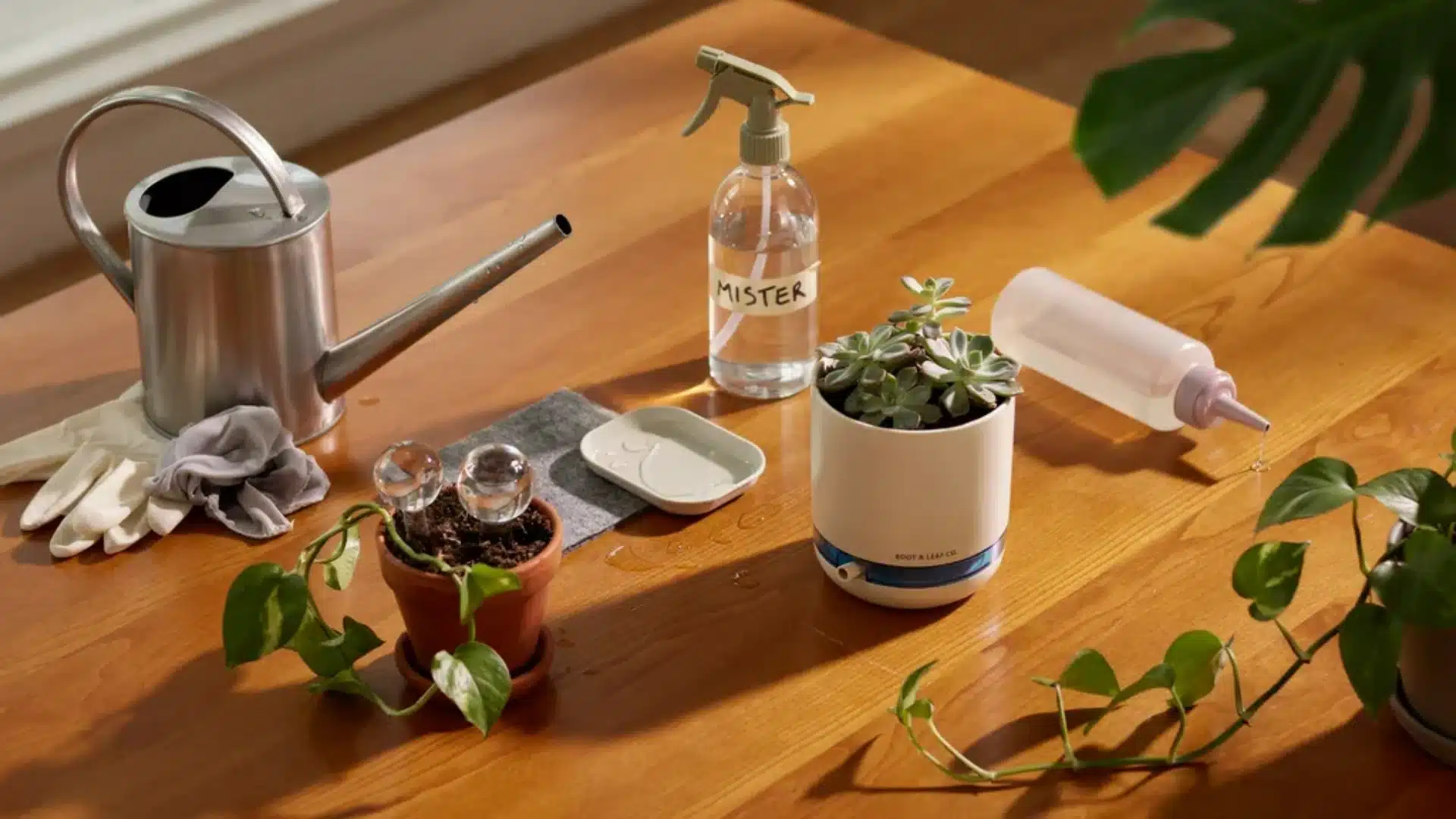
The right tool changes how easy watering is. Here are the main options and when each one works best.
1. Long-spout watering can: the standard choice for most houseplants. The narrow spout directs water right to the soil without splashing leaves, which helps in deep pots and hanging baskets.
2. Handheld mister: useful for raising humidity around tropical plants like ferns, calatheas, and orchids. Skip it on succulents, cacti, or any fuzzy-leaved plant.
3. Terracotta spikes or glass globes: fill them with water and push them into the soil near the roots. They release water slowly over several days, a solid, low-maintenance option if you travel often.
4. Self-watering pots: these have a built-in water reservoir at the base, and a wick draws water into the root zone as the plant uses it. In my apartment, the pothos I keep in a self-watering pot has stayed fuller through the winter than the ones I water by hand.
Terracotta spikes and glass globes are also the go-to tools when you need to water plants while you’re away. They keep moisture going for days without anyone checking in.
Signs of Overwatering vs. Underwatering
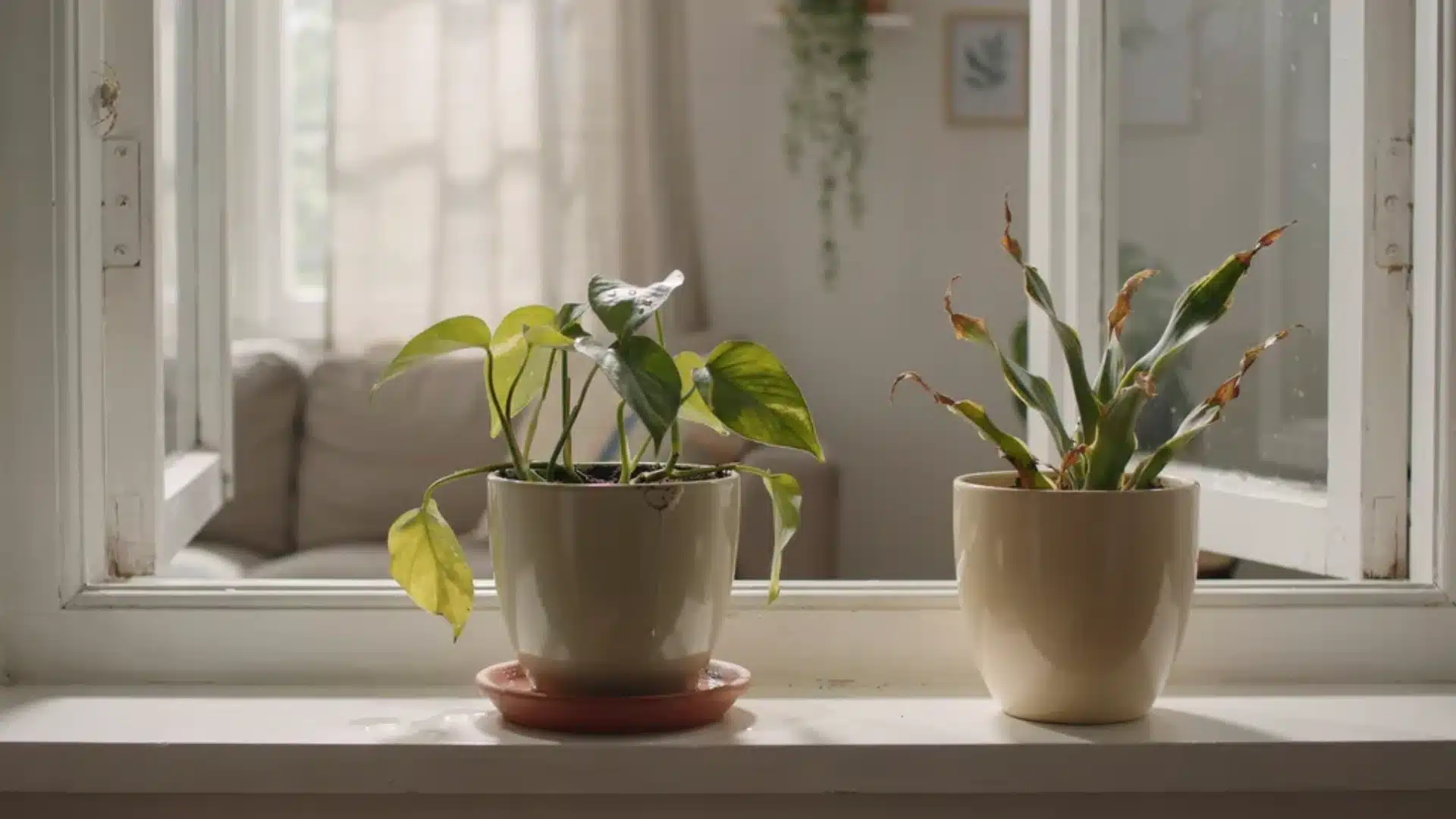
Knowing how to water houseplants also means knowing when you have gotten it wrong.
Signs your plant has too much water:
- Leaves turning yellow, even new growth
- Leaves dropping off without drying out first
- Soft or mushy stems near the base
- Soil that stays soggy for days after watering
- Mold or white fuzz appearing on the soil surface
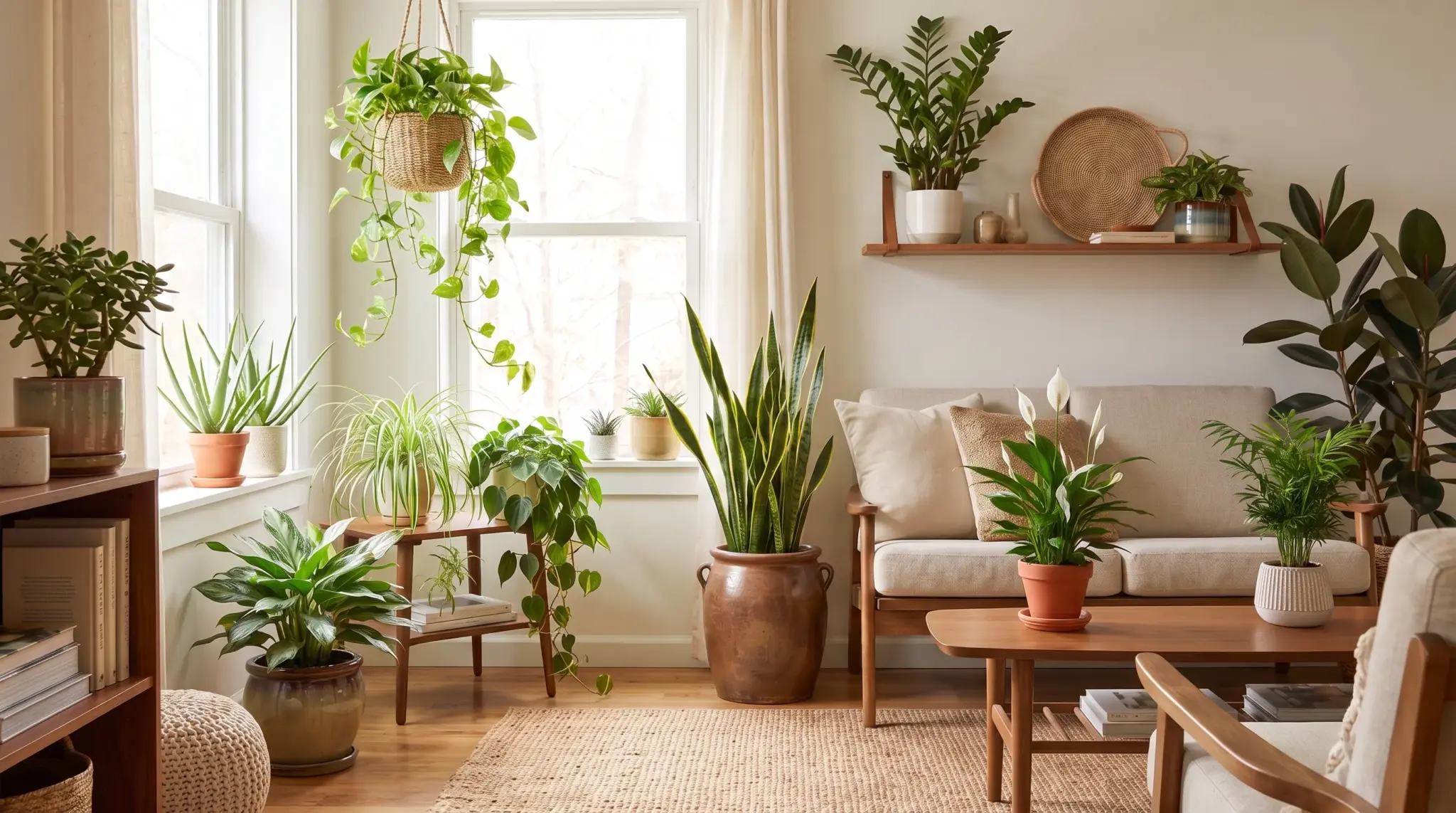
A peace lily is one of the quickest plants to show yellowing leaves when it sits in wet soil, faster than tougher plants like snake plant or pothos.
Signs your plant has too little water:
- Leaves curling, going crispy, or turning brown at the edges
- Soil pulling away from the sides of the pot
- The plant wilts but perks back up quickly after watering
- Stopped putting out new growth entirely
If you catch overwatering early, remove the plant from its pot, cut away any black or mushy roots, and repot in fresh well-draining soil. Stop watering and let it recover before giving it more.
How Watering Needs Change by Season
Seasonal shifts catch a lot of plant owners off guard because it is easy to keep watering at the same pace all year.
Spring and summer: plants are actively growing, use more water, and dry out faster, often needing water every few days in hot weather. Check soil every 2 to 3 days during peak summer.
Fall and winter: growth slows down a lot, and some plants go almost dormant. A plant that needed water twice a week in July may only need it once every two to three weeks in January. Overwatering in winter is one of the most common reasons houseplants die.
Adjust your habits as the seasons shift. Your plants will tell you when they need it. You just have to check.
Common Watering Mistakes to Avoid
Most watering problems are not about caring too little. They come from habits that seem reasonable but quietly hurt your plants.
1. Giving a light splash instead of a proper soak: a small amount of water only wets the top layer of soil, so the roots lower down never get what they need. Water slowly until it drains out the bottom.
2. Using cold tap water straight from the faucet: cold water shocks the root system, especially on tropical plants. Let tap water sit at room temperature for a few hours, or fill your watering can the night before.
3. Letting pots sit in filled saucers for hours: roots sitting in pooled water lose their oxygen supply, one of the fastest ways to trigger root rot. Empty saucers within 30 minutes of watering.
4. Using pots without drainage holes: without a way for water to exit, it collects at the bottom and suffocates the roots. Use a decorative pot with no holes as a cache pot, and keep your plant in a plain nursery pot inside it.
The Habit That Keeps Most Houseplants Alive
Getting the hang of watering houseplants comes down to one shift: pay attention to your plants instead of a schedule.
Check the soil before you water, give it a proper soak when it is dry, and pick the right tool for the plant in front of you.
The finger test works whether you have three plants or thirty, and it gets faster the more you do it.
This same habit works whether you are caring for one of the easy houseplants that forgive mistakes or a fussier plant that will not.
Which one do you find hardest to water? Drop it in the comments.
Frequently Asked Questions
Should You Water Indoor Plants From the Top or Bottom?
There is no single right way. Both top and bottom watering work well, depending on the plant.
Is Tap Water Okay for Watering Plants?
Yes. Tap water works fine for most houseplants and contains helpful minerals like calcium. Let it sit out a few hours if yours has a strong chlorine smell.
What Is the Number One Killer of Houseplants?
Overwatering. Most houseplant deaths come from soil that never gets a chance to dry out between waterings.
How Often Should You Water Houseplants?
It depends on the plant, pot, and season. Checking the soil every few days and watering only when it is dry works for most houseplants.
How Do You Water Houseplants While You’re Away?
Terracotta spikes, self-watering pots, or a wicking tray can keep soil moist for a week or two without daily attention.
Waverly has been collecting houseplants since she impulse-bought a pothos at a grocery store seven years ago. That one pot turned into 70+ plants crammed into her Portland apartment. She writes about what actually keeps indoor plants alive — no fluff, no overcomplicated advice. When she’s not talking to her plants (yes, she does that), she’s hunting for weird aroids at local nurseries.