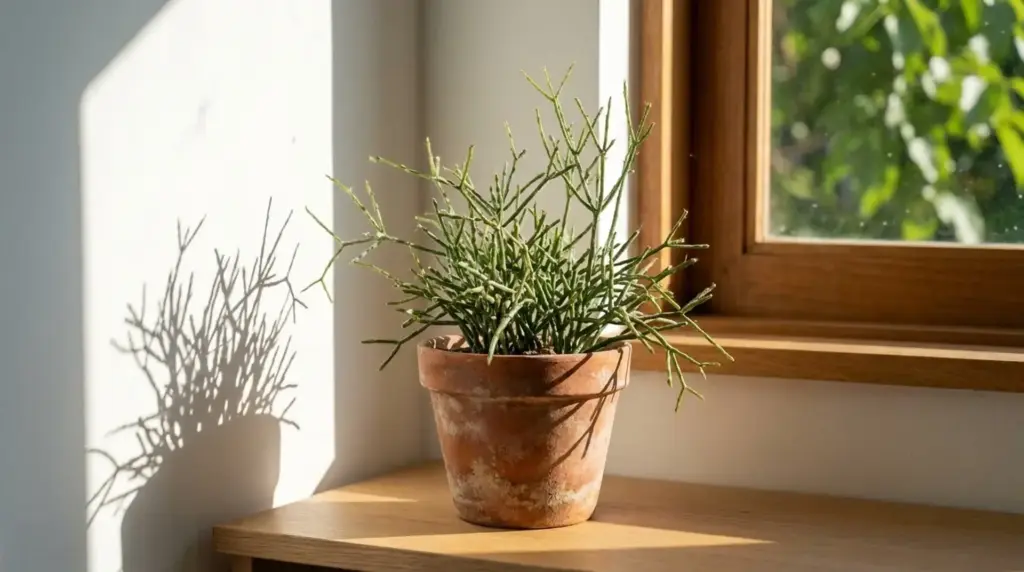
This cute jungle cactus is Hatiora salicornioides, also known as the dancing bones cactus! If you’re familiar with Rhipsalis, this plant may look familiar to you.
It’s closely related to Rhipsalis and was even once classified as one. You may also see it sold as drunkard’s dream, spice cactus, or bottle cactus.
Hatiora salicornioides is an epiphyte (a plant that grows on other plants) native to southeastern Brazil, where it clings to tree trunks. Its slender, bottle-shaped segments branch freely, and young plants stand upright.
Given time, the stems arch and cascade, so it can become a hanging plant or a sweeping, architectural bush, usually 12 to 24 inches tall and wide.
That unpredictable growth is one of its most charming traits and makes it one of the easy-care houseplants worth knowing. Below we cover light, water, soil, humidity, flowers, cuttings, and common problems.
Dancing Bones Cactus Care Tips
With its jungle-cactus roots, it needs a little more moisture and gentler light than desert cacti. Get these four care basics right, and it will reward you with healthy, branching stems.
1. Light Requirements
Hatiora salicornioides grows best in medium to bright indirect light, much like the dappled light under a rainforest canopy. A south or west window works well when a sheer curtain softens the strongest rays.
Keep it out of hot afternoon sun, because the stems can scorch, unlike those of its sun-loving desert cousins. Look for a spot with bright but indirect light, and this plant will settle right in.
2. Watering Tips
Water your dancing bones cactus when the top inch of soil feels dry, then let the pot drain fully. Jungle cacti aren’t adapted to the long droughts that desert cacti handle, so this isn’t a plant you can water once a month.
It also dislikes soggy soil. The little segments shrivel when it’s thirsty, which is a handy cue if jungle cacti are new to you.
3. Soil and Feeding
Use a loose, fast-draining mix. This epiphyte is used to airy spots on tree trunks and rots in dense, heavy soil. Cactus mix with extra perlite or bark works well in a pot with drainage holes.
During the growing season, feed with a balanced fertilizer diluted to half strength. Skip feeding in winter, when the plant rests. A light touch with fertilizer is plenty for this slow, easygoing grower.
4. Humidity and Temperature
Despite the word cactus in its name, this plant likes humid air. A bright bathroom is a good spot, and a humidifier helps in dry winter rooms. It isn’t frost-tolerant, so keep it above about 50°F and away from cold drafts.
Room temperature suits it fine the rest of the year. Like the Christmas cactus, it’s a jungle cactus that enjoys more moisture in the air than desert plants do.
Propagating Dancing Bones Cactus
Cuttings are the easiest way to make more of this plant. Snip off a piece a few inches long (about one to four segments), cutting just below a joint, and let the cut end dry for about a day.
As with most stem cuttings, the drying step helps prevent rot. Plant it in a loose, well-draining mix, set it in bright indirect light, and keep the soil lightly moist until roots form.
Cuttings usually root quickly, so they’re a good way to fill out a thin plant. Seeds work too, but they’re slow, so cuttings win for most of us.
Common Problems and Fixes
The Royal Horticultural Society lists dancing bones cactus as generally disease-free, so most trouble traces back to water or air, and both are fixable.
1. Shriveling Stems
Wrinkled, shriveled segments usually mean thirst or dry air, and the two can look alike. Check the soil first. If the top inch is dry, give the pot a good drink and let it drain.
If the soil is still moist, the air is likely too dry, so move the plant to a more humid room or add a humidifier. Stems that plump back up tell us the fix worked.
2. Mushy Stems and Rot
Mushy, yellow-brown stems signal root rot, which comes from too much water or dense, compacted soil. If only part of the plant looks affected, take healthy cuttings and pot them up in fresh, chunky mix.
Use a container with drainage holes, and wait until the top inch of soil is dry before watering again. Catching rot early leaves us with more healthy stem to work with.
Dancing bones cactus never grows quite the same way twice, and that is half the fun. Its stems wander wherever they like, then surprise us with tiny golden flowers in late winter or early spring.
Frequently Asked Questions
Should you water cactus from the top or bottom?
You can water a cactus from either the top or the bottom, as both methods work well depending on your setup. However, top watering is generally preferred by most growers because it mimics natural rainfall and flushes out built-up minerals.
What is the lifespan of a cactus?
The lifespan of a cactus typically ranges from 10 to 200 years, depending heavily on the species and whether it grows in the wild or indoors.
How long can a cactus survive without water?
A large cactus can survive anywhere from 4 months to over a year without water, depending on its size, species, and environment. Smaller potted desert cacti typically last 2 to 6 months without water.