To remove bugs from indoor plants, start by isolating the plant and rinsing it with a strong stream of water. Then, spray it with insecticidal soap or neem oil every 5 to 7 days for three treatments. For scale and mealybugs, use a cotton swab dipped in rubbing alcohol. Repeating the process is important because it kills the eggs.
Friends often text me late at night with blurry photos of bugs on their Monsteras. The messages are usually the same: they found one bug, and now there are several.
The good news is that bugs on indoor plants can almost always be fixed. Most problems respond well to a spray bottle, some dish soap, and a few weeks of patience.
The tricky part is figuring out which bug you have, since the treatment that works for aphids in one try won’t help with scale insects.
Indoor plants don’t have natural predators, so pests like aphids can multiply much faster than they would outside. Acting quickly matters more than doing everything perfectly.
This guide explains where bugs come from, the best order for treating them, how to choose the right spray for each pest, and when it might be time to let a plant go.
How Bugs Get on Indoor Plants
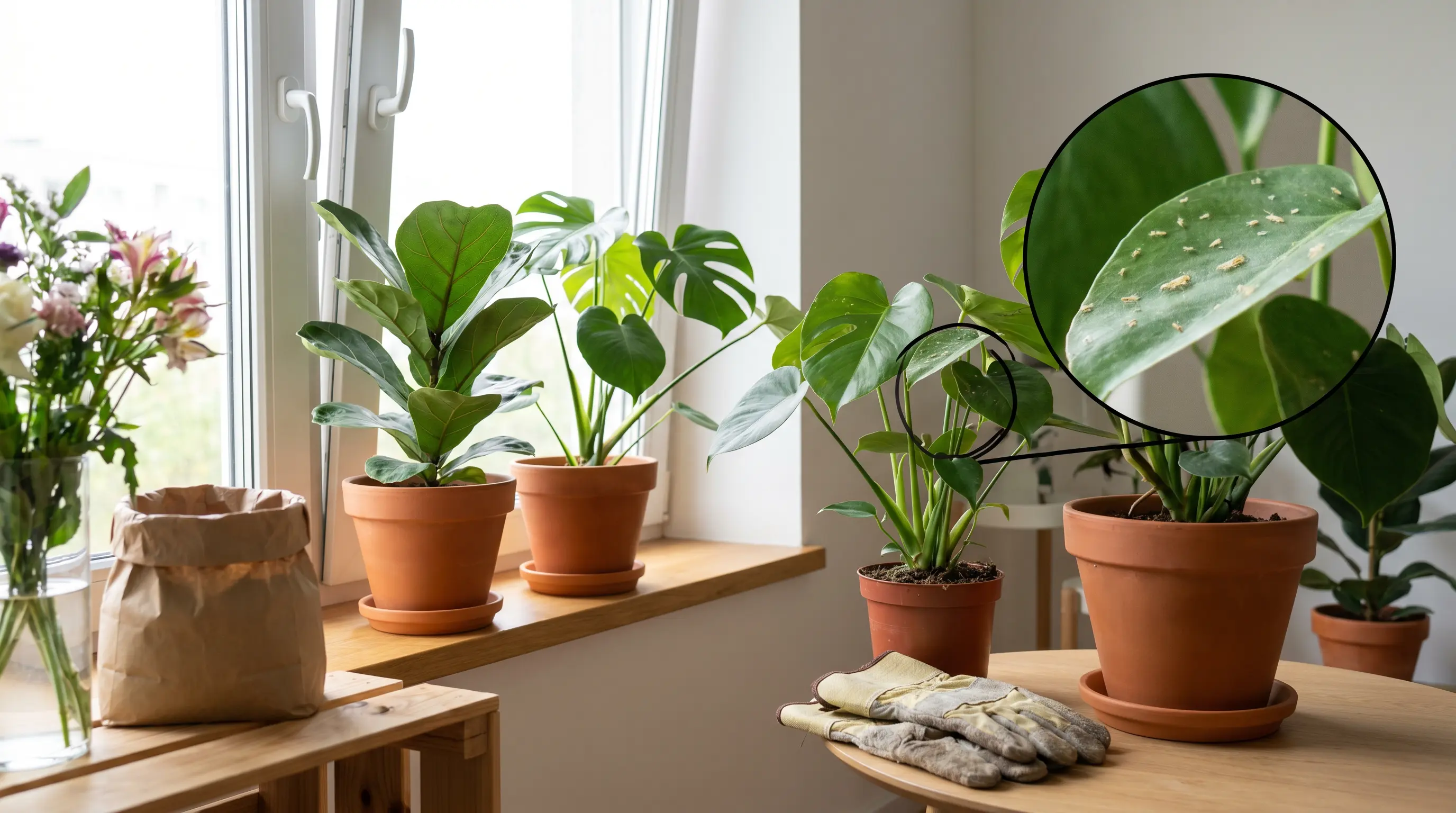
A plant that never goes outside still gets bugs.
New plants from garden centers are the most common source. Eggs and larvae ride in on the root ball and stay invisible for two or three weeks, which is about how long it takes you to stop watching the new plant.
Open windows let in thrips and spider mites, both light enough to drift in on air currents. Clothing and pets carry them too. Cut flowers from the garden are a route almost nobody thinks about.
Soil is the last one. The University of Minnesota Extension is blunt about this: never pot an indoor plant with garden soil, and never use a bag of potting mix that has been sitting open outside. Both carry eggs.
How to Get Rid of Bugs on Indoor Plants
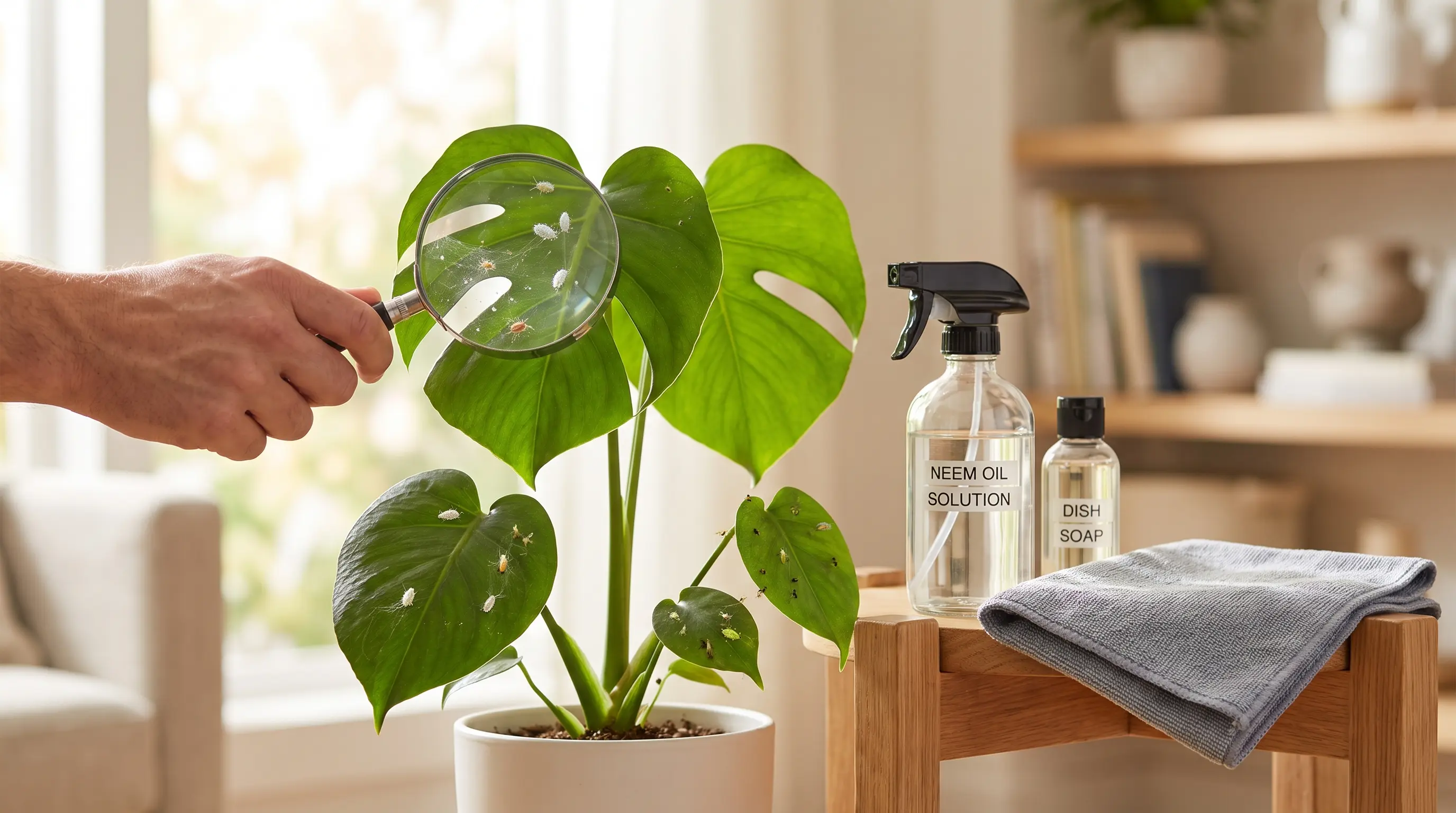
Follow these five steps, and do them in order. If you skip the first step, one infested plant can quickly turn into a whole shelf of problems.
Step 1. Isolate the Plant Immediately
Move the affected plant to a different room. A bathroom is ideal, because you’ll want the sink or shower in about ninety seconds. Pests spread by crawling, jumping, and flying, and mites hitch rides on your hands and your watering can.
Step 2. Remove and Rinse
Take it to the sink or shower. Use a firm stream of water to knock bugs off the leaves, stems, and soil surface. Tilt the pot so the runoff doesn’t drown the roots.
This alone can solve a mild aphid or mite problem. It also reduces the number of bugs before you spray, making each treatment more effective.e
Step 3. Match the Spray to the Pest
This is where many people make mistakes. They use whatever spray they have and treat all bugs the same way. Soap kills soft-bodied insects on contact, but it won’t affect scale insects protected by a waxy shell.
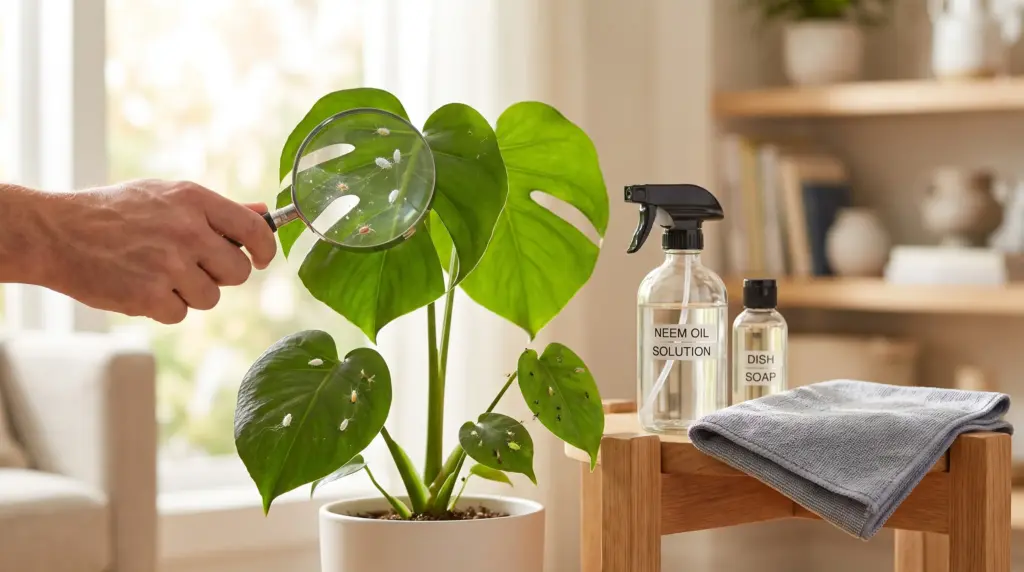
- Insecticidal soap: Mix 1 teaspoon of mild dish soap into 1 quart of water. Spray every surface, including the undersides, every 5 to 7 days for 3 weeks. Spot-test one leaf and wait a day. Ferns, succulents, and anything fuzzy-leaved burn easily.
- Neem oil: Combine 1 tablespoon neem oil and 1 teaspoon dish soap in 1 quart of warm water. Shake, use it immediately, and pour out what’s left. Neem breaks down within about 24 hours of mixing, so the bottle you made last week is water. Spray in the evening. Neem plus direct sun scorches leaves.
- Rubbing alcohol: Dip a cotton swab in 70% isopropyl and press it onto each visible bug. It dissolves the waxy coating on contact. Tedious on a vining plant, and worth it.
Soap works quickly, while neem oil lasts longer. The choice between neem and soap is most important when you need to target eggs instead of adult bugs.
Step 4. Repeat on Schedule
One treatment is usually not enough. Eggs can survive the first spray and hatch in four to six days, so timing is just as important as the spray itself. Three treatments, five to seven days apart, break the cycle. Set a reminder on your phone. Skipping the third round is the main reason people say the spray failed.
Step 5. Escalate Only If Needed
If three rounds of natural treatments don’t work, try a pyrethrin-based or neem concentrate product from a garden center or a nursery.
One warning before you buy. Many shelf products for houseplants contain imidacloprid, and it’s toxic to bees. I keep hives in my Austin backyard, so this one’s personal.
If the plant summers on a porch where anything blooms, skip it. Minnesota Extension flags the same caution. Pyrethrins and insecticidal soap leave no residue, which makes them the safer pick for anything that goes outdoors.
8 Common Bugs on Indoor Plants
Where a bug lives on your plant helps you decide how to treat it, so this section is organized by location instead of species.
Bugs on Leaves and Stems
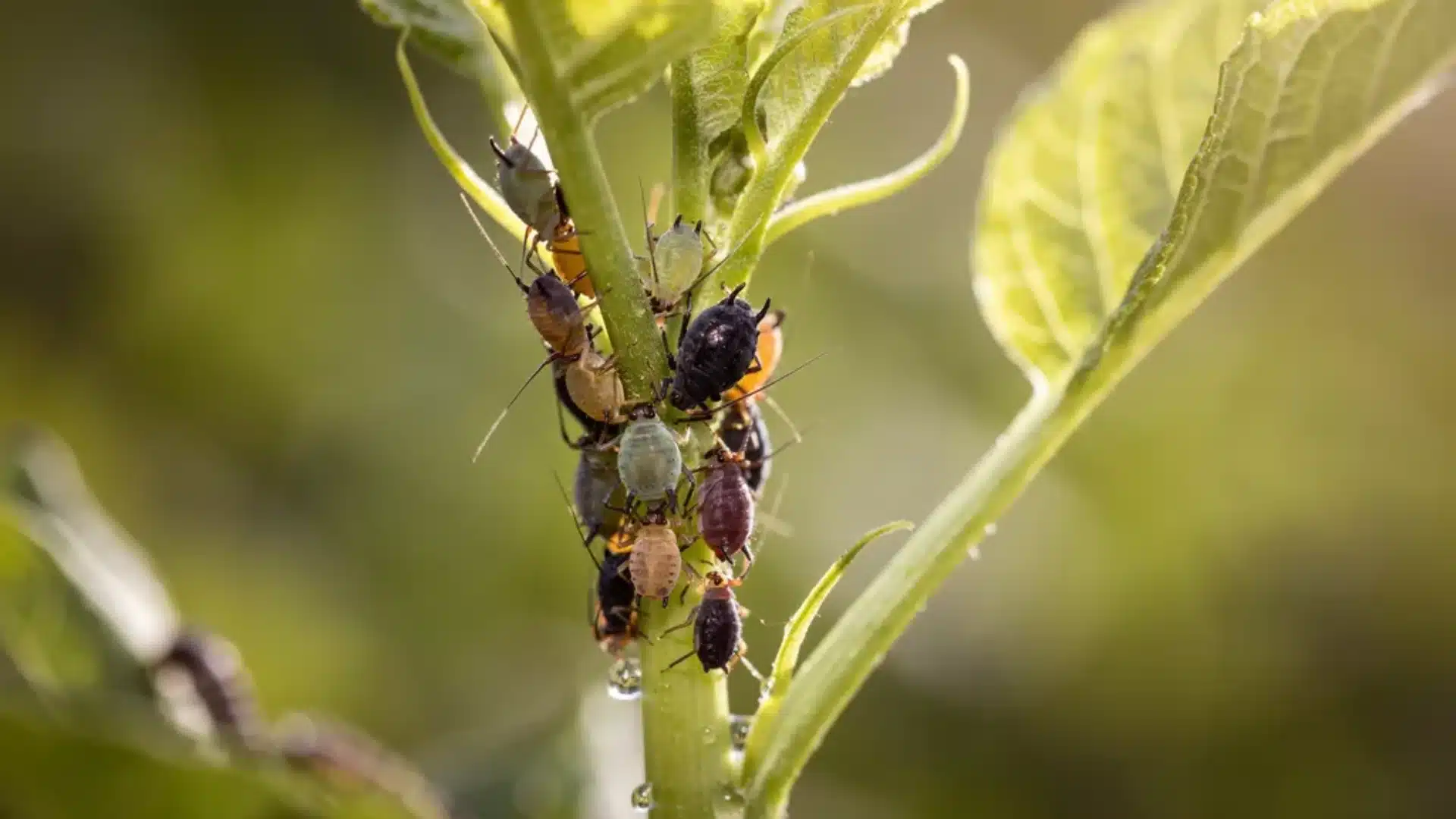
- Aphids are small, pear-shaped, and cluster on the newest growth. Green, black, or orange. They leave sticky honeydew, and new leaves curl and yellow. If you’re not sure, telling aphids apart from whitefly nymphs comes down to shape: aphids have visible legs and antennae; nymphs do not.
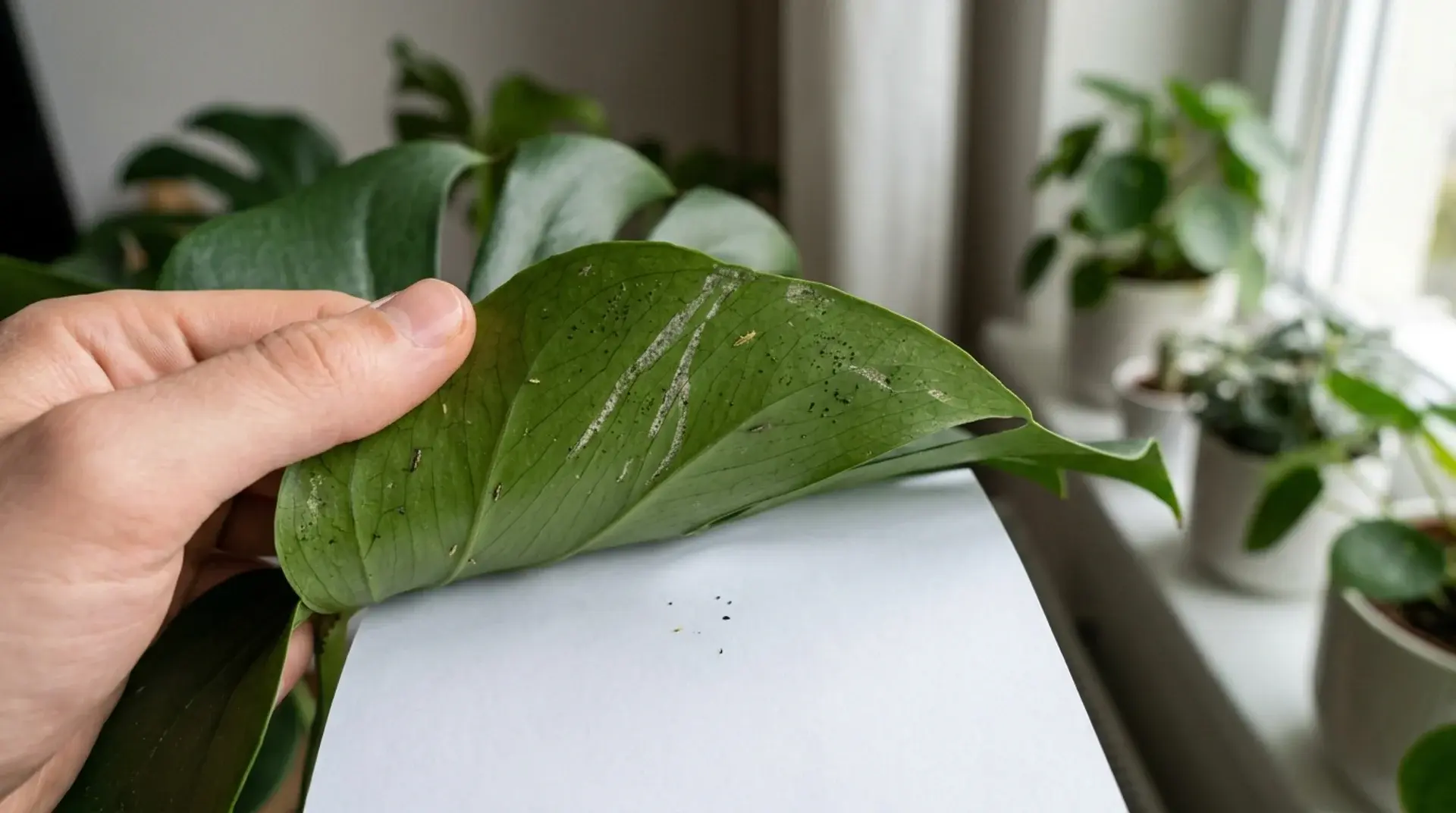
- Spider mites are nearly invisible until the fine webbing shows up. They like hot, dry air. Leaves look dusty and stippled with pale dots. Tap a leaf over a sheet of white paper and watch for movement.
- Mealybugs alarm people more than anything else on this list. White fluff in leaf joints and stem crevices. They move slowly and spread fast, and honeydew and sooty mold follow.
- Scale insects look like small brown bumps stuck to a stem, and it’s easy to mistake them for part of the plant. The waxy shell blocks sprays, so scrape them off with a fingernail file before you treat.
- Whiteflies lift off in a small cloud when you brush the plant. They cluster on leaf undersides, and the leaves above them yellow and drop.
- Thrips are thin and quick, scraping leaf surfaces to drink the fluid inside. Look for silvery streaks, patchy spots, and shiny black droppings. Adult thrips can fly. Blue sticky cards catch them better than yellow ones, which is helpful when dealing with a thrips problem.
Bugs in the Soil
- Fungus gnats are small, dark flies that hover around the base of the pot. The adults are annoying, but the larvae live in the top inch of wet soil and chew on roots. Overwatering is always the cause, so letting the top inch of soil dry out is more effective than any spray.
- Springtails jump when disturbed and can look alarming, but they eat fungus and decaying material, not roots. They are a sign that your soil is too wet, not a real pest. If you water less, they will go away. Less water, and they leave.
How to Spot Bugs on Your Plants Early
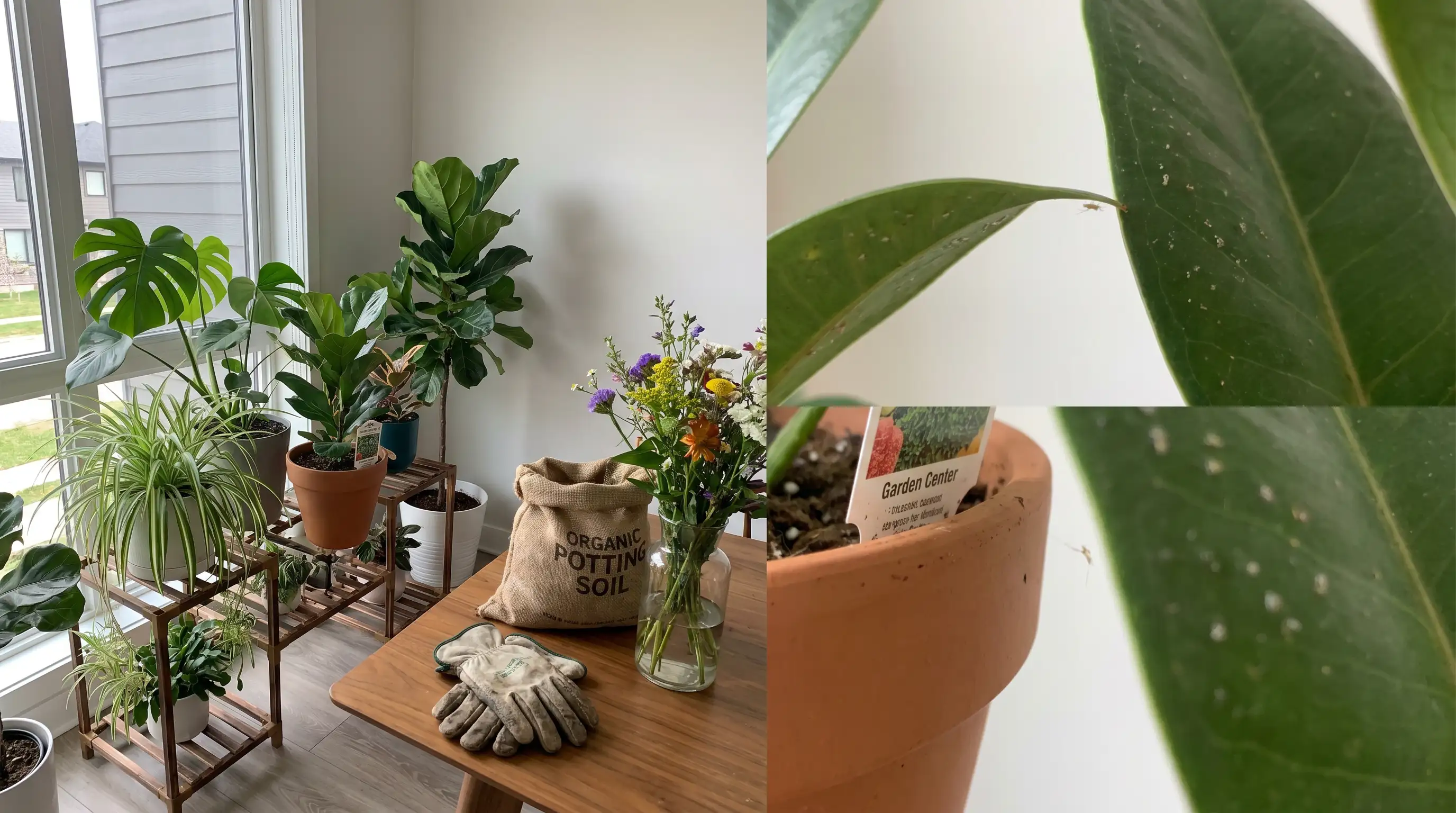
The sooner you spot a problem, the easier it is to fix. Just ten seconds per plant when you water is enough.
What to look for every time you water:
- Sticky residue on leaves or on the table underneath. That’s honeydew from aphids, mealybugs, or scale, and black sooty mold usually follows.
- Fine webbing between stems or under leaves. Spider mites.
- White cottony tufts where leaves meet stems. Mealybugs.
- Small dark flies near the soil. Fungus gnats.
- Yellowing, distorted, or silvery new leaves. Thrips or aphids feeding on tender growth.
- Tan bumps on stems that won’t wipe off. Scale.
- Tiny white insects that scatter at a touch. Always check the undersides of leaves and where stems meet, not just the top of the plant. Most pests hide in the spots you check last. where you look last.
A magnifier app on your phone can help you confirm if you have mites, which are about 1/50 of an inch long and hard to see without help.
How to Stop Bugs From Coming Back
Treating an infestation once is annoying. Treating the same plant twice is avoidable.
1. Quarantine new plants for two weeks in a room with nothing else green in it. That’s roughly one pest generation, long enough for a hidden problem to become an obvious one.
2. Repot with fresh, sterile mix, and wash the old soil off the roots while you’re in there.
3. Let the soil dry between waterings. This one habit removes the conditions fungus gnat larvae need and keeps plants strong enough to shrug off the rest.
4. Clear dead leaves off the soil surface. Decaying material is gnat larvae food and cover for everything else.
5. Wipe leaves with a damp cloth monthly. It removes dust, improves light absorption, and doubles as the inspection.
6. Hang yellow sticky cards near the pots. They catch adult gnats, whiteflies, and winged aphids before they lay eggs, and they’ll flag a problem before you can see it on the plant.
When Should You Throw a Plant Away
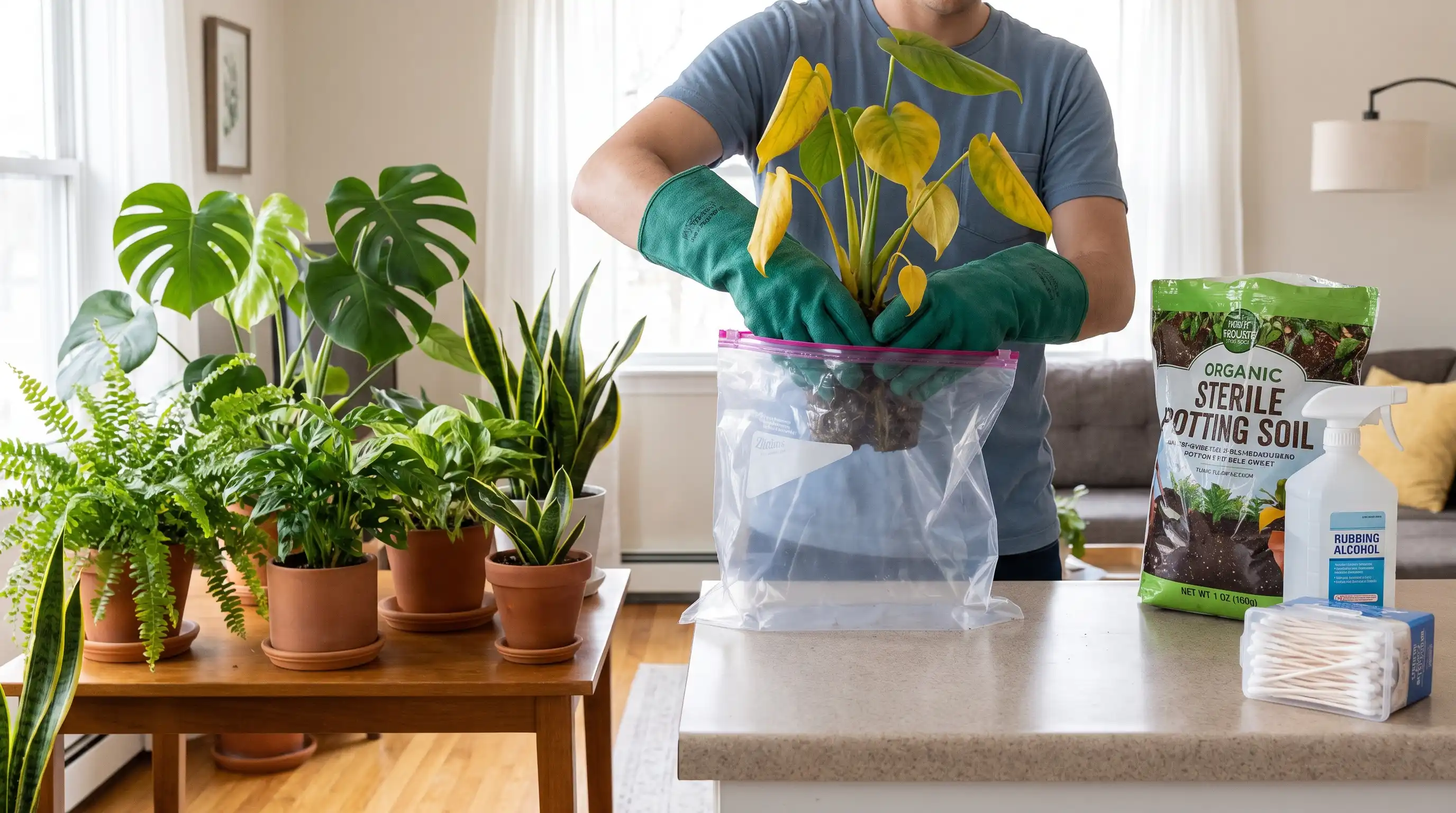
If three or more treatment rounds have not worked, if new growth has stopped, or if root mealybugs are confirmed, recovery becomes very difficult.
Root mealybugs live below the soil line, and most spray treatments never reach them. They are one of the hardest infestations to clear.
Repotting into fresh sterile soil with a full root wash is the best option available. Success is still not guaranteed.
When you do decide to discard a plant, seal it in a plastic bag first. Loose pests escaping in your home will find their way to the plants you kept.
Conclusion
Start by isolating the plant, then rinse it, and choose the right spray for the specific pest instead of using the same treatment for everything.
Do three treatments, five to seven days apart. Sticking to this schedule is what gets rid of an infestation.
If you find a bug that’s not listed here, describe it in the comments.
Let me know where it is on the plant and if it moves when you touch it. I’ll help you identify it.
Frequently Asked Questions
What causes indoor plants to get bugs?
Most arrive on new plants, in open bags of potting mix, or through open windows. Warm rooms with no predators let small populations build quickly.
What can I spray on my indoor plants to keep bugs away?
Insecticidal soap or neem oil, every 5 to 7 days. Neither repels bugs long-term, so preventive spraying wastes product. Inspect weekly instead.
How do you get rid of bugs without harming plants?
Spot-test any spray on one leaf and wait 24 hours. Apply in the evening, never in direct sun, and skip fuzzy-leaved plants entirely.
Can I spray vinegar on plants to get rid of bugs?
No. Vinegar burns foliage at concentrations strong enough to affect insects. It works in a gnat trap on the counter, not on the plant.