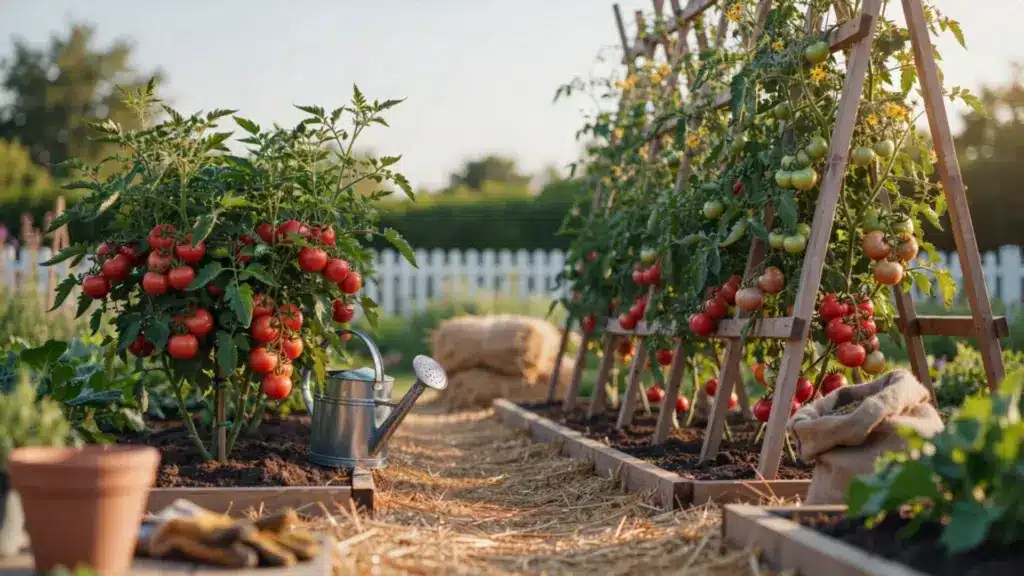
I grew my first batch of tomatoes and blamed the soil when they all ripened at once and rotted before I could use them.
The real issue? I had no idea what type of tomato I was growing. Once I understood the difference between determinate and indeterminate tomatoes, my whole approach to planning, staking, and harvesting changed.
Understanding determinate vs indeterminate tomatoes changes how you plan, support, and harvest your plants.
This post walks through growth habits, care differences, support needs, pruning, which variety fits your space, and how you want to eat what you grow.
What Are Determinate and Indeterminate Tomatoes?
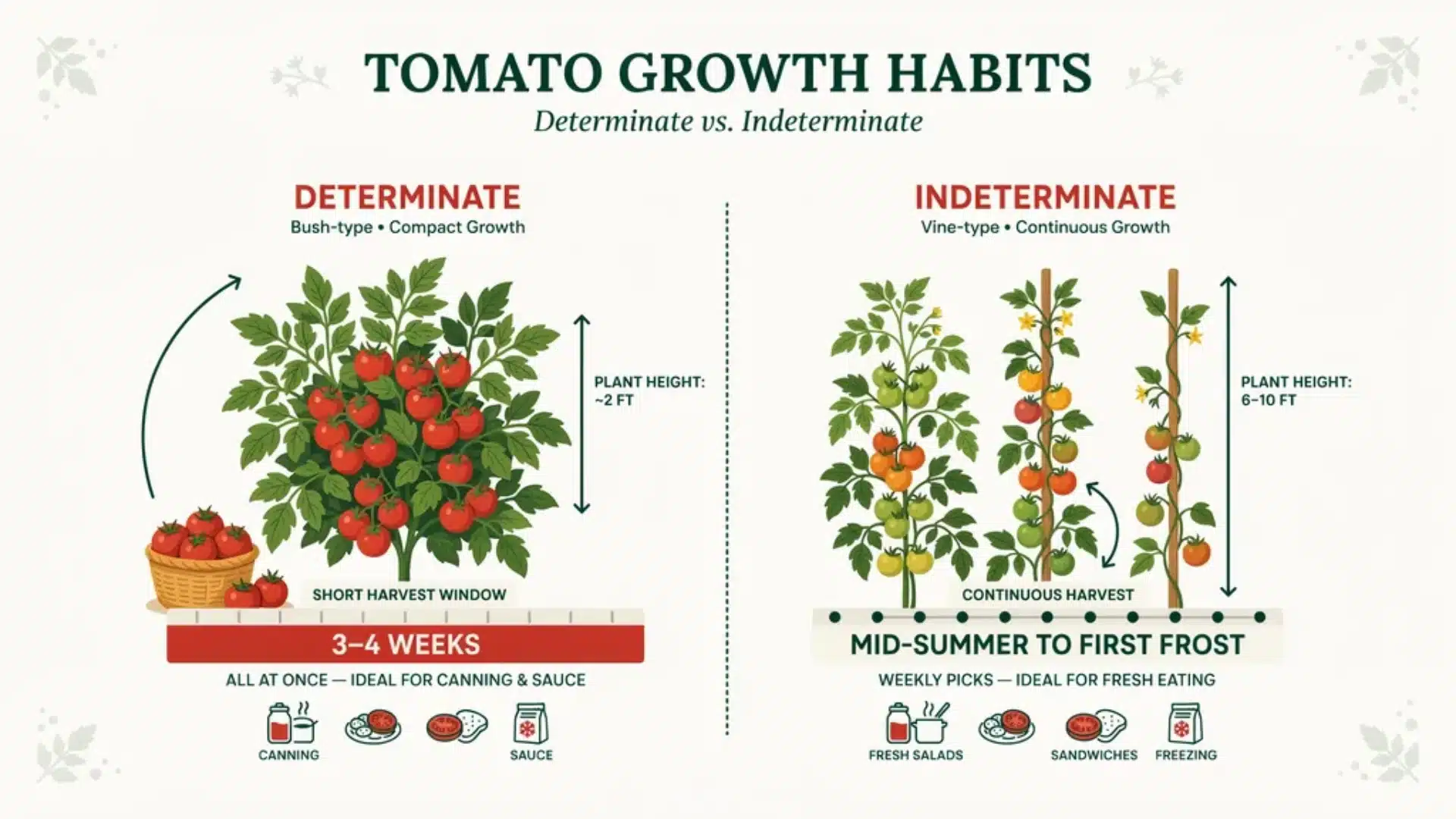
Determinate tomatoes grow to a fixed height, usually 3 to 5 feet. Once the plant sets fruit at the tips of its branches, it stops growing taller. All the fruit ripens within a 3- to 4-week window. This type is often called a bush tomato because of its compact, tidy shape.
Indeterminate tomatoes keep growing throughout the entire season. The main stem does not stop at a set point. These plants can reach 6 to 10 feet or more in height.
They flower and fruit continuously until cold weather or frost ends the season. Gardeners also call them vining tomatoes.
Tip: Look for the letter D for determinate or I for indeterminate on the seed packet or plant tag. Some tags also list the variety name with a note like “bush” or “vining.” You may also see letters like VFN after the variety name, which refer to disease resistance rather than growth type.
Growth Habit and Harvest Timing of Tomatoes
This is the most practical difference between the two types.
Determinate plants put all their energy into one concentrated harvest. You get a large volume of tomatoes in roughly 3 to 4 weeks. After that, the plant winds down.
This makes them ideal for canning, making sauce, or freezing large batches at once. Fruits form at the end of the branches and tend to ripen at the same time.
Indeterminate plants give you a steady supply of tomatoes from midsummer through the first frost. Fruits are spaced along the vine and ripen a few at a time. This is the better option if you want fresh tomatoes for slicing, salads, and sandwiches across the whole season.
One tactic worth trying with determinates: plant two rounds a few weeks apart. The first planting gives you a mid-season harvest. A second planting, started a few weeks later, gives you another flush before fall sets in. Both types have different harvest lead times, so your planting date directly affects when you pick your first tomato.
Support and Staking Needs of Tomatoes
Support decisions get much easier once you know your plant type.
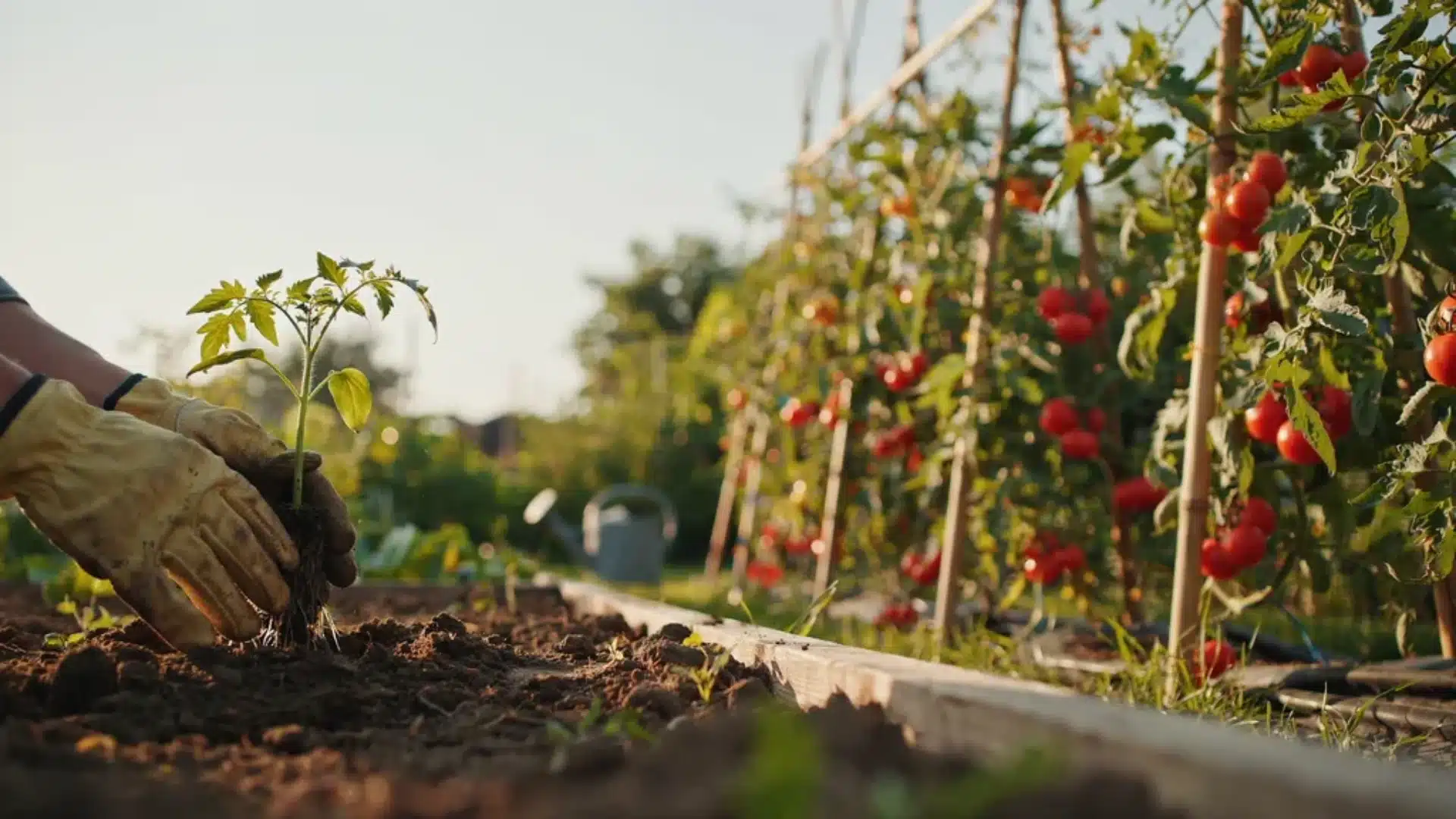
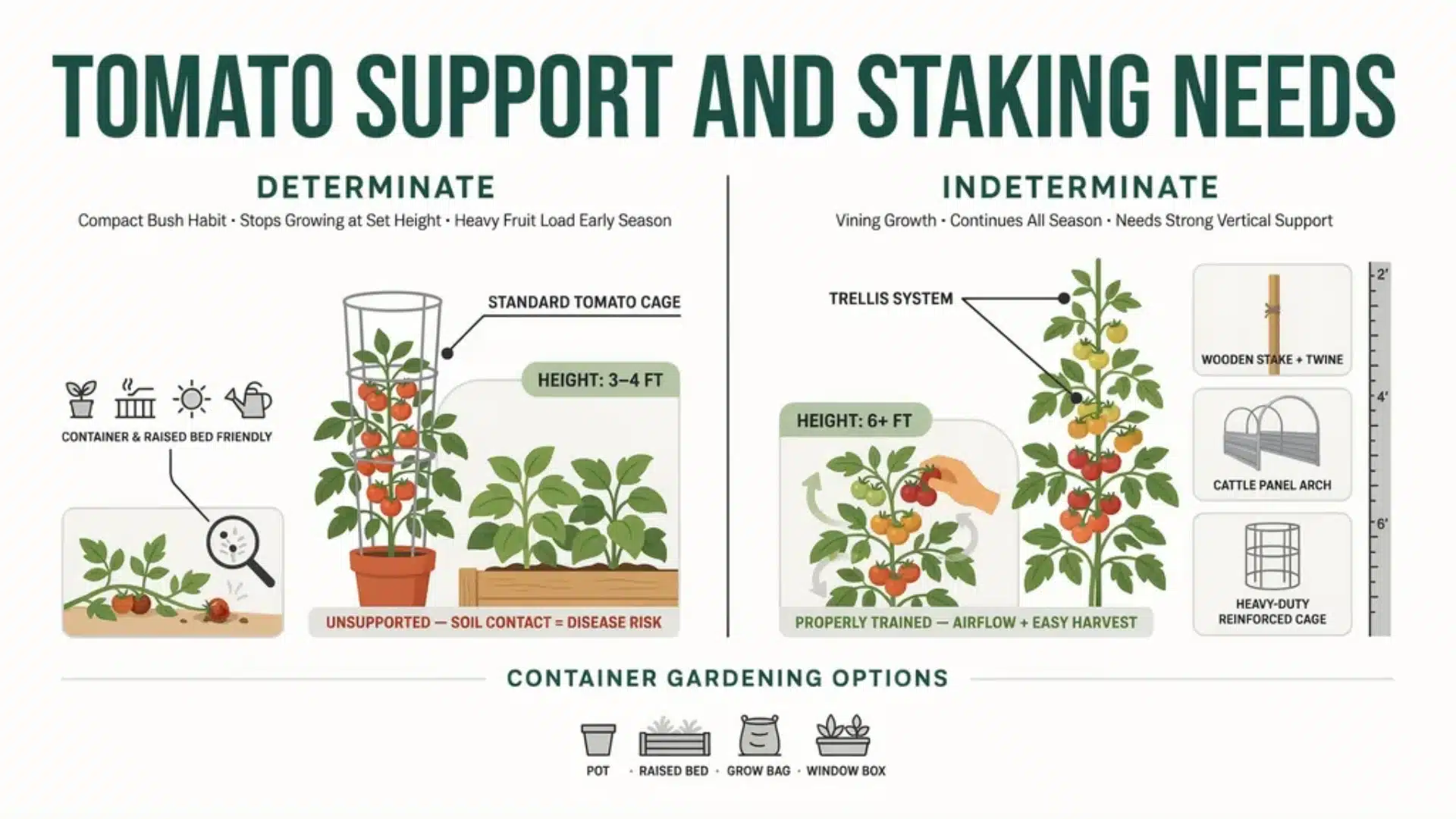
Determinate tomatoes have sturdy stems and a compact shape. A standard tomato cage usually handles the load. Some gardeners skip the cage entirely. Once the fruit fills out, even a bush tomato benefits from basic support to keep branches off the ground.
Indeterminate tomatoes need serious support. Tall stakes, heavy-duty cages, cattle panels, or trellises work best. Plan for at least 6 feet of vertical space.
If you let an indeterminate vine sprawl without support, it increases the risk of disease from soil splash and makes harvesting difficult. The right staking setup for tomato plants depends on the variety and the amount of fruit weight it can carry throughout the season.
For container gardening, determinate types win. Their compact size works well on patios, balconies, and small raised beds.
Varieties like Patio Princess and Bush Early Girl were bred specifically for small spaces. Indeterminate varieties can grow in large containers, but they need very sturdy support and consistent watering since pots dry out faster than garden beds.
Pruning Determinate vs Indeterminate Tomatoes
Pruning is where the two types diverge most, and getting it right protects your yield.
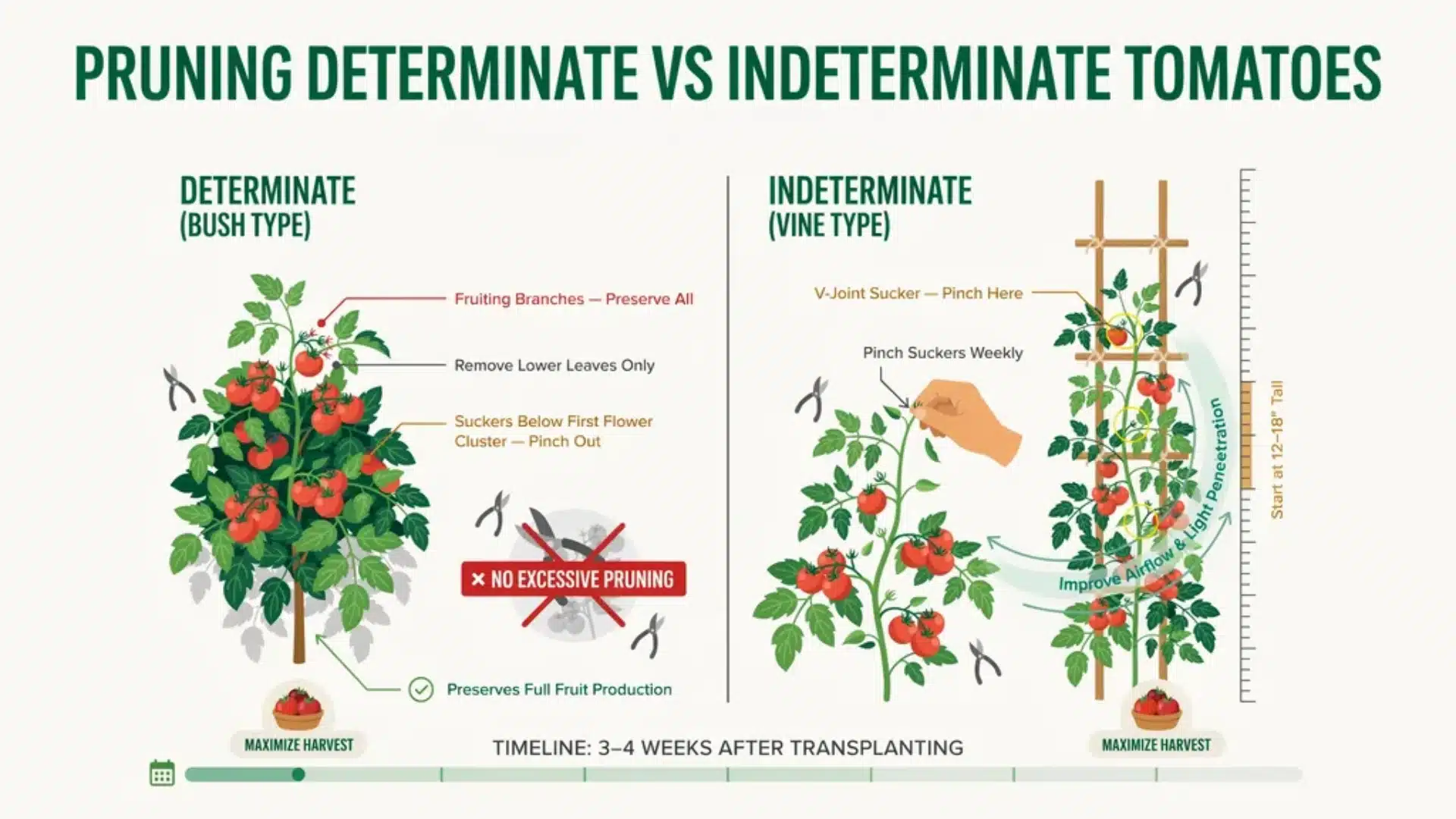
Determinate tomatoes need minimal pruning. Every branch on a determinate plant has the potential to produce fruit. If you remove suckers above the first flower cluster, you reduce your total harvest on a plant that was never going to get large anyway.
The only pruning worth doing on a determinate is removing suckers and leaves below the first flower cluster and clearing any growth that touches the soil. That is it.
Indeterminate tomatoes need regular pruning. A sucker is the small shoot that grows in the V-shaped gap between the main stem and a leaf branch. On indeterminate plants, these suckers grow into full branches and can take over the plant if left unchecked.
Start removing the lower ones when the plant reaches 12 to 18 inches tall, roughly 3 to 4 weeks after you transplant it. Always prune on a dry morning so the cuts seal before evening. Clean your shears between plants to avoid spreading disease. The same approach to pruning tomato plants applies across all indeterminate varieties.
Semi-determinate plants sit in the middle. Remove suckers below the first flower cluster and clear low growth, but you will prune far less than you would with a full vining variety.
Watering and Fertilizing: Do They Need Different Care?
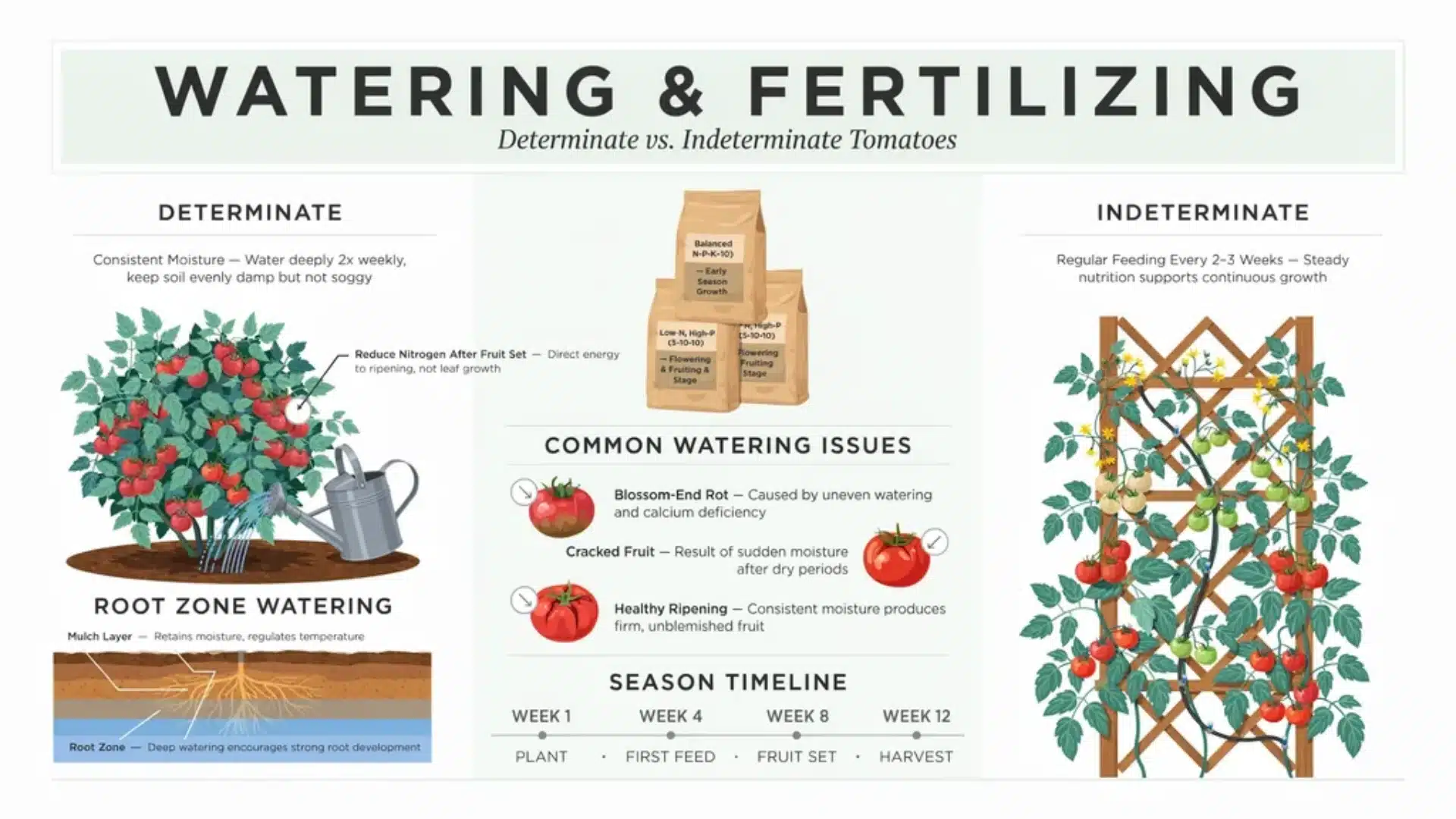
Both types need consistent watering. Uneven watering causes blossom-end rot and cracked fruit in either type. Mulching around the base helps retain moisture and prevent soil from splashing onto lower leaves, reducing the risk of disease.
Determinate tomatoes need steady water up to harvest. Once fruit sets and the plant stops growing, ease off on nitrogen-heavy fertilizers. Too much nitrogen at that stage promotes leafy green growth rather than helping fruit ripen.
Indeterminate tomatoes keep growing all season, so they need regular feeding throughout the season. A balanced fertilizer early in the season works well.
Once flowers appear, shift to a lower-nitrogen, higher-phosphorus feed to support fruit development rather than leaf growth. Feed every 2 to 3 weeks during active growth.
Best Determinate and Indeterminate Tomato Varieties
Picking the right variety matters as much as picking the right type. Here are the most reliable determinate and indeterminate tomatoes for home gardeners.
Determinate:
- Roma: the classic paste tomato, produces thick-walled fruit ideal for sauce and canning
- Celebrity: disease-resistant, consistent, and reliable across different climates
- Bush Early Girl: a shorter version of the popular Early Girl, ripens faster than most determinate types
- Patio Princess: bred for containers and small pots, compact and productive
Indeterminate:
- Brandywine: large heirloom with rich, full flavor, worth the wait
- Sungold: sweet cherry tomato with very high yield, a garden favorite
- Cherokee Purple: complex flavor with hints of smoky and sweet, shorter vines than most heirlooms
- Better Boy: vigorous, consistent producer that handles heat well
Which Type Is Right for Your Garden?
Ask yourself two questions: What space do I have? and What do I want to do with my harvest?
- Small space or container? Go with determinate or semi-determinate.
- Large garden with vertical room? Indeterminate plants will fill it well.
- Planning to can, freeze, or make sauce? Determinate types give you the bulk at one time.
- Want fresh tomatoes all summer? Indeterminate types deliver that slow-and-steady supply.
- Short growing season with early frosts? Determinate types work better because they ripen faster.
- Want low maintenance? Determinate types need less staking and almost no pruning.
- First-time grower? A disease-resistant hybrid like Celebrity (determinate) is a forgiving starting point.
Growing both types in the same season covers all your bases. A few determinate Roma plants for sauce, plus a couple of indeterminate Sungold or Better Boy plants for daily fresh eating, cover all your needs in one season.
Both types benefit from a 6- to 8-week head start. Starting tomato seeds indoors before your last frost date gives you stronger transplants and an earlier harvest.
Conclusion
Choosing between determinate vs indeterminate tomatoes comes down to your space, your time, and what you plan to do with the harvest.
Determinate types give you one focused, manageable crop, which is exactly what you need for batch cooking or canning. Indeterminate types reward patience with steady fruit all summer long. Get that choice right before you plant, and the rest of the season gets a lot easier.
Which type are you growing this year? Drop it in the comments below.
Frequently Asked Questions
Are Most Cherry Tomatoes Determinate or Indeterminate?
Most cherry tomatoes are indeterminate. This means they grow and vine continuously throughout the entire season.
What Should Never Be Planted Near Tomatoes?
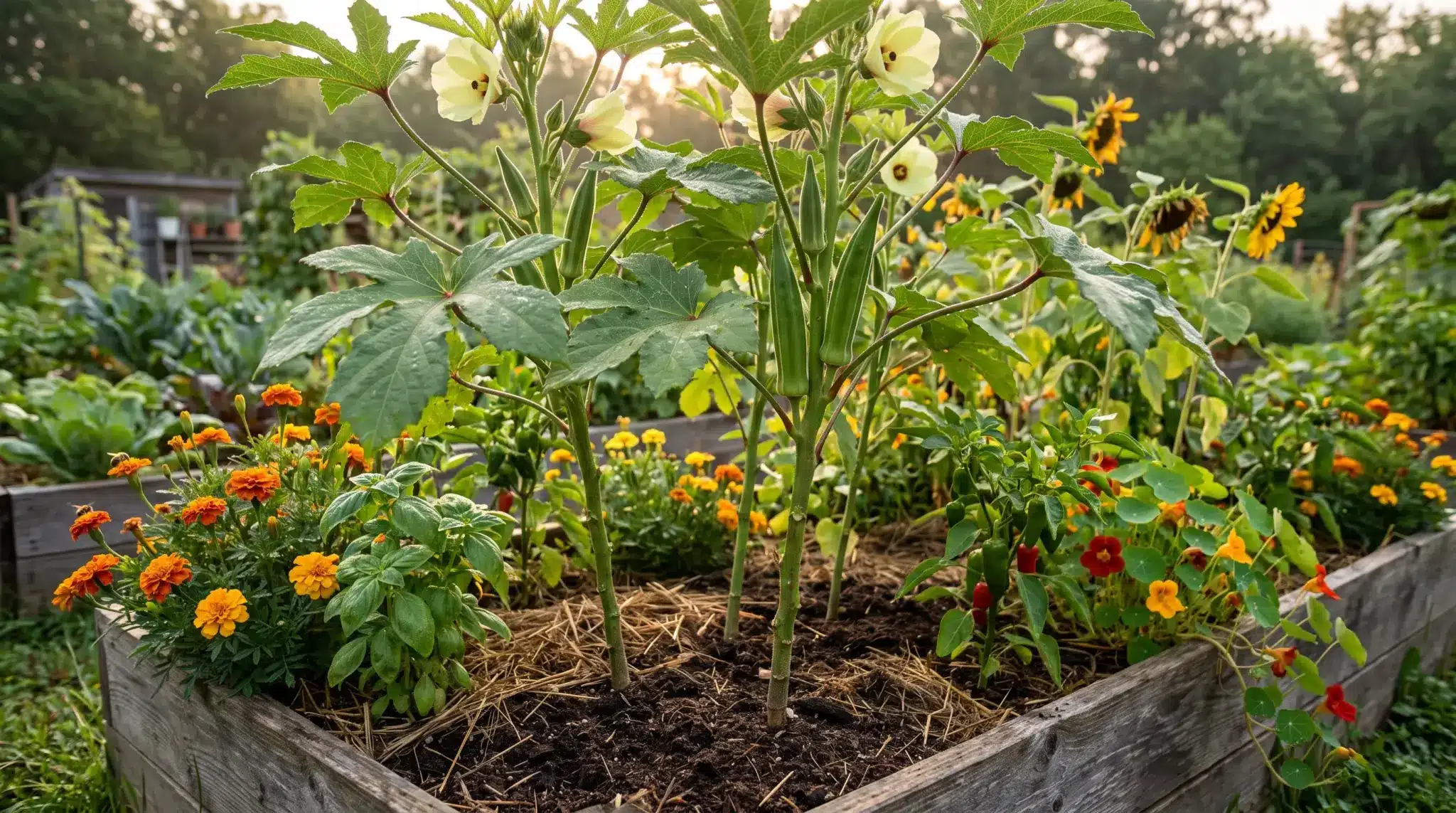
Nightshades (potatoes, eggplants), brassicas (cabbage, broccoli), corn, and fennel share diseases or nutrient needs with tomatoes. Good tomato companion plants like basil and marigold do the opposite.
Are Beefsteak Tomatoes Determinate or Indeterminate?
Beefsteak tomatoes are predominantly indeterminate. This means they grow as continuous vines that do not stop getting taller, requiring staking and regular pruning.