When I moved into my apartment, the only window in my living room faced north.
There was never any direct sunlight. I lost two fiddle leaf figs before I realized the problem was my plant choices, not my gardening skills.
North-facing windows aren’t a problem—they just create a specific environment, and some plants are naturally suited for it.
The University of Minnesota Extension puts low light at 50 to 250 foot-candles and describes these plants as understory species- the ones that grow under a canopy where filtered light is normal. Your north window sits in that range for most of the year.
In this post, I’ll go over 11 plants that do well in these conditions, how the light changes with the seasons, how to adjust your watering, when to consider a grow light, and which plants to avoid for north windows.
11 Best North-Facing Window Plants
These 11 plants are organized by type, with care notes specifically for north-window conditions.
Foliage Plants
These are the most reliable plants for north-facing windows, chosen for their ability to thrive in low, indirect light conditions.
1. ZZ Plant (Zamioculcas zamiifolia)
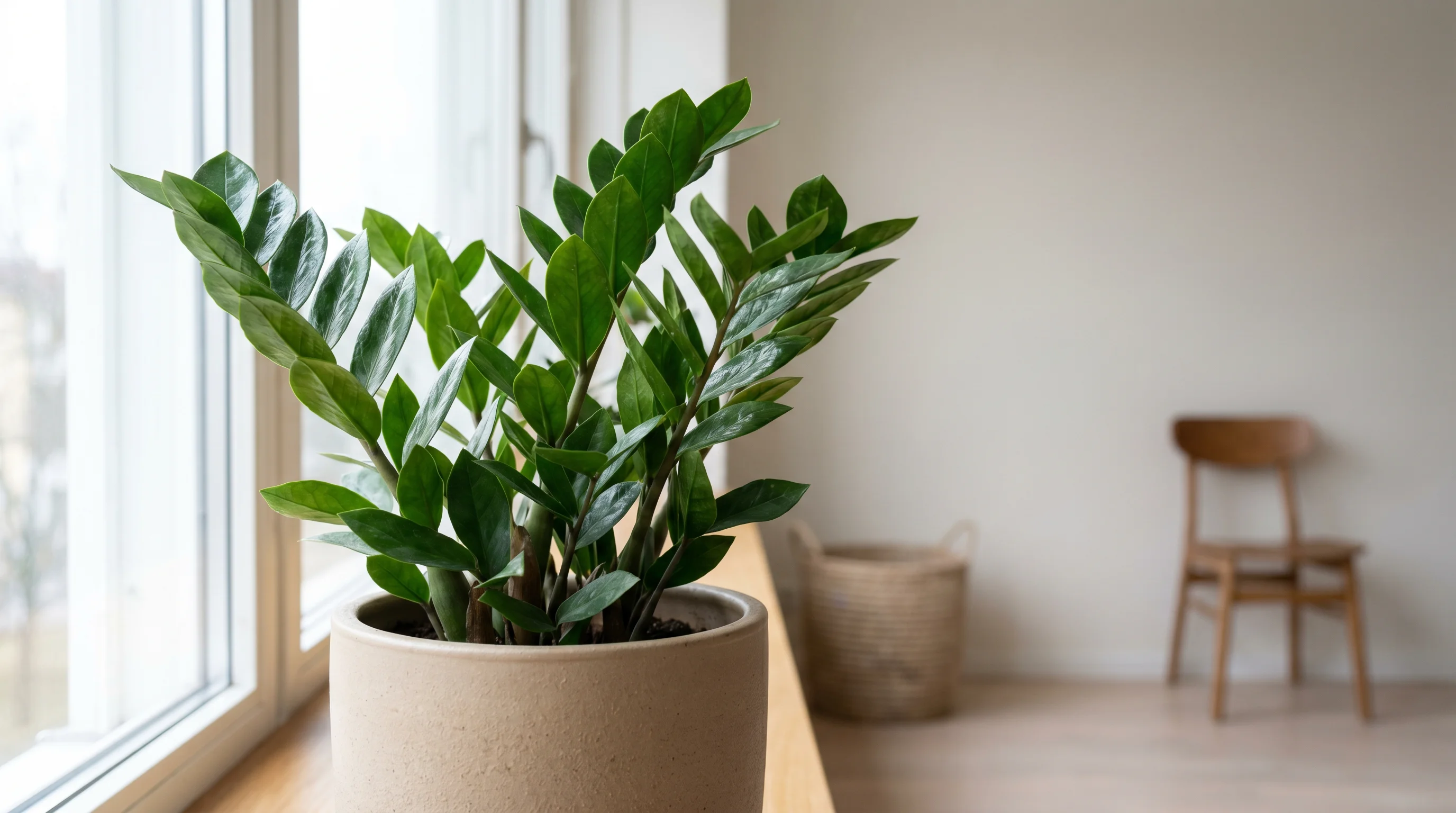
ZZ plants have thick underground rhizomes that store water and energy between waterings. They’re made for low, inconsistent light and are genuinely hard to kill.
Care Tip: Water far less than you think. Soil dries slowly in low light, and overwatering kills more ZZ plants than any other cause. Mine goes three to four weeks between drinks from November to March. Let the soil dry completely first.
Toxicity: Toxic to pets and humans.
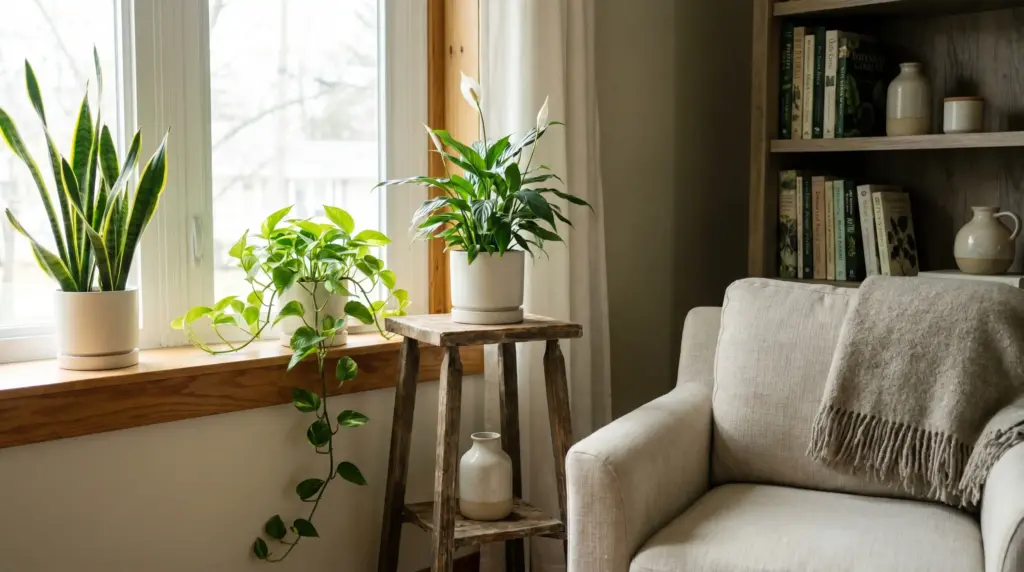
2. Snake Plant (Dracaena trifasciata)
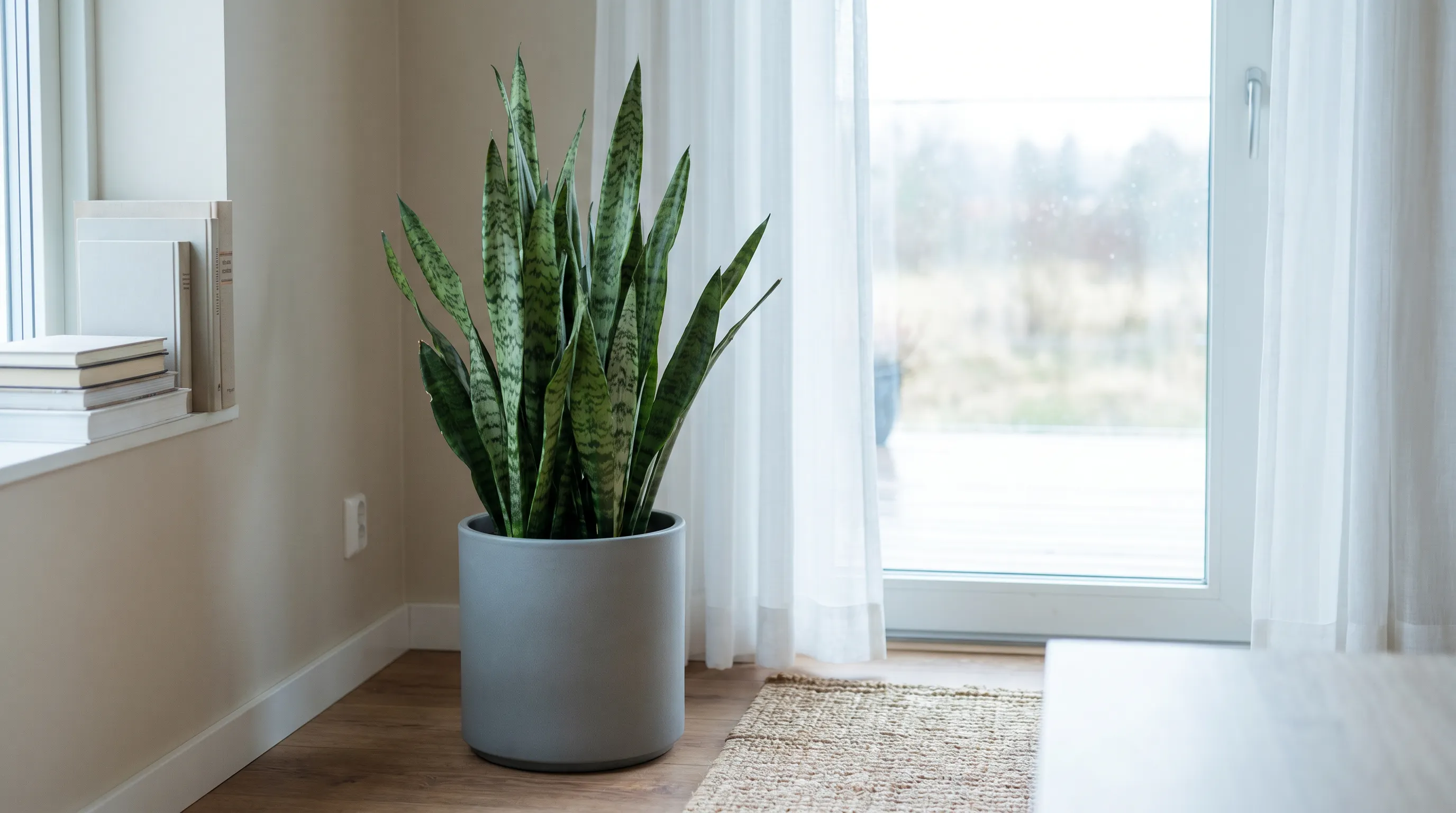
Snake plants come from West Africa, where they grow under other plants in rocky areas. They handle low light better than almost any common houseplant.
Care Tip: Skip fertilizing from October through February. Slow winter growth means the plant cannot use it, and salt buildup damages roots.
Toxicity: Mildly toxic to pets.
3. Pothos (Epipremnum aureum)
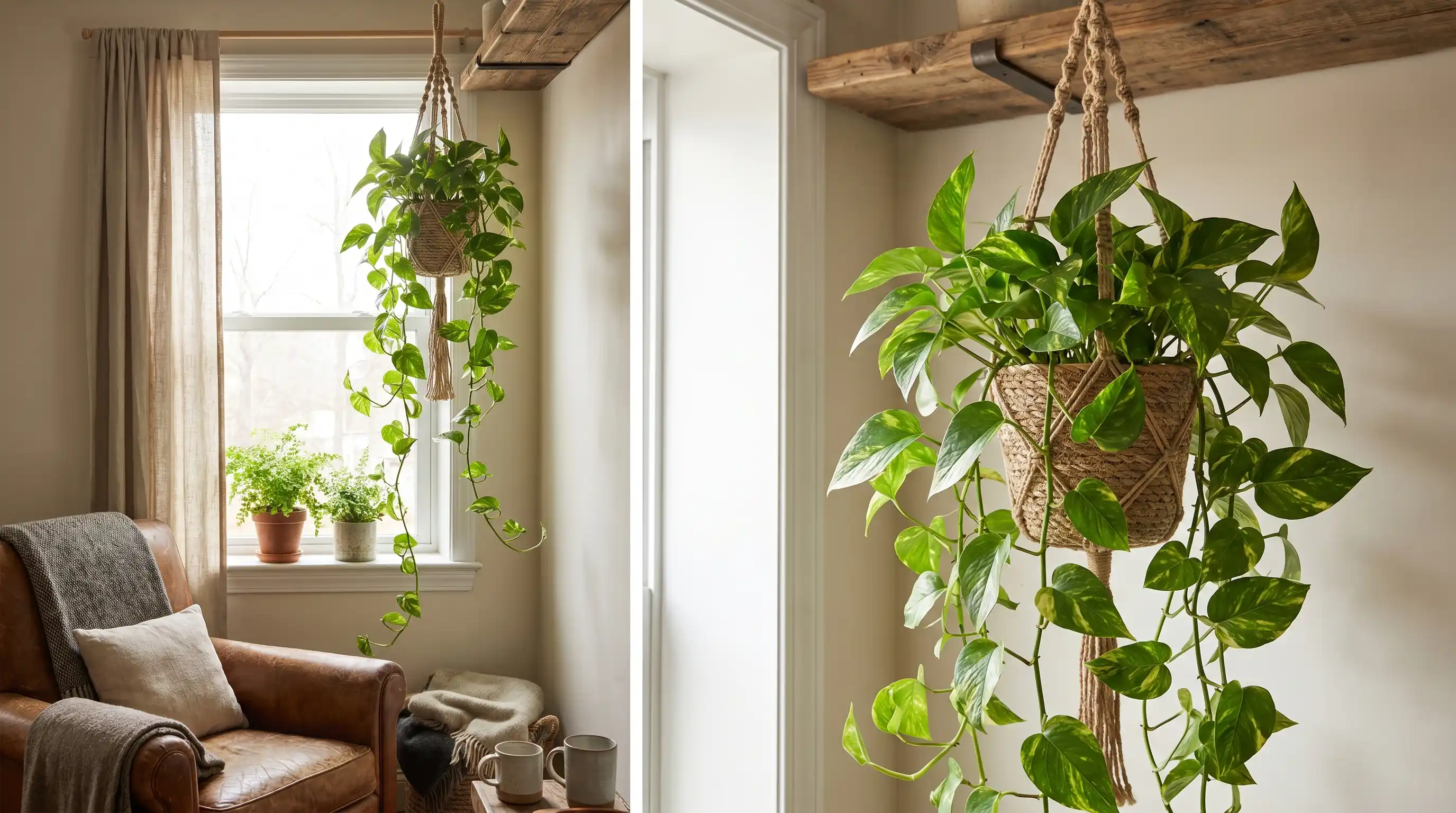
Pothos changes its leaf size and stem spacing depending on how much light it gets. It’s one of the most adaptable plants I’ve grown. You can root stem cuttings in water in about three weeks, so one plant can easily become three for free.
If you see long stems with wide gaps between the leaves, it’s a sign the plant needs to be closer to the window.
Care Tip: Leggy growth means it needs to be closer to the window, not moved to a different room. Two inches of distance makes a real difference here.
Toxicity: Toxic to pets and humans.
Also read: How to Propagate Pothos in Water
4. Heartleaf Philodendron (Philodendron hederaceum)
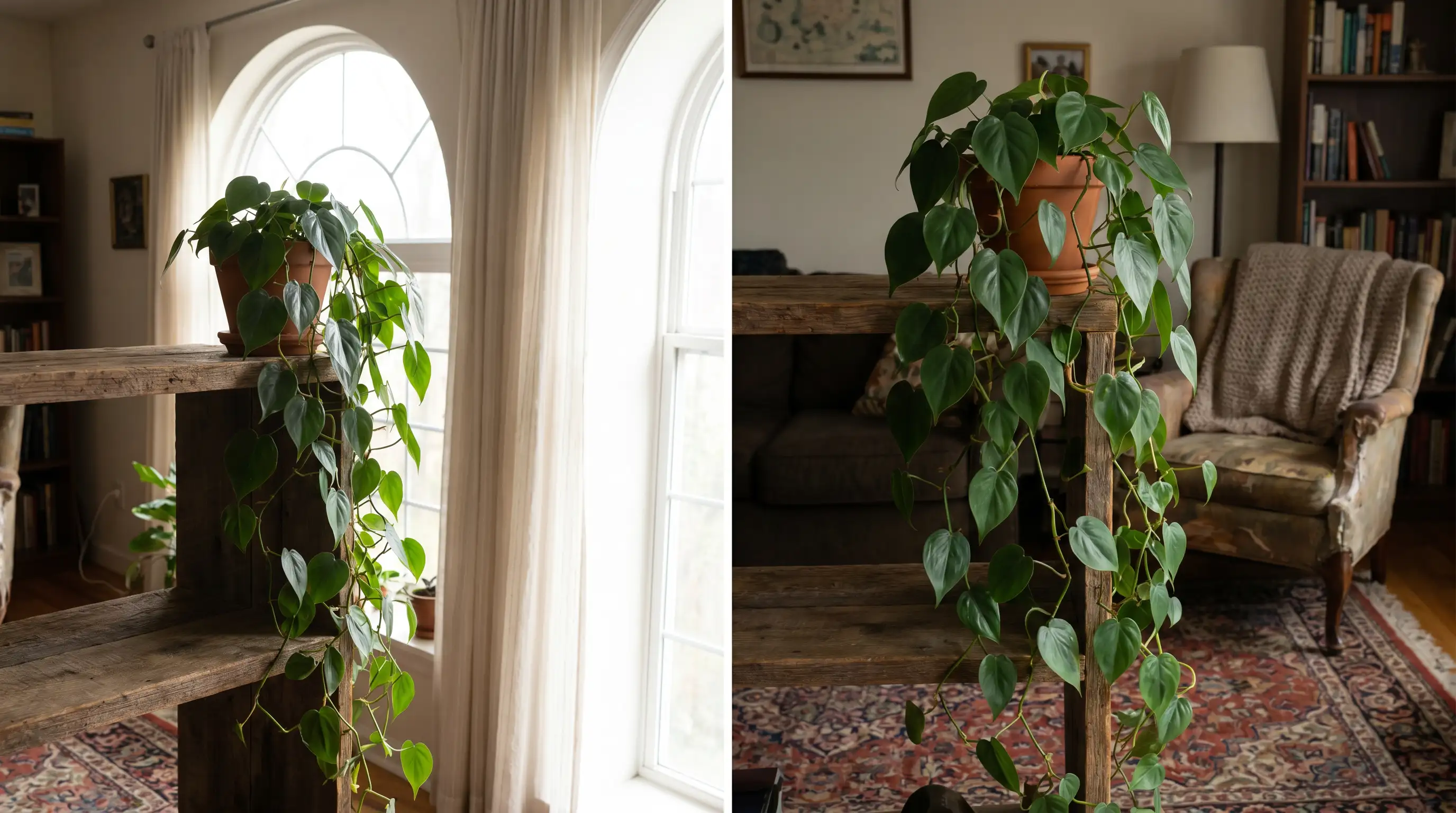
This trailing philodendron grows on rainforest floors, where most of the light is filtered through leaves above. It grows faster than most other options in north window light.
Care Tip: The top two inches of soil should dry between waterings. In north light, that typically takes 10 to 14 days rather than the usual 7.
Toxicity: Toxic to pets.
5. Cast Iron Plant (Aspidistra elatior)
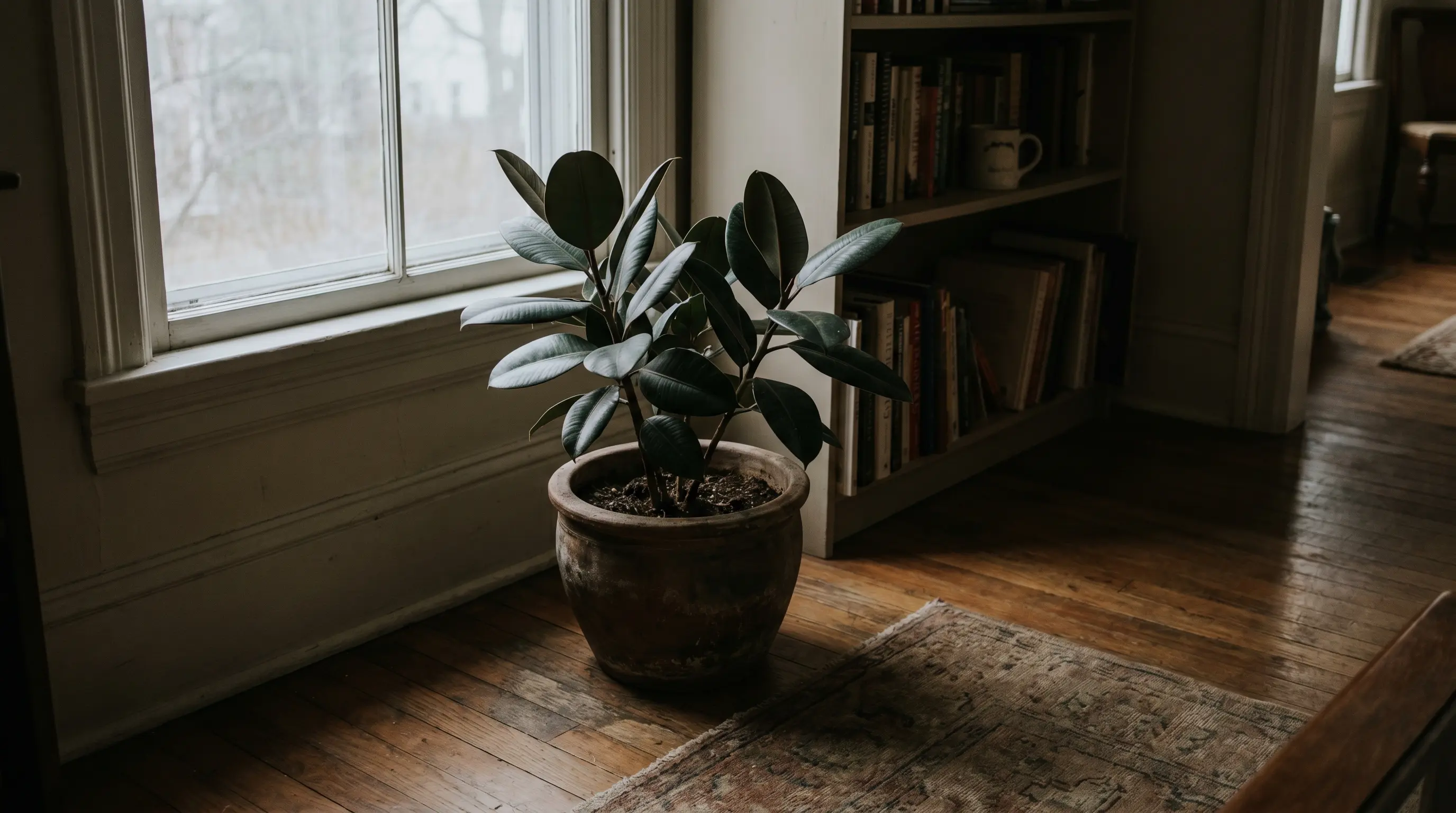
Cast iron plants can handle drafts, irregular watering, and low light that would kill most other plants. Victorian households kept them in gas-lit parlors for this reason. If you have a gloomy corner you’ve given up on, this is the plant for it.
Care Tip: One of the few plants that genuinely does fine three to five feet back from a north window, not just directly against the glass.
Toxicity: Non-toxic.
6. Chinese Evergreen (Aglaonema)
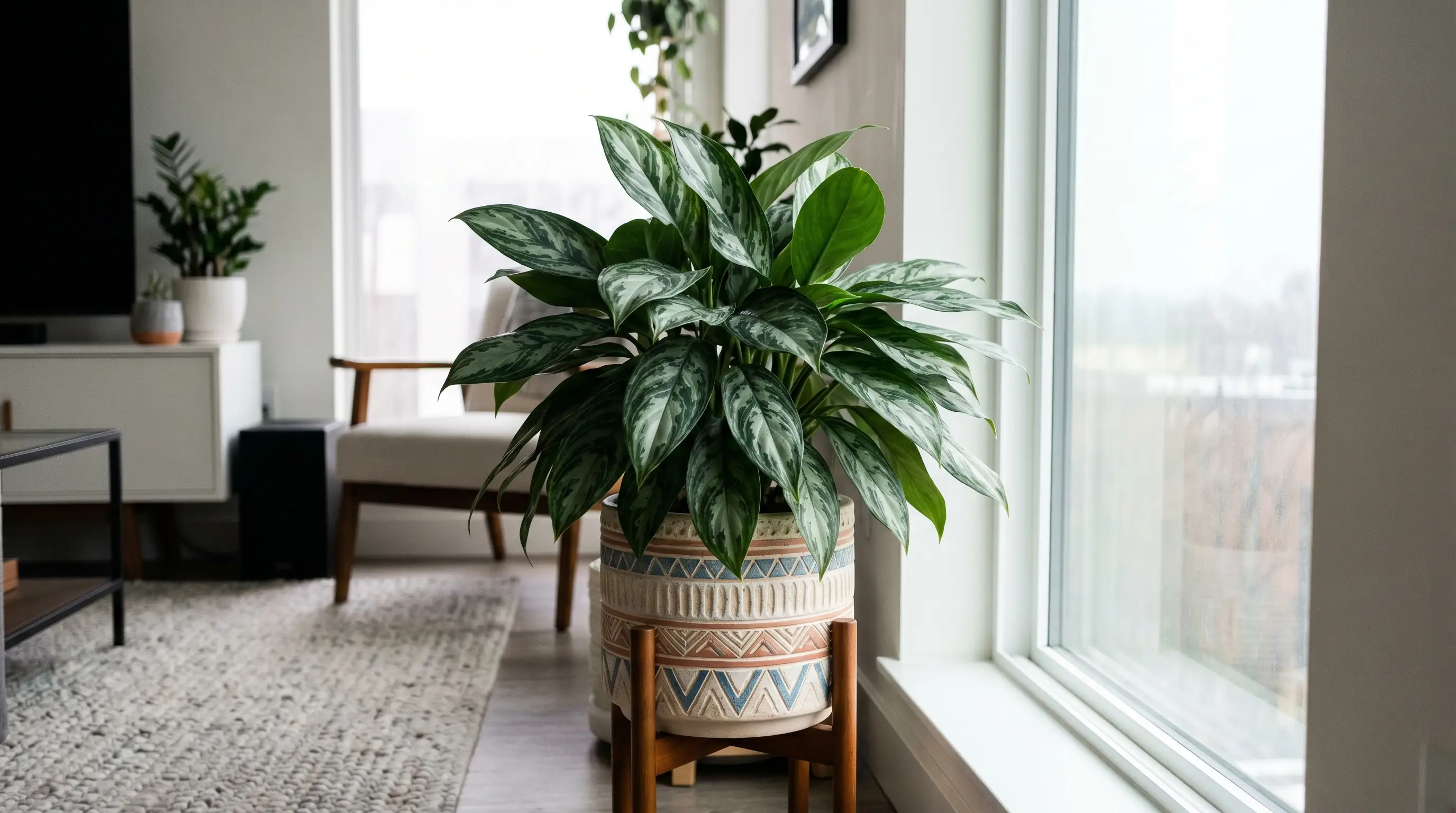
Chinese evergreens do well in north windows, but choosing the right variety is important.
Green and silver types like Silver Bay handle low light. Pink and red varieties need more intensity and will fade and struggle here.
Care Tip: ZZ and snake plants want to dry out. Chinese evergreen prefers soil that stays slightly moist, so check it every five to seven days.
Toxicity: Toxic to pets.
7. Bird’s Nest Fern (Asplenium nidus)
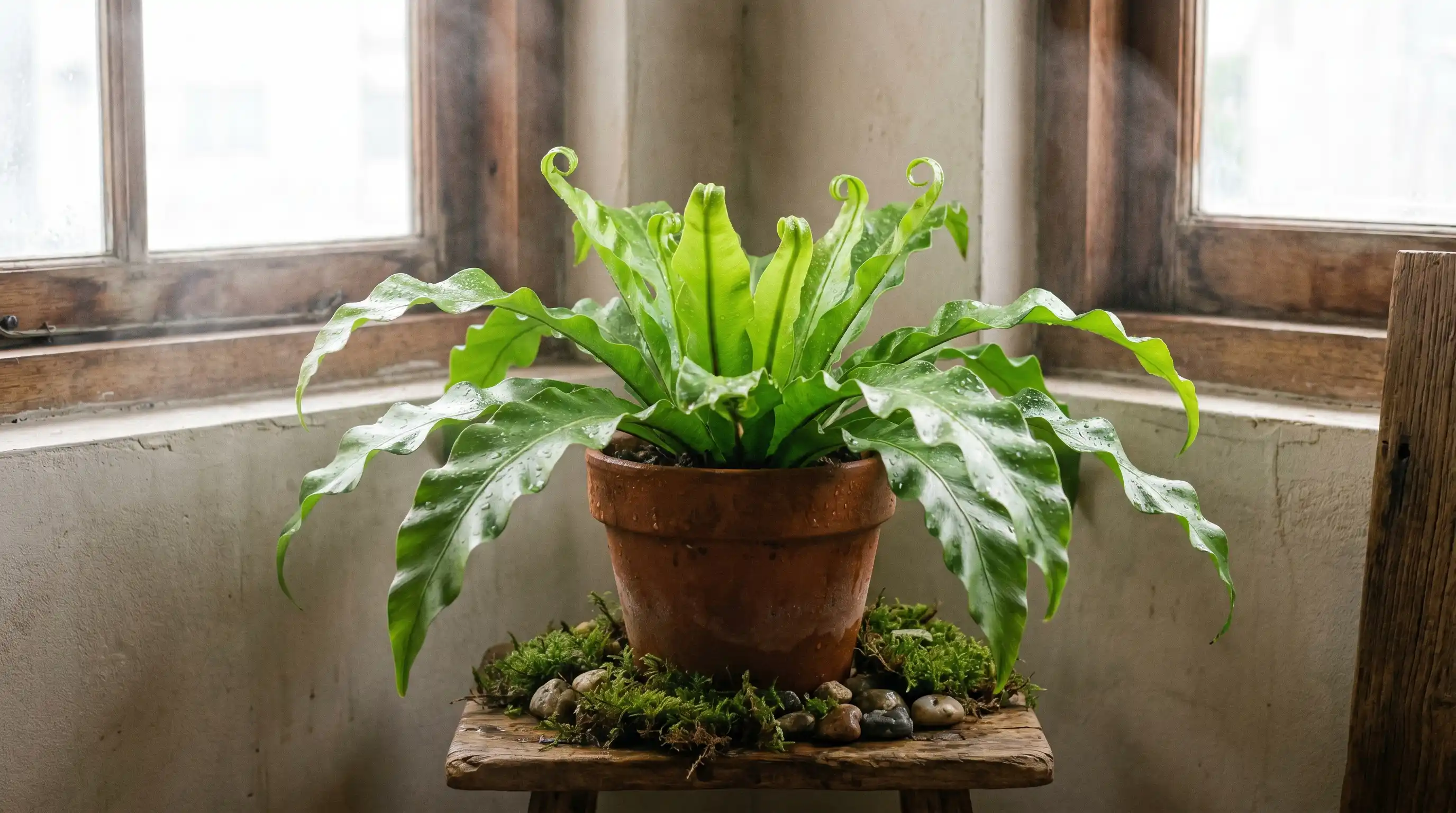
Bird’s nest ferns grow on tree trunks and get filtered light instead of direct sun. North window conditions are very similar to their natural habitat.
Care Tip: Humidity matters more than light for this plant. Group it with others or use a pebble tray with water beneath the pot to keep the surrounding air moist. Anything above 50 percent relative humidity keeps the frond edges from browning.
Toxicity: Non-toxic.
8. Spider Plant (Chlorophytum comosum)
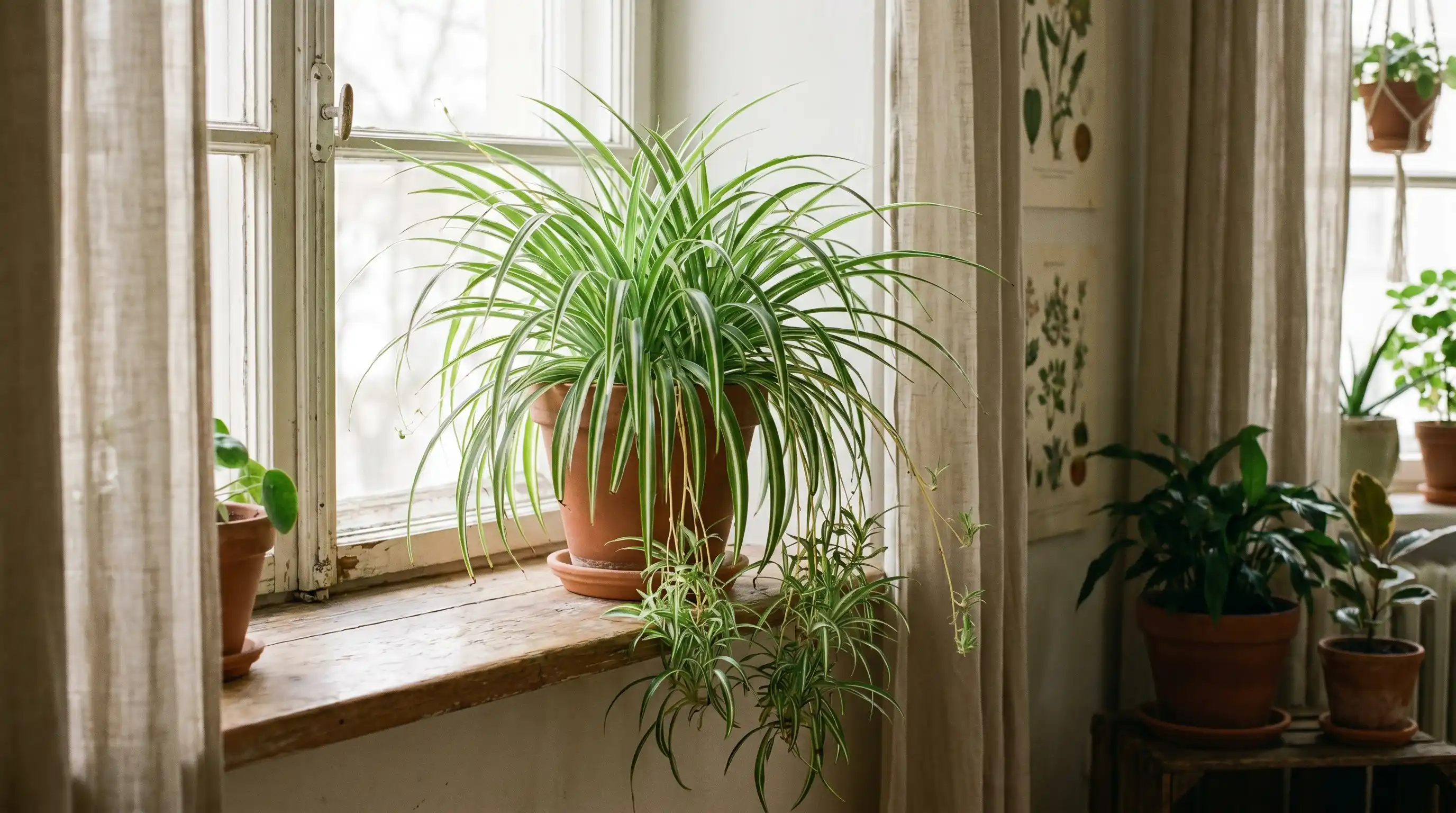
Spider plants are adaptable, non-toxic, and can handle irregular watering. Their low-light tolerance and pet safety make them a good choice for homes with curious pets. They’re also a great first houseplant for a north window.
Care Tip: Variegated varieties may fade to green in low light. Fully green varieties hold their color best.
Toxicity: Non-toxic.
Flowering Plants for North-Facing Windows
Most north window lists stop at foliage. These three actually bloom reliably in low-light conditions.
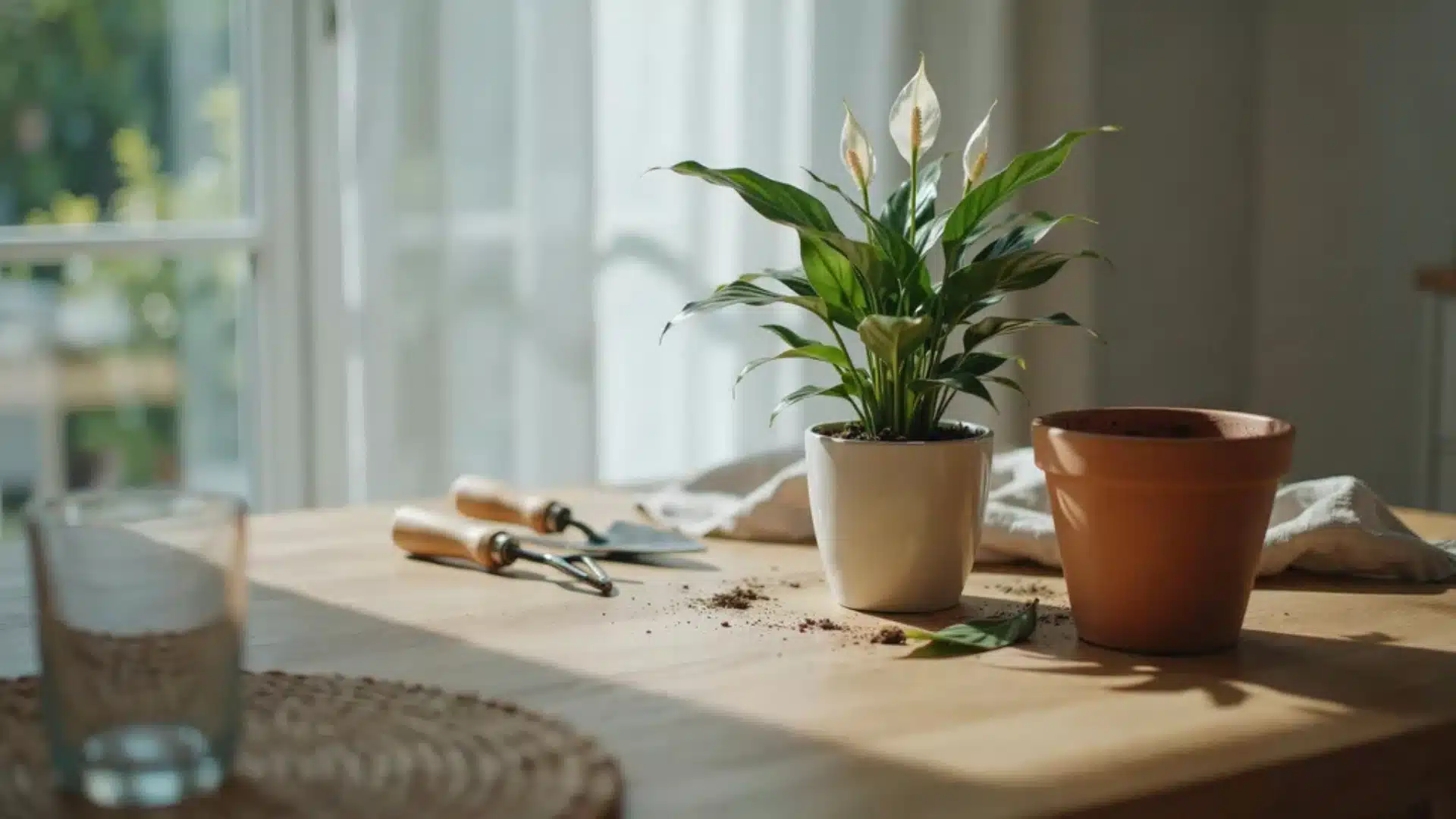
9. Peace Lily (Spathiphyllum wallisii)
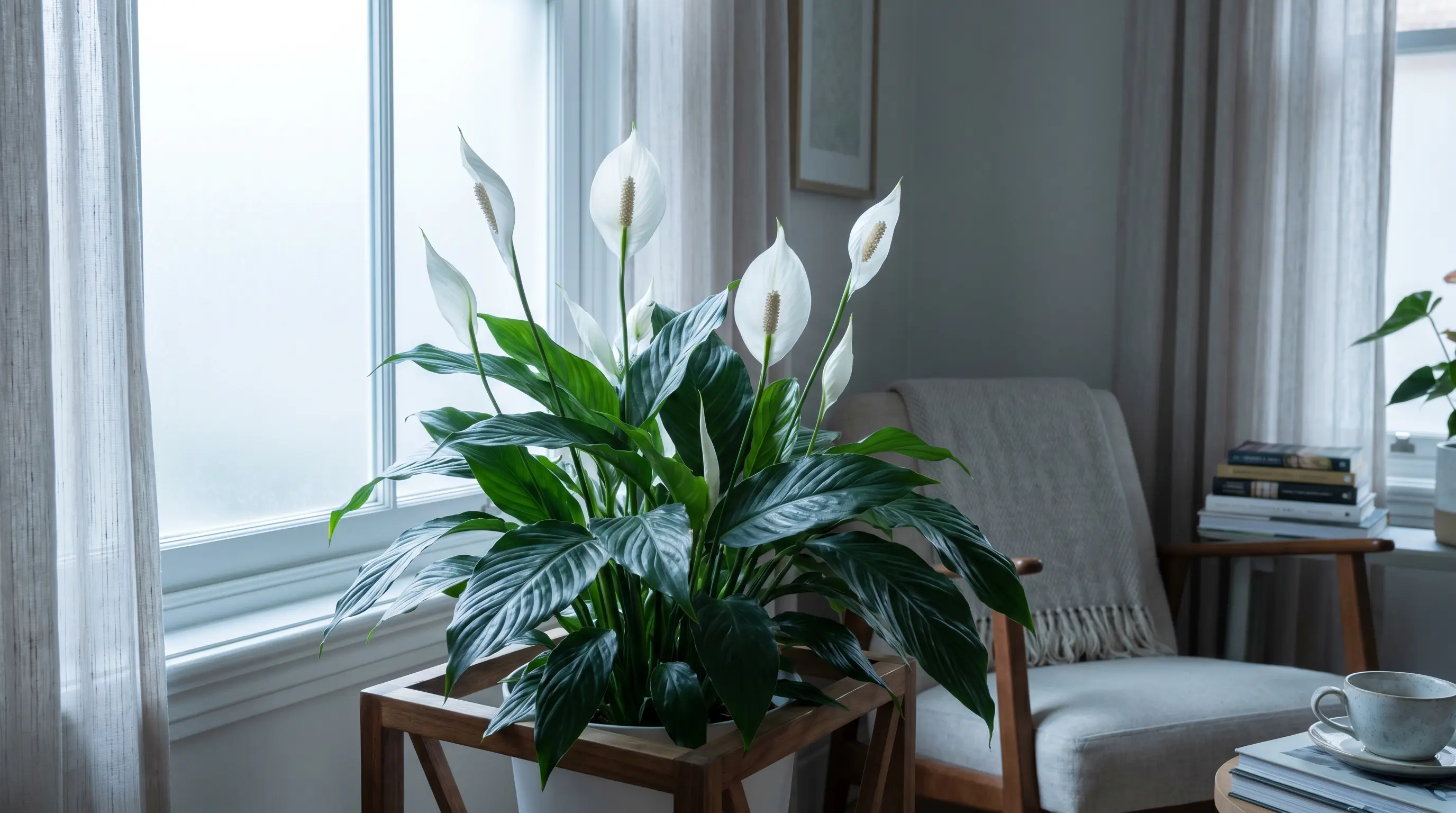
Peace lily is one of the few houseplants that will flower in a north-facing window. It won’t bloom as much as in a brighter spot, but it still does. Watch for brown leaf tips and yellowing, which usually mean it’s being watered incorrectly rather than not getting enough light.
Care Tip: Peace lily droops noticeably when it needs water. Use that signal rather than a fixed schedule. In low light, water every 10 to 12 days.
Toxicity: Toxic to pets and humans.
10. Phalaenopsis Orchid (Moth Orchid)
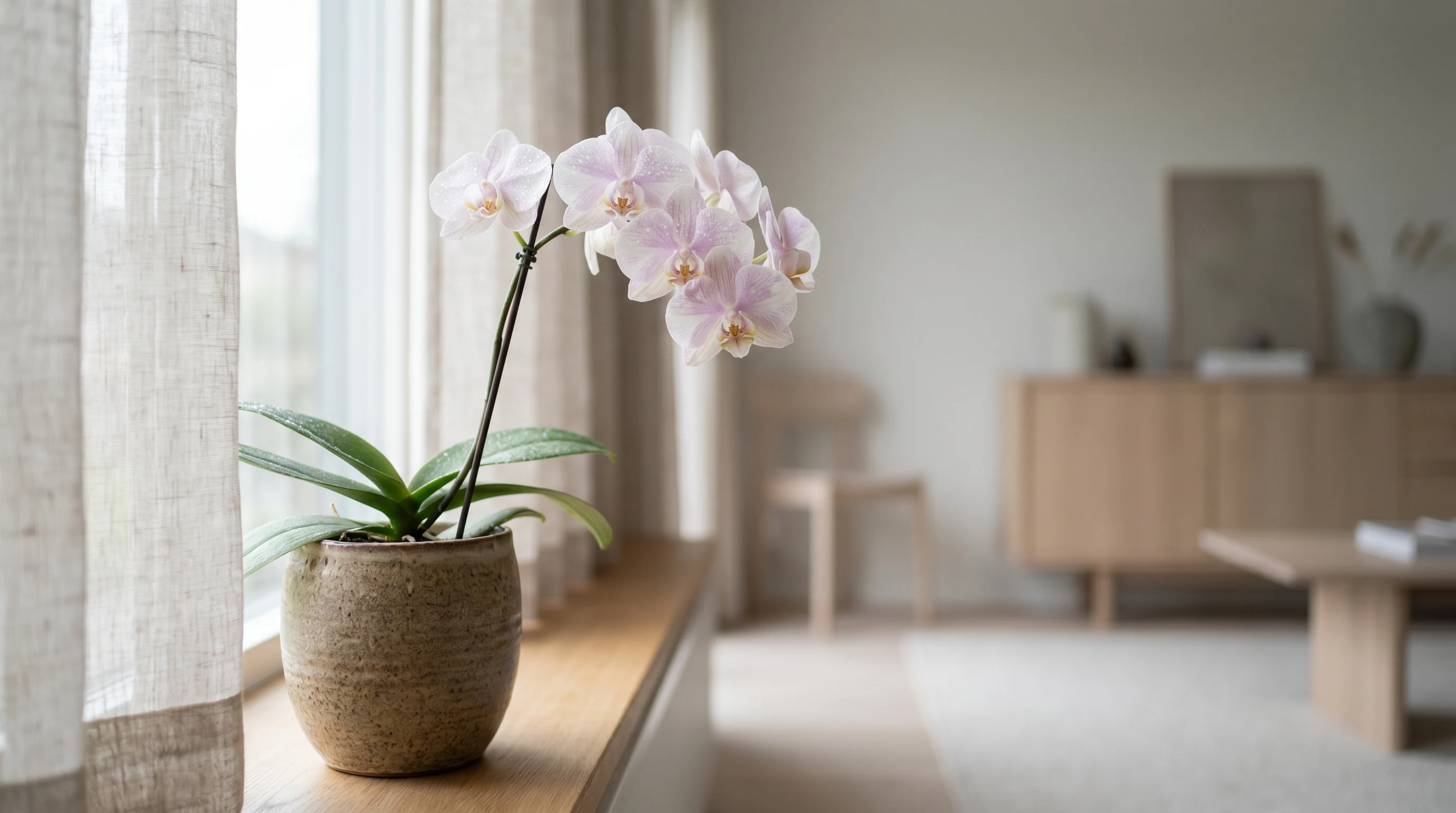
Phalaenopsis likes lower-intensity, indirect light, which makes it one of the few orchids that can do well in a north window.
There’s one thing to note about the bloom cycle: a north window will keep the flowers looking good for two to three months, but the plant usually needs a brighter spot, like an east window, to grow a new flower spike. Lowering the temperature to about 60°F at night for two weeks helps trigger new blooms.
Care Tip: Soak the pot fully, then drain completely. Root rot from standing water kills more of these than anything else.
Toxicity: Non-toxic.
11. Prayer Plant (Maranta leuconeura)
Prayer plants fold their leaves up at night and open them in the morning. This helps them catch light on low-light forest floors, so north windows are a good fit for them.
Care Tip: Keep soil consistently moist. Prayer plants do not want to dry out fully. Check them every five to six days.
Toxicity: Non-toxic.
How Light Works in a North-Facing Window
North-facing windows in the US receive no direct sun at any point during the day.
Unlike east or west windows that get direct morning or afternoon sun, north windows deliver consistent diffused ambient light from sunrise to sunset.
Light intensity in a north-facing window typically ranges from 25 to 200 foot-candles, depending on the season, outdoor obstructions, and room depth.
Two things affect north light most. The distance from the glass cuts the intensity fast. At a south window, three feet back is fine.
At a north window, three feet back can mean the difference between thriving and declining. Get plants as close to the glass as possible without touching cold panes in winter.
Season matters too. A north window in July and one in December are genuinely different environments, and winter is when these plants need the most support.
How North Window Light Changes Your Care Routine
North light changes how you care for every plant on this list. Here are five adjustments that cover most situations.
1. Plants grow and use water more slowly in low light, so the soil stays wet much longer than it would near a south window. Sticking to a fixed watering schedule is the most common way to kill plants in a north window. Checking the soil with your finger works better than following a calendar.
2. Don’t fertilize from October through February: Plants aren’t actively growing during the darker months, so feeding them just builds up mineral salts on the roots instead of helping them grow.
3. Rotate your plants every two weeks. Giving them a quarter-turn helps keep their growth upright and balanced, instead of leaning toward the light.
4. Clean the leaves once a month. Dust on the leaves and dirt on the window both reduce the light your plant gets. Wipe the leaves with a damp cloth once a month.
5. Move your plants closer to the window in the fall. Shift the pots right up to the glass in early October, as the days get shorter, before you see any signs of stress.
When a Grow Light Is Worth Adding
You don’t need a grow light for the plants on this list, but it’s helpful in three cases: if your window is blocked by a building or tree, if your light meter reads under 50 foot-candles at leaf height, or if you want to keep variegation during a Pacific Northwest winter.
You don’t need a special horticultural fixture for low-light plants. An LED bulb in a lamp you already have will work, as long as the specs are right.
- Color temperature: 4000K to 5000K. Warmer bulbs at 2700K look cozy but skew the spectrum, and 6500K reads cold and blue in a living room.
- CRI: 85 or higher, which indicates a fuller spectrum.
- Distance: within 12 to 24 inches of the leaves. Light intensity falls off fast with distance, so a bulb across the room does almost nothing.
- Run time: 10 to 14 hours a day on a plug-in timer. Consistency matters more than intensity for these species.
Use the grow light from October through March, then unplug it for the summer. That’s when north light drops below what these plants need.
Plants to Skip in a North-Facing Window
Knowing what not to plant here saves time and money.
1. Succulents and cacti need direct sun for most of the day. In north light, they stretch, the soil stays wet too long, and they rot at the base.
2. Herbs like basil, rosemary, and thyme require high light to produce the oils that give them flavor. A north window makes them leggy and bland. Use a south or east window instead.
3. Fiddle Leaf Fig (Ficus lyrata) drops leaves within weeks in north-facing conditions. This is the plant that helped me understand my window was the issue, not me.
4. Highly variegated varieties like pink aglaonema or neon pothos need bright indirect light to hold their color. In north light, they revert to plain green.
Conclusion
North-facing windows can work well. You just need to choose plants that are used to living in that kind of light.
Choose from this list, place your plants as close to the window as you can, and water less than you think you need to. Soil stays wet longer in low light, and making this one change will save more plants than anything else.
In October, move all your plants two feet closer to the window and decide if you need a grow light. If you want help with placement, leave a comment with your setup, and I’ll help you figure it out.
Frequently Asked Questions
Are north-facing windows okay for plants?
Yes, for low-light species. North windows give steady indirect light all day, which suits understory plants like ZZ, pothos, and snake plant. Sun-lovers will stretch and decline.
How far from a north window can a plant sit?
Within two feet for most plants on this list. Cast iron plant tolerates three to five feet. Past that, light drops below what these species can use.
Do north-facing windows get any direct sunlight?
No. In the continental US, a true north window receives no direct sun in any season. Light stays diffuse from sunrise to sunset, dimmer October through March.
Do I need a grow light for a north window?
Only if the window is obstructed or readings fall under 50 foot-candles. A 4000K to 5000K LED bulb, 12 to 24 inches away, 10 to 14 hours daily, covers it.