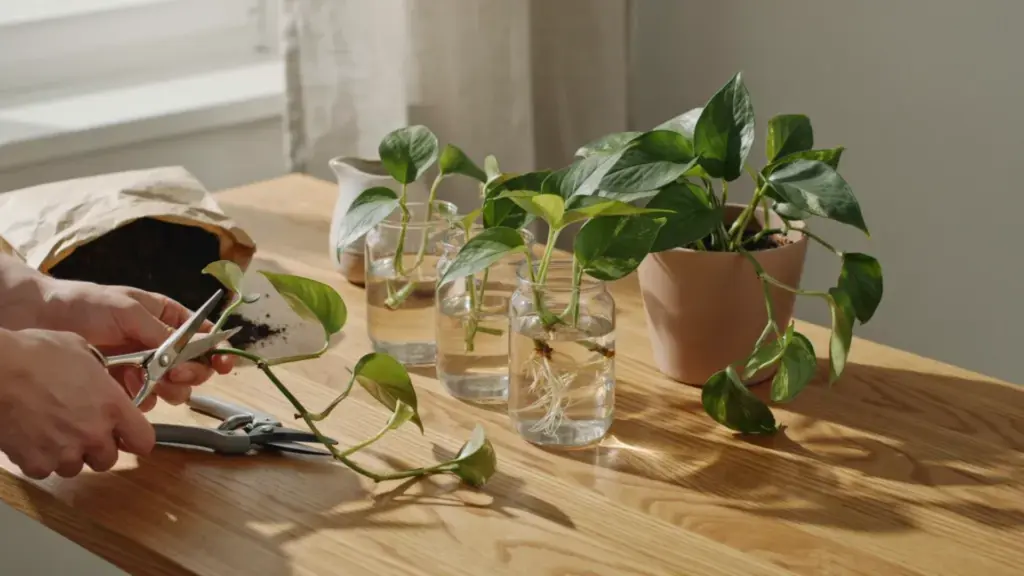
Seven years ago, I bought a pothos on a whim at the grocery store. Since then, it has grown into more than thirty new plants. Most of them didn’t come from a nursery—they started in jam jars on my kitchen windowsill in Portland.
Even after seven years, I still use water to propagate pothos because you can watch the process. Either the node swells and grows roots, or nothing happens, and you’ll know which it is within two weeks.
I’ll show you where to cut, what to expect during the first month, and what to look for if a cutting won’t root. One reason pothos are so popular is that propagating them costs almost nothing.
What You Need
Nothing specialized. Four things:
- You’ll need sharp scissors or a knife. A clean cut heals faster than a crushed one. Wipe the blades with rubbing alcohol before you start to prevent spreading disease between plants.
- Use a clear glass jar so you can watch the roots grow and notice cloudy water early. A jar with a narrow neck is helpful because leafy cuttings can get top-heavy and fall out of wide jars.
- Use room temperature water. Cold water from the tap can shock the cut end of the plant.
- Choose a healthy vine with firm stems and green leaves. A yellowing or limp vine won’t become healthy just because you cut it.
Where to Cut a Pothos Vine
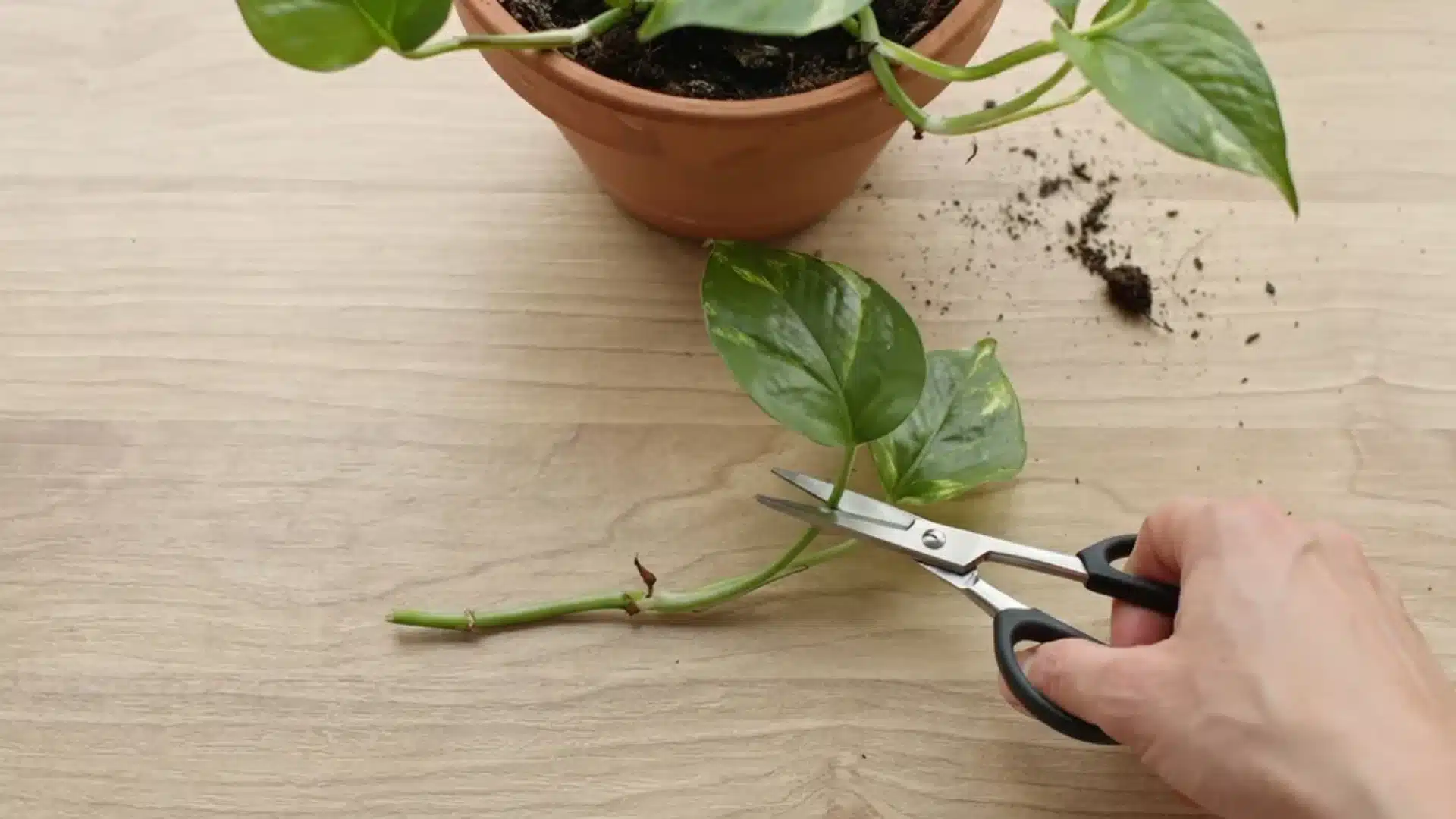
This step is important, so take your time with it.
Gently run the vine through your fingers. Every few inches, you’ll feel a slight bump where a leaf stem meets the main vine. That spot is the node, and roots only grow from nodes.
Most nodes have a small brown nub sticking out—sometimes it’s just a bump, other times it’s a short stub. This is an aerial root, which means the plant is already trying to root. Cuttings with a visible aerial root usually root faster than those without.
Cut about a quarter to half an inch below a node at a 45-degree angle. This angled cut helps the plant take up more water. Try to get a piece that’s 4 to 6 inches long, with two to four leaves and at least one node, or two if possible.
Avoid two common mistakes. If you pull off a leaf without any stem attached, it has no node and will never root. Also, a bare section of vine without a node is just a stick and won’t grow roots.
Leave at least a third of the original vine on the parent plant. It will branch out from where you cut it and fill in again. That’s why I take cuttings when my plant gets leggy, instead of treating pruning and propagating as separate tasks.
Step by Step
- Make the cut: A quarter inch below the node, angled, in one motion.
- Remove the bottom leaf: Any leaf that would be under the water should come off. Leaves left underwater will turn to slime in about a week and make the water dirty.
- Place the node fully underwater: The rest of the leaves should stay above the surface. At this point, that’s all you need to do.
- Put the jar in a warm spot withbright, indirect light. Cuttings root fastest between 65°F and 85°F. A few feet away from a south or west window is good. Avoid direct midday sun, as it can heat the water and cause algae.
- Change the water every week. Fresh water has more dissolved oxygen, which roots need just as much as they need light.
You can put several cuttings in one jar, as long as each node is under water and no leaves are touching the surface. I usually keep four or five cuttings in a jar and give away any extras.
How Long Does It Take to Root?
You’ll see the first white roots in 7 to 14 days. Roots will be long enough to pot—about 2 to 3 inches—after 3 to 8 weeks, depending on the conditions.
Three things affect how fast roots grow:
- Season: Cuttings taken in May root about twice as fast as those started in November. Winters in the Pacific Northwest are dim, and rooting speed depends a lot on daylight.
- Variegation: Plants with a lot of white, like Marble Queen and Manjula, root more slowly than plain golden pothos. Less green means less energy for growing roots.
- Warmth: A cutting on a cold windowsill in February might not grow for a month, but it can start rooting quickly in March even if you don’t change anything.
What Kind of Water to Use
Most people can use tap water. If your water is very hard, you might notice white mineral rings on the glass and slightly slower root growth.
The old advice is to let tap water sit overnight so the chlorine evaporates. That works for chlorine. It doesn’t work for chloramine, which roughly a third of US municipal systems now use instead, because chloramine is deliberately formulated to stay stable in the pipes and won’t off-gas from an open jar. Your water utility publishes which one it uses in its annual water quality report.
If your water has chloramine and you want to remove it, use a carbon filter pitcher. Distilled water also works. I’ve rooted pothos in regular Portland tap water for years without any problems, and most houseplants do fine with tap water. The only water to avoid is from a salt-based softener, because the extra sodium can build up and damage the cut end.
When a Cutting Will Not Root
If a cutting has been sitting for a month without rooting, it usually has one of these problems.
No node:Check first. This is the most common failure and the easiest to miss on a long trailing piece.
Cloudy or green water: Bacteria compete with the cutting for oxygen. Pour out the water, rinse the jar, and refill it with fresh water.
A leaf below the waterline: If you notice a soft, mushy stem and a sour smell, this is likely the cause. Remove the affected part and start over with fresh water.
Too little light. A back corner of a room isn’t enough. Cuttings need to photosynthesize to build roots.
Yellowing leaves: This can be caused by old water, too much direct sun, or rot at the base. If the parent plant’s leaves are also yellowing, the problem is usually with watering, not the cutting.
If the stem is still green and firm, don’t throw it away. I’ve had cuttings sit for six weeks before rooting. But if the stem is soft, brown, and collapsing, it’s done for and won’t recover.
Moving Your Pothos Cutting to Soil
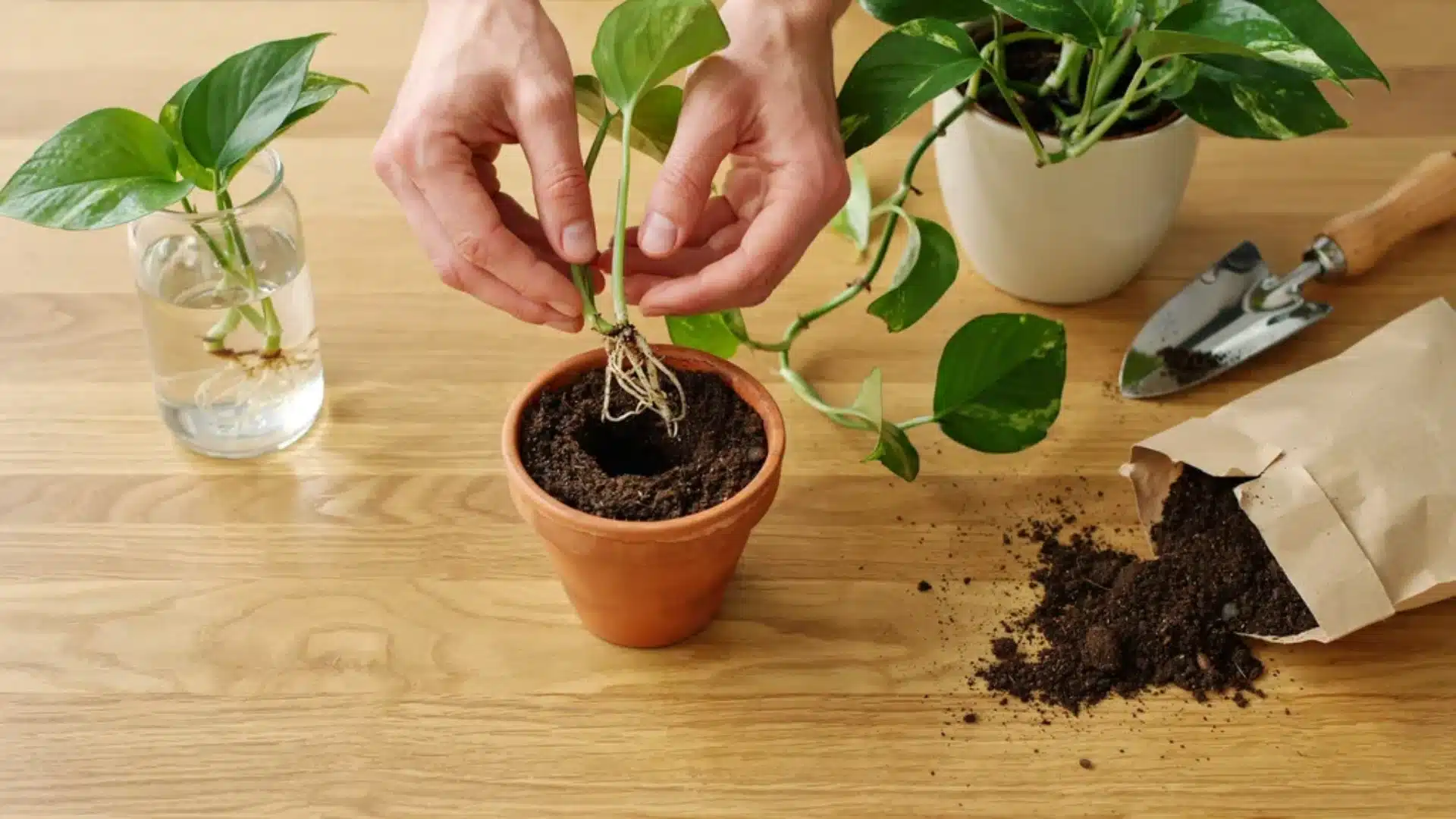
Move the cutting to soil when the roots are 2 to 3 inches long. Water roots are thinner and more fragile than soil roots, and the longer they stay in water, the harder it is for them to adjust. If a cutting stays in water for six months, it may lose some leaves after potting as it grows new roots.
- Use a pot with drainage holes; 4 inches across is plenty for one cutting.
- Fill with a well-draining potting mix.
- Plant so all the roots are covered, and no leaf sits on the soil.
- Water thoroughly and return it to bright indirect light.
- Keep the soil lightly moist for two weeks, then water normally.
Three or four cuttings. Planting three or four cuttings in one pot will give you a full-looking plant right away, instead of just one thin vine. This method works for most houseplants that root from stem cuttings.n Water Permanently
Can Pothos Live in Water Forever?
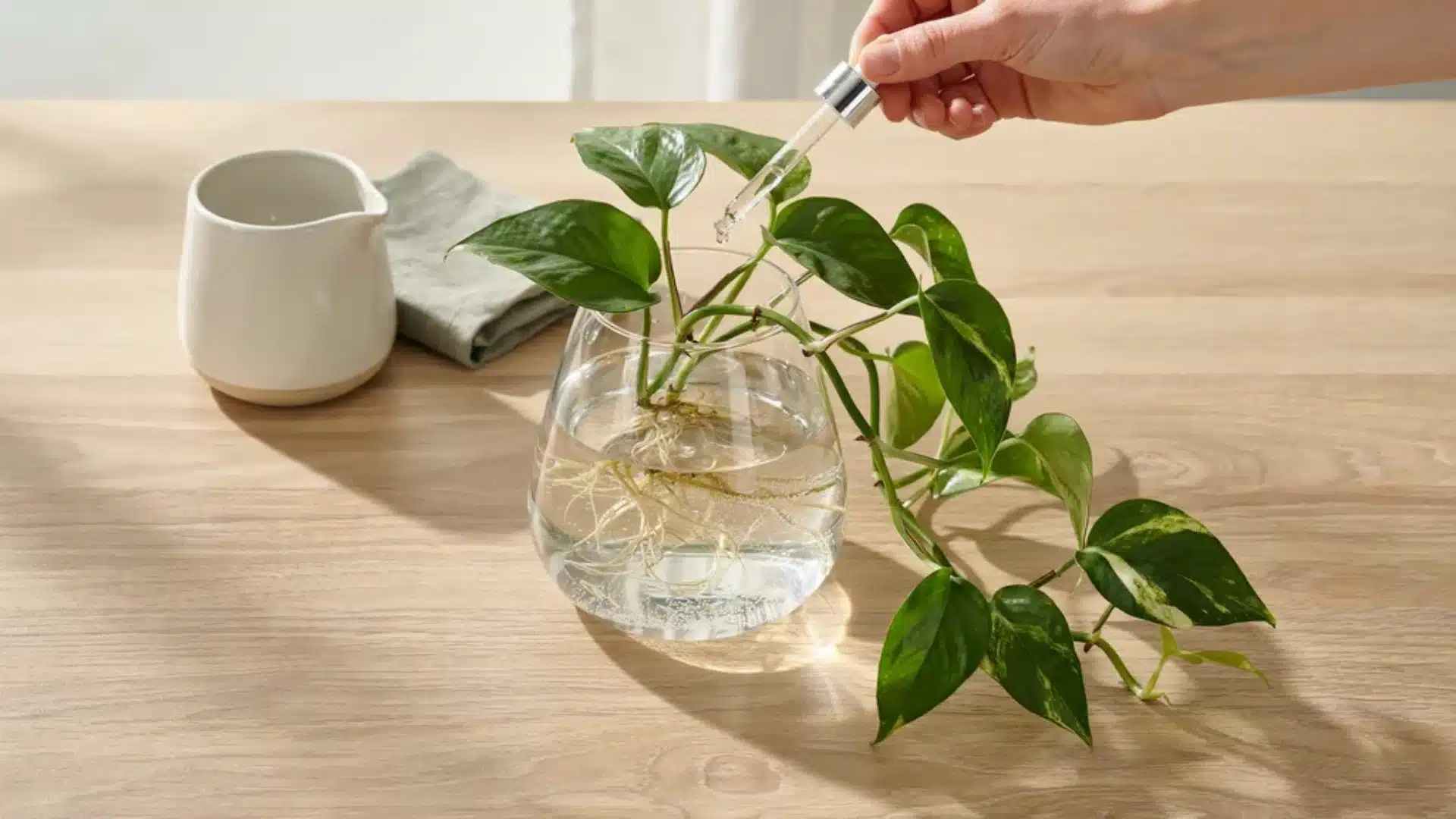
Yes, you can. I have a jar on my bookshelf that’s been growing pothos for four years. Plants in soil and leaves stay smaller, since water holds no nutrients. Add a quarter-strength liquid houseplant fertilizer once a month, change the water weekly, and keep it in the same bright indirect light a potted plant would want.
The tradeoff is that once a cutting has been in water for a year, it usually doesn’t move to soil very well. So, decide early if you want to keep it in water or plant it in soil.
Try taking a cutting this week and write the date on the jar. In two weeks, you’ll know if you picked a good node, and that experience will teach you more than any guide.
Frequently Asked Questions
What is the fastest way to propagate pothos?
The fastest way is to use water in spring or summer, with a cutting that has a visible aerial root on the node. Keeping it warm (above 70°F) and in bright, indirect light will help it root even faster.
Is it better to propagate pothos in water or soil?
Water helps roots grow faster and lets you see the progress. Soil takes longer but avoids transplant shock. Water is usually easier if you’re trying this for the first time.
Are pothos illegal to propagate?
No, not for ordinary varieties. Propagating a patented cultivar for sale infringes US plant patent law. Propagating any pothos for yourself is legal.
Do coffee grounds help pothos?
Don’t use coffee grounds in a propagation jar. Used grounds add nitrogen slowly to potting soil, and pothos is one of the houseplants that likes coffee grounds in moderation.