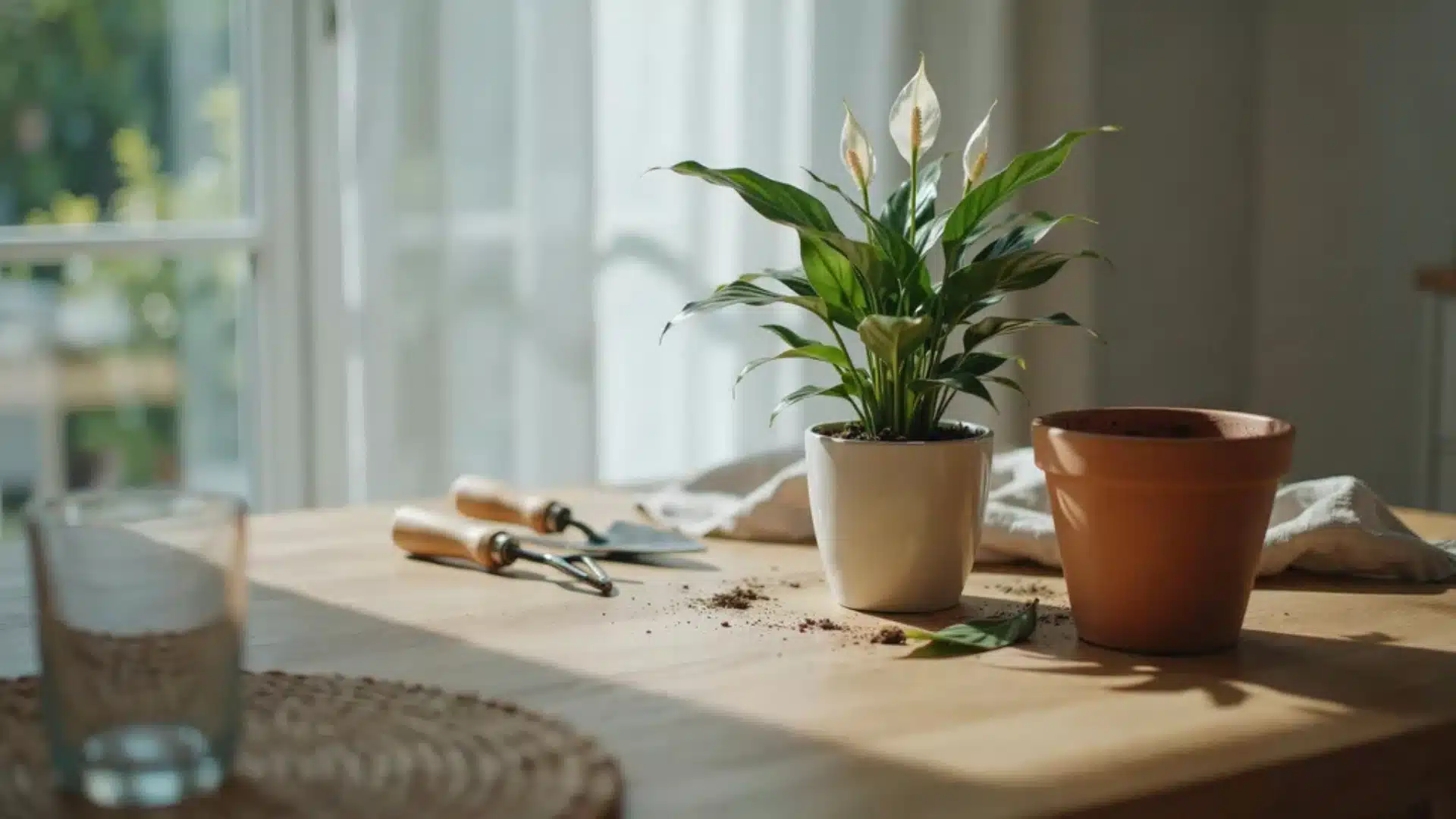
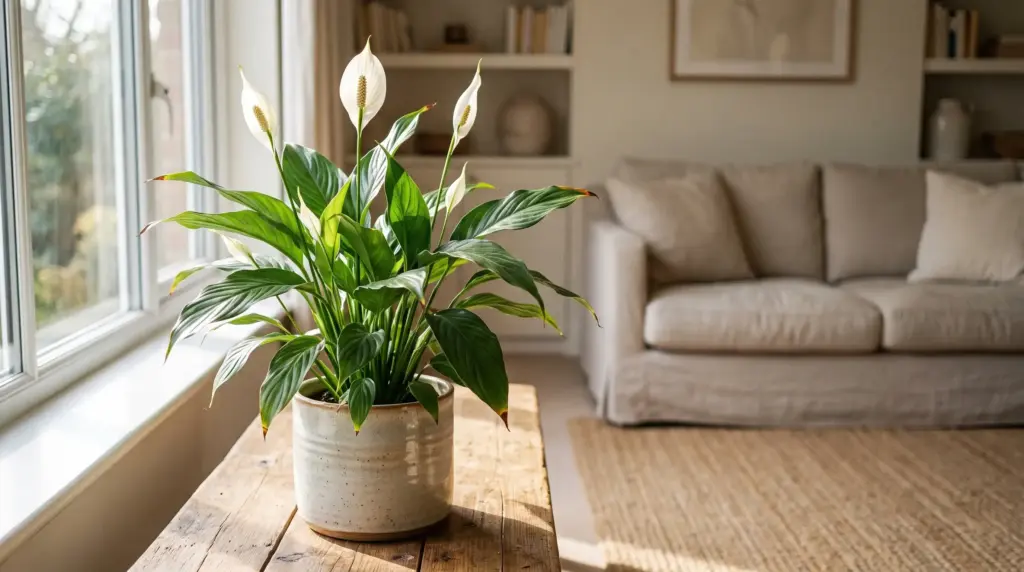
Brown tips on peace lilies usually happen because of fluoride and salts in tap water, low indoor humidity, fertilizer buildup, or simply old leaves. Use distilled or filtered water, flush the pot, and trim off the dead parts. Once a leaf turns brown, it will not turn green again.
My peace lily had brown tips all winter before I figured out the cause. Portland tap water was not to blame.
Bull Run water is only 3 to 8 ppm hard, and the city doesn’t add fluoride, so I ruled out the water right away.
The real problem was my bedroom space heater, which was six feet from the plant and dropped the humidity to about 22 percent.
This problem can be frustrating because the leaves look the same no matter which of the six causes is to blame, and treating the wrong one can waste weeks.
By looking at the browning pattern, you can figure out the real cause. Here, I’ll explain all six causes, how to tell them apart by looking at the leaves, and how to trim the damage without making things worse.
What the Browning Pattern Tells You
Check where the brown appears on the leaf and how clearly it stops. That edge gives you most of the clues you need.
| What You See | Where It Appears | Most Likely Cause |
|---|---|---|
| Crispy, dry tips | Very tip of the leaf only | Tap water buildup or low humidity |
| Brown along full margins | Tip and both leaf edges | Fertilizer salts or poor drainage |
| Irregular brown patches | Mid-leaf or random spots | Direct sun or heat scorch |
| Full leaf going brown | Starts yellow, then turns brown | Overwatering or root rot |
| Only old bottom leaves | Lowest leaves only, center growth clean | Normal aging, no fix needed |
Usually, one pattern will match your plant. Begin by looking for that.
Why Peace Lily Tips Turn Brown
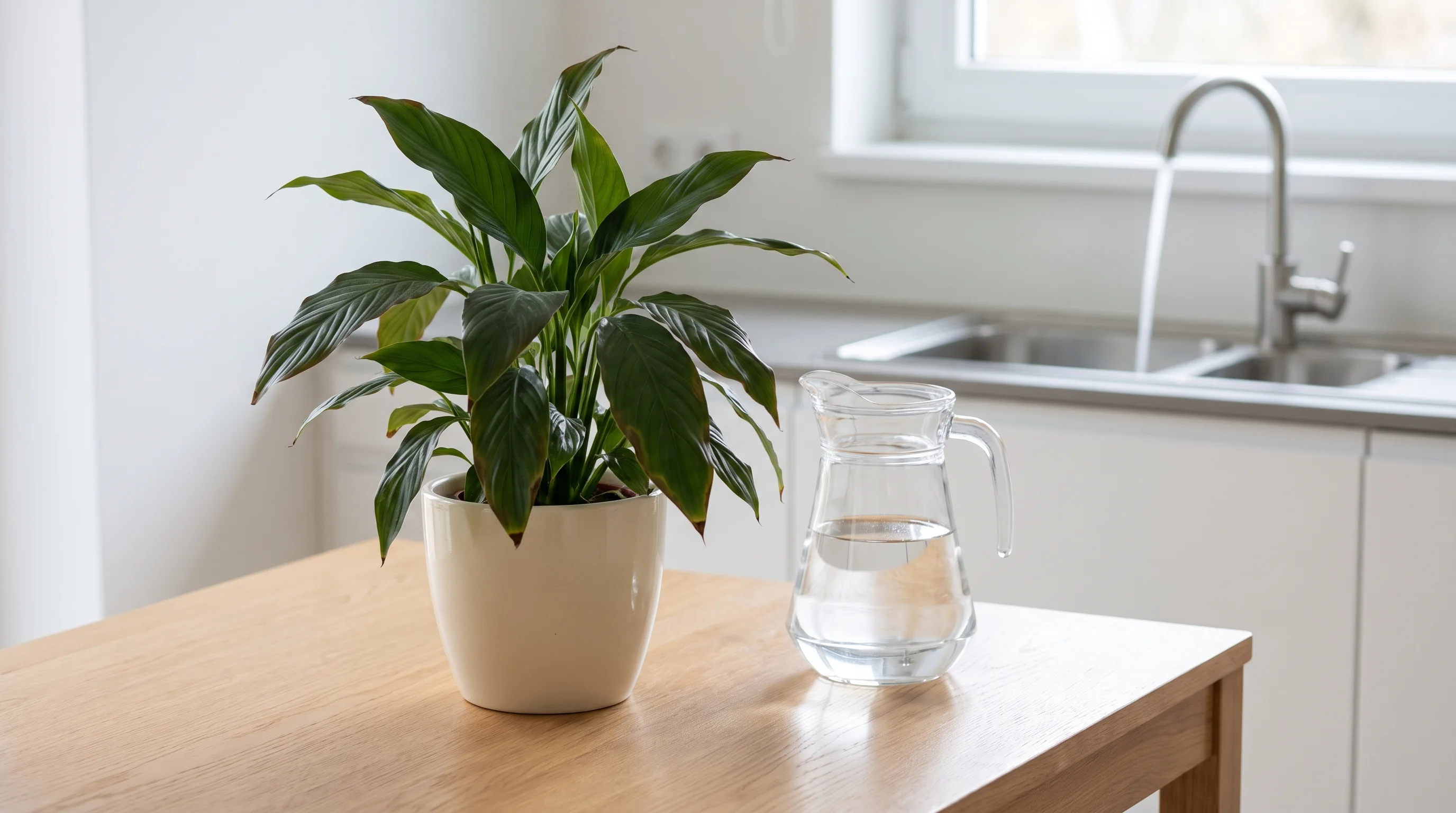
1. Fluoride and Salts in Tap Water
Spathiphyllum sits on the short list of houseplants that Michigan State University Extension flags as sensitive to fluoride in municipal water.
Fluoride moves up through the plant in the transpiration stream and collects in the leaf margins, where it kills tissue from the tip inward.
Oregon State’s Pacific Northwest handbook describes the same pattern: marginal and tip necrosis spreading inward, and it notes that salt toxicity and drought stress look nearly identical.
Softened water is worse. Ion-exchange softeners swap calcium and magnesium for sodium, and sodium does more root damage than fluoride does. If your house runs on a softener, that tap is off limits for this plant.
Use distilled water, reverse osmosis water, or rainwater for your peace lily. Every two or three months, flush the pot with clean water—use two to three times the pot’s volume—and let it drain completely.
Letting tap water sit out overnight does not solve the problem. Chlorine will evaporate, but fluoride will not. Many US utilities now use chloramine for disinfection, which also stays in the water. Portland is one of these cities.
2. Dry Indoor Air
Peace lilies prefer 50 to 60 percent humidity. Most US homes drop to 20 to 35 percent when the heat or air conditioning is on.
Get a hygrometer for about $10 to $15 at a hardware store to check your room’s humidity. If it’s below 50 percent, use a cool-mist humidifier. Grouping plants on a pebble tray can help a bit by raising humidity through shared transpiration.
Don’t bother misting. It only raises humidity for about 90 seconds and can leave water on the leaves, which may cause bacterial spots.
3. Watering That Swings
Both overwatering and underwatering can cause brown tips, and at first, they look the same. Lift the pot to check its weight—this tells you more than just looking at the leaves.
A dry plant feels light, droops all over, and its soil has shrunk back from the sides of the pot. An overwatered one feels heavy, holds water for five days or more, sometimes smells musty at the root zone, and browns at the tips while its lower leaves go yellow at the same time. That yellow-then-brown sequence is the tell.
In the long run, water your plant based on how much light it gets and the season, not by following a set schedule.
4. Fertilizer Salt Buildup
Fertilizer salts draw moisture out of the leaf tips, which are farthest from the roots, so they dry out first. Check for a white crust on the soil or the inside rim of the pot. If you see it, it’s time to flush the soil.
University of Florida researchers testing tip necrosis in Spathiphyllum ‘Petite’ found the damage tracked with fertilizer rate, temperature, and watering frequency together rather than any one of them alone. Some cultivars are simply more prone to it than others.
Fertilize at half strength once a month from March to August. Don’t feed in fall or winter. Peace lilies don’t need much fertilizer.
5. Direct Sun and Heat
Peace lilies naturally grow on the forest floor, where a canopy blocks most direct sunlight. A south or west window in July gives them much more sun than they can handle, and midday sun through glass can get hot enough to scorch the leaves in just a few hours.
The giveaway is one-sided damage: brown patches on the side facing the window, often with the green bleached pale around them.
Move your peace lily away from the window or use a sheer curtain. In most US homes, a north or east window gives the right amount of light.
Also read: Peace Lily Light Requirements: How Much Light Do They Actually Need
6. Old Leaves Doing What Old Leaves Do
Each peace lily leaf only lasts so long. The oldest leaves at the bottom turn brown at the tips and die back as the plant puts energy into new leaves in the center.
Look at the new leaves. If they look healthy and only one or two bottom leaves are turning brown, there’s nothing to worry about. Just cut those leaves off at the base and move on.
How to Trim Brown Tips
Trimming is just for looks. It gets rid of dead tissue so your plant looks better while it grows new leaves, but it does not fix the real problem.
- Clean your scissors with rubbing alcohol before trimming. This keeps bacteria from getting into the fresh cut.
- Cut along the natural curve of the leaf. If you cut straight across, it will look like damage even from far away.
- Leave a small bit of brown, about a sixteenth of an inch. If you cut into the green part, it will just turn brown again as it heals.
- If more than half the leaf is brown, cut the whole leaf off at the base.
- Don’t remove more than 20 to 30 percent of the leaves at once. Taking off too much at once can slow the plant’s recovery.
Fix the main problem before you trim. If you don’t, new tips will turn brown again in a week or two.
Frequently Asked Questions
Will brown tips turn green again?
No. That tissue is dead and stays dead. Judge your fix by whether new leaves emerge clean, not by whether damaged ones improve.
Should you water a peace lily from the top or the bottom?
Top watering, until it drains freely. It flushes salts on the way through. Occasional bottom watering is fine for rehydrating soil that has gone water-repellent.
What does an overwatered peace lily look like?
Heavy pot, soil wet for days, lower leaves yellowing before they brown, and sometimes a musty smell. Drooping alone points to thirst instead.
Are brown tips and yellow leaves the same problem?
Not usually. Tips point to water quality, humidity, or salts. Whole leaves yellowing points to root conditions, light, or age.
Does a peace lily with brown tips need repotting?
Only if the soil is compacted, salt-crusted, or 18 months old. Repotting a healthy rootball adds stress without addressing the cause.