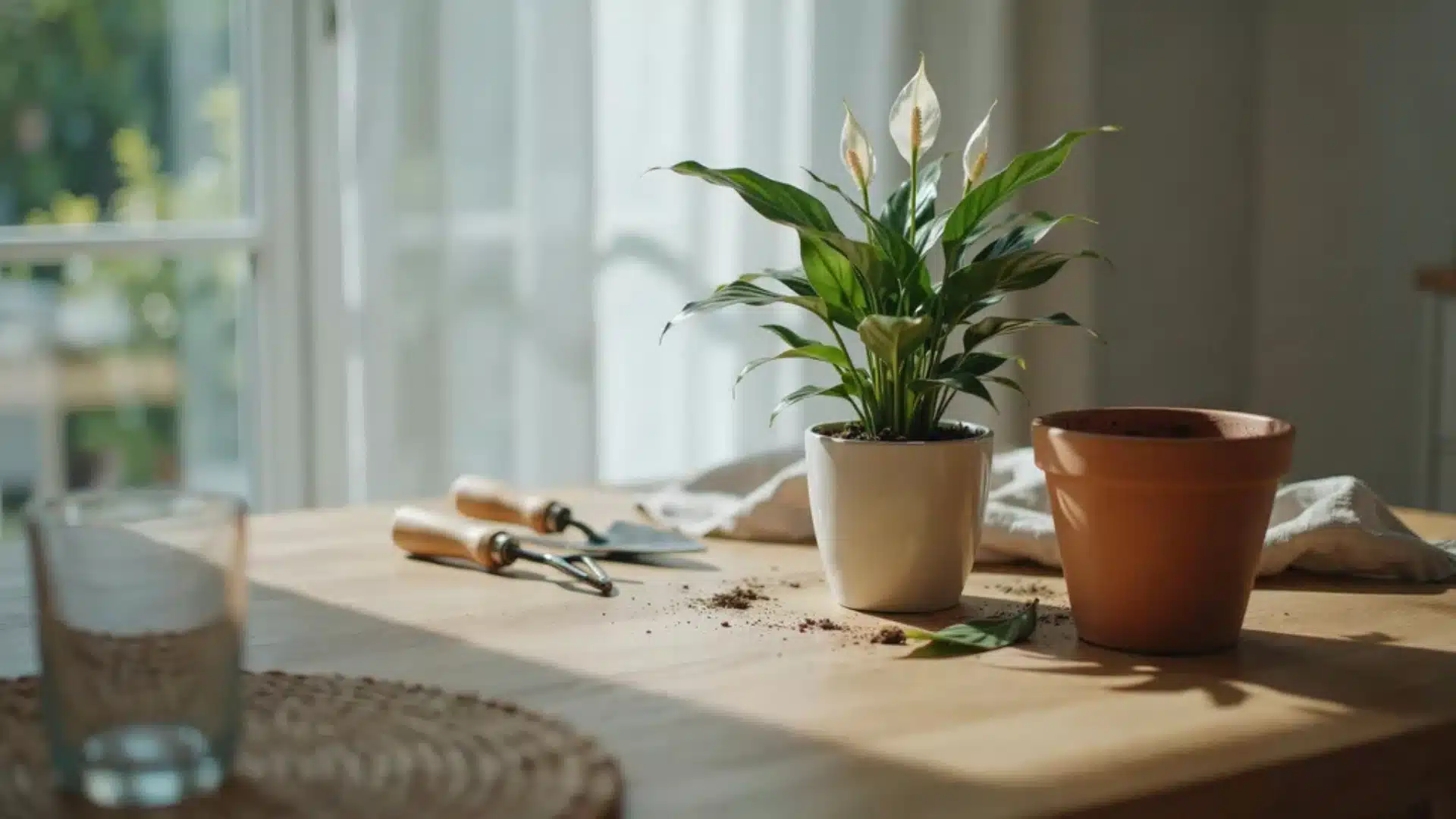
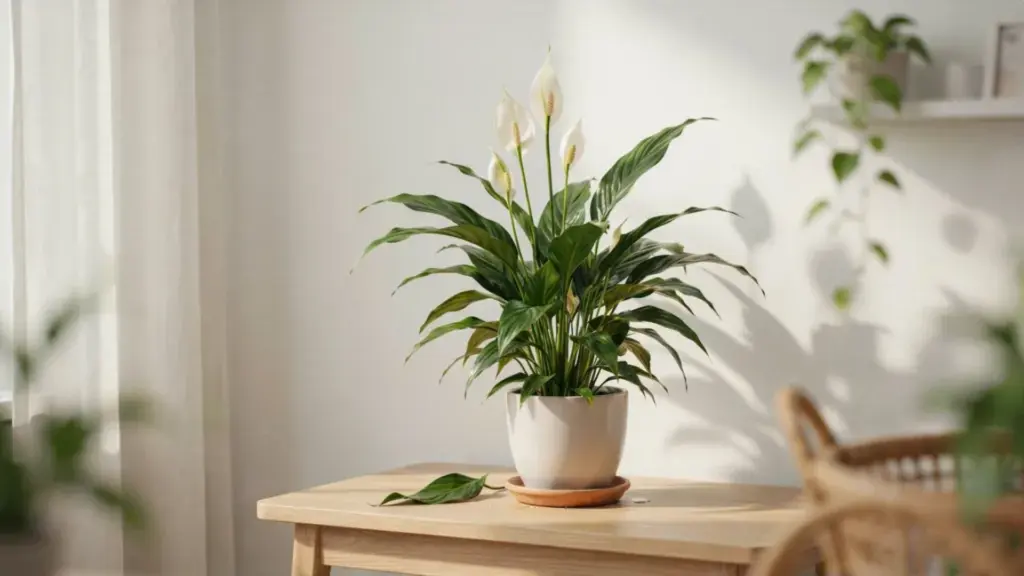
One of the peace lilies in my Portland apartment spent its whole first year parked in a dim hallway corner. It survived. It just never bloomed once.
Peace lilies tolerate low light. That’s true. But tolerating a spot and thriving in it are two different things.
Get the lighting right, and your peace lily will reward you with clean, white blooms and rich green leaves.
Get it wrong, and you will spend months trying to fix a problem you did not know you caused.
This post covers how much light a peace lily actually needs, what direct versus indirect light means in practice, the best window to use, and how to read the signs when you’ve got it wrong.
The “Low-Light Plant” Label Is Misleading
Peace lilies are sold everywhere as low-light houseplants. That label is not wrong, but it tells only half the story.
Low-light tolerant means the plant will not die quickly in a dim room. It does not mean that dim light is good for it.
Peace lilies are native to the floor of tropical rainforests in Central and South America. In that environment, sunlight filters down through a thick canopy of trees above.
The plants never get direct sunlight. But they do get consistent, soft, bright light for several hours each day.
That is the condition you are trying to copy indoors.
A peace lily kept in a genuinely dark corner will grow slowly. It will not bloom. Over time, the leaves may stretch and look thin. The plant is alive, but it is not doing well.
How Much Light Does a Peace Lily Actually Need?
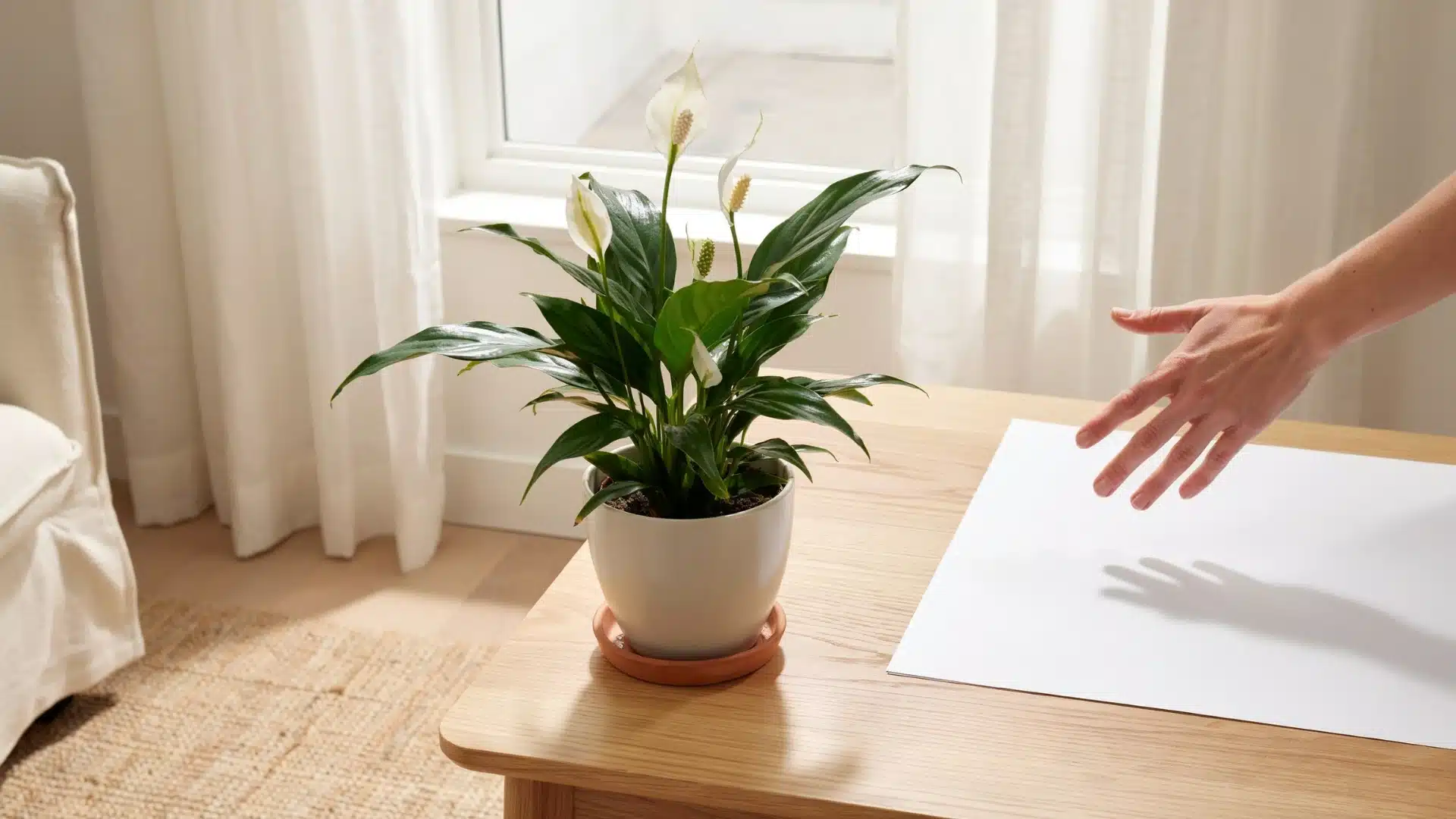
Here is the short answer: bright, indirect light for at least 2 to 4 hours per day.
That is the minimum for healthy foliage. If you want white blooms, aim for 6 or more hours of bright indirect light daily.
To put numbers to it: peace lilies do best in a range of 10,000 to 15,000 lux. You do not need a lux meter to check this. A simpler test is to hold your hand about a foot above a white sheet of paper.
If you can see a faint but clear shadow, the light level is close to right. No shadow at all means it is too dark.
Light is the detail that makes or breaks this plant. Get it right, and everything else about care gets easier.
Direct Sun vs. Indirect Light: What Is the Real Difference?
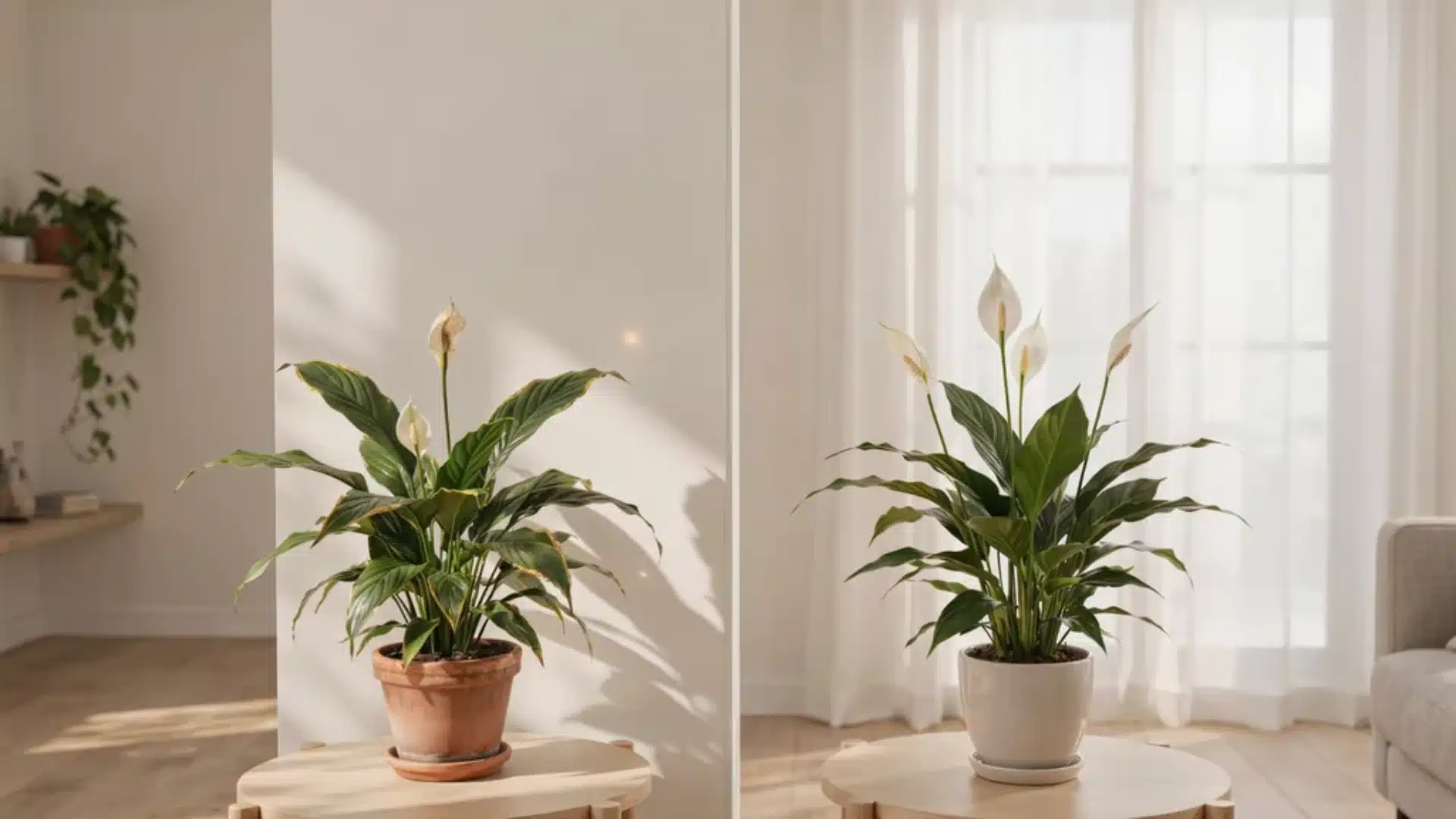
This is where a lot of people get confused. Let’s clear it up.
Direct sunlight means the sun’s rays are hitting the plant’s leaves without anything in between. You can tell because you will see a bright patch of sunlight sitting on the leaves.
Indirect light means the room is bright, but no direct sunlight reaches the plant. This includes light reflected off walls or buildings, light softened by a sheer curtain, and early morning light from an east window.
Direct afternoon sun is too intense for a peace lily. It will scorch the leaves within hours, especially in summer. Afternoon sun through a south or west window is the most common cause of burned, brown patches on peace lily leaves.
Morning sun from an east window is softer and usually safe unless it is peak summer, when even morning light can get strong by mid-morning.
Best Spots in Your Home for Peace Lily
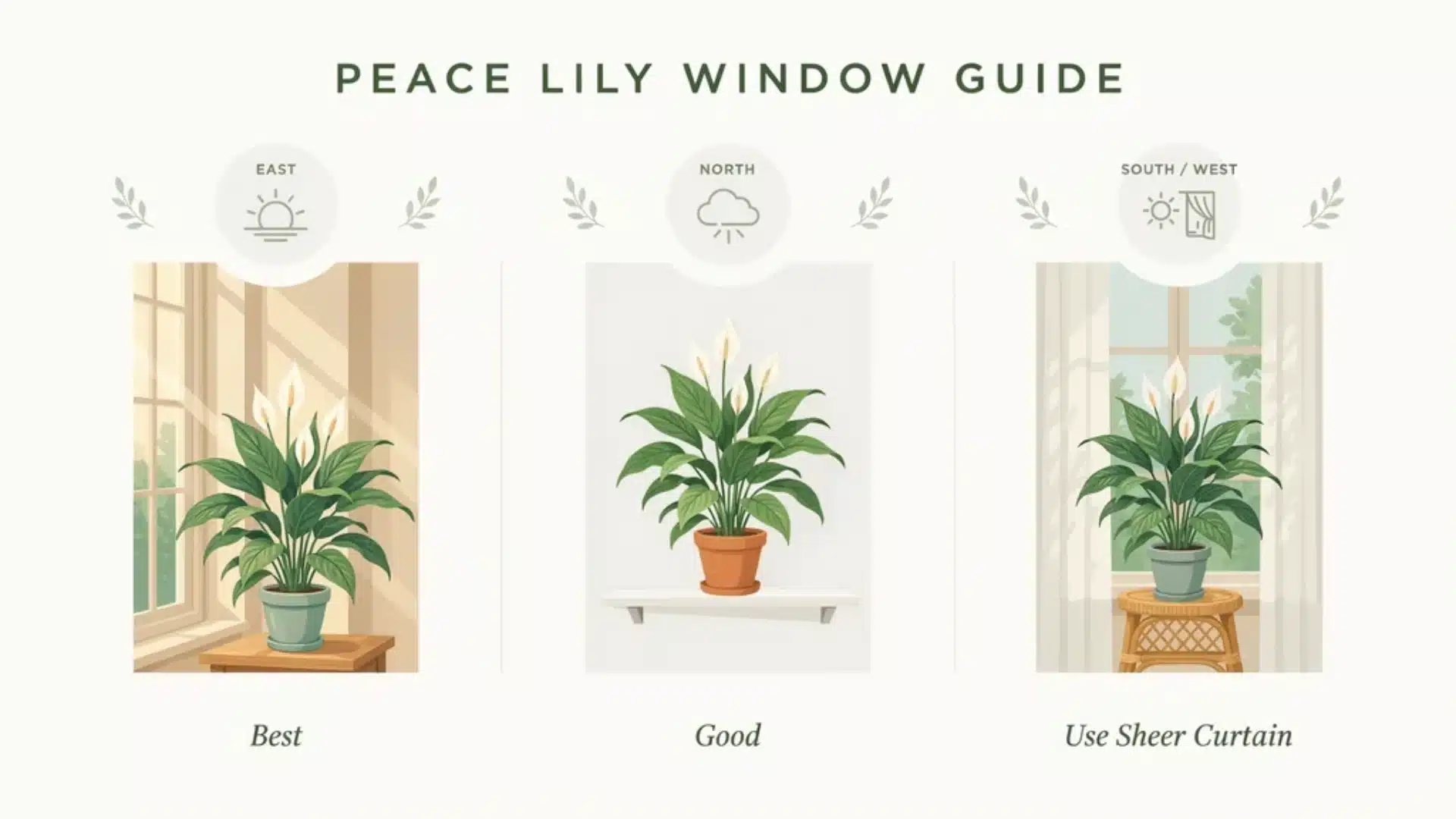
Pick your placement based on which direction your window faces.
- East-facing window: The best option. Soft morning light, safe from harsh afternoon rays.
- North-facing window: Works well. Provides diffused light all day with no risk of direct sun.
- South or west-facing window: Can work, but you need a sheer curtain to filter the light. Without it, direct sunlight will damage the leaves.
If you live somewhere with very intense sunlight, place the plant a foot or two back from the window rather than right on the sill.
Avoid placing a peace lily more than 8 feet from any window. Beyond that distance, light levels drop fast.
Signs Your Peace Lily Is Getting Too Much Light
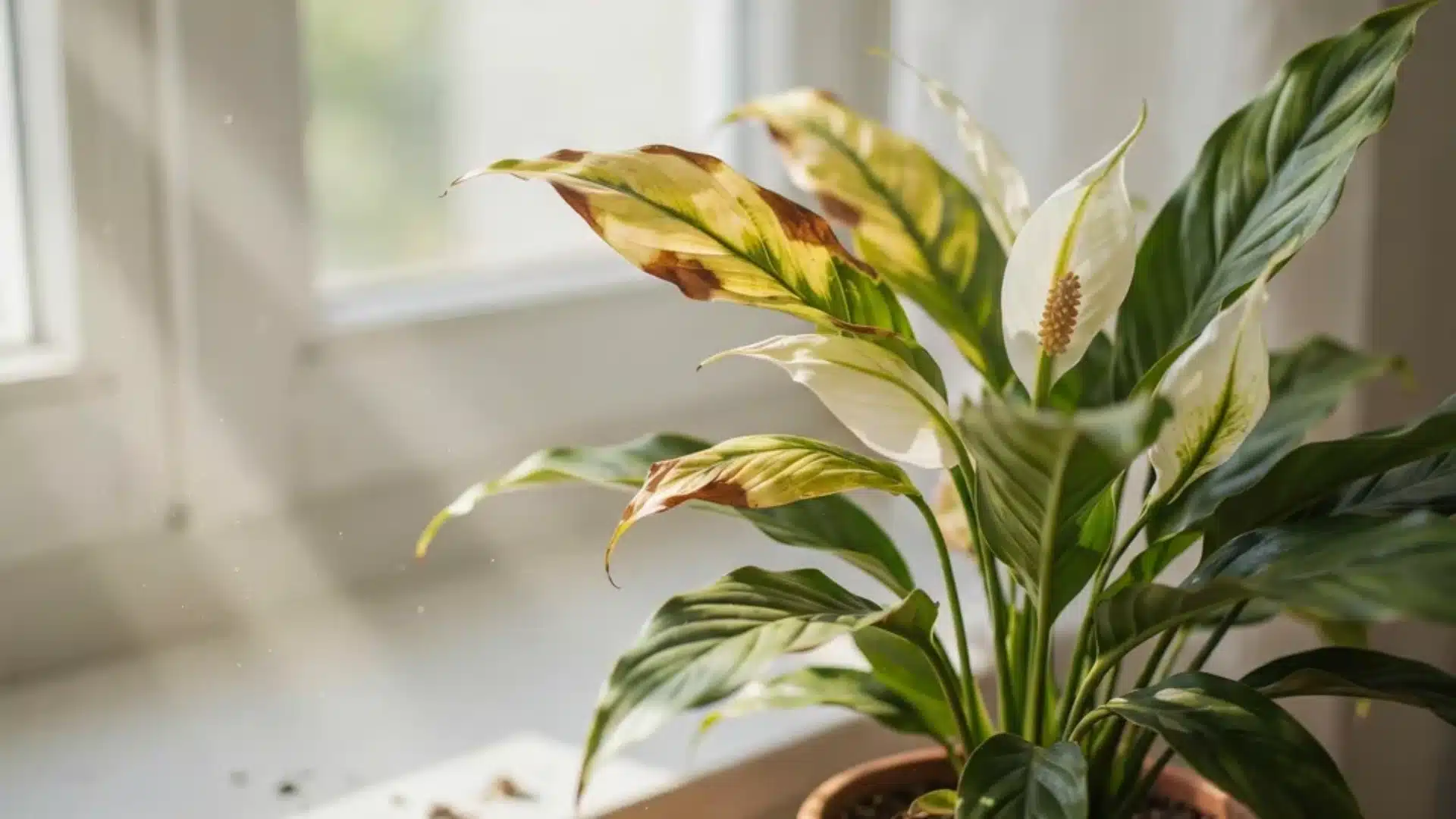
Your plant will show you when something is off. I moved one of mine into a south-facing window one August and had scorched leaf edges within three days.
These are the signs of too much light:
- Yellow patches or brown, crispy spots on the upper surface of the leaves
- Curling or cupping of new leaves
- White flowers turning green faster than normal
- Leaf edges that look bleached or washed out
If you see these signs, move the plant to a spot with filtered or softer light. If you cannot move it, hang a sheer curtain between the plant and the window.
Signs Your Peace Lily Is Not Getting Enough Light
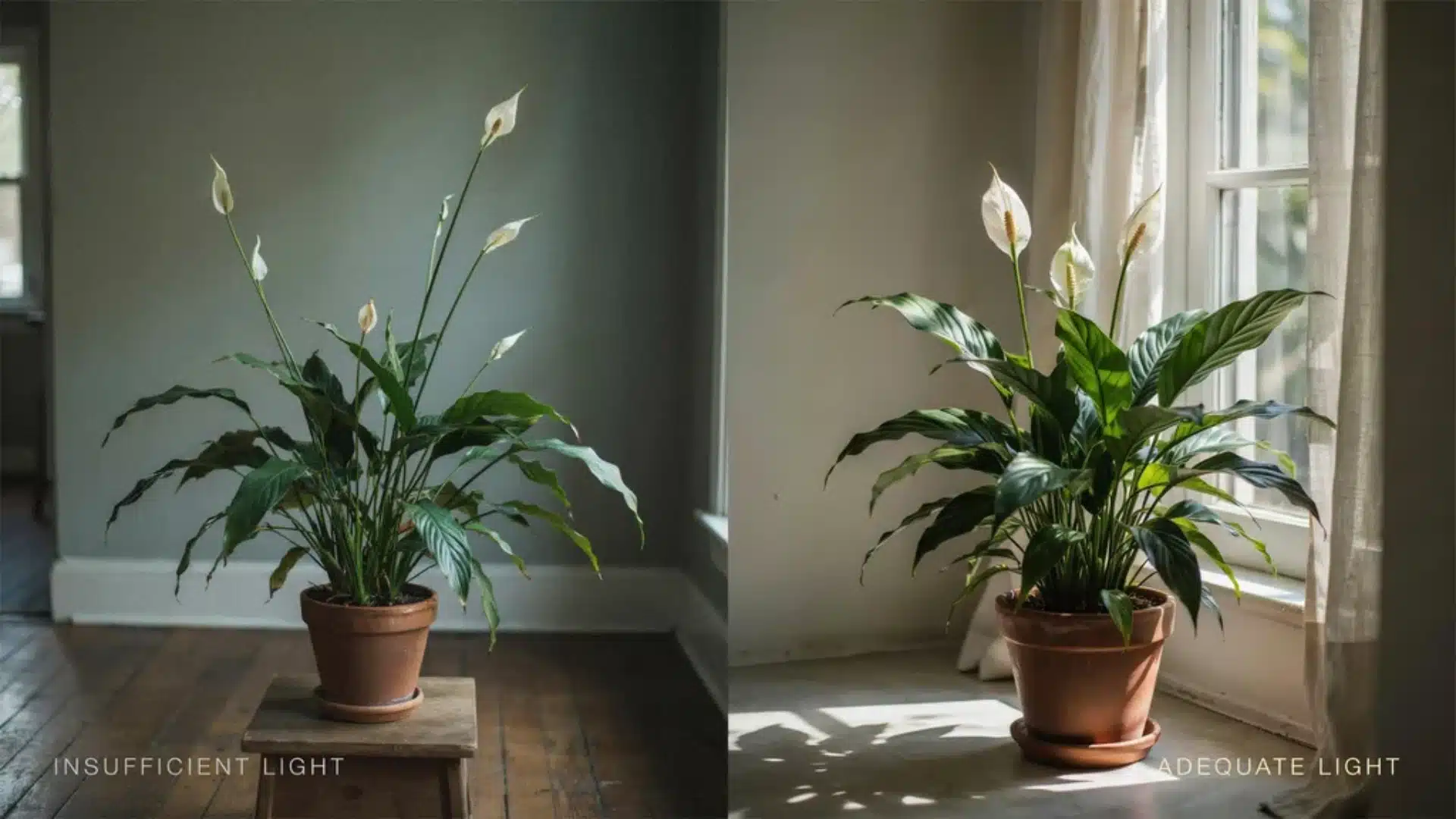
Too little light causes a different set of problems:
- Stems that look long, thin, and stretched (this is called legginess)
- Leaves spaced far apart on the stem
- Pale or dull green foliage instead of a rich, deep green
- No flowers for three months or more, even when you’re following a steady watering schedule
One useful check: flip a leaf over and look at the underside. Healthy peace lilies have visible silver veining on the underside of their leaves.
If that veining looks faint or has almost disappeared, the plant is not getting enough light for good photosynthesis.
Low light is one of the most common reasons why peace lily leaves turn yellow, though overwatering is usually blamed first.
Seasonal Light Changes Matter More Than You Think
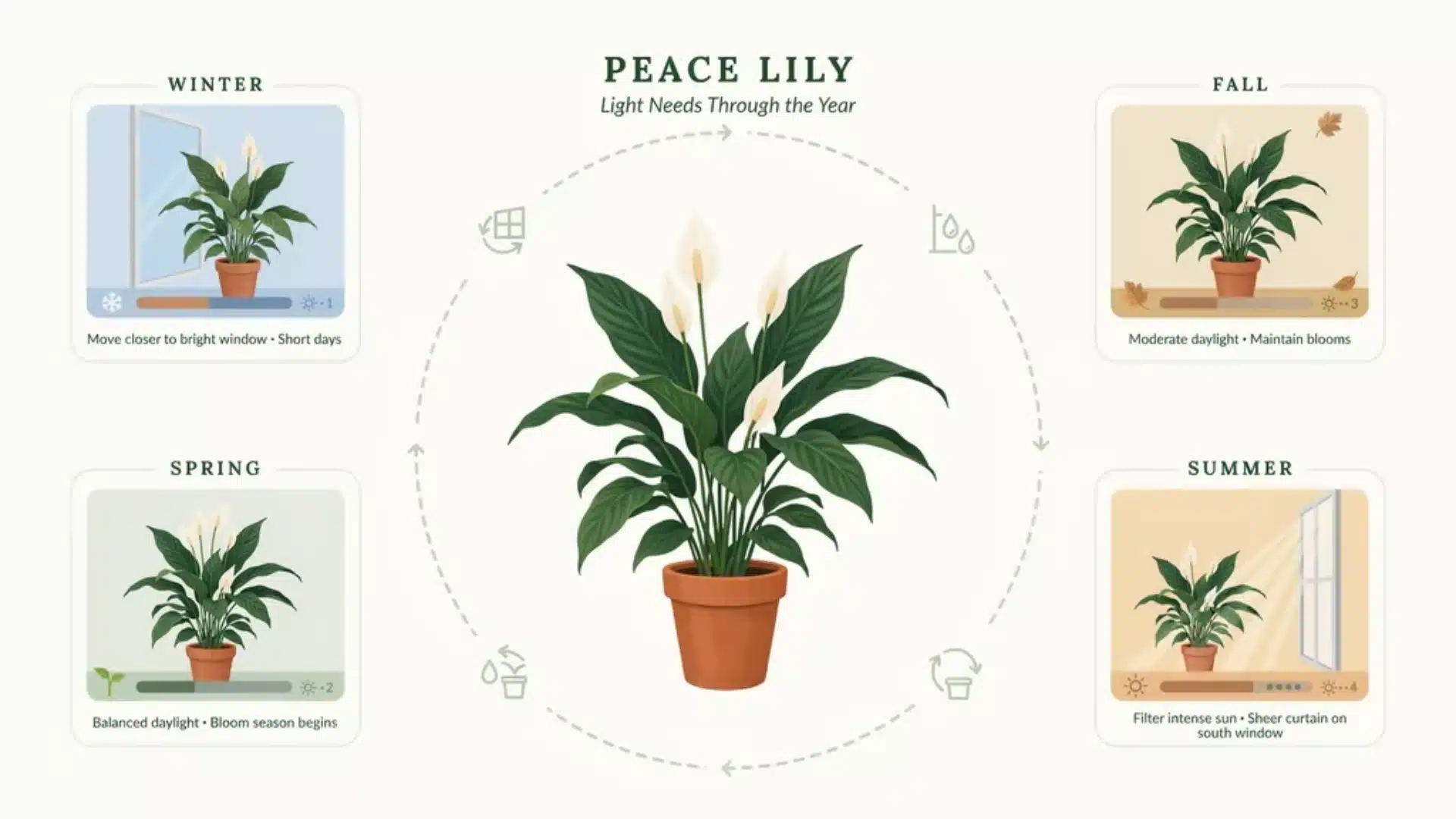
Most people set their peace lily in a spot once and leave it there for years. That is a mistake.
Light changes with the seasons. In winter, days are shorter, and the sun sits lower in the sky. Available light can drop by 40 to 60 percent compared to summer.
Move your plant within a foot of the window when the colder months arrive.
In spring and summer, the midday and afternoon sun gets much more intense. Add a sheer curtain during peak hours, roughly 10 am to 4 pm, if your plant is near a south or west window.
Peace lilies also bloom in response to day length. They are triggered to flower in spring and fall when days are close to 12 hours long. If yours has not bloomed in a while, seasonal light adjustment may be what it needs.
Also, rotate the pot every week or two. This keeps all sides of the plant growing evenly instead of leaning toward the light source.
Can Grow Lights Work for Peace Lilies?
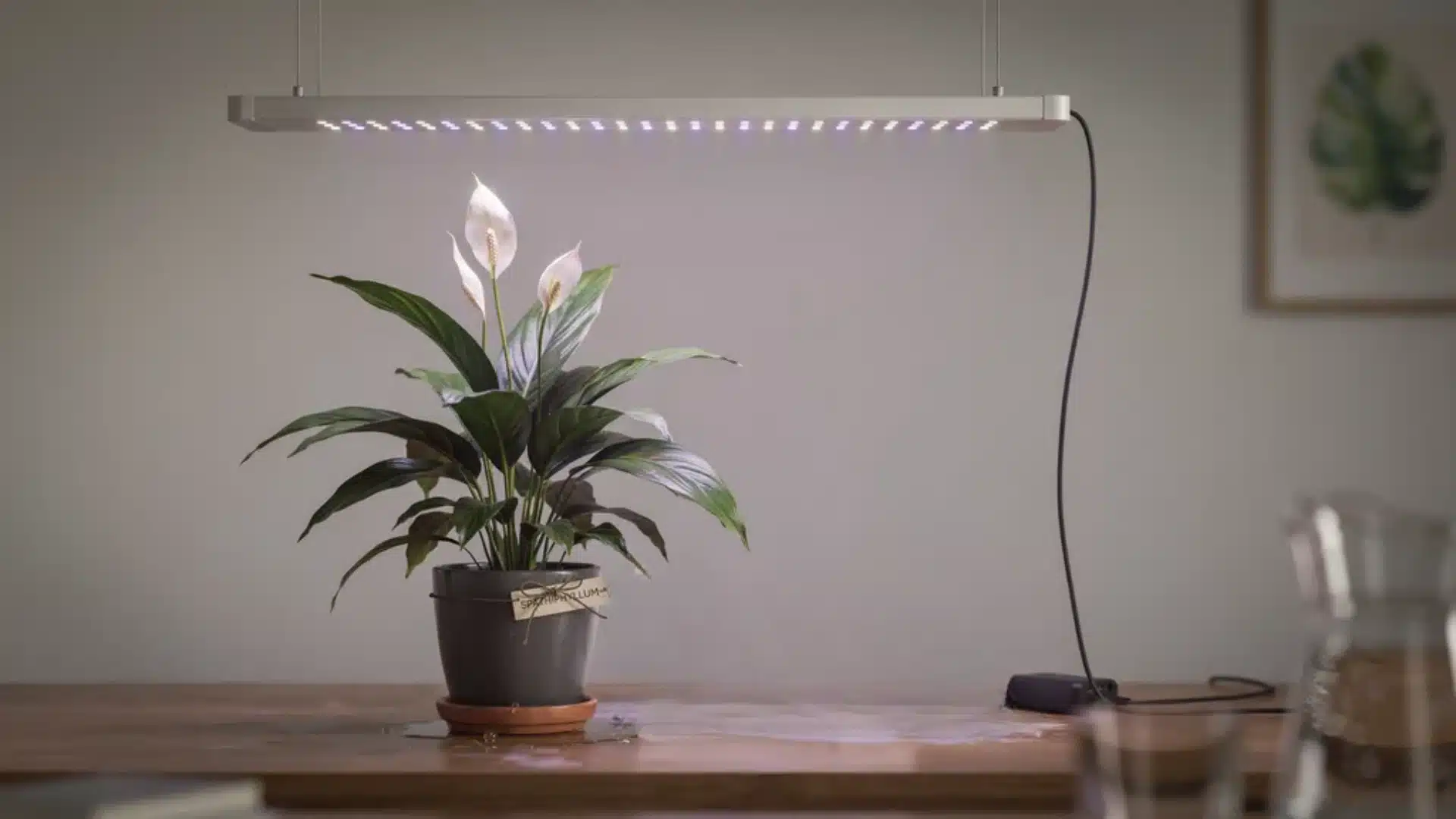
Yes. Grow lights are a solid option for offices or rooms with no natural light.
Full-spectrum LED grow lights work best. They closely match the range of sunlight and produce very little heat. Place the light 2 to 3 feet above the plant and run it for 10 to 12 hours per day.
Low-wattage options are enough. Peace lilies do not need high-intensity lighting. Look for lights that deliver around 10,000 to 15,000 lux at the plant’s level.
One Small Step to Keep in Mind
Dust builds up on the broad leaves of a peace lily. A thin layer of dust blocks light absorption more than you might expect.
Wipe the leaves gently with a damp cloth every few weeks. This keeps photosynthesis working well and also lets you spot early signs of pests or damage.
Avoid commercial leaf shine sprays. They block the leaf pores, slowing the plant’s ability to breathe and absorb light.
A rootbound plant also struggles to use light well. If the roots are packed tight, it may be time to repot your peace lily.
Conclusion
Peace lily light requirements come down to one clear rule: bright, indirect light every day. Skip the dark corner.
Place your plant near an east- or north-facing window, filter direct sun with a sheer curtain, and adjust placement when the seasons change.
Light is not the only thing your peace lily needs, but it’s the detail that determines whether the rest of your care actually works. Fix the light first, and everything else gets easier to solve.
What spot does your peace lily currently sit in? Drop a comment and let us know if moving it made a difference.
Frequently Asked Questions
Can a Peace Lily Live in a Room with No Windows?
A peace lily can survive short-term without windows, but it will not thrive. It needs 2 to 4 hours of bright indirect light daily, ideally from a grow light.
Can a Peace Lily Get Too Much Light?
Yes. Direct sun scorches the leaves within hours, leaving yellow or brown crispy patches. Filter bright light with a sheer curtain or move the plant back from the window.
Does a Peace Lily Need Direct Sunlight to Bloom?
No. Direct sun burns the leaves. Peace lilies bloom best in bright, indirect light for 6 or more hours a day, not direct sun.