I have 70-plus plants crammed into my apartment, and peace lilies still catch me off guard. You water them, move them out of a hot window, even talk to them, and the leaves turn yellow anyway.
If that is happening to you, you are not doing anything wrong. It is the most common question I hear about peace lilies.
Peace lilies are sold as an easy, no-fuss starter plant, so when the leaves start turning yellow, it catches people off guard.
Yellowing almost always traces back to one clear cause. Once you spot the pattern, the fix is usually simple.
Here is how I work through it every time one of mine starts turning yellow: check the leaf pattern first, then watering, light, water quality, temperature, and roots.
Not Every Yellow Leaf Is a Problem
Before you panic, check which leaves are turning yellow.
Older, lower leaves naturally yellow and fall off as the plant grows. This is normal. One yellow leaf at the bottom every few weeks is nothing to worry about. Remove it with clean scissors and move on.
The situation changes when:
- Several leaves turn yellow at once
- New or middle leaves start to pale
- Yellowing comes with drooping, brown tips, or a musty smell
If you see any of those signs together, something in the care routine needs to change.
How to Read the Pattern of Yellowing
The location and appearance of yellow leaves almost always point to the cause. Use this as your first diagnostic tool.
| Pattern | Likely Cause |
|---|---|
| Yellow edges on leaves | Overwatering or poor drainage |
| Yellow leaves with green veins still visible | Iron or magnesium deficiency |
| Pale yellow all over, slow growth, no flowers | Too little light |
| Yellow and drooping after repotting | Transplant shock |
| Yellow tips that spread inward, white crust on soil | Salt or mineral buildup |
| Lower, older leaves only, gradual | Natural aging |
| Yellow and wilting even in wet soil | Root rot |
Start here before changing anything. Treating the wrong cause will only make things worse.
Watering Mistakes: The Most Common Cause
Incorrect watering is the single most common reason peace lily leaves turn yellow, and it works in both directions.
Overwatering is the most frequent mistake. When soil stays soggy for days, roots cannot get oxygen.
They begin to break down, and the plant cannot absorb water or nutrients properly. The leaves turn yellow from the base up, and the pot often smells musty.
Underwatering causes similar symptoms for different reasons. If the soil dries out completely, roots shrivel. When you water again, those damaged roots cannot absorb moisture, so leaves stay pale and limp. If you are still working out how often to water a peace lily indoors, on the side of underwatering. It is the easiest mistake to fix.
The fix:
- Stick your finger 2 inches into the soil before watering.
- If it feels damp, wait.
- If it feels dry, water thoroughly until it drains from the bottom.
- Empty the drainage saucer every time. Never let the pot sit in standing water.
A useful habit: lift the pot before and after watering. The weight difference tells you how much moisture the soil holds. A heavy pot means it still has water. A light pot means it needs a drink.
Tap Water and Softened Water
The quality of water you use matters as much as how often you water.
Tap water contains chlorine, fluoride, and dissolved minerals. These chemicals build up in the soil over time and interfere with nutrient absorption.
One of my plants sat under a water softener line for months before I traced its yellowing back to sodium buildup.
Softened water is worse than tap water. Water softeners replace calcium and magnesium with sodium salts. Sodium builds up fast in potting soil and burns roots, causing the same symptoms as overwatering.
If your home uses a water softener, use water from a tap that bypasses it, usually an outdoor hose spigot or a dedicated kitchen cold tap.
You can also use:
- Filtered water
- Rainwater
- Distilled water
If tap water is your only option, let it sit in an open container for 24 hours. This lets chlorine evaporate. It will not remove fluoride, but it reduces the chemical load your plant faces each time you water.
A white or gray crust on the soil surface is a sign of salt or mineral buildup. When you see this, flush the soil slowly with filtered water to push the accumulated salts out through the drainage holes.
Light Problems
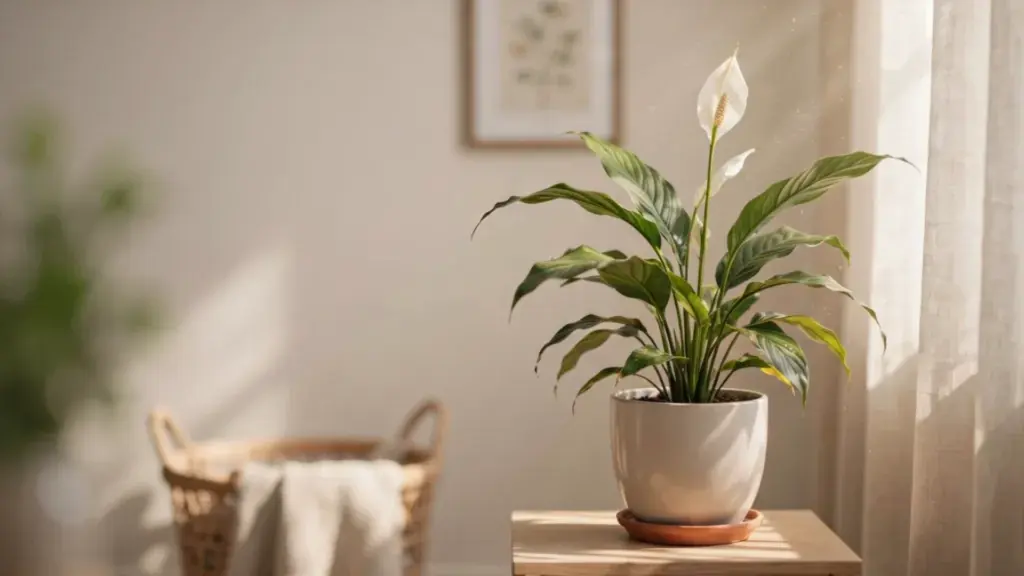
Peace lilies grew under dense jungle canopies. They need bright, indirect light, not direct sun or a dark corner.
Too much direct sun bleaches leaves to a pale yellow or white, and the tissue dries out and feels papery.
If your plant sits in a south- or west-facing window with direct afternoon sun, move it back a few feet or hang a sheer curtain to break the intensity.
Too little bright indirect light causes the plant to yellow older leaves first, then newer ones, because it cannot produce the energy it needs through photosynthesis.
You will also notice fewer or no flowers and stems that stretch toward any available light.
In Portland, my peace lilies get noticeably less light near the same window in winter than they do in summer, so I move mine a foot or two closer to the glass from November through February.
The ideal spot depends on your window direction. Peace lily light requirements are easiest to meet near an east-facing window or several feet back from a brighter one, where the plant gets steady filtered light for most of the day.
Temperature, Humidity, and Drafts
Peace lilies prefer a temperature range of 65°F to 85°F (18°C to 29°C). Temperatures below 45°F can cause chilling damage, turning leaves yellow and stalling growth.
The less obvious problem is indoor heating. In winter, heating vents and radiators dry the air out fast. Peace lilies prefer humidity levels of 50% to 60%. When indoor air drops well below that, leaves droop and yellow even if the watering routine is perfect.
Watch out for:
- Cold drafts near windows or doors in winter
- Air conditioning vents blowing directly on the plant in summer
- Heating vents dry the air during colder months
To raise humidity, place a small humidifier nearby or set a shallow tray of water and pebbles under the pot. As the water evaporates, it raises the moisture level around the plant.
Root Rot
Root rot happens when overwatering continues long enough to destroy the root system. By this point, the plant wilts even when the soil is wet. The leaves turn yellow fast, and the whole plant looks collapsed.
To check for root rot:
- Remove the plant from its pot.
- Look at the roots. Healthy roots are white or light tan.
- Rotted roots are brown or black, feel soft and mushy, and pull away from the stem easily.
- A sour smell from the soil confirms it.
To treat root rot:
- Cut off all soft, dark roots with clean scissors.
- Let the remaining roots air dry for 30 minutes.
- Repot in fresh, well-draining soil (2 parts houseplant mix, 1 part perlite, 1 part bark).
- Water lightly and place in indirect light while the plant recovers.
- Do not fertilize until new growth appears.
Pot Size, Repotting, and Transplant Shock
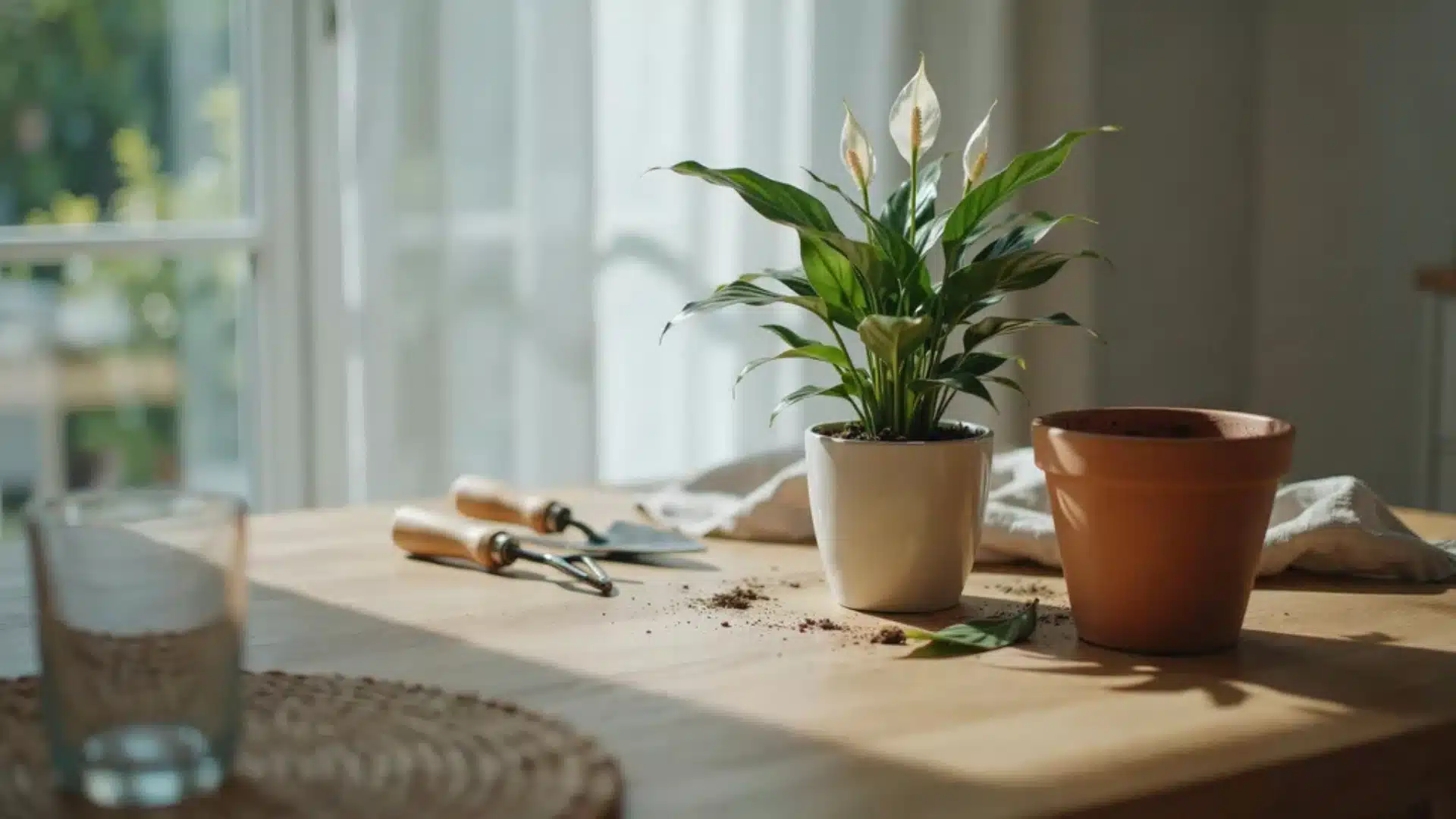
Two repotting-related causes are easy to miss: pot size and transplant shock.
Pot too large: When you move a peace lily into a much bigger pot, the extra soil holds moisture the roots cannot reach. This creates the same wet-root conditions as overwatering, even if you water correctly. Choose a pot just 1 to 2 inches wider than the current one.
Transplant shock: Yellowing and drooping within a few days of repotting is normal. The plant is adjusting. Keep watering as usual, avoid fertilizing, and give it time to settle. Most plants recover within two to four weeks.
The safest way to repot a peace lily without causing shock is to water it thoroughly about 12 hours in advance. This keeps the roots hydrated through the process and reduces stress on the root system.
Peace lilies do fine slightly pot-bound. Do not rush to repot unless roots are coming out of the drainage holes, water is pooling on the surface without draining, or the yellowing does not respond to any other fix.
Nutrient Deficiency and Over-Fertilizing
Both too little and too much fertilizer cause yellow leaves, and the symptoms look similar.
Deficiency signs:
- Yellow leaves with green veins still visible point to low iron or magnesium.
- Pale, washed-out foliage throughout the plant can mean nitrogen deficiency.
Over-fertilizing signs:
- Yellow leaves with brown, burnt edges
- White crust on the soil surface
- Slow or stunted growth
Peace lilies do not need heavy feeding. A balanced, water-soluble fertilizer at half strength, used once a month during spring and summer, is enough. Stop feeding entirely in fall and winter.
If you suspect over-fertilizing, flush the soil well with filtered water. If the damage is severe, repot in fresh soil to remove the accumulated salts.
Check the Undersides of Leaves for Pests
Spider mites, aphids, and scale insects weaken peace lilies by feeding on leaf tissue. As the plant loses nutrients, the leaves turn yellow, and growth slows.
Check for pests on the undersides of leaves.
You may find:
- Tiny webs (spider mites)
- Small sticky patches or clusters of insects (aphids)
- Brown or tan bumps on stems (scale)
Treat with insecticidal soap or diluted neem oil. Apply every 5 to 7 days for 3 to 4 weeks to break the pest cycle. Improve airflow around the plant to make it less hospitable to another round.
Should You Remove Yellow Leaves?
Yes, remove them. Once a leaf turns yellow, it will not return to green unless the cause was a nutrient deficiency caught very early.
Use clean, sharp scissors. Cut the stem at the base, close to the soil. Do not pull or tear the leaves, since that can damage the plant at the base.
Removing yellow leaves lets the plant put its energy into healthy growth. It also makes new yellowing easier to spot, so you can tell whether your fix is working.
What to Do Next
When peace lily leaves are turning yellow, the plant is sending a clear signal. Check watering first, then light, water quality, humidity, and pot conditions.
Most causes have simple fixes once you identify the right one. A single yellow leaf at the bottom is almost always normal aging, nothing more.
But several yellowing leaves or pale new growth mean something in the routine needs adjustment. Change one thing at a time and give the plant a full week to respond before trying something else.
Once the yellowing stops, the rest of peace lily care indoors is fairly forgiving.
What is your peace lily doing right now? Does the pattern match any of the causes above? Tell me what you are seeing in the comments.
Frequently Asked Questions
What Does an Overwatered Peace Lily Look Like?
An overwatered peace lily typically has wilted, yellowing leaves with soft, mushy, or blackened patches.
Can a Yellow Leaf Turn Green Again?
No. Once a leaf turns yellow, it has lost its chlorophyll and will not turn green again.
How Do I Make My Peace Lily Healthy Again?
Identify the cause first: underwatering (drooping), overwatering (yellowing, root rot), or fertilizer burn (brown tips). Fix that, then keep care consistent.
How Often Should I Water My Peace Lily?
Check the soil first. Water when the top two inches feel dry, then stick to a consistent rhythm.