Most gardeners plant tomatoes too early. That one mistake ruins more harvests than anything else.
You do everything right: good soil, a sunny spot, water on schedule, but the plants sit there looking sad. Or worse, they die from a cold snap you did not see coming.
Knowing when to plant tomatoes in your specific region is the fix. Get the timing right, and everything else falls into place.
This post breaks it all down by region, covers soil and air temperature requirements, and tells you exactly how much sun and water your tomato plants need to produce well.
What Is the Best Time to Plant Tomatoes?
The single most important rule: wait until all frost risk has passed.
Tomatoes will suffer serious injury or die when temperatures drop below 32°F, and when temperatures fall below 50°F at night, plant development slows significantly.
Plants can survive a cold night, but stunted early growth is hard to recover from.
Two numbers to check before you plant:
- Air temperature: Nights should stay consistently above 50°F, and daytime temps above 60°F.
- Soil temperature: Wait until the soil consistently reads at least 60°F. A cheap soil thermometer makes this easy to check.
Most gardeners focus only on air temperature and skip the soil check. That is where timing errors happen. Cold soil slows root establishment even when the air feels warm enough.
When to Plant Tomatoes by Region
Planting windows vary widely across the US. Here is a clear, region-by-region breakdown.
1. When to Plant Tomatoes in Florida
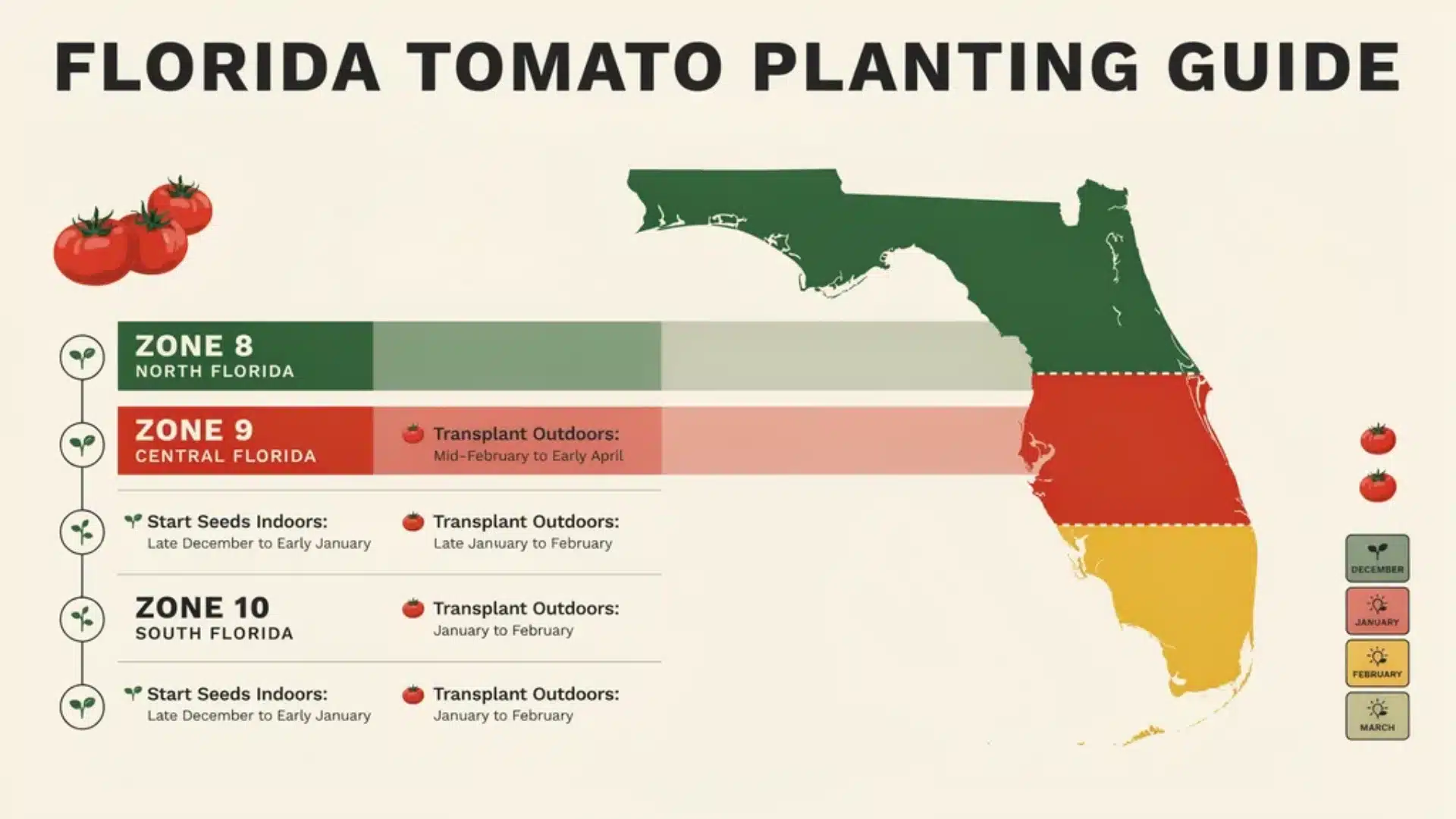
Florida follows a different schedule from the rest of the country. Its subtropical climate means two growing windows: late winter and fall.
- Zone 8 (North Florida): Start seeds indoors in early January. Transplant seedlings mid-February through early April.
- Zone 9 (Central Florida): Start seeds indoors in late December to early January. Transplant in late January through February.
- Zone 10 (South Florida): Start seeds indoors in late December to early January. Transplant in January through February.
Why the early schedule? Florida summers get too hot for tomatoes to set fruit well. Planting early lets the harvest happen before the brutal heat arrives.
One important thing: Florida gardeners do better with shorter determinate varietiesbecause they are easier to cover during cold snaps and finish producing before summer heat shuts the season down.
The late winter and spring months in Florida are also the dry season. Do not count on rain; you will need to water manually during this period.
2. When to Plant Tomatoes in Southern California
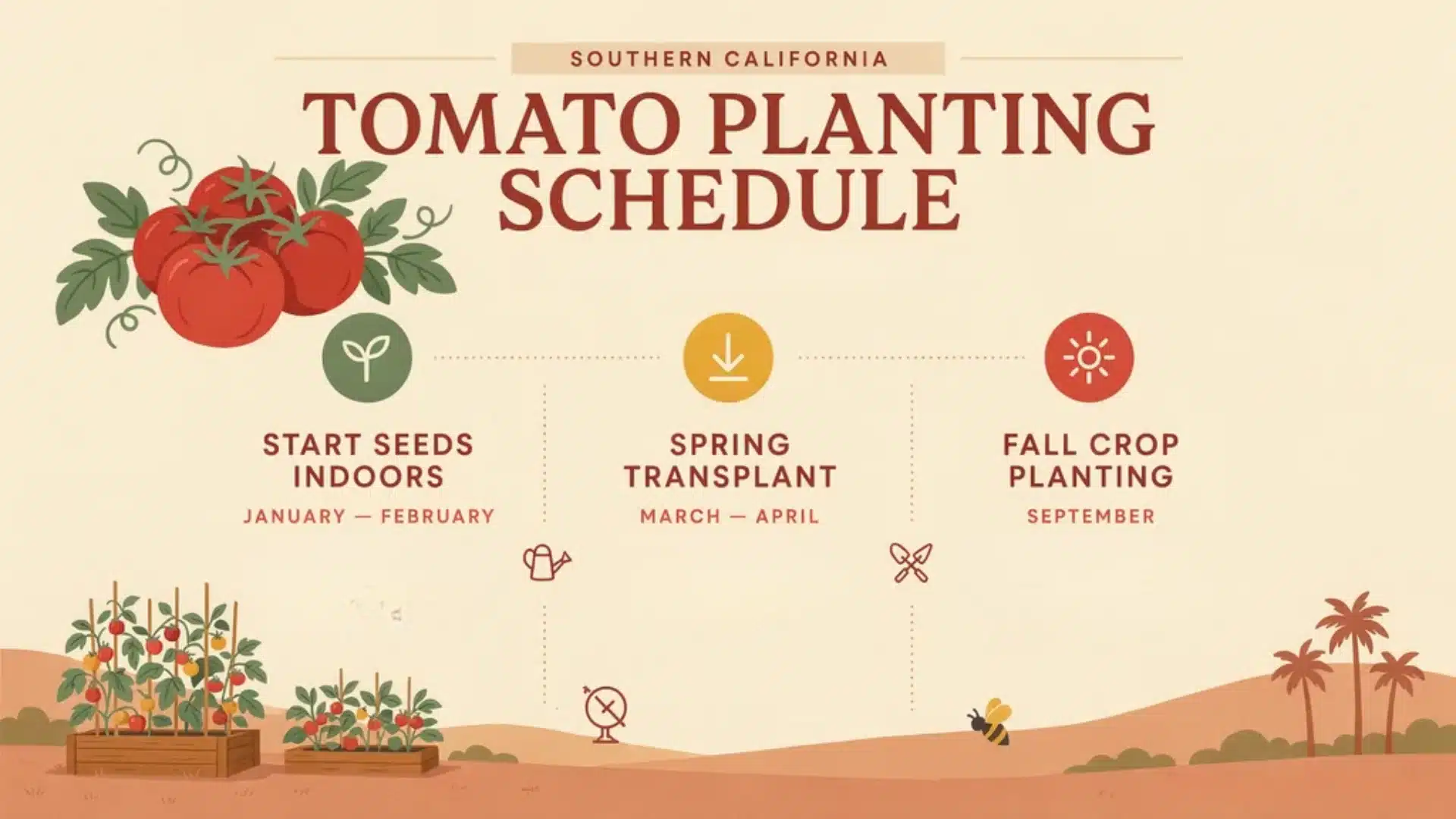
Southern California gardeners get two solid planting windows per season.
- Start seeds indoors: January to February
- Transplant outdoors: March to April (spring crop)
- Second planting window: Late summer, around September, for a fall crop
Tomatoes thrive in Southern California when temperatures stay above 50°F, which covers most of the March-to-June window and again in September.
Starting seeds indoors 6 to 8 weeks before transplanting gives your plants a real head start.
For transplanting: choose a sunny spot that gets at least 6 hours of direct sun daily. Transplant after nights have warmed up and the chill has gone from the air.
3. When to Plant Tomatoes in Other US Regions
Here is a quick-reference breakdown by region:
| Region | Start Seeds Indoors | Transplant Outdoors |
|---|---|---|
| South (AL, GA, MS) | Early February | Late March to April |
| Mid-Atlantic (VA, MD, PA) | Mid-March | Late April to May |
| Pacific Northwest | Early March | Late May |
| Midwest (IL, IN, OH) | Early to mid-March | Early to mid-May |
| Northeast (NY, CT, MA) | Late March to April | Mid-May |
| Mountain West (CO lower elevation) | March | Mid-May |
| Desert Southwest (AZ, NM) | January to February | February to March (spring crop) |
The general rule: start tomato seeds indoors 8 to 12 weeks before your last expected frost date, then transplant once the soil hits 60°F.
Seeds or Seedlings: Which Should You Start With?
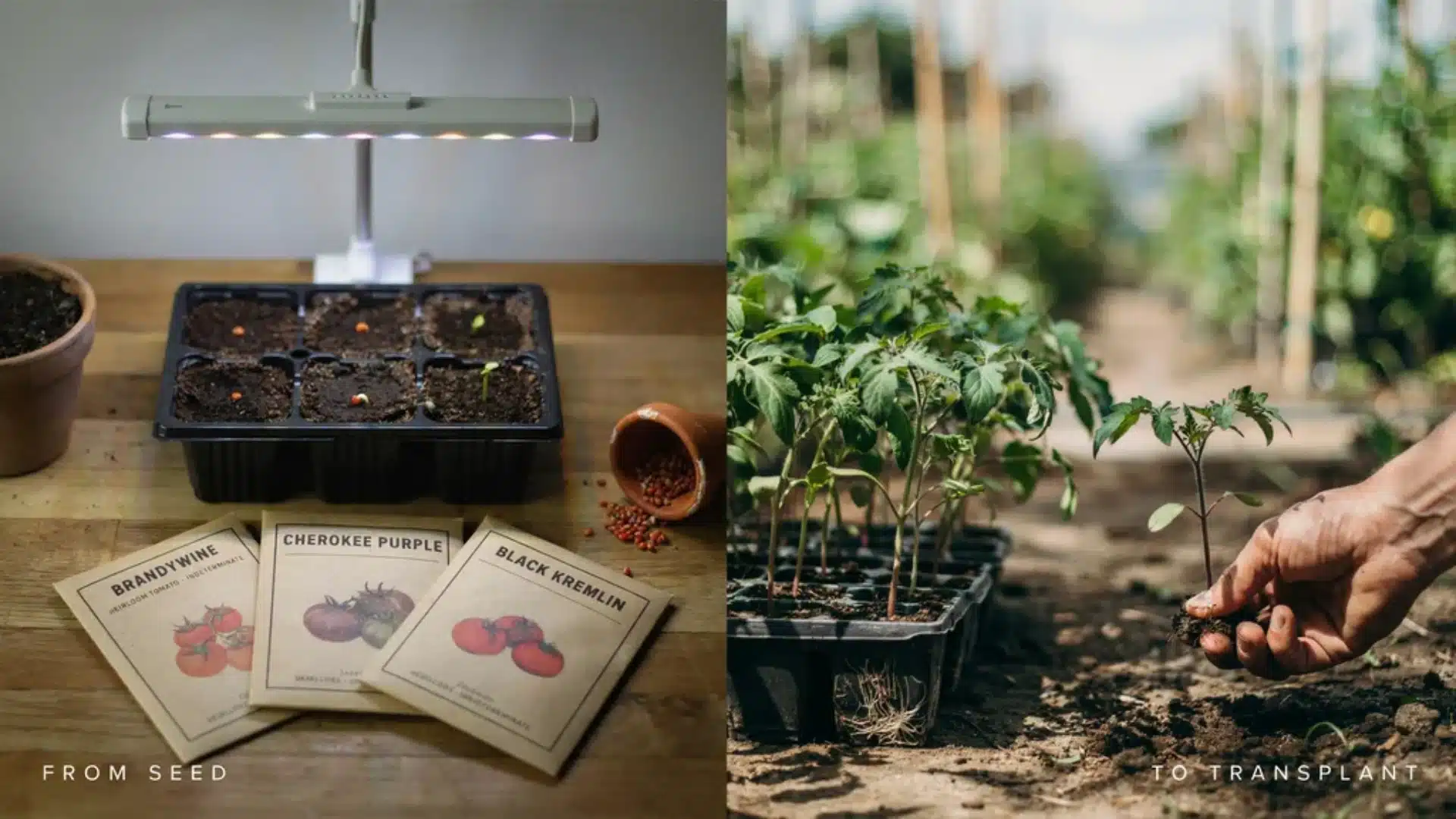
If you are new to growing tomatoes, buying nursery transplants is the faster path to your first harvest. They save you 8 to 10 weeks of indoor growing time.
If you want full control over variety selection, and many of the best-tasting tomatoes are only available as seeds, starting seeds indoorsgives you an 8 to 10-week head start before your transplant window opens.
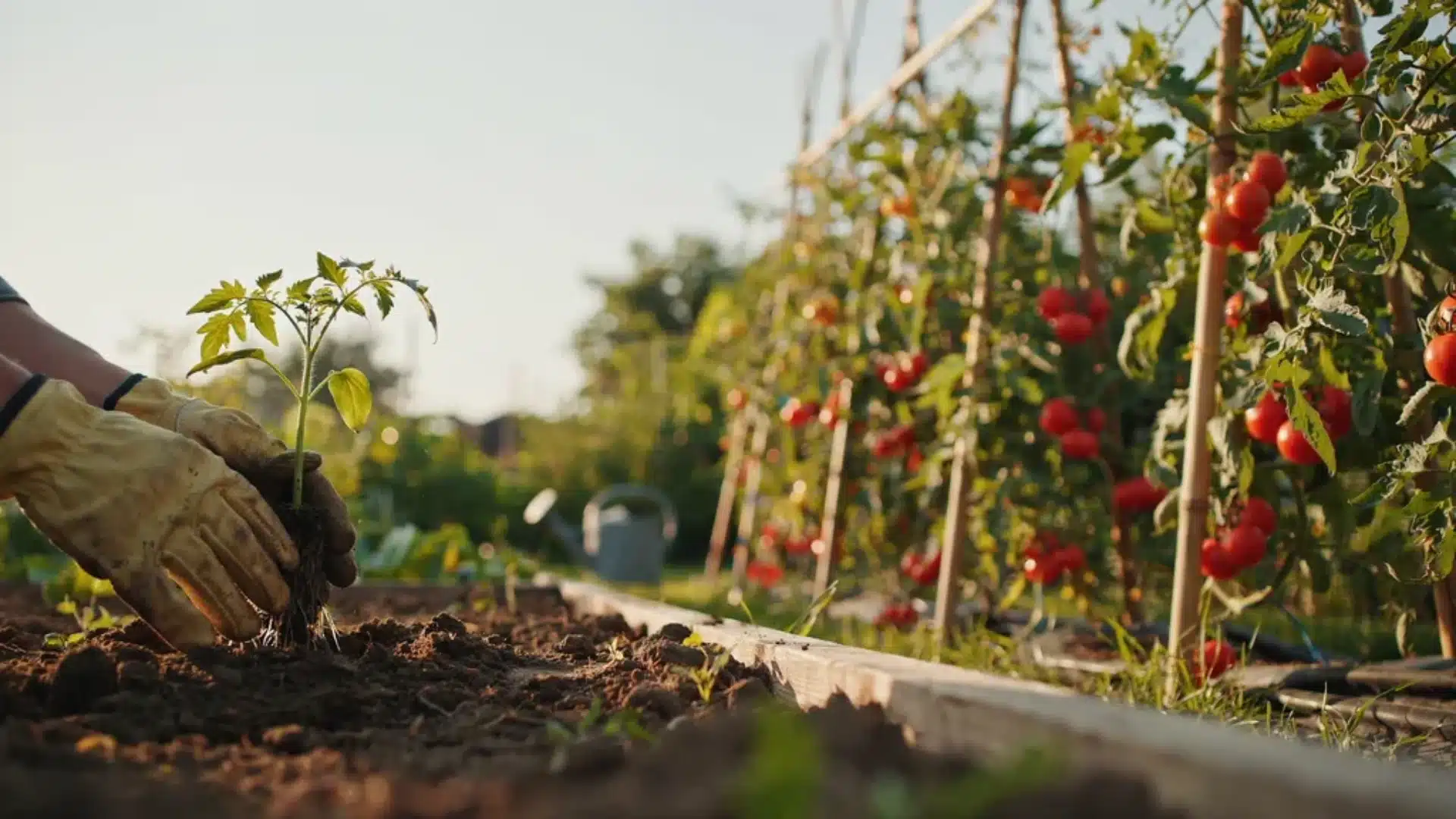
One step most beginners skip: hardening off. Before transplanting, set your seedlings outdoors in a shaded spot for a few hours each day for about a week.
Plants that go straight from indoors to full outdoor exposure often go into shock and stall for weeks. That patience at the end of the indoor phase saves real frustration later.
How Much Sun Do Tomatoes Need?
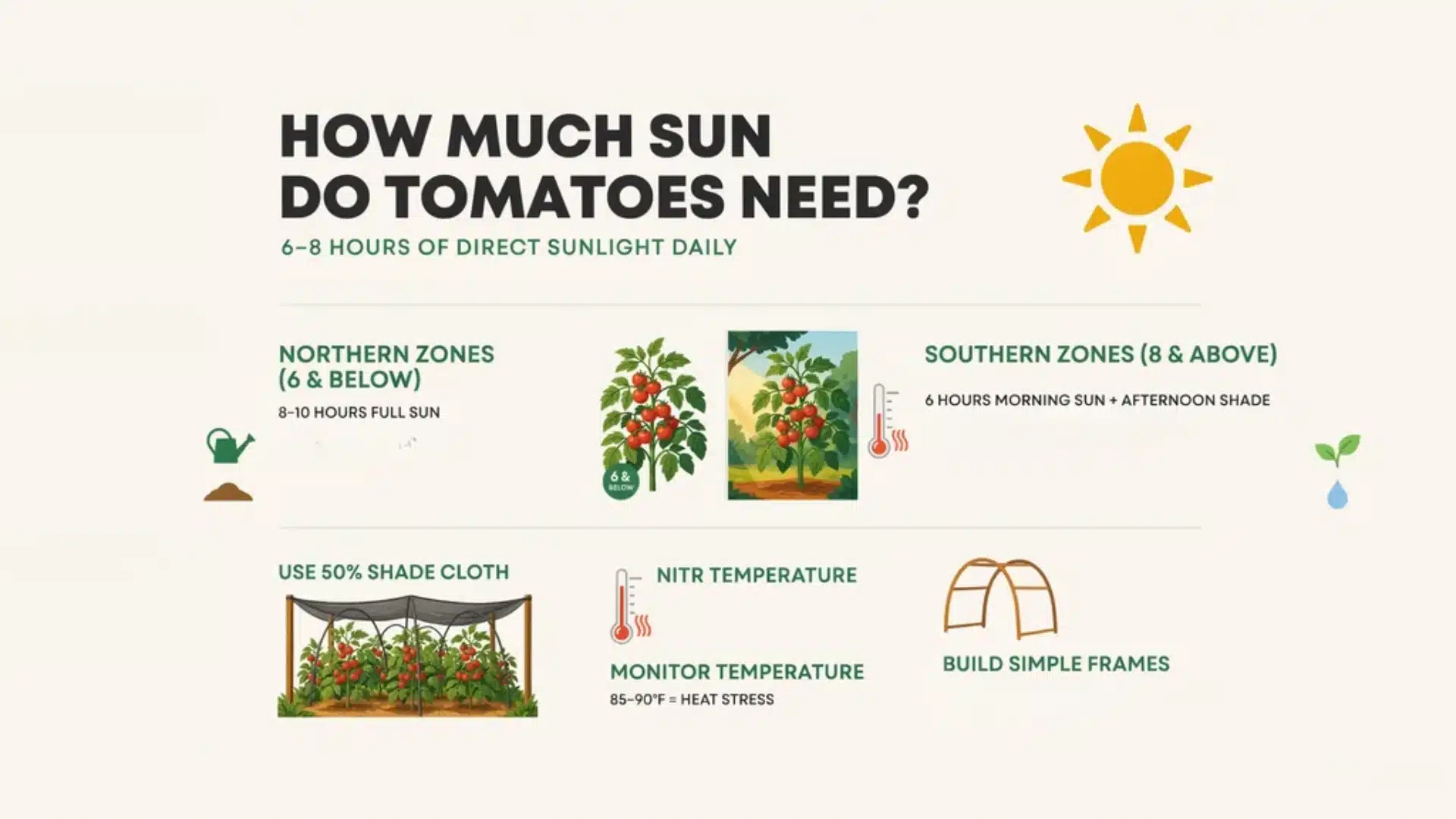
Tomatoes need 6 to 8 hours of direct sunlight per day. Placing them in too much shade causes slow, leggy growth and cuts your fruit yield.
That said, sun requirements are not the same in every region:
- Northern regions (Zone 6 and below): Aim for 8 to 10 hours of direct sun. Your growing season is shorter, so you want maximum light exposure.
- Southern regions (Zone 8 and above): 6 hours of morning sun work well. Afternoon shade actually helps here. Tomato flowers stop setting fruit reliably when temperatures consistently exceed 85-90°F during midday.
Pro Tip for Hot Climates: Gardeners in Florida, Southern California, Texas, and Arizona often use shade cloth between 10 AM and 2 PM, when the heat is at its peak. A 50 percent shade cloth reduces sunlight by half and drops heat by about 25 percent.
Build a simple frame with wood or row-cover hoops, and drape the cloth over it, leaving the east side open so the plants still get morning sun.
Overhead wetting during the hottest part of the day also stresses plants. Factor that into your watering schedule.
How Often Should You Water Tomato Plants?
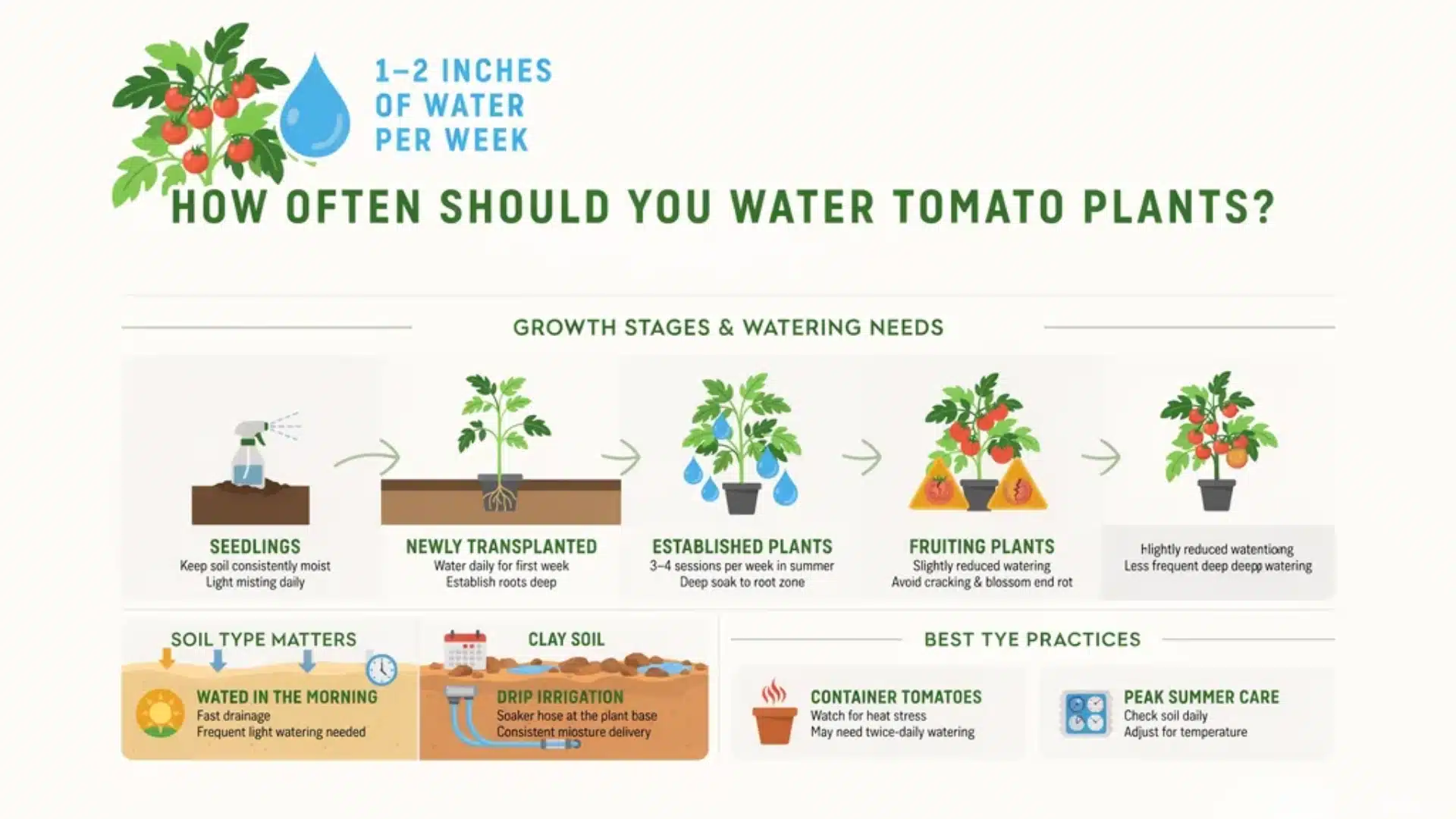
The general rule is that tomato plants need 1 to 2 inches of water per week.
But how often you actually water depends on where you are, what stage of growth your plants are at, and what your soil is like.
By growth stage:
- Seedlings: Keep soil consistently moist but not wet. Use a spray bottle for gentle watering at this stage.
- Newly transplanted starts: Water daily for the first 10 days while roots establish.
- Established plants: 1 to 2 inches per week. Depending on heat and rainfall, this often means watering 3 to 4 times per week in summer.
- Fruiting plants: Continue the same weekly amount, but reduce slightly as fruits ripen. Too much water at this stage causes cracking and blossom-end rot.
Soil type matters:
- Sandy soil drains fast. Plants in sandy soil may need water 3 to 4 times per week.
- Clay-heavy soil holds water longer. Once per week is often enough.
The best time to water is in the morning: This reduces evaporation during the day and lets the soil surface dry out before evening, which lowers the risk of fungal disease.
Always water at the base of the plant: Wetting leaves splashes soil-borne microbes onto foliage, increasing the risk of disease. A soaker hose or drip irrigation makes this easy and consistent.
For container-grown tomatoes: Pots dry out faster than garden beds because the sides and bottom are exposed to heat. Check them daily during summer. In peak heat, you may need to water twice a day.
Common Tomato Planting Mistakes to Avoid
These are the errors that cost gardeners an entire season:
1. Planting too early in cold zones: Even if frost does not kill the plant, cold soil stuns seedling roots for weeks. In Zones 7 and below, wait until nighttime temperatures are regularly in the upper 50s before transplanting.
2. Planting too late in hot zones: In Zones 8, 9, and 10, the challenge is the opposite. Tomatoes must go in early so they produce fruit before intense summer heat sets in. Tomatoes grow best when daytime temps sit between 70°F and 80°F.
3. Skipping the soil temperature check: Air temperature alone is not enough. Cold soil stalls root growth even on warm days. Use a thermometer to confirm the temperature is 60°F before planting.
4. Inconsistent watering: Big swings in soil moisture cause blossom-end rot and split fruit. Water deeply once or twice a week rather than a little each day.
5. Overhead watering: Spraying water over the top of the plant wets leaves and spreads disease. Always water at the base.
6. Ignoring variety selection: The right variety matters as much as the right timing. If you are growing in a hot climate, heat-tolerant varieties produce far better results.
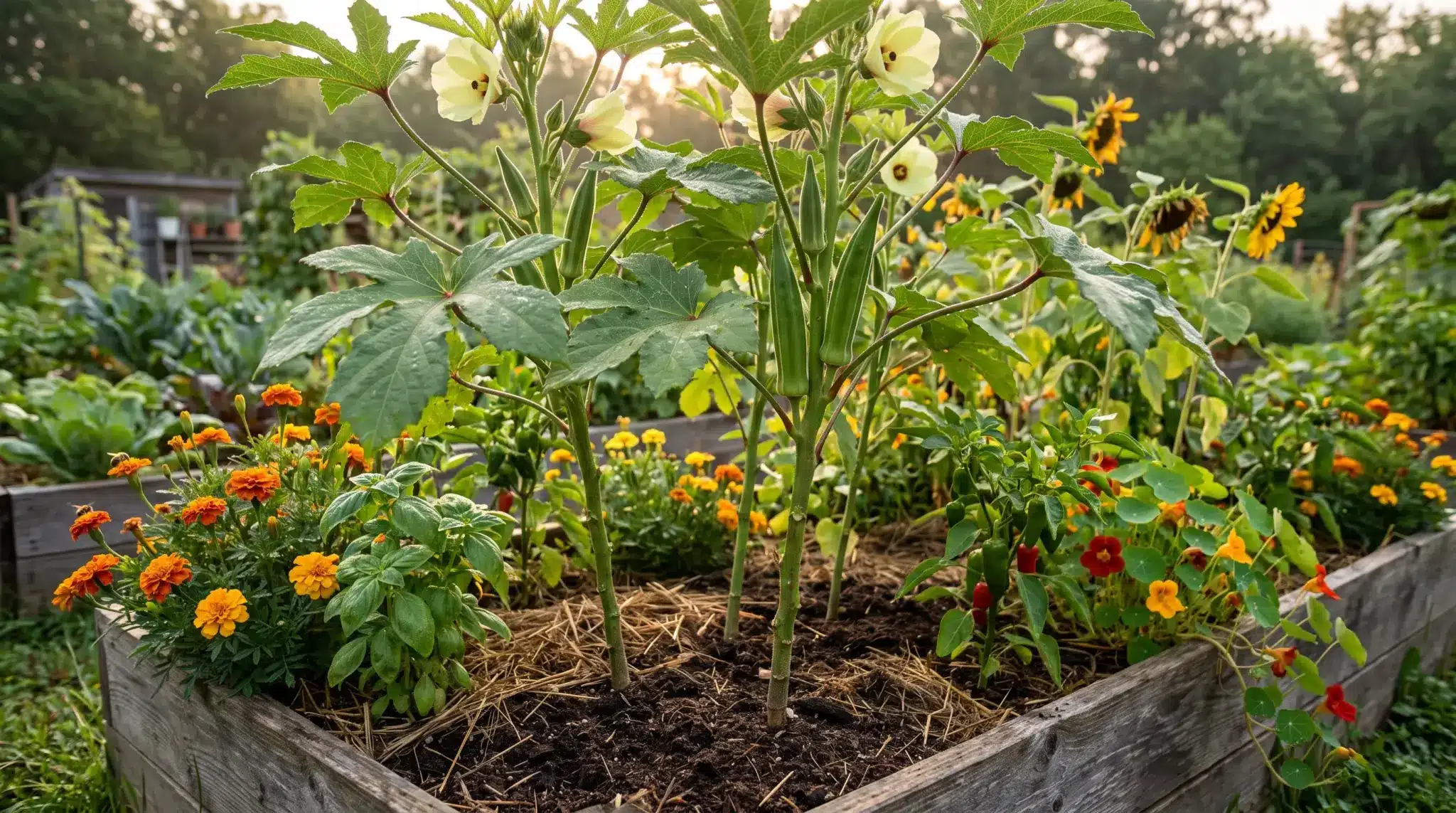
Pairing them with the right tomato companion plantsreduces pest pressure without extra effort.
Once plants are in the ground and growing well, pruning tomato plants regularly improves airflow between branches and directs the plant’s energy toward fruit rather than extra foliage.
Conclusion
Getting the timing right is the foundation of a good tomato harvest. When to plant tomatoes in your region depends on your last frost date, soil temperature, and the specific heat patterns of your climate, not just the calendar.
Gardeners in Florida and Southern California work with two planting windows. Those in colder zones work backward from their last frost date.
Everyone, no matter the zone, should check soil temperature before transplanting.
What zone are you in, and when do you plan to plant this season? Drop it in the comments.
Frequently Asked Questions
Why Put an Egg in The Hole when Planting Tomatoes?
Gardeners place an egg (or eggshells) in the planting hole primarily to act as a slow-release natural fertilizer.
What Do Coffee Grounds Do for Tomatoes?
Coffee grounds provide tomato plants with slow-release nitrogen, improve soil drainage, and help maintain optimal soil acidity.
What Is the Best Thing to Add to Soil for Tomatoes?
The single best thing to add to soil for tomatoes is rich, organic compost.