
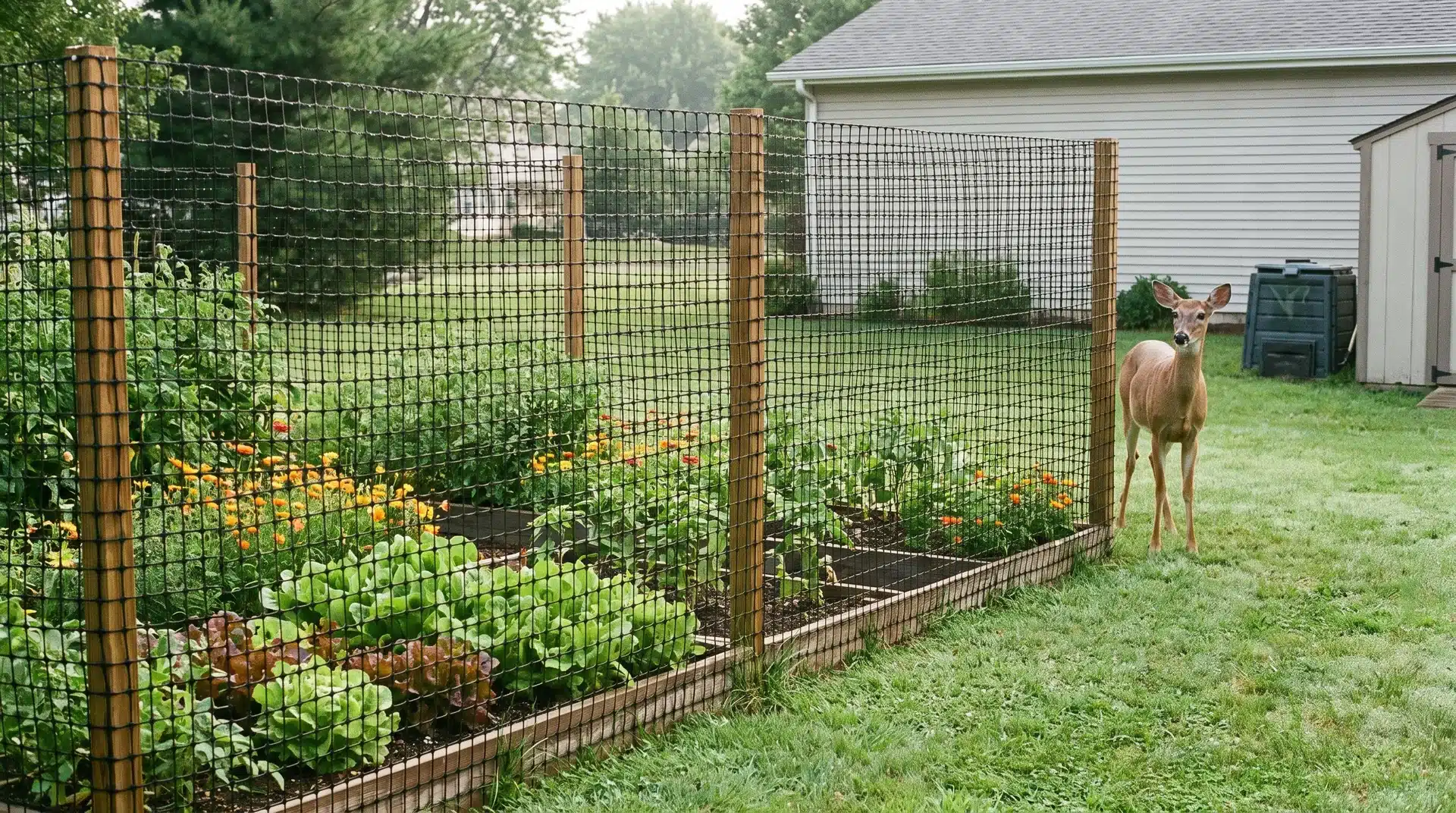
Quick Answer: The most reliable way to keep deer out of your garden is a physical barrier: an 8-foot fence, or two shorter fences spaced a few feet apart so deer cannot judge the jump. Layer that with deer-resistant plants, rotated scent repellents, and motion-activated sprinklers for the spots a fence cannot cover.
A single deer eats up to 10 pounds of garden plants a day, and once a herd decides your yard is easy pickings, they keep coming back.
I deal with deer pressure on my own property outside Austin, and the fixes that actually stick are never the one-and-done tricks.
Bars of soap tied to stakes, bags of hair clippings, a spray that worked for two weeks and then stopped: these are usually the first things people try, and they fade because deer get used to a smell that never changes.
A 2001 USDA Forest Service comparison of 20 commercial deer repellents found that egg and sulfur-based products outperformed the rest, cutting browsing for roughly four weeks per application.
Repellents work best as one layer in a bigger plan, not the whole plan. This post covers the plant choices, repellent habits, devices, and fencing that have held up in my own yard and in that research.
3 Ways to Keep Deer Out of Your Garden
Deer can undo weeks of gardening in a single night by feeding on flowers, vegetables, and young plants. These three approaches work together to protect your garden through the growing season.
1. Plant Choices That Naturally Keep Deer Away
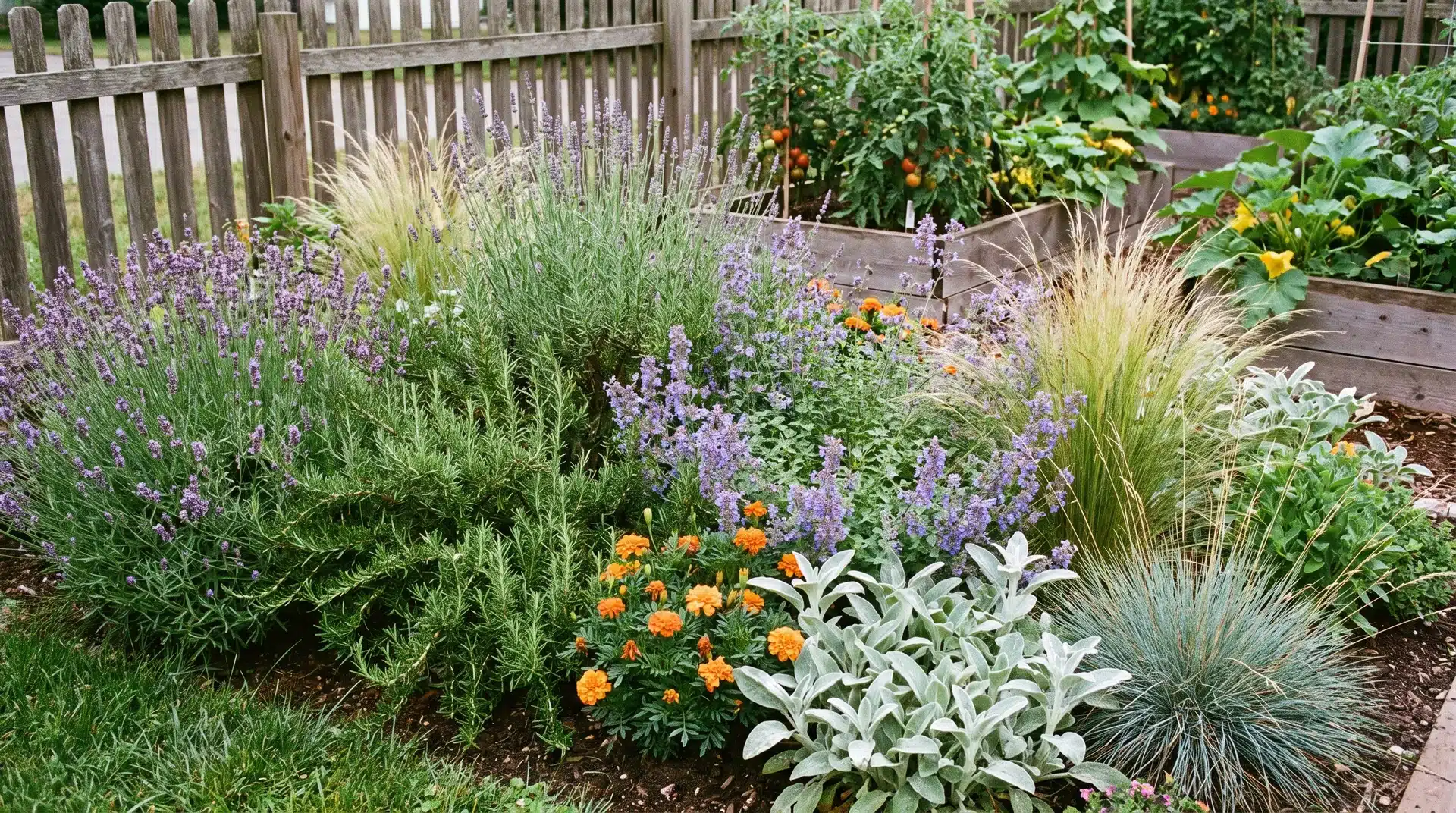
Plant selection is one of the most underused tools for keeping deer out of your garden. The right plants in the right spots reduce pressure without any ongoing effort.
Plants deer consistently avoid:
- Strongly scented herbs: lavender, Russian sage, catmint, rosemary, and mint. Marigolds fall into this group too, and they also serve as a companion planting that helps deter other garden pests at the same time.
- Coarse or fuzzy textures: lamb’s ears, ornamental grasses, ferns, hellebores
- Trees and shrubs: pine, spruce, larch, cypress, boxwood, forsythia, weigela, ninebark
Deer-resistant bulbs to mix in with your favorites: deer love tulips, so interplant daffodils, alliums, grape hyacinths, and autumn crocus among them. Deer tend to skip those bulbs. Alliums also deter voles and aphids, so they earn their spot even in beds without tulips.
A zone-based planting strategy: divide your yard into three zones based on deer pressure.
- Zone 1 (nearest the house): plant your most vulnerable favorites here, protected by a fence or regular repellent applications.
- Zone 2 (mid-yard): place moderately vulnerable plants here with occasional protection.
- Zone 3 (property edge): put your toughest deer-resistant species at the outer edge. They are the first line of defense between deer and the rest of your yard.
Rutgers Cooperative Extension’s deer resistance ratings are worth checking before you plant in deer-heavy areas.
2. Deer Repellents That Really Work
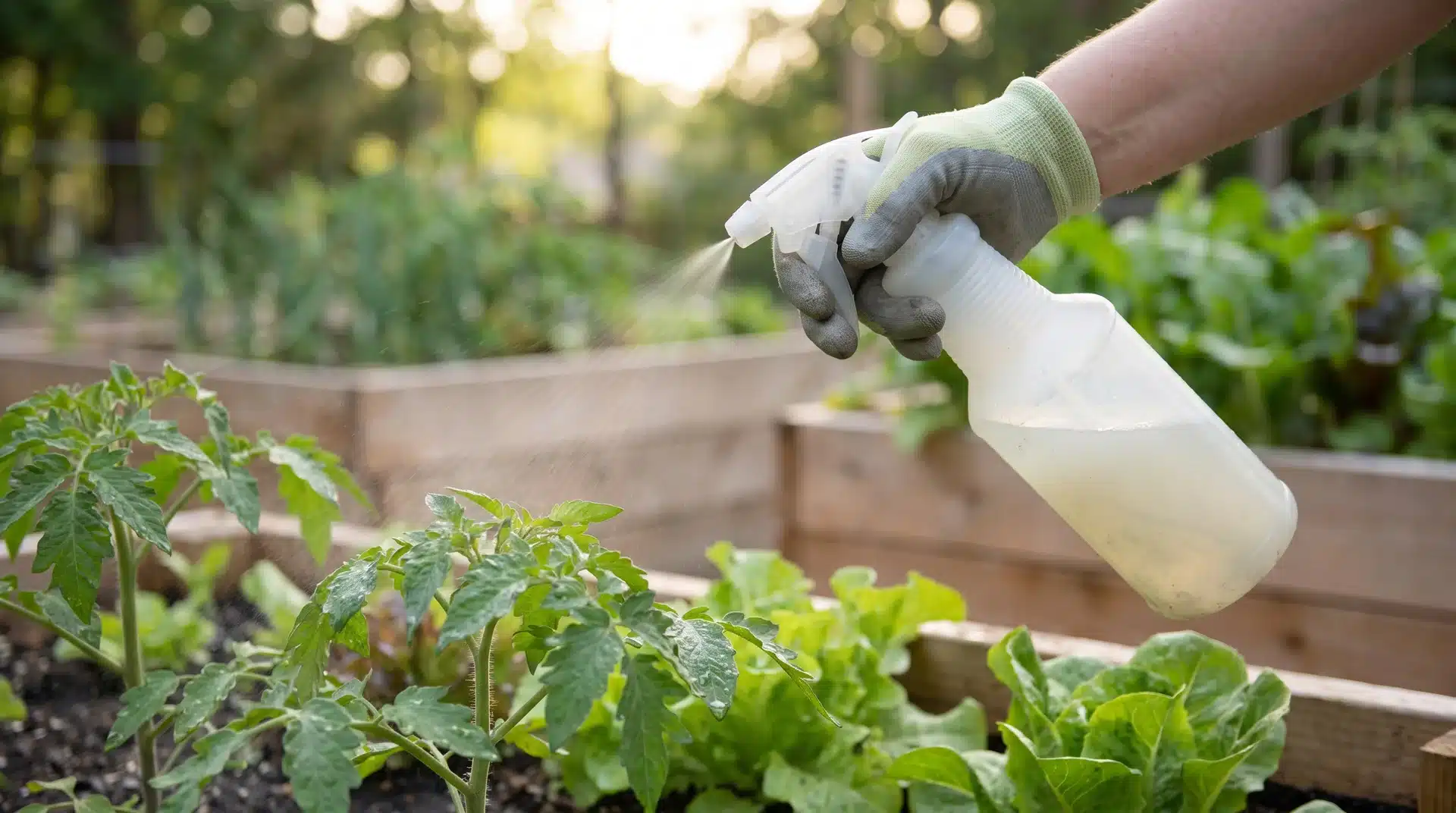
Egg and sulfur-based repellents rated best in that USDA Forest Service comparison, and products applied directly to leaf surfaces outperformed perimeter-release capsules.
As a beekeeper, I stick to sprays I can apply to foliage rather than blossoms, since I don’t want anything with a strong scent drifting onto flowers where my bees are working.
The most common repellent types:
- Egg and sulfur-based sprays: the most effective category. The smell is offensive to deer even when you can barely notice it yourself.
- Capsicum pepper sprays: work reasonably well when applied to foliage and reapplied after rain.
- Predator urine (coyote, wolf): less reliable in real-world yards than lab conditions suggest.
Application rules that matter:
- Apply to leaf surfaces, not just the soil around plants.
- Reapply after every significant rain, since rain washes scent away fast.
- New growth after your last application is unprotected. Reapply when plants flush.
The rotation rule: deer adapt to the same repellent over time. Rotate between two or three different products every two to three weeks. Hit them with enough different deterrents in the same yard and they tend to reroute elsewhere.
3. Motion-Activated Devices to Prevent Deer
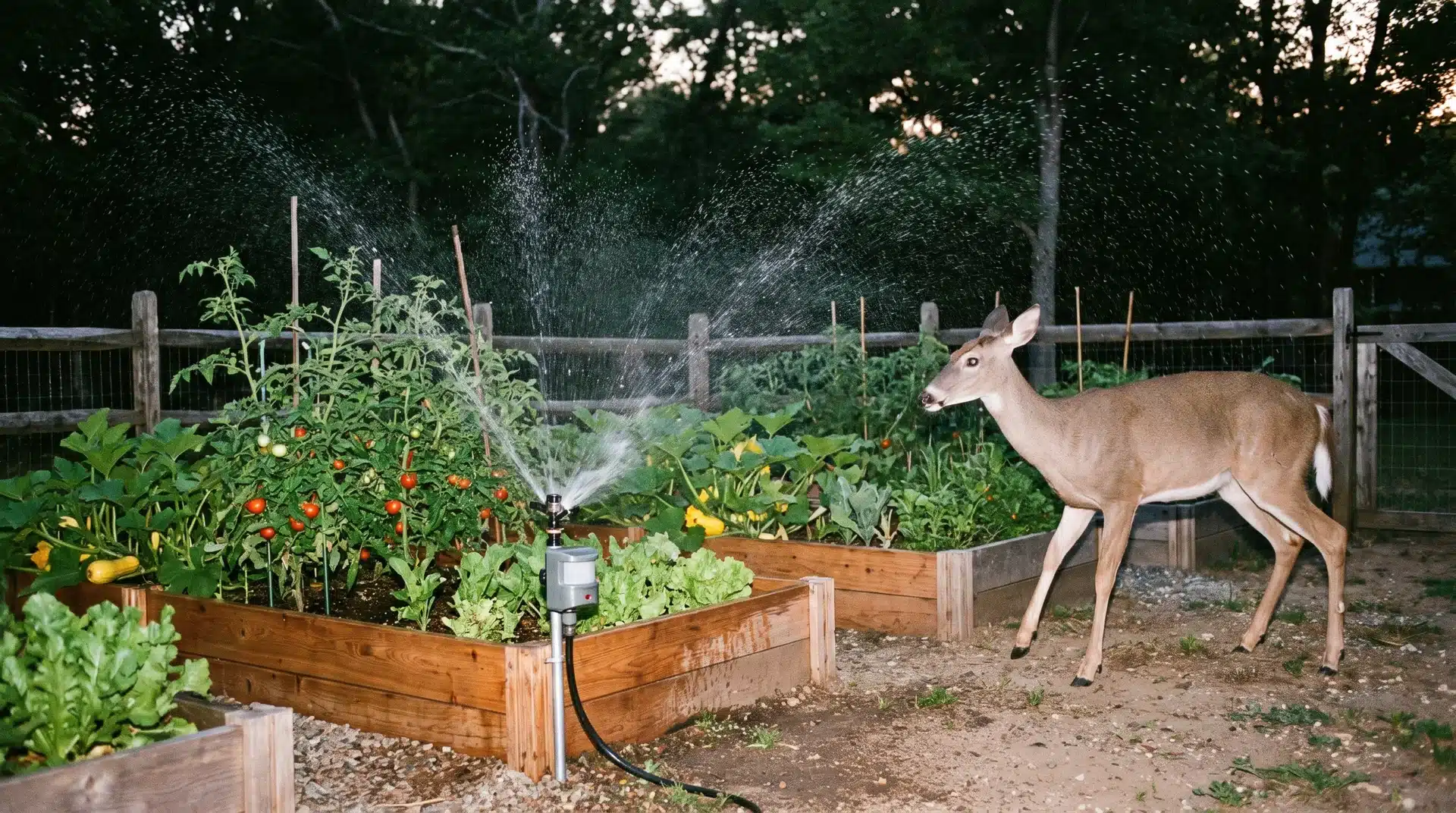
Motion-activated devices stop deer from settling into a routine in your yard. They work best before deer have decided your garden is a reliable food source.
Motion-activated sprinklers are the most effective option in this category. Look for infrared sensor models, such as the Orbit Yard Enforcer, that activate at night.
Move the sprinkler to a new spot every few days. A sprinkler left in the same position for two weeks loses most of its deterrent value.
Other useful options:
- Reflective objects like old CDs or pie tins that catch light and move in a breeze
- A small radio with human voices near the garden, which startles deer in lower-pressure areas
- A dog that patrols the yard. Deer respond strongly to scent, sound, and sight, so any dog that barks and moves freely is a real deterrent.
Rotate the type and location of every device regularly. Deer that keep running into surprises tend to find an easier place to eat.
What Do Deer Eat Most in a Garden?
Knowing what deer target most helps you decide which plants and beds need protection first.
In flower beds, deer go straight for hostas, tulips, daylilies, hydrangeas, azaleas, and arborvitae. Hostas are often the first to disappear overnight.
In vegetable gardens, they favor beans, lettuce, cabbage, broccoli, cauliflower, and Brussels sprouts. Rhubarb, asparagus, and garlic are among the few crops deer skip.
Young fruit trees are at risk year-round, not just from being eaten. Antler rubbing in late summer and fall can girdle a young trunk fast.
When food is scarce in winter, deer eat plants they normally avoid. No plant is completely off-limits to a truly hungry deer.
What Is the Best Fence to Keep Deer Out of a Garden?
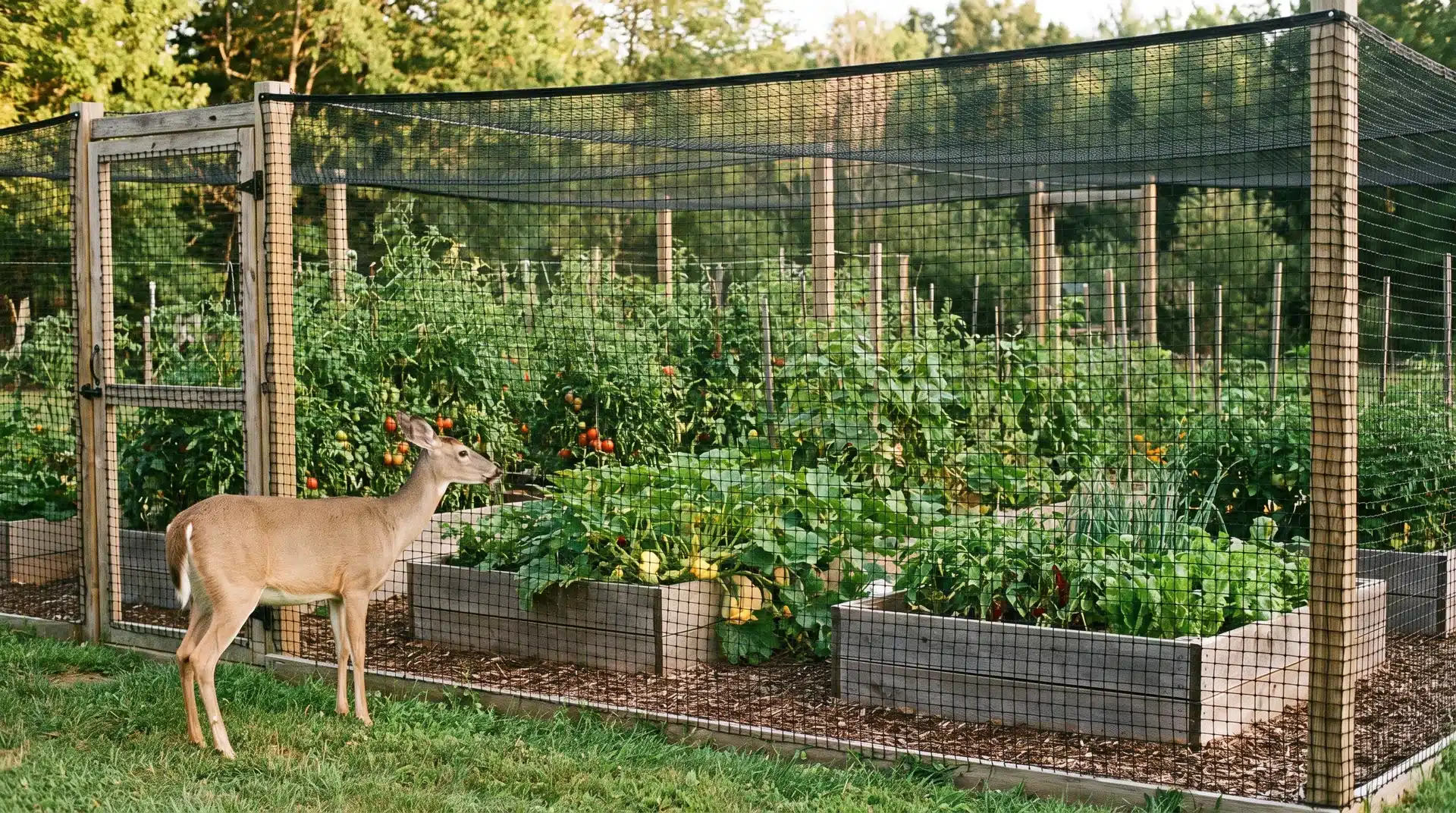
Fencing is the most reliable method for keeping deer out of your garden. Every other approach works best as a layer around it, not a replacement for it.
For smaller gardens, a homemade garden fence is a practical option, built from wire mesh, wooden stakes, or a simple barrier.
Height rules:
- 8 feet minimum for see-through wire or mesh fencing. Deer can clear a 6-foot wire fence from a standing start.
- 6 feet can work for solid, stockade-style panels, since deer hesitate to jump barriers they cannot see through and cannot judge their landing zone.
Your main options:
Polypropylene black mesh: the most affordable choice, nearly invisible from a distance, and easy to install yourself. Tie bright streamers to the fence for the first few months so deer don’t run through it by accident when startled.
Solid panel fencing: more expensive, but the sight barrier lets you use a shorter height. Works well for small yards near property lines.
Electric fencing: effective for orchards and large vegetable plots. Check local zoning laws first, and bait the second strand of wire with peanut butter to train deer to avoid contact.
Double fencing: two shorter fences, each 4 to 5 feet tall, spaced 4 to 5 feet apart. Deer have poor depth perception and won’t attempt to clear both barriers in sequence.
For individual plants you can’t bear to lose, wrap them in black bird netting. This works well for hostas and young hydrangeas.
How to Keep Deer Out of Your Garden Without a Fence
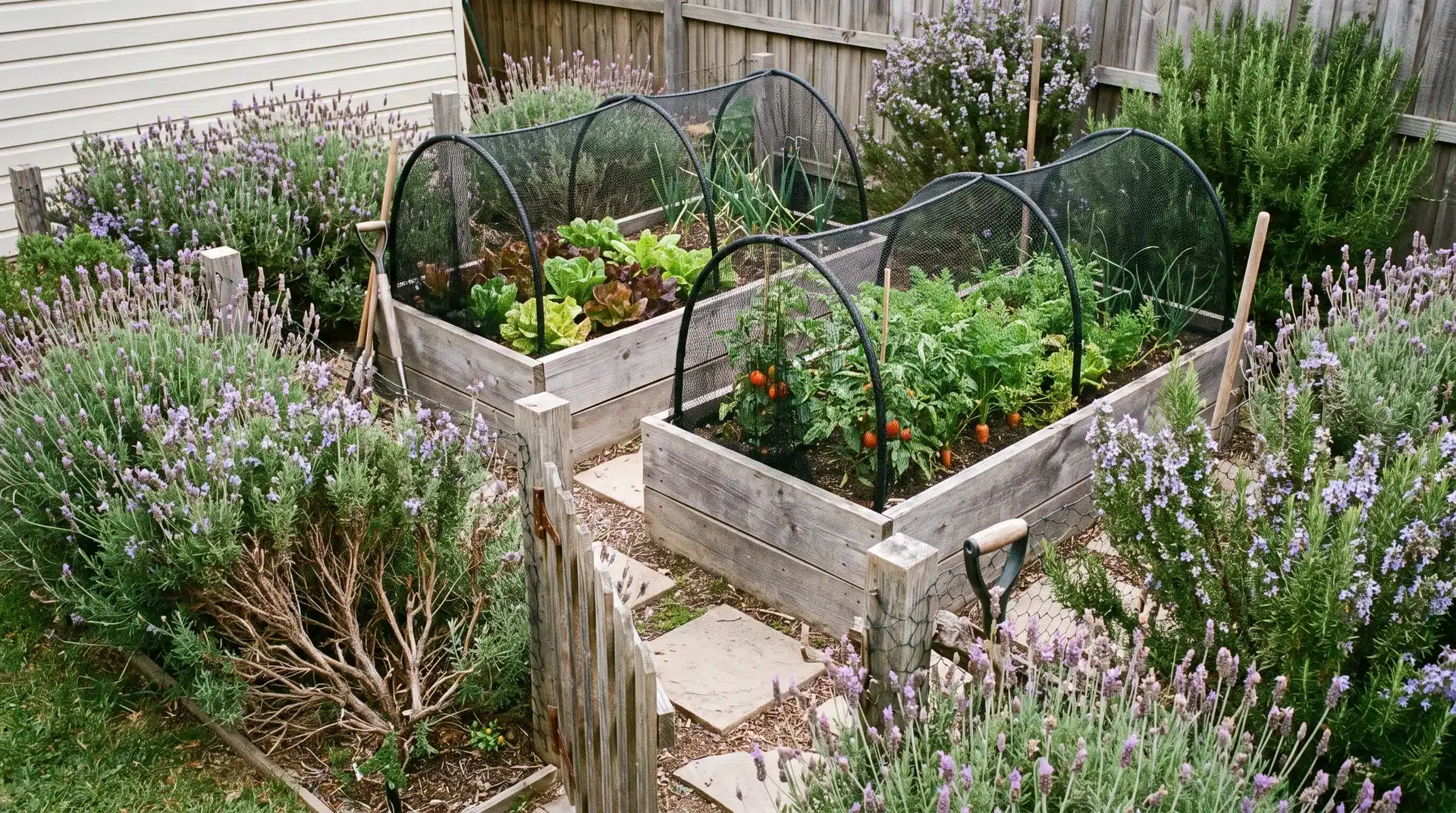
HOA rules, rental agreements, and tight budgets stop plenty of gardeners from building a proper fence. You still have practical options.
- Raised beds on a deck or porch: deer don’t climb stairs, so moving vulnerable plants off the ground removes them from deer traffic entirely.
- Zone-based planting: put deer favorites near the house where you can protect them, and plant deer-resistant species at the property edge to slow deer before they reach your beds.
- Scent repellent rotation: rotate two to three different products on a two- to three-week schedule. This is the most practical no-fence defense for most residential gardeners.
- Invisible netting over raised beds: black polypropylene mesh laid over beds acts as a physical barrier deer can’t see clearly, so they won’t jump onto it.
- Aromatic herb borders: dense plantings of lavender, mint, or rosemary along the garden edge create a scent barrier. Deer avoid strongly scented plants, and the scent that clings to their fur makes them easier for predators to catch.
Don’t use fishing line as a deer deterrent. It can tangle around legs and seriously injure deer and other wildlife.
How to Protect Young Trees From Deer
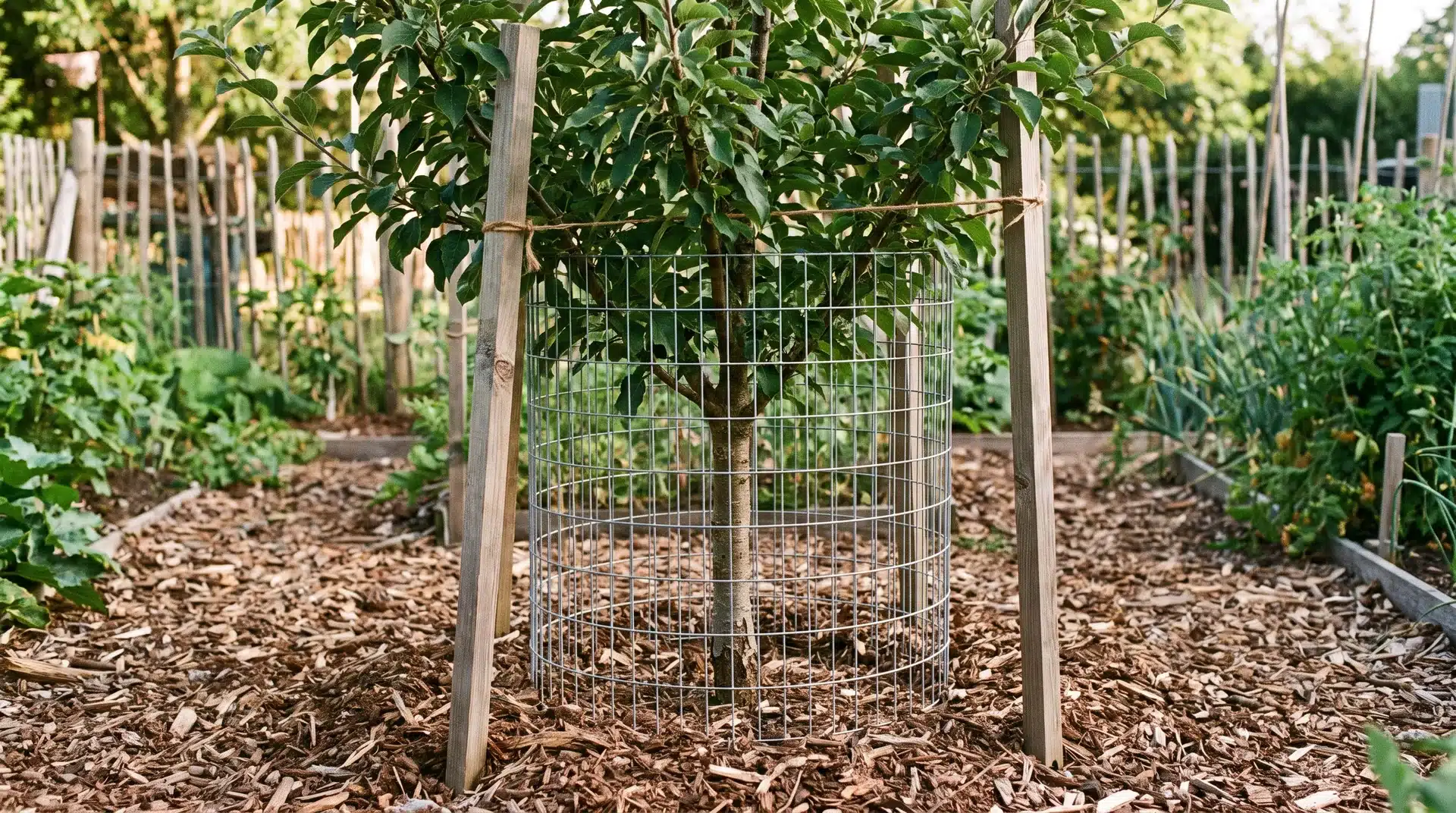
Young trees face two separate threats from deer. Most gardeners only know about the first one.
The first is browsing: deer eat the foliage, buds, and bark of young fruit trees throughout the growing season.
The second is buck rubs. In late summer and fall, male deer scrape velvet off their antlers by rubbing against woody trunks 2 inches or less in width.
These rubs strip bark in a ring around the trunk, which cuts off the flow of water and nutrients upward. Left unprotected, the tree dies.
To protect young trees:
- Wrap the trunk in plastic or paper tree wrap, and replace it each season to prevent moisture buildup and insect activity beneath the wrap.
- Build a wire cage around the trunk, held up with stakes, with a few inches of space between the cage and the bark.
- Use tree tubes or tree shelters for newly planted specimens. These cost as little as $1 each and protect the trunk until the tree is thick enough to handle minor damage.
How Do You Know Deer Are Damaging Your Garden?
Before you spend money on solutions, confirm deer are the actual problem. Rabbits and groundhogs cause similar-looking damage at first, but deer leave different clues.
- Ragged, torn leaf edges: deer have no upper front teeth, so they tear plants rather than cut them. Rabbits leave clean, sharp cuts.
- Hoof prints: look for cloven prints shaped like upside-down hearts. In soft soil, you may see deep cylindrical holes instead.
- Droppings: deer leave small, dark, oval pellets near browsed plants.
- Browse height: deer stand 3 to 4 feet at the shoulder and reach 6 to 7 feet when stretching. Damage above that height is unlikely to be from deer.
- Seasonal patterns: spring brings heavy feeding on new shoots. Late summer brings buck rubs, which look like stripped or scraped bark on young trunks.
Central Texas deer pressure follows its own rhythm. Around my place, browsing spikes hardest in late summer, once the native grasses dry out and deer start looking for anything green.
Building a Defense That Actually Holds Up
No single method keeps deer out of your garden forever. Deer adapt, and whatever you put in place today, they will eventually test it.
The gardeners who manage deer well stack their defenses. A fence handles the worst of it. Rotated repellents cover new growth between fence checks. Motion-activated sprinklers or a dog patrol the gaps. When one layer stops working, another one is already holding the line.
Keep the rotation habit at the center of it all: switch up your repellents, move your sprinklers, and change what you use and where you place it.
Deer that keep hitting different obstacles tend to find an easier place to eat, and that place is usually not your garden.
What has worked best for keeping deer out of your garden? Share it in the comments below.
Frequently Asked Questions
What do deer hate most in a garden?
Deer avoid strong scents like garlic, mint, lavender, predator urine, and hot pepper. They also steer clear of sudden movement, unfamiliar objects, and areas with frequent human activity.
Does Irish Spring soap actually deter deer?
Yes, temporarily. Its strong fragrance can put deer off for a while, but rain and hungry deer both cut into its effectiveness fast.
What noises scare deer away?
Loud, unexpected sounds work best: barking dogs, air horns, and motion-activated alarms. Deer get used to repeated noises that never lead to real danger.
Do the same methods work for keeping voles out of the garden too?
Not quite. Voles tunnel underground, so scent repellents and fencing height matter less than barriers below the soil line.



One Response