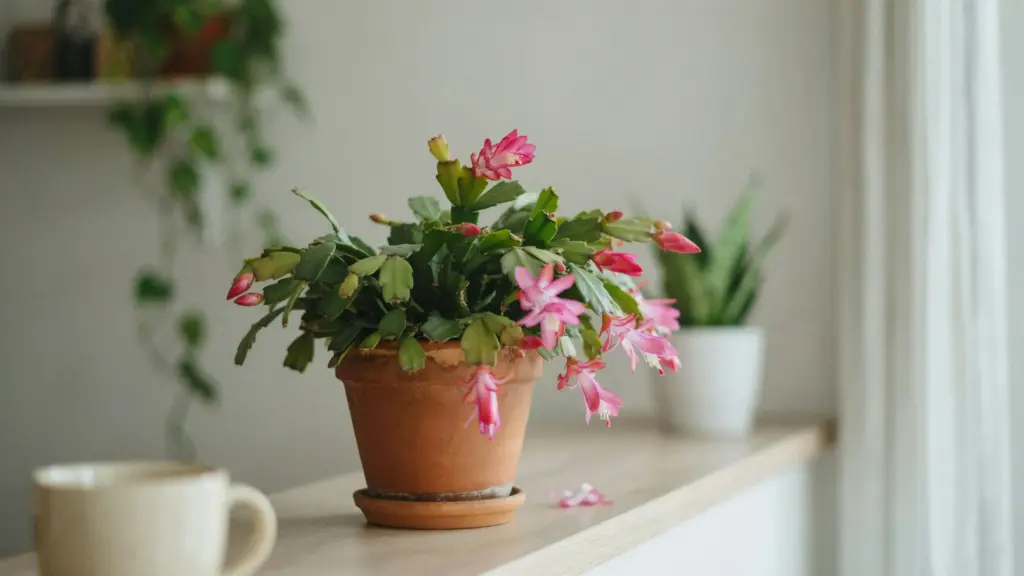
Quick answer
How do you care for a Christmas cactus and get it to bloom for the holidays?
Give a Christmas cactus bright, indirect light, fast-draining soil, and water when the top inch or two feels dry. Keep it at 65 to 75°F by day; for winter blooms, provide six to eight weeks of 13 to 14 hours of darkness nightly, with cool nights between 50 and 60°F, starting in early October.
The first Christmas cactus I brought home from the grocery store was covered in buds. Two weeks later, half of them were on the floor. I had parked it on my sunniest windowsill, the way you would a desert cactus.
Christmas cactus care gets easy once you know where the plant comes from. It grows on tree branches in Brazilian rainforests, so it wants filtered light, steady moisture, and shelter from harsh sun.
Once I switched to rainforest-style care, mine started blooming every winter. This post covers the full routine, from light and soil to the dark-period schedule that sets buds.
What Kind of Holiday Cactus Do You Actually Have
Many plants sold as “Christmas cactus” are really Thanksgiving cactus (Schlumbergera truncata), and the two get mixed up all the time. Thanksgiving cactus has pointed, claw-shaped edges on each stem segment, and its flowers face upward. It blooms in late fall.
True Christmas cactus has rounded, scalloped edges, and its flowers hang down. It blooms a few weeks later, from early to midwinter.
A third type, Easter cactus (Schlumbergera gaertneri), has smoother edges still and blooms in spring. The care for all three is nearly the same, so I don’t stress about telling them apart beyond knowing when to expect flowers. Rainforest cousins like the fishbone cactus follow the same filtered-light, steady-moisture rule.
How to Care for a Christmas Cactus
The University of Wisconsin-Madison Division of Extension sums up the baseline as bright, indirect light and moderate temperatures. Here is how I handle light, soil, water, temperature, and feeding.
1. Light
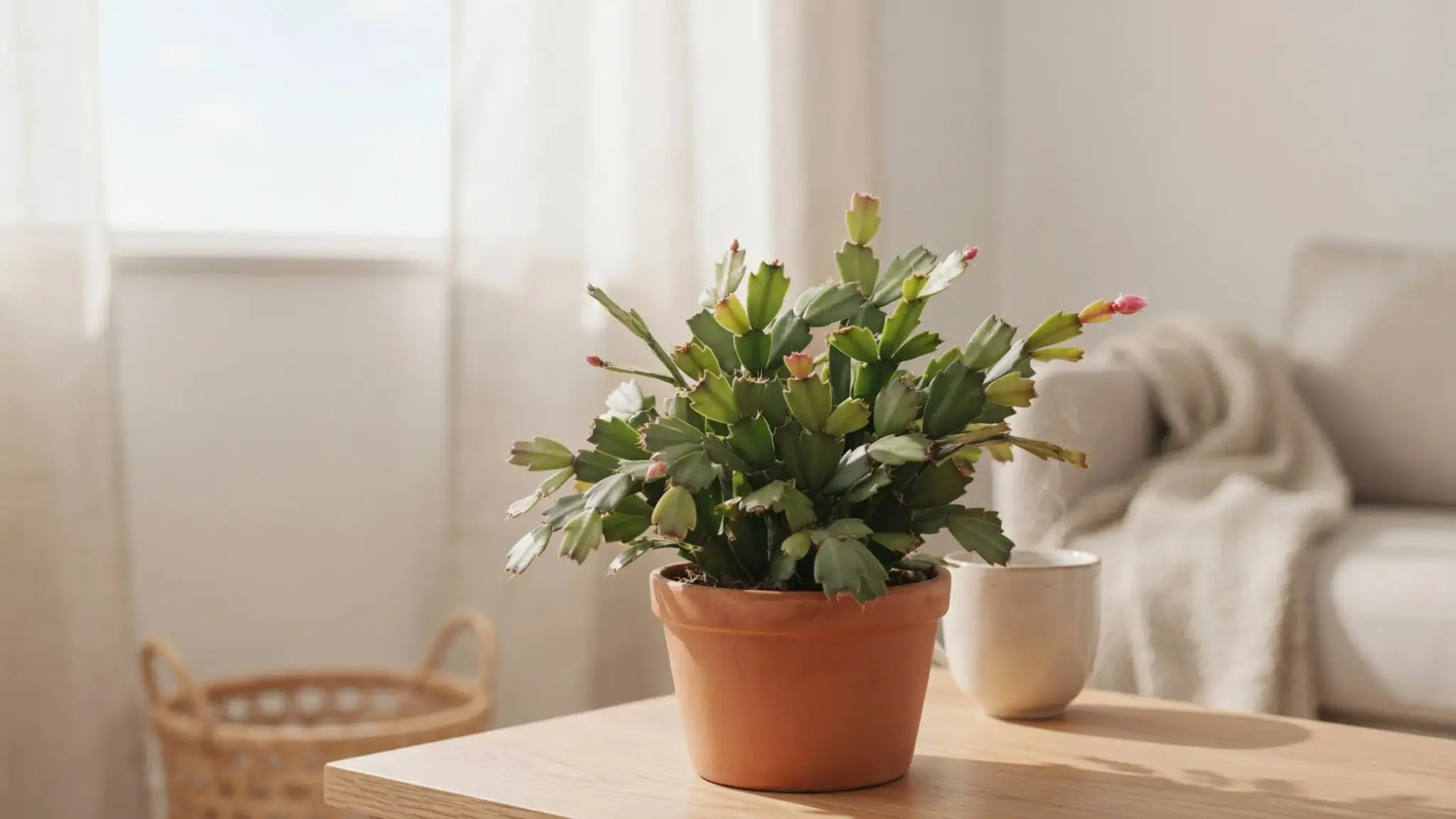
Give your plant bright, indirect light for most of the year. A spot a few feet back from an east- or north-facing window delivers bright indirect light without the scorch.
Direct afternoon sun burns the flat stem segments and leaves pale or brown patches. Morning sun is gentle enough that I don’t worry about it. In the darker months, we can slide the plant closer to the window so it doesn’t stretch toward the light.
2. Soil and Potting
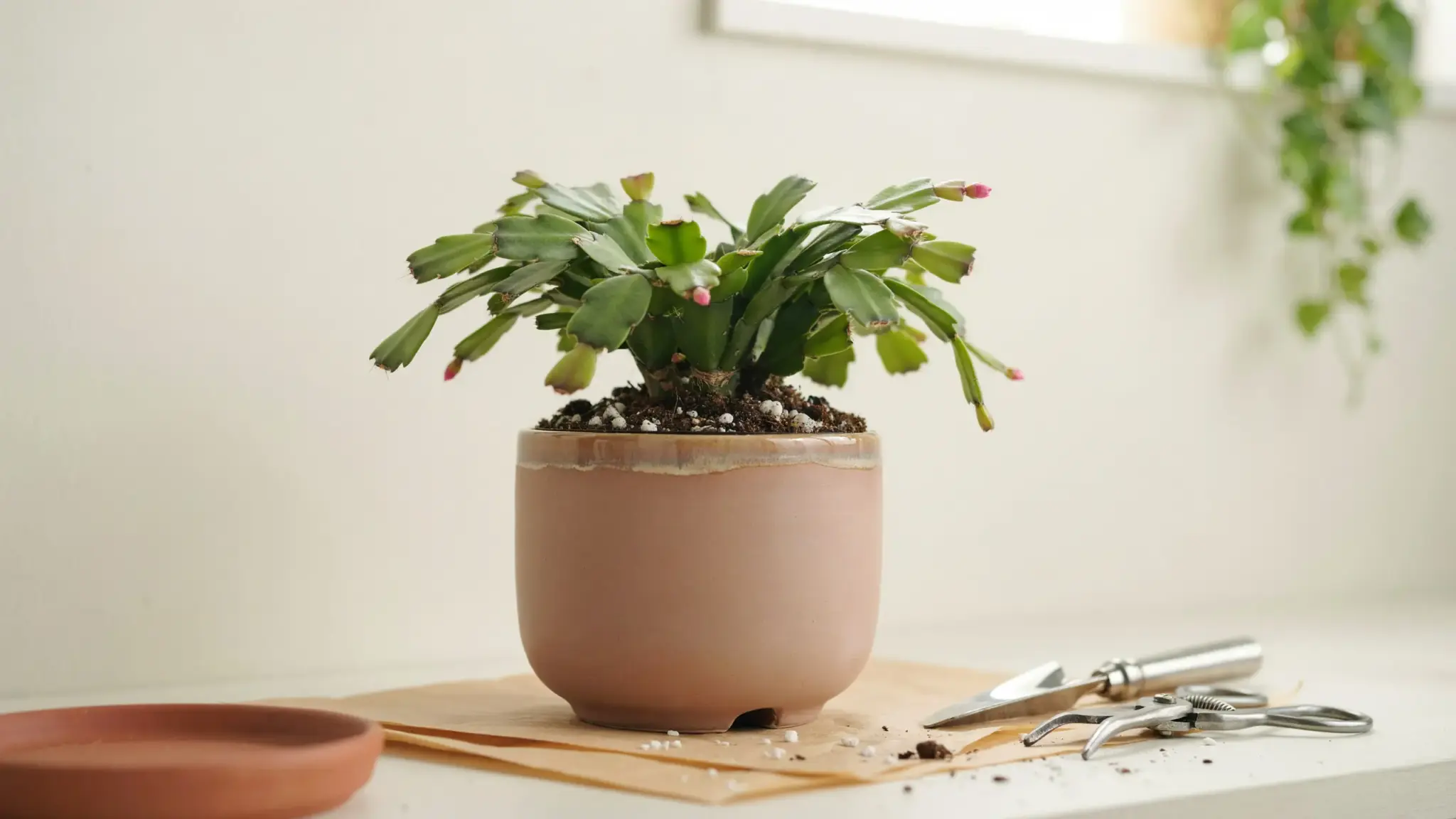
Gritty mix, one drainage hole, no drama.
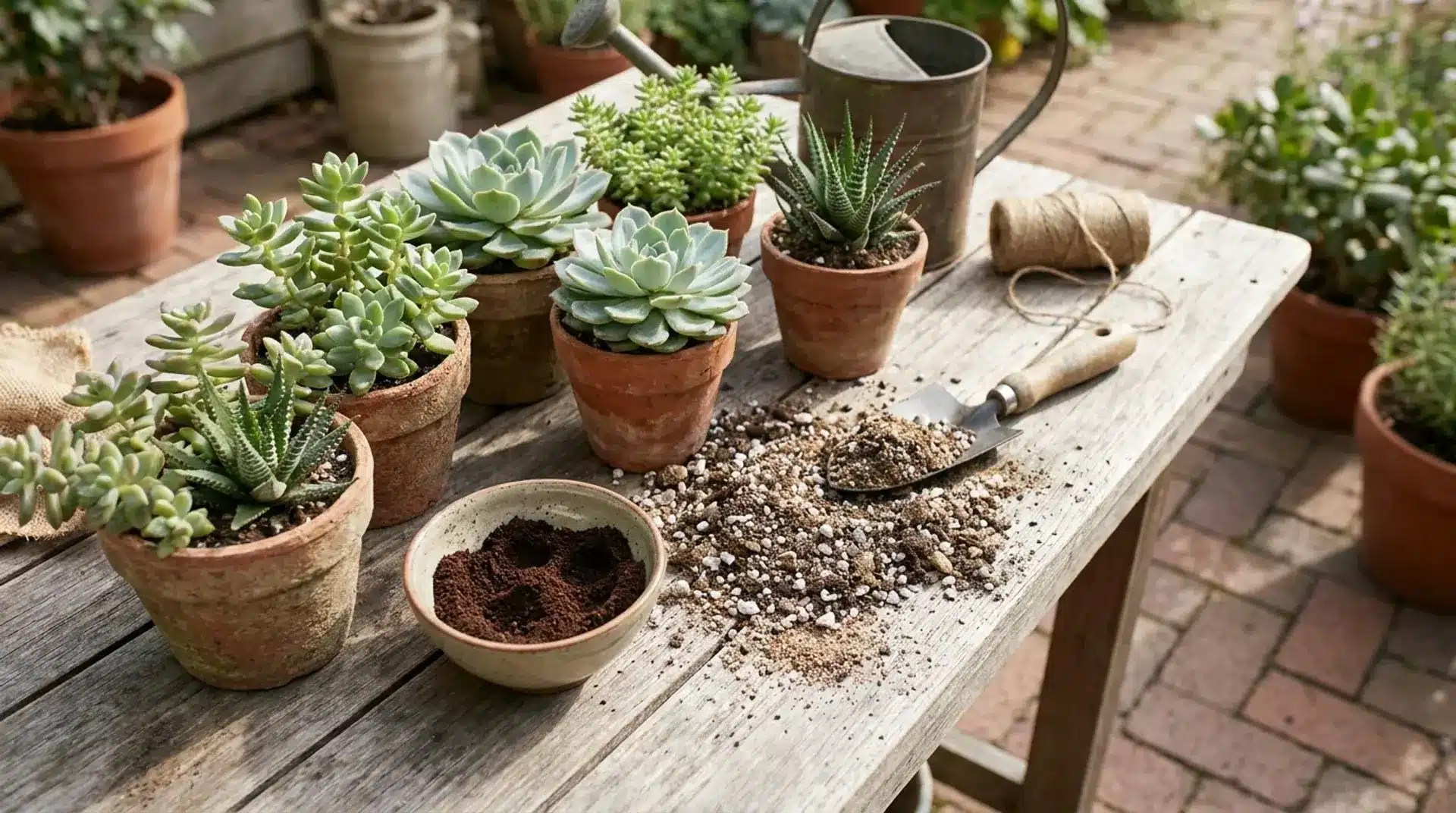
Christmas cactus needs fast-draining soil, since roots that sit in wet soil rot. A standard potting mix cut with perlite or coarse sand works fine.
The Missouri Botanical Garden suggests a mix of soil, peat moss, and sand. One version is one part potting soil, two parts peat moss or compost, and one part sharp sand or perlite. For something simpler, use two parts potting mix to one part sand or perlite.
Pick a pot with a drainage hole and resist sizing up. This plant blooms better with slightly crowded roots. I repot every two to three years, right after flowering in late winter or spring.
3. Watering
Water until it runs out the bottom, then empty the saucer.
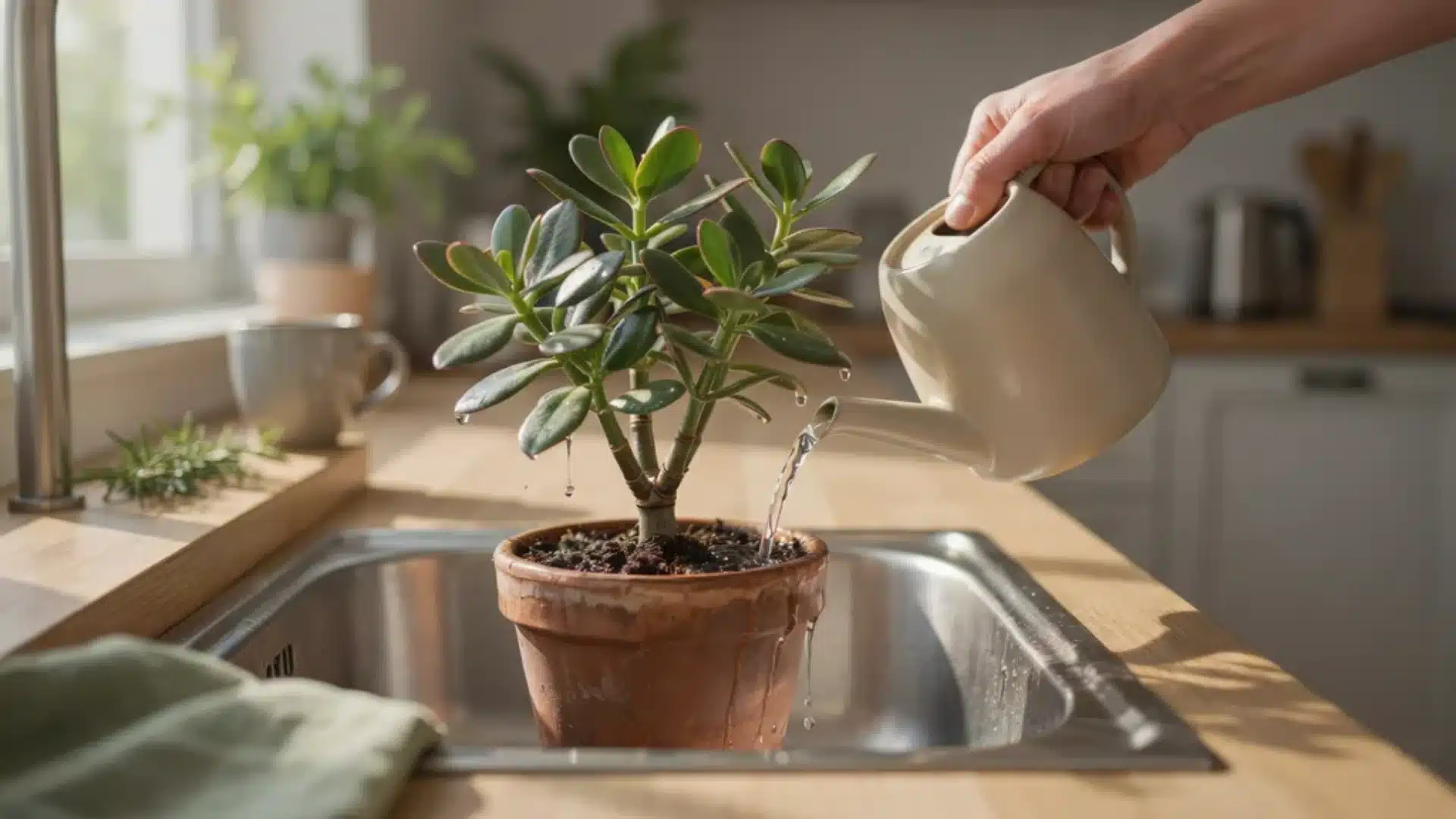
Water deeply when the top inch or two of soil feels dry, then let the excess drain completely. I empty the saucer so the pot never sits in water.
From spring through summer, when the plant is growing, I water about once a week. In fall and winter I cut back and let the soil dry out more between waterings (the finger test works for watering most houseplants).
Too much water and too little can both make the stem segments go limp and wrinkled, so I check the soil with a finger before I assume the plant is thirsty. Guessing wrong in either direction gives the same droopy look.
4. Temperature and Humidity
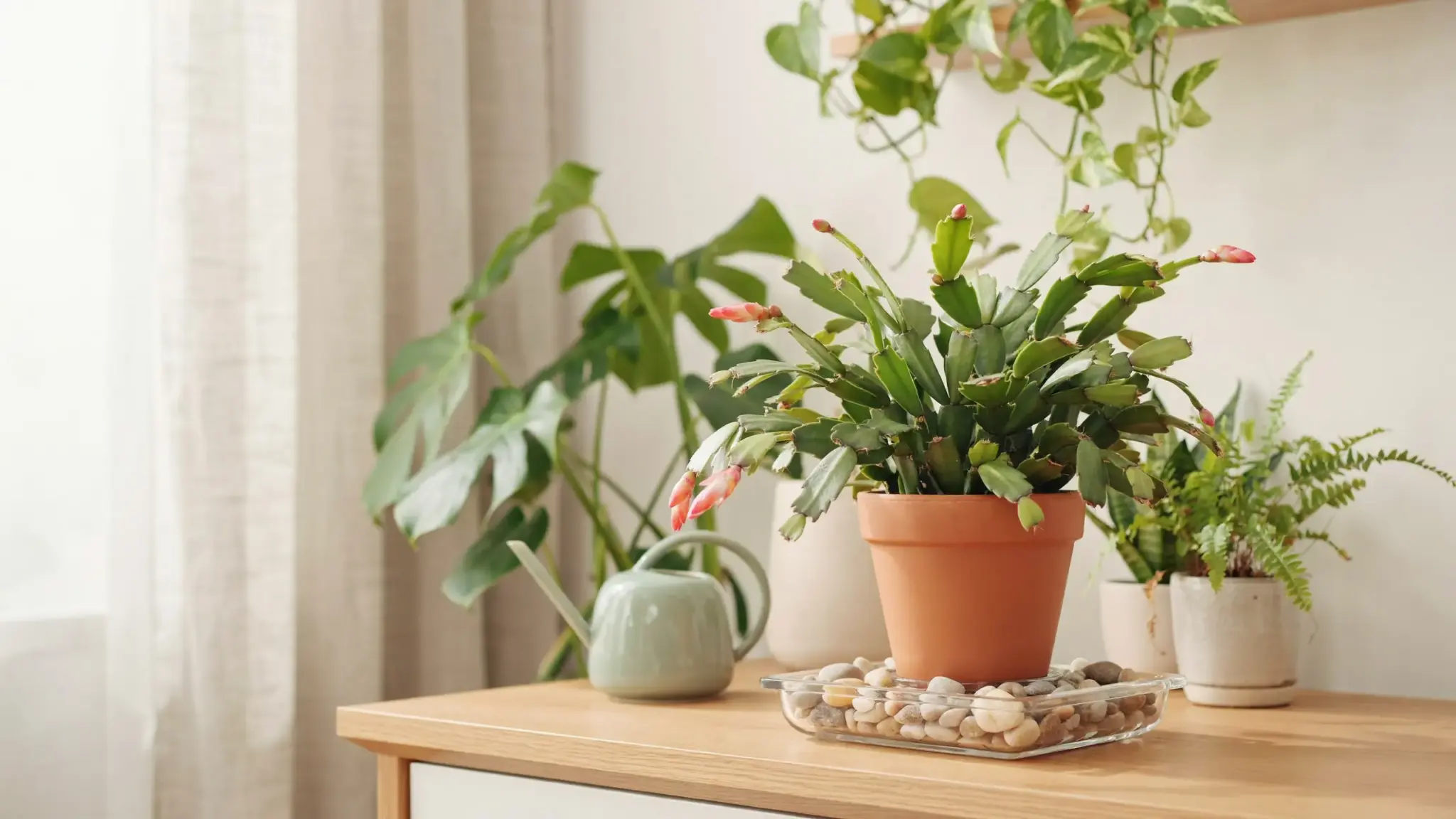
Pebble tray, bright room, no vents nearby.
Keep daytime temperatures around 65 to 75°F and nights a little cooler, around 55 to 65°F. Sudden temperature swings can make buds fall before they open, so I keep the plant away from heating vents, drafty doors, and fireplaces.
This plant likes more humidity than a typical living room offers, around 40 to 50% or higher. A few fixes help a lot:
Set the pot on a tray of pebbles with a little water, keeping the pot above the waterline
Group it with other houseplants, since plants raise humidity for each other
Place it in a bright bathroom or kitchen, where moisture in the air runs higher
5. Fertilizing
Feed every two to four weeks from spring through summer with a balanced liquid fertilizer, mixed at about a quarter of the label’s recommended strength.
The roots are small and fine, and a full-strength dose can burn them. I stop feeding in early fall, before the dark period starts, and wait until new growth shows up in spring to begin again.
How To Get Your Christmas Cactus to Bloom on Time
Blooming starts with cool nights and long stretches of darkness. The date on the calendar matters less. For flowers by the holidays, begin in early October.
Give the plant six to eight weeks of 13 to 14 hours of uninterrupted darkness each night, with temperatures between 50 and 60°F.
A spare room that stays dark and cool at night works well. We can also cover the plant each evening and uncover it in the morning. Even a short burst of light from a lamp or hallway can reset the clock, so pick a spot where that won’t happen.
Once buds appear, move the plant back to its normal spot and go back to regular watering. Poinsettias need long nights too before they color up by December, so a dark closet can pull double duty.
Started Late? The November Plan
If you’re reading this in November, there’s still time. Start the cool, dark routine tonight, and the flowers will likely arrive in January instead of December.
Late blooms still count.
A Month-By-Month Care Calendar
January through March: the plant rests after blooming. Water less and skip fertilizer until new growth shows up.
April through June: growth picks up again. This is the best window to repot or take cuttings (twist off a piece two or three segments long and root it in moist mix).
July through August: active growth continues. Water and feed on a regular schedule.
September: stop feeding, ease back on water, and settle the plant in a cool spot.
October: start the 13 to 14 hours of darkness and keep it going for six to eight weeks. Leave the plant where it is once buds show.
November through December: enjoy the blooms. Water consistently and avoid any sudden changes in light or temperature.
Caring for an Older or Heirloom Plant
Christmas cactus often gets passed down through a family for decades. As a plant ages, the base of its stems turns woody and hard. That’s normal for an old plant. What matters is fresh green growth still coming from the tips.
Long, heavy stems can split under their own weight near the base, which opens the plant up to disease. I trim back no more than a third of any one stem at a time to keep it balanced.
If you inherit a very old, root-bound plant, go one pot size up and stop there. A big jump in pot size usually means fewer blooms the next winter, because the plant spends its energy on new roots instead of flowers.
Why Isn’t Your Christmas Cactus Blooming?
A few causes explain most bloom problems, and most bud drop too:
Too much artificial light at night, which blocks the dark period the plant needs to set buds
A sudden move or temperature change while buds are forming
Both over- and under-watering during the budding stage
Low humidity in the room
Not enough of a cool, dark rest period before the growing season starts
Pests to Watch For
Mealybugs and spider mites are the two I watch for. Mealybugs look like small, white, cottony spots along the stems.
Spider mites leave fine webbing and tiny speckled marks. A cotton swab dipped in rubbing alcohol wipes mealybugs off, and insecticidal soap works on both.
The same fixes apply to most other bugs on indoor plants.
A Note on the Calendar Does Most of the Work
I set a phone reminder for early October, and my plant has bloomed every December since. Jotting down the start date, the temperature, and how dark the room stays makes the next year easy to repeat. A plant that forgives a first-year windowsill mistake is worth keeping for decades, and there are other holiday plants worth growing if you want to fill the shelf.
Frequently Asked Questions
What Do Coffee Grounds Do for Christmas Cactus?
A thin sprinkle of used, dried grounds won’t hurt, but it won’t do much either. Thick layers stay wet and can mold. I stick with quarter-strength balanced fertilizer.
What's the Life Expectancy of A Christmas Cactus?
Often 20 to 30 years, and plants handed down in families can last 50 years or more. Overwatering and root rot are the biggest threats.
Is Christmas Cactus Safe for Pets?
Yes. The ASPCA lists Christmas cactus (Schlumbergera) as non-toxic to cats, dogs, and horses. A big nibble can still upset a stomach, so call your vet if symptoms show.
Do You Water a Christmas Cactus From the Top or the Bottom?
Top watering is fine. Water until it drains from the bottom, then empty the saucer. Bottom watering works too, if you drain the pot fully afterward.
How Is Christmas Cactus Care Different From Poinsettia Care?
Poinsettias want brighter light and warmer rooms, and rebloom takes most of a year. A Christmas cactus wants filtered light and a six-week cool, dark fall.