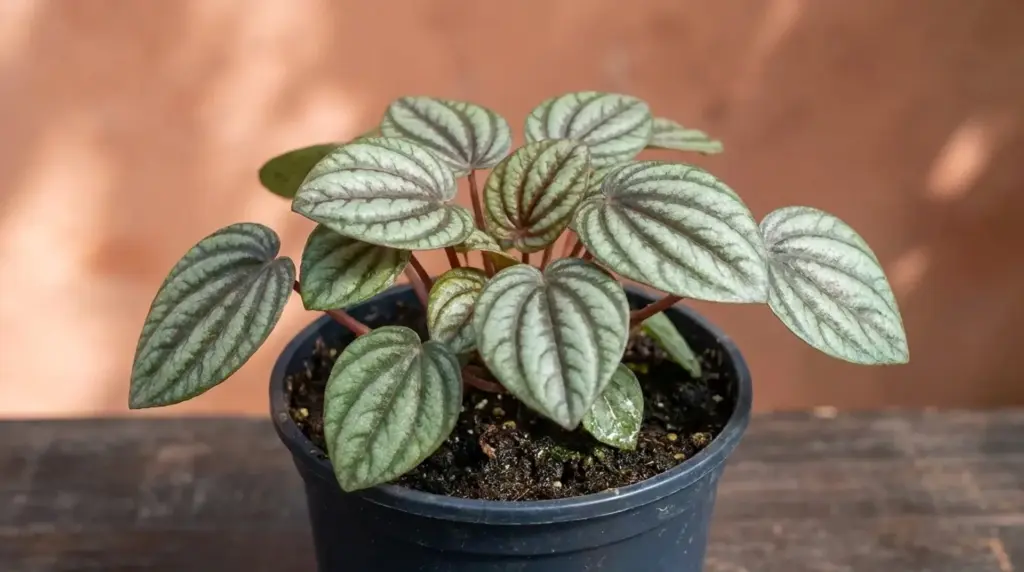
This cutie is Peperomia albovittata, ‘Piccolo Banda’, sometimes called Peacock Peperomia for its green and reddish color.
I found mine on a nursery hunt for something that wasn’t all green, and it was in my cart before I finished reading the tag. If you’re familiar with Peperomia, you know it’s a huge genus with a wide range of looks and different levels of care needed.
The Piccolo Banda peperomia is more similar to other Peperomia such as Peperomia caperata than it is to the more succulent varieties like Peperomia obtusifolia.
This type of Peperomia can sometimes be a little mysterious to both newbie plant parents and experienced plant parents alike.
That’s why we’ve collected all the info you’ll need to keep your new Peacock Peperomia happy, from light and water to cuttings and pet safety.
Meet the Peacock Peperomia and Its Striking Foliage
The Peacock Peperomia packs a lot of pattern into a pot about four inches wide. Peperomia albovittata is native to Ecuador, and ‘Piccolo Banda’ is a cultivar of it, grown for silver-green leaves with burgundy veining on reddish stems.
Like others in the Peperomia genus, it grows epiphytically (that means on trees, not in the ground) in humid rainforests, which is why it wants airy soil.
It stays compact at about 8 to 12 inches tall, so it fits on a shelf or a windowsill. Small flower spikes may show up in the warm months, though I grow it for the leaves.
Watermelon peperomia (Peperomia argyreia) is a different plant, so double-check the botanical name on the tag before you buy.
Most of the newbies do fine with the Piccolo Banda, and a few other easy houseplants make good windowsill neighbors.
Piccolo Banda Care Tips
Care comes down to light, water, and airy soil, and each one affects the others.
1. Light Requirements
Peperomia albovittata or ‘Piccolo Banda’ does best in bright indirect light. You can grow your plant in medium indirect light, but you will need to adjust how often you water accordingly.
The less light a plant is receiving, the less frequently you will need to water. Direct sun scorches the leaves and fades that pretty pattern, so I keep mine a few feet back from a south window or right beside an east one.
2. Watering Tips
Like most Peperomia, Peperomia albovittata does not like to sit in wet soil. Allow about half of the soil to go dry before watering again.
The leaves hold some water, so a skipped week is easier to forgive than a soggy pot. I check by lifting the pot (a light pot means dry soil) and by feel, the same way I handle watering houseplants in general.
Water at the soil rather than over the leaves, and empty the saucer after about 15 minutes.
3. Soil, Pot and Feeding
Because Peperomia albovittata is an epiphyte, it will appreciate being potted in an airy, well-draining soil. Any good indoor potting mix works if you cut it with perlite or orchid bark so water runs through fast.
I use about two parts mix to one part perlite. If mixing feels like a hassle, a bagged chunky aroid mix does the job. A 4-inch pot with drainage holes is plenty, and I repot every year or two, when roots start poking out the bottom.
Feed once a month in spring and summer with a balanced liquid fertilizer at half strength, and skip it in winter.
4. Humidity and Temperature
Average household humidity suits it fine, somewhere around 40% to 60%. I keep mine in a room that stays between 65°F and 80°F, away from cold drafts and heating vents.
A small pebble tray nearby can help maintain gentle humidity, but avoid letting the pot sit in standing water.
How to Propagate Peperomia Albovittata
Leaf and stem cuttings both work, and I start mine in late spring, when the days are long and the room sits around 72°F to 80°F.
Take the cutting: Snip a stem with two or three leaves just below a node (the little bump where a leaf joins the stem). For a leaf cutting, take one healthy leaf with a short bit of stem attached.
Plant it: Set the cut end in a damp, airy mix and cover the pot loosely with a clear bag to hold in humidity.
Wait: Keep it in bright indirect light and don’t let the mix dry out completely. Roots usually show up in a few weeks.
My Peperomia albovittata is the plant that finally broke up the wall of green on my shelf. It asks for bright light and a light hand with the watering can, and it pays you back with that silver and burgundy pattern.
Frequently Asked Questions
Why is peperomia called a radiator plant?
Peperomia is called the radiator plant because it loves warm, dry air and thrives in sunny indoor spots like a windowsill above a heating radiator.
How can I make a peperomia bushy?
To make a Peperomia plant bushy and full, you need to combine proper pruning with the right light and growth habits. Use clean, sharp scissors or pruners to pinch or cut the growing tips (the very top of the stems) just above a leaf node.
What is the average lifespan of a peperomia plant?
A single Peperomia specimen typically lives for 5 to 10+ years indoors under proper care conditions. Its decline is usually caused by environmental stress, improper watering, or root rot rather than old age.