You checked on your pothos this morning, and something looked off. The new leaves were curled, and there was a sticky film on the stems.
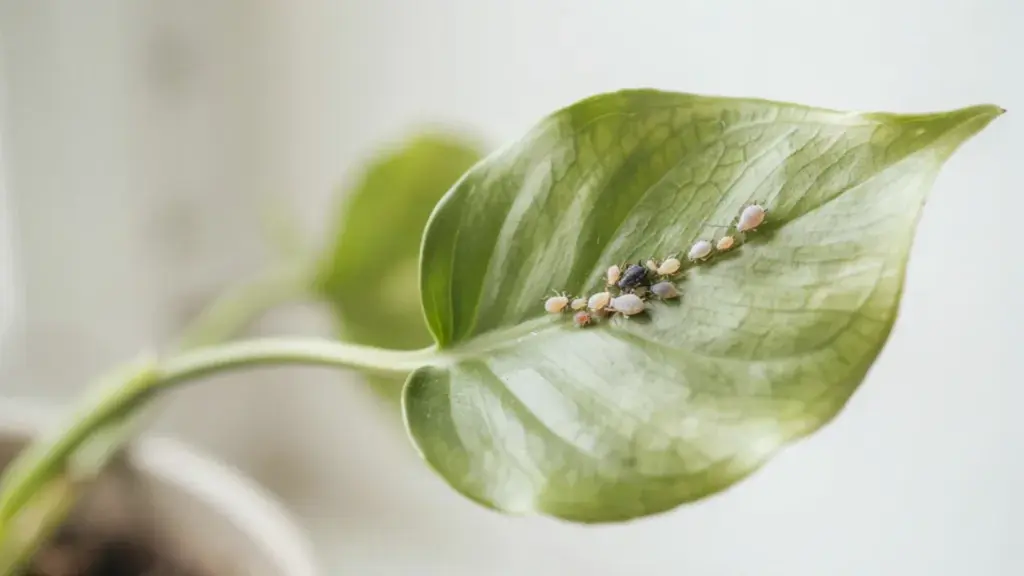
When you flipped a leaf over, you saw tiny clusters of soft, slow-moving insects packed tight on the underside.
That is aphids on houseplants, and yes, it feels unsettling the first time you see it.
I get calls about this more than almost any other houseplant bug. Aphids are usually the first pest people learn to recognize on sight, and the good news is you caught it. With the right steps, your plant can fully recover.
This post covers exactly how to confirm what you are dealing with, how to treat it fast, and how to keep aphids from coming back.
What Are Aphids and Why Do They Target Houseplants?
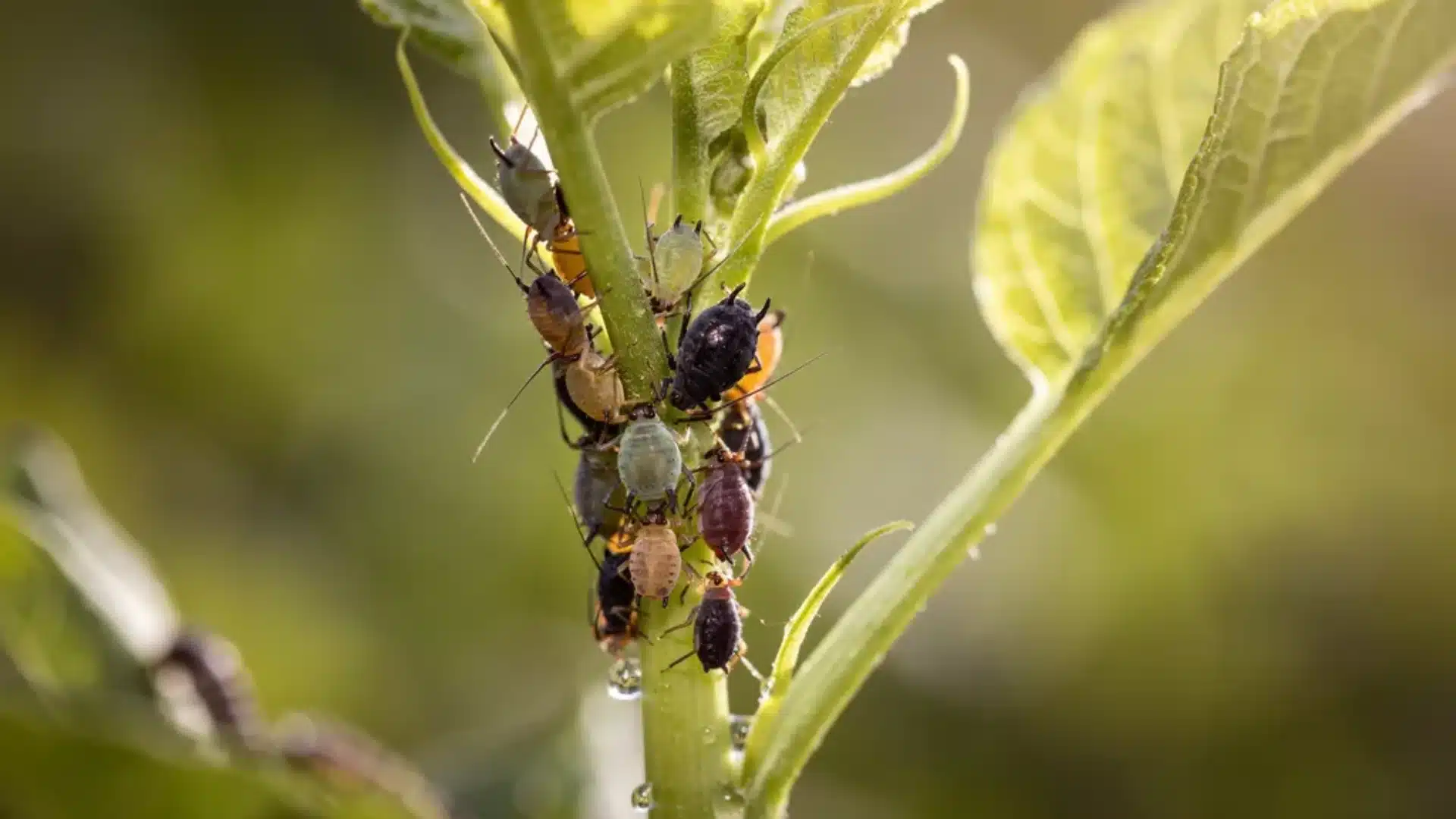
Aphids are tiny, soft-bodied insects that feed by sucking sap directly out of plant tissue. They are usually 1/16 to 1/10 inch long, with pear-shaped bodies and two small, tube-like structures called cornicles projecting from their rear end.
The cornicles are the clearest giveaway if you are trying to confirm what aphids look like up close. That is one feature no other common houseplant pest has.
They come in green, black, yellow, red, brown, and white, and the species usually matches the color of the plant it feeds on, which helps it stay hidden.
Aphids are among the most common pests on indoor plants. Plants that spend summer outdoors sometimes carry eggs or live aphids back inside for winter, and low indoor humidity from heating stresses plants, making them easier targets.
Most importantly, there are no natural predators indoors. Outside, ladybugs and lacewings keep aphid populations in check. Inside, nothing stops them from reproducing unchecked.
I keep bees outside, so the first thing I tell people is to treat indoor pests with the same products they would feel fine spraying near a hive. That is why soap and neem oil are the starting point here, not a synthetic pesticide off the shelf.
One or two aphids can turn into a full infestation within days. A generation cycle can complete in as little as two to three weeks.
Signs of Aphids on Houseplants
Catching an infestation early makes treatment much easier. Here are the most reliable signs to look for:
1. Curled or puckered new leaves: Aphids feed on the youngest, softest growth, which causes new leaves to curl, twist, or distort. This is often the first visible symptom.
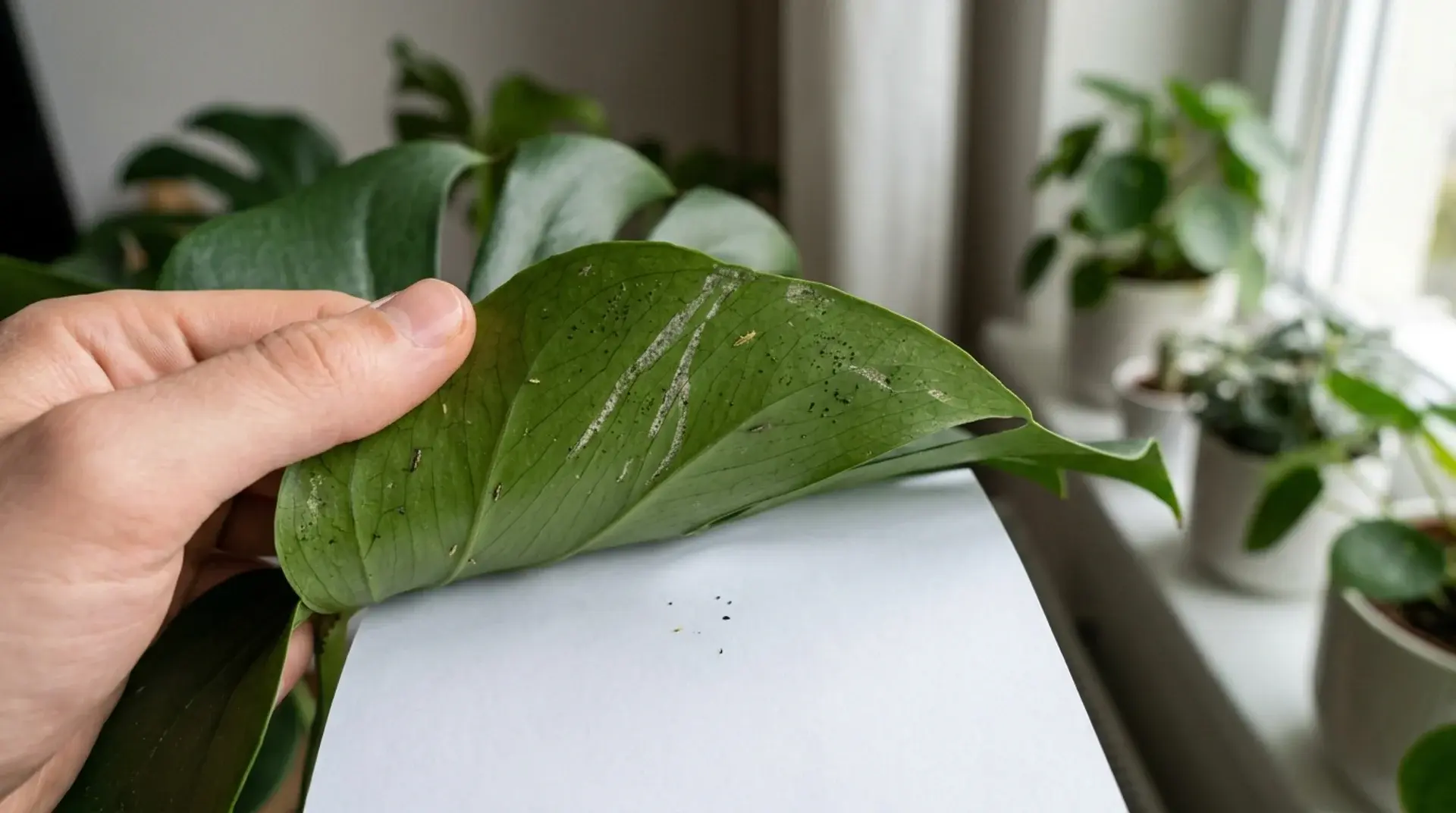
2. Sticky residue on leaves or nearby surfaces: Aphids excrete a sugary substance called honeydew as they feed. Tacky leaves or a sticky film on the shelf below the plant point straight at aphids.
3. Black sooty patches on leaves: Sooty mold grows on top of honeydew deposits, showing up as dark, powdery patches that block light from reaching the leaf surface.
4. White shed skins on leaves or in the soil: Aphids molt as they grow, and the discarded white skins collect on leaves and in the topsoil. Easy to spot on dark-leafed plants.
5. Stunted growth or yellowing leaves: Aphids drain sap over time, so the plant loses key nutrients it needs for new growth. Growth slows, and leaves turn yellow.
6. Ants walking on or near the plant: Ants farm aphids for their honeydew. Ants on a plant that was previously ant-free are a reason to check underneath the leaves.
Start your inspection at the stem tips and the underside of younger leaves. That is where aphids cluster first.
What Are White Aphids? Are They Different?
White aphids are not a separate pest. They behave the same way as green or black aphids, and the white color usually just means the insect is young. Nymphs are often pale before they fully develop.
Because white aphids can look like other pests, a quick comparison helps:
White Aphids Vs. Mealybugs: Mealybugs have a cottony, segmented texture and sit still in leaf joints. White aphids are smaller, move when disturbed, and cluster on soft growth tips.
White Aphids Vs. Whiteflies: Whiteflies are winged and fly off the moment you touch the plant. Aphids stay put and crawl slowly.
White Aphids Vs. Woolly aphids: Woolly aphids have a waxy, cotton-like coating and show up almost exclusively on outdoor trees such as apple and hawthorn. White fluff on a houseplant is almost always mealybugs.
How to Get Rid of Aphids on Houseplants, Step by Step
Work through these steps in order. Skipping ahead rarely works, and it usually means starting over.
Step 1: Isolate the Plant
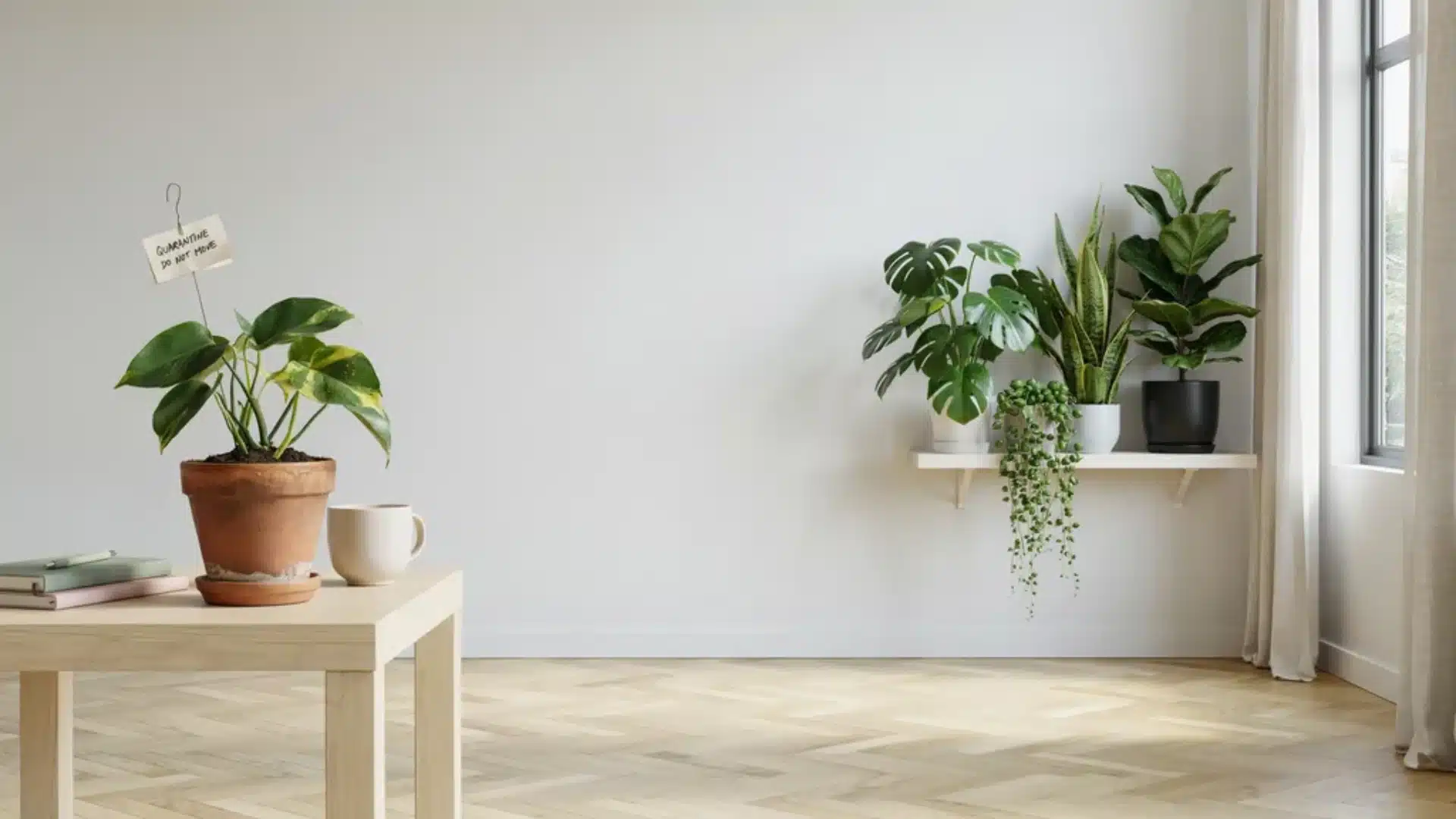
The moment you confirm aphids, move the plant away from all other houseplants. Aphids spread fast, especially if you have winged adults in the mix.
Step 2: Manual Removal
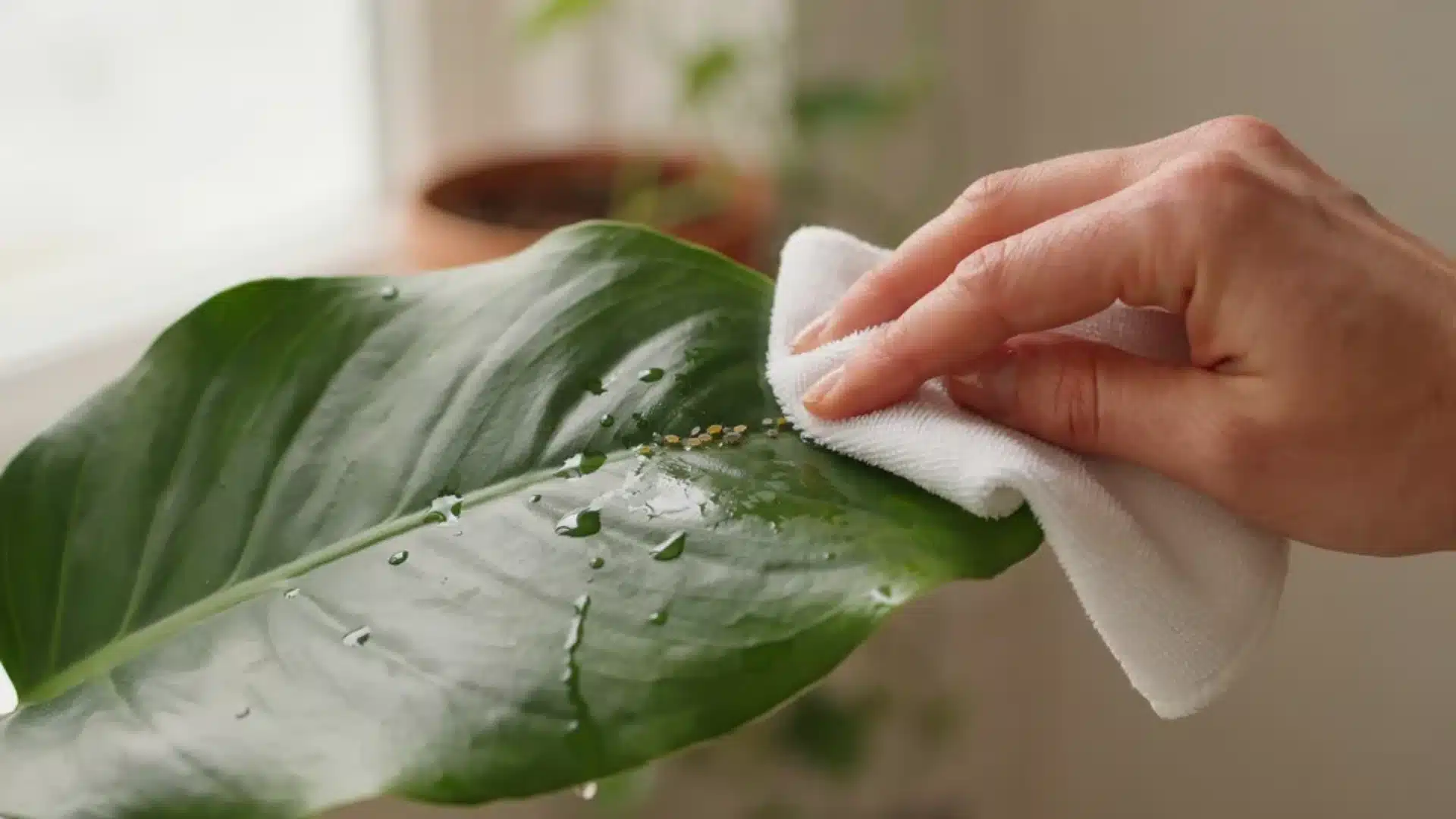
Take the plant to a sink or shower. Use a strong stream of water to rinse off as many aphids as possible, hitting the underside of every leaf.
For smaller plants or delicate leaves, wipe with a damp cloth or use your fingers to remove clusters directly.
This step alone will not eliminate the infestation, but it will reduce the population significantly before you apply any treatment.
Step 3: Soap Spray
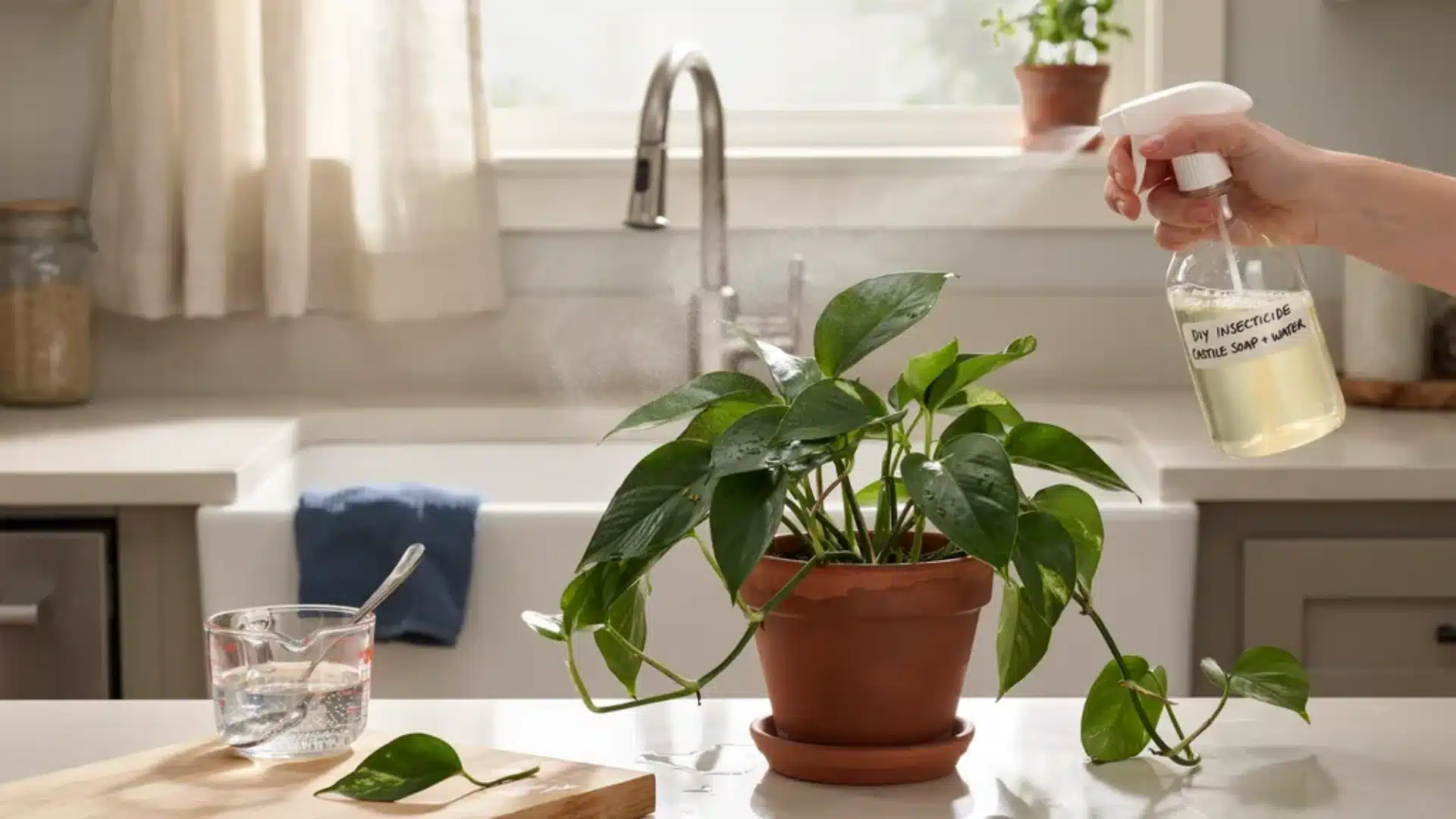
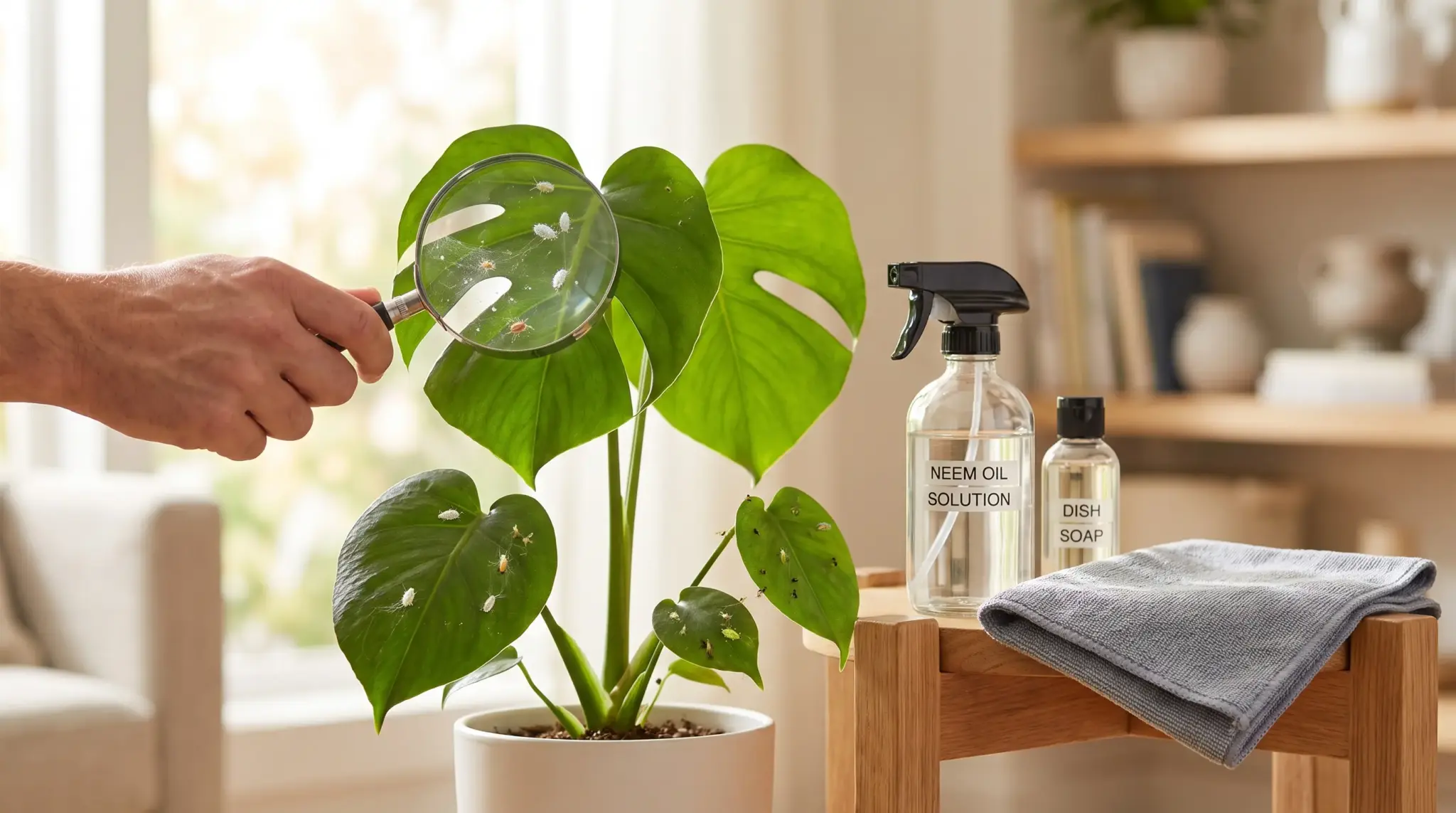
Mix 5 tablespoons of dish soap with 4 cups of water in a spray bottle, and spray it directly onto all affected surfaces, covering every leaf top and bottom. The soap breaks down the outer layer of soft-bodied insects like aphids, causing them to dehydrate and die.
Reapply every 2 to 3 days for two full weeks. Test the spray on a small section of the plant first to check for sensitivity.
Step 4: Neem Oil Treatment
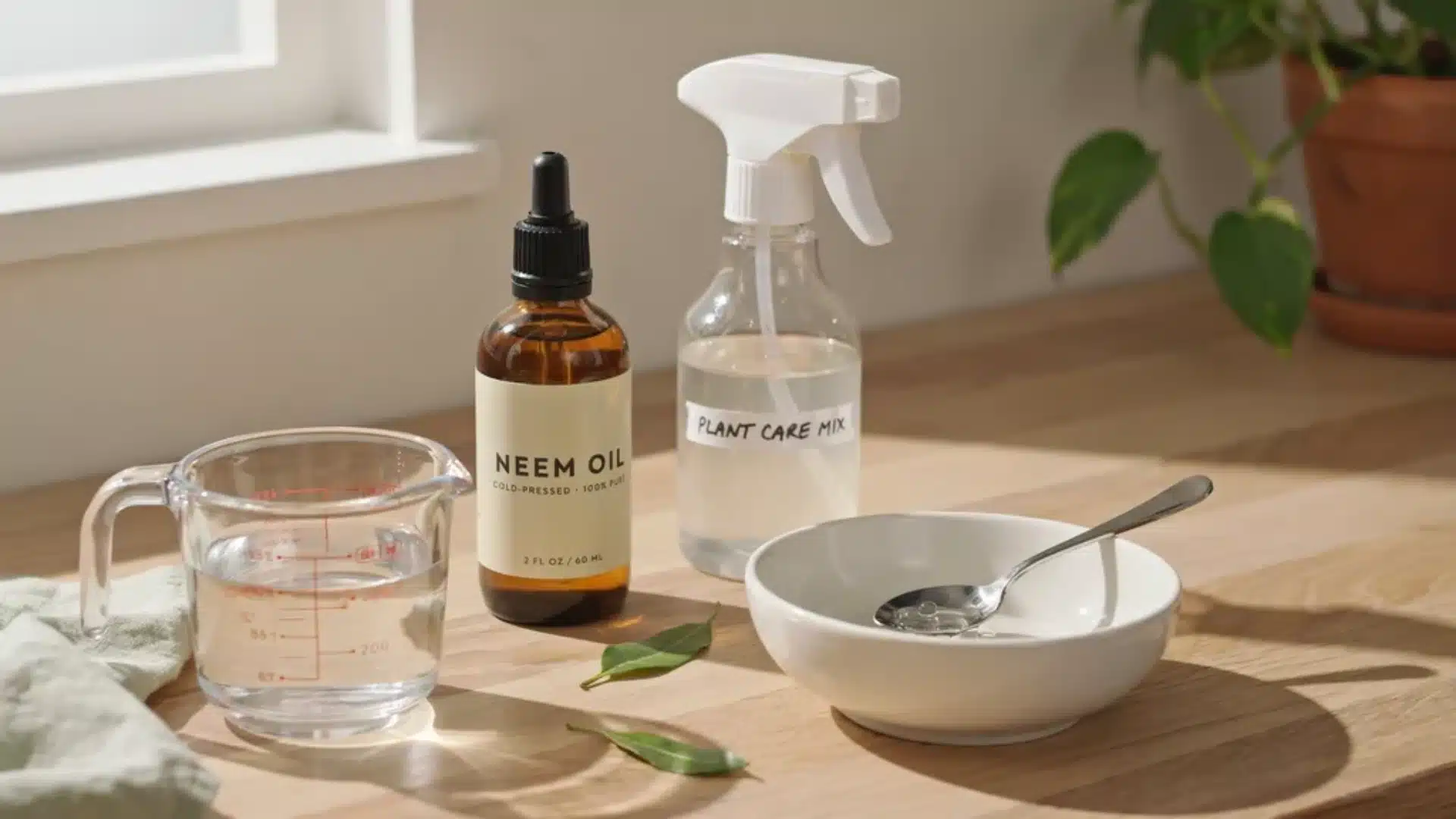
For larger or recurring infestations, neem oil is one of the most reliable options I reach for, and mixing neem oil correctly matters as much as applying it on a consistent schedule.
Mix 2 to 3 teaspoons of neem oil with 1 cup of water and a few drops of dish soap to help it blend, then spray all plant surfaces thoroughly.
Neem oil interferes with aphid feeding and reproduction, and you should see reduced activity within 24 to 72 hours. Repeat every 7 to 10 days until the infestation clears.
Apply neem oil in the evening. Neem oil on leaves in direct sunlight can cause burns.
Step 5: Yellow Sticky Traps
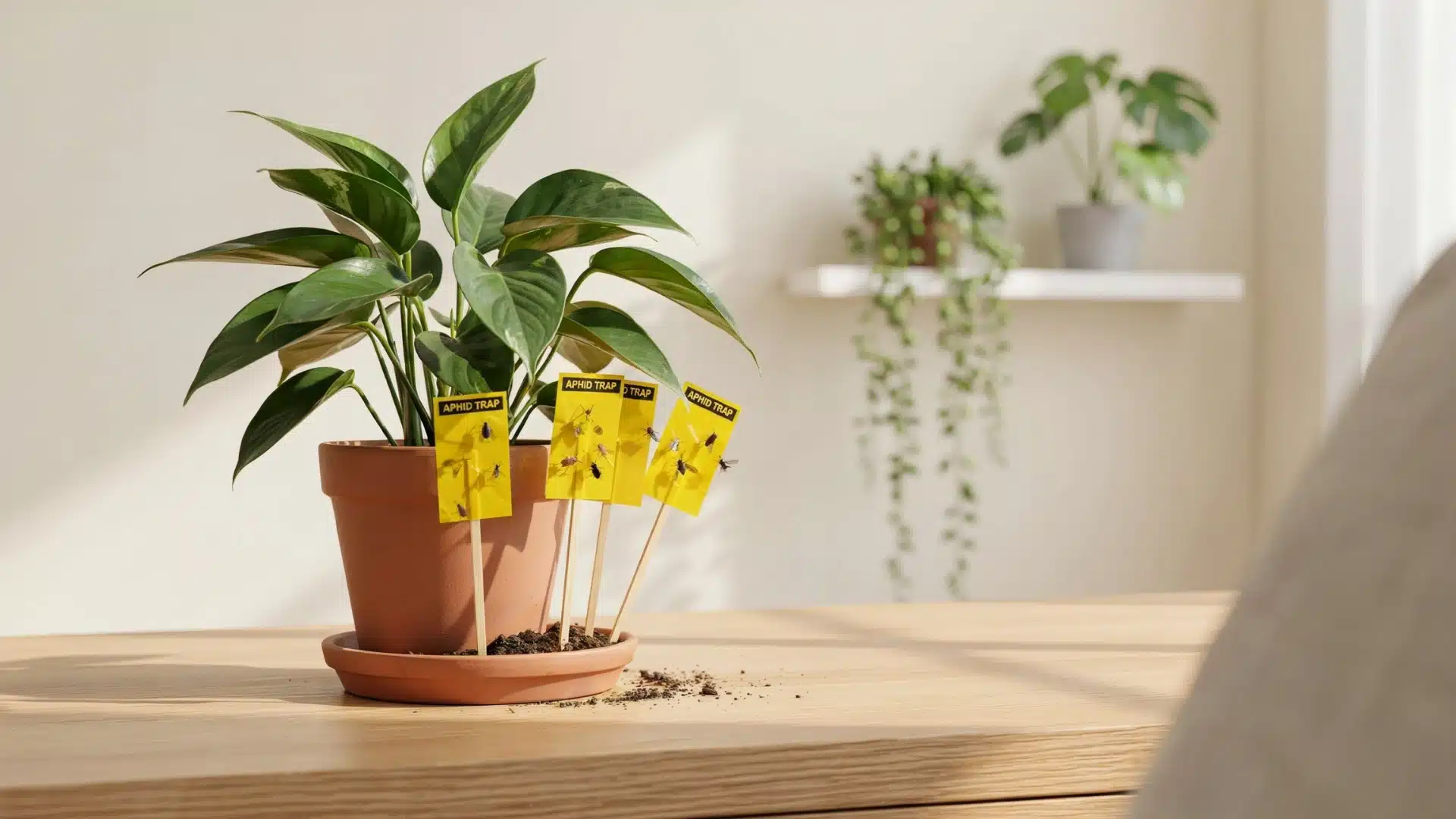
Place yellow sticky traps close to the plant without touching the leaves or stems. These catch winged adult aphids, slow the spread, and work as an early warning system. If aphids start showing up on the traps, check the plant again.
Step 6: When to Let Go
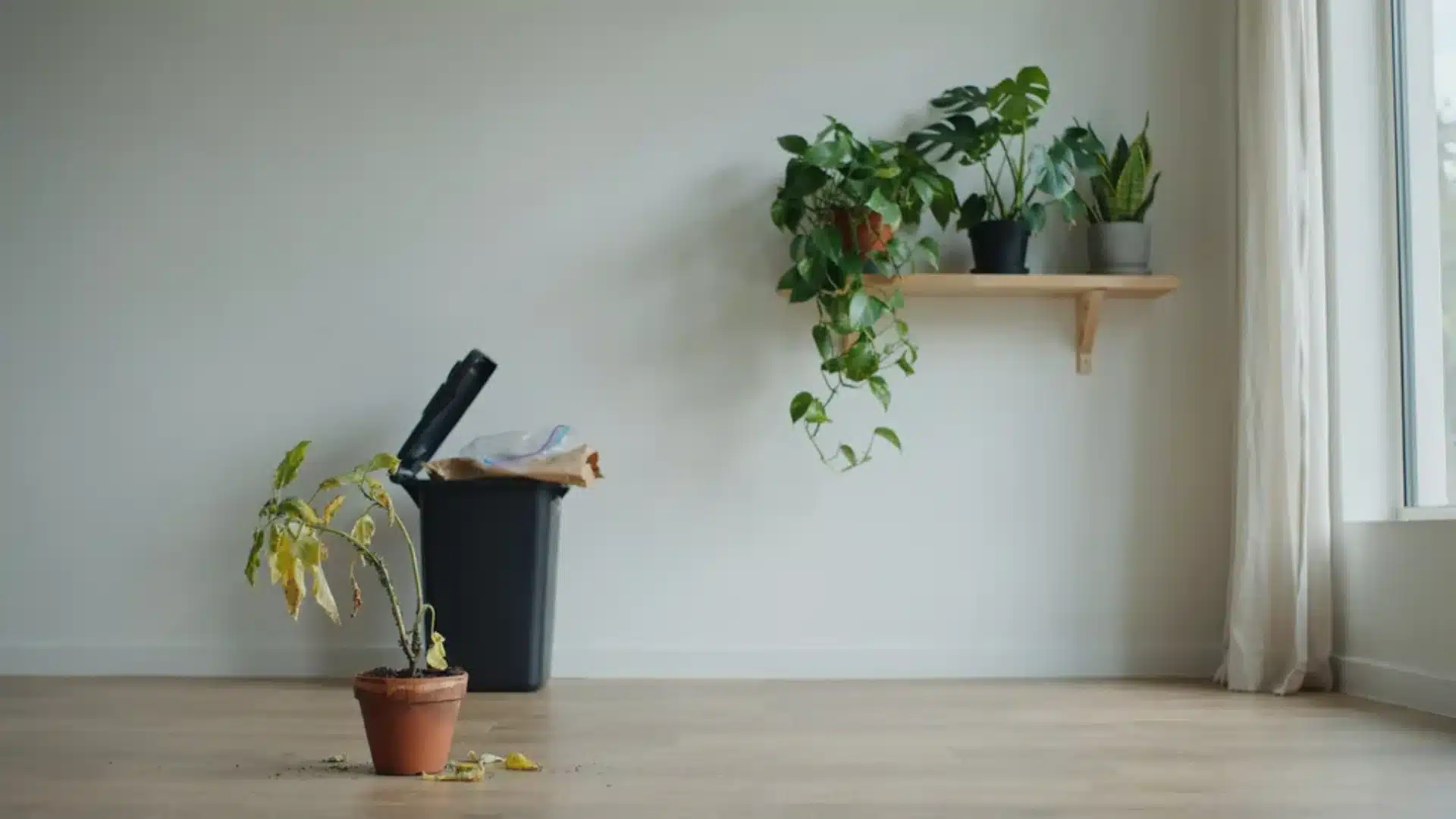
If a plant keeps getting reinfested after several rounds of treatment over multiple weeks, discarding it is the right call. A heavily infested plant puts every other plant in your home at risk.
Home Remedies: What Works and What Doesn’t
Most plant owners try something from the kitchen cabinet first. Some fixes work. Others can do more harm than the aphids themselves.
Soap and neem, covered above, are the two most reliable starting points. A few other options are worth knowing:
Cayenne pepper spray: mix 1 quart of water with 1 teaspoon of dish soap and a pinch of cayenne pepper, undiluted. The spice deters aphids from feeding.
Rubbing alcohol on a cotton ball: works well for small, targeted clusters on thick-leaved plants. Dab it directly on the insects.
Diatomaceous earth (food-grade): dust it on dry soil surfaces, where it dehydrates soft-bodied insects on contact.
Vinegar sprays are popular online but can damage leaf tissue on houseplants. Skip these and stick with soap or neem instead.
For a fuller breakdown of when to reach for which, comparing neem oil and insecticidal soap side by side is worth doing before committing to one for a bigger collection.
Water rinsing alone will not clear a moderate or large infestation. Use it as a first step, not a complete treatment.
How to Prevent Aphids on Houseplants
Getting rid of aphids is one thing. These habits take less than five minutes a week and save you hours of treatment later.
1. Inspect new plants before bringing them home: quarantine new arrivals for one to two weeks and check them daily before adding them to your collection.
2. Check plants weekly: flip leaves over and inspect stem tips. Early-stage infestations are far easier to treat than established ones.
3. Keep plants healthy: aphids target stressed plants first, so make sure each one gets enough light, consistent watering, and occasional fertilizing.
4. Clean leaves regularly: wipe down foliage with a damp cloth to remove dust, early egg deposits, and any early-stage insects.
5. Increase humidity: indoor heating drops humidity and stresses houseplants. A pebble tray or small humidifier reduces their vulnerability to pests.
6. Avoid excess nitrogen fertilizer: heavy nitrogen pushes soft new growth, exactly what aphids prefer. Fertilize at the recommended rate, not more.
Most Houseplants Bounce Back
Aphids move fast and reproduce quickly, but they are among the most treatable pests you will deal with as a plant owner. Catch them early, isolate the plant, and stick with the same treatment consistently rather than switching methods every few days.
I have brought plants back from what looked like a lost cause more times than I can count. Give a treated plant a few weeks before you decide it is not coming back.
Once aphids are addressed, fungus gnats are usually the next pest to check for, especially if your soil stays damp.
Have you dealt with aphids on your houseplants? Share what worked for you in the comments.
Frequently Asked Questions
What Kills Aphids Instantly on Plants?
Spray them directly with a store-bought insecticidal soap, a pyrethrin-based spray, or a homemade mix of water and a few drops of mild liquid dish soap.
Can Plants Recover From an Aphid Infestation?
Yes. Plants can fully recover from an aphid infestation once the pests are cleared and new growth resumes.
What Do Aphids Hate the Most?
Aphids hate strong smells, especially from garlic, onions, and pungent herbs, and the physical force of a strong jet of water.
Are Aphids the Same as Fungus Gnats?
No. Aphids cluster on stems and leaves and barely move. Fungus gnats are small flying insects that breed in damp soil.