You water your plant. A cloud of tiny flies shoots up. Those are fungus gnats, and they breed in the soil, not in the air.
Adult gnats are the part you notice, but they are not the source of the problem. The larvae live in the soil, out of sight, and they are what keep a gnat problem coming back.
Getting rid of gnats in houseplants for good means targeting both stages at once.
This post covers what fungus gnat larvae actually are, which treatments kill them, which ones do not, and how to keep them from coming back for good.
Follow the steps, stay consistent, and the gnats will be gone within a few weeks.
What Are Fungus Gnats and Why They Show Up
Fungus gnats are small, dark, mosquito-like flies. Adults are about 1/8 inch long with gray or see-through wings. Look closely, and you’ll spot a distinct Y-shaped vein pattern on the wings.
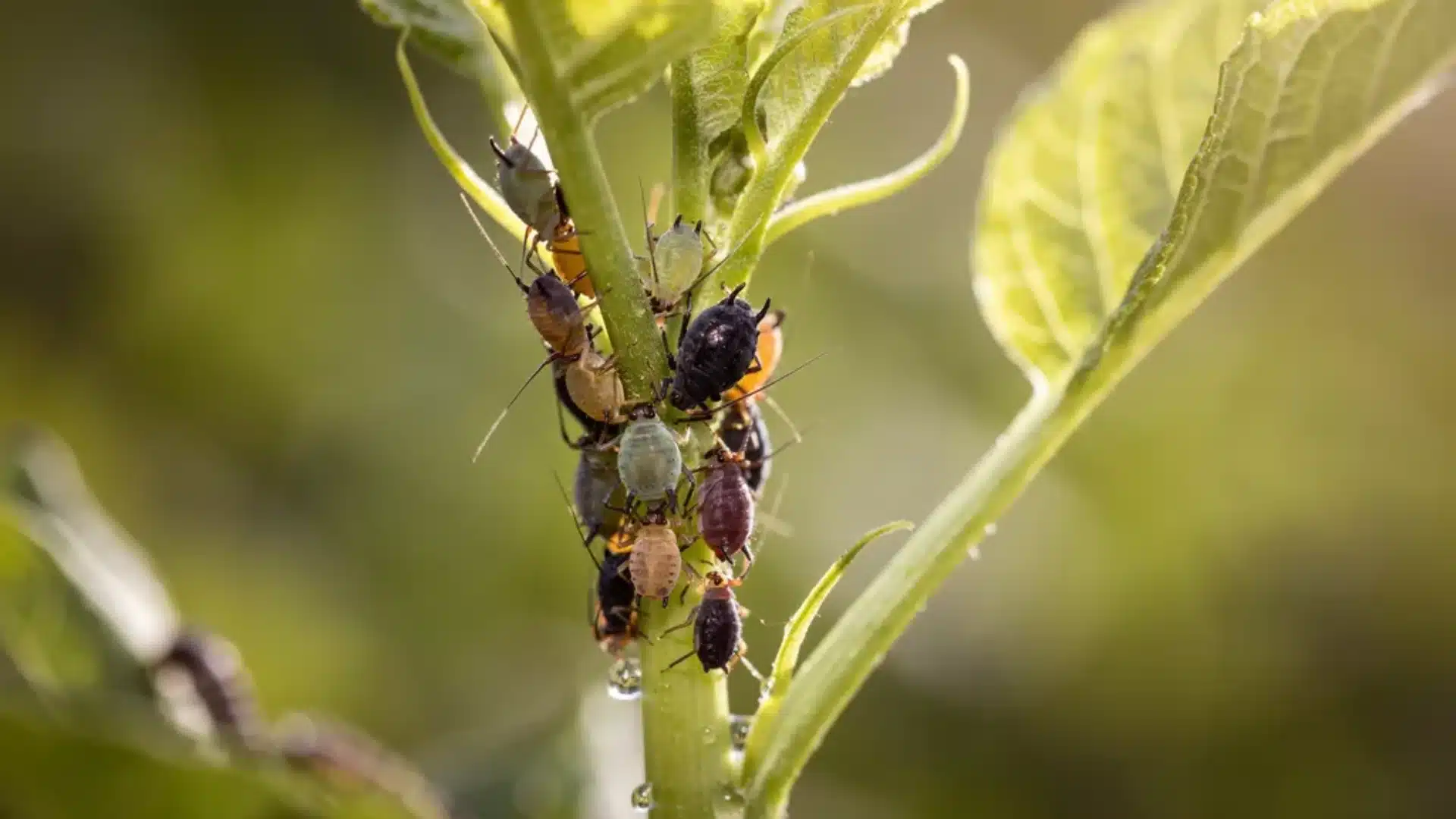
They are often confused with fruit flies, but the behavior is different. Fruit flies hover around food and drains. Fungus gnats hover around your plant’s soil. That’s your clearest tell. If the bugs you’re seeing are clustered on leaves and stems instead of the soil surface, you’re probably looking at aphids, not fungus gnats.
They get into your home in three main ways:
- A new plant from a nursery or garden center that already has eggs in the soil
- A bag of contaminated potting mix (open bags at stores can hold eggs for months)
- An open window or door during warmer months
In Austin, gnats show up hardest the moment summer humidity climbs. If your plants spent the season outside, check the soil closely before bringing them back in for winter.
Fungus Gnat Larvae: The Real Problem Under the Soil
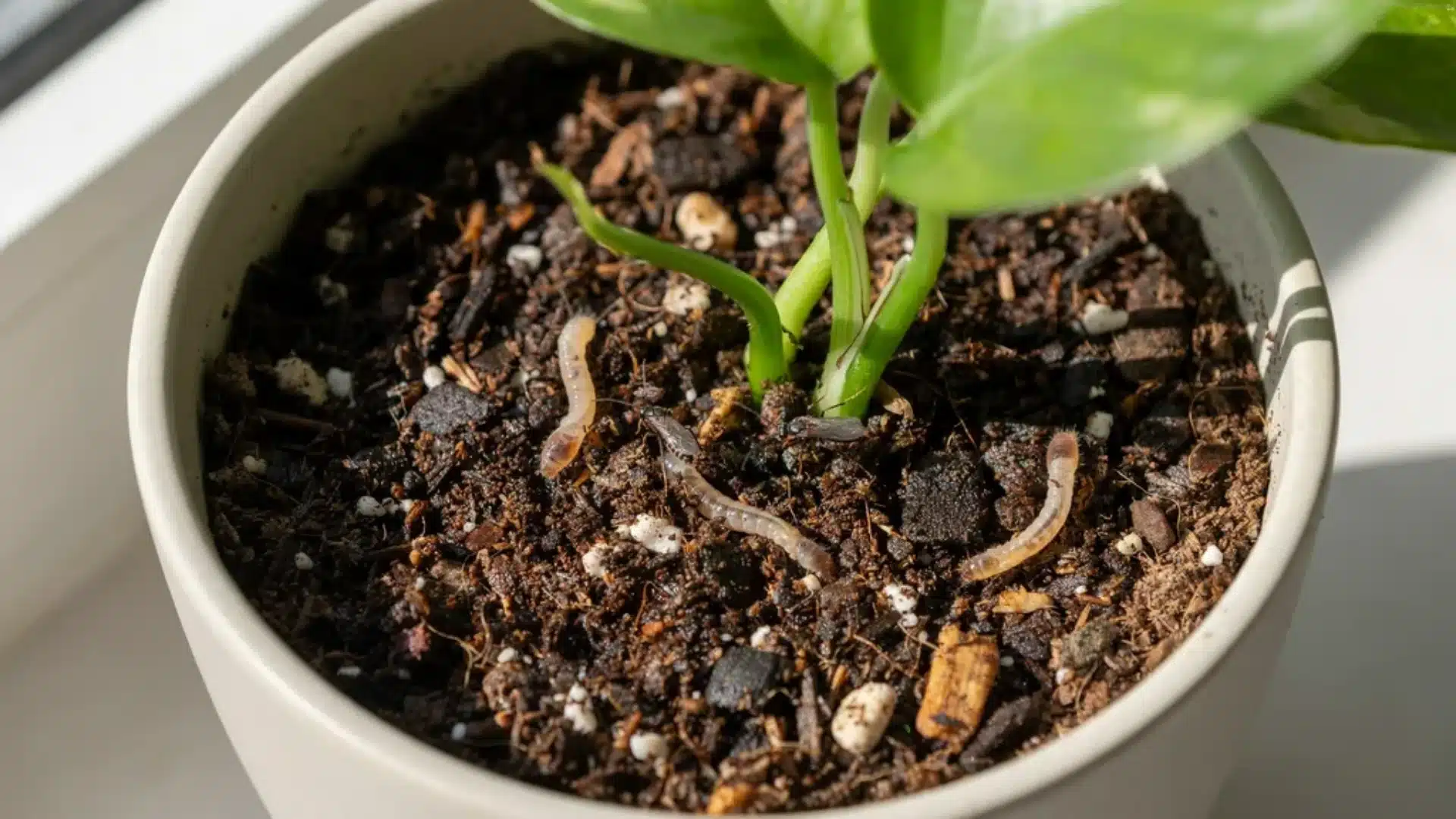
Adult gnats don’t bite, don’t sting, and don’t directly harm your plants. The damage comes from what they leave behind: eggs that hatch into larvae.
Fungus gnat larvae are tiny, clear or whitish worms with a shiny black head. They grow up to 1/4 inch long. They live in the top 2 to 3 inches of moist soil, and that’s where they do their damage.
What do they eat?
- Fungi and decaying organic matter in the soil
- Plant roots, root hairs, and sometimes the base of stems
- The fungi found in rich, peat-heavy potting mixes
Most plants can handle a small larval population. But seedlings, African violets, poinsettias, and geraniums are especially at risk because their root systems are thin and close to the surface.
Signs your plant has a larval problem:
- Leaves turning yellow with no obvious cause
- Wilting even after watering
- Slow or stopped growth
- Visible tiny worms on the soil surface when you water
How to confirm larvae are present: press a few thin slices of raw potato into the top inch of soil. Leave them for 3 to 4 days, then flip them over.
If larvae are present, they will have come up to feed on the potato. This method also works to track whether your treatment is reducing the population.
The Life Cycle You Must Understand Before You Treat
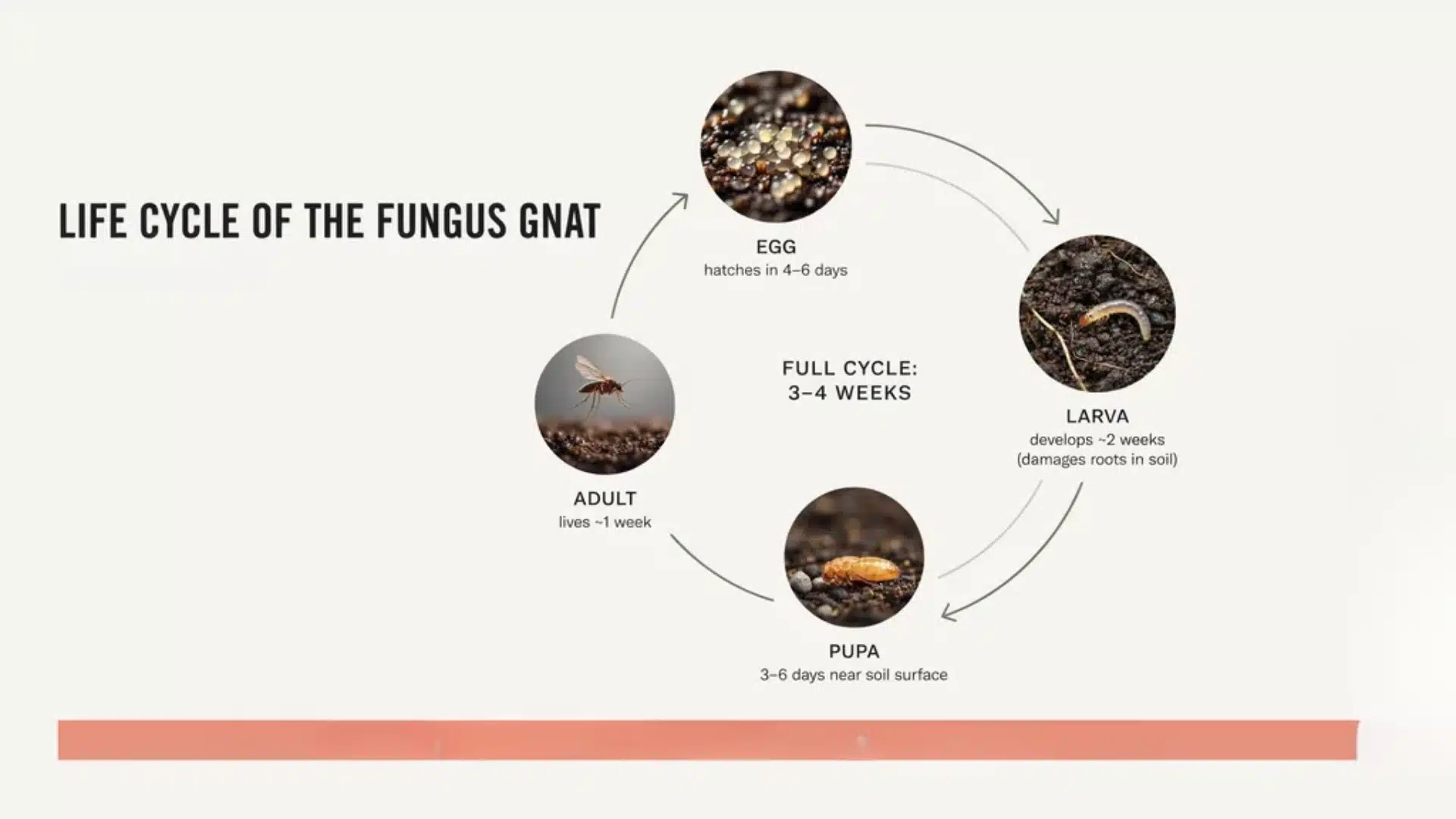
The fungus gnat life cycle has four stages: egg, larva, pupa, and adult, and the entire cycle takes just 3 to 4 weeks. Eggs hatch in 4 to 6 days.
Larvae develop for about two weeks. Pupae form near the soil surface and mature in 3 to 6 days. Adults then live for about one week.
A single female can lay up to 200 eggs in damp soil during that short adult life. Because of overlapping generations, your plant hosts eggs, larvae, pupae, and adults all at the same time.
Here’s the point that matters: if you only kill adult gnats, new adults keep emerging from larvae already in the soil. You need to hit both stages at once, or you stay stuck in a loop.
Fungus Gnats Treatment: Kill the Larvae First
The larvae are your real target here. You can see the adult gnats, but the larvae stay hidden in the soil, and that’s where the infestation actually lives.
1. Let the Soil Dry Out
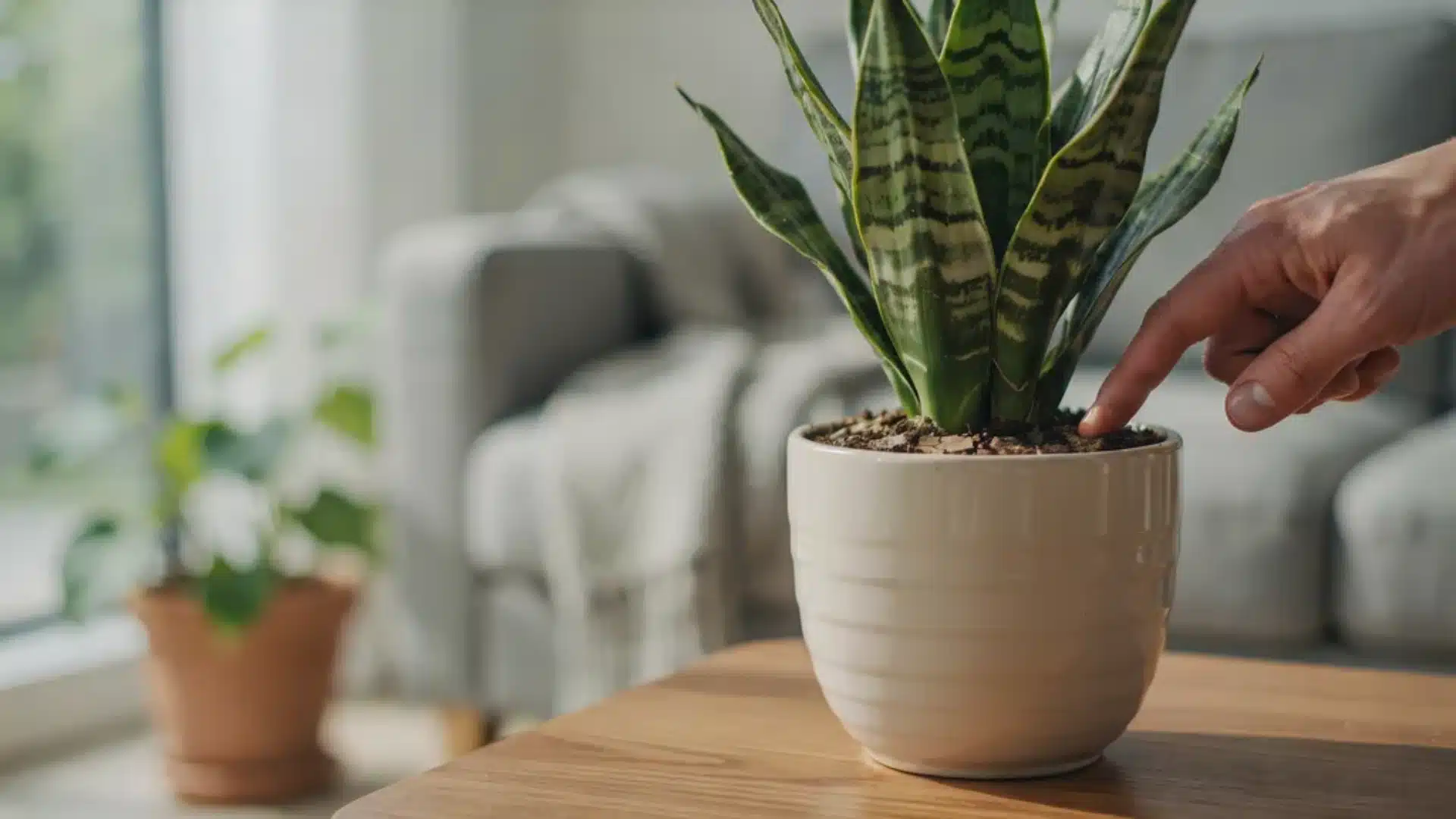
Fungus gnat larvae can’t survive in dry soil. Allow the top 1 to 2 inches to dry completely before watering again. This is the single most important step for most houseplants.
This works well for drought-tolerant plants like pothos, snake plants, and ZZ plants.
It’s harder to maintain for moisture-loving plants, but even a brief dry spell between waterings cuts the larval population by a lot.
2. BTI Soil Drench (Mosquito Bits)
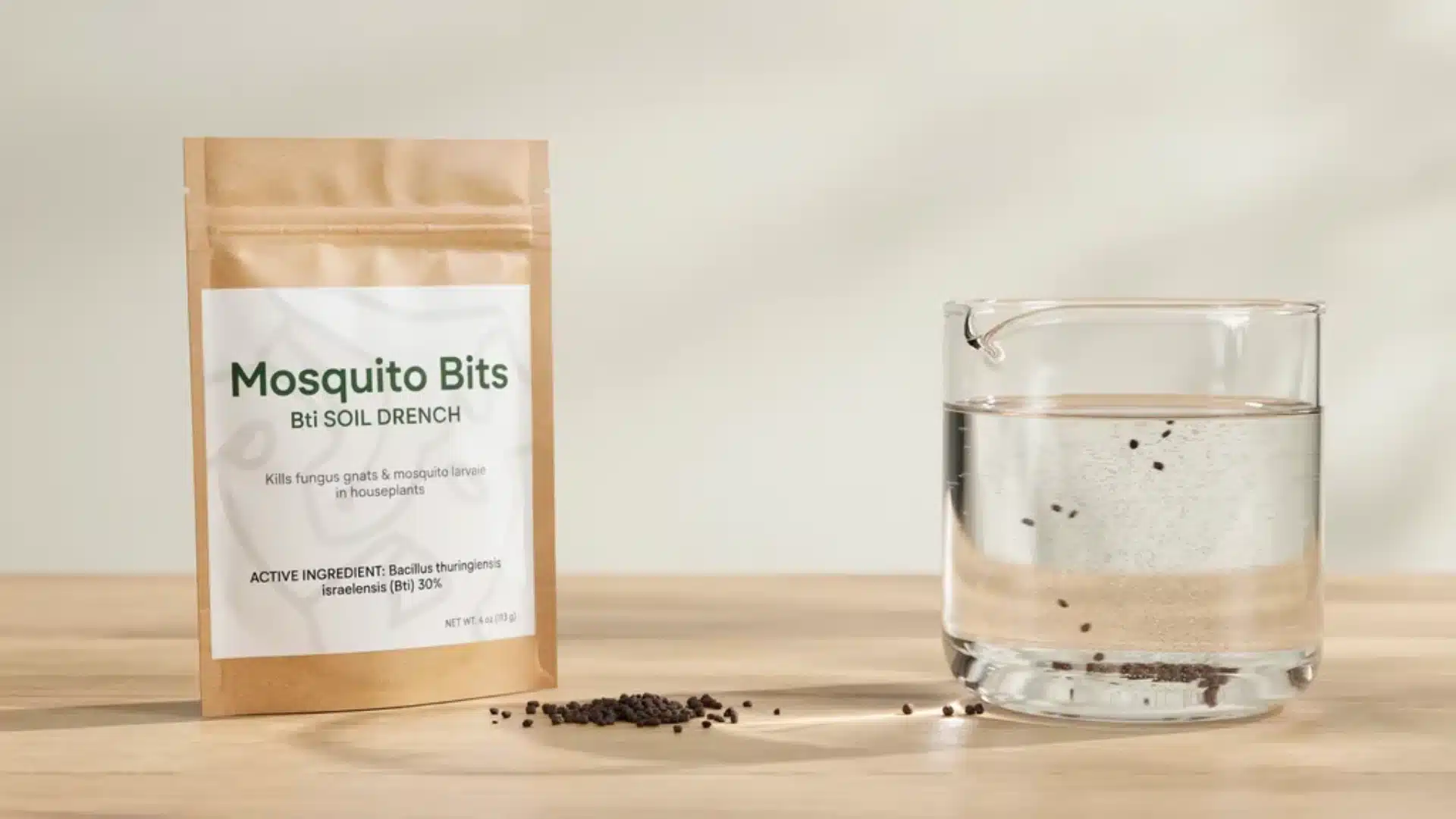
This is the most effective treatment I’ve used across all my plants.
Mosquito Bits contain Bacillus thuringiensis israelensis (Bti), a naturally occurring bacterium that is toxic to fungus gnat larvae but completely safe for plants, pets, and humans, and safe for the bees I keep in my backyard too, since Bti only targets fly larvae. It does not affect eggs, pupae, or adults, only larvae.
How to use it:
- Add Mosquito Bits to a watering can
- Let them soak overnight to release the Bti
- Water your plants with this solution as normal
- Repeat every 5 to 7 days for several weeks
The Oklahoma State University Extension recommends this same 5 to 7 day cycle, since Bti kills larvae but not eggs or pupae, so a single treatment always misses the next wave. It took about 3 weeks to see a real drop in the number of adults on my sticky traps. By week four, the gnats were gone.
3. Hydrogen Peroxide Drench
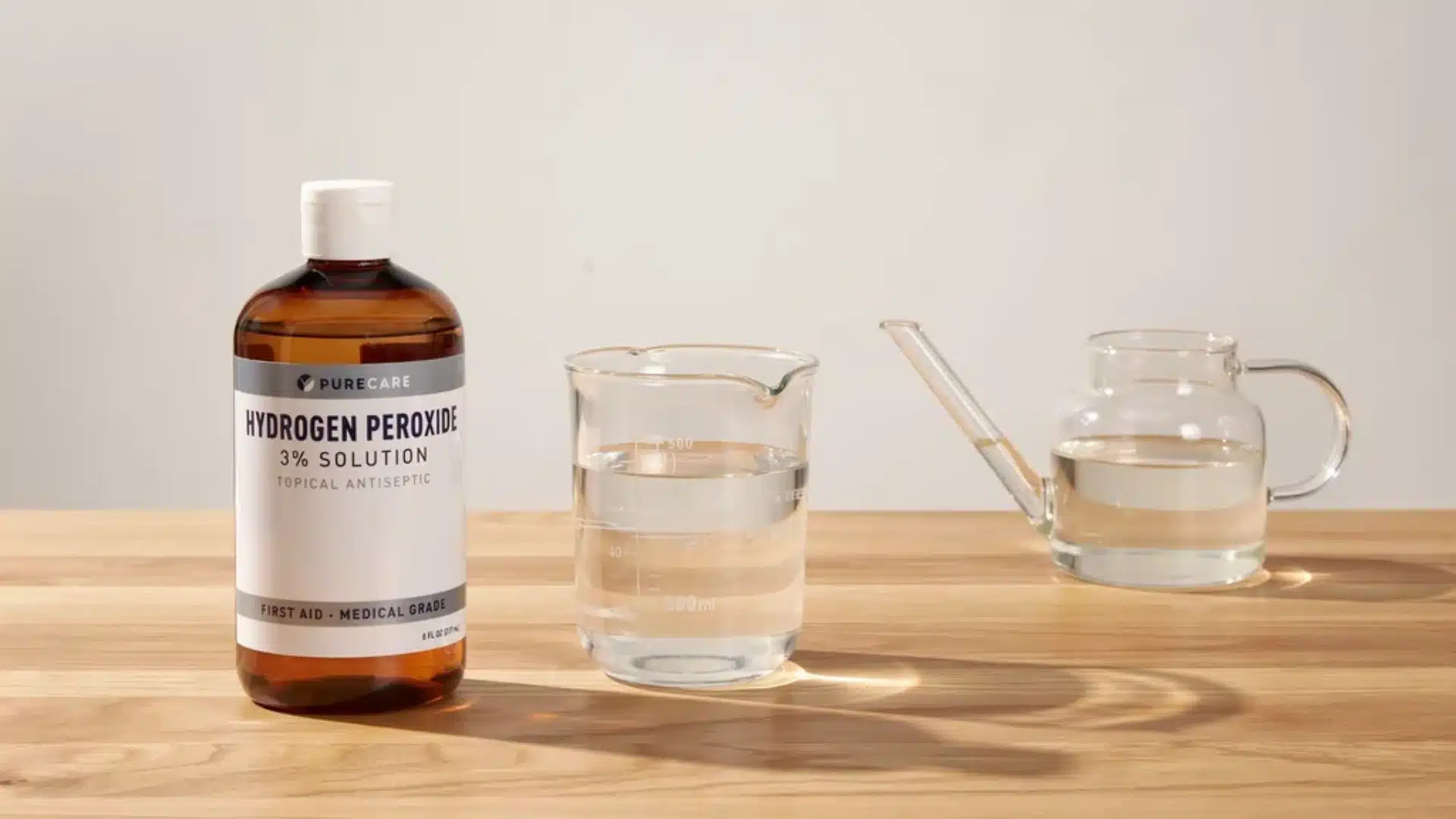
Mix 1 part 3% hydrogen peroxide with 4 parts water. Water your plants with this solution in place of regular water.
It kills larvae on contact and then breaks down harmlessly into water and oxygen. The soil will fizz briefly. That’s normal.
Use this treatment a few times over two to three weeks. Avoid overusing it, as it can affect beneficial organisms in the soil over time.
4. Bottom Watering
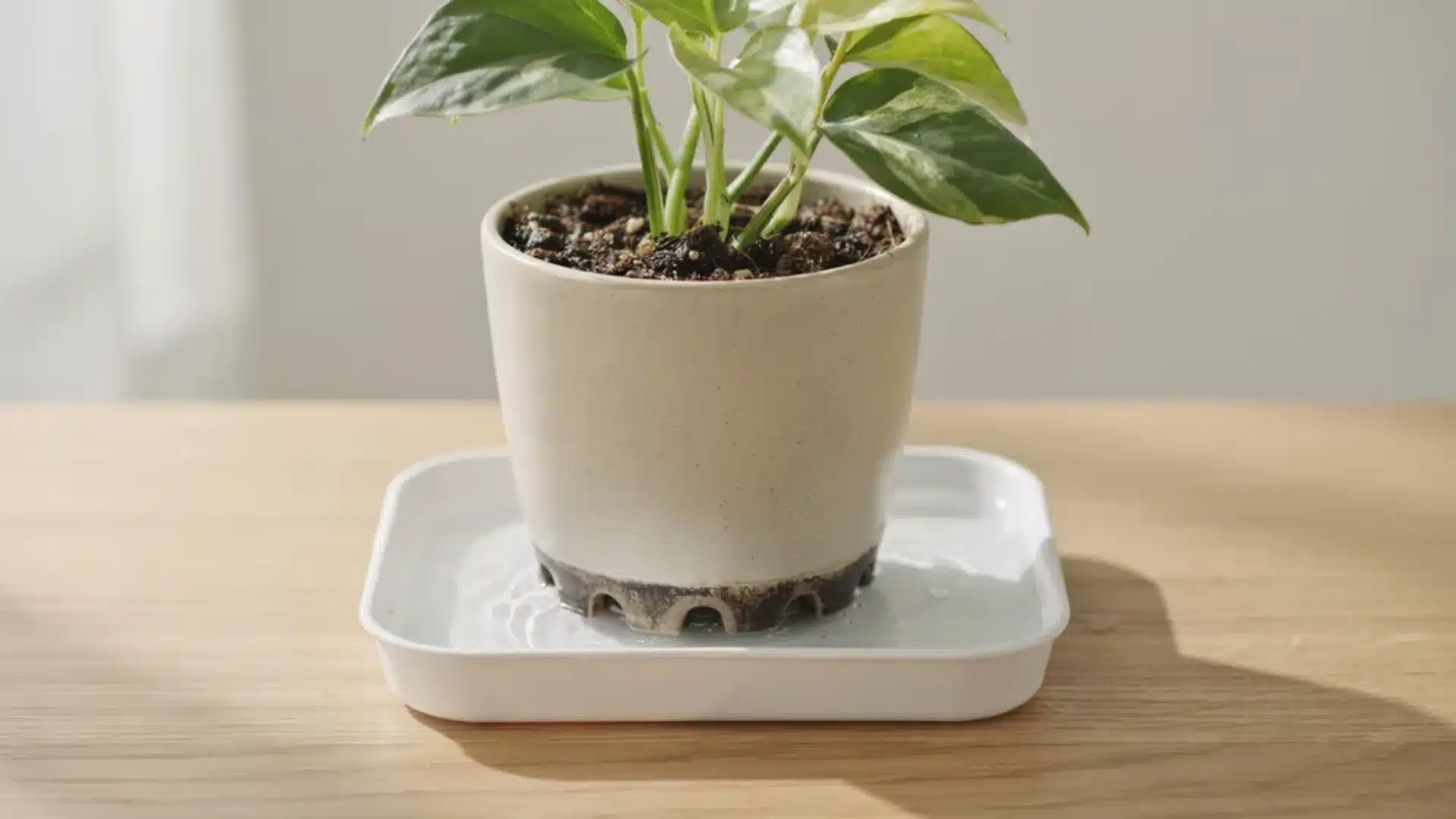
Place your pot (it must have drainage holes) in a tray of water for 15 to 20 minutes. The soil absorbs moisture from the bottom up, keeping the topsoil consistently dry.
Larvae near the surface cannot survive without moisture at the top.
This is a great long-term habit once you’ve treated the infestation, especially for plants that need regular watering.
5. Beneficial Nematodes
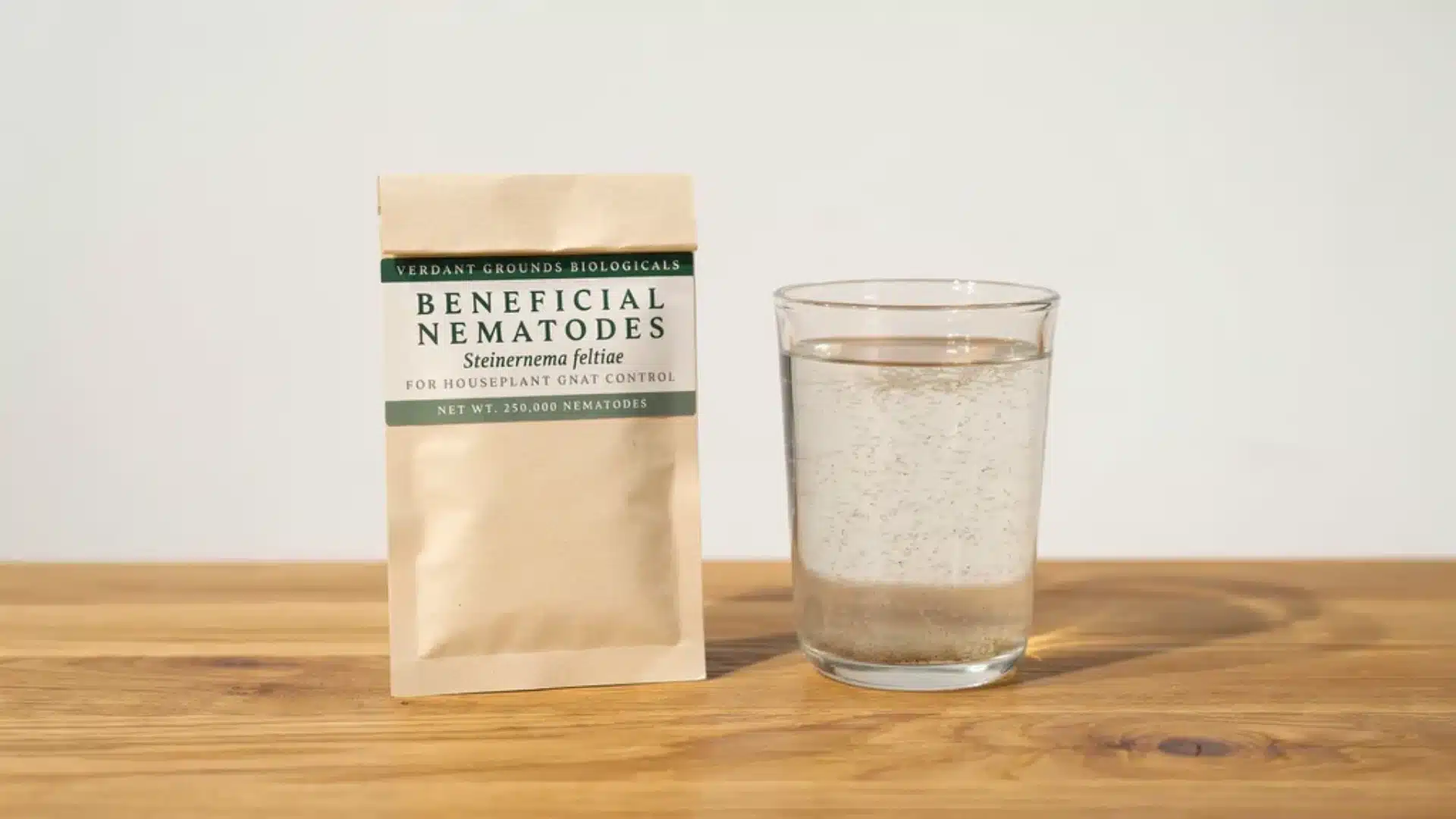
Steinernema feltiae are microscopic roundworms that attack and kill fungus gnat larvae in the soil. They are mixed with water and applied as a soil drench. These are safe for plants, pets, and humans.
They work well for moderate-to-heavy infestations and are an option if other treatments haven’t fully cleared the problem.
How to Deal With Adult Gnats
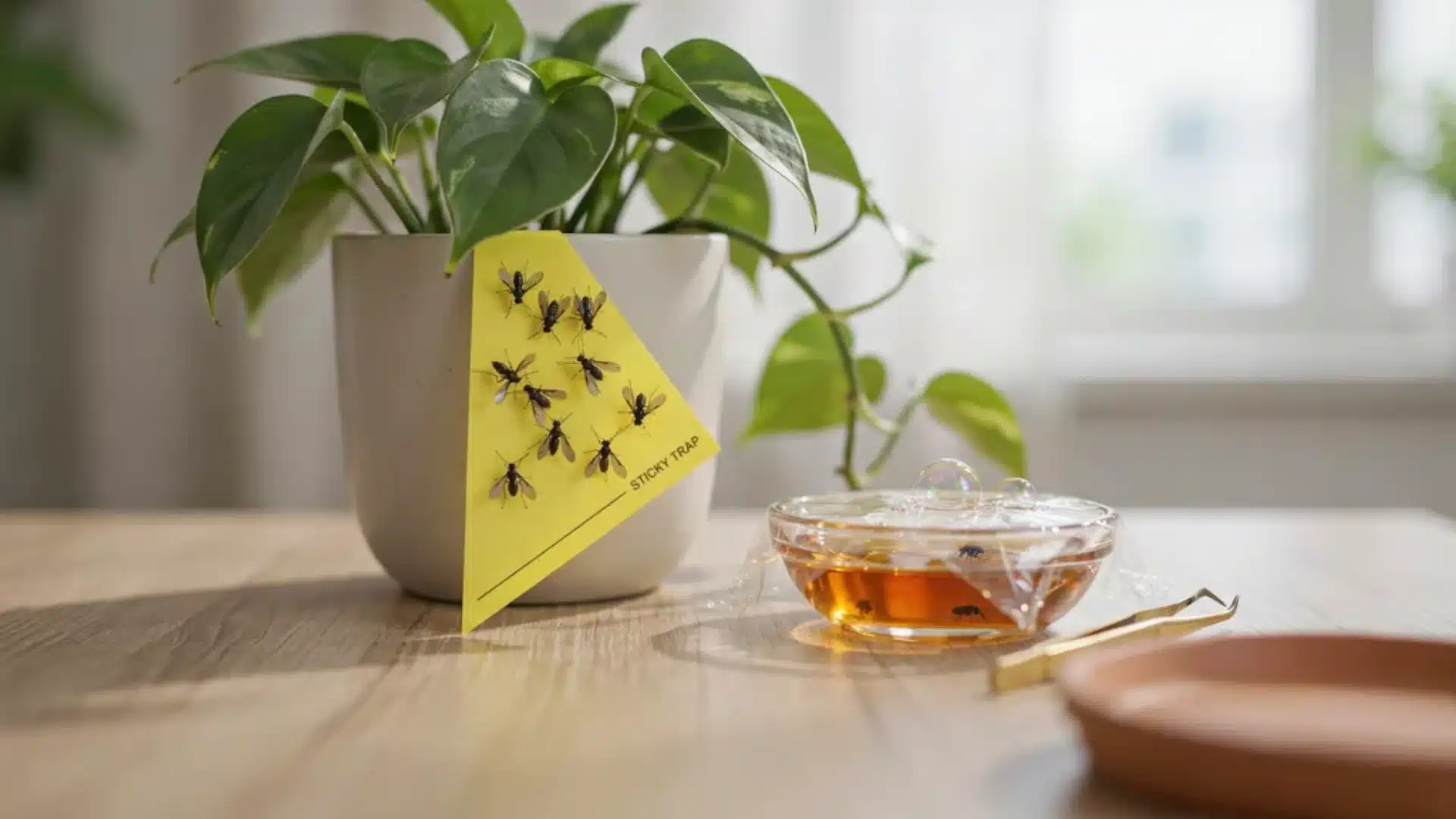
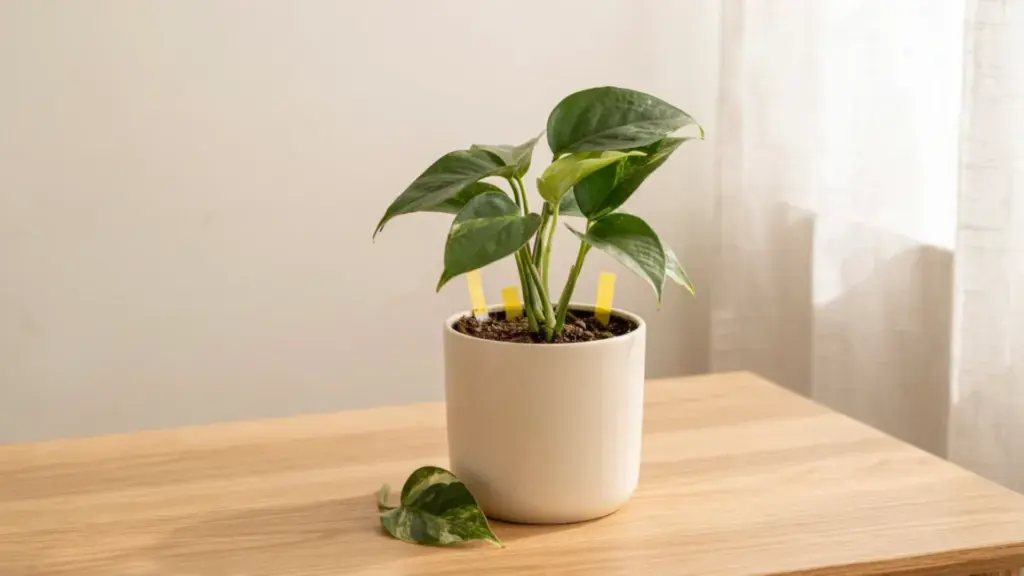
Yellow sticky traps are the most reliable tool. Place them near the soil surface, not up in the leaves. Adults crawl and hover near the soil, so that’s where traps catch the most.
Check and replace them regularly, and use them to track whether your infestation is shrinking.
An apple cider vinegar trap also helps: a shallow dish of vinegar, a few drops of dish soap, and plastic wrap poked with small holes.
It catches some adults by attracting them with the scent. It’s easy to set up and can work as a supplement to sticky traps.
One important thing to remember: traps only catch adults. They do nothing for larvae already in the soil. Treat the soil first, then use traps to mop up the adults.
Treatments That Don’t Work Well
1. Apple cider vinegar traps alone: catch some adults. Do not touch larvae. The infestation continues.
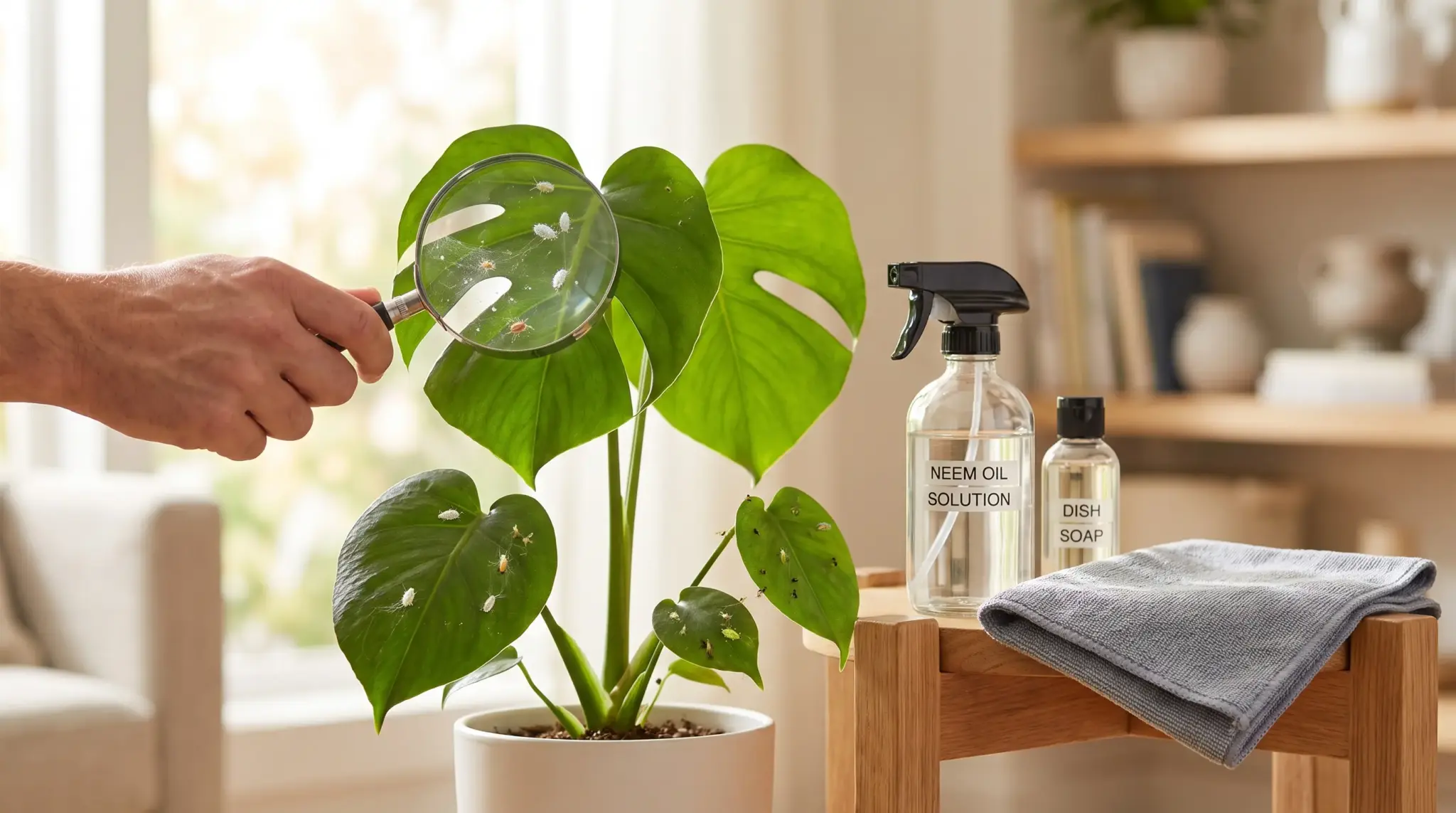
2. Neem oil spray: inconsistent results. Messy to apply. Doesn’t reach larvae deep in soil. As a neem oil soil drench it’s inconsistent too, so it’s not the first tool to reach for against larvae.
3. Letting soil dry temporarily: works in the short term. The moment you resume normal watering, larvae return if the eggs weren’t fully cleared.
4. Cinnamon on soil: a natural antifungal treatment that reduces the fungi larvae feed on. It can help slow a light infestation but won’t eliminate one that’s already established. Use it alongside a proper treatment, not as a standalone fix.
5. Repotting all your plants at once: useful for severe infestations, but most potting mixes already carry eggs. You may repot and reintroduce the problem on the same day.
How to Keep Gnats From Coming Back
Prevention is simpler than treatment. These habits will keep your plants gnat-free long term.
1. Only water when the top inch of soil is dry, test with your finger, not a calendar
2. Use pots with drainage holes and empty water from saucers after watering
3. Remove dead leaves and plant debris from the soil surface regularly
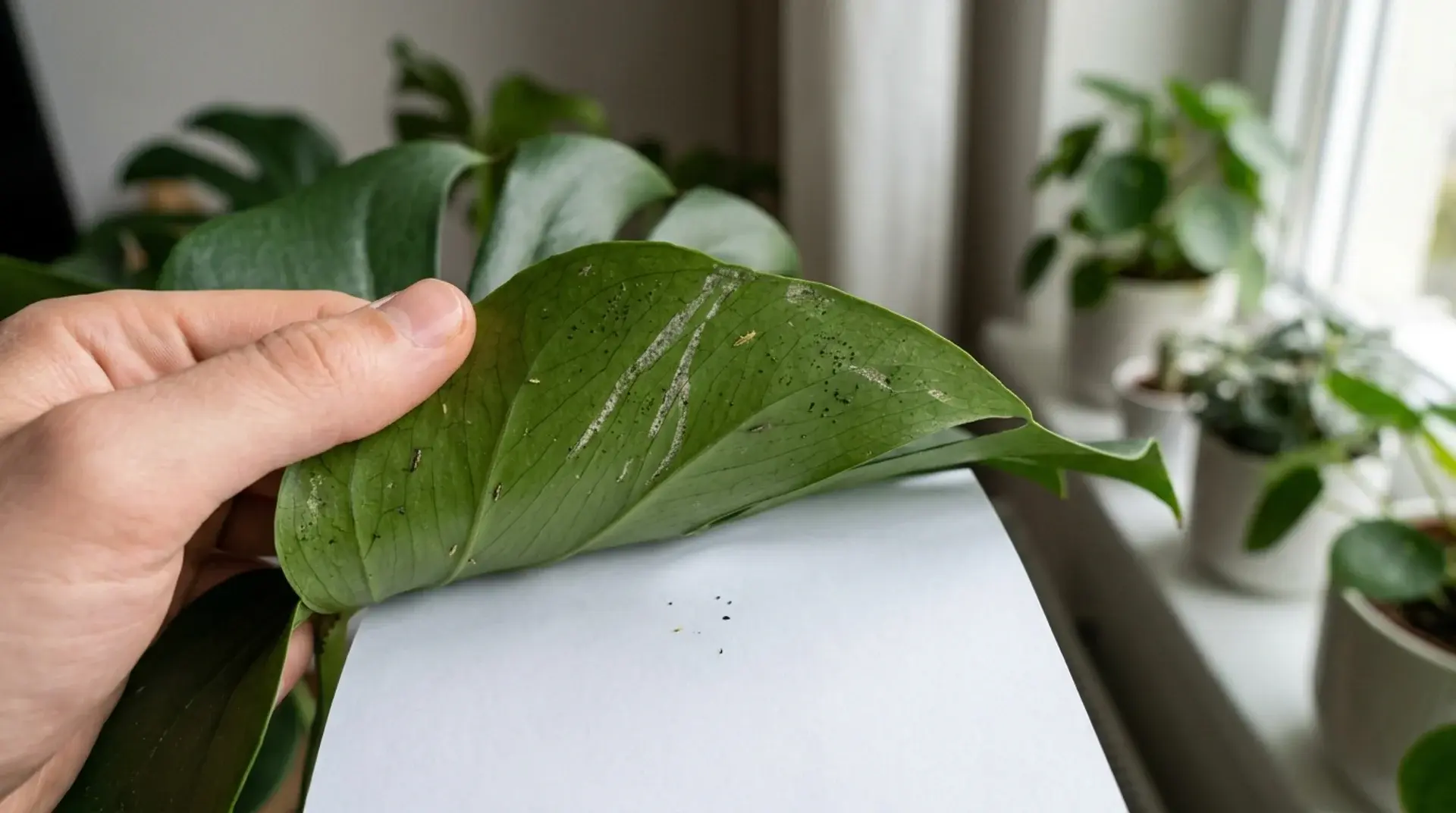
4. Inspect new plants before bringing them home, check the soil for tiny white larvae, and look for adults hovering near the pot
5. Store open potting mix in sealed bags: bags left open at garden centers can already contain eggs
6. Add a thin layer of sand or fine gravel to the soil surface to block adult gnats from laying eggs in the top layer
Getting rid of gnats in houseplants is not complicated, but it does require two things working together: treating the larvae in the soil and trapping the adults above it.
Most people do one without the other and wonder why the gnats keep coming back.
Start with soil moisture control and a Bti drench, run sticky traps alongside them, and stay consistent for 4 to 6 weeks. That’s the actual fix.
Once the gnats are handled, run the same check over your other houseplants for common indoor pests like aphids or spider mites.
Which method worked for you, or which one completely failed? Drop it in the comments.
Frequently Asked Questions
Can I Put Vinegar Directly on My Plants to Kill Gnats?
No. Straight vinegar is too acidic for soil or roots. Use it only in a shallow trap dish, never poured into the pot.
How Long Does It Take to Get Rid of Gnats for Good?
Usually 4 to 6 weeks. Treat the larvae, keep the topsoil dry between waterings, and run traps until new adults stop showing up.
Why Is My House Suddenly Full of Gnats?
Usually overwatering, a recently repotted plant, or a new plant that arrived from the nursery with eggs already in the soil.
Do I Need to Get Rid of an Infested Plant?
No. Treat the soil and keep monitoring it. Fungus gnats rarely kill an established, healthy plant on their own.