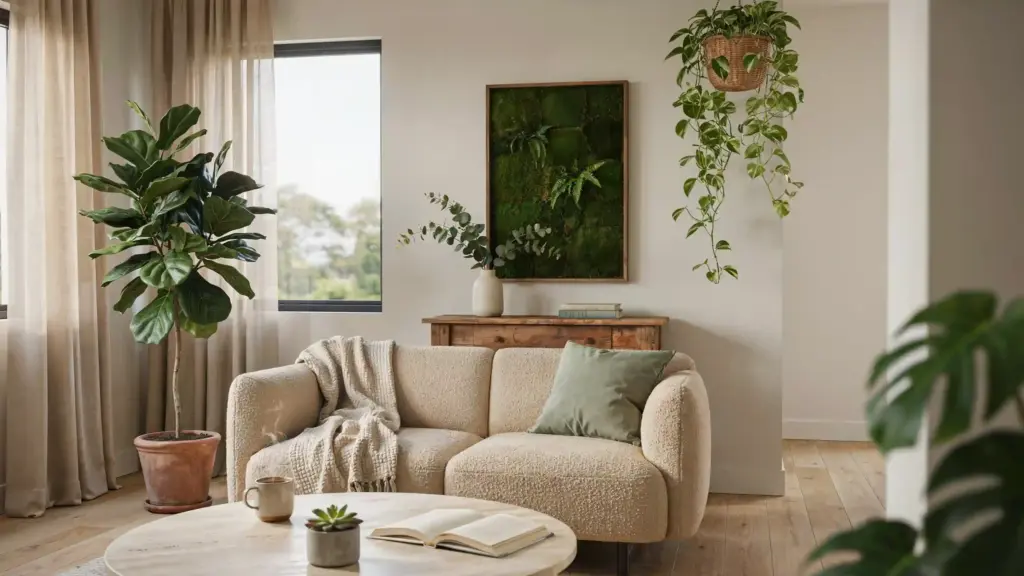
You know that feeling when you walk into a room and immediately want to stay a little longer? There’s good light. Something green.
Maybe a wood table that feels really nice under your hand. Nothing is shouting for attention, it just feels good. That’s the feeling biophilic design is trying to create. And thankfully, it doesn’t require turning your living room into a greenhouse:)
Biophilic design brings nature indoors through daylight, plants, natural materials, texture, and outdoor views. The goal? A home that feels calmer and warmer.
More connected to the world outside. But the important part is the combination. A plant helps. A plant beside a sunny window, with a comfortable chair facing the garden, does more.
These ideas work in homes, offices, cafés, and schools. They also work in rentals. I love that you don’t need a whole new space to try them! That feels pretty important to me.
So let’s get into what that can look like.
What Is Biophilic Design, And Where Did It Start?
The idea comes from biophilia, our innate attraction to nature, which biologist Edward O. Wilson helped bring into wider conversation.
Yale ecologist Stephen Kellert later helped develop that idea into a usable design framework. Basically, if people feel connected to nature, why wouldn’t we make that connection part of the places where we spend our days?
The design approach has four main goals: everyday contact with nature, references to natural patterns and processes, support for human well-being, and better indoor conditions through air, light, and acoustics.
I love that this isn’t only about what a room looks like! Cool stone, moving air, birds outside a window, and sunlight crossing a floor all count.
For me, the strongest rooms bring several of those experiences together without making each one a big “design moment.”
Also read: 10 Biophilic Interior Design Ideas to Bring Nature Into Your Home
The Thirteen Elements Of Biophilic Design
1. Daylight
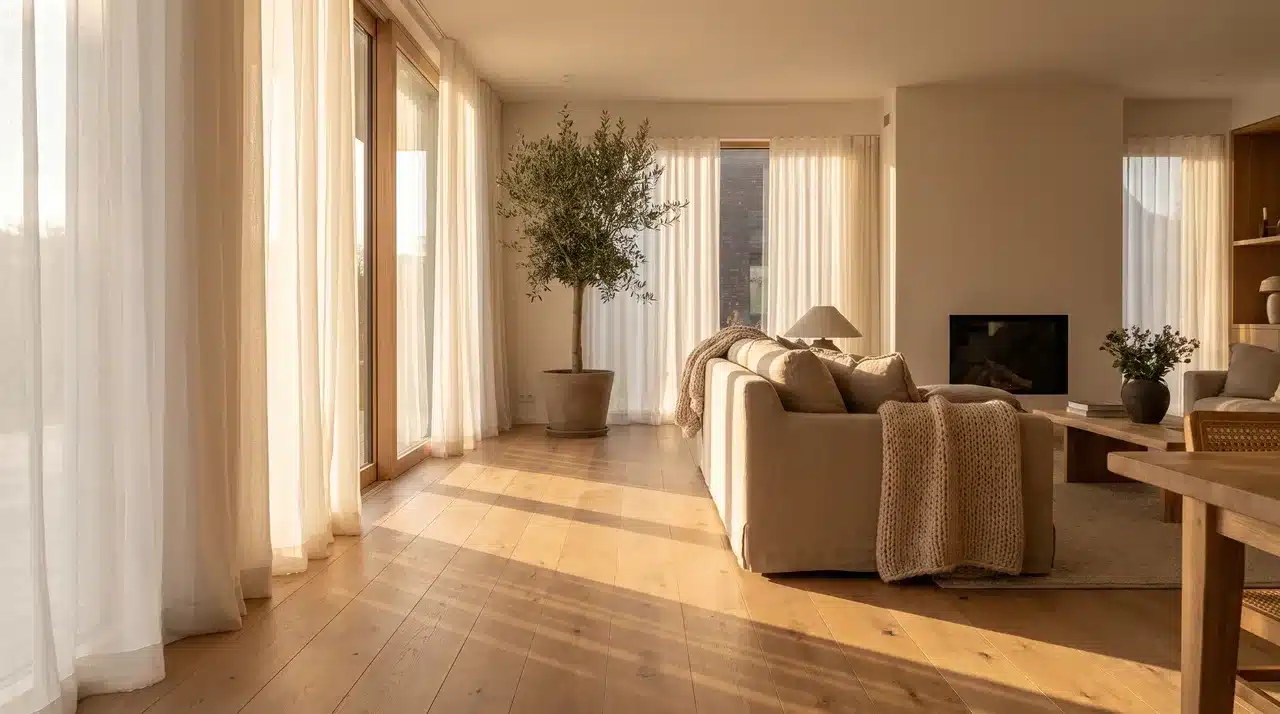
Good daylight changes SO MUCH. Colors feel fuller, the room feels connected to the outdoors, and changing light helps support our sleep-and-wake rhythm.
Lighting also affects mood and concentration, so I think it’s worth considering before shopping for anything decorative.
Bigger windows, glazed garden doors, rooflights, and light tunnels can help (but those involve cost and sometimes structural work). I’d start smaller!
Pull furniture away from glazing, swap heavy drapes for translucent curtains, and try a mirror opposite a window to help that light reach farther inside.
Clearing a blocked window can make a really surprising difference. Free, and no contractor required! (the same trick I use for making a small living room look bigger).
2. Greenery
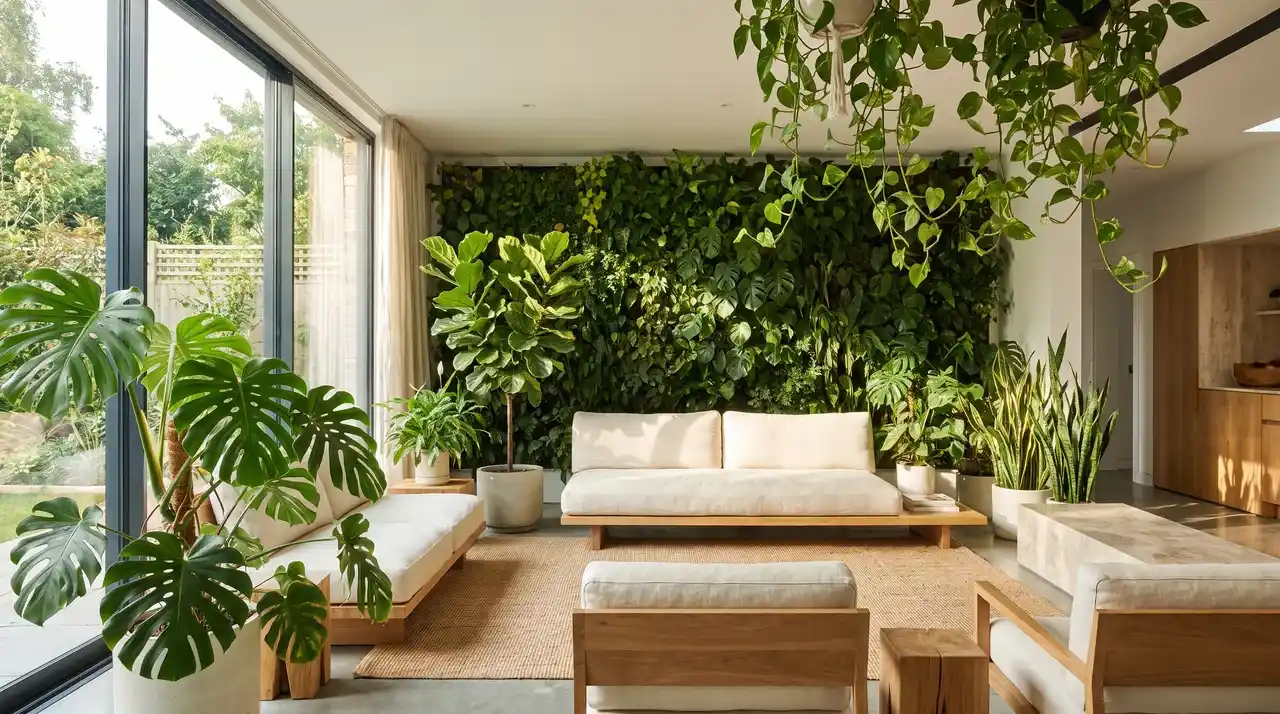
Plants are the most familiar starting point, and I get it. They bring color, texture, and life into the room, and research also links indoor plants with lower self-reported stress and more positive feelings.
But please shop for the light you HAVE! Pothos, snake plants, and ZZ plants tolerate lower light and imperfect watering better than many fussier options. A croton needs sun, not a dim hallway, and our best wishes:)
Hanging indoor plants like pothos or string of pearls can cost under $20 each (though their light needs differ).
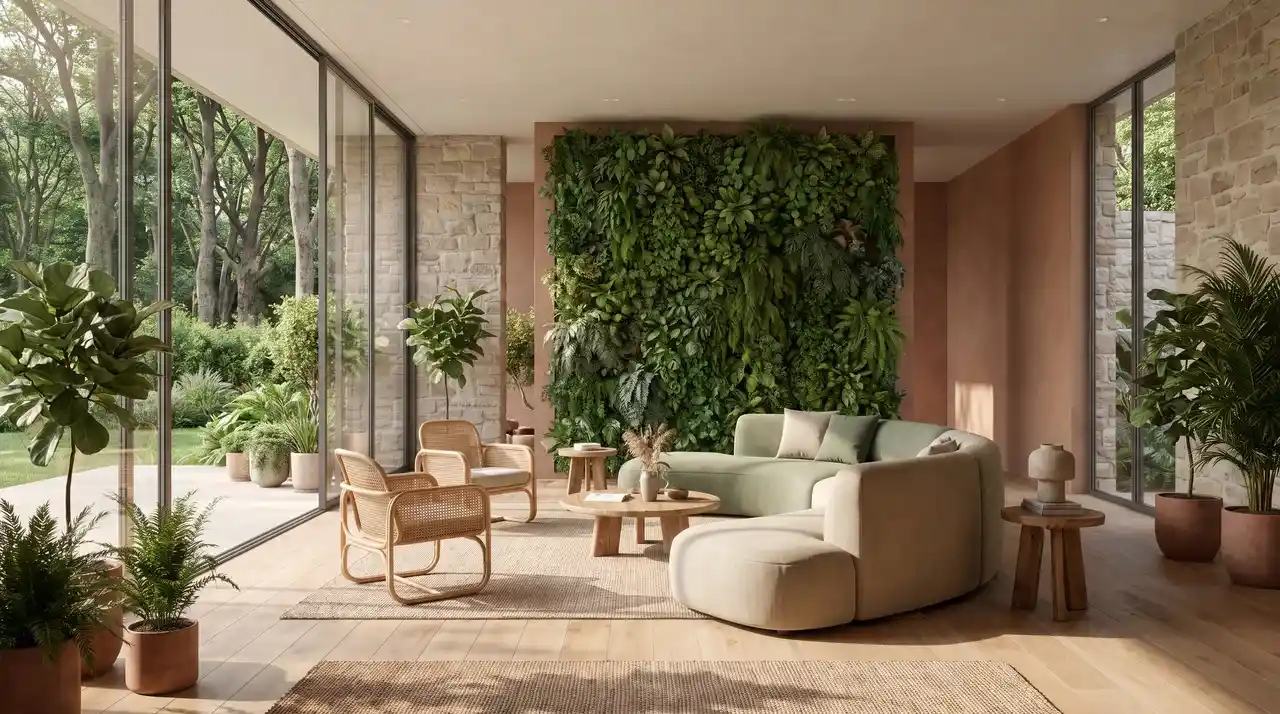
Small plants suit shelves, rubber plants and fiddle-leaf figs bring scale. Installed planted walls run around $500–$3,000 or more, while homemade pocket-planter versions can start near $80. That’s a pretty big difference!
3. Authentic Materials
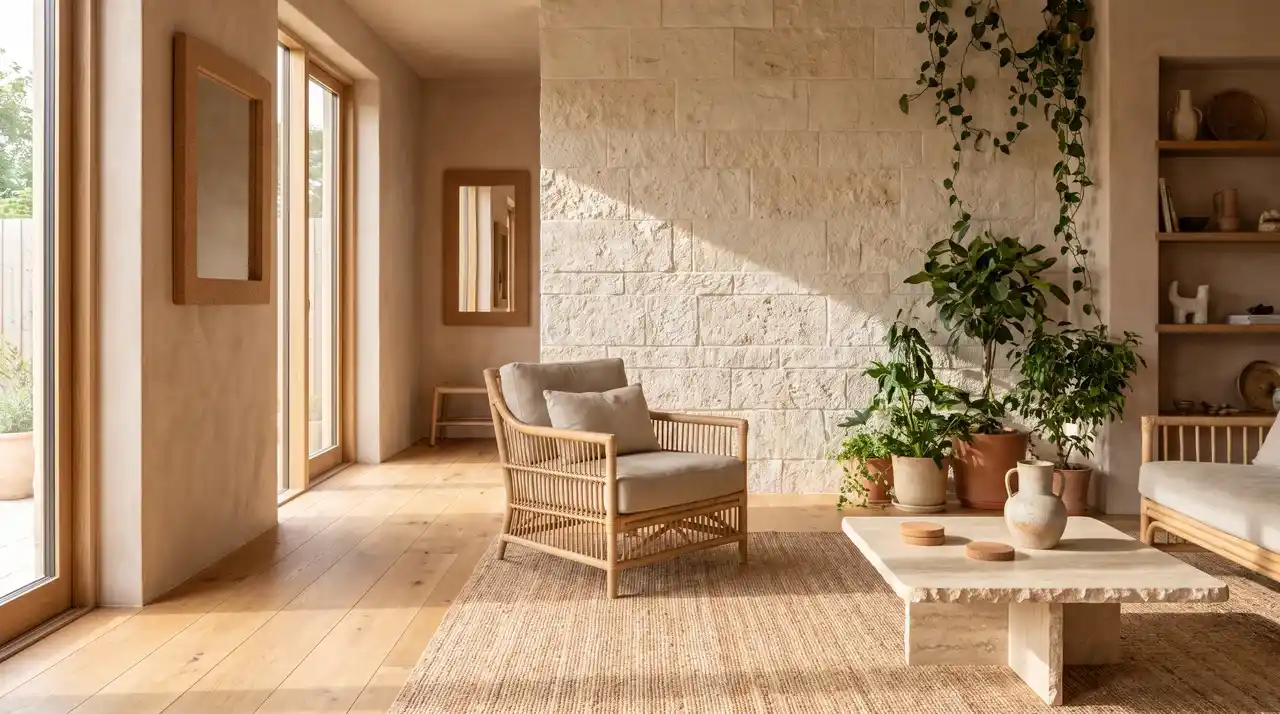
This is where touch gets its moment! Oak grain, cool slate, and a slightly uneven clay pot offer something a printed surface doesn’t quite give me. Those small differences are the appeal.
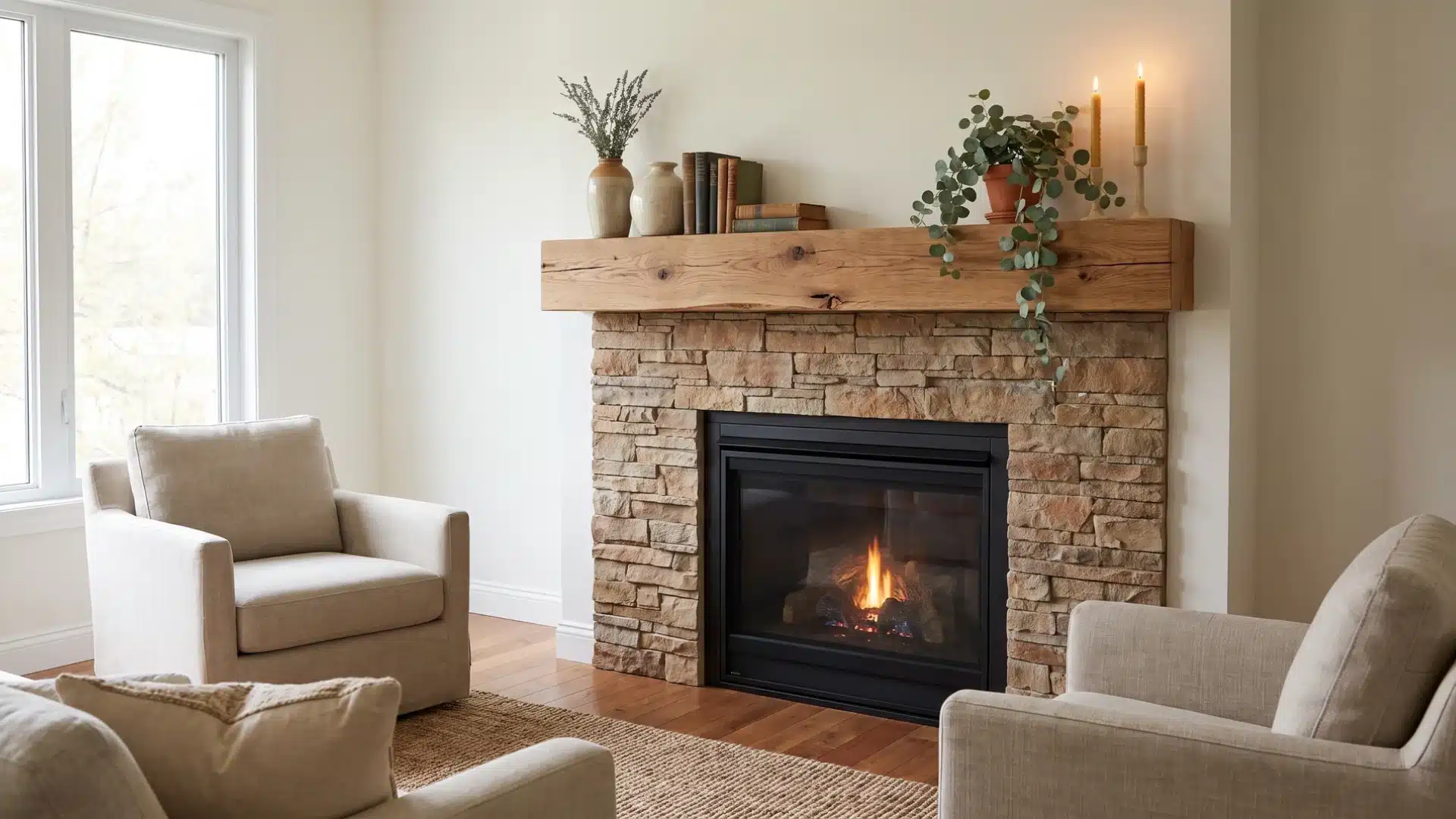
Wood can appear in floors, shelves, or furniture; stone works on counters, fireplaces, or a small tabletop.
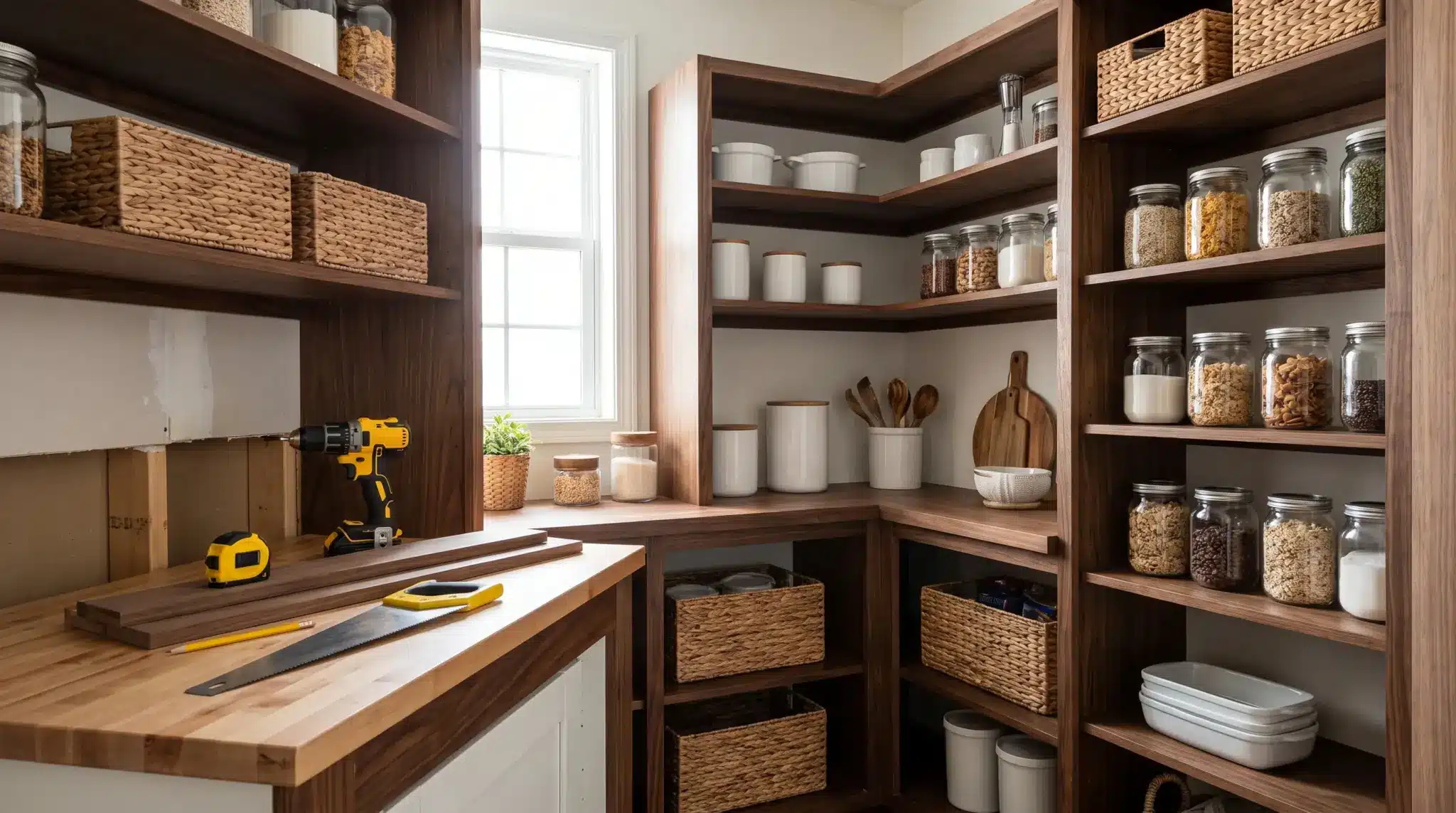
Bamboo brings a fast-growing material into blinds and furniture, while cork offers warmth underfoot and useful sound absorption. Rattan, wicker, terracotta, and clay add texture without needing an entire renovation. I love that smaller option.
Would I replace a perfectly useful laminate floor just for this? No. But when choosing something new, I’d rather have one real timber shelf than a large oak-print treatment (that touchable grain is so good).
4. Landscape-Derived Colors
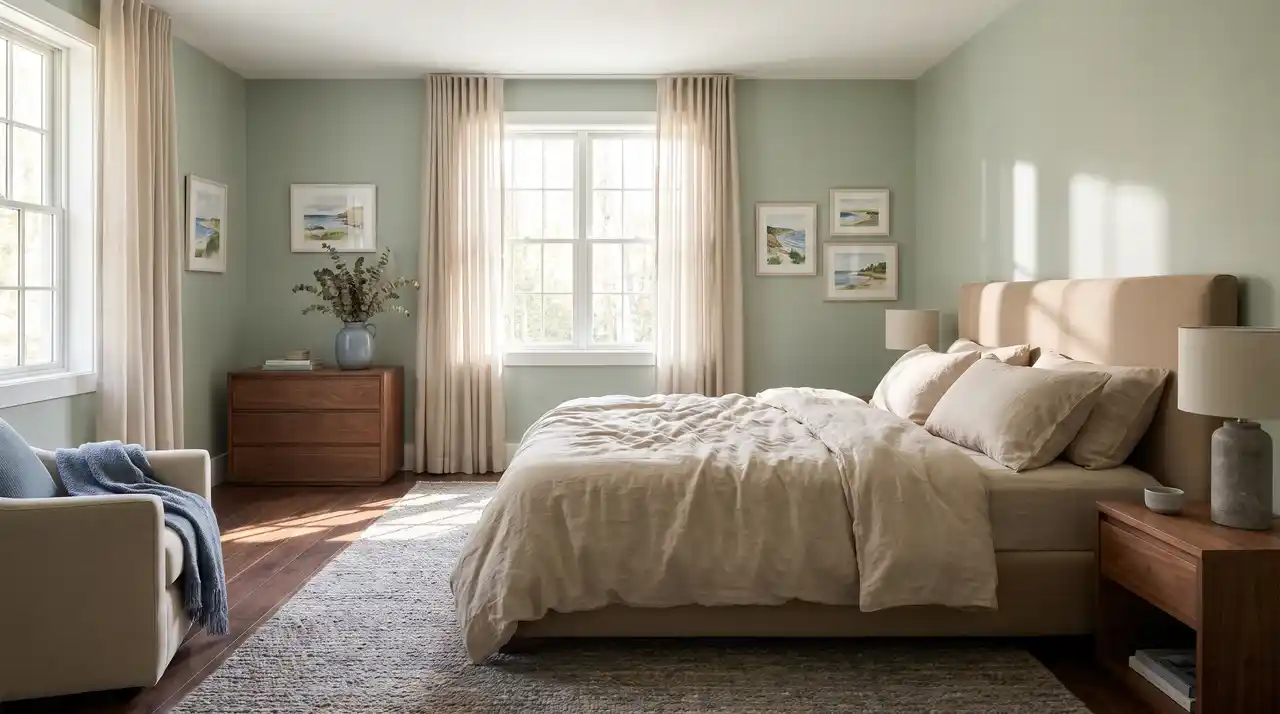
You can make a nature-connected room without adding another plant, color does a lot of the work! Think sage, olive, moss, and forest green. Then walnut brown, chestnut, sky blue, oatmeal, clay, sandy beige, and warm gray.
A sage bedroom can feel restful; pale-blue bathroom tile can suggest water without becoming a themed bathroom. An important distinction!
I think the most convincing palette often comes from somewhere familiar, rather than somewhere that only looks pretty in a photo.
If you look outside, or think about a landscape where you feel comfortable, maybe that’s coastal grass and sand rather than a deep green forest. Both are very good starting points.
5. Exterior Views

A view doesn’t need to be spectacular to matter! A tree, a planted bed, or a patch of sky gives your eyes somewhere to rest. Research involving students and office workers links nature views with better concentration and less mental fatigue.
I’d try putting a reading chair, dining table, or desk where that view becomes part of the day, rather than something you only notice in passing.
Also check what’s blocking the sightline from the rest of the room. Facing a wall or parking lot? A planted window box or bird feeder (where allowed and practical) can add life to the view. Small still counts!
6. Water
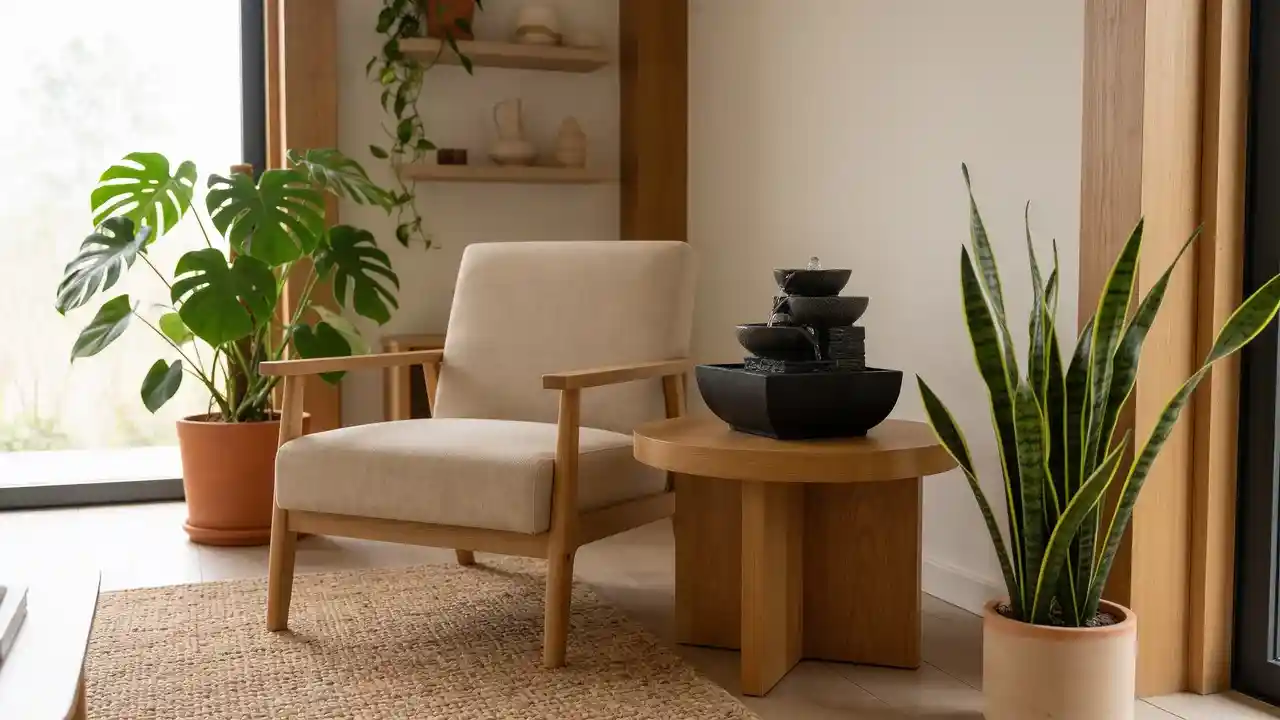
Water gets a strong yes from me, with one maintenance-related asterisk. The sound and slow movement can redirect attention in such a calming way. Research suggests that water sounds paired with water imagery can reduce the body’s fight-or-flight activity more than imagery alone.
Small plug-in fountains often cost $25–$80, floor-standing versions can run $100–$500. Wall installations are a larger commitment, so an outdoor container water garden near an open window is another option. I love that there are very different scales to consider here!
But the water needs care. Use circulation and regular cleaning, and remember that stagnant water can attract mosquitoes in warm places (not the connection to nature we’re after). Peaceful shouldn’t become another household problem.
7. Organic Shapes
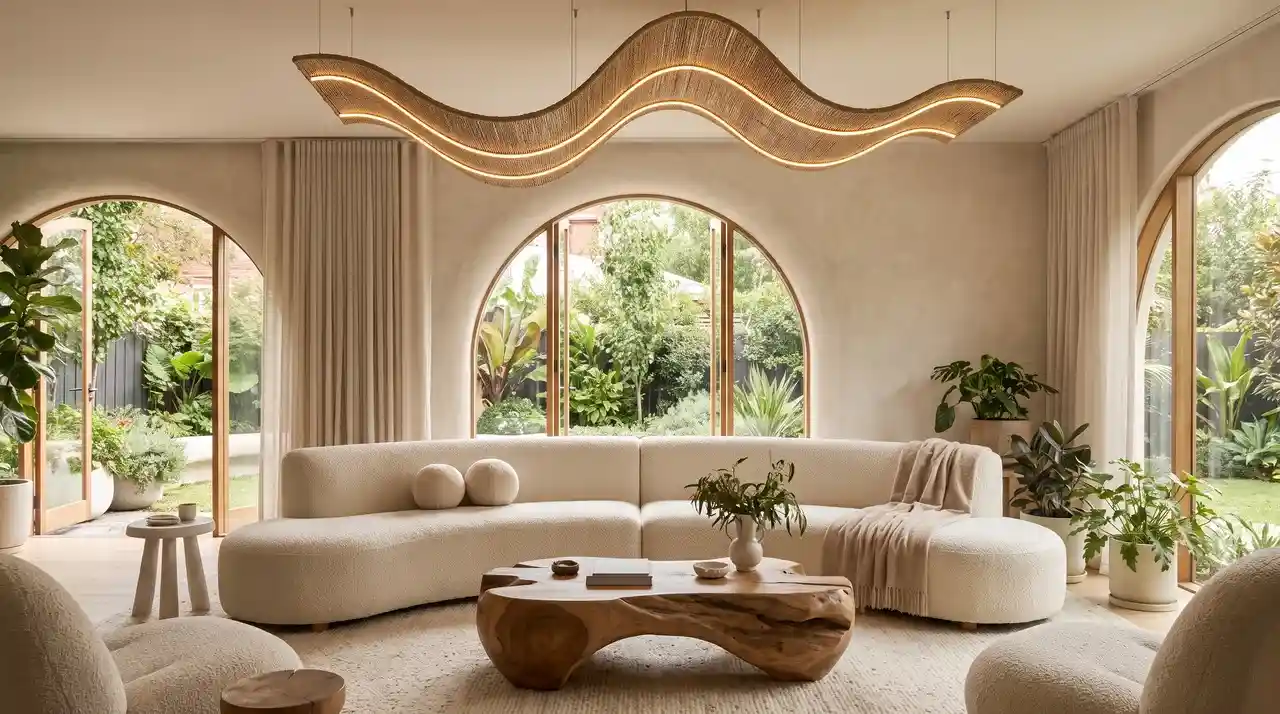
Sometimes a room needs fewer sharp corners, not more stuff! I really like that distinction. Curves can reference winding rivers, branches, shells, and rolling land without literally copying them.
An oval dining table, curved sofa, or kidney-shaped side table can soften a boxy room. Arches and curved niches do it architecturally, but that’s not the only route. An irregular ceramic vase or woven basket can bring in a smaller version of the same idea, and I love how little that change can be.
If you already love your furniture, please keep it, one curved piece might be enough to change the balance. We don’t need to send every rectangular table into retirement.
8. Natural Patterns and Textures
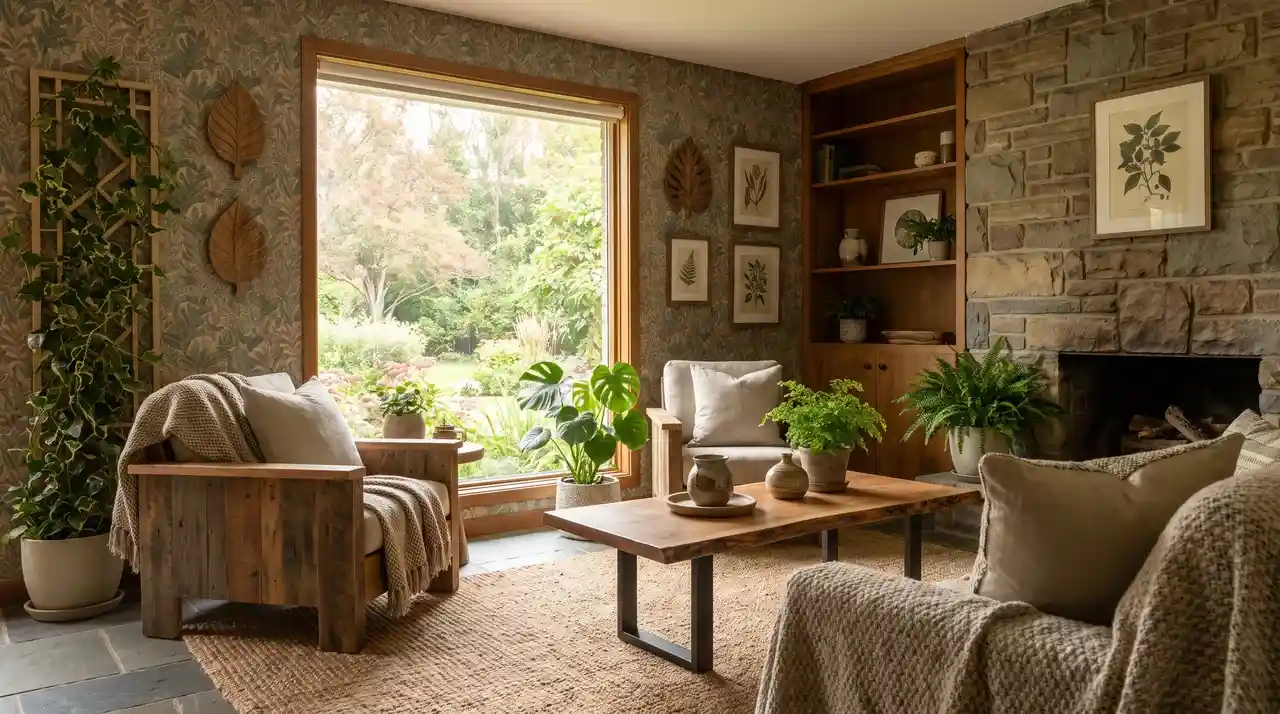
Ah, the lovely middle ground between a plain room and a room full of plants! Nature-derived patterns bring references to the outdoors without needing anything watered. A very good option, if you ask me.
Leaf prints, fern wallpaper, visible wood grain, stone, terrazzo, and wave-like tile arrangements all fit here. Woven blankets, linen, and macramé plant hanger add the tactile side.
This approach is often called “Natural Analogs” (meaning materials and forms that remind us of nature). I find that a pretty useful way to think about it.
I’d start with one botanical wall treatment or a woven linen throw, then see what the room needs before adding anything else. Texture creates depth, but too many competing patterns can lose the calm you were hoping for.
9. Biomorphic Forms
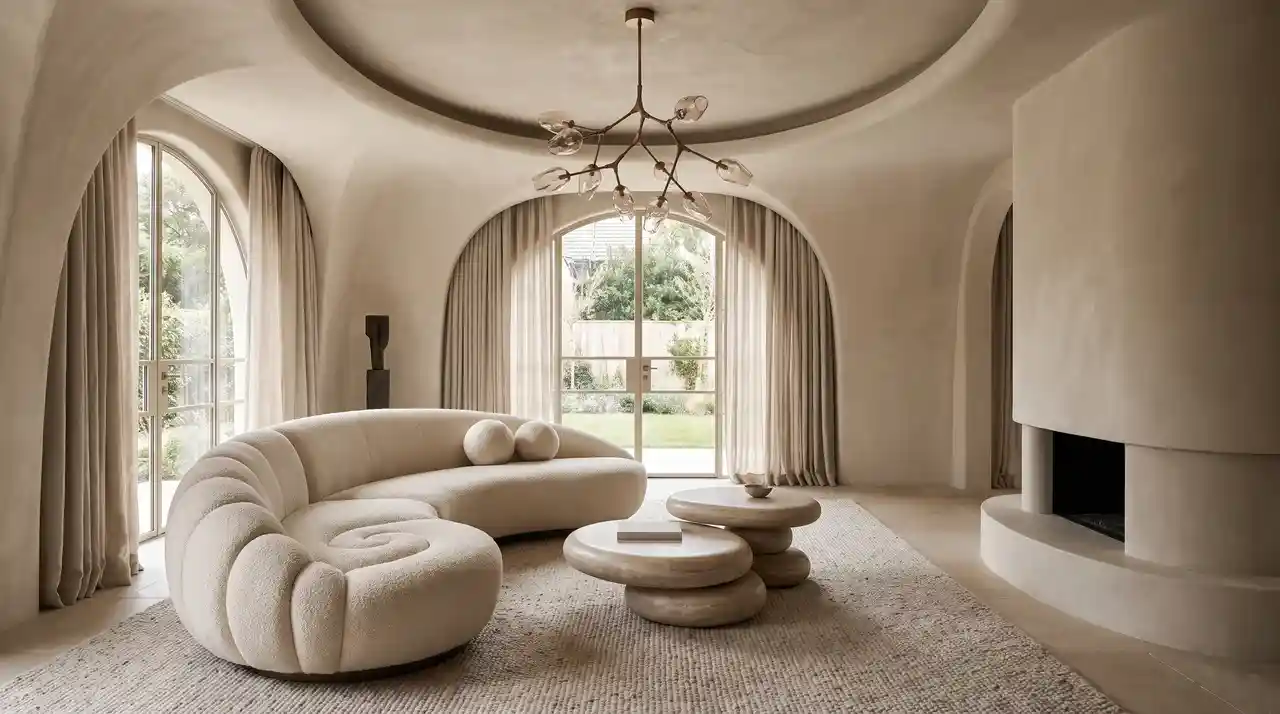
This sounds technical, the idea is really fun! Organic geometry is about general curves and irregularity; biomorphism more clearly references the structure of living things.
Think of a nautilus spiral, branching tree limbs, or the ribs underneath a leaf. Shell-like seating, branch-shaped pendants, and root-inspired tables are good examples. The Egg Chair and Womb Chair sit within this broader design lineage, too.
These pieces can feel like sculpture. I love when the reference is suggested rather than copied exactly, so you notice the beautiful shape first instead of immediately naming the thing it resembles. One interesting light fixture can do plenty here. No need for matching coral-inspired everything:)
10. Moving Air
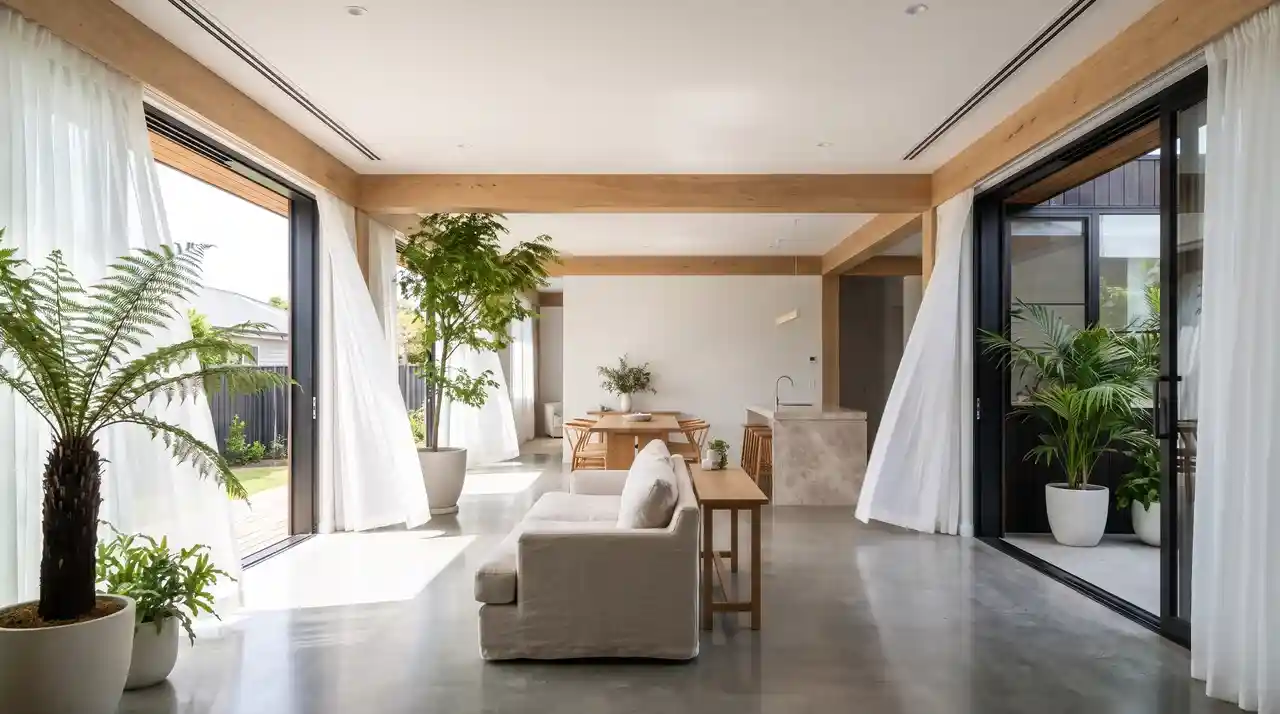
A little movement in the air can make a room feel so much more alive! That mild change between warm and cool, stillness and breeze, is different from sitting in a sealed space all day.
When weather and outdoor air quality allow, openable windows, opposing vents, and cross-ventilation help bring that movement into the room. Even a short airing can freshen a stale room, ceiling fans on low or varying speeds offer another way to create gentle movement. I like that this doesn’t have to involve a big change.
Screened porches and covered patios are lovely transitional spaces, too. The goal isn’t to make anyone cold, it’s comfortable variation. I’m thinking tree shade on a warm day rather than a fan blasting directly at your face.
11. Indoor–Outdoor Connections
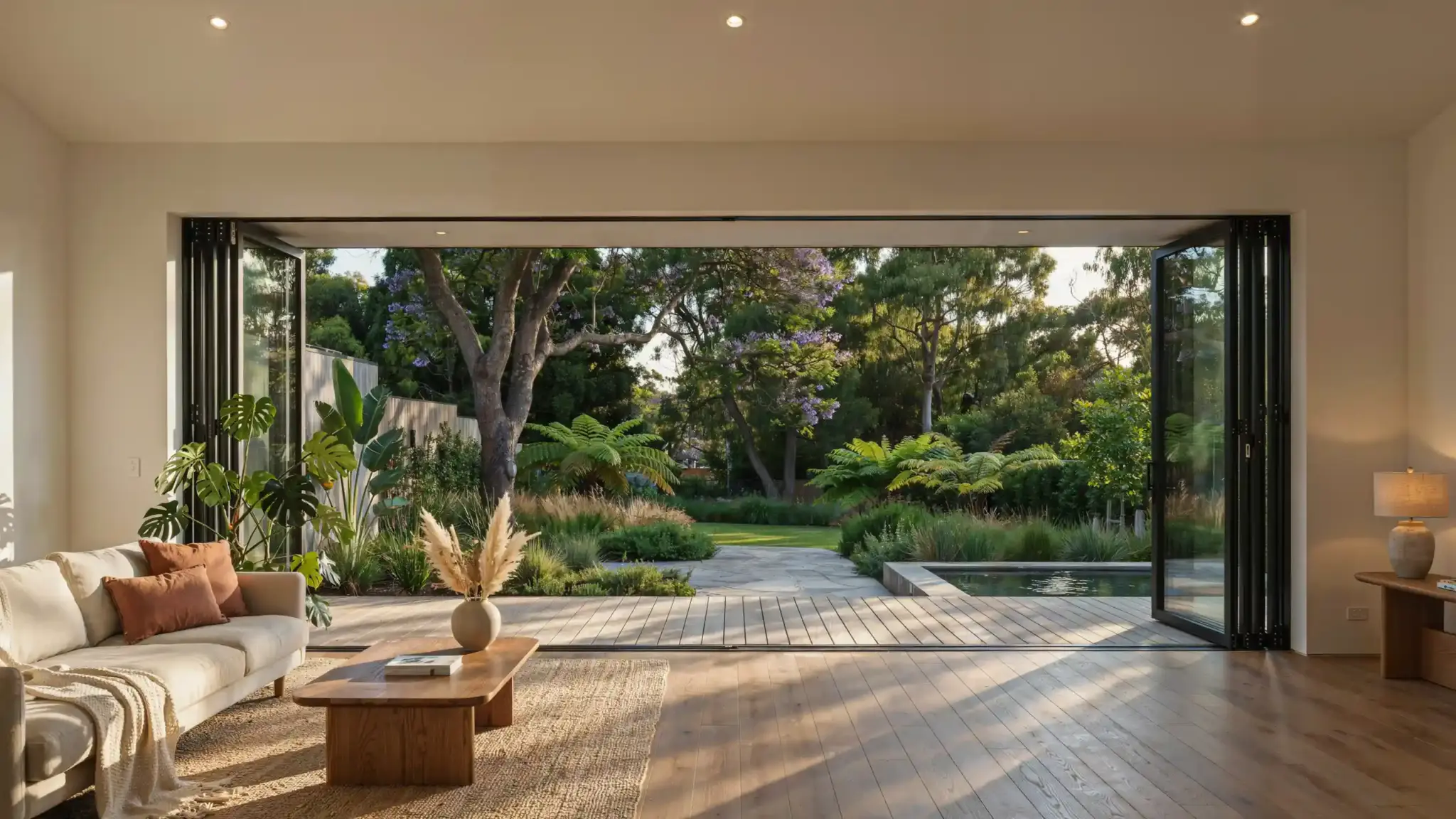
The strongest examples make nature feel like part of daily life, not something you occasionally notice through glass. That connection can be so lovely!
Sliding walls and folding doors can connect a living area to a patio, French doors can open a kitchen toward a garden. Repeating a stone or tile finish across the threshold can also make the spaces feel related. Those are bigger-budget options (and not small purchases).
If you have an apartment, a planted balcony with a chair can create a similar invitation to step outside without those larger changes. A few planters, a trellis, and somewhere comfortable to sit are a very good start. You still get that connection to the sky, I love that!
12. Fragrance
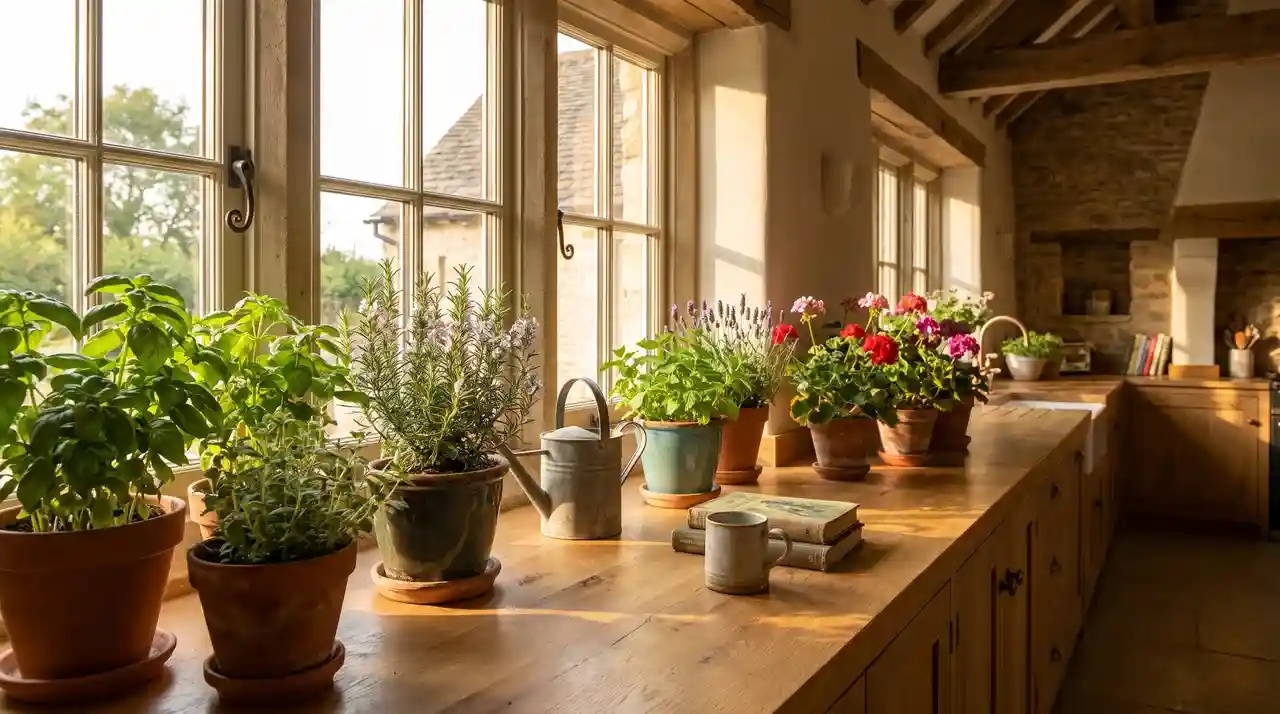
We talk about how rooms look constantly, but scent can bring back a garden or forest before we’ve even identified it. It’s another way to connect with nature beyond sight.
Fresh flowers, fragrant plants, windowsill herbs, and unfinished cedar or pine can all contribute. Some people enjoy eucalyptus, cedarwood, or lavender oils, or the subtle honey scent of a beeswax candle. Keep fragrance gentle, and consider sensitivities, pets, and safe use.
I like an herb doing more than one job, basil gives you greenery, scent, and something for dinner! Hardworking and pretty? An excellent combination.
13. Living Systems
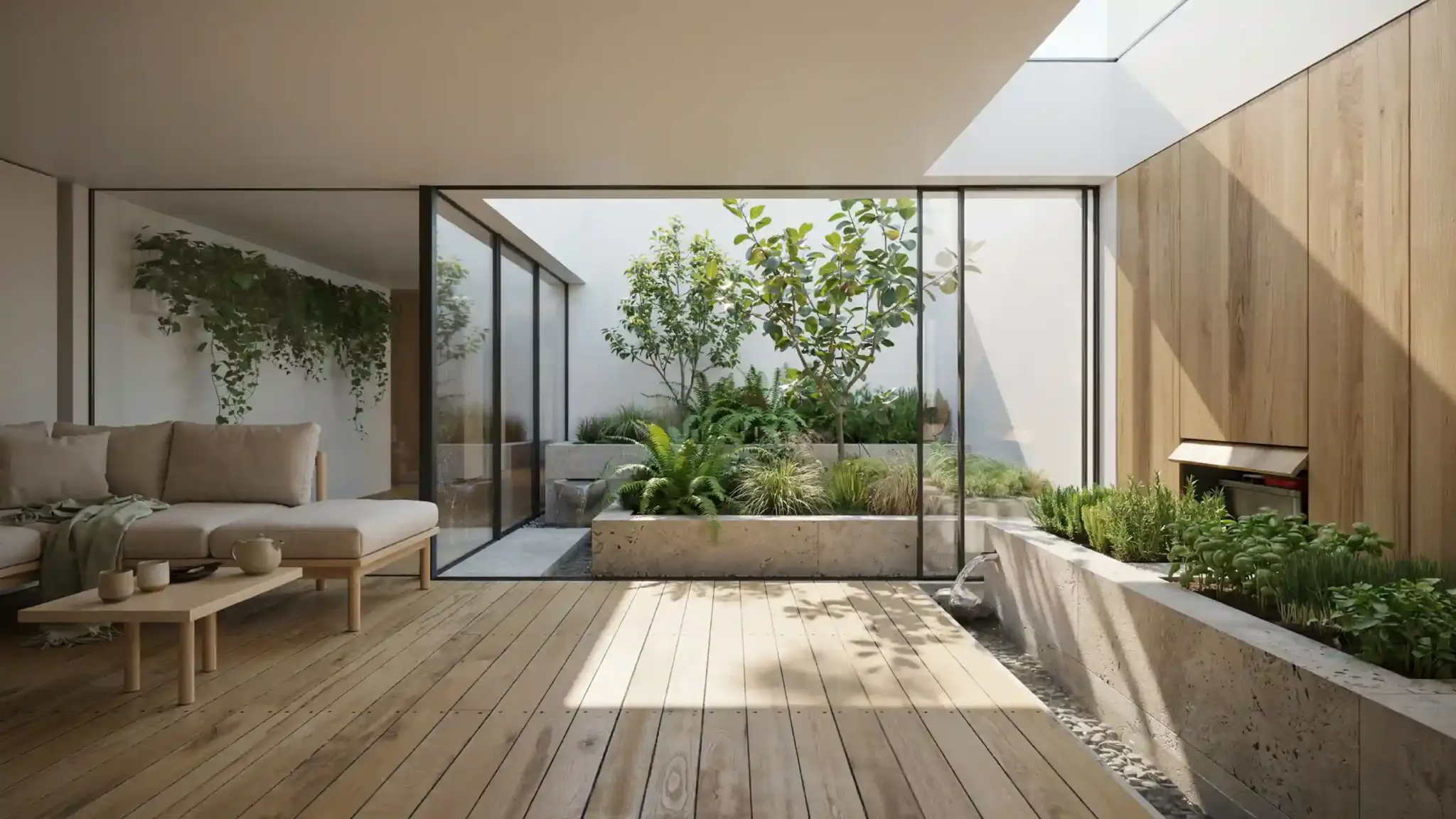
This is where the idea moves beyond decoration. You’re making room for natural cycles, not just natural-looking objects. I think that distinction is really helpful!
Growing seasonal herbs, composting kitchen scraps, or tending a terrarium can make those cycles visible at home, while rain gardens and bioswales help manage stormwater outside.
Roof gardens can support insulation and local pollinators (though they need proper planning).
Not everyone needs an enclosed ecosystem on the coffee table. But noticing growth, seasons, and what happens to food waste can deepen the connection.
I love that sustainability and biophilic design can support each other here, rather than feeling like separate projects.
Can Biophilic Design Help Health And Productivity?
There’s growing research behind these ideas, not just a collective fondness for a pretty plant.
One widely cited office study found a 15% productivity increase after plants were added to previously undecorated workspaces.
Other research has reported benefits involving stress, job satisfaction, and collaboration.
Studies of greenery combined with natural sounds suggest that engaging more than one sense can help reduce the body’s stress response.
But I wouldn’t read any of that as “buy a fern, sleep perfectly.” Different studies examine different settings, an association isn’t a promise for every home.
For me, the useful household takeaway is more modest. Thoughtful light, comfortable air, greenery, and restful views can support better conditions for sleep, concentration, and everyday ease.
That feels very worth doing, even without expecting your living room to solve everything!
How To Use It In Different Rooms
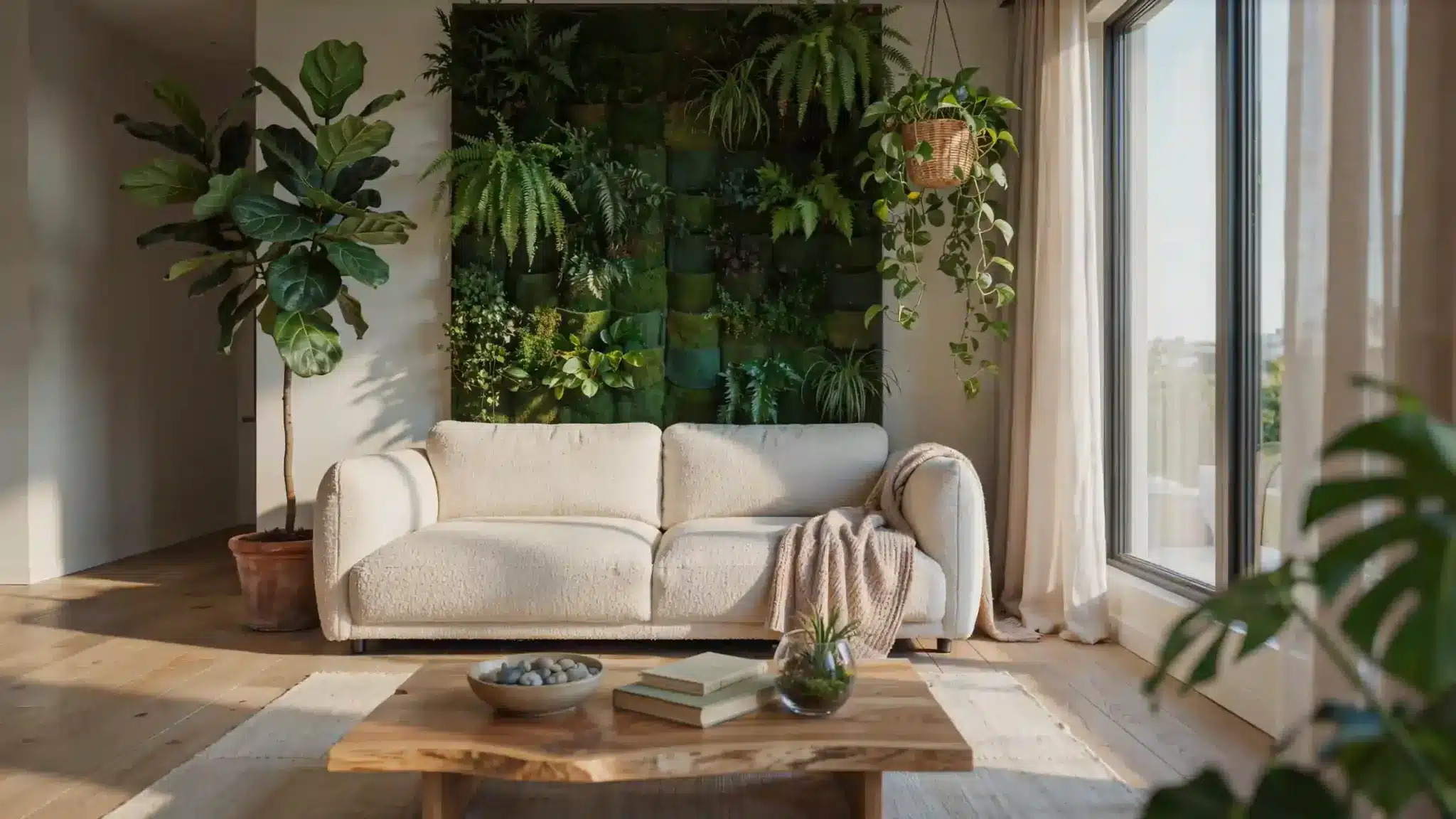
Living areas are a great place to combine plants, wood or stone, and woven surfaces. I’d also look at the seating. Can a chair face the garden instead of only the television? That change makes the view something you use!
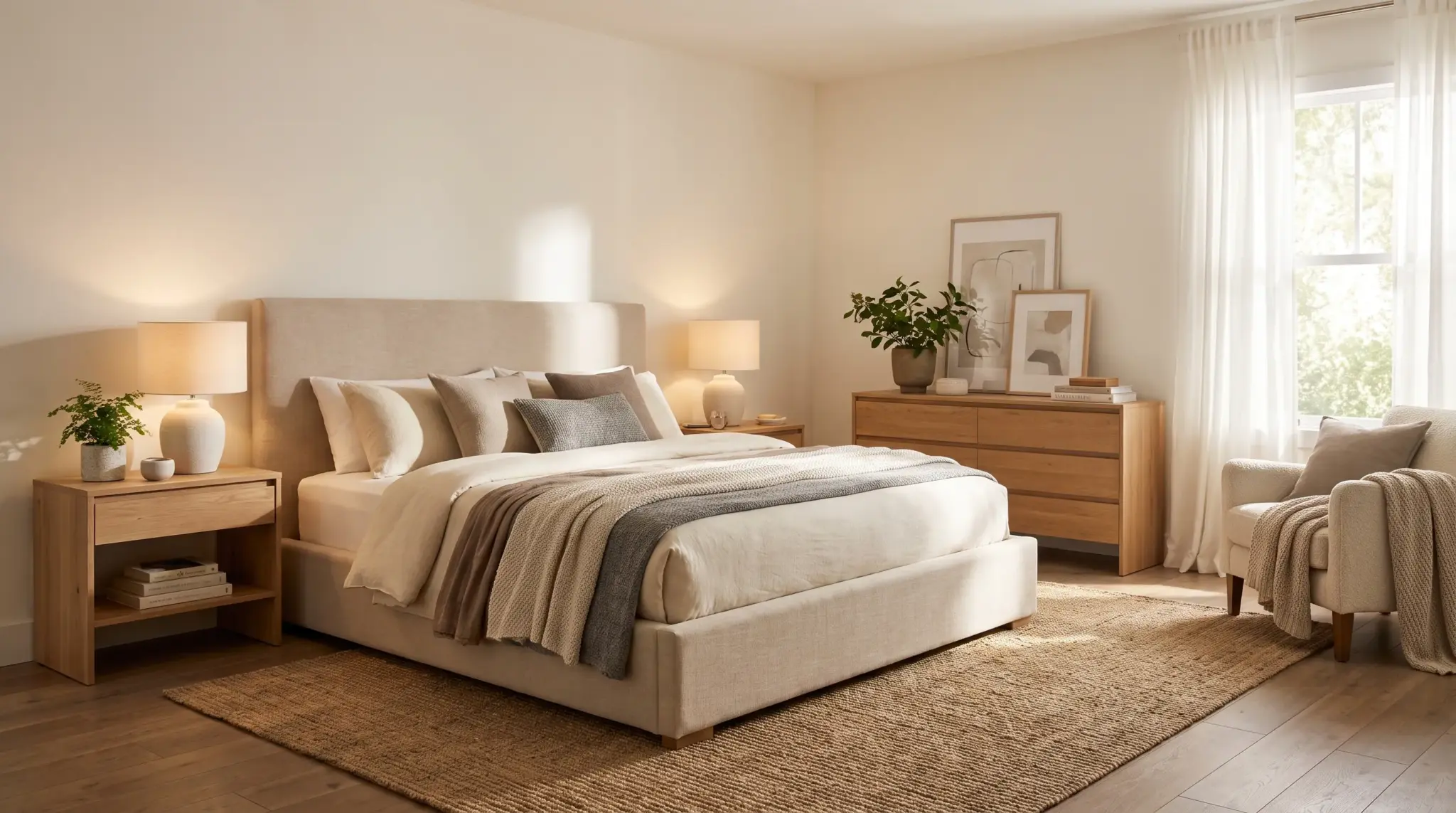
Bedrooms need a softer approach. Earthy colors, natural cloth, simple planting, and gentle daylight control can help the room feel settled. I’d keep nighttime darkness in mind, too; daylight-led doesn’t mean permanently sheer curtains (sleep still matters). It is a balance.
Kitchens can do this through practical pieces: herbs by a suitable window, timber shelves, stone surfaces, or a beautiful chopping board left out because it gets used.
I’d prioritize a window-adjacent desk without screen glare, a manageable plant or two, and a wood or bamboo surface for a home office. Cork can also help soften sound, so I’d match the choices to the room’s job and actual light, not a universal checklist.
Conventional Versus Biophilic Interiors
Either approach can be beautiful, plenty of homes combine them already! This is a comparison of starting priorities, not a judgment on anyone’s white walls or angular sofa.
Aspect | Conventional emphasis | Biophilic emphasis |
|---|---|---|
Finishes | Decorative or synthetic surfaces | Genuine wood, stone, and clay |
Illumination | Electric lighting first | Daylight, with warm electric support |
Vegetation | An occasional accessory | Part of the room’s planning |
Layout | Inward-facing, wall-defined spaces | Outdoor connections and nature sightlines |
Palette | Trends, gray, white, strong accents | Earth colors, greens, warm neutrals |
Geometry | Angles, symmetry, geometric forms | Curves, irregularity, living forms |
Priority | Appearance and refinement | Comfort, well-being, nature connection |
For me, the useful distinction is appearance versus experience. Not because biophilic rooms can’t be refined, but because their starting question includes how it feels to spend time there. Does the light change pleasantly? Is there something good to touch? Can your eyes rest somewhere beyond the screen?
Frequent Mistakes To Avoid

Buying plants without a care plan is a big one, a declining fiddle-leaf fig doesn’t exactly create serenity. I’d start with two or three manageable species, then add more when you know what works. Also, match the plant to actual conditions. A sun-loving succulent in a dim passage can stretch and fade. Humidity matters, too!
I’m less convinced by large imitation wood or stone treatments when the goal is sensory connection. If money is limited, one small authentic piece would be my choice rather than a larger treatment that only looks like the real thing. But don’t throw out useful things just to satisfy a material rule. That’s not the goal!
And EDIT. Plants, crystals, driftwood, and botanical prints can become clutter when every surface gets involved, so I’d improve blocked daylight before filling a dark room with greenery. Finally, include upkeep in the water-feature budget. Cleaning, pump care, and preventing stagnation are part of the purchase, not optional extras.
How Much Is Enough, And What Does It Cost?
You don’t need all thirteen elements! A cleared outlook, one healthy plant, and a natural texture can make a meaningful start. The same principles work in a 200-square-foot studio, just at a different scale. I find that so encouraging.
There are useful purchases below $100 individually (though these ranges aren’t a promise that the whole group fits that budget). A larger pothos or snake plant can cost around $15–$30. A pair of cotton or linen cushion covers may run $20–$40. Sheer curtain panels can be around $15–$25 each.
A bamboo tray, displayed chopping board, or salvaged-wood frame can add warmth for approximately $10–$30. Clearing the best window and turning a chair toward it? Free!
I’d make one change, live with it, then decide what’s missing, balance matters more than quantity. The room should still feel like yours.
A More Nature-Connected Home, Without Starting Over
The lovely part, for me, is how these elements support each other. Daylight brings out wood grain, moving air carries an herb’s scent. A comfortable chair makes a small outdoor view part of the day. Those connections can be so simple!
No renovation prerequisite. No requirement to love an indoor jungle. Just a chance to make home feel warmer and calmer through a few choices that work together.
Frequently Asked Questions
What Are The Fourteen Patterns Of Biophilic Design?
They’re a framework for describing different nature-connected experiences, not the same thing as the thirteen practical elements above. Examples include nature views, natural sounds, water, daylight, airflow, authentic materials, and organic forms. Prospect, refuge, and mystery also matter: looking outward, feeling sheltered, and wanting to discover what’s beyond. That’s a selection, not the full fourteen-pattern list.
What Are The Six Principles?
The six principles are environmental features, natural forms, natural patterns, light and space, place-based relationships, and human–nature relationships. They help move the conversation beyond plants toward how a space connects with its setting and the people using it.
What Are The Three Pillars?
“Nature in the Space,” “Natural Analogs,” and “Nature of the Space.” Broadly, those cover direct nature experiences, references through materials and forms, and spatial experiences such as shelter or an open outlook.
What Are The Nine Biophilia Values?
They are utilitarian, naturalistic, ecological-scientific, aesthetic, symbolic, humanistic, moralistic, dominionistic, and negativistic. These describe different human relationships with nature, including practical use, affection, curiosity, control, and fear. They aren’t nine decorating rules (thankfully!).
Can You Study Biophilic Design?
Yes, though dedicated degrees are uncommon. Common routes include interior design, architecture, landscape architecture, and sustainable design, with biophilic ideas studied within those fields.
Which part would make the biggest difference in your home? Better light, a view you’ve been ignoring, or simply fewer things around your favorite chair? I really hope this gives you somewhere manageable to begin.
Love you, mean it.